
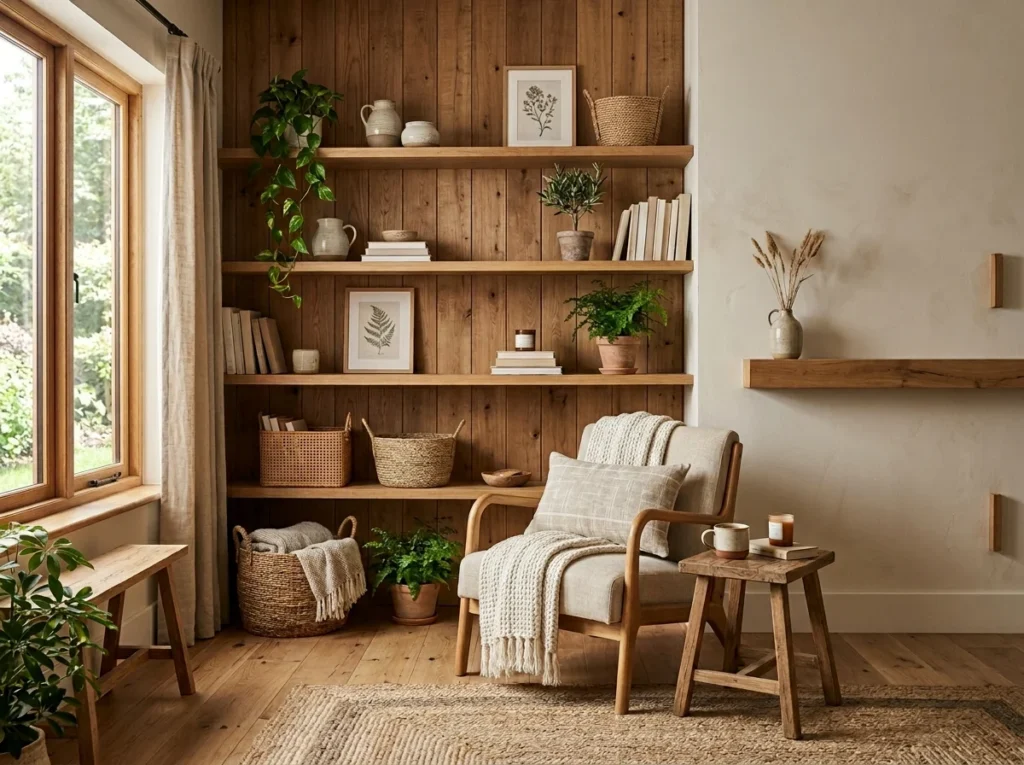
Wooden home decor brings something no other material can — genuine warmth, natural character, and a timeless quality that only improves with age. In a world increasingly dominated by synthetic materials and mass production, wood grounds a home in something real, organic, and endlessly beautiful.
From rustic farmhouse charm to sleek Scandinavian minimalism, wooden home decor adapts beautifully across every interior style. The grain, texture, and natural variation of wood create a visual richness that painted or manufactured surfaces simply cannot replicate — every piece is truly one of a kind.
This guide covers the best wooden home decor ideas that interior designers and natural material enthusiasts actually recommend — with practical tips, honest comparisons, and product picks to help you bring the warmth and beauty of wood into every room of your home.
List of 13 Best Wooden Home Decor Ideas
1. Solid Wood Floating Shelves
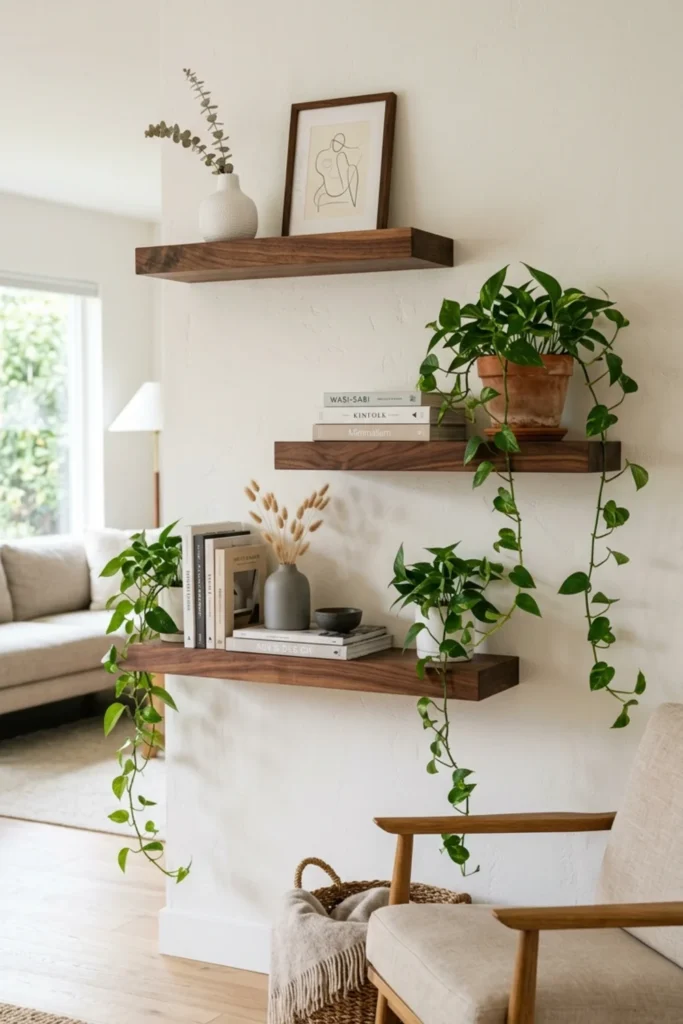
Solid wood floating shelves are the most versatile and widely loved wooden home decor addition available — they bring warmth and natural texture to any wall while providing functional display and storage space that metal or painted alternatives simply cannot match in visual character.
White oak, walnut, and pine are the most popular species for floating shelves in wooden home decor — white oak reads clean and contemporary, walnut reads rich and sophisticated, and pine reads warm and rustic, making each wood species a distinct design direction in its own right.
The natural grain pattern and knots in solid wood floating shelves are design features rather than imperfections — they make each shelf genuinely unique and contribute the organic, handcrafted quality that distinguishes real wood from wood-look laminates and veneers.
Pro Tip: Finish solid wood floating shelves with a hardwax oil or Danish oil rather than a polyurethane varnish — oil finishes penetrate the wood grain and enhance its natural character, while varnish creates a plastic-like surface film that obscures grain detail and yellows over time.
2. Live-Edge Wood Coffee Table
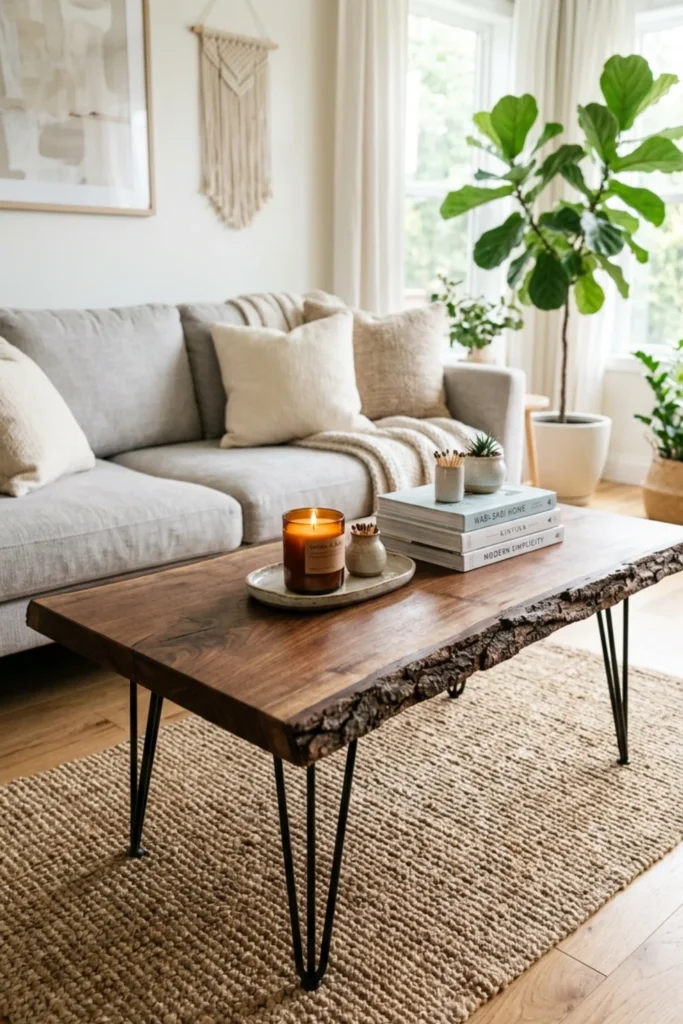
A live-edge wood coffee table — where the natural outer edge of the tree slab is preserved rather than cut into a straight line — is the most dramatic and nature-celebrating statement in wooden home decor. No two live-edge tables are ever identical, making each one a genuinely unique piece of functional sculpture.
The preserved natural edge of a live-edge table tells the story of the specific tree it came from — its growth patterns, knots, burls, and natural curves are all visible in the finished surface, creating a connection to the natural world that manufactured furniture can never replicate.
Live-edge tables work beautifully in both rustic and modern interiors — a live-edge walnut slab on sleek metal hairpin legs suits a contemporary loft aesthetic, while the same slab on carved wooden legs suits a farmhouse or traditional setting perfectly.
Pro Tip: Oil a live-edge wood coffee table with a food-safe hardwax oil every six to twelve months to prevent the wood from drying, cracking, or losing its deep, rich color — regular oiling is the single most important maintenance step for preserving both the beauty and structural integrity of a live-edge piece over years of use.
3. Wooden Wall Art and Carved Panels
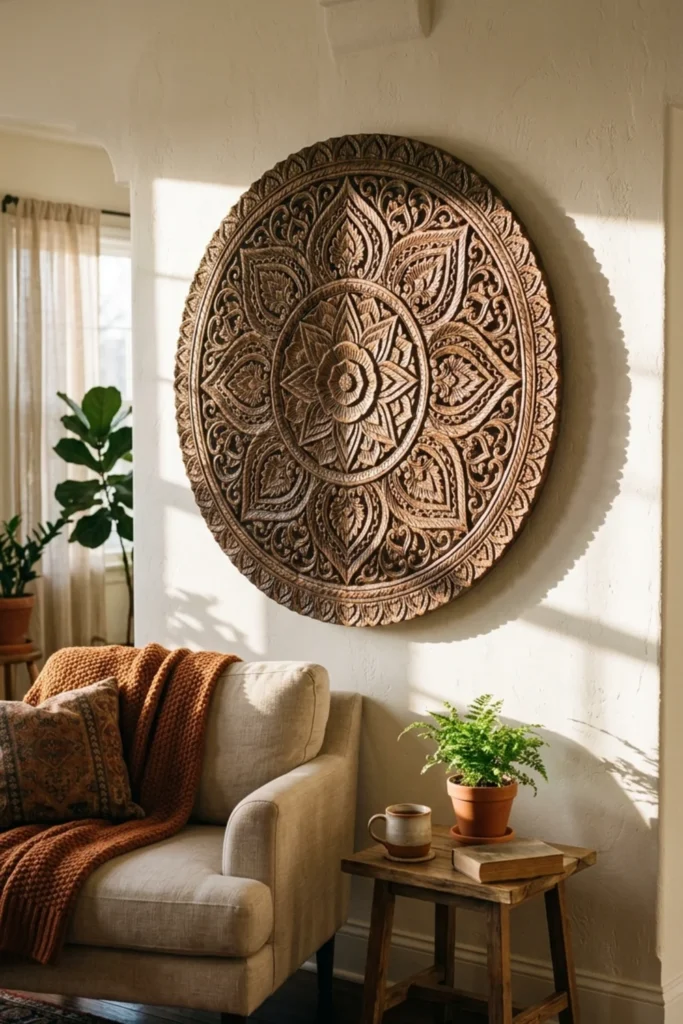
Wooden wall art and carved decorative panels are among the most distinctive and texturally rich wooden home decor options for bringing depth and artisanal character to interior walls. Unlike flat canvas or print art, wooden wall art engages the eye through physical three-dimensionality that changes subtly with every shift in light.
Hand-carved mandala panels, geometric laser-cut wood screens, driftwood wall sculptures, and wood slice arrangements each offer a different aesthetic — from the meditative intricacy of hand carving to the clean graphic quality of laser-cut geometric design.
Reclaimed wood wall art — arrangements of weathered barn wood planks, salvaged timber fragments, or found wood pieces assembled into a composition — brings the most authentic and environmentally responsible form of wooden home decor to any wall surface.
Pro Tip: Position wooden wall art where it will receive raking light from a side window or directional spotlight rather than flat frontal illumination — angled light catches the carved or textured surface of wooden wall art and creates dramatic shadow play that makes the three-dimensional quality of the piece visible and impactful from across the room.
4. Wooden Picture Frames and Mirror Frames
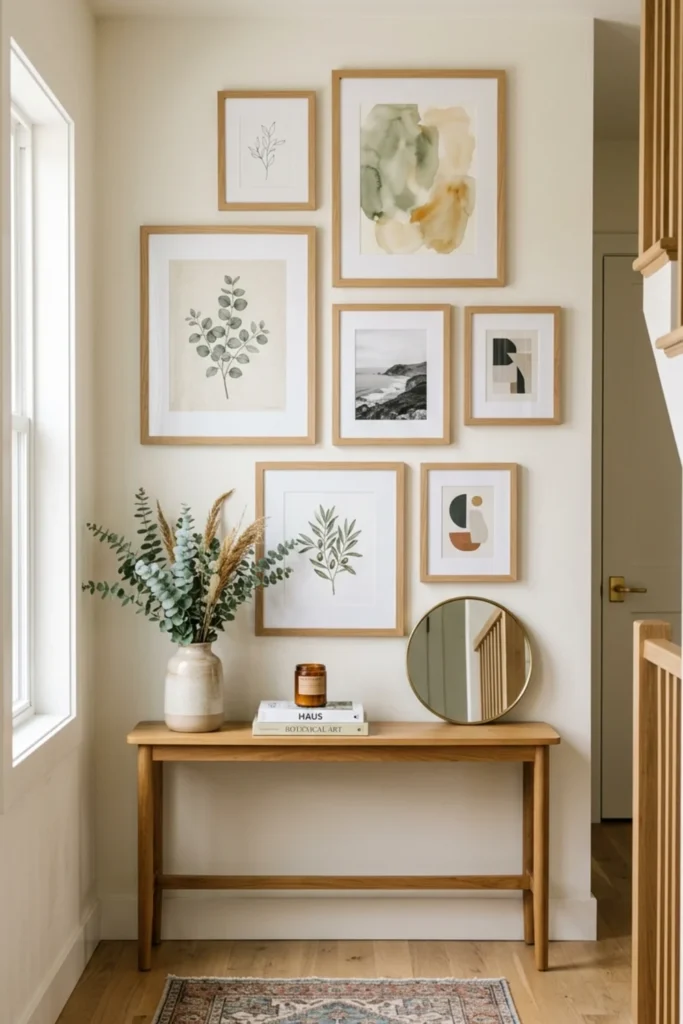
Solid wood picture frames and mirror frames are one of the most accessible and immediately impactful wooden home decor upgrades — replacing plastic or metal frames with genuine wood instantly elevates the perceived quality and warmth of every piece of art and mirror in the home.
Natural wood frames in white oak, walnut, pine, and bamboo suit contemporary and Scandinavian aesthetics, while darker stained or ebonized wood frames suit more traditional, eclectic, or maximalist interiors. Rustic distressed wood frames with visible grain and weathering suit farmhouse and coastal decorating styles perfectly.
A consistently wood-framed gallery wall — all frames in the same wood species or a close tonal family — creates a cohesive, warm, and organic gallery arrangement that feels more handcrafted and personal than a wall of metal or painted frames.
Pro Tip: Choose naturally finished wood frames without a lacquer topcoat wherever possible — unlacquered wood frames develop a beautiful patina over time that enriches their character, while heavily lacquered frames remain static and can yellow or crack as the finish ages.
5. Reclaimed Wood Feature Wall or Accent Panel
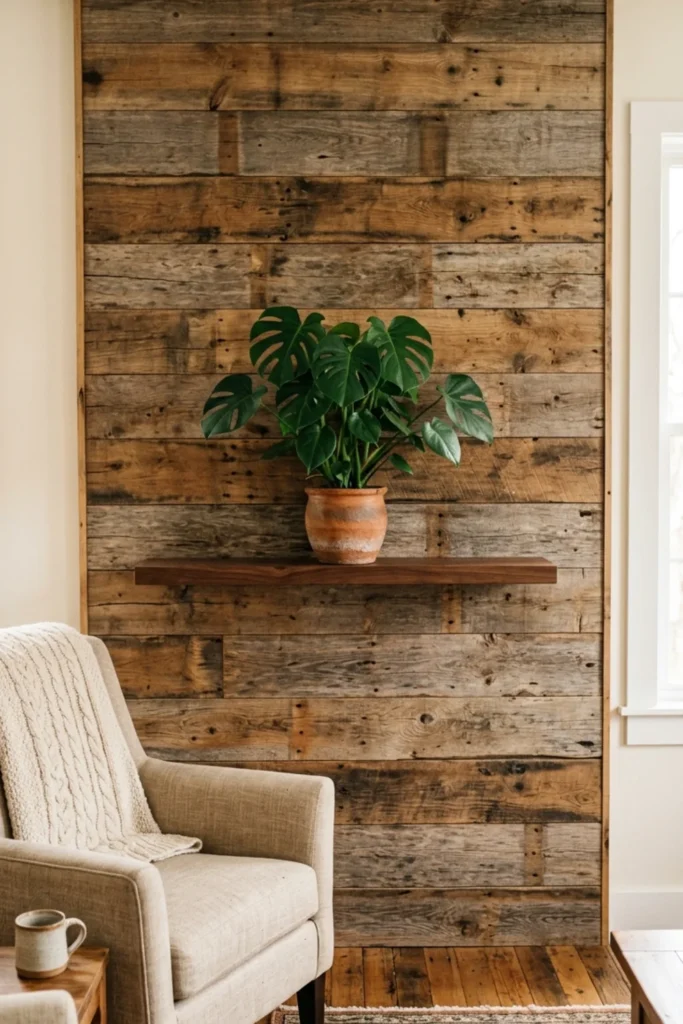
A reclaimed wood feature wall or accent panel is one of the most architecturally dramatic wooden home decor ideas — covering one wall in carefully arranged reclaimed timber planks creates a surface of extraordinary visual richness, warmth, and historical depth that paint, tile, or wallpaper cannot approach.
The natural variation in color, grain, texture, and aging across individual reclaimed timber planks creates a wall surface that reads as a single warm composition while revealing infinite detail on closer inspection — every plank has its own story of prior use.
Reclaimed wood feature walls suit living rooms, bedrooms, dining rooms, and home offices equally — behind a bed headboard, above a fireplace, behind a sofa, or as a home office backdrop, a reclaimed wood wall creates an instant focal point of genuine character.
Pro Tip: Seal a reclaimed wood feature wall with a clear matte water-based sealant before installation rather than after — treating each plank individually before fitting prevents the sealant from running into gaps between planks and ensures complete coverage of all surfaces including edges and backs that prevent moisture movement from the wall.
6. Wooden Candle Holders and Decorative Objects
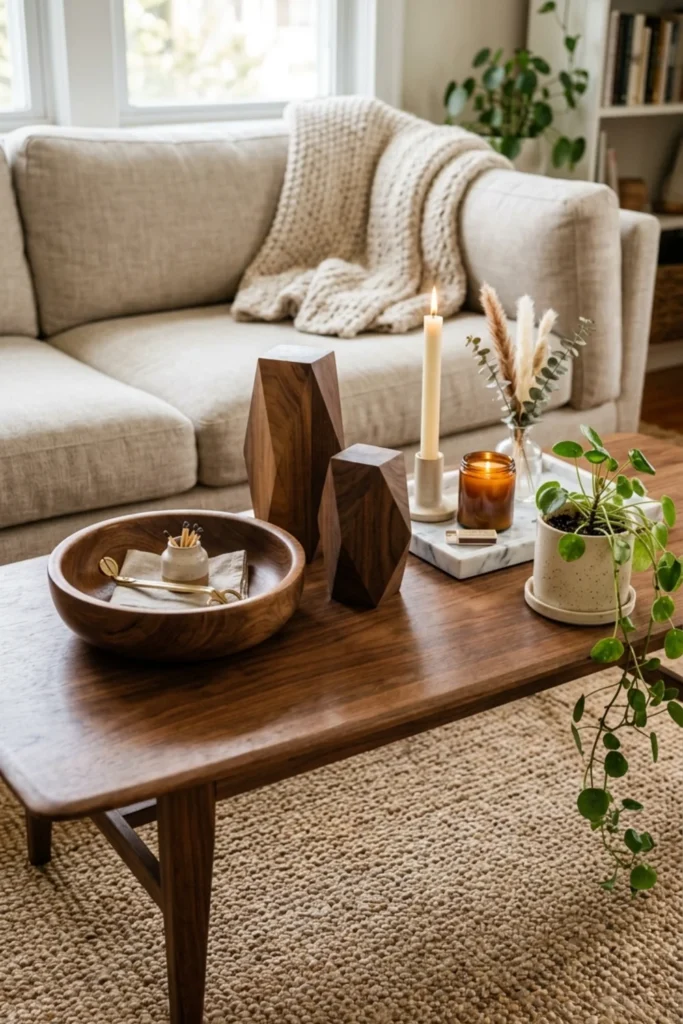
Wooden candle holders and decorative objects — turned wooden bowls, carved figurines, driftwood sculptures, wood slice coasters, and geometric wooden sculptures — are the most affordable and accessible entry point into wooden home decor. Small wooden objects bring immediate warmth and organic texture to any surface.
Turned wooden bowls in walnut, cherry, or maple are among the most beautiful and functional wooden home decor objects available — they work as fruit bowls, key catchers, jewelry trays, and purely decorative display pieces with equal elegance.
Grouping wooden decorative objects of different heights, species, and forms on a coffee table, shelf, or console table creates a natural, collected vignette that introduces multiple wood tones and grain patterns into the same composition without feeling disjointed.
Pro Tip: Combine wooden decorative objects with one or two natural stone pieces — a marble tray, a quartz crystal, or a smooth river stone — to create a vignette that feels grounded in the natural world rather than exclusively a wood collection, which adds material contrast and prevents the arrangement from reading as monotonously single-material.
7. Wood and Rattan Furniture Combination
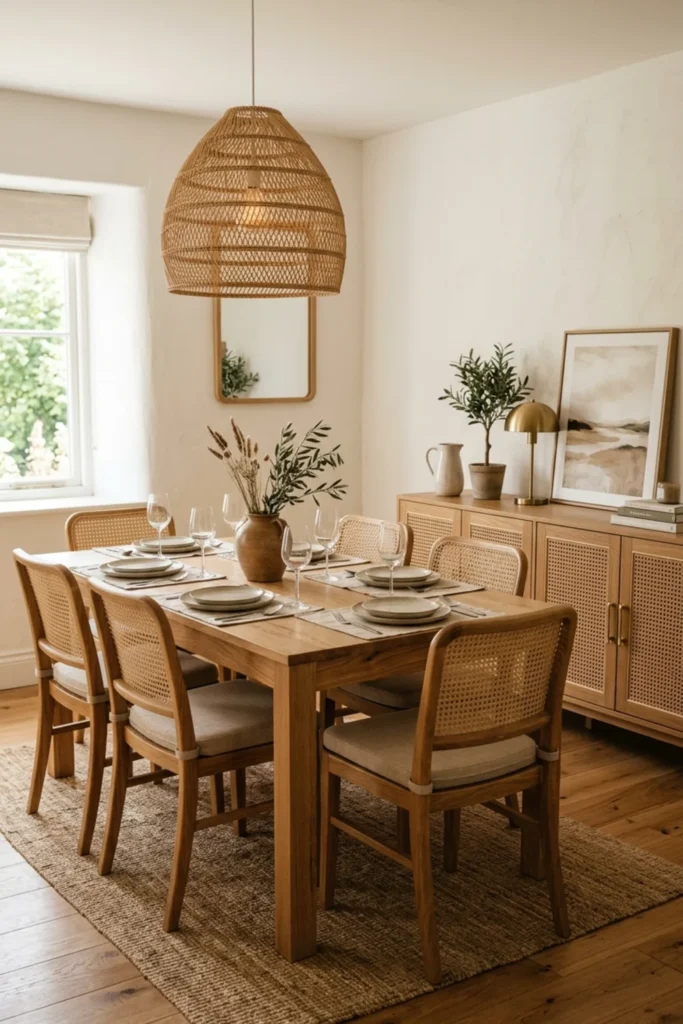
Combining solid wood furniture with rattan or cane accents is one of the most popular and enduringly beautiful wooden home decor combinations — the structural warmth of solid wood paired with the lightness and texture of woven rattan creates a layered, organic aesthetic that suits coastal, Japandi, bohemian, and farmhouse interior styles.
Rattan-caned dining chairs around a solid wood table, a rattan-insert sideboard beside a solid wood bookcase, or a woven rattan headboard beside solid wood bedside tables — each pairing creates the satisfying tonal harmony of two natural materials that share the same warmth without competing for visual dominance.
The combination of dense solid wood and open-weave rattan also creates a practical visual balance — the solidity of wood provides visual weight and grounding while the openness of rattan prevents the arrangement from feeling too heavy or closed.
Pro Tip: When combining wood and rattan in wooden home decor, match the undertones rather than the exact color — a golden-toned oak pairs best with a warm honey rattan, while a cooler grey-toned ash pairs best with a bleached or whitewashed rattan, creating visual harmony rather than an awkward color mismatch between the two natural materials.
8. Wooden Kitchen Elements and Butcher Block
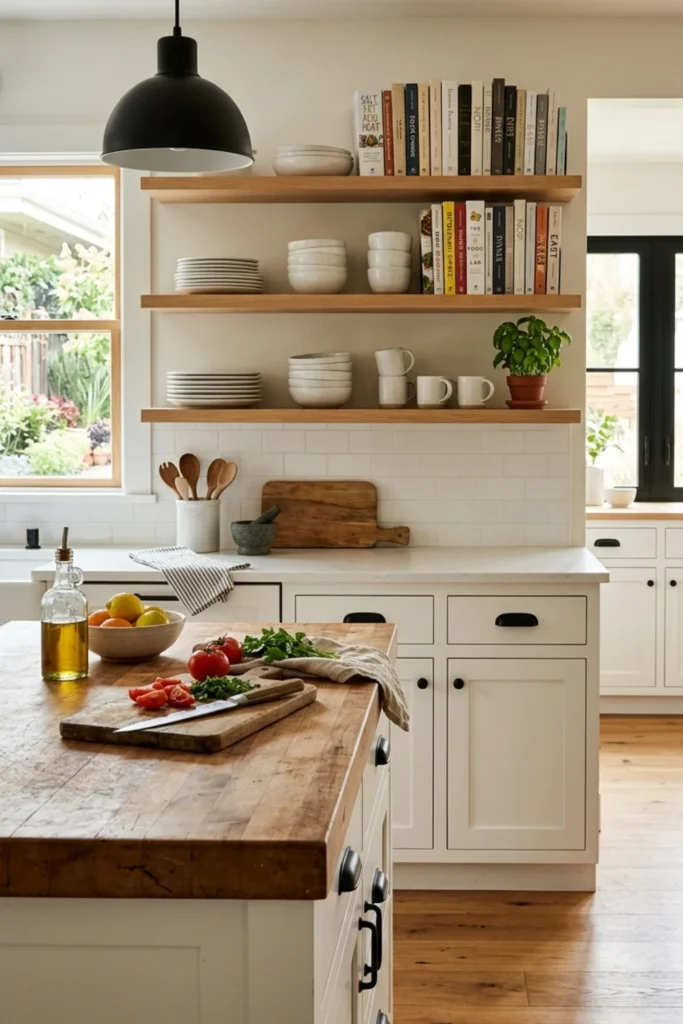
Wooden kitchen elements — butcher block countertops, solid wood open shelving, wooden cutting boards displayed as decor, wooden utensil holders, and wood-fronted cabinet inserts — bring the warmth and natural character of wooden home decor into the most functional room of the house.
A butcher block kitchen island or countertop section is the most impactful single wooden home decor addition to a kitchen — it introduces a warm, organic surface that contrasts beautifully with stone, tile, or painted surfaces and provides a genuinely superior cutting and prep surface for everyday cooking.
Solid wood open shelving in a kitchen — replacing upper cabinets with simple wood shelf runs — creates a warm, accessible display for ceramics, glassware, and cookbooks that transforms the upper half of the kitchen from a wall of closed doors into a styled, personal display.
Pro Tip: Treat a butcher block countertop with food-safe mineral oil monthly for the first year and every three months thereafter — the frequency of treatment during the initial period allows the wood to absorb sufficient oil to become water-resistant, and the regular ongoing maintenance prevents the grain from drying and cracking from daily exposure to water and food acids.
9. Wooden Headboard and Bedroom Furniture
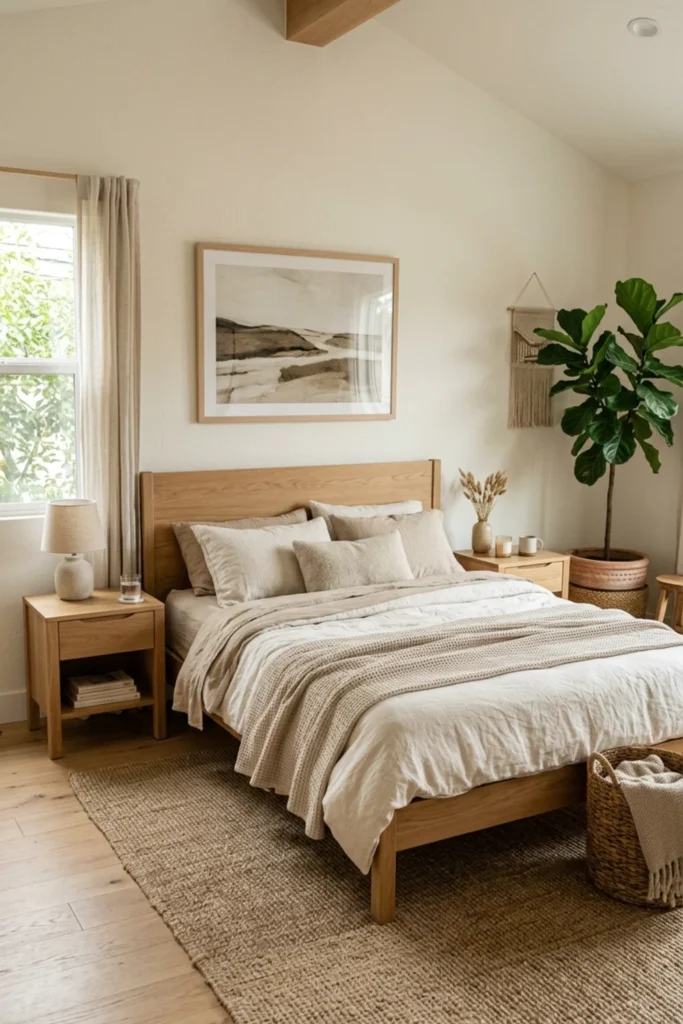
A solid wood headboard and bedroom furniture — bed frame, bedside tables, dresser, and wardrobe all in a cohesive wood species — creates the most grounded, serene, and naturally beautiful bedroom environment that wooden home decor can offer.
White oak, American walnut, and ash are the most sought-after bedroom furniture wood species — each brings a distinct visual character while sharing the warmth and natural grain variation that makes solid wood bedroom furniture so enduringly desirable compared to painted or laminated alternatives.
A solid wood bed frame without upholstery — in a simple platform, slatted, or paneled design — creates a bedroom that feels genuinely calm and organic, particularly when paired with natural linen bedding, soft wool throws, and a jute or wool area rug that reinforces the natural material palette.
Pro Tip: Choose bedroom furniture in the same wood species but different product lines rather than a perfectly matched bedroom suite — coordinated but not identical pieces create a collected, layered quality that feels more personally designed than a uniform matching set from a single manufacturer.
10. Driftwood and Branch Decorative Accents
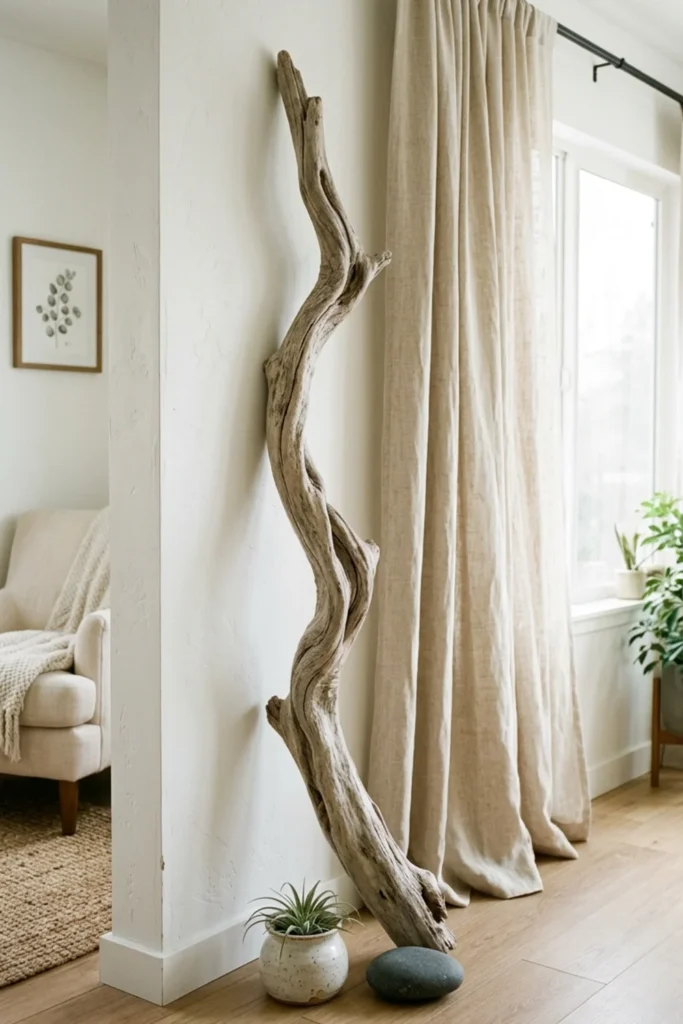
Driftwood and branch decorative accents — naturally found, gathered, and displayed pieces of weathered timber — are the most free and organically expressive form of wooden home decor. A single piece of driftwood or a beautiful sculptural branch costs nothing to source and brings extraordinary natural character to any space.
Large driftwood pieces leaned against a wall, placed in a tall floor vase, or mounted as wall sculpture create a striking natural focal point that no manufactured decor item can replicate — the bleached, weathered texture of driftwood adds a coastal, time-worn quality that suits bohemian, coastal, and organic modern interiors perfectly.
Budded branches, sculptural twigs, and foraged stems in tall ceramic or glass vases create seasonal, living wooden home decor that changes character throughout the year — bare branches in winter, budding stems in spring, and leafy green branches in summer and autumn.
Pro Tip: Treat foraged branches and driftwood with a light coat of clear matte sealant spray before bringing them indoors — the sealant kills any lingering insects or mold spores in the wood without changing its natural weathered appearance, preventing the most common problem with natural found-material wooden home decor.
11. Wooden Clock as a Statement Wall Piece
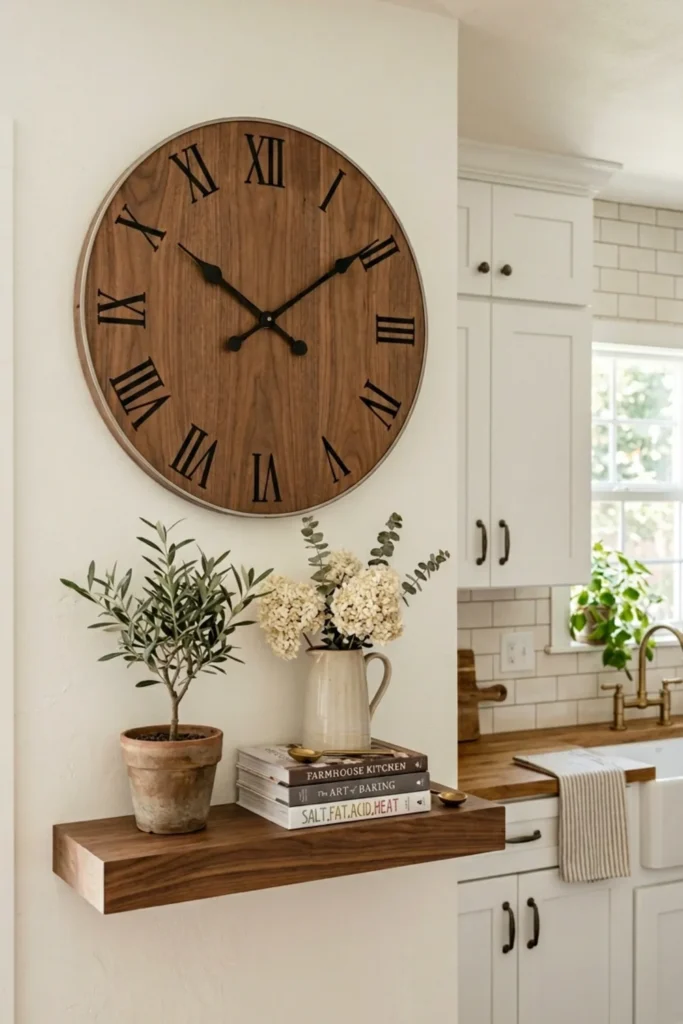
A wooden wall clock — in a large-format round or geometric design — is one of the most functional and visually pleasing wooden home decor pieces for kitchens, living rooms, and home offices. A beautifully made wooden clock brings natural warmth, precise craftsmanship, and everyday practicality to the wall simultaneously.
Large round wooden clocks with simple Roman numeral or minimalist marker faces in natural wood tones suit Scandinavian, farmhouse, and organic modern kitchens and living rooms, while geometric multi-panel wooden clocks in darker stained species suit more contemporary or eclectic interior directions.
The scale of a wooden clock matters enormously in wooden home decor — choose a clock that is at least 20 to 24 inches in diameter for a meaningful wall presence, as smaller wooden clocks disappear visually against the surrounding wall and fail to deliver the decorative impact that makes them worth choosing over simpler alternatives.
Pro Tip: Mount a wooden wall clock slightly higher than standard art hanging height — at approximately 65 to 72 inches to the center — so it sits above the surrounding furniture and can be read from across the room without straining to see the face, which is the fundamental functional requirement that all wooden home decor clock choices must serve.
12. Wooden Planters and Plant Stands
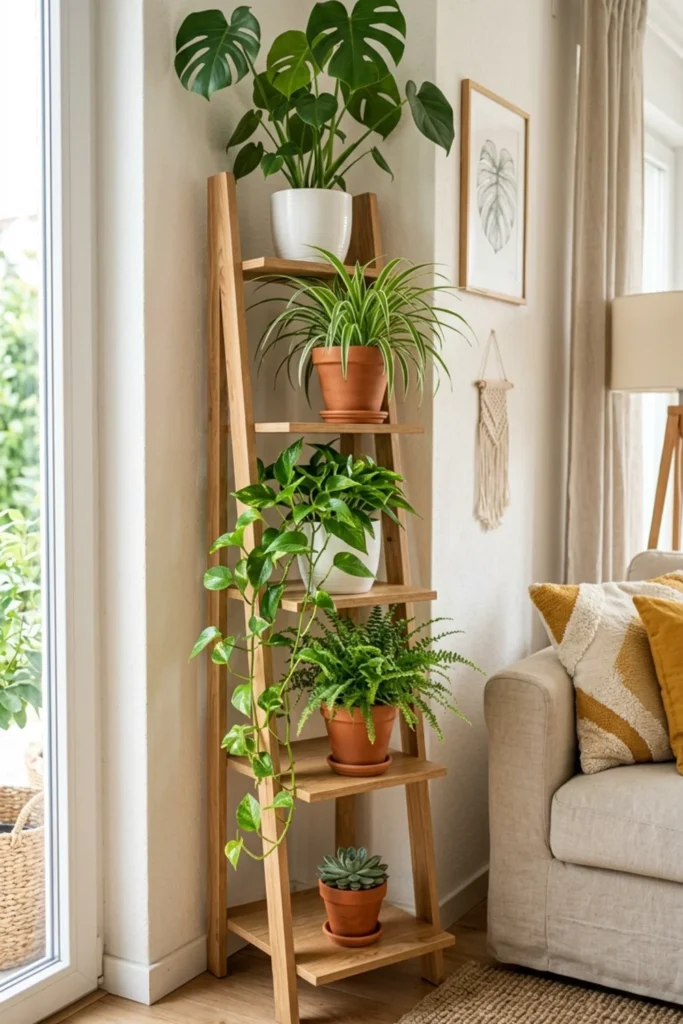
Wooden planters and plant stands are one of the most organic and cohesive ways to incorporate wooden home decor into a plant-filled interior — the natural warmth of wood and the organic vitality of living plants are natural partners that reinforce each other’s character beautifully.
Tiered wooden plant stands allow multiple plants to be displayed at different heights in a single floor footprint — creating a mini indoor garden that adds dramatic vertical interest to a living room corner, bedroom nook, or home office without requiring multiple individual pots scattered around the room.
Cedar or teak wooden planters are particularly well-suited to outdoor wooden home decor — both species are naturally moisture-resistant and develop a beautiful silver-grey patina over time that complements almost every garden or balcony planting scheme.
Pro Tip: Line wooden planters with a plastic or rubber insert before filling with soil and plants — the liner prevents moisture from the potting mix from contacting the wood directly, significantly extending the lifespan of the planter and preventing the rot and staining that occur when wet soil sits in direct contact with even treated timber.
13. Wooden Lighting Fixtures and Lamp Bases
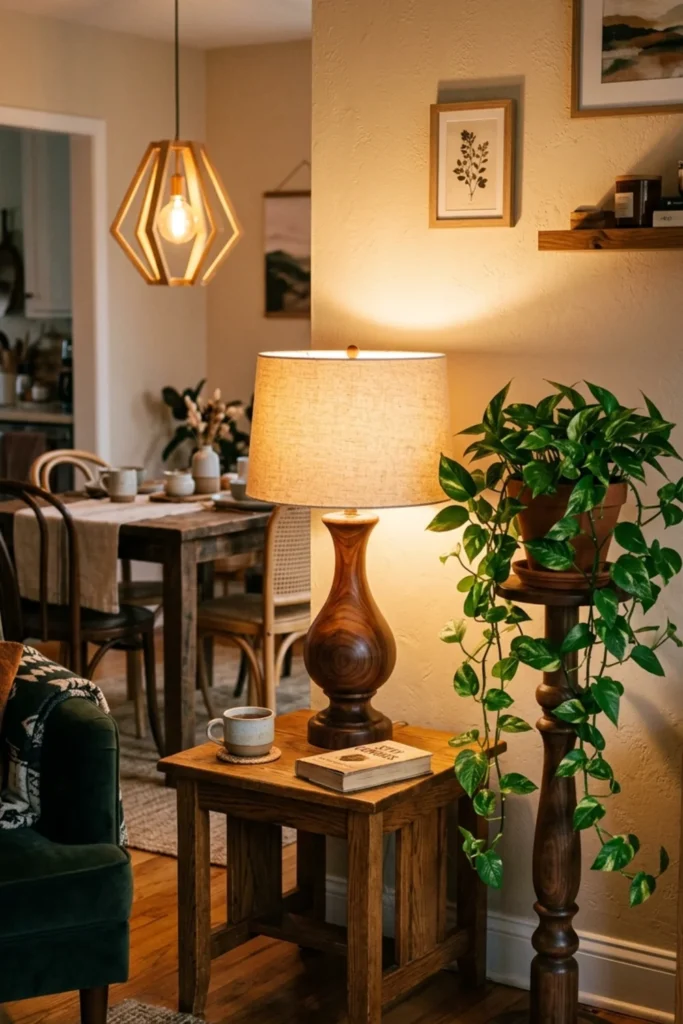
Wooden lighting fixtures and lamp bases — pendant lights with wooden shades, table lamps with turned wood bases, and floor lamps with natural wood stems — bring the warmth and organic character of wooden home decor into one of the most functionally central and visually prominent categories of interior design.
A pendant light with a wooden shade or frame — whether a geometric laser-cut design, a simple cylindrical turned wood shade, or a natural wood slice pendant — creates a warm pool of amber-toned light that no glass or metal shade can replicate, because the wood grain itself filters and warms the light as it passes through.
Turned wooden lamp bases in walnut, oak, or mango wood are among the most beautiful and characterful table lamp choices in wooden home decor — each turned base is slightly unique in its form, and the combination of natural grain and lathe-worked shape creates an object of genuine craft that complements every interior style.
Pro Tip: Pair wooden lighting fixtures with warm white bulbs at 2700K rather than cool daylight bulbs — the warm color temperature of the light source enhances the golden, amber tones naturally present in wood grain and creates the cozy, organic glow that is one of the most characteristic and beloved qualities of wooden home decor interiors.
Why Wooden Home Decor Is Worth the Investment
Wooden home decor is one of the most financially sound and emotionally satisfying categories of home investment — quality solid wood pieces appreciate in character and beauty over time rather than degrading, and well-maintained wooden furniture and decor regularly outlasts synthetic alternatives by decades.
The sustainability credentials of wooden home decor — particularly when sourced from FSC-certified sustainably managed forests or reclaimed from existing structures — make it one of the most environmentally responsible material choices available for home decoration in comparison to plastic, synthetic fiber, and petroleum-derived materials.
Living with wooden home decor creates a measurably different daily experience — research in environmental psychology consistently shows that natural materials like wood reduce stress hormones, lower perceived room temperature in summer, and create a sense of biological comfort that synthetic materials cannot replicate, making wooden home decor a genuinely wellness-supporting design choice.
Things to Consider Before Choosing Wooden Home Decor
Before purchasing any wooden home decor, consider the wood species and its specific character carefully — different species have profoundly different grain patterns, color tones, hardness levels, and maintenance requirements, and choosing the right species for the application is as important as any aesthetic decision.
Think about how the wood will age and change over time in your specific environment — some species like walnut darken beautifully with light exposure, while others like cherry warm from pale to rich amber, and some like pine show wear marks and dents more readily than harder species. Understanding how your chosen wood ages helps you choose pieces that will become more beautiful rather than simply more worn over time.
Always consider the finish on wooden home decor as a functional as well as aesthetic decision — oil-finished wood develops a living patina but requires regular maintenance, lacquered wood is more durable but less repairable, and wax-finished wood sits between the two in both character and care requirements.
Comparison Table of Wooden Home Decor Ideas
| Wooden Decor Item | Price Range | Wood Species Options | Maintenance | Best For | Style Suits |
|---|---|---|---|---|---|
| Solid Wood Floating Shelves | $50–$400 | Oak, walnut, pine | Oil annually | Any room | Any style |
| Live-Edge Coffee Table | $300–$3,000 | Walnut, maple, elm | Oil every 6–12 months | Living room | Modern, rustic |
| Wooden Wall Art | $50–$800 | Various, reclaimed | Dust regularly | Any room | Any style |
| Wooden Picture Frames | $20–$200 | Oak, pine, bamboo | Minimal | Any room | Any style |
| Reclaimed Wood Feature Wall | $500–$3,000 | Reclaimed various | Seal and dust | Any room | Rustic, industrial |
| Wooden Decorative Objects | $20–$300 | Walnut, cherry, maple | Occasional oil | Any surface | Any style |
| Wood and Rattan Furniture | $300–$4,000 | Oak, ash, teak | Dust and wipe | Any room | Coastal, Japandi |
| Butcher Block Countertop | $400–$2,000 | Maple, walnut, teak | Oil monthly (initially) | Kitchen | Farmhouse, transitional |
| Solid Wood Bed Frame | $500–$3,000 | Oak, walnut, pine | Wipe clean | Bedroom | Any style |
| Driftwood Accents | Free–$200 | Natural driftwood | Seal before use | Any room | Coastal, boho |
| Wooden Wall Clock | $40–$300 | Oak, pine, bamboo | Battery replacement | Kitchen, living | Farmhouse, Scandi |
| Wooden Planters and Stands | $30–$300 | Cedar, teak, bamboo | Seal and wipe | Any room | Any style |
| Wooden Lighting Fixtures | $80–$800 | Walnut, oak, mango | Dust regularly | Any room | Any style |
Frequently Asked Questions About Wooden Home Decor
What Is the Best Wood for Home Decor Pieces?
Walnut and white oak are the two most consistently recommended wood species for wooden home decor — walnut for its rich, dark color and fine, straight grain that suits sophisticated and contemporary interiors, and white oak for its cooler, more neutral tone and open grain that suits Scandinavian, Japandi, and transitional styles.
For budget-conscious wooden home decor, pine and bamboo are excellent alternatives — pine offers a warm, knotty character that suits farmhouse and rustic styles at a fraction of hardwood prices, while bamboo provides a clean, contemporary look with exceptional hardness and sustainability credentials.
How Do I Care for Wooden Home Decor to Keep It Looking Beautiful?
The most important care principle for wooden home decor is consistent moisture management — keeping wood away from direct sunlight, heating vents, and excessive humidity prevents the warping, cracking, and fading that cause the most visible deterioration in wood home decor pieces over time.
Regular oiling of unfinished or oil-finished wooden surfaces — annually for decorative pieces, every three to six months for frequently used surfaces — replenishes the natural oils that wood loses to its environment and maintains the rich, deep color and smooth texture that makes wooden home decor so beautiful in the first place.
How Do I Mix Different Wood Tones in Wooden Home Decor?
The most reliable approach to mixing wood tones in wooden home decor is to ensure all woods share the same undertone — either warm golden-amber tones (like pine, honey oak, and warm teak) or cool grey-brown tones (like ash, white oak, and weathered driftwood) — while varying the depth and grain pattern across individual pieces.
Avoid mixing more than three distinct wood tones in a single room — two primary wood tones with one contrasting accent creates a layered, collected quality that reads as intentional, while four or more different wood tones in the same space creates visual competition that fragments the natural warmth that wooden home decor is designed to deliver.
Is Reclaimed Wood Better Than New Wood for Home Decor?
Reclaimed wood has significant advantages over new timber for wooden home decor — it has already undergone the dimensional changes that new wood experiences as it acclimates to indoor environments, it carries a visual history and patina that new wood requires decades to develop, and its use is inherently more sustainable than cutting new timber.
The practical consideration is that reclaimed wood requires more careful inspection and preparation than new timber — checking for nails, treating for insects and mold, and assessing structural integrity are all essential steps before using reclaimed timber as wooden home decor, and these steps are most reliably taken by experienced suppliers rather than untreated raw salvage.