Maximalist home decor is the unapologetic celebration of more — more color, more pattern, more texture, more personality. It is the design philosophy that says a room should tell a story, display a life fully lived, and reflect the full spectrum of its owner’s taste without apology or restraint.
Far from being chaotic, the best maximalist home decor is deeply intentional — every object, color, and pattern is chosen with purpose and arranged with care. The difference between a beautiful maximalist interior and an overwhelming cluttered one is the same difference that separates a symphony from noise: structure, harmony, and a guiding creative vision.
This guide covers the best maximalist home decor ideas that designers, collectors, and bold decorators actually use — with practical tips, honest comparisons, and product picks to help you create a richly layered, deeply personal home that is full of life and completely your own.
List of 13 Best Maximalist Home Decor Ideas
1. Gallery Wall Floor to Ceiling
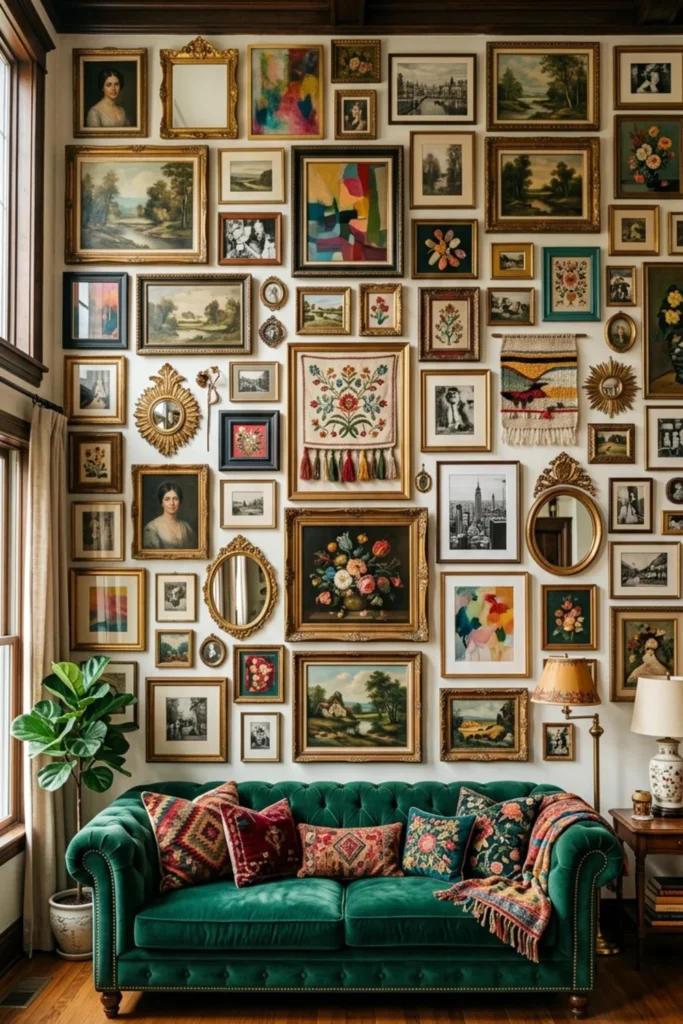
A floor-to-ceiling gallery wall is the purest and most dramatic expression of maximalist home decor. Unlike the carefully curated three-by-three grid of minimal decorating, a true maximalist gallery wall fills every inch of available wall space with art, photographs, mirrors, plates, and objects in an abundant, joyful arrangement.
The maximalist gallery wall thrives on mixing mediums, frames, and subject matter — oil paintings beside photography beside textile art beside decorative plates, all in frames that range from ornate gilt to simple black to natural wood — the variety is the point.
The unifying principle is color repetition rather than stylistic consistency — pull two or three colors from across the collection and ensure each appears multiple times throughout the arrangement to create cohesion within the glorious chaos.
Pro Tip: Start from the center of the wall and work outward when building a floor-to-ceiling gallery wall — anchor the arrangement with the largest or most important piece at the visual center, then fill outward in all directions, maintaining roughly equal density across the entire surface.
2. Bold Pattern Mixing Across Textiles
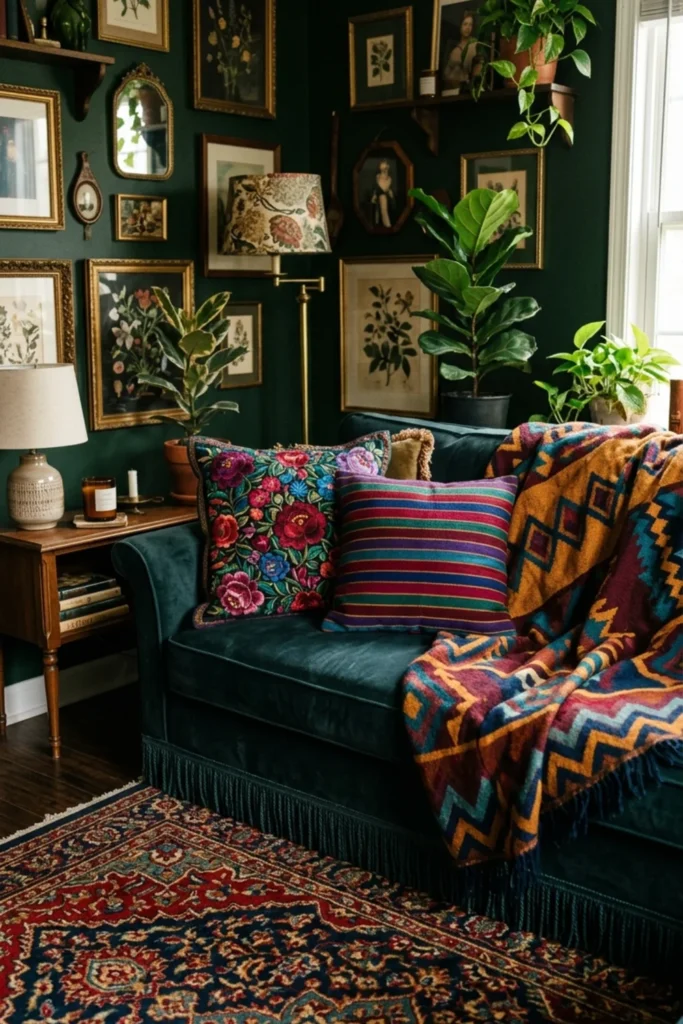
Mixing bold patterns across all textiles in a room — cushions, rugs, curtains, throws, and upholstery — is one of the most signature and exhilarating maximalist home decor techniques. The maximalist approach to pattern is to embrace multiple prints simultaneously rather than choosing just one.
The golden rule of successful pattern mixing in maximalist home decor is to vary the scale — combine a large-scale floral or botanical print with a medium geometric and a small-scale stripe or check — the difference in repeat size prevents the patterns from competing and creates visual hierarchy.
Anchor all patterns in a shared two or three color palette — maximalist home decor does not mean every color simultaneously, but rather the same palette expressed through multiple different print vocabularies across every textile surface.
Pro Tip: Introduce pattern mixing gradually rather than all at once — start with two patterned cushions on a solid sofa, then add a patterned rug, then patterned curtains. Building the layer by layer allows you to assess the balance at each stage and prevent the room from tipping from maximalist into genuinely chaotic.
3. Jewel-Toned Color Palette Throughout
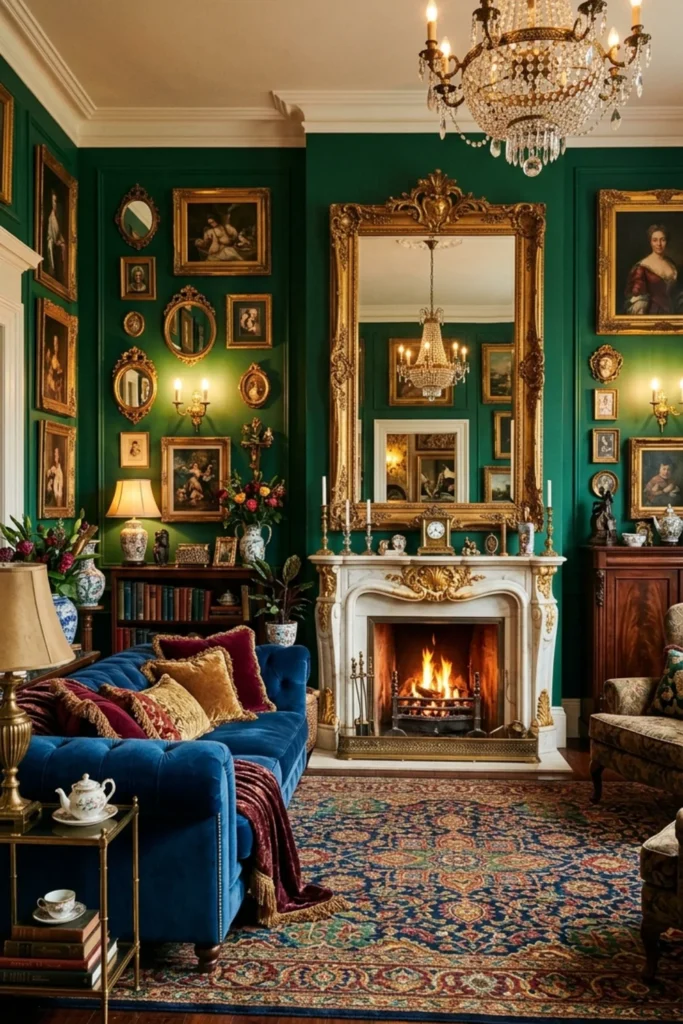
A jewel-toned color palette — deep emerald, sapphire, amethyst, ruby, and burnished gold — is the most beloved and characteristic color direction in maximalist home decor. These rich, saturated tones create depth, warmth, and visual opulence that the neutrals of minimalist design deliberately avoid.
Unlike a single accent color in a neutral room, maximalist jewel tones are applied throughout the entire space simultaneously — jewel-toned walls, jewel-toned upholstery, jewel-toned cushions, and jewel-toned accessories all working together to create an immersive, enveloping color experience.
The key to making multiple jewel tones work together is tonal consistency — choosing colors of similar saturation and depth that share the same richness and intensity creates harmony across the palette, while mixing saturated jewel tones with bright primaries creates visual discord.
Pro Tip: Ground a jewel-toned maximalist room with at least one deep neutral — a very dark chocolate brown, a true black, or a deep charcoal — used on a major surface like the ceiling, a sofa, or a large area rug. The dark neutral prevents the jewel tones from vibrating against each other and gives the eye a moment of rest.
4. Layered Rugs in Multiple Patterns
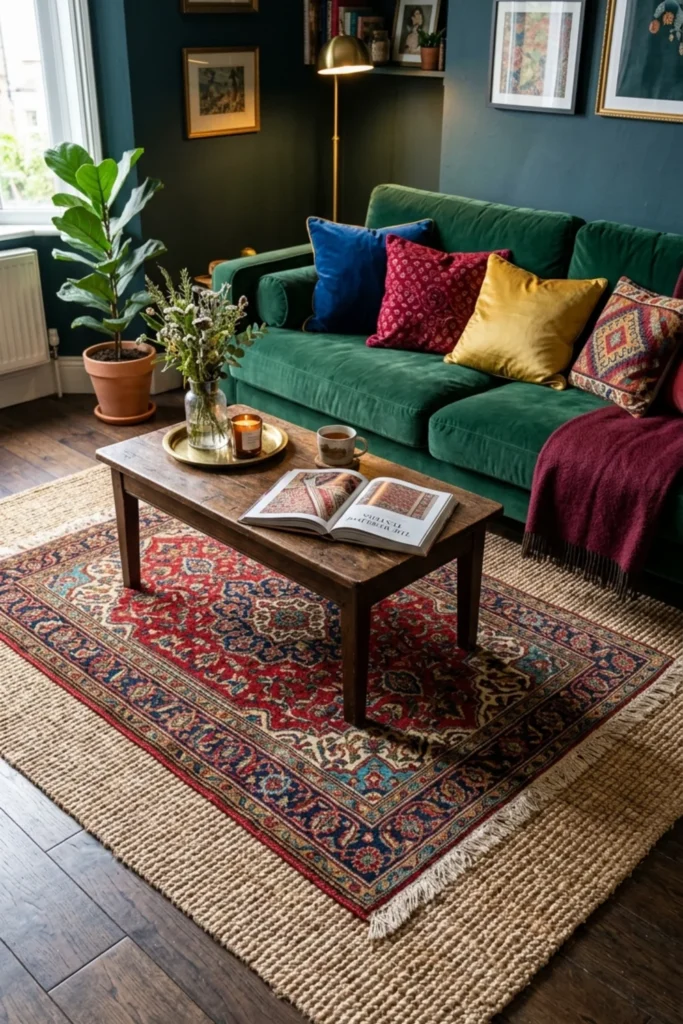
Layering multiple rugs on top of each other is one of the most practical and visually rich maximalist home decor techniques — it adds depth, pattern interest, and warmth to a floor zone that a single rug, however beautiful, cannot achieve alone.
The most successful layered rug combinations in maximalist home decor pair a large neutral or natural fiber base rug — a jute, sisal, or plain wool foundation — with a smaller, more richly patterned rug layered on top. The base grounds the composition while the upper rug provides the maximalist pattern energy.
An antique Persian or kilim rug layered over a large natural jute rug is one of the most classic and designer-endorsed maximalist home decor combinations — it creates a global, collected aesthetic that looks as though the rugs were brought together from different travels rather than deliberately combined.
Pro Tip: Ensure the top layered rug is at least 18 to 24 inches smaller than the base rug on all sides — this size differential shows enough of the lower rug to read as a deliberate layering rather than a too-small rug that appears to have simply been placed on an unrelated larger one.
5. Eclectic Collection Display
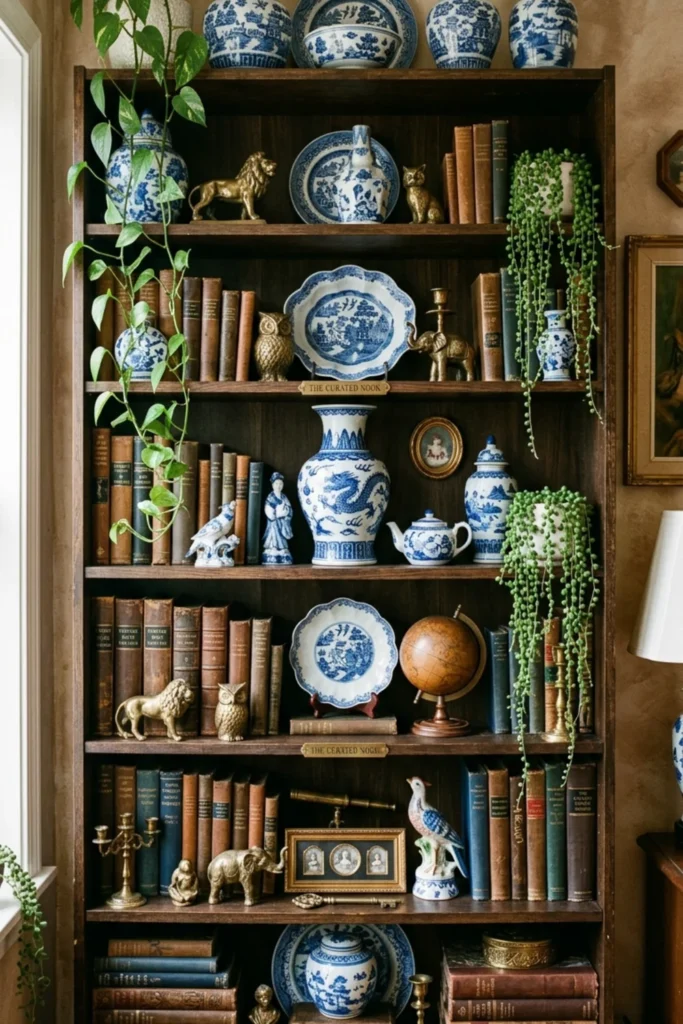
Displaying an eclectic personal collection — ceramics, vintage glassware, antique books, figurines, travel souvenirs, or any accumulated category of objects — is at the philosophical heart of maximalist home decor. A maximalist home tells the story of its owner through every surface and shelf.
The key to making a collection look deliberately maximalist rather than accidentally cluttered is density and repetition — grouping objects of the same category together in sufficient quantity that the arrangement reads as a curated collection rather than a random accumulation of unrelated items.
Collections gain maximum impact when displayed on a dedicated surface or shelving unit that signals their importance — a tall bookcase, a deep windowsill, an entire mantlepiece, or a dedicated display cabinet all create a context that elevates even modest objects into something that feels intentional and significant.
Pro Tip: Introduce odd numbers into collection displays — arrangements of three, five, or seven similar objects create a more dynamic and visually interesting composition than even numbers, which feel static and formal in a way that contradicts the joyful, abundant energy of great maximalist home decor.
6. Maximalist Bedroom with Canopy, Layers, and Drama
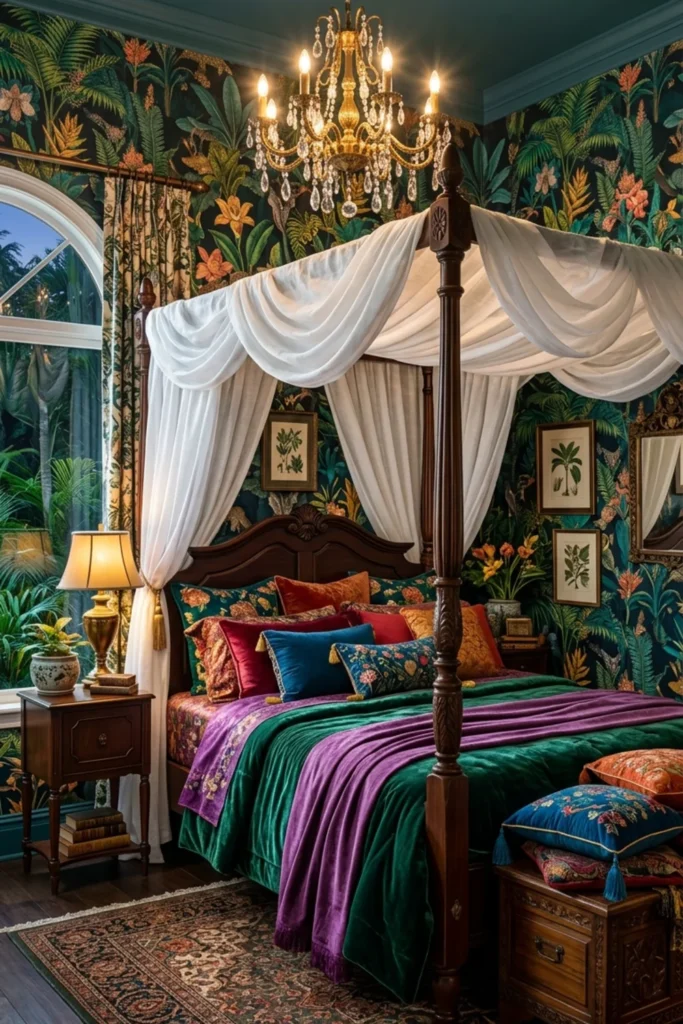
A maximalist bedroom layers bedding, cushions, throws, canopy drapery, statement headboards, patterned wallpaper, and decorative objects into a sleeping space that feels like an enveloping, deeply personal sanctuary rather than a purely functional room.
The maximalist bed is the ultimate expression of layered luxury — a minimum of four to six decorative cushions, two or three throw pillows, a folded throw blanket, and bedding in at least two complementary patterns creates the lush, hotel-suite abundance that maximalist home decor bedrooms are known for.
A bold patterned wallpaper on all four walls of a maximalist bedroom — floral, botanical, geometric, or tropical — creates the immersive, jewel-box atmosphere that makes going to bed feel like entering a beautifully designed retreat.
Pro Tip: Balance a dramatically wallpapered maximalist bedroom by keeping the furniture in solid, grounding tones — a dark wood bed frame, a solid velvet headboard, and richly colored but unpatterned bedding provide the visual anchor that allows the wallpaper to read as a deliberate design choice rather than an overwhelming mistake.
7. Statement Ceiling as the Fifth Wall
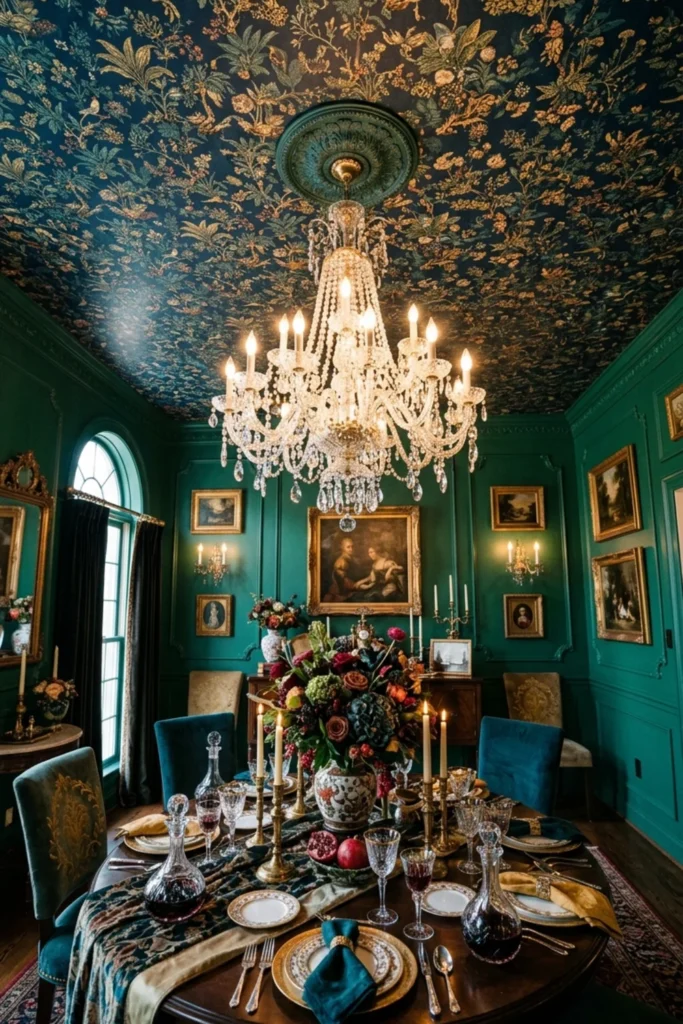
Decorating the ceiling — with paint, wallpaper, plasterwork, fabric draping, or a dramatic light fixture — is one of the most unexpected and impactful maximalist home decor ideas. The ceiling is the most underutilized surface in most homes and one of the most powerful in a maximalist interior.
A ceiling painted in a deep, saturated tone — the same color as the walls but one shade darker, or a contrasting accent color from the room’s palette — creates an enveloping, cocoon-like atmosphere that deepens the room’s color story in a direction that wall paint alone cannot achieve.
Wallpaper applied to the ceiling in a maximalist interior is one of the most dramatic and design-forward moves available — a floral, geometric, or celestial pattern overhead creates an immersive environment that makes the room feel like a complete artistic statement rather than a decorated box.
Pro Tip: When painting the ceiling a dark or saturated color in a maximalist room, also paint the crown molding and upper wall trim the same color rather than keeping it white — this unified treatment merges ceiling and wall into a continuous color field that amplifies the dramatic, enveloping quality of the dark ceiling.
8. Dark, Moody Walls as a Maximalist Backdrop
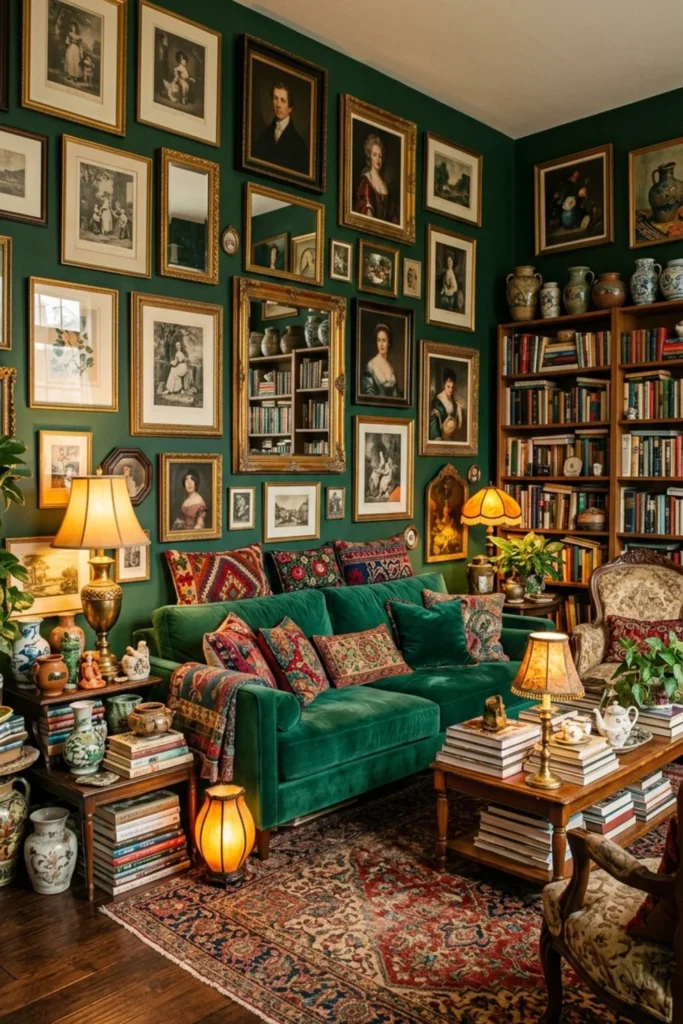
Dark, moody wall colors — deep forest green, midnight navy, rich burgundy, charcoal, plum, and matte black — are the most natural and widely used backdrop for maximalist home decor. Dark walls make art pop, textiles glow, and metallic accents gleam in a way that pale walls simply cannot support.
The common fear that dark walls make a room feel small is contradicted by the experience of the best maximalist home decor interiors — a dark room filled with abundant objects, layered lighting, and rich textiles feels intimate and jewel-box-like rather than oppressive.
Dark walls in a matte or flat finish create the richest and most dramatic backdrop for maximalist home decor — the light-absorbing quality of matte paint creates depth and prevents the distracting light reflections that eggshell or satin finishes produce on a very dark color.
Pro Tip: Layer multiple light sources at different heights in a dark-walled maximalist room — table lamps, floor lamps, picture lights illuminating art, and candles all working together create the warm, glowing atmosphere that makes a dark maximalist interior feel romantic and luxurious rather than simply dark.
9. Maximalist Dining Room with Grandeur and Theater
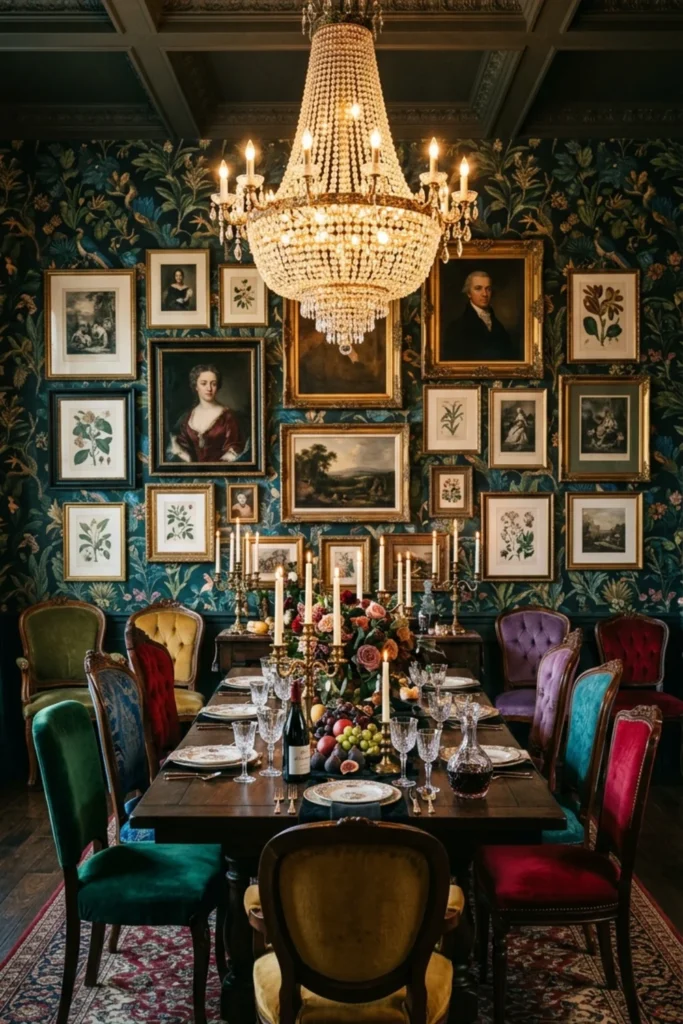
A maximalist dining room is designed for theater — for the drama of gathered company, elaborate table settings, and an environment so visually rich that it makes every meal feel like an occasion worth dressing for.
An oversized chandelier, a dramatic table runner, mismatched chairs in complementary colors, layered table settings with charger plates and cloth napkins, and multiple candelabras combine to create the maximalist dining table that is as beautiful to look at as it is to eat at.
The walls of a maximalist dining room are never left bare — a full gallery arrangement, large-scale murals, ornate wallpaper, or a collection of decorative plates installed as wall art all contribute to the visual richness that makes dining in the room feel genuinely special.
Pro Tip: Mix dining chair styles rather than using a matching set in a maximalist dining room — two upholstered host chairs at the ends and four or six wooden or rattan side chairs along the length creates the collected, eclectic quality that is fundamental to the maximalist home decor aesthetic.
10. Abundant Houseplants and Indoor Jungle
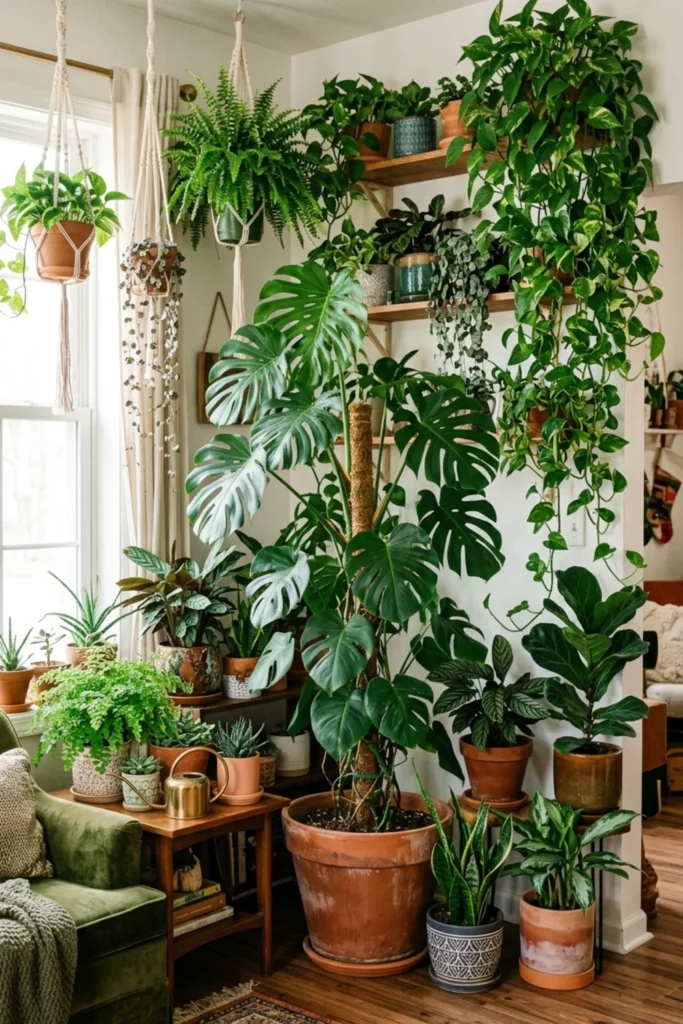
An indoor plant jungle — dense, abundant, and overflowing with different species at every height and surface — is one of the most organic and wildly beloved expressions of maximalist home decor. The indoor jungle takes the biophilic design principle to its most exuberant conclusion.
A true maximalist plant collection mixes species dramatically — towering monstera and fiddle leaf fig trees at floor level, trailing pothos and philodendrons from high shelves, compact ferns and calatheas on every windowsill, and trailing string-of-pearls cascading from hanging planters.
The containers are as important as the plants in a maximalist indoor jungle — a mix of terracotta, ceramic, woven rattan, and concrete planters in complementary colors and textures creates a cohesive collection of vessels that adds to the abundant visual richness of the plant display.
Pro Tip: Group plants by their light and water requirements rather than purely by aesthetic arrangement — a maximalist plant collection that is logistically organized around its horticultural needs remains healthy and lush, while one arranged purely for looks often includes incompatible species that deteriorate quickly when grouped together.
11. Maximalist Kitchen with Colorful Tiles and Open Display
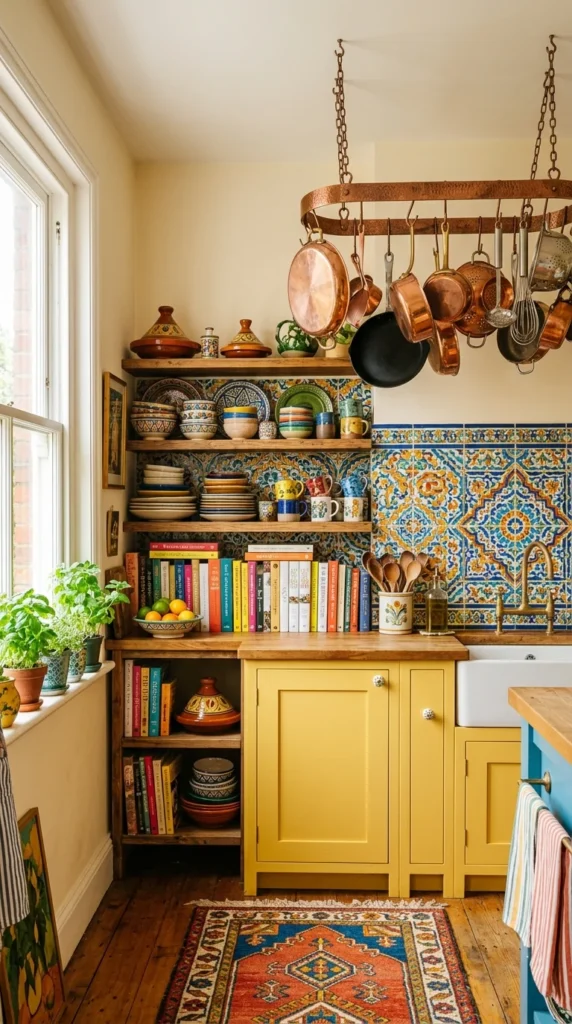
A maximalist kitchen embraces color, pattern, open display, and abundance in a room where most design advice urges restraint and minimalism. The maximalist kitchen is the most personal and joyful room in the home — filled with color, beautiful objects, and the visual evidence of a love of cooking and entertaining.
Colorful patterned tiles — Moroccan cement tiles, hand-painted Spanish azulejos, or brightly colored encaustic patterns — cover backsplashes, floors, or entire walls in a maximalist kitchen with the visual generosity that plain subway tile categorically refuses to offer.
Open shelving displaying a curated abundance of colorful ceramics, vintage cookbooks, glass jars of pantry ingredients, copper pots, and botanical prints creates a kitchen wall that is as beautiful and characterful as any gallery in the home.
Pro Tip: In a maximalist kitchen, choose one dominant color or pattern for the most prominent surface — the backsplash or the floor — and let every other element respond to and support that anchor piece rather than competing with it. Even in maximalist home decor, every room benefits from one element that leads and others that follow.
12. Maximalist Entryway That Sets the Tone
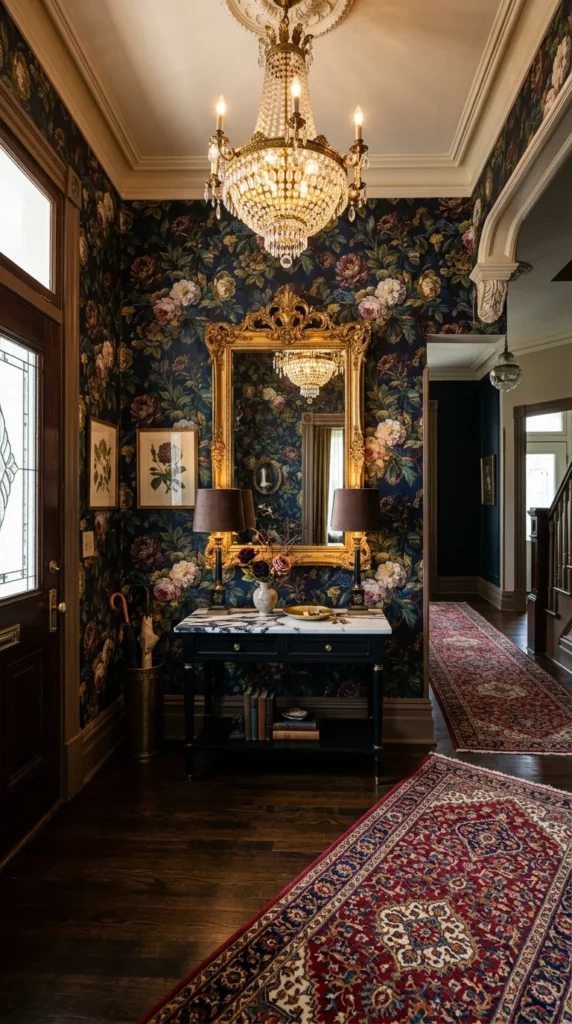
A maximalist entryway is the most powerful statement of design intent in a home — it is the first room every guest experiences, the daily first impression for every family member, and the space where the maximalist home decor philosophy announces itself with full confidence before any other room is seen.
A boldly wallpapered entryway — even a very small powder room or narrow hallway — is the maximalist home decor decision that consistently creates the most dramatic first impression for the least square footage. The enclosed nature of an entry concentrates the wallpaper’s impact in a way a larger room cannot.
Layer the maximalist entryway with a statement mirror in an ornate frame, a console table displaying a curated collection of objects, a dramatic light fixture, and an unexpected piece of sculpture or oversized plant to create an arrival experience that announces the home’s character from the very first step inside.
Pro Tip: In a narrow maximalist entryway, paint or wallpaper the end wall only and keep the side walls in a complementary solid color — this focused application draws the eye to the end of the hall and creates a sense of depth and destination that full wallpaper in a tight space can sometimes undermine.
13. Layered Lighting for Maximalist Atmosphere
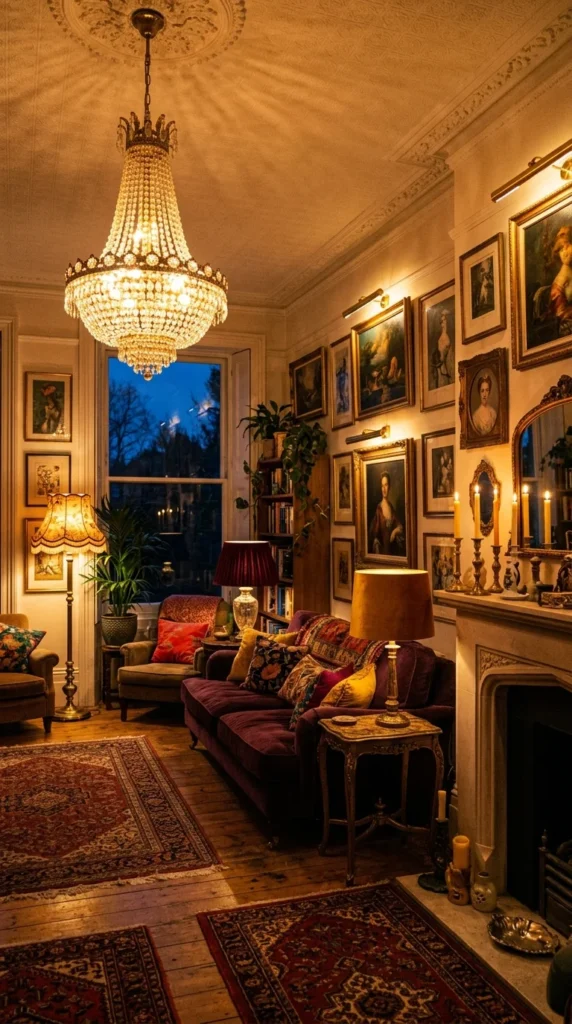
Layered, abundant lighting is one of the most essential and most frequently underestimated elements of maximalist home decor — the warm glow of multiple simultaneous light sources at different heights and intensities creates the rich, atmospheric quality that makes a maximalist interior feel truly magical after dark.
A maximalist room ideally includes at least five separate light sources — an overhead chandelier or pendant, two table lamps on side tables, a floor lamp in a corner, picture lights illuminating art, and candles on the mantle or dining table — all working simultaneously at different brightness levels to create layered depth.
Ornate and decorative light fixtures are as much objects of display as they are functional light sources in maximalist home decor — a chandelier dripping with crystal, a hand-blown glass pendant, an antique oil lamp converted to electricity, and a gilded wall sconce all contribute to the visual richness of the space as decorative objects even when unlit.
Pro Tip: Put every light source in a maximalist room on a separate switch or dimmer rather than a single master control — the ability to activate different combinations of lights at different levels creates entirely different atmospheres from the same room for different times of day, different moods, and different activities.
Why Maximalist Home Decor Is Worth the Investment
Maximalist home decor is one of the most personally fulfilling and practically rewarding design philosophies available — it creates a home that is genuinely full of meaning, character, and beauty rather than one that sacrifices personality in the pursuit of a photographable neutrality.
The financial logic of maximalism is also compelling — maximalist home decor embraces secondhand, vintage, inherited, and collected objects as readily as new purchases, making it one of the most budget-flexible and environmentally responsible design approaches available. A maximalist home is built over time from things that matter rather than assembled in a single expensive shopping trip.
A richly decorated maximalist home creates a social and emotional environment that guests consistently describe as welcoming, interesting, and alive — the abundance of objects, art, and color creates a space where conversations start naturally, memories are made, and people linger far longer than they do in more restrained environments.
Things to Consider Before Embracing Maximalist Home Decor
Before committing to maximalist home decor, identify your guiding color palette — this is the single most important structural decision in maximalist design, because without a consistent palette the abundant layers of pattern, texture, and object simply become visual noise rather than orchestrated richness.
Think carefully about the difference between maximalism and clutter — maximalist home decor is defined by abundance of beautiful, chosen objects, while clutter is defined by the accumulation of things that have not been consciously decided to keep. Maximalism requires more editing discipline, not less, because the sheer quantity of objects makes every curatorial decision more visible and more consequential.
Always approach maximalist home decor as a long-term, evolving project rather than a room to be completed in a single weekend — the most beautiful maximalist interiors are built over years through collecting, travel, inheritance, and gradual accumulation, and the attempt to achieve maximalist richness through a single large shopping trip consistently produces results that feel artificially assembled rather than genuinely lived-in.
Comparison Table of Maximalist Home Decor Ideas
| Design Idea | Cost Range | Difficulty | Impact Level | Maintenance | Best Room |
|---|---|---|---|---|---|
| Floor-to-Ceiling Gallery Wall | $100–$2,000 | Medium | Very High | Dust frames | Living room, hallway |
| Bold Pattern Mixing | $200–$2,000 | Low–Medium | Very High | Wash regularly | Any room |
| Jewel-Toned Color Palette | $50–$500 (paint) | Low–Medium | Very High | Repaint every 5–7 yrs | Any room |
| Layered Rugs | $100–$3,000 | Low | High | Rotate annually | Living, dining, bedroom |
| Eclectic Collection Display | $50–$5,000+ | Low | Very High | Dust regularly | Any room |
| Maximalist Bedroom | $500–$5,000 | Medium | Very High | Launder regularly | Bedroom |
| Statement Ceiling | $50–$500 | Medium | Very High | Occasional repaint | Any room |
| Dark Moody Walls | $50–$200 (paint) | Low | Very High | Repaint every 5–7 yrs | Any room |
| Maximalist Dining Room | $500–$5,000 | Medium | Very High | Clean and maintain | Dining room |
| Indoor Plant Jungle | $100–$1,000 | Low | High | Water and prune | Any room |
| Maximalist Kitchen | $500–$10,000 | Medium–High | Very High | Clean tiles regularly | Kitchen |
| Maximalist Entryway | $200–$2,000 | Low–Medium | Very High | Wipe and dust | Entryway, hallway |
| Layered Lighting | $200–$3,000 | Low–Medium | Very High | Replace bulbs | Any room |
Frequently Asked Questions About Maximalist Home Decor
What Is the Difference Between Maximalist Home Decor and Clutter?
Maximalist home decor is intentional abundance — every object is chosen, every color is considered, and the overall effect is one of rich, curated personality. Clutter, by contrast, is the unintentional accumulation of objects that have not been consciously decided to keep and that serve no aesthetic or meaningful purpose in the space.
The practical test is simple: if you can explain why every object in the room is there — its beauty, its meaning, its function, or its contribution to the overall composition — the room is maximalist. If there are objects present simply because they have nowhere else to go or because you have not yet decided to remove them, those objects are clutter regardless of how many other beautiful things surround them.
How Do I Start Decorating in a Maximalist Home Decor Style?
Begin with your color palette — choose two to four colors you genuinely love and commit to them as the through-line of every layer you add. Everything else in the maximalist room — every cushion, every piece of art, every rug, every ceramic — should include at least one of these colors somewhere in its composition.
Add one layer at a time in the following sequence: wall color or wallpaper first, then the largest rug, then primary furniture, then secondary furniture, then textiles, then art, then objects and collections. Building the room in layers allows you to assess the balance at each stage and prevents the overwhelm of trying to assemble a complete maximalist interior all at once.
Can Maximalist Home Decor Work in a Small Space?
Small spaces are often the most successful maximalist home decor environments — the enclosed nature of a small room concentrates the visual richness in a way that creates a jewel-box effect rather than overwhelming the senses. Powder rooms, entryways, and small studies are frequently the most dramatically decorated rooms in maximalist homes for precisely this reason.
The most important adaptation of maximalist home decor for small spaces is to use vertical space more aggressively than in a large room — floor-to-ceiling bookshelves, art that extends to the ceiling, and tall plants that draw the eye upward all expand a small room’s perceived volume while delivering the abundant, layered quality that defines the maximalist aesthetic.
What Colors Are Most Associated with Maximalist Home Decor?
Jewel tones — deep emerald green, sapphire blue, amethyst purple, rich ruby red, and burnished gold — are the colors most closely associated with maximalist home decor because their depth and saturation support the layering of pattern, texture, and object that the style demands without becoming visually confused.
Dark neutrals — deep charcoal, midnight black, and rich chocolate brown — play an equally important role in maximalist home decor as anchors and grounding elements that give the jewel tones something to rest against. The combination of saturated jewel tones with deep neutrals is the most consistently successful and widely loved color formula in the maximalist home decor tradition.