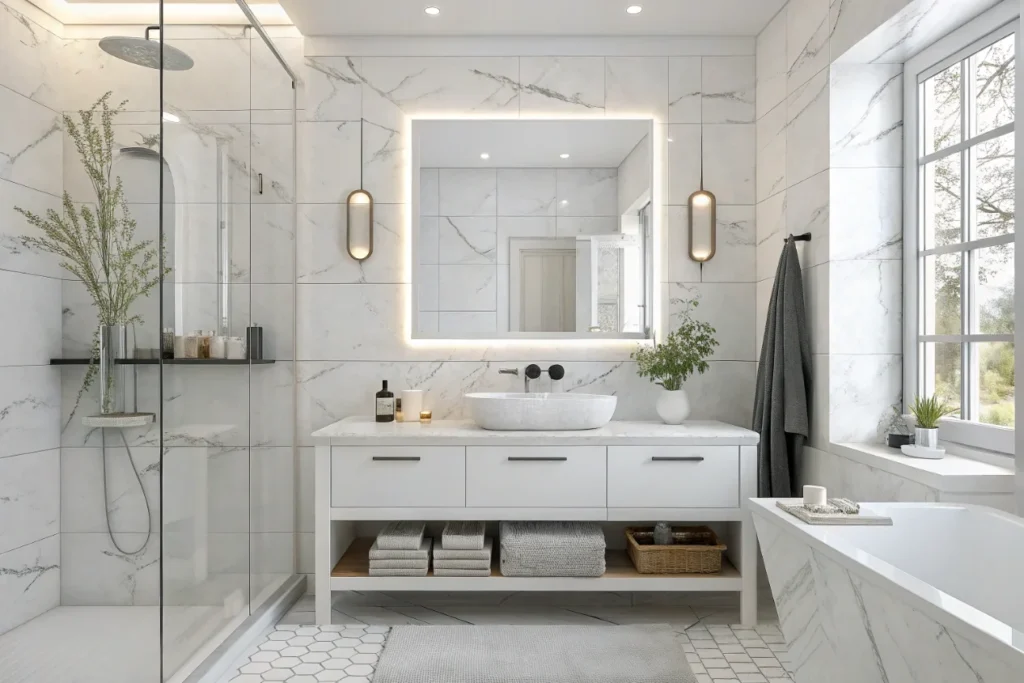
A beautifully designed white washroom is one of the most enduringly appealing and broadly loved bathroom aesthetics available — its association with cleanliness, calm, and light-filled spaciousness makes it the most consistently aspirational bathroom choice across every design period and generation.
Yet a white washroom done well is far more nuanced than it first appears — the difference between a white bathroom that feels clinical and cold and one that feels warm, considered, and genuinely luxurious lies entirely in the depth of that whiteness, the variation of textures within it, and the careful selection of accent tones, natural materials, and light quality that transform a monochromatic room from flat to dimensional.
Whether you are designing a pristine all-white spa sanctuary, a warm white washroom with natural wood accents, or a dramatic white washroom with bold contrast elements, these white washroom ideas cover every approach — with the material, texture, and styling guidance to ensure your white bathroom feels genuinely beautiful rather than simply unfinished.
List of 10 Best White Washroom Ideas
1 All-White Spa Washroom with Textural Variation
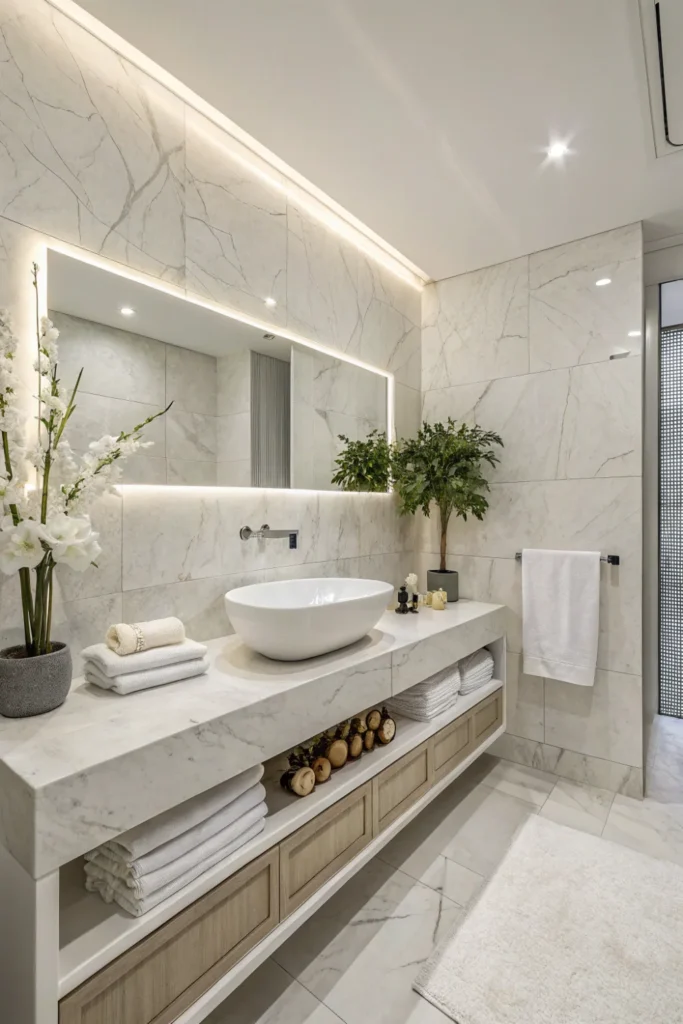
The purest expression of the white washroom ideal is a room where every surface is white but no two surfaces share the same material texture — matte ceramic wall tiles, polished marble countertop, rough-hewn limestone floor, smooth porcelain basin, and soft cotton towels each represent a different dimension of white, creating a room that reads as entirely white from any distance but reveals layers of material richness at close range.
This textural approach to the all-white washroom prevents the flatness and visual monotony that a single-material white room would produce, creating instead the depth and visual interest that a fully polychromatic room achieves through colour but this aesthetic achieves entirely through material variation and the way each surface interacts differently with the room’s light.
Choose a minimum of four different white surface materials in your all-white washroom — matte, polished, rough, and woven or soft — and ensure each reads as a distinct white tone in your room’s specific light. A white that appears warm and creamy in natural light and cool and blue in artificial light will disrupt the all-white harmony you are building, so test samples under both light conditions before specifying.
2 White Washroom with Warm Brass Hardware Accents
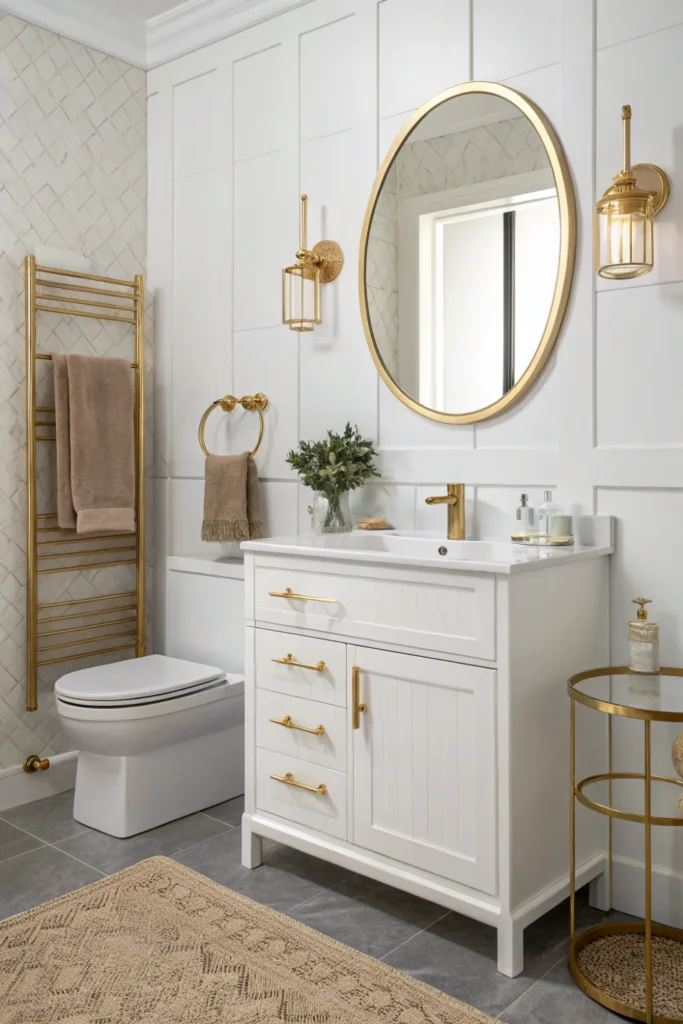
Pairing a white washroom with brushed brass or warm gold hardware — tap, towel rail, toilet roll holder, mirror frame, and shower fitting all in a consistent warm metallic finish — creates one of the most consistently admired and widely aspirational bathroom aesthetics, where the warmth of gold provides just enough chromatic relief to prevent the white from feeling cold while adding a layer of material luxury that chrome and nickel alternatives rarely achieve.
The brass-and-white combination has proven its staying power across decades of bathroom design precisely because the two elements are instinctively harmonious — the yellow warmth of brass and the warm undertone of the best white tile and porcelain share a tonal family that makes the combination feel resolved rather than contrasted.
Specify all brass hardware in the same finish — brushed, polished, or aged — from the same manufacturer’s collection in your white washroom. Brass is one of the finishes where tonal variation between brands is most visible, and mixing slightly different brass tones in a white washroom is immediately apparent against the neutral backdrop in a way that the same mixing would be invisible in a more complex, coloured scheme.
3 White Subway Tile Washroom — Classic and Timeless
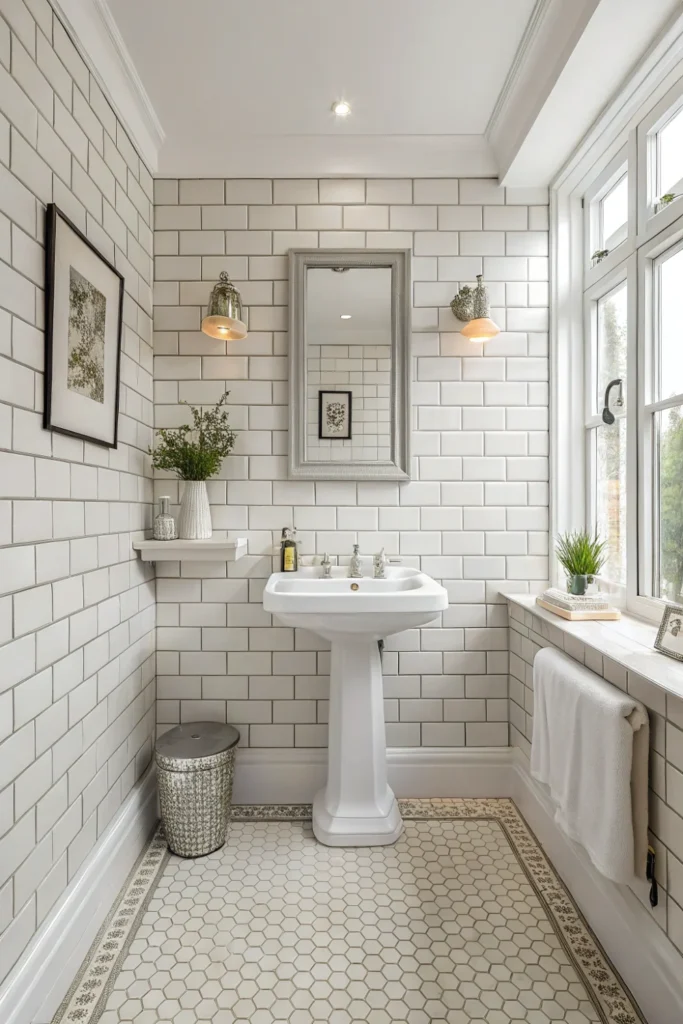
White subway tile — the 75x150mm or 100x200mm rectangular glazed ceramic tile that has defined the clean, graphic washroom aesthetic for over a century — is the most reliably beautiful and enduringly fashionable of all white washroom tile choices, its simple format and glossy reflective surface creating a room that manages to feel simultaneously classic and contemporary in any era.
The versatility of white subway tile in a washroom is extraordinary — the same tile in a traditional brick bond pattern creates a period-informed bathroom that suits Victorian terraces as naturally as it suits contemporary apartments; arranged in a vertical stack or herringbone pattern, the same tile reads as modern and graphic; and combined with coloured or contrasting grout, it gains a third character entirely.
Use a slightly off-white or warm white grout rather than brilliant white with white subway tiles in your washroom — brilliant white grout alongside brilliant white tile can merge the grout lines into invisibility and lose the characteristic grid pattern that gives subway tile its visual identity, while a warm grey or cream grout creates the defined but harmonious grid that is the tile’s most enduring quality.
4 White Washroom with Natural Wood Accents
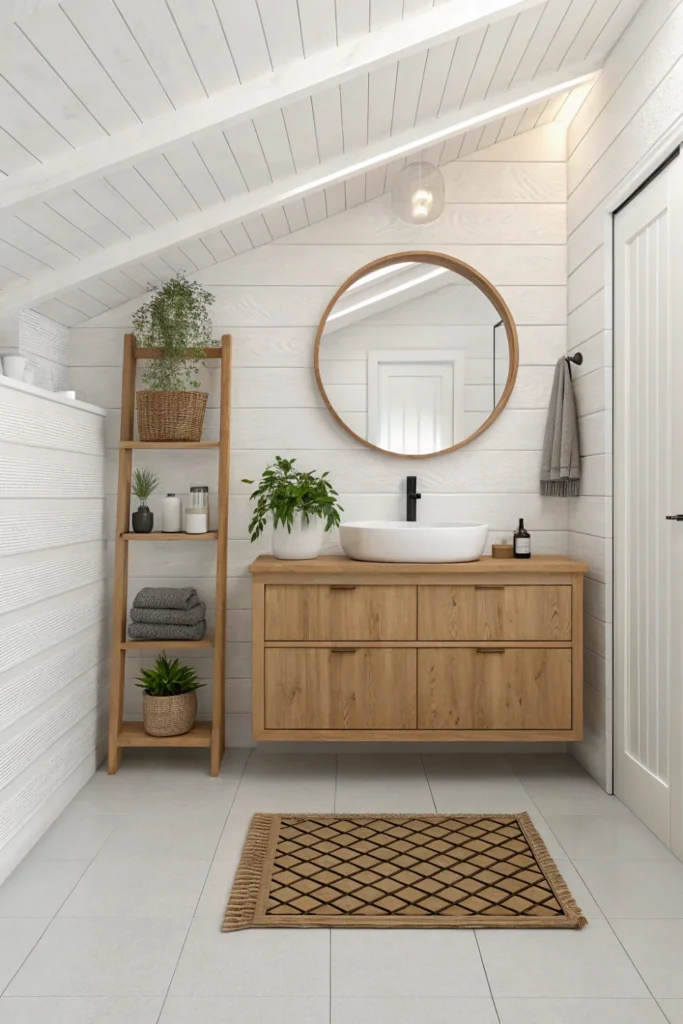
The combination of a white washroom with warm natural wood — a teak bath mat, a floating oak vanity, wooden open shelving, a bamboo ladder towel rail, or a timber-framed mirror — is one of the most universally appealing bathroom aesthetics, softening the potential coolness of an all-white scheme with the organic warmth and natural character that timber uniquely provides.
White and wood in a washroom creates the specific quality of calm associated with Scandinavian and Japanese spa design — the freshness of white combined with the natural warmth of wood producing an environment that feels simultaneously clean and warm, modern and organic, simple and deeply comfortable. It is an aesthetic that photographs beautifully and lives even more beautifully.
Use the same wood tone consistently across all timber elements in a white washroom — one floating oak vanity, one oak shelf, and one teak bath mat each in a slightly different wood tone creates an accidental mismatched quality that prevents the white and wood palette from reading as a considered whole. Source all timber pieces in the same species and finish, or keep them far enough apart in the room that direct comparison is impossible.
5 White Marble Washroom for Pure Luxury
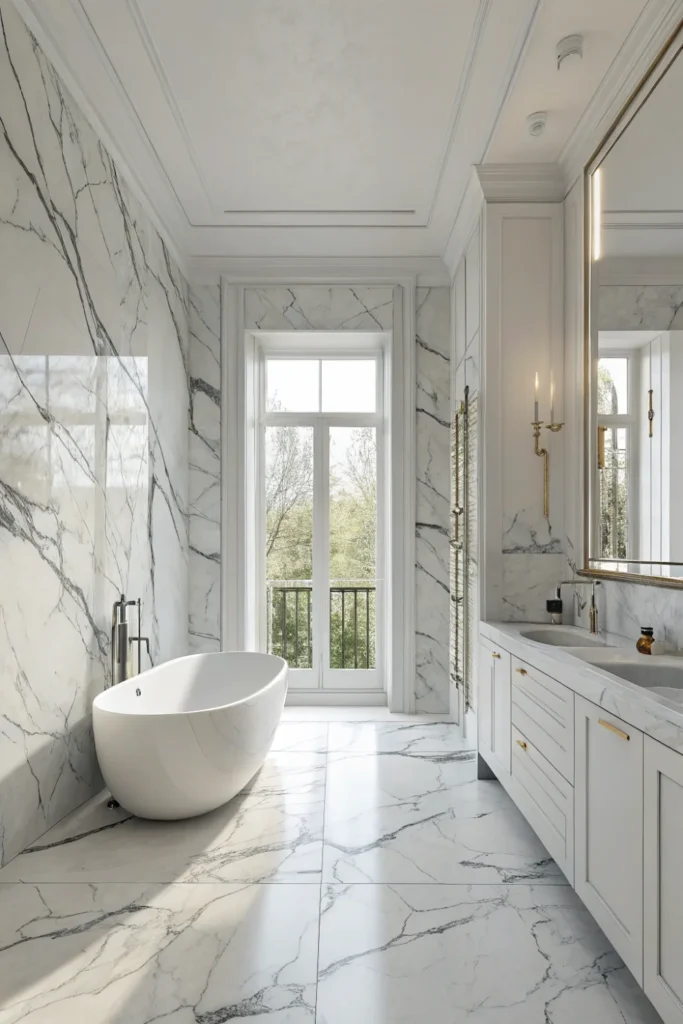
A white marble washroom — white Carrara, Calacatta, or Statuario marble on walls, floors, and countertop — is the most classically and unambiguously luxurious expression of the white bathroom ideal, the dramatic grey and gold veining of white marble providing visual richness and material depth that no engineered or manufactured white surface can replicate at any price.
The drama of a white washroom built around real marble comes from the visual movement of the veining — which shifts with the angle of view and the direction of light in a way that creates a room that appears genuinely different at different times of day and from different positions, giving the white washroom a quality of perpetual interest that static, uniform surfaces never achieve.
Bookmatched marble panels — where adjacent slabs from the same block are opened like a book to create a mirrored veining pattern — take the white marble washroom to its most visually spectacular expression, turning walls and floors into geological art that is the room’s undisputed hero.
Seal white marble washroom surfaces with a quality impregnating sealer before use and re-apply every twelve months — marble’s natural porosity makes it susceptible to permanent etching from acid (lemon juice, shampoo, certain cleaning products) and staining from coloured liquids, but a properly maintained sealed surface is resilient enough for a bathroom environment used with reasonable care.
6 White Washroom with Matte Black Accents for Graphic Drama
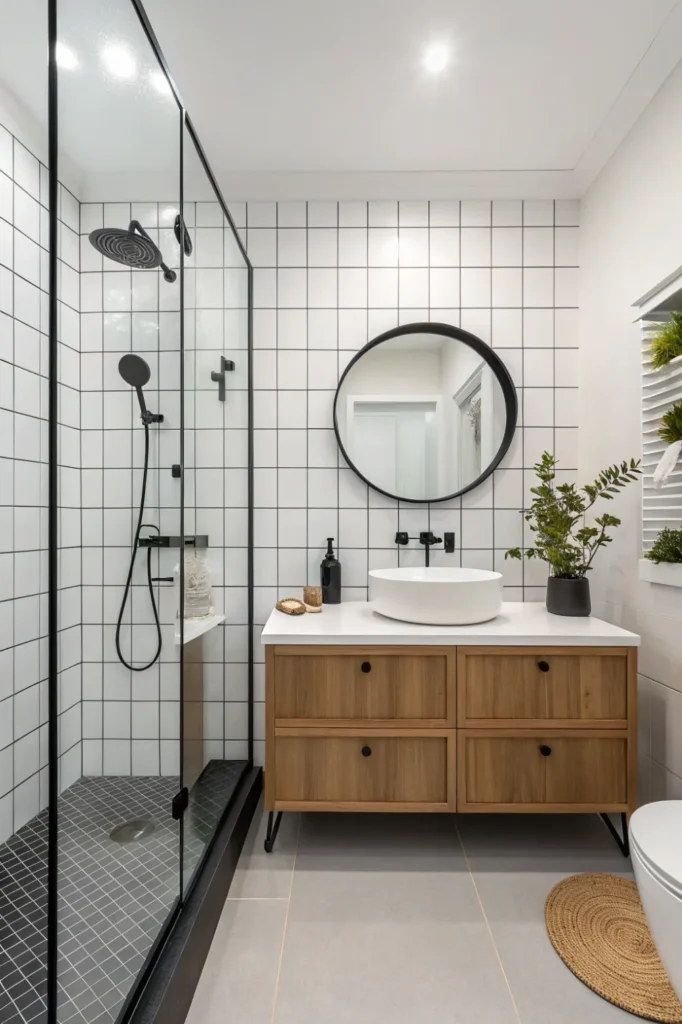
Pairing a white washroom with matte black hardware and accents — black-framed shower screen, matte black tap and towel rail, black-framed mirror, black grout between white tiles — creates one of the most graphically striking and photographically dramatic bathroom aesthetics available, where the extreme tonal contrast between white and black gives the room a bold, modern character that brass-accented and all-white alternatives cannot achieve.
The matte black and white washroom combination is particularly effective in contemporary, industrial, and minimalist bathroom designs where the graphic quality of the contrast reinforces the design’s clean-lined aesthetic intelligence. Matte black is also the most practical of all hardware finishes for a white washroom — its dark surface conceals water marks completely, requiring far less maintenance than polished or brushed finishes to remain looking sharp.
Use black grout between white wall tiles in at least one zone of a white washroom with matte black accents — the dark grout lines on the white tile surface create a grid pattern that visually bridges the wall tile and the black hardware, providing a coherent design thread that unifies the black and white elements of the room more convincingly than separate tiles and hardware without this connecting element.
7 White Freestanding Bath as the Washroom Centrepiece
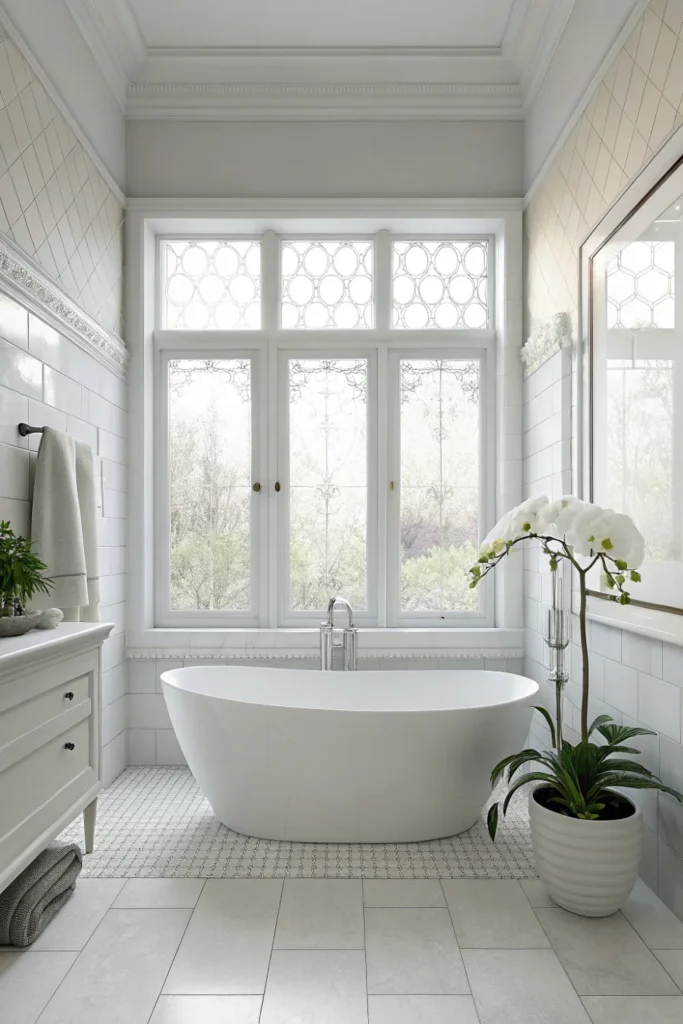
A white freestanding bathtub positioned as the centrepiece of a white washroom creates one of the most serene and visually pure bathroom compositions available — the sculptural form of the bath reading clearly against a white tile or painted background as a three-dimensional object of quiet beauty, defined more by its shape and shadow than by any colour contrast.
In a white washroom, the choice of bath form becomes the room’s primary design decision — a classic roll-top communicates period warmth and romance; a sleek oval stone resin bath communicates contemporary luxury; a deep soaking tub with straight angular sides communicates Japanese-influenced minimalism. The form speaks the room’s entire aesthetic language in a single object.
Add a single non-white element beside the freestanding bath in your white washroom — a small wooden stool, a potted plant in a terracotta pot, or a natural linen bath towel draped casually over the bath edge — to provide the human-scale warmth that prevents an all-white room from feeling uninhabited. The contrast element should be modest but warm, acting as the room’s emotional anchor rather than a design statement.
8 White Washroom with Green Plants for Biophilic Freshness
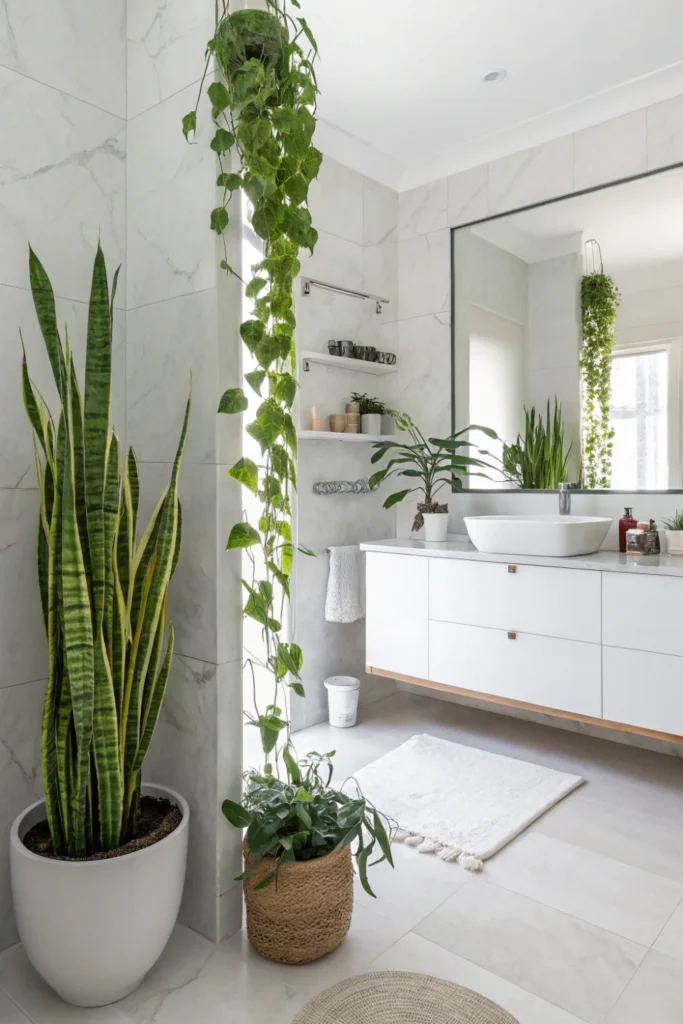
Introducing lush green plants into a white washroom creates one of the most natural and visually refreshing bathroom aesthetics available — the vivid, organic green of ferns, trailing pothos, peace lilies, or orchids reading with extraordinary clarity and beauty against the white backdrop, each leaf appearing as if lit from within against the surrounding brightness.
Green plants in a white washroom also introduce the only other element — beyond natural light — capable of making the room feel genuinely alive rather than perfectly still and static. The movement of leaves in air circulation, the growth and change of living plants over time, and the quality of biological presence they contribute give the white washroom a quality of gentle vitality that no decorative object can replicate.
Group three plants of different heights in the corner of a white washroom — a tall floor plant, a medium shelf plant, and a small trailing species at counter height — creating a layered botanical composition that fills the corner with life from floor to ceiling. A single plant in a white washroom can look isolated; a grouped composition looks like a designed element of the room’s styling.
9 White Zellige or Handmade Tile for Artisan Character
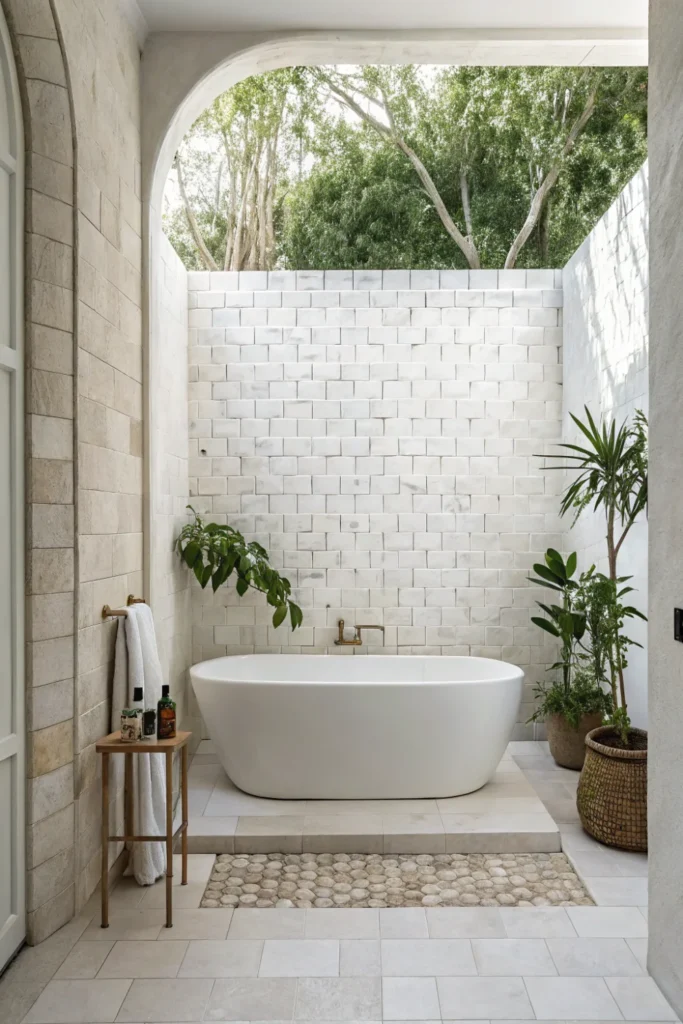
White zellige tiles — hand-cut Moroccan ceramic tiles with a characteristic undulating surface and slight tonal variation — bring a quality of artisan warmth and visual depth to a white washroom that factory-made white tiles, however beautifully specified, simply cannot achieve, creating a surface that shimmers and shifts with the light in a way that makes the white washroom feel genuinely alive.
The appeal of white zellige and handmade ceramic in a white washroom is precisely its imperfection — each tile’s slight variation in tone (ranging from cool bright white to warm ivory to pale cream within a single installation) creates a wall that appears different at different times of day, with morning light reading differently from evening light, and direct sun producing entirely different shadow patterns from overcast diffused light.
Use white zellige tiles on a single feature wall in your white washroom rather than on all surfaces — their inherent texture and tonal variation reads most dramatically against a plain white background. A full room of zellige loses the visual contrast that makes each tile’s individual quality apparent; a single zellige wall against smooth white plaster or large-format tile makes the handmade quality the star of the space.
10 White Washroom with Terrazzo Floor for Playful Texture
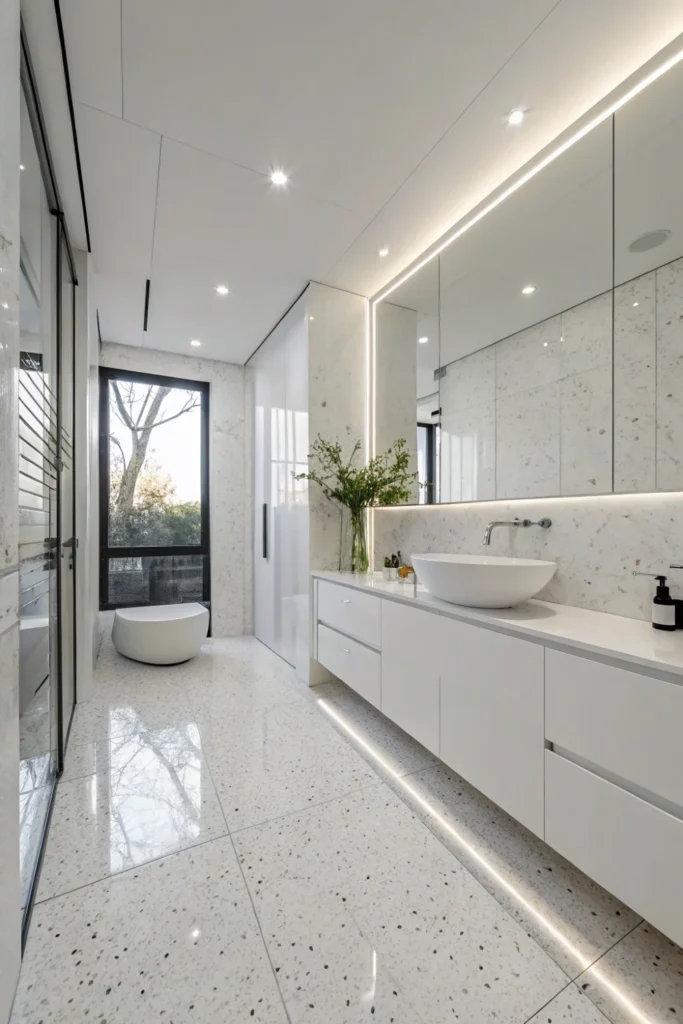
A white terrazzo floor — the classic aggregate of marble, glass, and stone chips set in a white cement binder — introduces a layer of playful texture and material depth to a white washroom that preserves the overall lightness and brightness of the white palette while adding the visual interest and artisan quality of a hand-crafted surface.
White terrazzo in a white washroom creates the finest possible version of the tonal-monochrome bathroom approach — the floor’s aggregate sparkles slightly under direct light, creating a subtle visual movement underfoot that contrasts beautifully with the matte stillness of white ceramic walls above, giving the room a sense of vertical material drama without introducing any competing colour.
Choose a white terrazzo with white or pale grey aggregate rather than coloured chips for a white washroom — a terrazzo with pink, green, or blue aggregate chips introduces a colour accent to the floor that may be welcome as a design decision but will need to be reflected elsewhere in the room to feel intentional rather than incidental. White-on-white terrazzo maintains the monochromatic purity of the white washroom concept.
Vertical 2:3 white washroom with a gleaming white terrazzo floor, the white aggregate catching light in a gentle shimmer, white large-format wall tiles above, a chrome basin tap, the floor adding material depth to the all-white washroom without introducing any colour.
Terrazzo Bathroom Floor Ideas — Colours, Patterns and How to Specify
Why White Washroom Ideas Are Worth the Investment
Investing in a beautifully designed white washroom represents one of the most durable and broadly appealing bathroom investments available — white bathrooms consistently outperform coloured alternatives in long-term resale appeal because white transcends design trend cycles, ensuring a well-executed white washroom looks as relevant in fifteen years as it does today.
The practical advantages of a white washroom compound over the years — white surfaces reveal dirt and require regular cleaning, which motivates the consistent hygiene maintenance that keeps a white bathroom performing at its visual best, while the high-reflectance quality of white tile amplifies natural light and reduces the artificial lighting load required to maintain comfortable illumination throughout the day.
Quality materials specified for a white washroom — real marble, premium porcelain, solid brass hardware — improve with the patina of thoughtful use in a way that is uniquely appropriate to the white aesthetic, developing the kind of character that makes a well-used white bathroom more beautiful at ten years old than it was on the day of completion.
Things to Consider Before Choosing White Washroom Ideas
Before committing to any white washroom approach, clarify the specific white tone you are working with across all surfaces — brilliant white, warm white, cool white, and off-white are all distinctly different in bathroom environments, and mixing white tones without intention creates the most consistently regretted outcome in white bathroom design. Test tile samples, paint chips, and grout colours together in the actual room under both natural and artificial light before specifying anything.
Consider the maintenance reality of a white washroom honestly — while white surfaces are not inherently harder to clean than coloured ones, they are less forgiving of inadequate cleaning because limescale, soap scum, and mould growth are more visible against white than against any other colour. A white washroom requires consistent cleaning to look its best; a household that cannot maintain this schedule may find a warm neutral or slightly coloured alternative more practical without sacrificing the light, spacious quality of a pale bathroom.
Plan lighting with particular care in a white washroom — the high reflectance of white surfaces means that cool, harsh, or poorly directed lighting is amplified and made more uncomfortable in a white bathroom than in a darker one, while warm, well-directed lighting is equally amplified and made more beautiful. The lighting quality in a white washroom determines whether the room feels clinical or luxurious more directly than any other design variable, and it deserves a disproportionate share of the planning and budget allocation.
Comparison Table of White Washroom Ideas
| White Washroom Idea | Cost Range | Warmth Level | Maintenance | Best Style | Timelessness |
|---|---|---|---|---|---|
| All-White Textural Variation | $3,000–$20,000 | Medium | Medium | Spa / Minimal | Very High |
| White + Brass Hardware | $500–$3,000 (hardware) | High | Medium | Any style | Very High |
| White Subway Tile | $800–$5,000 | Medium | Medium | Classic / Any | Timeless |
| White + Natural Wood | $1,000–$8,000 | Very High | Medium | Scandi / Natural | Very High |
| White Marble | $5,000–$30,000 | Medium–High | High | Luxury / Classic | Timeless |
| White + Matte Black | $500–$3,000 (hardware) | Low | Low | Contemporary | High |
| White Freestanding Bath | $800–$5,000 | Medium | Low–Medium | Any style | Timeless |
| White + Green Plants | $50–$300 | Very High | Medium | Any style | Timeless |
| White Zellige Tile | $2,000–$10,000 | High | Low | Artisan / Boho | High |
| White Terrazzo Floor | $1,500–$8,000 | Medium | Low (sealed) | Contemporary / Retro | High |
| Warm White / Ivory Scheme | $2,000–$15,000 | Very High | Medium | Traditional / Classic | Very High |
| White + Statement Lighting | $200–$2,000 | High | Very Low | Any style | Timeless |
| White + Terracotta/Sage Accent | $50–$500 | Very High | Low | Any style | Very High |
Recommended Products for White Washroom Ideas
Porcelanosa Elegant White Wall Tile ~$20–$45 per sq ft
Porcelanosa’s Elegant White is one of the finest mid-market large-format white tiles available for a premium white washroom — a 45x120cm rectified porcelain wall tile with a subtly textured matte surface that replicates the organic quality of fine white plaster while providing the waterproof durability of vitreous ceramic. Its warm white tone — neither brilliant cool white nor obviously warm cream — sits in the ideal position for a white washroom that needs to look equally beautiful in natural and artificial light, and its large format minimises visible grout lines for the seamlessly clean aesthetic that defines the best white bathroom installations.
Vola T33 Towel Rail in Polished Brass ~$250–$500
Vola’s T33 towel rail is a benchmark piece of bathroom hardware design for a white washroom with warm metal accents — a single horizontal bar in a simple, perfectly proportioned form that has remained in continuous production for over fifty years because it has never needed updating. In polished or brushed brass, it provides the warm metallic note that a white washroom requires with a design authority that purely decorative hardware cannot match, and its quality of material and finish means it will develop a more beautiful patina over decades of bathroom use rather than deteriorating as cheaper alternatives inevitably do.
Fired Earth Bianco Zellige White Hand-Made Tile ~$50–$100 per sq ft
Fired Earth’s Bianco zellige is one of the finest white handmade tiles available for an artisan white washroom feature wall — each tile is individually shaped and fired in Morocco using the traditional zellige method, producing a surface with the characteristic undulation, tonal variation, and iridescent glaze depth that transforms a white washroom wall from a flat surface into a living material composition. The range of whites across a single installation — from cool bright white to warm ivory to pale cream — gives the wall a depth and visual interest that makes the white washroom feel genuinely designed rather than simply undecorated, which is the fundamental challenge of all-white bathroom aesthetics.
Frequently Asked Questions About White Washroom Ideas
Does a white washroom always look clean and clinical?
A white washroom only looks clinical when the design relies on a single white material (typically smooth, glossy, cool-white ceramic) without any textural variation, warm accent, or quality of natural light to enliven it. The difference between a clinical white washroom and a beautifully warm one is almost entirely a matter of material texture variation, lighting quality, and the choice between cool and warm white tones.
The most reliably warm and inviting white washroom designs combine at least three different white surface textures (matte, slightly rough, and polished), use warm white rather than cool brilliant white as the primary tile or paint tone, include at least one natural material (wood, stone, or linen), and are lit with warm-white LED sources at 2700–3000K rather than the cool 4000–5000K sources that are common in commercial and builder-grade bathroom fittings.
What is the best white for a washroom — bright white, off-white, or warm white?
Warm white — the category that includes cream, ivory, and whites with slight yellow or pink undertones — is the best performing white in most residential washroom environments because it works equally well in natural and artificial light, it is more flattering to skin tones than cool white, and it ages more gracefully than brilliant white which can yellowing in a way that is more obvious against its own cool original tone.
Bright cool white is most successful in south-facing or very naturally bright white washrooms where the abundant natural light prevents the cool tone from reading as grey or clinical. Off-white and cream are most successful in smaller or north-facing washrooms where their inherent warmth compensates for limited natural light — the precise tone to choose depends primarily on the light quality in the specific room rather than on any universal preference.
How do I add warmth to a white washroom without losing the white aesthetic?
The five most effective ways to add warmth to a white washroom without compromising its white character are: specifying warm brass rather than chrome hardware; adding one or two living plants in terracotta or warm ceramic pots; introducing a natural timber element (a floating vanity, an open shelf, or a bath mat); switching the lighting to a warm white source at 2700K or below; and placing a single warm-toned textile — a linen hand towel or a cotton bath mat in natural or terracotta — in a prominent position.
Any one of these five elements will noticeably warm a white washroom; all five together will transform it. None of them introduces a competing colour that reduces the room’s essential white quality — they warm it from within through material character and light quality rather than overlaying it with chromatic contrast.
Is a white washroom hard to keep clean?
A white washroom is not inherently harder to clean than a coloured one — it requires the same frequency and method of cleaning — but it is less forgiving of infrequent cleaning because limescale, soap residue, and mould are more visible against white than against most other colours. The misconception that white bathrooms are “more work” typically reflects the higher visible standard that white imposes rather than any actual increase in cleaning time or effort.
Several specification choices significantly reduce the visible maintenance burden of a white washroom: choosing large-format tiles minimises grout lines where discolouration accumulates; specifying a wall-hung toilet and floating vanity exposes the floor for easier wiping; using a matte or satin tile finish rather than high-gloss reduces the visibility of water marks between cleans; and installing a squeegee hook in the shower enclosure encourages the daily habit that prevents limescale build-up more effectively than any cleaning product.