
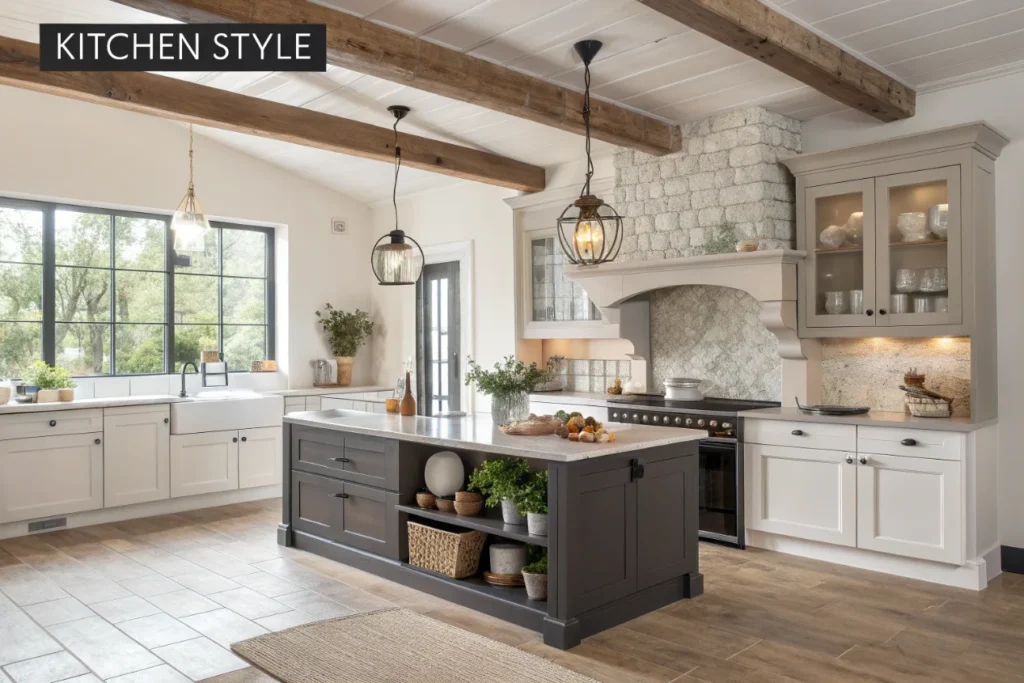
A well-considered kitchen room design is one of the most rewarding and highest-return investments a homeowner can make — transforming the most active room in the house into a space that genuinely delights every day, performs effortlessly during cooking and entertaining, and reflects the personality and values of the people who live there.
The best kitchen room designs are never purely about aesthetics or purely about function — they achieve both simultaneously, creating rooms where the layout is as thoughtful as the tile choice, the storage is as considered as the cabinet colour, and the lighting is as carefully designed as the hardware finish. Every decision is made in conscious relationship to every other one.
Whether you are embarking on a full renovation, refreshing a dated kitchen, or building from scratch in a new home, these kitchen room design ideas cover the most impactful layout, style, material, and finishing choices across every aesthetic and budget — helping you create a kitchen room that will be the heart of your home for decades to come.
List of 10 Best Kitchen Room Design Ideas
1 L-Shaped Kitchen Room Design for Corner Efficiency
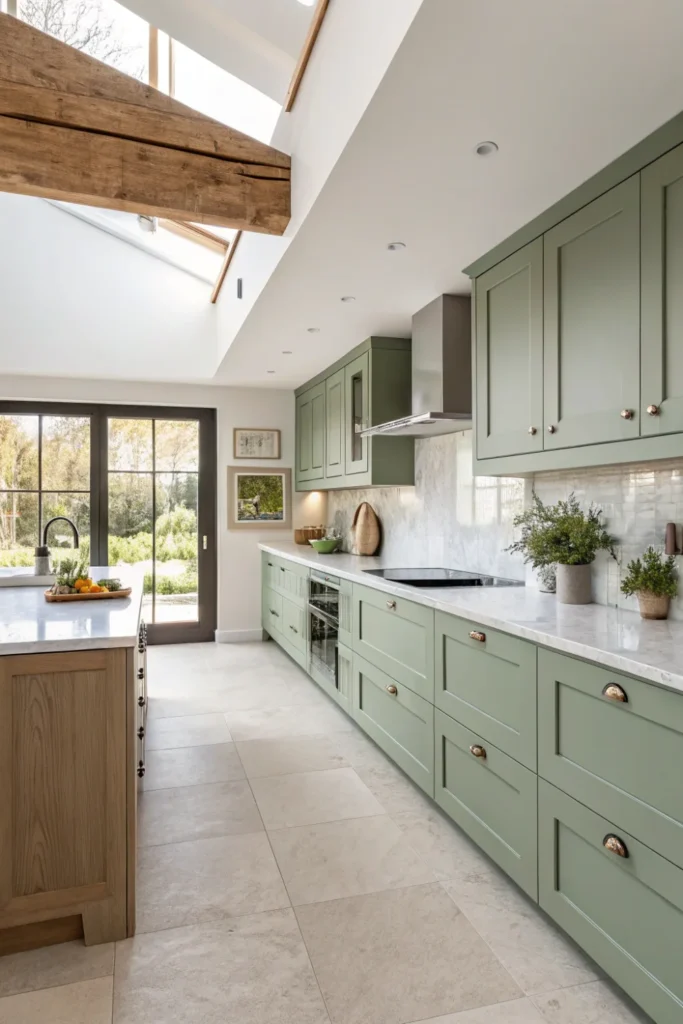
The L-shaped kitchen room design — cabinetry running along two adjacent walls meeting at a corner — is one of the most universally practical and adaptable kitchen layouts available, creating an efficient work triangle between the cooker, sink, and refrigerator while leaving one or two walls completely open for natural flow into a dining or living space.
In an open-plan kitchen room design, the L-shape is particularly powerful because it defines the kitchen zone clearly without erecting any physical barrier — the cabinetry run creates an implied boundary while the open plan benefits of an unobstructed floor remain fully available.
Place the sink at the corner junction of the L in your kitchen room design — positioning the sink where the two runs meet gives the person washing up the widest possible view of the room (and any children in it), and the sink’s plumbing connection at the corner wall simplifies the drainage run while keeping the longest counter runs on both sides clear for preparation and appliances.
2 Open-Plan Kitchen Diner with a Social Island
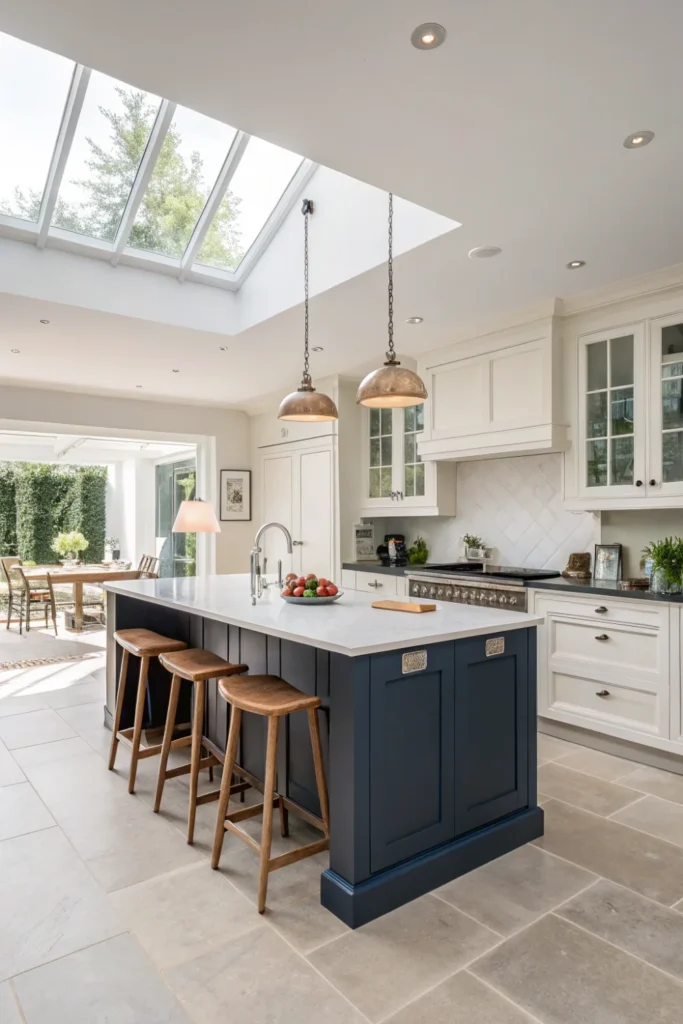
An open-plan kitchen room design with a central island that bridges the kitchen and dining zones is the most socially dynamic and contemporary kitchen layout available — it places the cook at the centre of the room’s social activity rather than facing a wall, and the island’s seating on one side creates an informal gathering point that transforms every meal preparation into a communal experience.
The island in an open-plan kitchen room design performs multiple functions simultaneously: additional preparation surface, breakfast bar, informal dining, storage in the base, and a visual anchor that defines the kitchen zone within the larger open floor plate. Its proportions and material should be carefully calibrated to the room — an island that is too large creates a crowded obstacle course; one that is too small looks tentative and undersized.
The most successful open-plan kitchen room designs give the island a deliberately contrasting material, colour, or finish from the perimeter cabinets — creating a designed tension between the two elements that makes the room feel composed rather than uniform.
Ensure a minimum of 100cm clearance on all sides of a kitchen island — 90cm is workable for one person but creates a bottleneck when two people are in the kitchen simultaneously. In rooms where the island competes with a dining table for floor space, the island almost always wins on both utility and design grounds.
3 Two-Tone Cabinet Kitchen Room Design
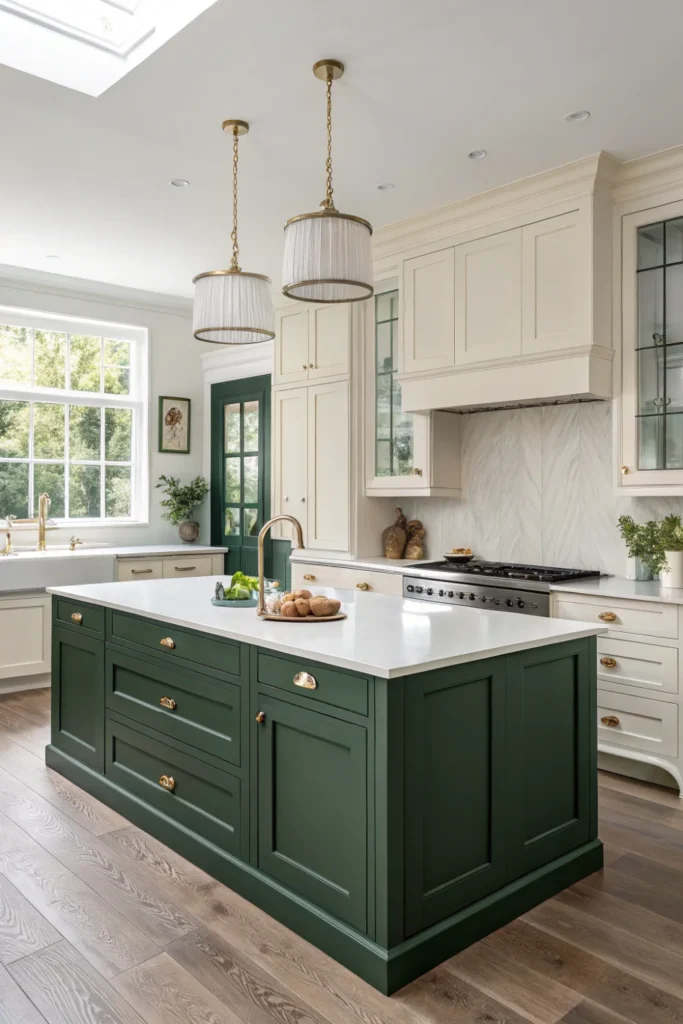
A two-tone kitchen room design — where upper cabinets and lower cabinets are finished in different but complementary colours or materials — adds visual depth, personality, and a designed quality to the kitchen that single-colour cabinet schemes rarely achieve, creating a room that feels considered and layered rather than uniformly installed.
The classic two-tone kitchen room design formula pairs darker lower cabinets with lighter upper ones — deep navy, forest green, or charcoal below against white or cream above — creating a grounded-yet-airy composition where the colour sits naturally in the lower half of the room (as shadow in nature does) and light opens upward toward the ceiling.
Extend the darker lower cabinet colour to the kitchen island if your room design includes one — treating the island as a third element that shares the lower cabinet tone creates a coherent three-part colour architecture (light above, dark below, dark island) that reads as a resolved design decision rather than a separate furniture choice that happened to arrive in the same room.
4 Scullery or Utility Room Behind the Main Kitchen
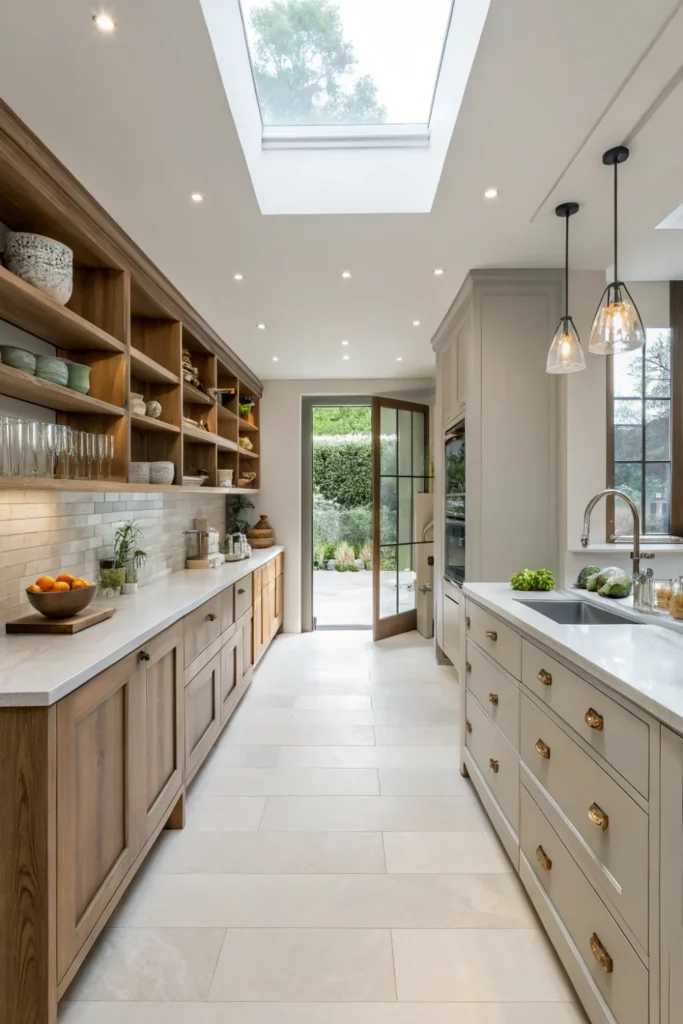
A scullery, prep kitchen, or utility room positioned directly behind or adjacent to the main kitchen room design is one of the most coveted and practically transformative kitchen configurations available — it allows the display kitchen to remain permanently styled and uncluttered while all the unglamorous work of food storage, appliance use, and washing up happens concealed beyond a closed door.
Even a scullery as compact as 1.5 metres deep can accommodate a second sink, a dishwasher, a tall fridge, storage shelving, and counter space for small appliances — removing every utilitarian element from the primary kitchen room design and enabling it to perform like a showroom continuously rather than only when thoroughly cleaned before a dinner party.
Connect the scullery to the main kitchen room design via a wide opening rather than a conventional door where space allows — a wide doorless opening feels architecturally generous and makes the scullery feel like a designed pantry wing rather than a separate room, while still providing effective visual separation of the two zones from the primary living areas.
5 Handleless Kitchen Room Design for Maximum Sleekness
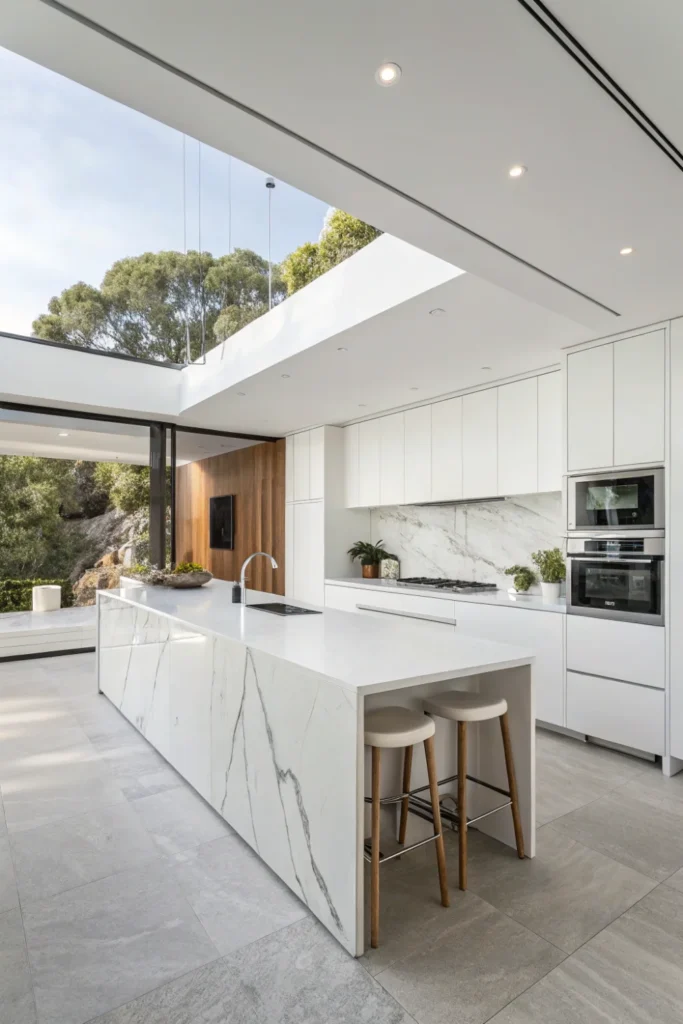
A handleless kitchen room design — where cabinets and drawers open via integrated J-pull channels, push-to-open mechanisms, or recessed finger-pull grooves — creates the cleanest, most architecturally resolved kitchen aesthetic available, a room where the cabinetry reads as a continuous smooth plane rather than a collection of door-and-handle units.
The absence of hardware simplifies the visual reading of a kitchen room design significantly — without handles to interrupt the eye’s travel across the cabinet face, the colour, texture, and proportion of the cabinetry material become the sole decorative variables, demanding higher quality choices but rewarding them more visibly than hardware-fronted alternatives.
Use push-to-open mechanisms on base drawers but J-pull or finger-pull channels on wall and tall cabinets in a handleless kitchen room design — push-to-open on overhead and tall cabinets can be difficult to operate cleanly with full hands or when the mechanism requires a firm push upward, while J-pulls on these positions provide the handleless aesthetic with reliable, easy daily operation.
6 Warm Timber Kitchen Room Design — Natural and Inviting
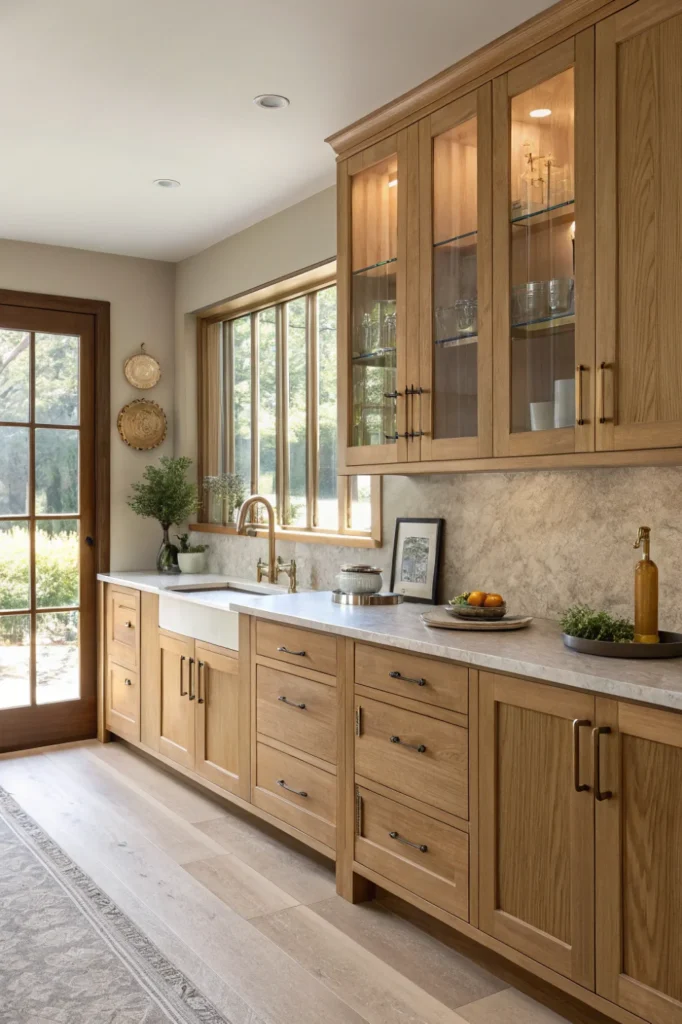
A warm timber kitchen room design — solid oak, walnut, or ash cabinets in a natural or lightly oiled finish — is one of the most enduringly beautiful and emotionally resonant kitchen aesthetics available, creating a room that feels genuinely warm, organic, and alive in a way that painted or lacquered kitchen room designs, however beautifully executed, struggle to replicate.
Real timber cabinet fronts bring the variable grain, natural colour depth, and tactile warmth of wood into the kitchen’s most dominant surface area, making the room feel grounded in natural material and connected to the craft traditions of furniture-making rather than the factory-finish uniformity of contemporary kitchen manufacture.
Combine real timber fronts with painted carcasses in your kitchen room design — the visible interior of open shelves, the sides of the island, and the drawer box interiors can all be painted in a complementary neutral, reserving the premium timber material for the doors and drawer fronts where it will be seen and touched most directly. This targeted use of expensive timber material significantly reduces the cost of a timber kitchen room design without any visible compromise.
7 Galley Kitchen Room Design — Compact and Highly Efficient
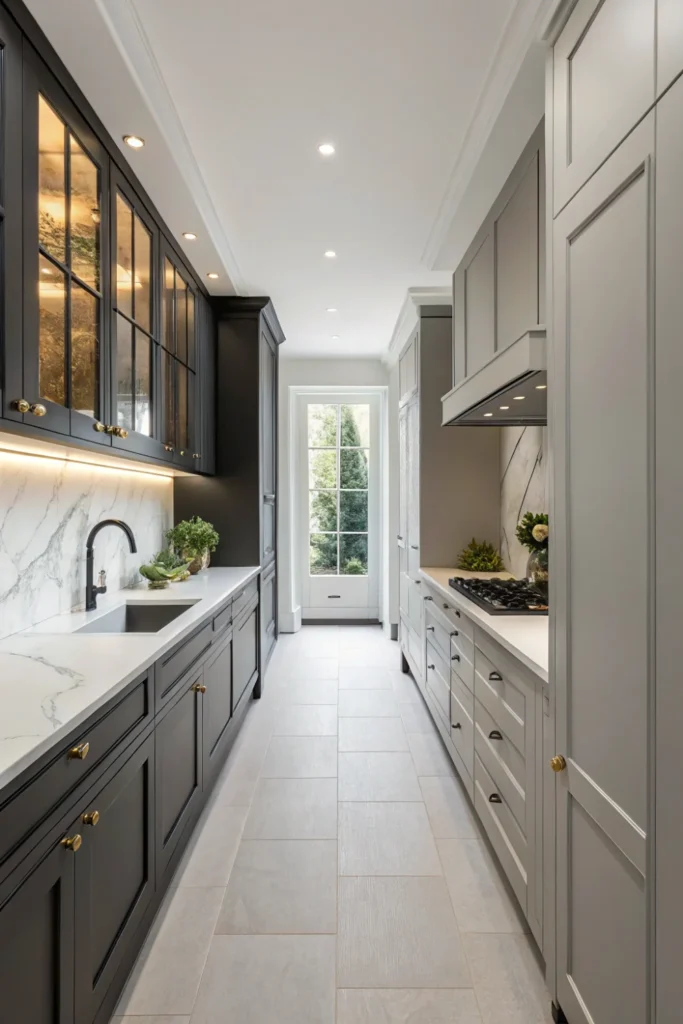
The galley kitchen room design — two parallel runs of cabinetry facing each other along a single corridor — is the most ergonomically efficient of all kitchen layouts, concentrating all the working surfaces, appliances, and storage within a minimum of movement distance, and used as the standard kitchen configuration in professional restaurant kitchens for exactly this reason.
In a domestic kitchen room design, the galley layout is particularly well-suited to narrow rooms and to homes where the kitchen is a distinct room rather than an open-plan zone — the parallel runs create a focused, purposeful cooking environment that rewards skill and organisation in a way that more open, spatially generous kitchen room designs sometimes do not.
Keep one run of a galley kitchen room design completely handleless and in a single, quiet colour to prevent the inherent narrowness of the corridor layout from feeling visually busy — the simpler and more recessive one wall is, the more the room appears to push back and breathe, which is the defining visual challenge of any galley kitchen room design.
8 Statement Range Hood as Kitchen Room Design Hero
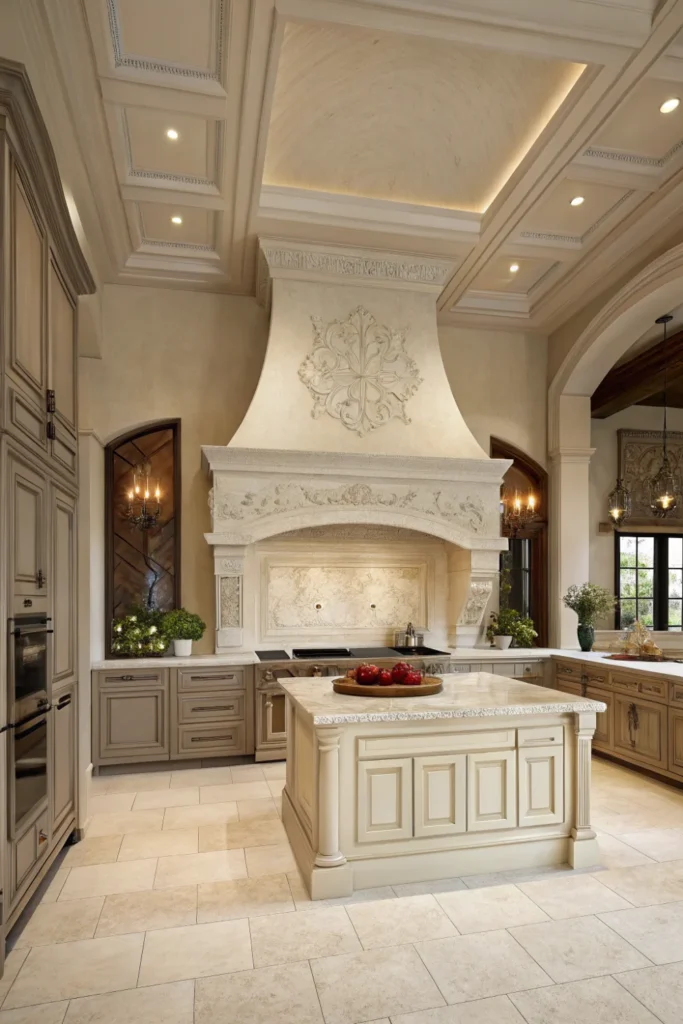
A custom or architecturally designed range hood — in plaster integrated with the ceiling, hand-hammered copper, polished stone, concrete, or bespoke steel — is the single kitchen room design element with the greatest power to transform a functional cooking wall into a genuine architectural statement, establishing the room’s entire design character in one bold, permanent decision.
The range hood’s unique position — centred on the most active wall of the kitchen room design, at eye height, framed by cabinetry on both sides — makes it the natural focal point of any kitchen, and treating it as a sculptural object rather than a functional extraction unit unlocks a level of design possibility that most kitchen room designs never explore.
Size the range hood generously beyond the width of the cooking surface — a hood that extends at least 15cm beyond the hob width on each side looks architecturally decisive, while one that exactly matches the hob width looks precisely functional rather than designed. The overhang also improves extraction performance, making the visual and practical case simultaneously.
9 Maximalist Kitchen Room Design with Pattern and Colour
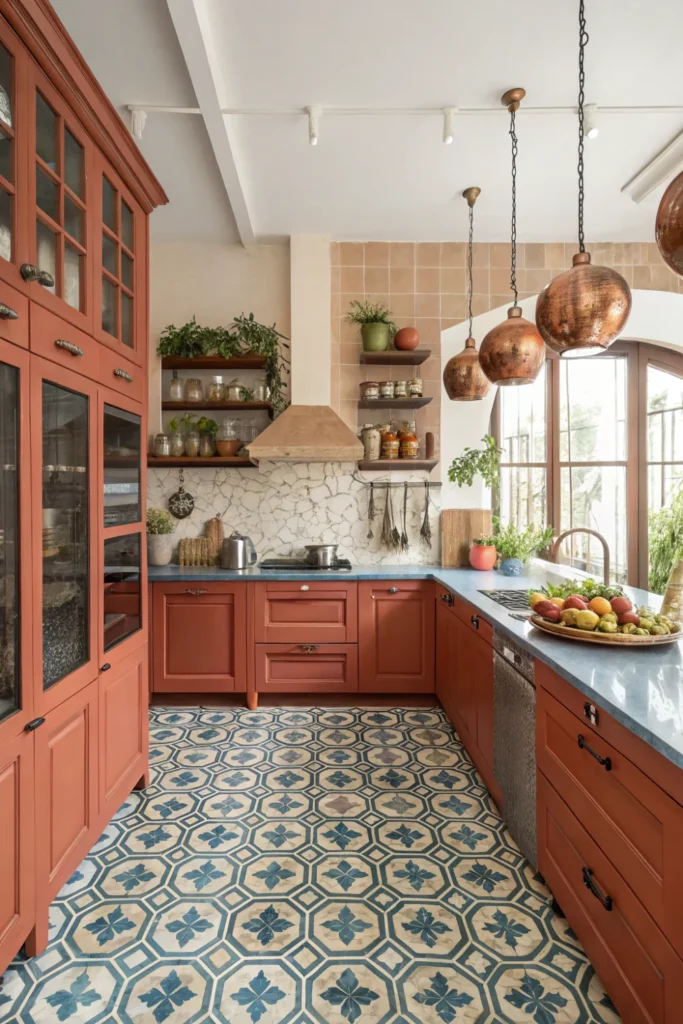
A bold maximalist kitchen room design — rich colour on the cabinets, a patterned encaustic tile floor, a dramatic stone splashback, colourful open shelving, and hanging copper cookware — creates a kitchen room that is joyful, energetic, and unambiguously individual, celebrating the pleasures of cooking through a room that is as visually stimulating as the food it produces.
The maximalist kitchen room design succeeds through internal colour logic — a dominant palette of two or three colours that appear in different concentrations and materials across all surfaces, creating a cohesive whole from what might appear individually as a collection of bold separate decisions. Without this underlying colour coherence, maximalism becomes visual chaos rather than designed abundance.
In a maximalist kitchen room design, maintain one quiet, visually recessive element — a plain white ceiling, a single unpatterned surface, an area of clear counter — that the eye can use as a resting point within the abundant decoration. Without any relief, even a beautifully executed maximalist kitchen can begin to feel relentless in a room where extended daily time is spent.
10 U-Shaped Kitchen Room Design for Maximum Storage
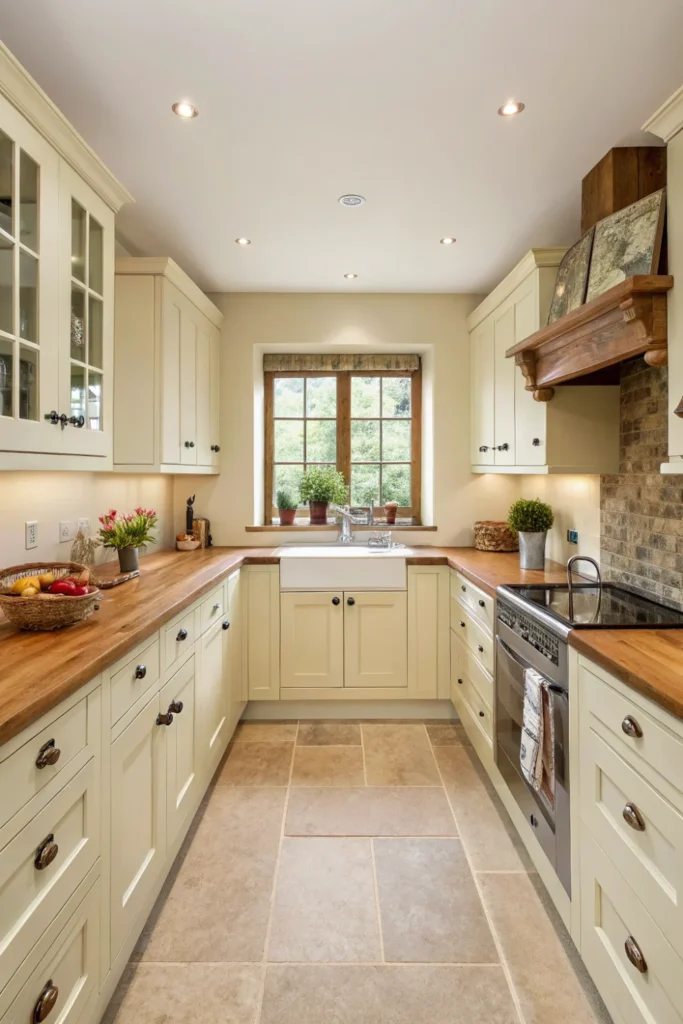
The U-shaped kitchen room design — cabinetry on three walls forming a horseshoe — provides the maximum possible counter run and storage capacity in a single-room kitchen format, making it the optimal layout for serious home cooks who need extensive preparation space, appliance accommodation, and storage organisation in a dedicated kitchen room.
The design challenge of the U-shaped kitchen room is managing the corners — the two internal corners created by the three-wall configuration can become dead zones unless fitted with carousel units, deep pull-out drawers, or creative storage solutions that make those angular spaces genuinely accessible and productive rather than cosmetically filled with inaccessible fixed shelving.
Install a kitchen room window above the sink in the middle run of a U-shaped layout wherever the architecture permits — the window provides natural light to the deepest point of the U, gives the person at the sink a view rather than a wall, and creates the kitchen room’s most aspirational working position by combining the primary task with the best light and outlook in the space.
Vertical 2:3 generous U-shaped kitchen room design with cream cabinets on three walls, a window above the sink in the central run, warm timber countertops on the left run, stone on the right, a butcher block central prep surface, well-organised and inviting.
Kitchen Layout Ideas — Which Floor Plan Works Best for Your Space
Why Kitchen Room Design Ideas Are Worth the Investment
Investing in a considered kitchen room design consistently delivers the highest financial return of any room renovation in the home — property valuers and estate agents universally identify the kitchen as the primary room influencing buyer decisions and property valuations, with a well-designed kitchen room regularly adding 5–15% to a property’s market value in competitive markets.
Beyond financial return, the daily quality-of-life benefit of a beautifully designed and intelligently organised kitchen room is incalculable — cooking, entertaining, and gathering in a space that functions effortlessly and looks genuinely beautiful transforms the most frequently occupied room in any home from a service area into a genuine source of daily pleasure and domestic pride.
Quality materials chosen for a kitchen room design — natural stone countertops, solid timber cabinetry, quality hardware, and properly specified flooring — represent twenty-year investments whose upfront premium over lower-quality alternatives is typically recovered within the first decade through avoided replacement cycles and in the property value they contribute at sale.
Things to Consider Before Choosing Kitchen Room Design Ideas
Before committing to any kitchen room design direction, prioritise layout above all other considerations — the most beautiful kitchen room in the world will be a daily frustration if its layout creates inefficient movement patterns, inadequate storage, or working surfaces positioned in the wrong relationship to the appliances they serve. Spend as much time on the layout as on the material and finish choices combined.
Consider the relationship of your kitchen room design to the rest of your home — the most successful kitchen rooms are those that feel architecturally and materially coherent with the spaces they connect to rather than existing as isolated design statements that create a jarring transition at the doorway. A kitchen room design that continues the home’s material language — the same timber tone, a consistent palette, compatible hardware finishes — reads as an integral part of a designed whole.
Always plan ventilation, electrical, and plumbing infrastructure before specifying any finishes in a kitchen room design — these invisible systems are the most expensive and disruptive to modify after installation, and the correct placement of electrical sockets, extract fans, gas connections, and plumbing waste runs fundamentally determines which design options are available to you. Infrastructure first; aesthetics second.
Comparison Table of Kitchen Room Design Ideas
| Kitchen Room Design | Cost Range | Best Home Size | Design Style | Cooking Performance | Longevity |
|---|---|---|---|---|---|
| L-Shaped Layout | $5,000–$30,000 | Any | Any | High | Permanent |
| Open-Plan with Island | $8,000–$50,000 | Medium–Large | Contemporary | High | Permanent |
| Two-Tone Cabinets | $3,000–$20,000 | Any | Transitional | High | 10–15 years |
| Scullery / Utility Room | $5,000–$25,000 | Large | Any | Very High | Permanent |
| Handleless Design | $5,000–$30,000 | Any | Modern / Minimal | High | 15–20 years |
| Warm Timber Cabinets | $6,000–$35,000 | Any | Natural / Warm | High | 20+ years |
| Galley Layout | $4,000–$20,000 | Small–Medium | Any | Very High | Permanent |
| Statement Range Hood | $800–$8,000 | Any | Any | High | Permanent |
| Maximalist Design | $4,000–$25,000 | Any | Eclectic / Bold | High | 10–12 years |
| U-Shaped Layout | $8,000–$40,000 | Medium–Large | Any | Very High | Permanent |
| Integrated Appliances | $2,000–$10,000 add-on | Any | Minimal / Modern | High | 15+ years |
| Banquette / Breakfast Nook | $800–$5,000 | Any | Cottage / Classic | Medium | 15–20 years |
| Concrete / Terrazzo | $3,000–$15,000 | Any | Industrial / Modern | High | Permanent (sealed) |
| Bold Coloured Cabinets | $3,000–$20,000 | Any | Any | High | 10–15 years |
| Large Window / Skylight | $2,000–$15,000 | Any | Any | Very High | Permanent |
Recommended Products for Kitchen Room Design Ideas
IKEA SEKTION / AKURUM Kitchen System with AXSTAD Doors ~$1,500–$6,000
IKEA’s kitchen cabinet system with AXSTAD handleless flat-front doors in white or grey-green is the most widely recommended accessible route to a contemporary kitchen room design — the SEKTION carcass system’s modular format allows precise planning for any kitchen layout including L-shaped, U-shaped, and galley configurations, and the AXSTAD handleless door front produces the clean, minimal kitchen room aesthetic that typically requires a significantly higher budget from specialist kitchen retailers. The system’s modularity also allows progressive upgrades — starting with standard doors and upgrading to timber fronts or custom panels as budget allows while keeping the carcass infrastructure permanently in place.
Caesarstone Calacatta Nuvo Quartz Countertop ~$70–$120 per sq ft installed
Caesarstone’s Calacatta Nuvo is one of the most specification-appropriate kitchen room design countertops available at the accessible luxury price point — an engineered quartz surface that captures the bold grey veining of Calacatta marble while providing the non-porous, stain-resistant, and heat-tolerant performance that natural stone cannot match in a kitchen environment. Its warm white ground and dramatic movement pattern suit a wide range of kitchen room design aesthetics from classic white and navy to contemporary timber and concrete, making it one of the most broadly applicable countertop choices in the accessible luxury category.
Perrin & Rowe Ionian Bridge Kitchen Tap in Aged Brass ~$400–$700
Perrin & Rowe’s Ionian bridge kitchen tap is widely regarded as the finest bridge-style kitchen mixer available at an accessible luxury price for warm, traditional, and transitional kitchen room designs — its two-column bridge profile in Aged Brass provides the period authenticity and warm metallic character that single-lever contemporary taps cannot approximate, and its solid brass construction means the Aged Brass finish develops the kind of living patina that genuinely improves over years of kitchen use. A statement tap choice that elevates the entire sink zone and provides a definitive period character anchor for any kitchen room design that needs one.
Frequently Asked Questions About Kitchen Room Design Ideas
What is the most popular kitchen room design style right now?
The most prevalent kitchen room design style in 2026 is a transitional aesthetic that combines the warmth of natural materials — real timber, stone, and hand-crafted ceramics — with the clean-lined simplicity of contemporary cabinetry forms. This “warm contemporary” kitchen room design approach is replacing both the cold minimalism that dominated a decade ago and the full-maximalist heritage kitchen, finding a middle ground that is practical, beautiful, and broadly appealing across a wide range of home types and age groups.
Within this broad movement, coloured cabinetry in muted, complex tones — sage green, warm terracotta, dusty navy, and warm charcoal — continues to dominate over plain white, with the white kitchen room design now most likely to be found in new-builds and rental properties rather than in owner-designed homes where colour confidence has become the dominant aspiration.
How do I maximise storage in a small kitchen room design?
The most effective storage strategies for a small kitchen room design are: using full-height cabinetry to the ceiling (removing the gap above standard wall units that becomes a grease-collecting inaccessible space); specifying deep drawers in base units rather than shelved cupboards (drawers provide complete access to their full depth, while shelved base cupboards create permanent dark zones at the back); and integrating a pantry column or tall larder unit to concentrate all food storage in a single accessible vertical run.
A small kitchen room design also benefits significantly from treating all wall space above the worktop and below the upper cabinets as potential storage — a magnetic knife strip, a rail system for hanging implements, a spice rack mounted on the splashback, or a folding table mounted on the wall can each add meaningful working and storage capacity without consuming any precious counter or cabinet allocation.
What countertop material is best for a kitchen room design?
Quartz engineered stone is the most practically excellent kitchen room design countertop for most households — non-porous (so it cannot be stained by wine, oil, or acid), consistent in appearance, highly scratch and impact resistant, and available in an enormous range of colours and patterns including highly convincing marble lookalikes that avoid natural marble’s maintenance demands. For a kitchen room design that sees heavy daily use, quartz is the choice that best combines appearance, practicality, and value.
Natural stone — marble, granite, quartzite, and limestone — remains the most beautiful and most design-authentic countertop material for kitchen room designs where aesthetic aspiration is the primary driver, but requires acceptance of its maintenance reality: periodic sealing, vulnerability to acid etching (marble particularly), and the development of patina and wear marks that some owners celebrate as character and others find distressing. The right choice depends entirely on whether you see those imperfections as beauty or failure.
How long does a kitchen room design renovation take?
A standard domestic kitchen room design renovation — including cabinet removal, new cabinetry installation, countertop fabrication and fitting, tiling, electrical work, and plumbing — typically takes three to six weeks from first day of demolition to final completion, with most of that time front-loaded in structural and mechanical work before the design-visible elements are installed.
The most significant variable in a kitchen room design renovation timeline is the lead time for bespoke or made-to-order elements — custom cabinetry typically requires six to twelve weeks of lead time from order to delivery, natural stone countertops four to six weeks from template to installation, and specialist light fittings or custom handles can add further delays if sourced from international suppliers. Beginning the procurement of long-lead items before demolition starts is the single most important kitchen room design project management decision available for keeping the overall renovation timeline manageable.