
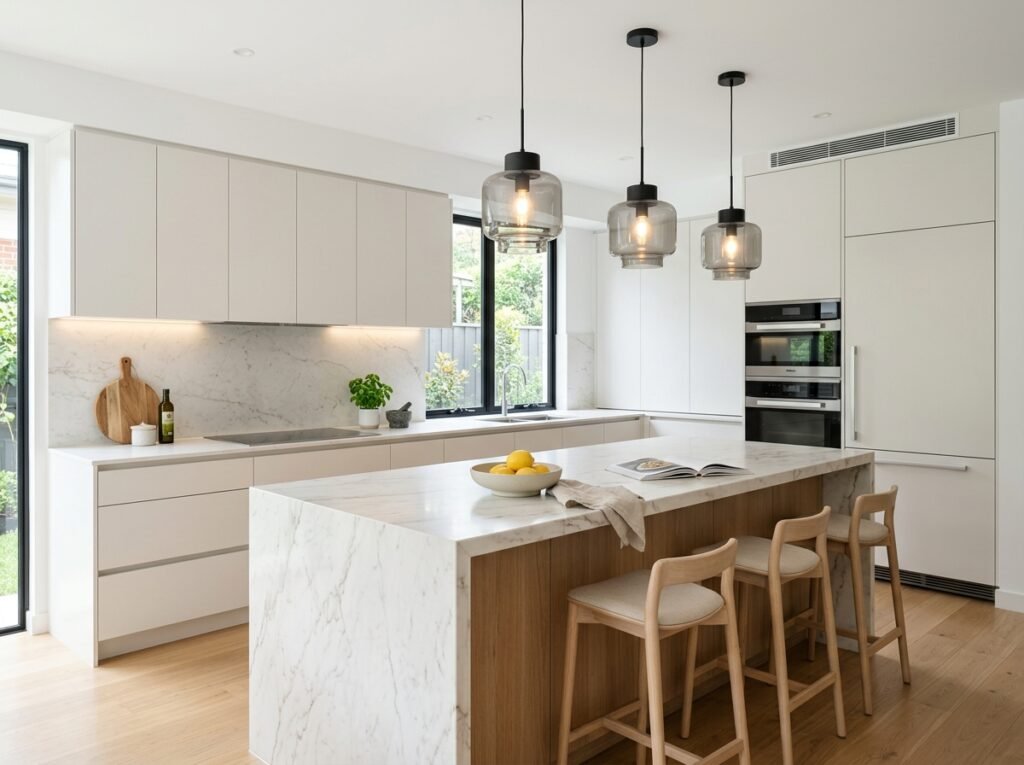
Finding the right kitchen inspirations is the first and most exciting step in any kitchen renovation or redesign. Before a single tile is chosen or cabinet ordered, a clear vision of what your kitchen could become makes every subsequent decision faster, more confident, and more cohesive.
The kitchen is the most used, most designed, and most personally expressive room in any home — and the range of styles, materials, and layouts available today is broader and more beautiful than at any point in design history. The right inspiration transforms a vague desire for something better into a concrete, achievable direction.
This guide covers the best kitchen inspirations that homeowners, designers, and food lovers are actually drawn to right now — with practical tips, honest comparisons, and product picks to help you translate your kitchen inspiration into a space that genuinely reflects your personality and supports the way you cook and live.
List of 10 Best Kitchen Inspirations
1. The All-White Classic Kitchen
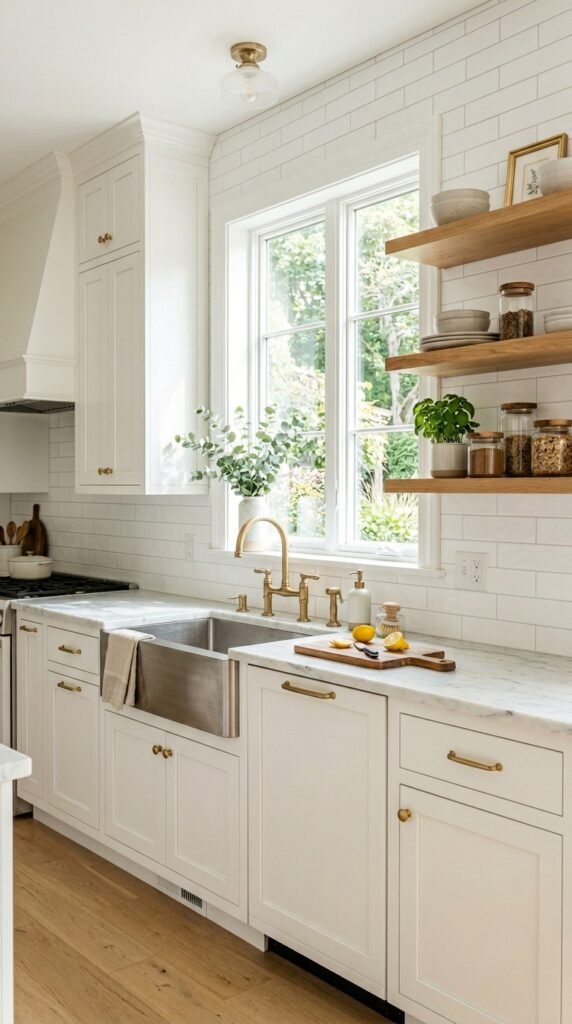
The all-white kitchen is the most enduring and universally beloved of all kitchen inspirations — clean, bright, and infinitely versatile, an all-white kitchen creates a canvas that makes every ingredient look beautiful and every moment spent cooking feel fresh and energizing.
White Shaker cabinets, white marble or quartz countertops, white subway tile backsplash, and white painted walls create a kitchen that feels simultaneously classic and contemporary — the timeless quality of the all-white kitchen means it never dates and can be refreshed with new accessories and hardware without any structural changes.
The secret to a successful all-white kitchen inspiration lies in varying the whites across different surfaces — a warm white on walls, a cool white on cabinets, and an ivory-veined marble countertop creates tonal depth that prevents the kitchen from feeling flat or clinical.
Pro Tip: Introduce one warm natural material into an all-white kitchen inspiration — a butcher block island section, white oak open shelving, or rattan bar stools — to prevent the palette from feeling cold and sterile. The warmth of a single natural material grounds the white scheme and adds the organic character that transforms a showroom kitchen into a genuinely welcoming one.
2. The Warm Earthy Organic Kitchen
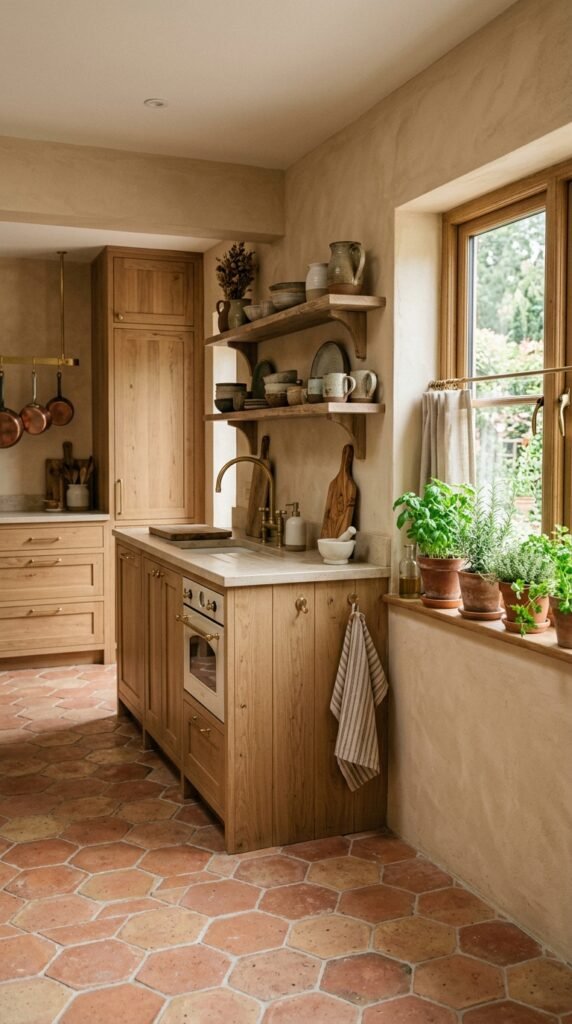
The warm earthy organic kitchen — combining terracotta, warm cream, sage green, natural wood, and stone — is one of the most loved and widely shared kitchen inspirations right now. It creates a kitchen that feels genuinely warm, grounded, and alive with natural character.
Limewash walls in warm sand, terracotta tile floors, natural wood cabinetry, handmade ceramic vessels, and trailing herbs on the windowsill combine to create a kitchen that looks like it has been assembled over years of thoughtful collecting rather than purchased in a single renovation weekend.
This kitchen inspiration suits both traditional farmhouse homes and contemporary interiors equally — the earthy organic palette is one of the most architecturally neutral, complementing exposed brick, plastered walls, concrete floors, and painted surfaces with equal ease.
Pro Tip: Anchor an earthy organic kitchen inspiration with one consistent grout color throughout the entire tiled area — using the same warm grey or sand grout on both floor and wall tiles creates a visual continuity that makes the kitchen feel coherent and considered rather than assembled from separate design decisions.
3. The Moody Dark Kitchen
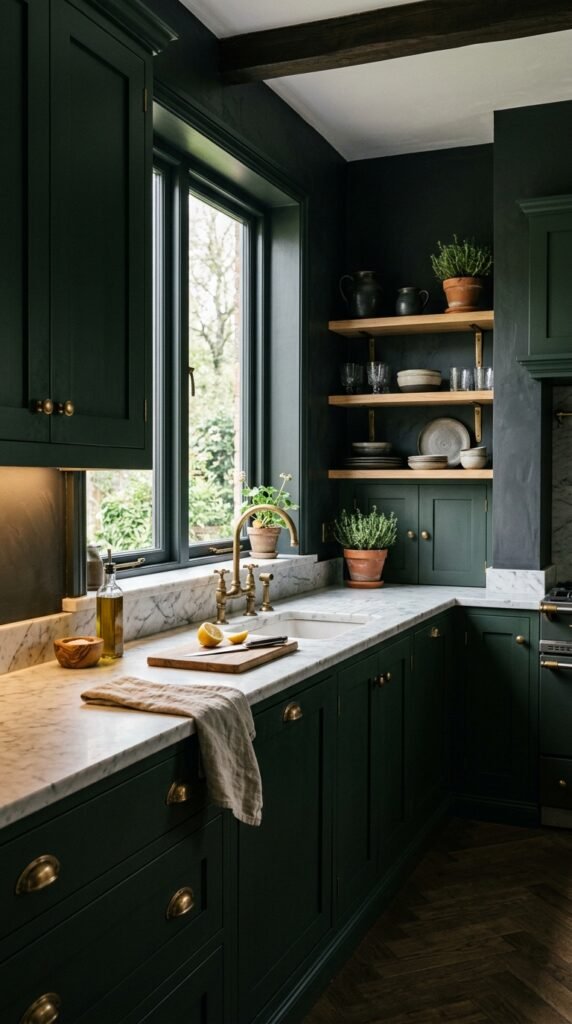
The moody dark kitchen — deep navy, forest green, charcoal, or matte black cabinets against light countertops and warm metallic hardware — is one of the most dramatic and sophisticated kitchen inspirations available, creating a space of extraordinary visual depth and confident design character.
Dark kitchen inspirations work because they create a sense of envelopment and intimacy that light kitchens cannot achieve — cooking in a beautifully dark kitchen feels focused, sensory, and genuinely special rather than simply efficient.
Under-cabinet lighting, pendant lights, and a skylight or generous window are essential companions to a dark kitchen inspiration — the moody aesthetic depends on the dramatic contrast between dark surfaces and warm light sources, and inadequate lighting turns a beautiful dark kitchen into a simply dim one.
Pro Tip: Choose matte or satin finishes for dark kitchen cabinet doors rather than high gloss — dark gloss surfaces show every fingerprint, water splash, and smear immediately after cleaning, while matte finishes conceal daily marks and maintain the clean, sophisticated appearance that makes dark kitchen inspirations so compelling.
4. The Scandinavian Minimalist Kitchen
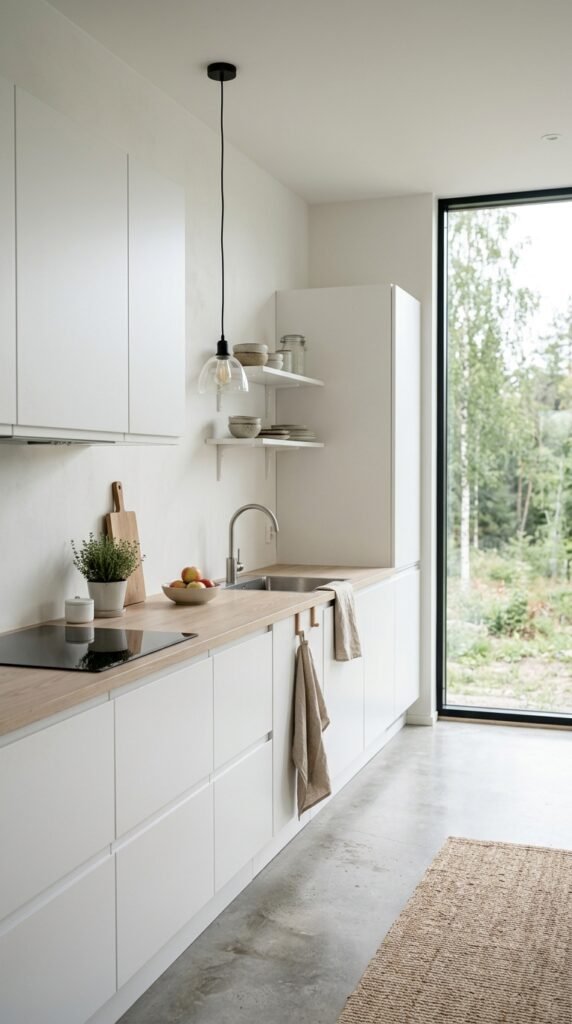
The Scandinavian minimalist kitchen inspiration distills the kitchen to its purest, most functional essence — clean lines, restrained palette, natural materials, and an absence of unnecessary decoration create a space of profound visual calm that makes cooking feel like a meditative pleasure.
White or pale grey handleless cabinets, light wood surfaces, concrete or stone countertops, simple pendant lights, and deliberately limited accessories define the Scandi kitchen inspiration — every element earns its place by being either genuinely useful or genuinely beautiful, and ideally both simultaneously.
The Scandinavian kitchen inspiration’s great gift is its effortless maintenance quality — fewer surfaces, fewer objects, and cleaner lines mean less to clean and less visual noise to manage, creating a kitchen that looks as good at the end of a busy cooking session as it did at the start of the morning.
Pro Tip: Introduce soft texture at the kitchen window in a Scandinavian minimalist kitchen inspiration — a simple linen curtain, a pair of sheer panels, or even just a single plant on the windowsill prevents the clean-lined aesthetic from tipping into coldness and adds the human warmth that distinguishes a genuinely Scandi kitchen from a merely clinical one.
5. The Farmhouse Kitchen Inspiration
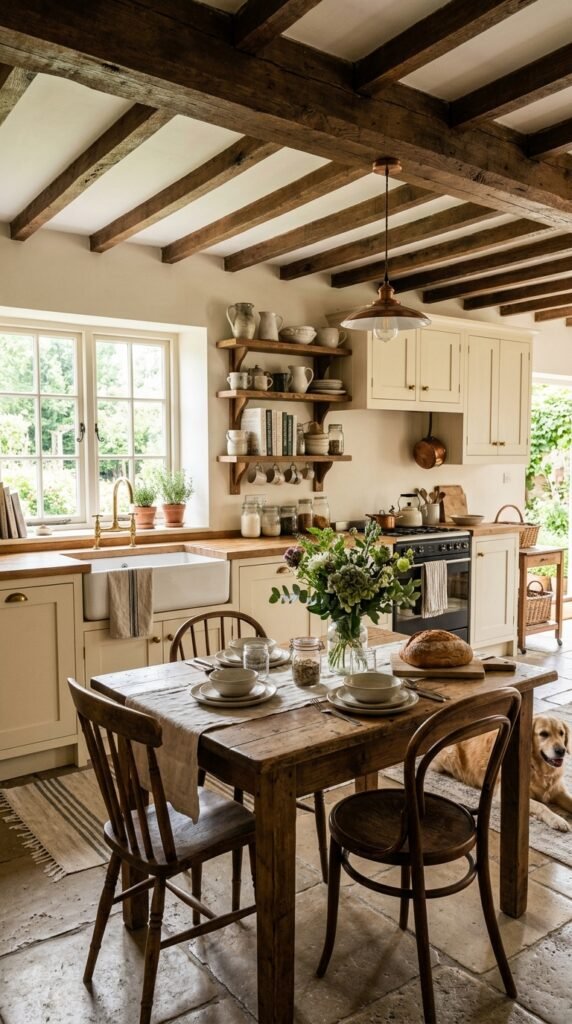
The farmhouse kitchen inspiration celebrates the warmth, practicality, and honest craftsmanship of a working country kitchen — apron front sinks, shaker cabinets, open shelving, exposed beams, flagstone floors, and an abundance of natural materials create a kitchen that feels deeply rooted in tradition and genuine daily life.
A large farmhouse table at the kitchen center, an Aga or range cooker as the focal point, and an open dresser displaying ceramics and cookbooks are the signature elements of a farmhouse kitchen inspiration that create immediate visual warmth and the sense of a kitchen built for real, generous cooking and entertaining.
The farmhouse kitchen inspiration is one of the most style-inclusive and materially forgiving directions in kitchen design — the aesthetic accommodates imperfection, mix-and-match materials, and collected pieces beautifully, making it genuinely achievable at every budget level from modest to grand.
Pro Tip: Include a butler’s pantry or larder cupboard as part of a farmhouse kitchen inspiration wherever space allows — a separate storage and preparation space adjacent to the main kitchen is one of the most historically authentic and practically transformative elements of the farmhouse kitchen tradition, keeping the main room clear and welcoming even during intensive cooking.
6. The Contemporary Industrial Kitchen
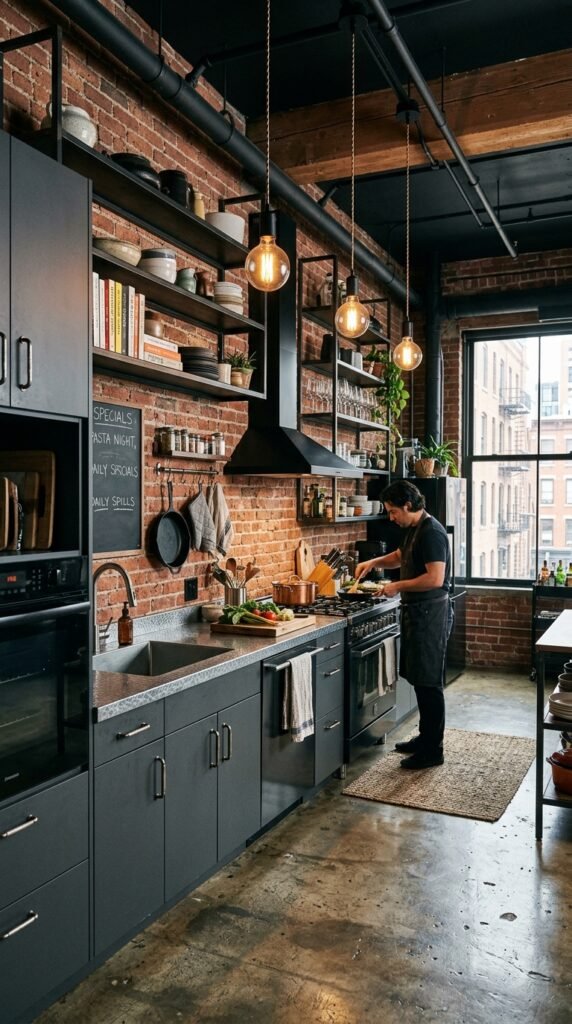
The contemporary industrial kitchen inspiration draws from the aesthetics of urban loft apartments and professional kitchens — exposed brick, concrete, steel, dark cabinetry, and factory-style pendant lights create a kitchen of raw, confident design character that suits modern city living perfectly.
Stainless steel countertops, matte black or dark grey cabinetry, exposed Edison bulb pendant lights, open pipe shelving, and concrete or polished cement floors define the industrial kitchen inspiration — a palette of materials that communicates serious cooking credentials and design confidence simultaneously.
The industrial kitchen inspiration suits both genuine warehouse conversions and purpose-built new homes — the aesthetic is strong enough to create its own architectural context rather than requiring a specific building type as its backdrop.
Pro Tip: Soften an industrial kitchen inspiration with one genuinely warm organic material — a butcher block counter section, a reclaimed wood shelf, or a collection of natural ceramic vessels prevents the industrial palette from feeling uncomfortably cold and creates the lived-in, human warmth that transforms raw industrial character into a genuinely welcoming kitchen.
7. The Mediterranean Inspired Kitchen
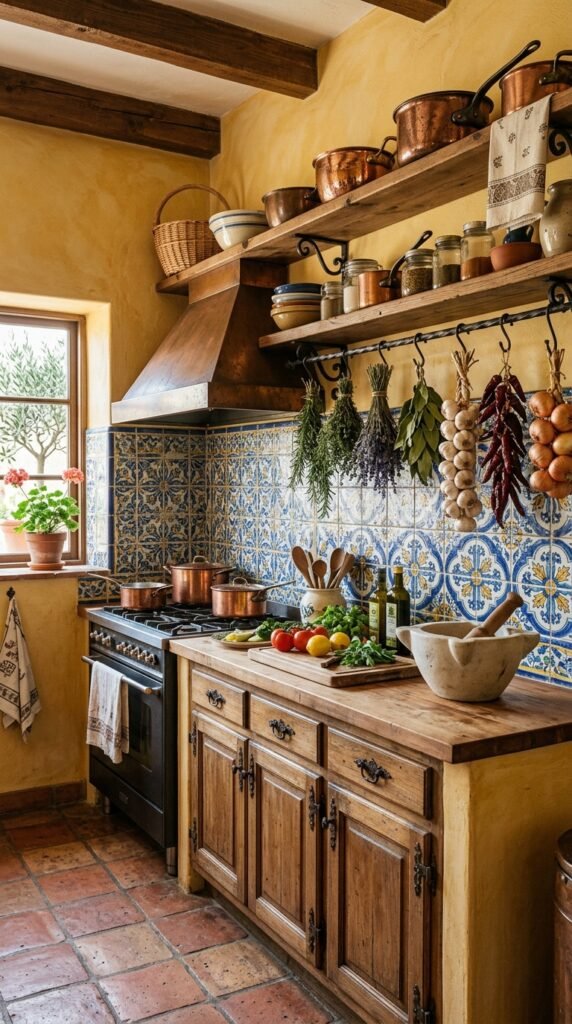
The Mediterranean kitchen inspiration brings the warmth, color, and artisan craft of southern Europe into the domestic kitchen — hand-painted tiles, terracotta floors, warm plaster walls, olive wood accessories, wrought iron hardware, and an abundance of hanging copper and terracotta cookware create a kitchen of irresistible warmth and personality.
Spanish azulejo tile backsplashes in cobalt blue and white, Moroccan encaustic cement floor tiles, arched doorways and window openings, and deep-set thick walls are the architectural hallmarks of a Mediterranean kitchen inspiration that creates an immediate sense of timeless craftsmanship and sun-drenched living.
The Mediterranean kitchen inspiration is one of the most color-forward and pattern-accepting directions in kitchen design — multiple tile patterns, warm paint colors, and vibrant accessories coexist naturally within the visual vocabulary of southern European domestic architecture.
Pro Tip: Use hand-painted or handmade tiles for the backsplash only rather than throughout the entire kitchen in a Mediterranean inspiration — concentrating the most characterful and expensive tile to the most visible single surface creates maximum visual impact with minimum material cost, and allows the remaining surfaces to provide the visual breathing room that makes the pattern backsplash read clearly.
8. The Japandi Kitchen Inspiration
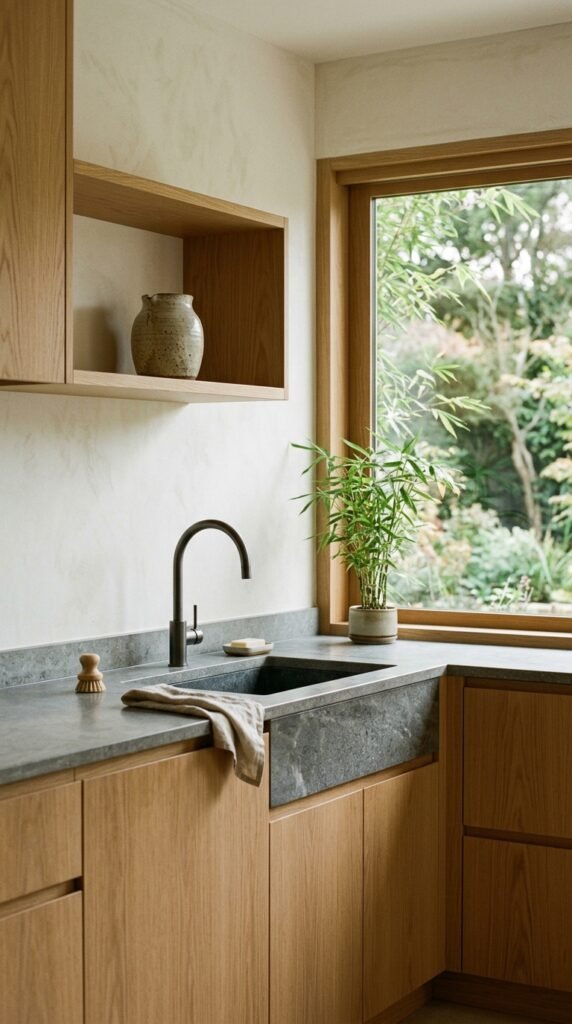
The Japandi kitchen inspiration — a fusion of Japanese minimalism and Scandinavian warmth — is one of the most refined and currently sought-after kitchen design directions, creating spaces of extraordinary visual calm through the combination of natural materials, functional simplicity, and deeply considered proportion.
Natural white oak or ash cabinetry in simple shaker or flat panel profiles, stone or concrete countertops, a single carefully chosen piece of ceramics on an open shelf, and warm but minimal lighting define the Japandi kitchen inspiration — every element is chosen with precision and placed with intention.
The Japandi kitchen inspiration prioritizes quality over quantity in every material and object decision — a single beautiful stone sink rather than a composite alternative, a handthrown ceramic bowl rather than a mass-produced equivalent, and solid wood cabinetry rather than laminated board are all characteristic Japandi choices.
Pro Tip: Maintain a strict monochromatic palette within a Japandi kitchen inspiration rather than introducing multiple accent colors — the visual power of the Japandi aesthetic comes from tonal unity within natural material variation, and the introduction of even one strongly colored accent can disrupt the careful balance that makes the style so calming.
9. The French Country Kitchen Inspiration
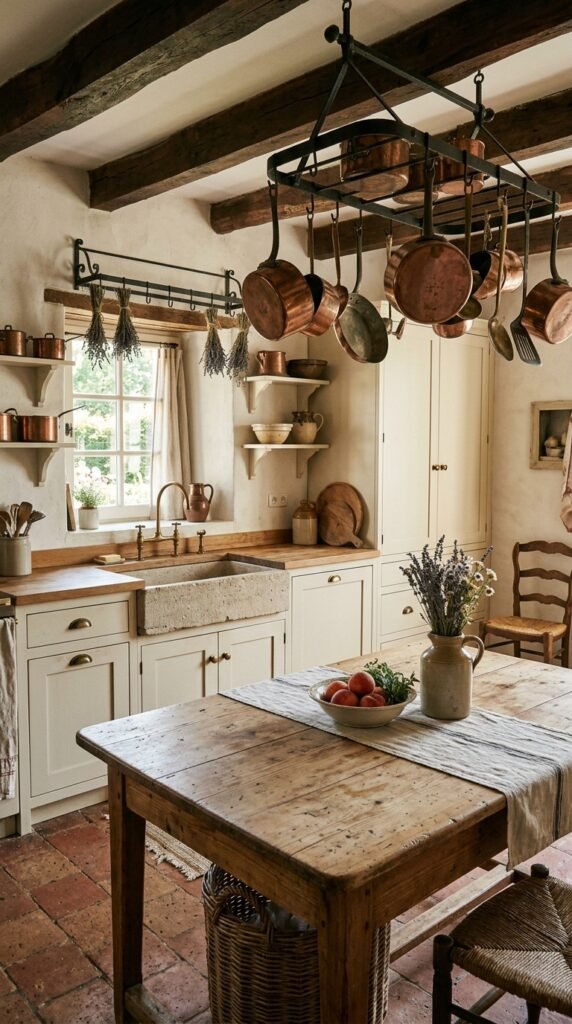
The French country kitchen inspiration — also known as the Provençal kitchen — captures the relaxed, sun-washed elegance of the French countryside in a domestic interior that is simultaneously formal and deeply comfortable, grand and genuinely homely.
Warm cream or pale blue Shaker cabinets, stone or terracotta tile floors, a large stone or porcelain farmhouse sink, copper cookware displayed openly, a large central table, and bunches of dried lavender and herbs create the quintessential French country kitchen inspiration that has inspired home cooks and designers for generations.
The French country kitchen inspiration is one of the most accessory-rich and display-forward design directions — the open display of beautiful cookware, ceramics, and culinary ingredients is a fundamental part of the aesthetic rather than a failure of organization, and the kitchen is deliberately designed to accommodate and celebrate these visual elements.
Pro Tip: Choose unlacquered brass hardware throughout a French country kitchen inspiration rather than polished brass — unlacquered brass develops a beautiful aged patina over time that suits the slightly worn, accumulated-over-decades quality of authentic French country style, while polished brass stays bright and new-looking in a way that contradicts the relaxed, lived-in character of the inspiration.
10. The Bold Color Kitchen Inspiration
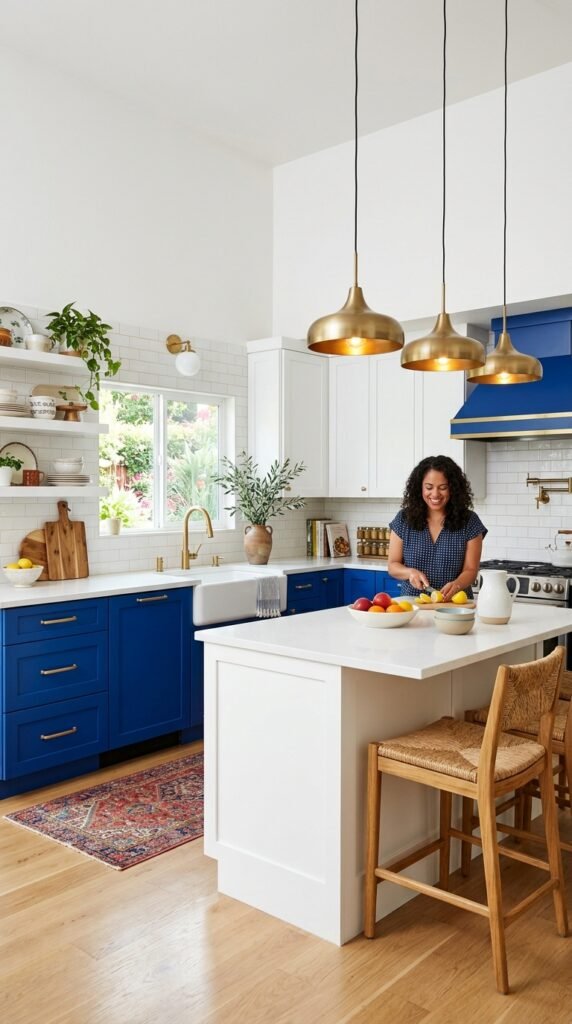
A bold color kitchen inspiration — choosing a genuinely saturated, committed color for the cabinets, the walls, or both — is the most personality-forward and individual kitchen design direction, creating a space that is immediately, unmistakably expressive of the homeowner’s taste and confidence.
Cobalt blue, racing green, paprika red, mustard yellow, deep plum, and warm orange are among the most beloved bold color kitchen inspirations — each creates a completely different emotional atmosphere and pairs distinctly with different countertop materials, hardware finishes, and flooring choices.
The bold color kitchen inspiration requires commitment and internal consistency to succeed — a single bold color applied throughout the cabinetry creates a coherent, considered statement, while partial or timid application creates an unresolved result that has the visual awkwardness of a decision half-made.
Pro Tip: Test bold kitchen cabinet color inspirations by painting a large section of MDF board in the chosen color and placing it in the actual kitchen space under its real lighting conditions before ordering any cabinetry — bold colors are particularly sensitive to different light sources, and a color that looks perfect in a paint store can read very differently in a north-facing kitchen under artificial light.
Pinterest Image Prompt: Vertical 2:3 image — a bold and joyful kitchen inspiration with cobalt blue lower cabinets, white upper cabinets and countertop, white subway tile backsplash, brushed gold hardware, and three brass pendant lights above a white island creating a confident and colorful kitchen statement.
Why Exploring Kitchen Inspirations Is Worth the Time
Taking time to gather and refine kitchen inspirations before making any purchasing or planning decisions is the single most valuable investment you can make in any kitchen renovation — it prevents costly changes mid-project, creates a shared visual language between homeowner and designer or builder, and ensures that the finished kitchen genuinely reflects your taste rather than the default choices of whoever supplied the materials.
A clear kitchen inspiration direction saves money — homeowners who enter a kitchen renovation with a well-defined aesthetic direction make faster, more decisive choices, avoid expensive specification changes, and are less susceptible to upselling into materials and finishes that do not belong to their vision.
The most beautiful and personally meaningful kitchens always start with genuine inspiration — the homes and kitchens that feel most alive, most personal, and most worth cooking in are those where a clear aesthetic vision was held consistently from the first sketch through to the last accessory placement.
Things to Consider Before Committing to Kitchen Inspirations
Before selecting a kitchen inspiration direction to pursue, assess the architectural character of your home carefully — some kitchen inspirations are deeply harmonious with specific building styles and periods, while others create jarring contrasts that undermine both the kitchen and the surrounding spaces. A Scandi minimalist kitchen in a Victorian terrace requires more reconciliation than an organic farmhouse kitchen in the same setting.
Think about your actual cooking style and daily kitchen use before committing to an inspiration that prioritizes aesthetics over function — a chef’s kitchen inspiration in a household that primarily reheats meals, or a maximalist pattern inspiration in a home with young children who require constant surface cleaning, will create daily friction that erodes the initial pleasure of the beautiful design.
Always gather at least 20 to 30 images that genuinely excite you before committing to any kitchen inspiration direction — looking at a large collection of images that you love reveals patterns and consistent elements that define what you truly want more reliably than any single image or trend article, and prevents the regret of choosing a direction based on a single aspirational image that turns out to be unrepresentative of your actual taste.
Comparison Table of Kitchen Inspirations
| Kitchen Inspiration | Cost Range | Style Longevity | Maintenance | Best Home Type | Difficulty |
|---|---|---|---|---|---|
| All-White Classic | $10,000–$40,000 | Very High | Medium | Any | Medium |
| Warm Earthy Organic | $12,000–$45,000 | Very High | Low–Medium | Any | Medium |
| Moody Dark Kitchen | $15,000–$50,000 | High | Low | Any | Medium–High |
| Scandinavian Minimalist | $12,000–$45,000 | Very High | Very Low | Contemporary | Medium |
| Farmhouse Kitchen | $10,000–$40,000 | Very High | Medium | Traditional, rural | Medium |
| Contemporary Industrial | $15,000–$55,000 | High | Low | Loft, urban | Medium–High |
| Mediterranean Inspired | $12,000–$50,000 | High | Medium | Any | Medium |
| Japandi | $15,000–$55,000 | Very High | Very Low | Contemporary | High |
| French Country | $12,000–$50,000 | Very High | Medium | Traditional | Medium |
| Bold Color Kitchen | $10,000–$40,000 | Medium–High | Low | Any | Medium |
| Open Plan Kitchen | $20,000–$80,000+ | High | Medium | Modern | Very High |
| Maximalist Pattern | $15,000–$55,000 | Medium | Medium | Any | Medium–High |
| Coastal Kitchen | $10,000–$40,000 | High | Low | Any | Medium |
| Smart Technology | $20,000–$80,000+ | Medium | Low | Contemporary | High |
| Chef’s Kitchen | $25,000–$100,000+ | Very High | Low | Any | Very High |
Frequently Asked Questions About Kitchen Inspirations
How Do I Find My Personal Kitchen Inspiration?
The most effective approach to finding your personal kitchen inspiration is to spend two to three weeks saving every kitchen image that genuinely excites you — on Pinterest, in shelter magazines, on Instagram, and in design blogs — without filtering or editing in real time. After gathering 30 to 50 images, look at them collectively and identify the patterns: the colors that repeat, the materials that appear most often, and the layouts or details that you keep returning to.
The consistent elements across your most-loved images define your genuine kitchen inspiration more reliably than any single aspirational photograph, and the patterns that emerge from a large collection often surprise people by revealing preferences they had not consciously articulated — a recurring presence of natural wood in images from someone who thought they wanted an all-white kitchen, for example.
How Much Does a Kitchen Renovation Cost for These Inspirations?
Kitchen renovation costs vary enormously based on the size of the kitchen, the quality of materials specified, the extent of structural changes required, and regional labor costs — but as a broad guideline, a basic kitchen renovation implementing a straightforward inspiration like an all-white Shaker kitchen typically starts at $10,000 to $15,000 for a standard-sized room.
A mid-range kitchen renovation achieving inspirations like a dark moody kitchen, a Japandi design, or a coastal aesthetic with quality materials and integrated appliances typically ranges from $25,000 to $50,000, while high-end renovations pursuing chef’s kitchen, open-plan transformation, or fully integrated smart kitchen inspirations regularly exceed $75,000 to $100,000 in total cost.
Can I Mix Multiple Kitchen Inspirations Together?
Mixing elements from two or three kitchen inspirations produces some of the most individual and beautiful kitchen results — the key is identifying which elements from each inspiration are structurally essential to the look and limiting the borrowing from any one direction to those essential characteristics.
The most successful mixed kitchen inspiration combinations share a consistent palette — farmhouse and Japandi both suit warm natural materials and restrained palettes, making them natural fusion partners, while industrial and coastal share a preference for honest materials and simple forms. Attempting to mix inspirations with fundamentally conflicting palettes — maximalist pattern and Scandi minimalism, for example — typically produces results that feel unresolved rather than eclectic.
How Do I Stay True to My Kitchen Inspiration Throughout the Design Process?
The most effective way to maintain consistency with your kitchen inspiration throughout a renovation is to create a physical mood board — a printed or physical collection of images, material samples, paint chips, and hardware finishes representing your chosen direction — and refer to it at every decision point throughout the project.
When any proposed substitution or compromise arises during the renovation — a tile that is out of stock, a cabinet color that is slightly different, a hardware finish that is unavailable in the specified style — test the alternative against the mood board before accepting it. Incremental substitutions that individually seem acceptable can cumulatively drift significantly from the original kitchen inspiration, and the mood board provides an objective reference against which every change can be assessed.