
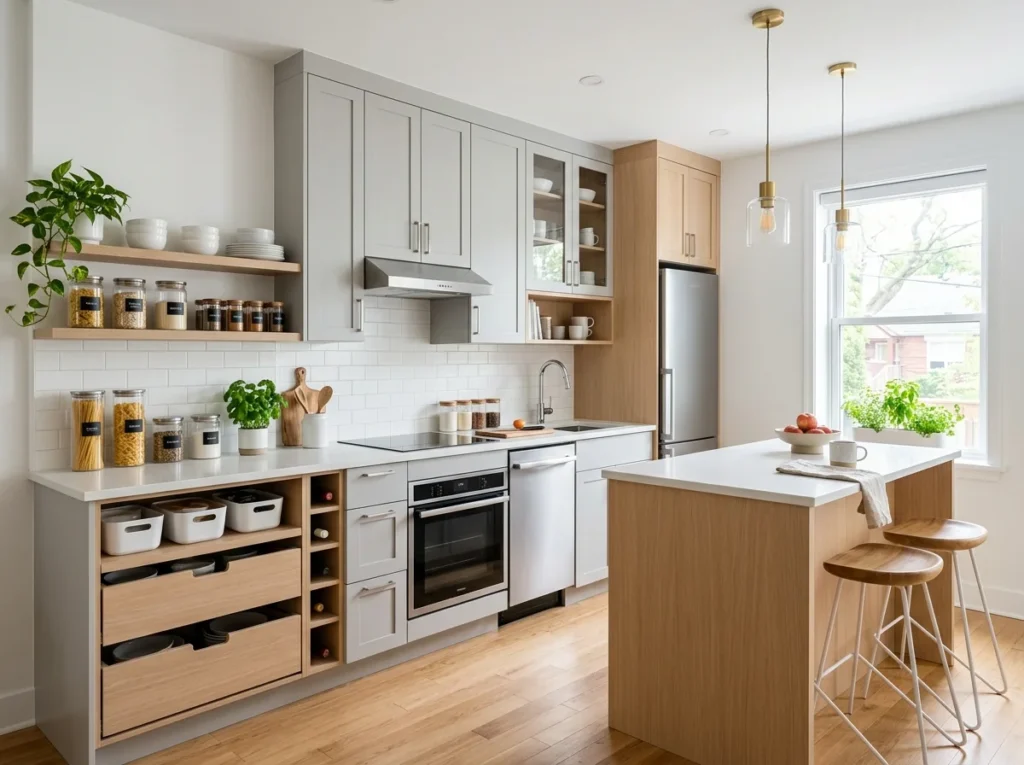
Designing a beautiful apartment kitchen is one of the most rewarding and creative challenges in home decorating. The constraints of a compact space demand smarter storage solutions, more intentional styling choices, and a greater respect for every square inch than a larger kitchen ever requires.
The best apartment kitchens prove that small does not mean compromised. With the right layout strategies, storage ideas, and design choices, even the most compact kitchen can feel organized, functional, and genuinely beautiful. The key is making every decision count — from the cabinet hardware to the countertop material to the way the shelves are styled.
This guide covers the best apartment kitchen ideas that renters, designers, and small-space enthusiasts actually recommend — with practical tips, honest comparisons, and product picks to help you create an apartment kitchen that works brilliantly and looks stunning every single day.
List of 13 Best Apartment Kitchen Ideas
1. Maximize Vertical Space with Floor-to-Ceiling Storage
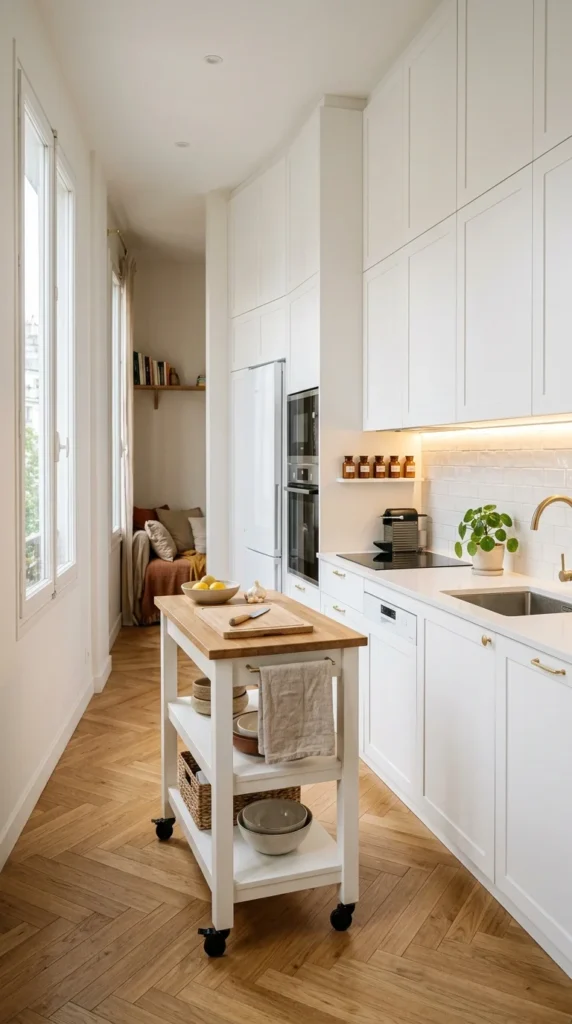
Floor-to-ceiling storage is the single most impactful strategy for an apartment kitchen — extending cabinetry or shelving all the way to the ceiling transforms wasted overhead space into functional storage and makes the kitchen appear taller and more architecturally considered simultaneously.
The gap between the top of standard upper cabinets and the ceiling is one of the most consistently wasted spaces in any apartment kitchen — filling this zone with open shelving, additional closed cabinets, or decorative baskets and containers adds a full additional tier of storage without consuming any floor area.
In a rental apartment kitchen where new cabinetry is not an option, freestanding shelving units that reach ceiling height create the same vertical storage effect without permanent modification — a tall narrow pantry unit, a ladder shelf, or a freestanding kitchen cabinet beside the refrigerator all make productive use of ceiling-height space.
Pro Tip: Reserve the highest ceiling-height storage for rarely used items — seasonal entertaining pieces, large platters, and bulk pantry overflow — accessed with a compact kitchen step stool kept nearby. Everyday essentials should remain at comfortable reaching height so the apartment kitchen functions efficiently in daily use without requiring a stool for routine tasks.
2. Install Open Floating Shelves for an Airy Feel
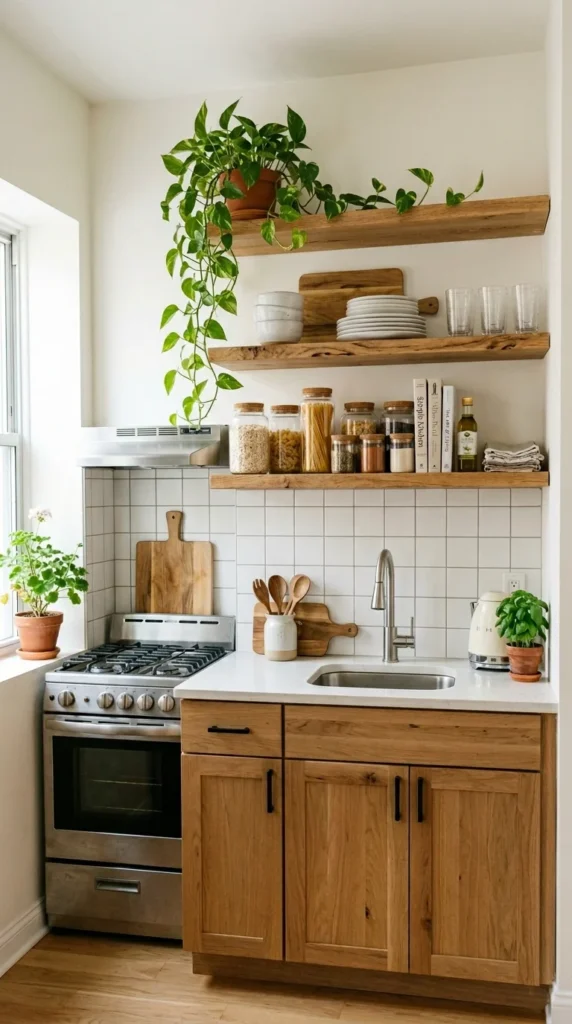
Open floating shelves replacing some or all upper cabinets in an apartment kitchen create an immediate visual opening of the space — removing the visual bulk of closed cabinet boxes makes the kitchen feel significantly larger, airier, and more welcoming than the identical square footage with closed cabinets would allow.
The open shelf format is particularly valuable in a small apartment kitchen because it eliminates the psychological enclosure created by a full wall of closed upper cabinet doors — the eye travels past the shelf and its contents to the wall behind, creating visual depth that closed cabinets actively prevent.
Choose solid wood floating shelves in white oak, pine, or painted MDF for an apartment kitchen — the shelf material and finish become a design element in their own right, and a warm natural wood shelf creates the organic character that most compact apartment kitchens genuinely need.
Pro Tip: Install floating shelves using heavy-duty toggle anchors rated for at least 75 pounds each in rental apartments where accessing wall studs is uncertain — properly specified toggle anchors provide reliable support for fully loaded kitchen shelves without requiring stud-finding accuracy, and most can be removed at the end of a tenancy without significant wall damage.
3. Use a Rolling Kitchen Cart or Island
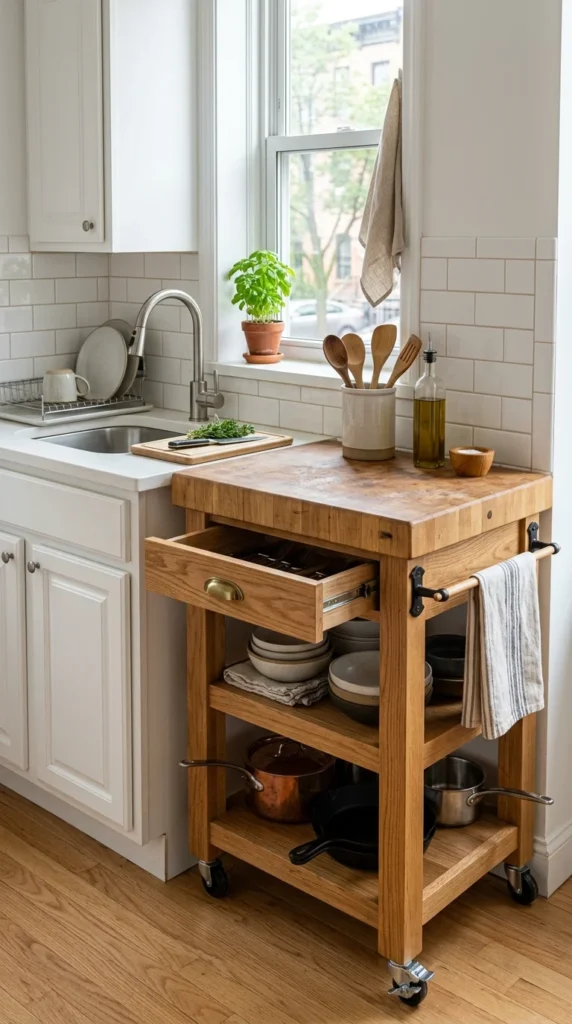
A rolling kitchen cart or island is the most flexible and practical storage solution available for an apartment kitchen — it provides additional counter workspace, extra storage, and the mobility to be repositioned or moved entirely depending on the layout needs of any given meal or occasion.
A butcher block-topped rolling cart provides a genuine food preparation surface that adds meaningful counter area to an apartment kitchen without permanent installation — it can be rolled to the most useful position during cooking and stored against a wall or in a pantry area when the kitchen needs to be clear.
Choose a rolling kitchen cart with lower shelving or drawers rather than a purely open base — the enclosed storage below the work surface handles everything from pots and pans to grocery bags and cleaning supplies in a way that open-base carts cannot, maximizing the storage value of every component.
Pro Tip: Select a rolling kitchen cart with a butcher block or solid wood top that can be used as a direct cutting surface — this converts the cart from purely additional counter space into a dedicated prep station that reduces the pressure on the apartment kitchen’s limited fixed counter area during active cooking sessions.
4. Embrace a Bold Backsplash for Visual Interest
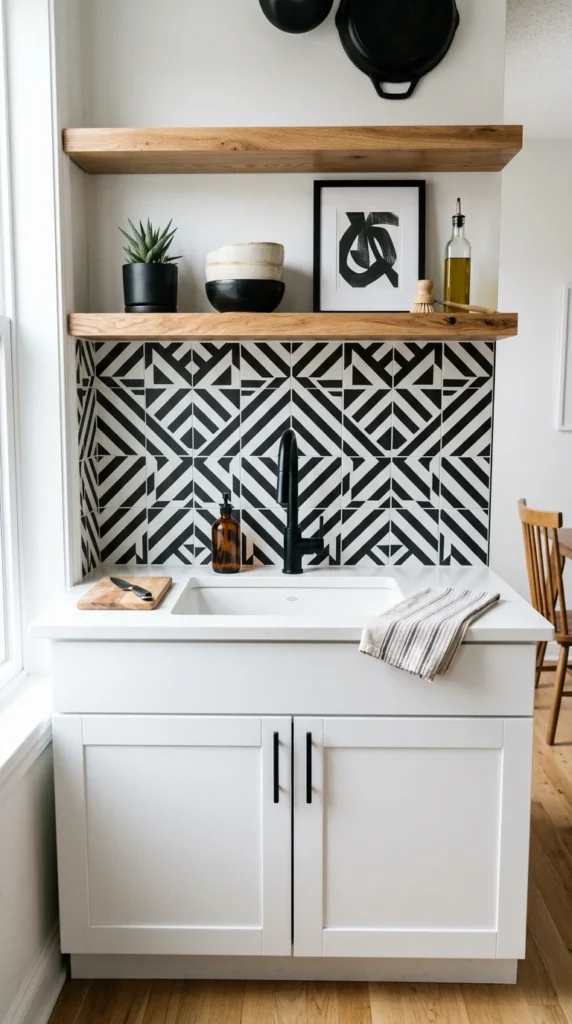
A bold backsplash is the most impactful design investment in an apartment kitchen — it introduces color, pattern, and personality to the most prominent vertical surface in the room without consuming any floor space, altering the layout, or requiring permanent changes to the kitchen’s structure.
Peel-and-stick backsplash tiles are the most popular apartment kitchen backsplash solution because they require no permanent adhesive, no grouting, and no professional installation — they can be applied directly over an existing backsplash and removed completely at the end of a tenancy, making them perfectly suited to rental apartment kitchens.
Moroccan zellige patterns, black and white subway tiles with dark grout, geometric encaustic patterns, and bold color field glass tiles are among the most popular choices for an apartment kitchen backsplash transformation — each creates a dramatically different atmosphere from the same basic tiled surface.
Pro Tip: In a rental apartment kitchen, always test peel-and-stick backsplash tiles on a small hidden section before full installation — different existing backsplash materials and paint finishes accept adhesive tiles with different levels of reliability, and a small test section reveals any adhesion or removal issues before they affect the full surface.
5. Maximize Under-Cabinet and Cabinet Door Storage
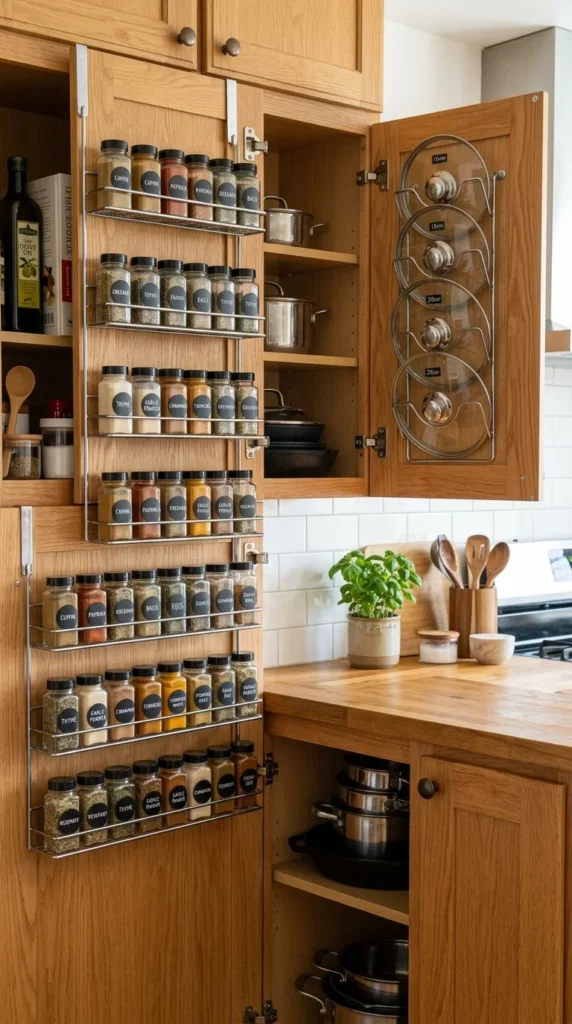
Under-cabinet and cabinet door storage accessories are the most overlooked storage opportunities in any apartment kitchen — the inside face of every cabinet door and the underside of every upper cabinet are essentially free storage real estate that most kitchens leave completely unused.
Over-door spice racks, under-cabinet mounted knife strips, under-cabinet stemware racks, over-door cutting board holders, and inside-door pot lid organizers all convert previously wasted space into organized, accessible storage without consuming any countertop or shelf area.
A magnetic knife strip mounted on the inside of a cabinet door above the countertop moves the knife block completely off the counter and out of the drawer while keeping every knife safely stored and immediately accessible during food preparation — one of the most space-efficient single storage upgrades available in any apartment kitchen.
Pro Tip: Measure the internal clearance between shelf and door in each cabinet before purchasing any over-door or inside-door storage organizer — the most common installation failure with cabinet door accessories is purchasing a holder that is too deep to allow the cabinet door to close completely, which renders the organizer unusable and the cabinet permanently propped open.
6. Create a Faux Pantry with a Curtained Cabinet
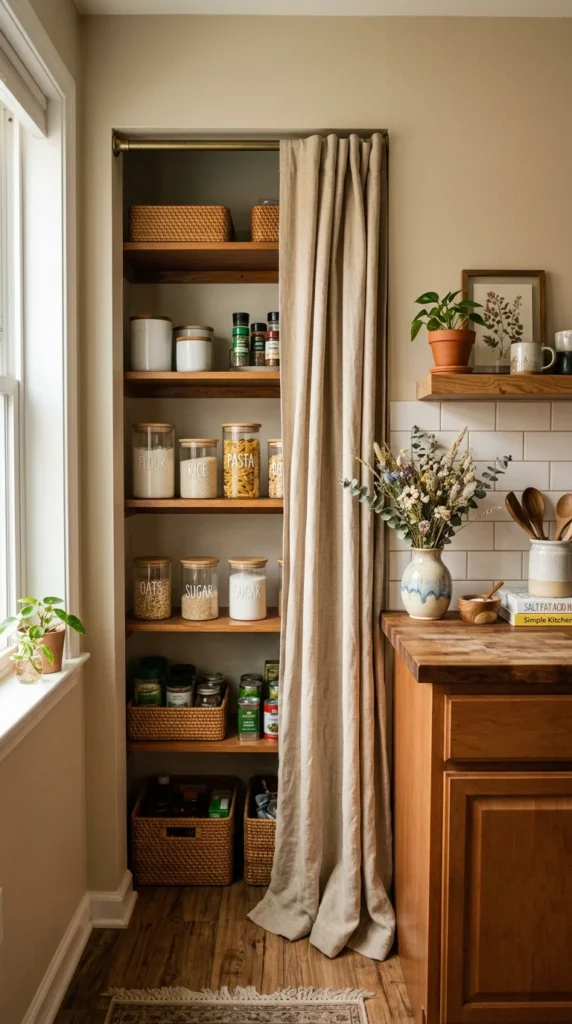
A curtained cabinet or faux pantry — a section of open shelving or a standard cabinet with the doors removed and replaced by a floor-length fabric curtain — is one of the most charming and practical apartment kitchen storage ideas, providing ample pantry-style storage without the bulk of a dedicated pantry unit.
The fabric curtain conceals everyday pantry clutter — cereal boxes, canned goods, cleaning supplies, and miscellaneous kitchen items — behind an attractive, room-appropriate fabric surface that adds color and texture to the apartment kitchen while solving the storage problem entirely.
Choose a curtain fabric that complements the apartment kitchen’s existing palette — a linen curtain in a natural tone suits organic and farmhouse kitchens, a printed cotton pattern suits eclectic and colorful kitchens, and a simple stripe suits contemporary and Scandi apartment kitchen aesthetics.
Pro Tip: Install the curtain on a tension rod fitted inside the cabinet opening rather than on a decorative rod mounted outside the frame — an inside-mounted tension rod creates a cleaner, more built-in appearance and preserves the full width of the cabinet opening, while an external rod reduces accessible width and adds visual complexity to an apartment kitchen that benefits from simplicity.
7. Use Mirrors and Light Colors to Expand the Space
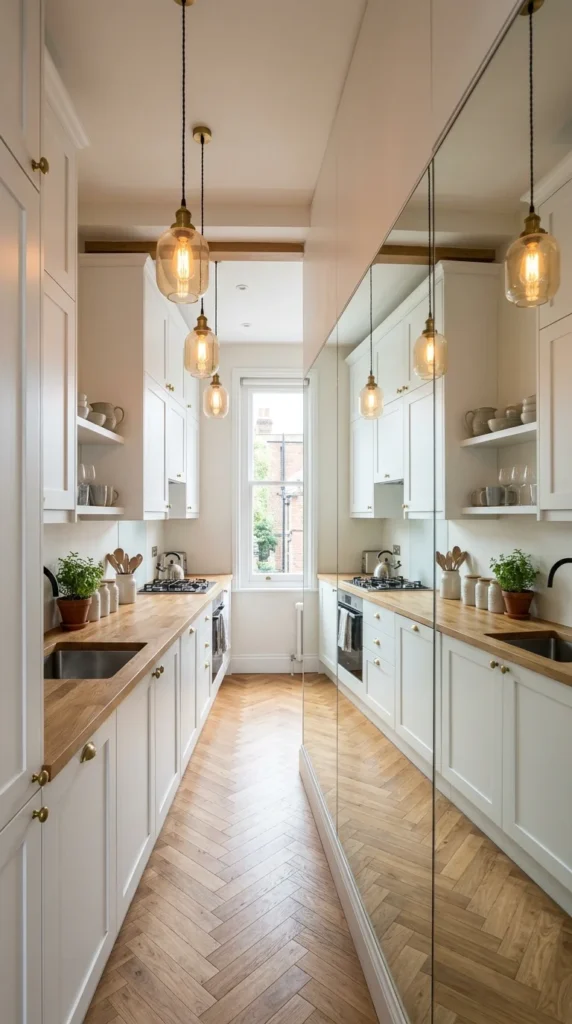
Light colors and mirrors are the most powerful visual tools for making an apartment kitchen feel larger than its actual dimensions — they reflect light, reduce visual density, and create the illusion of spatial depth that dark or busy surfaces actively work against.
Painting apartment kitchen walls in warm white, pale cream, or soft greige makes the room feel immediately brighter and more open — the light-reflecting quality of pale tones reduces the visual compression that darker colors create in compact spaces and allows the eye to travel further before meeting a surface.
A large mirror or mirrored splashback panel on one apartment kitchen wall reflects the opposite wall’s cabinets and contents, visually doubling the apparent width of the space — one of the most effective single interventions for a narrow apartment kitchen that feels uncomfortably corridor-like.
Pro Tip: Install a full-length mirror panel from countertop to upper cabinet line on the shortest wall of a narrow apartment kitchen — the reflected view of the opposite counter run and the cooking equipment creates a convincing impression of a kitchen twice as wide as it actually is, and the reflective surface also dramatically increases the apparent light level in the entire room.
8. Invest in Multi-Functional Appliances
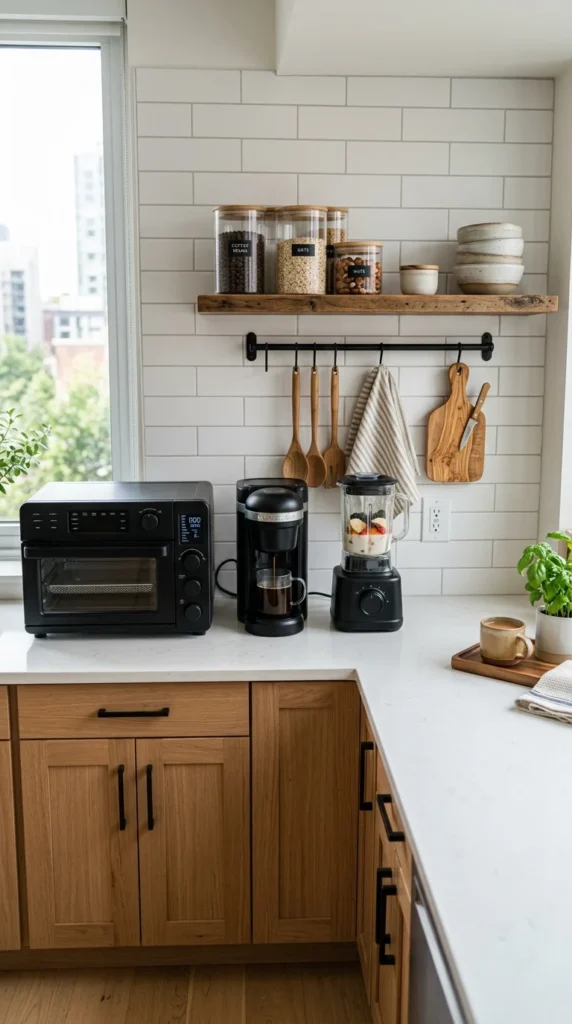
Multi-functional compact appliances are among the most practically transformative investments in an apartment kitchen — replacing several single-purpose appliances with one multi-function unit frees up significant counter and cabinet space while maintaining the full range of cooking capabilities.
A multi-function air fryer and oven combination, an Instant Pot that replaces a slow cooker and pressure cooker, or a compact toaster oven with convection and broil functions each consolidates multiple kitchen tasks into a single appliance footprint — the cabinet and counter space saved is immediately apparent and permanently maintained.
Compact appliances specifically designed for small kitchens — narrow dishwashers, counter-depth refrigerators, 24-inch range cookers, and single-bowl undermount sinks** — scale appropriately to the apartment kitchen’s proportions without sacrificing the functional capabilities that standard-sized equivalents provide.
Pro Tip: Choose multi-function appliances in a consistent color family within the apartment kitchen — all black, all stainless, or all white appliances create a visually cohesive countertop landscape that reads as deliberately considered, while a mix of different appliance colors and finishes creates visual noise that makes even a tidy apartment kitchen feel slightly chaotic.
9. Add Personality with Plants and Natural Elements
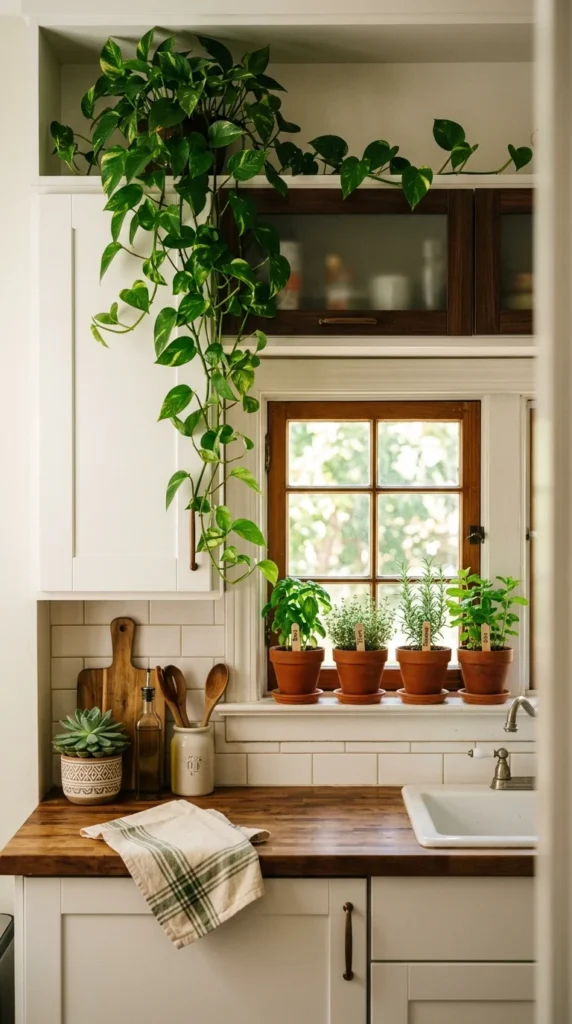
Indoor plants and natural elements transform an apartment kitchen from a purely functional space into one that feels genuinely alive, personal, and warm — the organic texture, color, and vitality of plants create a sensory richness that no manufactured accessory can replicate.
A kitchen window herb garden — small terracotta pots of basil, rosemary, chives, and thyme on the windowsill — provides both visual warmth and genuine culinary utility that suits the apartment kitchen’s limited space perfectly. Fresh herbs within arm’s reach during cooking elevate every meal while the plants add green life to the most-viewed window position.
Trailing pothos plants on the top of cabinets, small succulents on the counter, and a single statement snake plant on the floor beside the refrigerator create a layered, verdant quality in an apartment kitchen without consuming any functional surface area.
Pro Tip: Choose trailing plants for the tops of apartment kitchen cabinets — a pothos or heartleaf philodendron planted in a small pot on top of the cabinet and allowed to trail down the cabinet face adds extraordinary organic warmth and visual softness to the hardest-working wall in the kitchen without occupying any counter or shelf space.
10. Upgrade Hardware and Fixtures for Maximum Impact
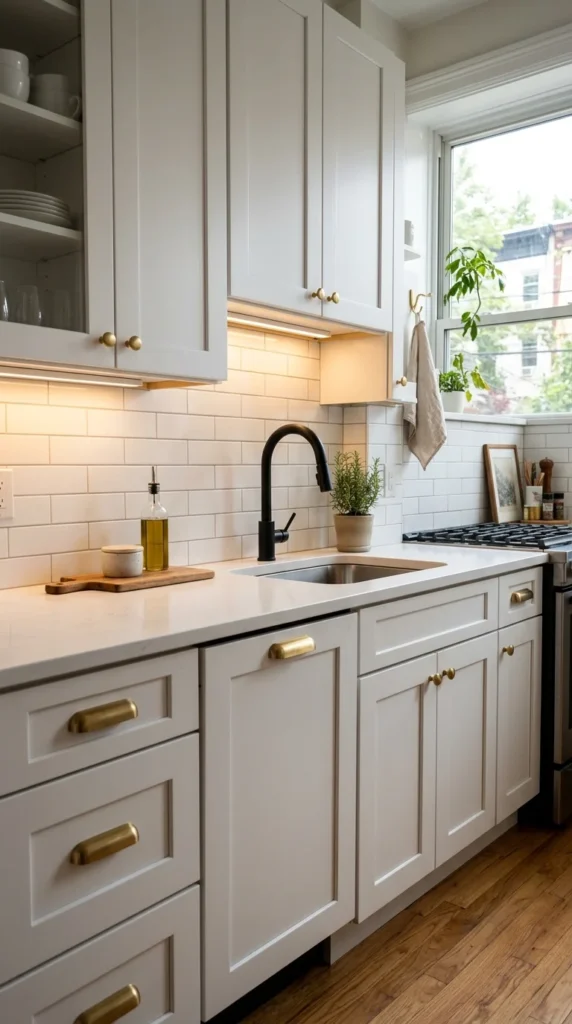
Upgrading cabinet hardware and fixtures is the highest-impact, lowest-disruption transformation available in any apartment kitchen — replacing builder-grade knobs and pulls with quality brass, matte black, or ceramic hardware instantly elevates the perceived quality and aesthetic sophistication of every cabinet in the kitchen.
In a rental apartment kitchen where cabinet replacement is not possible, new hardware transforms existing cabinets — the same doors and drawer fronts in the same color look dramatically more considered with beautiful hardware than with the generic stainless knobs they were installed with, and the change requires only a screwdriver and 30 minutes.
Replacing the kitchen faucet with a premium model in matte black, brushed brass, or brushed nickel is the single most visible fixture upgrade in an apartment kitchen — the faucet is one of the most frequently seen and touched objects in the room, and a quality faucet communicates elevated design standards that affect the perception of every surrounding surface.
Pro Tip: When replacing cabinet hardware in a rental apartment kitchen, keep the original hardware in a labeled bag and reinstall it before moving out — replacing rental hardware without permission can technically constitute a breach of tenancy, and having the originals available ensures the apartment can be restored to its original specification quickly and without cost.
11. Define Zones for Cooking, Prep, and Storage
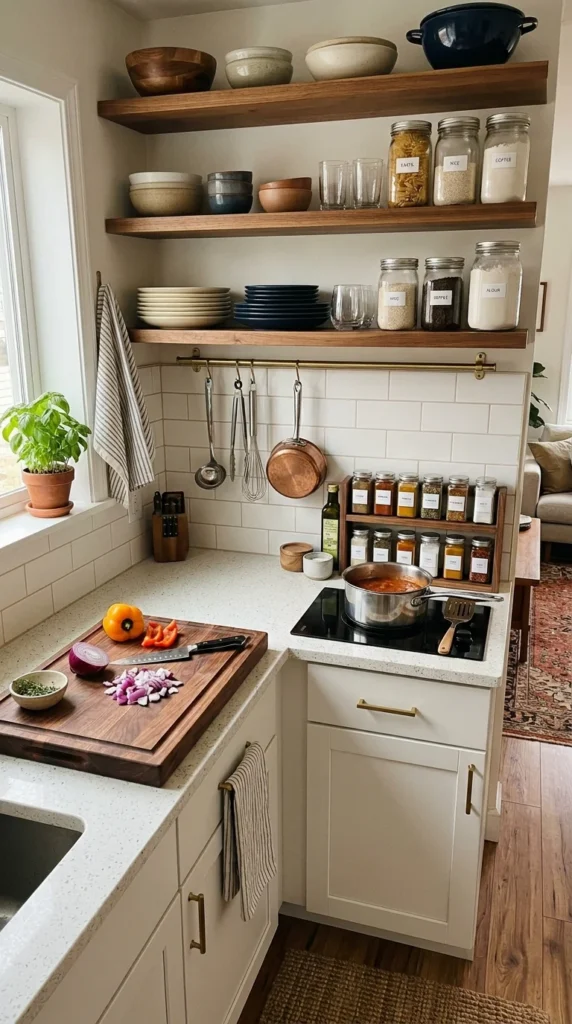
Defining clear functional zones within an apartment kitchen — a dedicated cooking zone, a food preparation zone, and an organized storage zone — creates an implicit organizational logic that makes the small space function far more efficiently than an undifferentiated kitchen where everything competes for the same surface.
The cooking zone centers on the hob and oven, with the most-used cooking tools, oils, and seasonings within immediate reach. The prep zone is the longest continuous counter run, with a cutting board, knife storage, and fresh ingredients at hand. The storage zone consolidates pantry items, cooking equipment, and cleaning supplies in an organized, dedicated location.
Even in the smallest apartment kitchen, creating these distinctions — even if they overlap physically — creates a mental model of the space that makes cooking more efficient, reduces the time spent searching for tools mid-recipe, and prevents the counter clutter that accumulates when everything is stored without designated homes.
Pro Tip: Use a small area rug or anti-fatigue mat to physically mark the primary standing zone in an apartment kitchen — beyond its comfort benefit during extended cooking sessions, the rug creates a visual anchor that defines the cooking zone spatially and adds warmth and color to the apartment kitchen floor without any permanent modification.
Why Investing in Your Apartment Kitchen Is Worth It
A well-designed apartment kitchen significantly improves daily quality of life in ways that extend far beyond cooking — a kitchen that is organized, functional, and genuinely pleasant to spend time in makes home cooking more frequent, more enjoyable, and more social, creating a positive lifestyle ripple effect across meals, health, and household happiness.
Even rental apartment kitchens can be meaningfully and affordably upgraded through reversible improvements — new hardware, peel-and-stick backsplash tiles, paint, floating shelves, and stylish storage accessories require minimal investment and can transform a dated or uninspiring kitchen into one that feels designed and cared for without violating tenancy agreements.
The cumulative effect of multiple small improvements to an apartment kitchen is often more visually impressive than any single large change — new hardware plus a plant plus organized shelves plus a quality faucet plus a styled countertop vignette creates a kitchen that looks genuinely renovated to most observers, even though each individual change was modest in cost and complexity.
Things to Consider Before Redesigning Your Apartment Kitchen
Before making any changes to a rental apartment kitchen, review your tenancy agreement carefully to understand what modifications are permitted — some landlords allow cosmetic changes like paint and removable accessories with prior written permission, while others prohibit any modification whatsoever. Written confirmation of what is and is not permitted protects both tenant and landlord and prevents costly disputes at the end of the tenancy.
Think carefully about the relationship between storage capacity and the items you actually own before purchasing organizational systems for your apartment kitchen — the most common small kitchen storage mistake is buying organizers sized for an idealized kitchen inventory rather than the actual quantity and size of items that need to be stored, resulting in organizers that either overflow immediately or create empty space in a kitchen where every inch counts.
Always measure every dimension of your apartment kitchen before purchasing any furniture, appliance, or storage solution — compact apartment kitchens have less margin for error in sizing than larger kitchens, and a rolling cart that is 2 inches too wide for the available gap, an appliance that cannot open its door fully due to adjacent cabinet clearance, or a shelf that is too deep for the wall space available are all frustratingly common and entirely avoidable mistakes.
Comparison Table of Apartment Kitchen Ideas
| Idea | Cost Range | Difficulty | Renter-Friendly | Impact Level | Space Required |
|---|---|---|---|---|---|
| Floor-to-Ceiling Storage | $200–$1,500 | Low–Medium | Yes | Very High | Vertical wall space |
| Open Floating Shelves | $50–$400 | Medium | Yes | High | Wall space |
| Rolling Kitchen Cart | $80–$400 | Low | Yes | High | Floor beside counter |
| Bold Backsplash (Peel-Stick) | $30–$200 | Low | Yes | Very High | Behind counter |
| Under-Cabinet / Door Storage | $15–$100 | Low | Yes | High | Cabinet interiors |
| Curtained Faux Pantry | $20–$100 | Low | Yes | Medium–High | Shelf or cabinet |
| Mirrors and Light Colors | $30–$300 | Low–Medium | Yes | High | Wall surface |
| Multi-Function Appliances | $50–$400 | Low | Yes | High | Counter space |
| Plants and Natural Elements | $20–$150 | Low | Yes | Medium–High | Windowsill, counter |
| Hardware and Fixture Upgrade | $50–$300 | Low | Yes (keep originals) | Very High | No space needed |
| Defined Functional Zones | $0–$100 | Low | Yes | High | No space needed |
| Paint or Contact Paper Cabinets | $30–$150 | Medium | Yes | Very High | No space needed |
| Breakfast Bar or Dining Extension | $100–$1,500 | Low–High | Partly | High | Counter overhang |
Frequently Asked Questions About Apartment Kitchens
How Do I Make a Small Apartment Kitchen Feel Bigger?
The most effective strategies for making a small apartment kitchen feel bigger are using light colors on walls and cabinet fronts, replacing some upper cabinets with open shelves, installing a mirrored or highly reflective backsplash, keeping countertops as clear as possible through effective storage, and using consistent flooring that runs into the kitchen from adjacent spaces without a threshold or transition.
Layered lighting is equally important — a bright under-cabinet light, a pendant light over the workspace, and a window kept clear of heavy treatments together create the best-lit, most spatially generous version of any apartment kitchen, as poor lighting makes small kitchens feel cave-like regardless of how well they are organized or decorated.
What Are the Best Storage Solutions for a Small Apartment Kitchen?
The most impactful apartment kitchen storage solutions for small spaces are magnetic knife strips on the wall, over-door spice racks inside cabinet doors, vertical plate organizers that double the capacity of standard kitchen shelves, a rolling cart for additional counter and cabinet space, and stackable clear containers in the pantry that replace original packaging and maximize visual organization and accessibility.
Using every vertical surface — the inside faces of cabinet doors, the underside of upper cabinets, the tops of cabinets, and any available wall space — creates significant additional storage capacity in a small apartment kitchen without consuming any counter or floor area that cooking and circulation require.
How Can I Upgrade a Rental Apartment Kitchen Without Losing My Deposit?
The most impactful rental apartment kitchen upgrades that are fully reversible and deposit-safe are new cabinet hardware (kept in original hardware for reinstallation), peel-and-stick backsplash tiles, removable contact paper on cabinet fronts, a new faucet (with original stored for reinstallation), tension rod curtains, freestanding storage units, floating shelves on damage-free adhesive mounts, and plants and accessories throughout.
Always document the apartment kitchen’s original condition with dated photographs before making any changes, keep all original hardware and fixtures labeled and stored safely, and obtain written landlord permission for any changes before proceeding — the combination of documentation, reversibility, and permission covers every apartment kitchen upgrade against deposit deduction risk.
What Is the Most Important Upgrade for an Apartment Kitchen?
The single most impactful apartment kitchen upgrade depends on the specific kitchen’s biggest weakness — but across most apartment kitchens, new cabinet hardware delivers the highest visible return for the lowest cost and effort, transforming the appearance of every cabinet in the kitchen with nothing more than a screwdriver and a one-time hardware purchase.
The second most impactful upgrade for most apartment kitchens is a peel-and-stick backsplash transformation — the backsplash is the most visually prominent vertical surface in the kitchen, and changing it from a dated or plain tile to a bold, beautiful pattern creates an immediate and dramatic improvement in the kitchen’s overall design quality that no accessory change can match for sheer visual impact.