
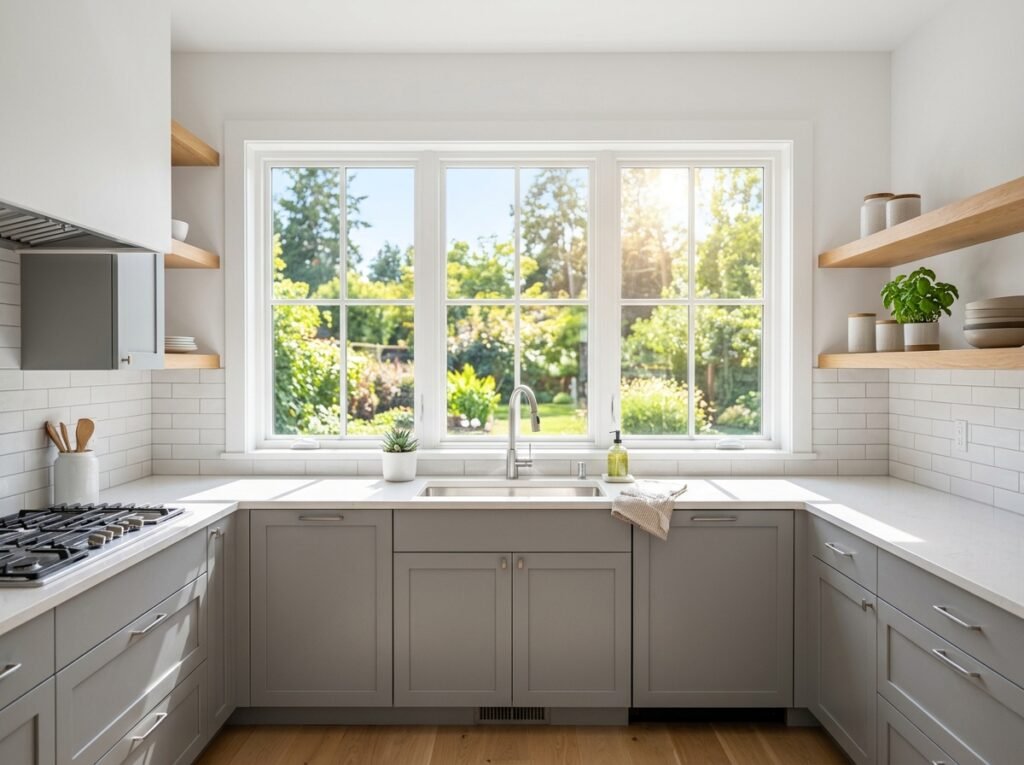
The kitchen window is one of the most important and most underdesigned elements in any kitchen — it is the primary source of natural light, the visual connection to the outdoors, and one of the most frequently seen surfaces in the room’s busiest work zone. Getting it right transforms the daily experience of cooking.
Whether you are planning a full kitchen renovation, replacing an existing window, or simply looking to style and dress the window you already have, the choices you make here affect how bright, welcoming, and functional your kitchen feels throughout every hour of the day.
This guide covers the best kitchen window ideas that kitchen designers and home stylists actually recommend — with practical tips, honest comparisons, and product picks to help you make the most of every inch of your kitchen’s most important natural light source.
List of 13 Best Kitchen Window Ideas
1. Garden Window or Greenhouse Window
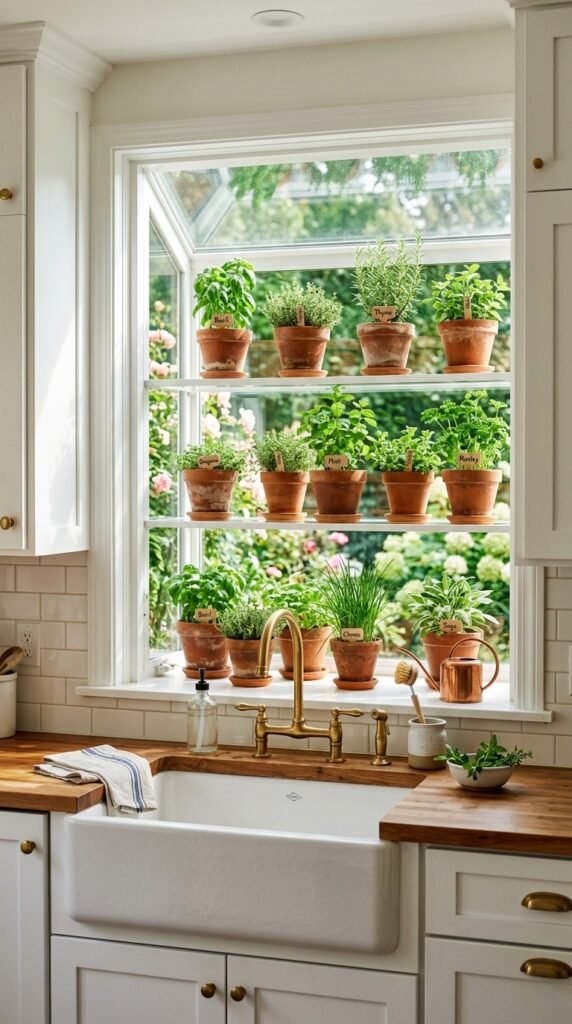
A garden window or greenhouse window is one of the most beloved and functional kitchen window upgrades available — it projects outward from the wall like a small bay, creating a three-dimensional glass enclosure with a shelf inside that bathes plants, herbs, and small objects in natural light from three sides simultaneously.
The extended sill and side glass panels of a garden window create a miniature indoor greenhouse effect that is perfect for growing culinary herbs — basil, parsley, chives, and mint thrive in the warm, south-facing conditions that a projecting kitchen garden window provides year-round.
Garden windows bring significantly more natural light into the kitchen than a standard flat window of the same rough opening size — the angled top panel and side panels capture light from a wider arc of the sky and direct it deep into the kitchen interior.
Pro Tip: Install a removable waterproof tray on the garden window shelf before placing any plants or water-containing vessels — the tray protects the wooden shelf from water damage and makes plant maintenance, watering, and occasional shelf cleaning significantly easier without risk of moisture damage to the window frame.
2. Window Above the Kitchen Sink
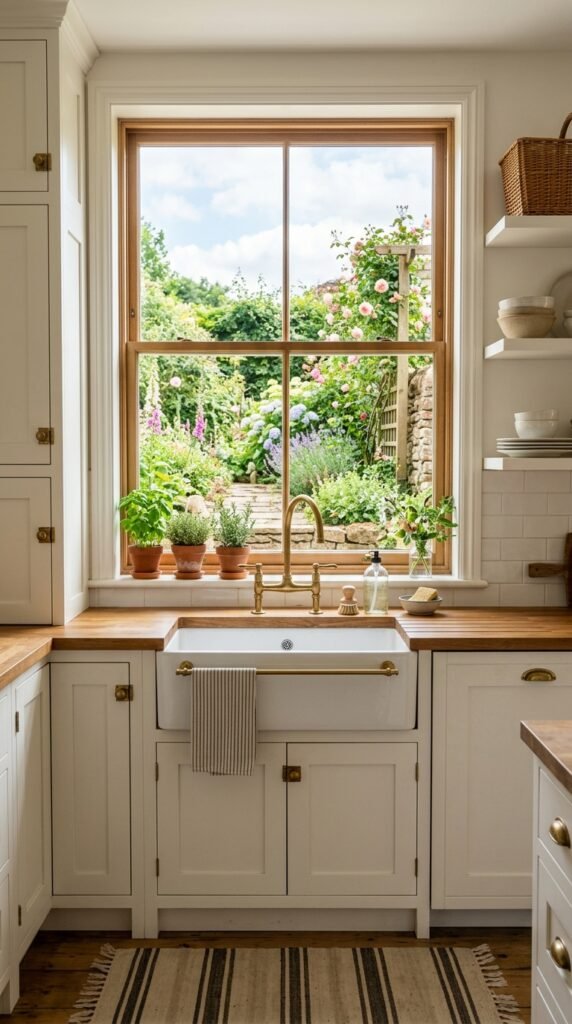
A window positioned directly above the kitchen sink is the single most practically valuable kitchen window configuration — it brings natural light directly to the room’s primary work zone, provides a view to focus on during dishwashing, and creates the most natural ventilation position for cooking steam and odors.
The emotional and psychological benefit of a kitchen window above the sink is consistently underestimated — a view of the garden, the street, or even simply the sky while doing dishes transforms the most repetitive kitchen task from a closed, dark chore into a moment of genuine connection with the outside world.
Size the above-sink kitchen window as generously as the wall structure allows — a wide, low-sill window that runs close to the countertop height and reaches near the upper cabinet line brings dramatically more light into the work zone than a small punched opening that leaves most of the wall solid.
Pro Tip: Keep the above-sink kitchen window treatment minimal or absent entirely — blinds, curtains, or shutters above the sink inevitably get splashed and are difficult to keep clean in the most water-intensive zone of the kitchen. A bare window or at most a simple café curtain covering the lower half delivers maximum light with minimal maintenance.
3. Bay Window Kitchen Seating Nook
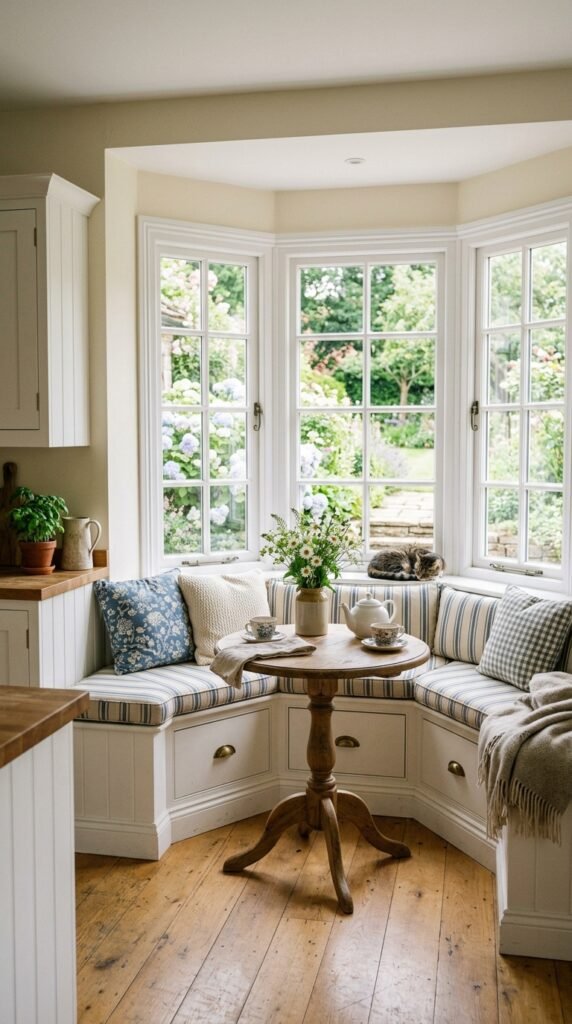
A bay window kitchen seating nook — a projecting three-panel window configuration with a built-in bench seat below — is one of the most charming and space-transforming kitchen window ideas, creating a dedicated social zone within the kitchen that makes the room feel significantly larger and more welcoming.
The three angled or squared panels of a kitchen bay window flood the seating area with natural light from multiple directions, creating the brightest and most naturally lit spot in the kitchen — the perfect location for morning coffee, casual meals, and the inevitable gathering of family and guests around the cook.
A built-in window seat with storage drawers beneath maximizes the practical value of the bay window nook — the enclosed under-seat storage provides valuable kitchen overflow space for rarely used entertaining items, large platters, and seasonal equipment.
Pro Tip: Upholster the kitchen bay window bench seat in a durable, wipeable performance fabric rather than standard upholstery material — the kitchen environment exposes the seat to food splashes, sticky hands, and daily wear that standard linen or cotton upholstery cannot withstand without frequent professional cleaning.
4. Casement Kitchen Windows for Maximum Ventilation
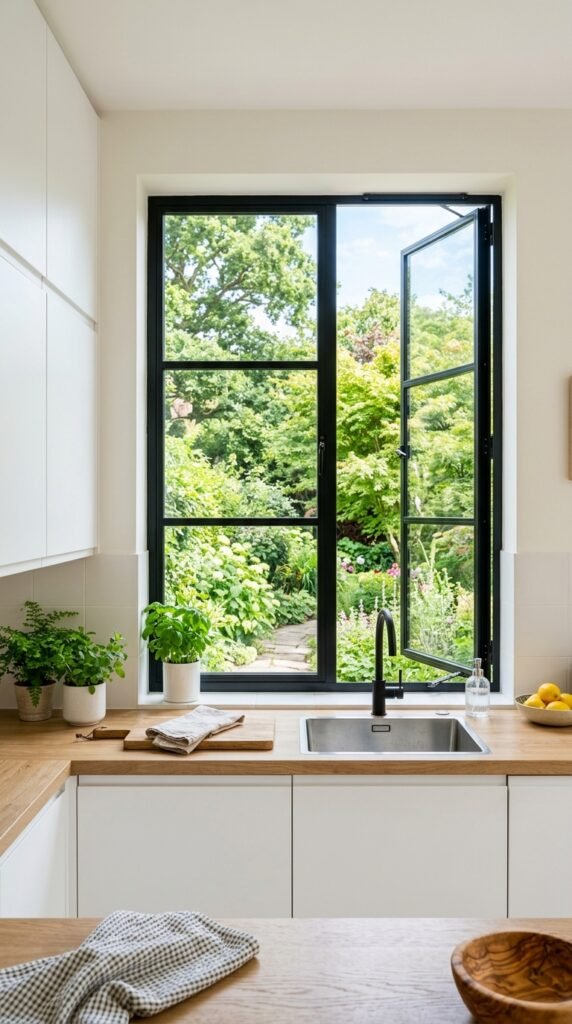
Casement kitchen windows — side-hinged windows that swing open outward like a door — are the most practical and ventilation-efficient kitchen window type for an active cooking environment. They can be opened fully to create a wide, unobstructed airflow path that extracts cooking steam, odors, and heat far more effectively than sliding or double-hung windows.
The full-opening capability of casement kitchen windows makes them particularly valuable above a hob or stove — opening the casement window while cooking allows hot, steamy air to escape directly rather than circulating through the kitchen and condensing on surfaces.
Casement kitchen windows in slim-frame black steel or aluminum are one of the most design-forward window choices for contemporary kitchens — the narrow frames maximize the glass area and create a graphic, industrial quality that suits modern, loft, and warehouse-conversion kitchen aesthetics.
Pro Tip: Install a window latch that allows the casement kitchen window to be held open at multiple positions — being able to set the window at a small ventilation crack for background airflow or open it fully for maximum extraction is more versatile and practical than a simple open-or-closed binary that most basic casement hardware provides.
5. Pass-Through Kitchen Window to Outdoor Dining
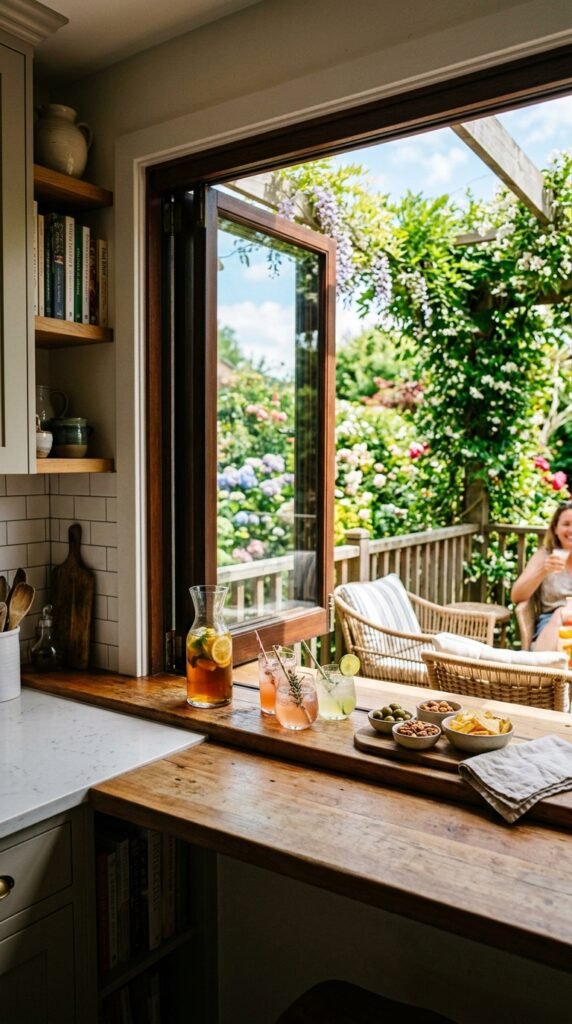
A pass-through kitchen window — a wide, low opening cut into an exterior wall with a countertop-height sill that connects directly to an outdoor dining or entertaining space — is one of the most sociable and lifestyle-enhancing kitchen window ideas for homes with outdoor living areas.
The pass-through window allows food and drinks to be passed directly from the kitchen counter to an outdoor table or bar without carrying through a door — dramatically improving the flow of outdoor entertaining and eliminating the constant in-and-out trips that conventional kitchen-to-outdoor service requires.
When closed, the pass-through kitchen window functions as a standard window bringing light and views into the kitchen — when open, it expands the kitchen’s functional zone into the outdoor entertaining space and creates a genuinely connected indoor-outdoor kitchen experience.
Pro Tip: Specify the pass-through kitchen window sill at the same height as your indoor countertop — a continuous countertop-to-sill height creates a seamless serving surface that allows dishes, trays, and glasses to be slid directly through rather than lifted up and over a raised sill that breaks the service flow.
6. Stained Glass or Decorative Glass Kitchen Window
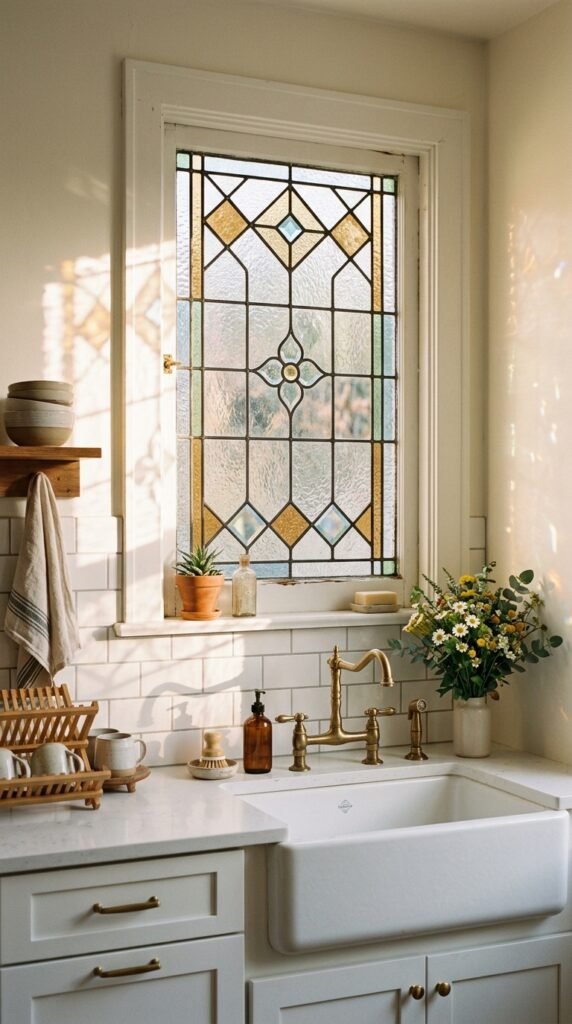
A stained glass or decorative glass kitchen window — whether an antique leaded light, a contemporary fused glass panel, or a modern geometric stained glass design — transforms a purely functional opening into a genuine piece of installed art that changes character throughout the day as the light moves.
Frosted and etched glass kitchen windows provide privacy without sacrificing light — an etched botanical or geometric pattern in the glass creates a beautiful diffused light effect that eliminates any privacy concerns while adding decorative character to the kitchen window position.
Colored glass inserts in small kitchen window panels — even a single stained glass insert in one panel of a multi-light window — introduce a jewel-like quality that throws colored light across kitchen surfaces throughout the day and creates an unexpected decorative moment in the room’s most functional zone.
Pro Tip: Use obscure or frosted glass in a kitchen window that faces directly into a neighbor’s view rather than net curtains or blinds — privacy glass allows full natural light transmission without the visual interruption of fabric window treatments that collect grease and require frequent washing in a kitchen environment.
7. Café Curtains for the Kitchen Window
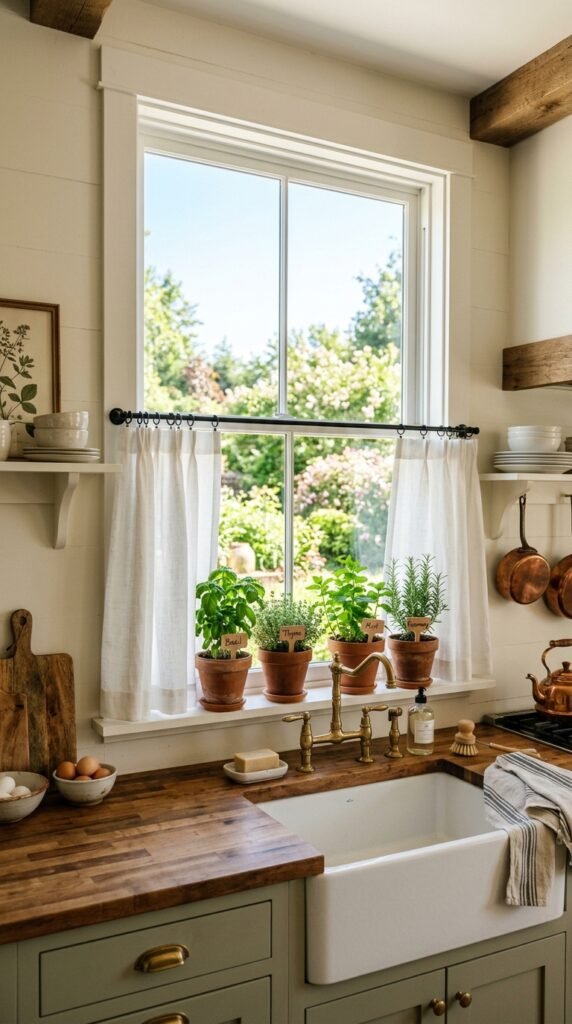
Café curtains — short curtain panels that cover only the lower half of the kitchen window — are the most practical and stylistically versatile kitchen window treatment, providing privacy at seated viewing height while keeping the upper window completely clear for maximum natural light transmission.
The half-height format of café curtains is uniquely well-suited to kitchen windows — it prevents the window treatment from collecting kitchen grease and steam as readily as full-length curtains, makes laundering easier, and maintains the light-maximizing open quality of the upper window pane throughout the day.
Sheer white linen, printed cotton, ticking stripe, gingham, and embroidered fabric café curtains each suit different kitchen aesthetics — sheer linen suits organic and farmhouse kitchens, striped ticking suits classic and French country directions, and printed cotton suits eclectic and colorful kitchen styles.
Pro Tip: Hang café curtains from a slim tension rod fitted inside the window recess rather than on a decorative rod mounted in front of the window frame — inside-mount tension rods create a cleaner, more built-in appearance and preserve the full visible width of the window frame without the visual interruption of external mounting hardware.
8. Full-Height Kitchen Window with No Treatment
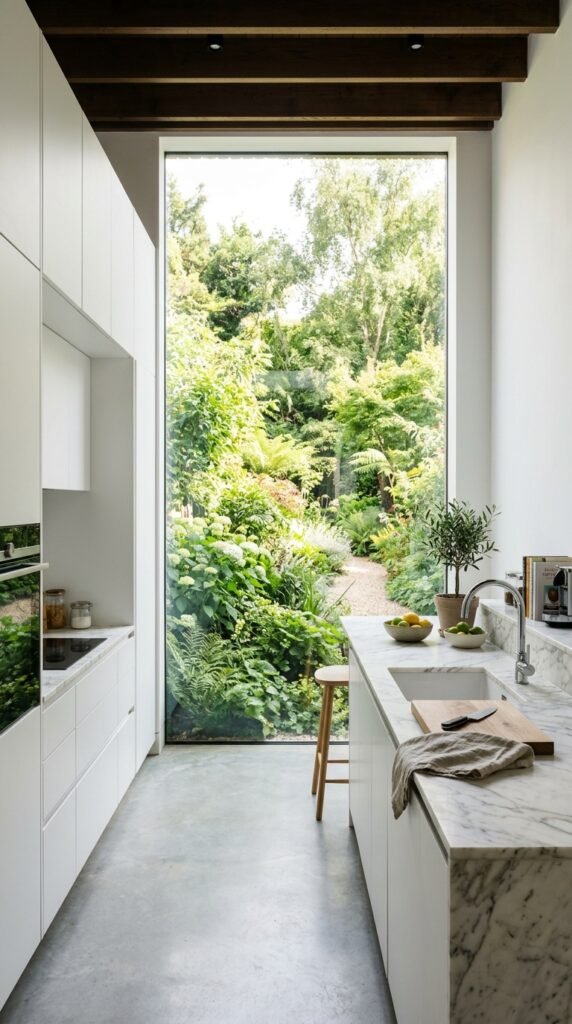
A full-height kitchen window with no treatment whatsoever — no blind, no curtain, no shutter — is the most light-maximizing and design-purist kitchen window approach and one of the most popular choices in contemporary kitchen design where privacy is not a concern.
The unobstructed floor-to-near-ceiling kitchen window creates an immediate visual connection with the outside landscape that is the single most powerful way to make a kitchen feel spacious, fresh, and alive with natural energy — the changing light, seasons, and weather become a constantly evolving backdrop to every moment spent in the kitchen.
Floor-to-ceiling kitchen windows are particularly dramatic in kitchens that open to a garden, a terrace, or a natural landscape — the absence of any visual barrier between the interior and exterior creates a genuinely immersive relationship with the outside that makes the kitchen feel like an extension of the natural world.
Pro Tip: Install solar control or low-e glass in large untreated kitchen windows that receive direct afternoon sun — solar control glazing reduces heat gain by up to 70 percent without visibly tinting the glass, preventing the kitchen from overheating in summer while maintaining the full light transmission and unobstructed view that makes the bare kitchen window approach so desirable.
9. Kitchen Window Herb Garden on the Sill
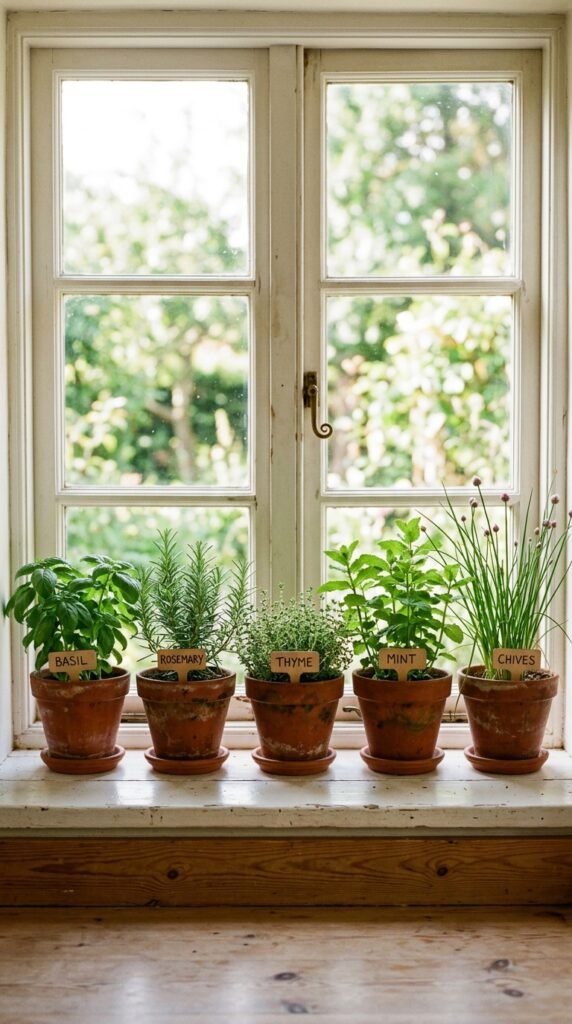
A kitchen window herb garden — terracotta pots, ceramic planters, or a wooden window box of growing culinary herbs arranged on the window sill — is the most lived-in, personal, and practically useful way to style and animate any kitchen window.
The kitchen window sill is the perfect microclimate for culinary herbs — the combination of direct natural light, warmth from the kitchen, and proximity to the food preparation zone creates conditions that suit basil, thyme, rosemary, mint, parsley, and chives better than almost anywhere else in the home.
Beyond their culinary function, growing herbs in the kitchen window create a visual layering of green, organic life against the glass that brings the same biophilic warmth to the kitchen as a full indoor plant arrangement while fitting within the specific constraints of the window sill footprint.
Pro Tip: Plant each herb variety in its own individual pot rather than in a combined mixed planter — herbs have different water and drainage requirements that individual pots accommodate perfectly, while a combined planter forces all herbs into one watering regime that inevitably suits some and damages others within weeks of installation.
10. Roman Blind for the Kitchen Window
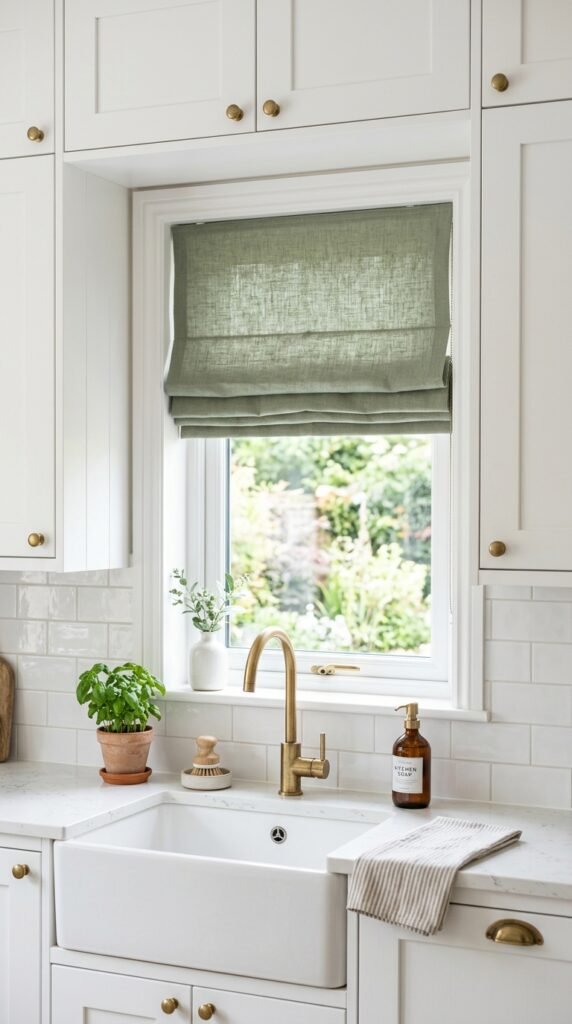
A Roman blind is the most tailored and structured kitchen window treatment — it folds into neat horizontal pleats when raised and lies flat when lowered, creating a clean-lined, fabric panel that adds color and pattern to the kitchen window without the volume and movement of curtains.
Wipeable fabric Roman blinds in cotton, linen, or polyester blends are the most practical choice for kitchen windows — fabrics with a slight water resistance or easy-clean coating handle the inevitable cooking splashes and steam exposure of a kitchen window environment significantly better than delicate or dry-clean-only alternatives.
A patterned Roman blind — in a bold stripe, a botanical print, or a geometric design — creates one of the most impactful single decorative opportunities in a kitchen, introducing color and pattern to the window wall that complements the kitchen’s palette and adds personality to the room’s most visible vertical surface.
Pro Tip: Choose a Roman blind that is fitted inside the window recess rather than outside it wherever the recess depth allows — an inside-fitted Roman blind sits flush with the window opening, preserving the full width of the window surround and creating a cleaner, more architecturally refined appearance than an outside-mounted blind that covers the surrounding wall.
11. Roller Blinds in the Kitchen Window
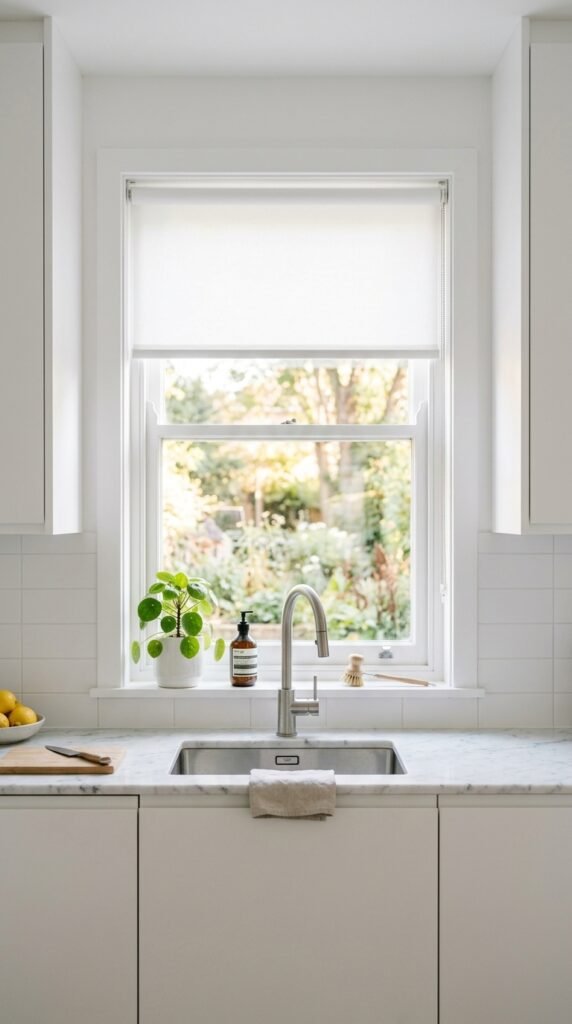
Roller blinds are the most minimal and maintenance-friendly kitchen window treatment — they roll up completely out of sight above the window when raised and provide a clean, flat fabric surface when lowered, with no folds, pleats, or fabric volume that accumulates kitchen grease or dust.
Blackout roller blinds in a kitchen window are particularly valuable in east-facing kitchens where low morning sun creates uncomfortable glare across the countertop work zone — the ability to control direct sun while maintaining diffused natural light dramatically improves the comfort of the cooking environment during morning hours.
Moisture-resistant and PVC roller blinds are the most practical kitchen window blind specification for above-sink positions and behind-hob windows where direct water splash and cooking steam create conditions that standard fabric blinds deteriorate within.
Pro Tip: Install kitchen window roller blinds with a side chain or spring mechanism rather than a cord pull — side chain mechanisms allow precise blind positioning at any intermediate height with one hand while the other continues food preparation, and they eliminate the cord tangling and safety risks that long pull cords create in a busy kitchen environment.
12. Plantation Shutters for Kitchen Windows
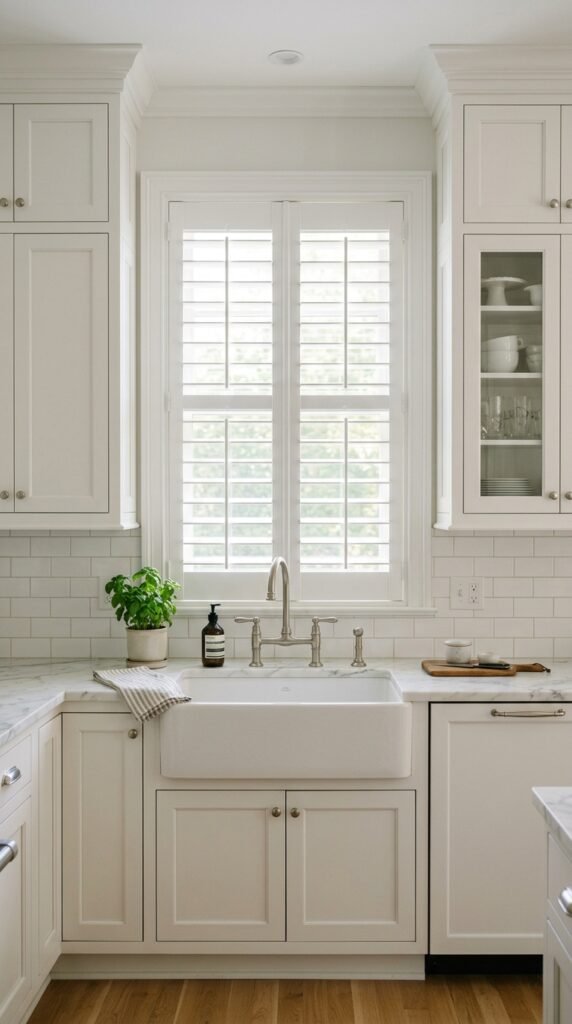
Plantation shutters are the most architectural and value-adding kitchen window treatment — their solid louvered panels create a permanent, built-in quality that is instantly recognizable as a premium window finish and adds genuine perceived value to the kitchen and the property.
The adjustable louvers of plantation shutters provide infinite light and privacy control in a kitchen window — fully open louvers admit maximum natural light and views, partially closed louvers diffuse direct sun while maintaining brightness, and fully closed solid panels provide complete privacy and light blockout.
White painted solid wood or PVC plantation shutters are the most popular kitchen window treatment choice — both materials suit the practical demands of a kitchen environment, with PVC offering additional moisture resistance for above-sink positions where solid wood shutters may warp over time.
Pro Tip: Specify full-height plantation shutters rather than café-height shutters for kitchen windows where privacy is needed throughout the full window — full-height shutters with a mid-rail allow the upper and lower sections of the louvers to be operated independently, combining privacy at the lower pane with an open upper section for maximum light transmission simultaneously.
13. Kitchen Window Seat with Storage
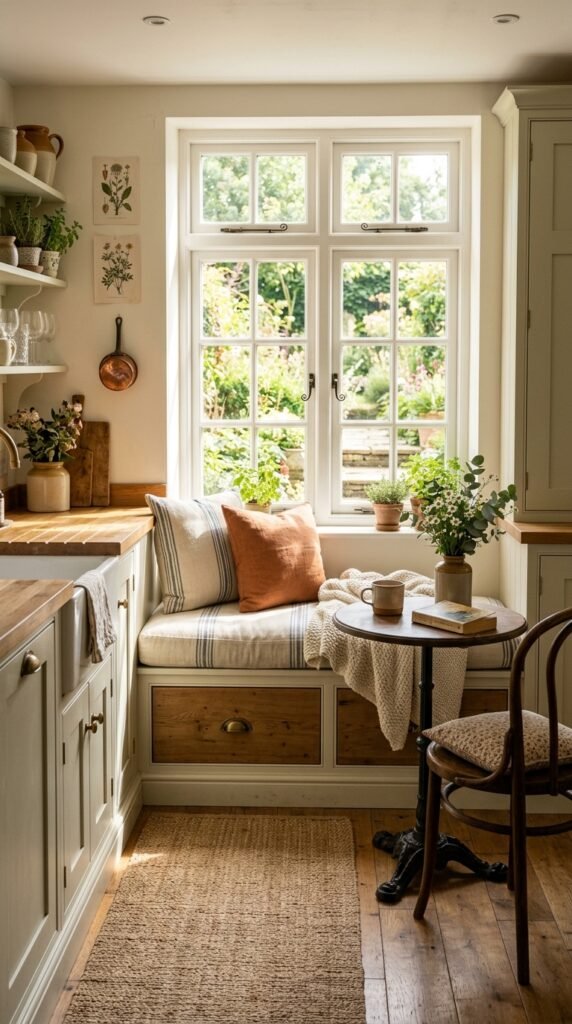
A kitchen window seat — a built-in upholstered bench positioned beneath a kitchen window — is one of the most charming and space-efficient kitchen window ideas for rooms where the window sits at a height that creates a natural seating opportunity rather than a countertop work zone.
The kitchen window seat creates a defined social space within the cooking environment — a place to sit with a coffee while the cook works, to do homework at the table beside it, or to gather casually during the preparation of a meal in the way that kitchen islands and breakfast bars serve in larger spaces.
A window seat with lift-up storage or drawers beneath is one of the most practical kitchen storage ideas available — the enclosed space under a window seat bench is perfectly proportioned for storing table linens, placemats, extra kitchen towels, and infrequently used entertaining accessories that need accessible but out-of-sight storage.
Pro Tip: Position a kitchen window seat at a height of 17 to 19 inches from floor to seat top — standard seating height that suits most adults comfortably with feet flat on the floor. A window seat built at a height that matches the window sill creates a visual connection between the seat and the window but may result in an uncomfortable seating height that discourages actual use.
Why Getting Your Kitchen Window Right Is Worth the Investment
A beautifully designed kitchen window delivers a daily quality of life improvement that extends to every moment spent in the kitchen — from the mood-lifting effect of morning light flooding the work zone to the ventilation that makes an active cooking session comfortable and the view that transforms dishwashing from a chore into a moment of quiet reflection.
Natural light from a well-positioned kitchen window reduces reliance on artificial lighting during daylight hours, lowers energy costs, and creates the most flattering and accurate light for food preparation and presentation — the difference between cooking in good natural light and cooking under artificial light alone is immediately and consistently apparent.
From a property value perspective, kitchen windows — particularly large, well-positioned windows with quality treatments and garden views — are consistently cited by estate agents and buyers as one of the top three features that most positively influence a kitchen’s appeal and a property’s overall value.
Things to Consider Before Designing Your Kitchen Window
Before making any kitchen window decisions, assess the orientation of the window wall carefully — a south-facing kitchen window brings valuable natural light throughout the day but may create uncomfortable afternoon glare and summer overheating that requires solar control glazing or adjustable window treatments to manage effectively.
Think carefully about privacy relative to the kitchen window’s position — a kitchen window facing a neighboring property, a busy street, or a public footpath needs a treatment strategy that provides privacy during daytime cooking without sacrificing natural light, while a kitchen window facing a private garden may benefit from no treatment at all.
Always consider the relationship between kitchen window size and the overall balance of the kitchen wall — a kitchen window that is too small for its wall leaves excessive solid masonry that makes the kitchen feel dark and closed, while an oversized window that eliminates practical wall space for cabinets and shelving creates storage problems that no amount of light can compensate for.
Comparison Table of Kitchen Window Ideas
| Kitchen Window Idea | Cost Range | Difficulty | Light Level | Privacy | Best Style |
|---|---|---|---|---|---|
| Garden / Greenhouse Window | $800–$3,000 | High | Very High | Medium | Farmhouse, cottage |
| Window Above Sink | $500–$2,500 | High | Very High | Low | Any style |
| Bay Window Nook | $2,000–$8,000 | Very High | Very High | Low | Traditional, farmhouse |
| Casement Windows | $400–$2,000 | High | High | Low | Any style |
| Pass-Through Window | $1,000–$4,000 | High | High | Low | Modern, coastal |
| Stained Glass Window | $500–$5,000 | High | Medium–High | High | Traditional, eclectic |
| Café Curtains | $30–$200 | Low | High | Medium | Farmhouse, French country |
| Full-Height No Treatment | $0 | Low | Very High | None | Modern, contemporary |
| Herb Garden on Sill | $20–$100 | Low | High | Low | Any style |
| Roman Blind | $40–$300 | Low–Medium | Variable | High | Any style |
| Roller Blind | $20–$200 | Low | Variable | High | Modern, minimalist |
| Plantation Shutters | $200–$1,200 | Medium | Variable | Very High | Classic, transitional |
| Window Seat with Storage | $500–$3,000 | High | High | Low | Farmhouse, traditional |
Frequently Asked Questions About Kitchen Windows
What Is the Best Kitchen Window Treatment for Above the Sink?
The best kitchen window treatment for above the sink is either no treatment at all — for maximum light and a completely maintenance-free solution — or a café curtain covering only the lower half of the window for privacy at seated viewing height while keeping the upper glass clear.
If full-height privacy is required above a kitchen sink, a moisture-resistant roller blind or PVC plantation shutters are the most practical choices — both tolerate direct water splash and cooking steam without the mold, fabric degradation, and laundering demands that standard curtain fabrics experience directly above a kitchen sink.
How Do I Make a Small Kitchen Window Feel Bigger?
The most effective strategies for making a small kitchen window feel larger are to mount the window treatment as high and wide as possible — hanging a blind or curtain rod from near the ceiling and extending it significantly beyond the actual window width creates the visual impression of a much larger window than the actual glass area.
Removing any existing window treatment from a small kitchen window and leaving the glass bare is often the single most impactful change — the unobstructed glass appears larger than a dressed window of the same size, and the maximized natural light creates a spatial generosity that treatment-obscured light cannot achieve.
What Is the Standard Kitchen Window Height and Size?
Standard residential kitchen windows are typically 3 feet wide by 3 feet tall, positioned with the sill at approximately 38 to 42 inches from the floor — high enough to sit above a standard countertop height of 36 inches with clearance for backsplash tile, yet low enough to provide a comfortable view from a standing cooking position.
For kitchen windows above the sink specifically, a wider format of 36 to 48 inches is recommended wherever the structural configuration allows — a wider than standard kitchen window above the sink brings significantly more light to the primary work zone and creates a more generous and welcoming focal point for the most frequently occupied position in the kitchen.
How Do I Prevent a Kitchen Window from Getting Greasy and Difficult to Clean?
The most effective strategy for keeping a kitchen window and its treatment clean in an active cooking environment is to install a high-quality range hood or extractor fan that captures airborne grease before it reaches the window — an extractor fan rated for the size of the cooking zone removes the majority of grease particles before they can deposit on glass, frames, and any fabric treatment.
For the window treatment itself, choosing wipeable materials — moisture-resistant roller blinds, PVC shutters, or café curtains in a tight-weave washable fabric — allows quick and easy cleaning of any grease deposits before they accumulate into the stubborn, embedded grease that requires intensive chemical cleaning to remove from porous fabrics and intricate shutter surfaces.