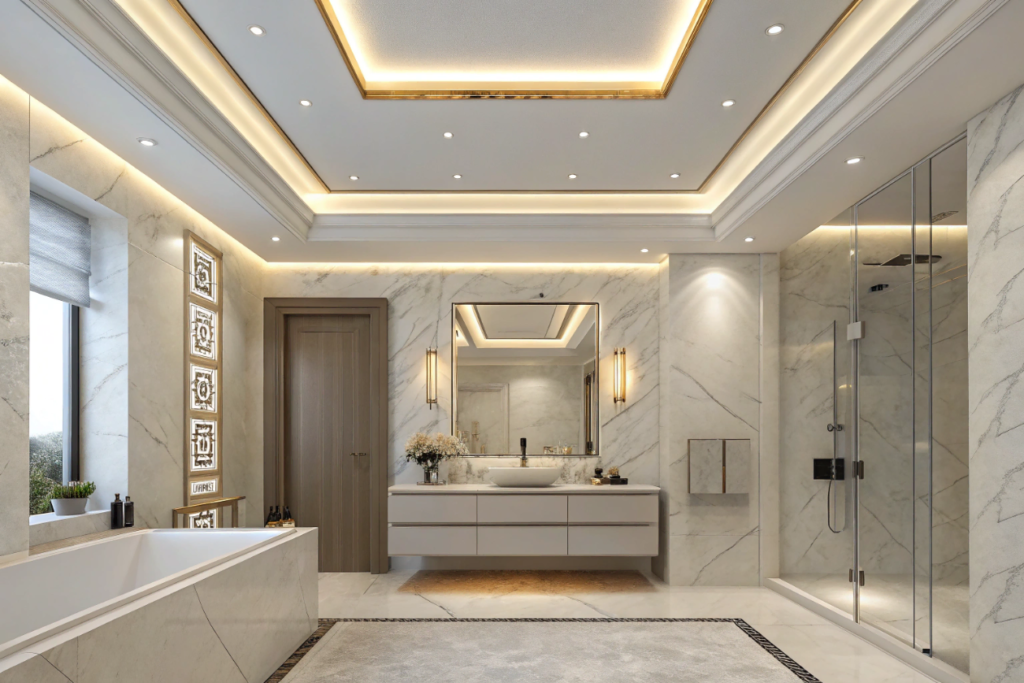
Your washroom ceiling design deserves the same creative attention as walls and floors, yet it often remains an afterthought in renovation plans. A thoughtfully designed ceiling can elevate your bathroom from purely functional to genuinely impressive, adding character and sophistication.
The ceiling influences everything from lighting quality to perceived room dimensions and overall ambiance. Smart material choices and strategic design elements work together to solve moisture challenges while creating visual impact that guests immediately notice.
These innovative washroom ceiling design approaches combine aesthetic appeal with practical performance in humid environments. Let’s explore fresh ideas that will inspire your next bathroom transformation and help you make informed decisions.
List of 11 Best Washroom Ceiling Designs
1. Waterproof PVC Panel Ceiling
PVC panel washroom ceiling design delivers exceptional moisture resistance with zero maintenance requirements for busy households. These lightweight plastic panels never warp, rot, or mold regardless of humidity levels, making them ideal for bathrooms with poor ventilation.
Modern PVC options mimic wood grain, marble, and other premium materials convincingly at fraction of the cost. Installation snaps together over furring strips, creating a suspended system that hides pipes and wiring while remaining accessible.
The glossy or matte finishes wipe clean instantly and reflect light to brighten dark bathrooms.
Pro Tip: Choose thicker PVC panels (8mm+) for better acoustic properties—thin panels sound hollow when tapped and can amplify noise from upstairs rooms.
2. Statement Wallpaper Accent Ceiling
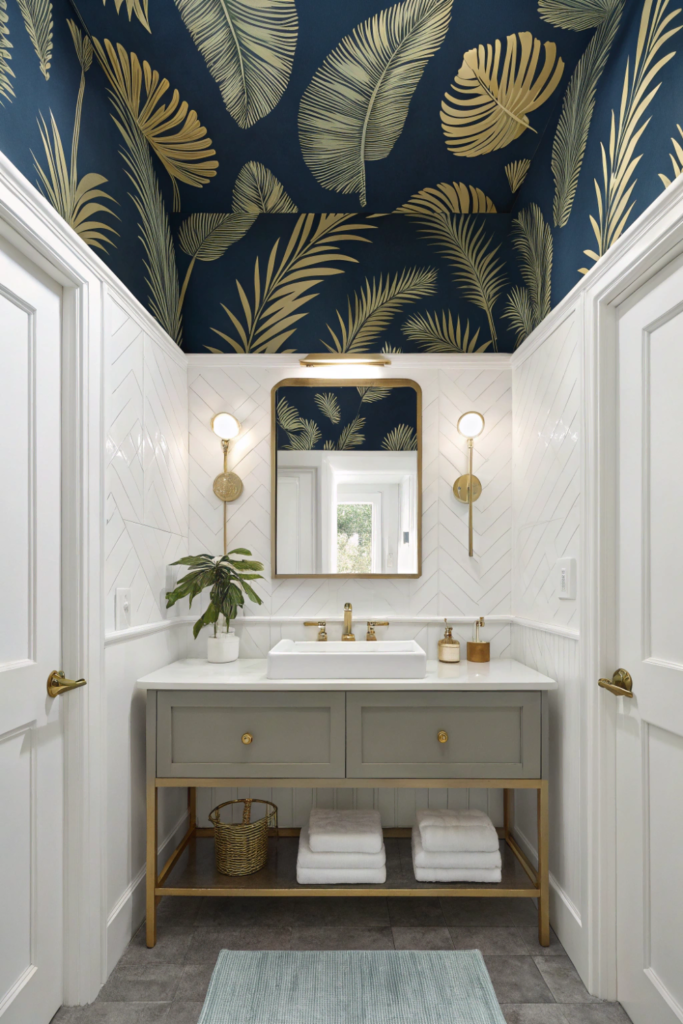
Bold wallpaper washroom ceiling design creates instant drama by transforming the fifth wall into an artistic focal point. Patterns range from tropical botanicals to geometric metallics, adding personality without overwhelming small spaces when walls remain neutral.
This approach costs significantly less than architectural renovations while delivering maximum visual impact. Vinyl-coated or non-woven wallpapers withstand bathroom humidity better than traditional paper-backed versions.
Peel-and-stick options make installation and future updates straightforward for design enthusiasts.
Pro Tip: Test wallpaper samples in your bathroom for 72 hours before committing—some patterns feel overwhelming overhead despite looking beautiful on showroom walls.
3. Recessed Panel Grid Ceiling
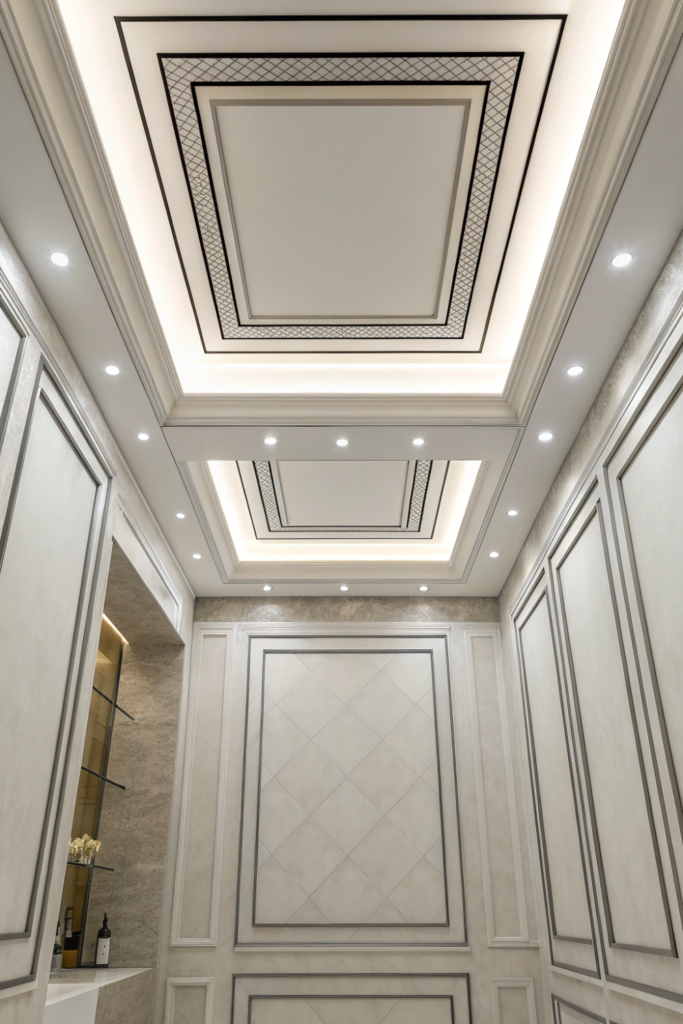
Recessed grid washroom ceiling design creates architectural depth through systematic panel divisions separated by raised borders. This treatment adds subtle dimensionality without the expense of true coffered construction while maintaining clean contemporary lines.
The paneled sections can incorporate different paint colors or textures within frames for customization. This design visually lowers tall ceilings to create cozier proportions or adds interest to otherwise flat expanses.
Pro Tip: Keep grid divisions proportional to room size—small bathrooms need larger panels (3×4 feet) rather than busy grids that make spaces feel cluttered.
4. Stained Wood Planks with Natural Finish
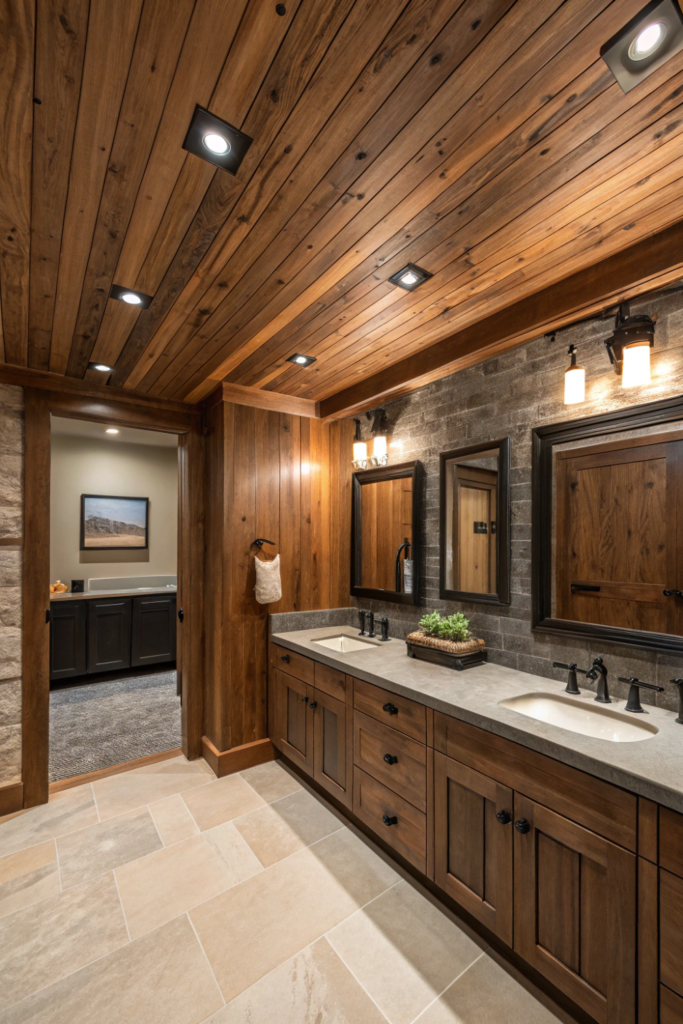
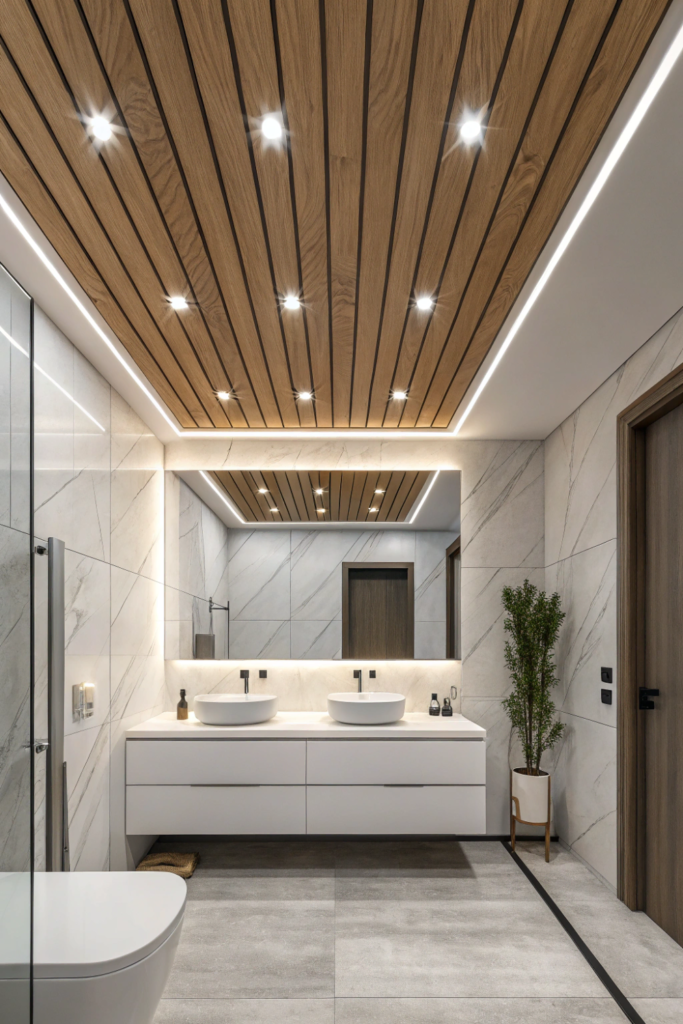
Natural stained wood washroom ceiling design showcases timber’s organic beauty through rich tones ranging from honey oak to dark walnut. Unlike painted wood, stained planks highlight grain patterns and natural character that make each ceiling unique.
This warm treatment counterbalances cold tile and stone surfaces common in bathrooms. The horizontal plank installation adds perceived width to narrow bathrooms while creating cozy, cabin-like atmosphere.
Multiple coats of water-based polyurethane seal moisture out effectively.
Pro Tip: Apply stain in well-ventilated areas before installation—staining ceiling planks in place creates uneven coverage and dangerous fume concentration in enclosed bathrooms.
5. Acoustic Tile Drop Ceiling
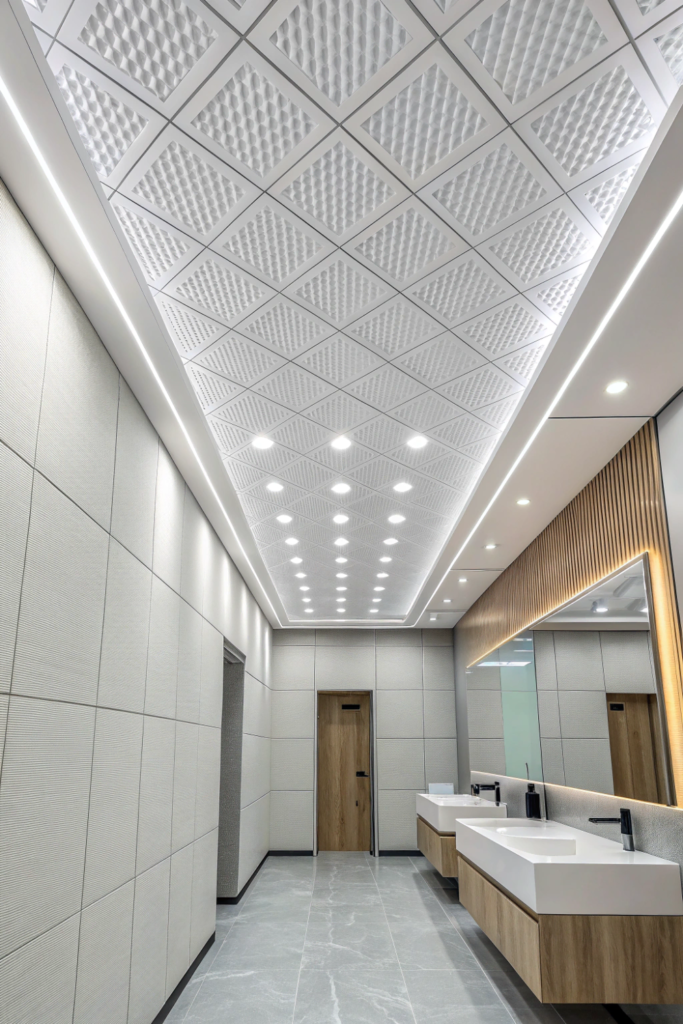
Acoustic tile washroom ceiling design solves noise problems in multi-story homes by absorbing sound transmission between floors. These specialized tiles reduce echo and amplification that make bathrooms feel hollow while hiding unsightly ductwork and pipes.
Modern versions feature moisture-resistant construction and attractive patterns that transcend institutional aesthetics. The suspended grid system sits 3-4 inches below the original ceiling, providing easy access to plumbing without demolition.
Pro Tip: Choose fiberglass-based acoustic tiles over mineral fiber for bathrooms—they resist sagging from moisture exposure and maintain sound-dampening properties in humid conditions.
6. Illuminated Stretch Fabric Ceiling
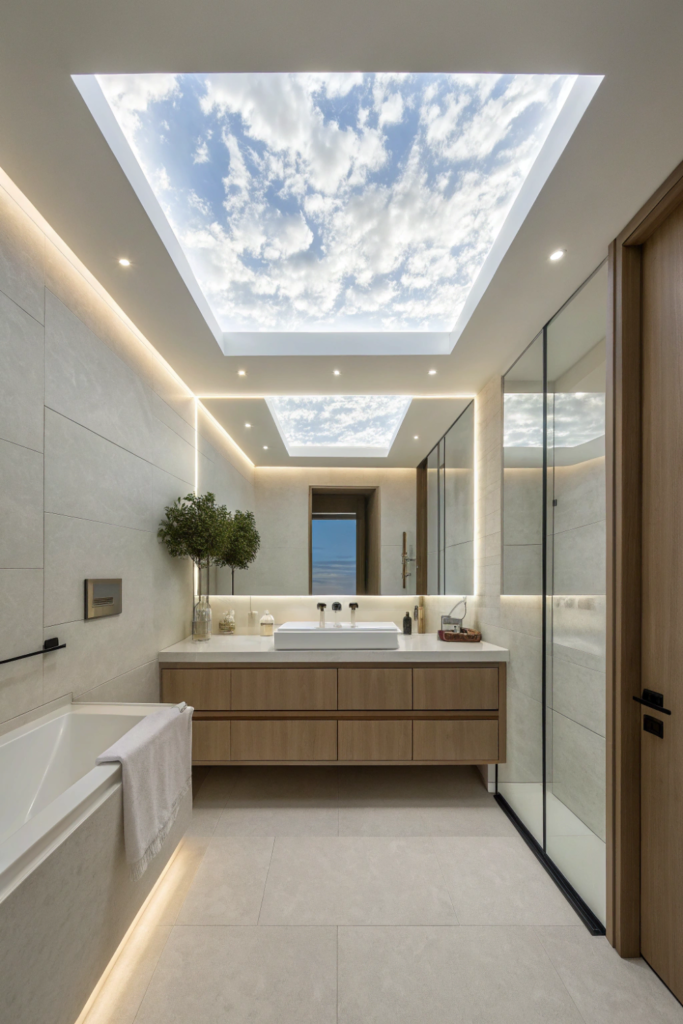
Backlit stretch fabric washroom ceiling design creates ethereal glow by mounting translucent PVC fabric on perimeter tracks with LED lighting behind. This modern system produces soft, diffused illumination that eliminates shadows while making ceilings appear to float.
The fabric surface remains perfectly smooth regardless of original ceiling imperfections. Custom printing allows photo-realistic sky scenes, abstract patterns, or solid colors to transform bathroom ambiance completely.
Installation typically requires professional expertise but delivers stunning results.
Pro Tip: Install RGB color-changing LEDs behind stretch fabric for mood lighting options—shift from energizing cool white for morning routines to relaxing warm amber for evening baths.
7. Concrete Effect Finish Ceiling
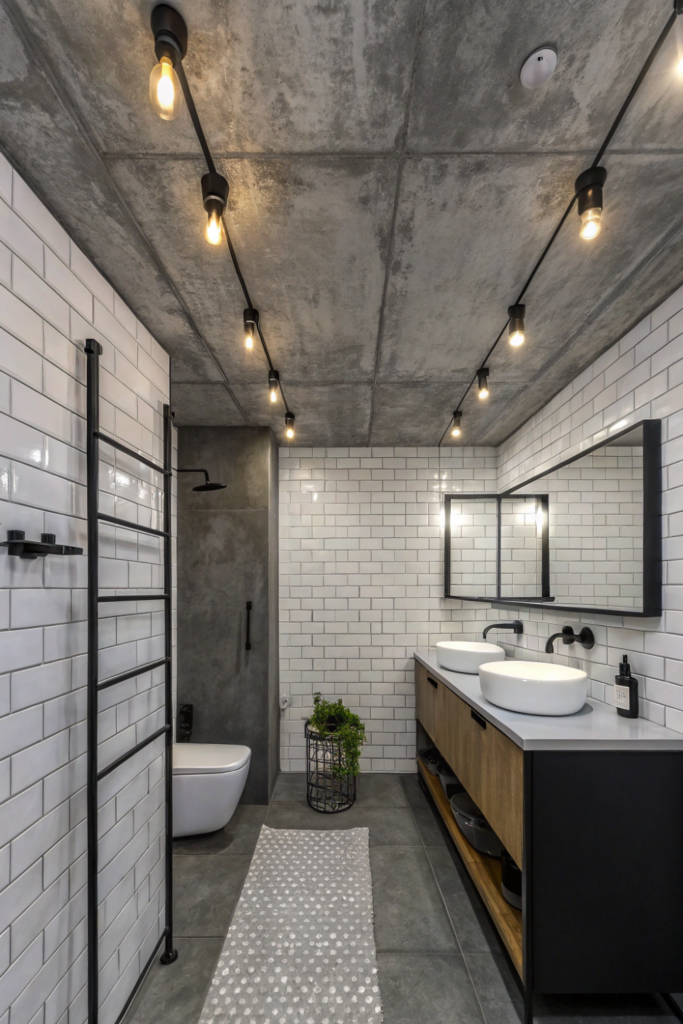
Industrial concrete washroom ceiling design achieves urban loft aesthetics through textured finishes mimicking poured concrete. Specialty plasters or micro-cement create authentic concrete appearance without structural weight or installation complexity of actual concrete.
This raw, minimalist treatment pairs beautifully with exposed plumbing, metal fixtures, and modern floating vanities. The neutral grey tones provide sophisticated backdrop that won’t compete with statement tiles or colorful accents.
Sealed surfaces resist moisture and maintain appearance for decades.
Pro Tip: Apply concrete-effect finishes over perfectly smooth drywall first—surface imperfections telegraph through thin plaster layers and ruin the intentional industrial aesthetic.
8. Two-Tone Painted Ceiling
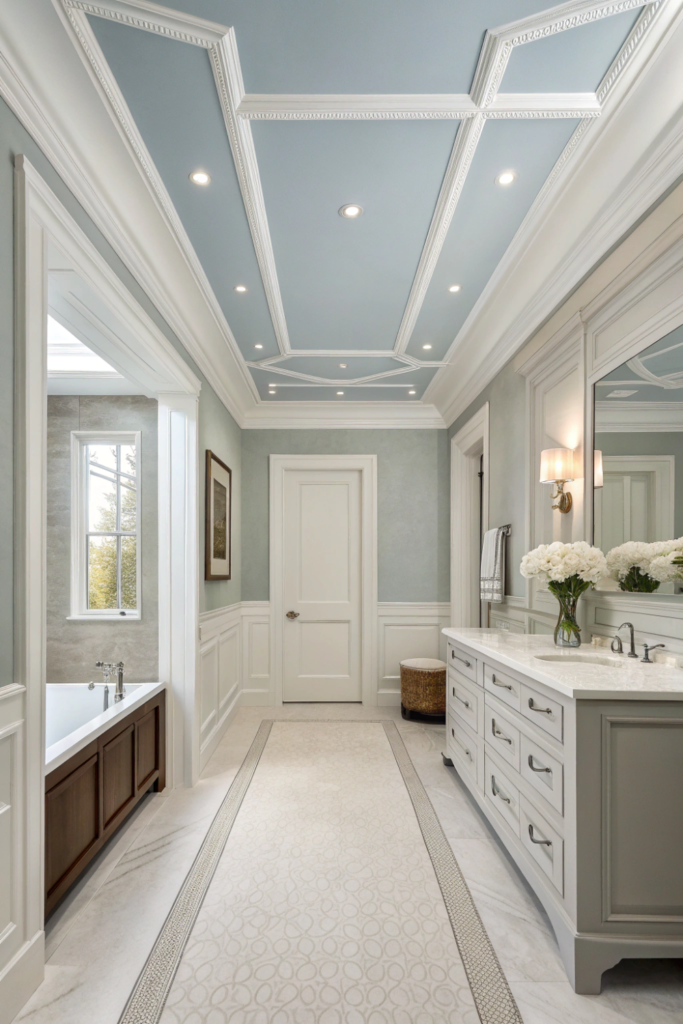
Two-tone painted washroom ceiling design divides the ceiling into sections using different colors for visual interest without material cost. Common approaches include darker perimeter with lighter center, colored tray insets, or geometric color blocking that creates modern artistic appeal.
This budget-friendly technique adds architectural dimension where none exists structurally. The color contrast draws eyes upward and makes standard flat ceilings feel more dynamic and intentionally designed.
Pro Tip: Use low-tack painter’s tape and remove it while paint is still slightly wet—waiting until paint fully dries often pulls up dried paint along tape edges, ruining crisp lines.
9. Rustic Corrugated Metal Ceiling
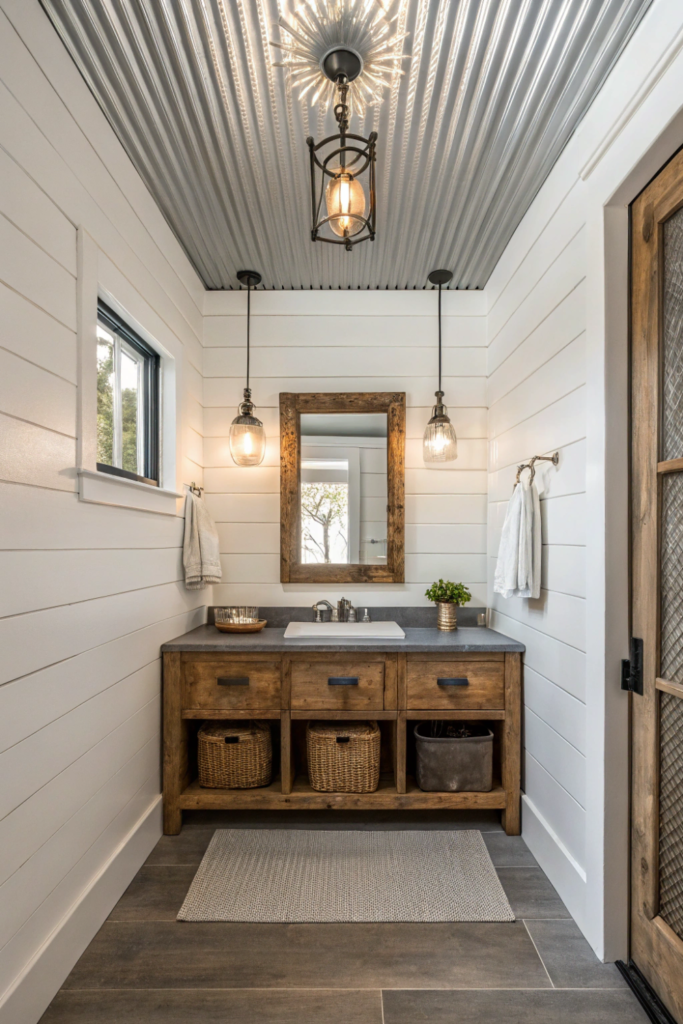
Corrugated metal washroom ceiling design brings farmhouse industrial character with ribbed galvanized or copper-toned steel panels. The wavy profile creates interesting shadow play as light moves throughout the day while adding textural contrast to smooth wall surfaces.
This durable material handles moisture exceptionally well and never requires painting or sealing. Installation over strapping allows air circulation that prevents condensation buildup above the metal surface.
Pro Tip: Install sound-dampening insulation batts above metal ceilings before securing panels—bare corrugated metal amplifies sound dramatically, making every noise echo throughout the bathroom.
10. Faux Brick Vaulted Ceiling
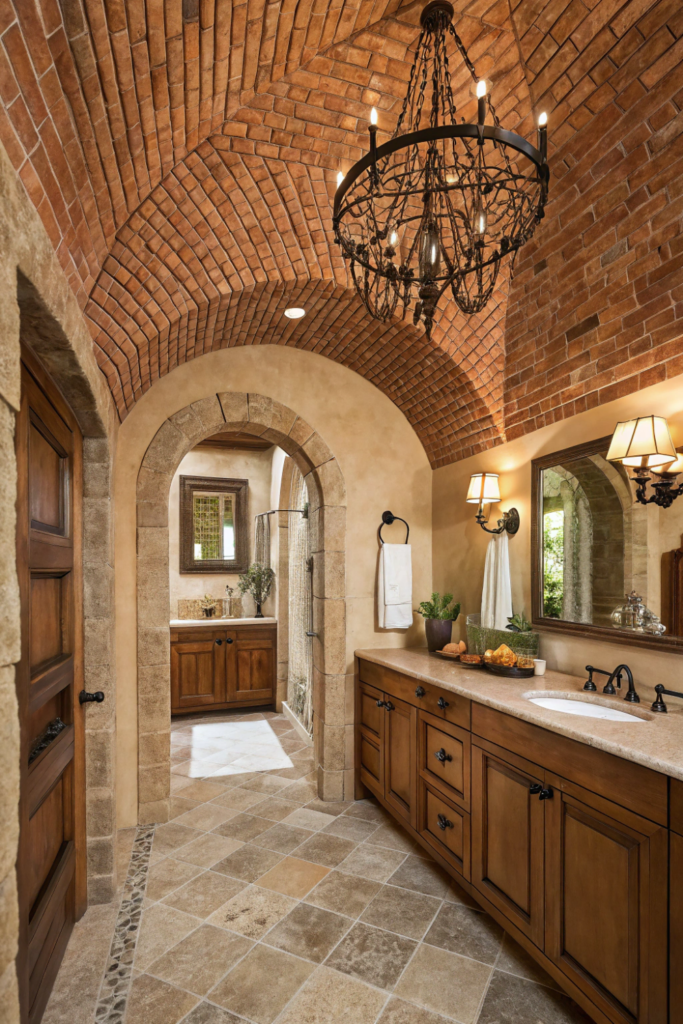
Faux brick washroom ceiling design creates old-world European charm through lightweight panels or skilled painting techniques that mimic authentic masonry. Vaulted or arched configurations add dramatic architectural presence that transforms ordinary bathrooms into statement spaces.
The brick pattern introduces warmth and texture overhead without actual construction weight. Thin brick veneer panels install over existing ceilings more affordably than real brick while achieving virtually identical appearance.
Pro Tip: Vary brick colors within your faux finish using 3-4 coordinating tones—uniform color makes the treatment look obviously fake, while subtle variation creates authentic masonry appearance.
Pinterest Image Prompt: Vertical 2:3 ratio image showing faux brick vaulted washroom ceiling design in warm terracotta tones, Mediterranean-style bathroom with arched doorway, wrought iron chandelier, stone floors, rustic wood accents
Related: Creating Architectural Interest in Standard Builder Bathrooms
11. Minimalist White Smooth Ceiling with Statement Fixture
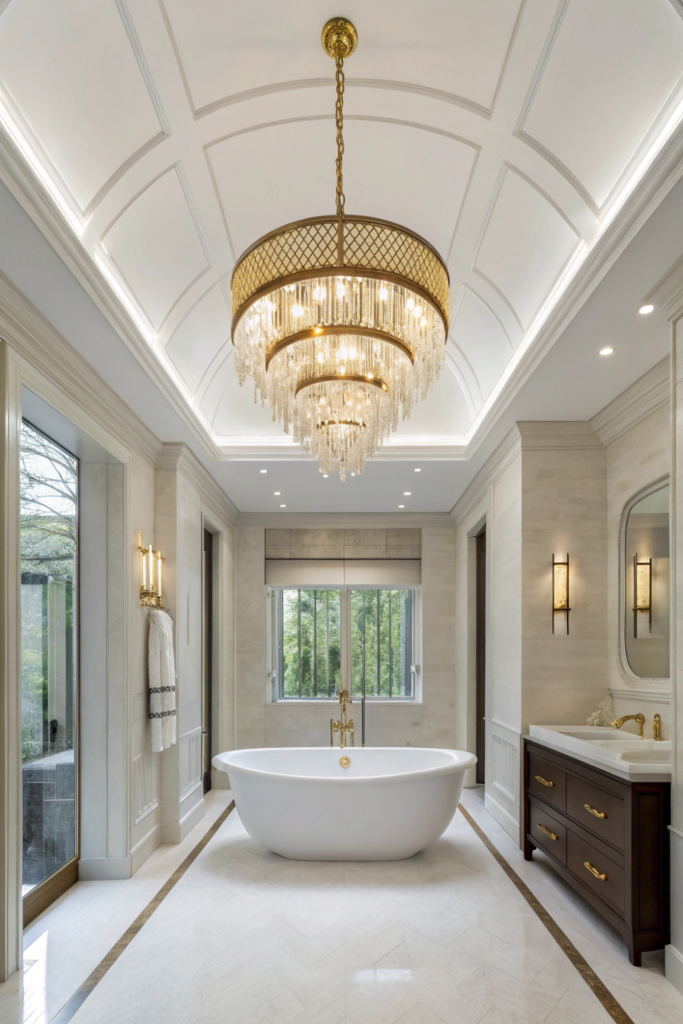
Smooth minimalist washroom ceiling design embraces simplicity by keeping surfaces pristine white and unadorned, allowing dramatic lighting fixtures to command attention. This approach proves that restraint often delivers more impact than elaborate treatments.
The clean backdrop makes statement chandeliers, artistic pendants, or sculptural flush-mounts appear more striking. Perfectly smooth finish requires expert drywall work but creates timeless elegance that never dates.
High-quality bathroom paint with mildew inhibitors maintains pristine appearance.
Pro Tip: Use Level 5 drywall finishing for smooth ceiling treatments—this premium finish eliminates all texture and joint visibility, essential when spotlighting from dramatic fixtures will highlight every imperfection.
Why Washroom Ceiling Design Is Worth the Investment
Strategic washroom ceiling design solves persistent moisture problems that plague bathrooms through proper material selection and ventilation integration. Purpose-built ceiling treatments resist mold growth, prevent paint peeling, and eliminate water damage that costs thousands to repair, protecting your investment in bathroom renovations.
Creative washroom ceiling design enhances daily experiences by improving lighting quality and acoustic properties that standard drywall ceilings ignore. The right treatment reduces echo, controls humidity more effectively, and creates spa-like ambiance that makes routine activities feel more luxurious and relaxing.
Updated washroom ceiling design delivers impressive returns when selling your home by signaling thorough attention to detail throughout the property. Real estate professionals report that distinctive ceiling treatments help bathrooms photograph better for listings and create memorable impressions during showings that justify premium asking prices.
Things to Consider Before Choosing Washroom Ceiling Design
Ventilation capacity impacts which washroom ceiling design materials will perform reliably long-term without deterioration. Bathrooms with inadequate exhaust fans (under 50 CFM) require extremely moisture-resistant materials like PVC panels, metal, or specially sealed treatments, while well-ventilated spaces accommodate broader material options including wood and certain wallpapers.
Existing structural limitations affect washroom ceiling design possibilities—load-bearing considerations, joist accessibility, and current ceiling height determine which treatments work without expensive modifications. Suspended systems require minimum clearance, while surface-applied treatments need structurally sound bases for proper adhesion.
Long-term maintenance requirements vary dramatically across washroom ceiling design options and should match your lifestyle preferences. Sealed wood needs periodic refinishing, wallpaper requires eventual replacement, while materials like PVC and metal deliver decades of maintenance-free performance ideal for busy households wanting permanent solutions.
Comparison Table of Washroom Ceiling Designs
| Ceiling Design Type | Price Range | Installation Time | Moisture Performance | Maintenance | Lifespan |
| Waterproof PVC Panels | $300-$900 | 1-2 days DIY | Excellent – never damaged | None – wipe clean | 25+ years |
| Statement Wallpaper | $200-$600 | 4-8 hours DIY | Good with proper ventilation | Medium – replace 5-8 years | 5-8 years |
| Recessed Panel Grid | $500-$1,500 | 2-3 days pro | Good – painted surfaces | Low – repaint occasionally | 20+ years |
| Stained Wood Planks | $700-$1,800 | 2-3 days DIY/pro | Good when sealed properly | Medium – reseal every 3-5 years | 20-30 years |
| Acoustic Tile Drop | $400-$1,200 | 1-2 days DIY | Good – fiberglass types | Low – replace damaged tiles | 15-20 years |
| Stretch Fabric Backlit | $1,500-$4,000 | 1 day pro required | Excellent – PVC waterproof | Very Low – dust occasionally | 15-25 years |
| Concrete Effect Finish | $600-$1,800 | 2-3 days pro | Excellent when sealed | Very Low – durable surface | 25+ years |
| Two-Tone Painted | $150-$400 | 1 day DIY | Good – bathroom paint | Low – touch up as needed | 5-10 years (repaint) |
| Corrugated Metal | $500-$1,500 | 1-2 days DIY/pro | Excellent – rust-resistant | None – permanent finish | 30+ years |
| Faux Brick Vaulted | $800-$2,500 | 2-4 days pro | Good – sealed panels/paint | Low – occasional sealing | 15-25 years |
| Smooth with Fixture | $300-$800 | 1-2 days pro | Good – quality paint | Low – repaint every 7-10 years | 7-10 years (paint) |
Recommended Products for Washroom Ceiling Design
DPI Beadboard Paintable Vinyl Ceiling Planks
These moisture-proof vinyl planks feature authentic beadboard styling that installs directly over existing drywall with panel adhesive and trim. The interlocking tongue-and-groove system creates seamless appearance while the durable vinyl construction resists humidity, mildew, and warping indefinitely. Paintable surface accepts any latex paint for custom color coordination with your bathroom design.
NuWallpaper Peel and Stick Botanical Ceiling Wallpaper
This removable peel-and-stick wallpaper features water-activated adhesive that applies without messy paste and removes cleanly for easy updates. The vinyl-coated surface withstands bathroom humidity better than traditional wallpaper while the botanical pattern adds sophisticated style. Each roll covers 30.75 square feet, and the repositionable material allows adjustment during installation for perfect alignment.
Genesis Stucco Pro Revealed Edge Ceiling Tile
These 2×2 foot ceiling tiles create elegant coffered appearance through revealed edge design that shows dimensional borders between panels. Made from moisture-resistant vinyl, tiles install directly over existing drywall or suspended grid systems with easy DIY-friendly mounting. The washable surface resists stains and mildew while the lightweight construction simplifies overhead installation without professional help.
Frequently Asked Questions About Washroom Ceiling Design
What Is the Most Durable Washroom Ceiling Design?
PVC panel and metal washroom ceiling designs offer maximum durability by completely resisting moisture damage, mold, warping, and deterioration regardless of humidity levels. These materials last 25-30+ years without maintenance, making them ideal for bathrooms with poor ventilation or high moisture exposure from frequent showers.
Properly sealed wood and concrete-effect washroom ceiling designs also deliver excellent longevity (20-25 years) when combined with adequate ventilation. The key distinction is that synthetic materials like PVC and metal perform consistently in any conditions, while natural materials require proper bathroom exhaust systems to achieve comparable lifespan and resist moisture-related problems.
Can You Use Regular Paint on Bathroom Ceilings?
Standard interior paint performs poorly for washroom ceiling design because it lacks mildew inhibitors and moisture resistance needed in humid environments. Regular paint develops mold spots, peels, and yellows within 1-2 years when exposed to constant bathroom moisture and temperature fluctuations.
Bathroom-specific paints formulated for washroom ceiling design contain antimicrobial additives that prevent mold growth and offer superior moisture resistance. These specialty paints cost $5-10 more per gallon but deliver dramatically better performance—look for products labeled “bathroom paint,” “kitchen and bath,” or containing mildewcide for best results in ceiling applications.
How Do You Hide Ceiling Imperfections in a Bathroom?
Textured washroom ceiling design options like popcorn, knockdown, or orange peel finishes effectively hide minor cracks, dents, and drywall imperfections without repair work. These spray-applied textures mask surface irregularities while adding visual interest, though they’ve fallen from popularity in contemporary design trends.
Dimensional washroom ceiling designs including wood planks, PVC panels, acoustic tiles, or tin tiles conceal imperfections by covering the existing ceiling entirely. These surface-applied treatments require no patching or smoothing of the original ceiling, making them ideal solutions when the existing surface has extensive damage that would be costly to repair properly before painting.
Should Bathroom Ceiling Paint Be Different Than Wall Paint?
Yes, washroom ceiling design paint should typically use matte or flat finishes rather than the satin or semi-gloss often used on bathroom walls. Flat finishes hide ceiling imperfections better and don’t create harsh glare from light fixtures reflecting off glossy surfaces overhead.
However, high-humidity bathrooms may benefit from satin ceiling paint for washroom ceiling design despite the slight sheen because it offers superior moisture resistance and wipe-clean maintenance. The compromise between appearance and durability depends on your bathroom’s ventilation quality—excellent exhaust systems allow flat paint, while marginal ventilation necessitates more moisture-resistant satin finishes.