
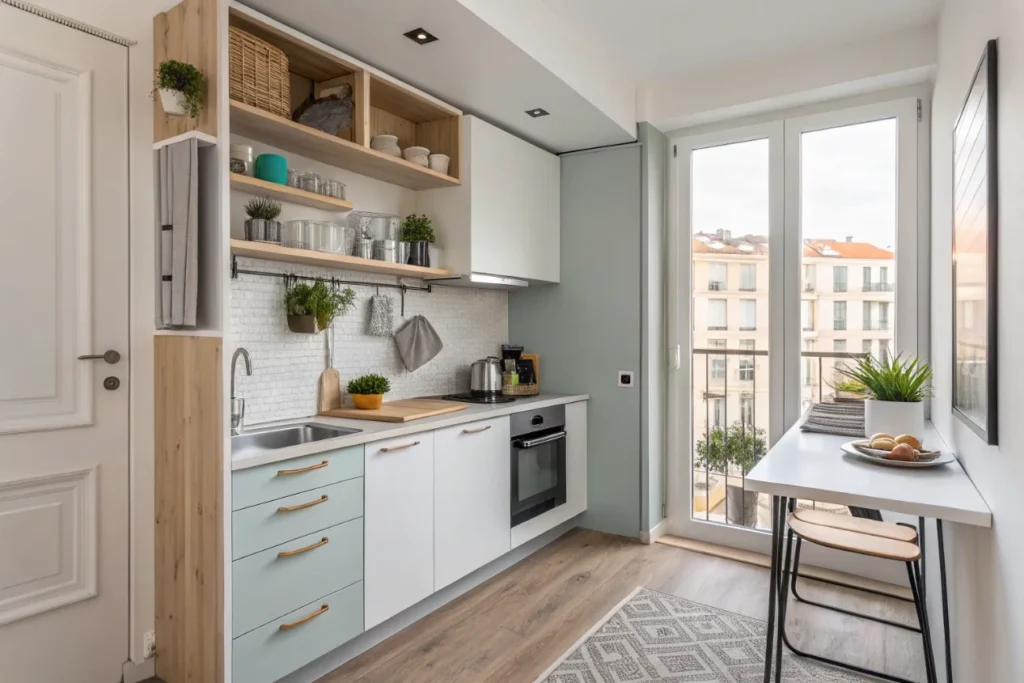
Creating functional, beautiful cooking spaces despite severe square footage limitations requires strategic tiny kitchen design solutions. Clever planning transforms cramped quarters into surprisingly efficient kitchens through innovative storage and layout choices.
Modern small-space innovations prove size doesn’t determine quality or style through creative approaches. Vertical storage, multifunctional furniture, and space-saving appliances maximize every precious inch without sacrificing essential functionality.
Whether furnishing studio apartments, tiny homes, or compact urban kitchens, effective tiny kitchen design principles create workable spaces that enhance daily life. Let’s explore how to make the most of minimal kitchen square footage.
List of 15 Best Tiny Kitchen Design Solutions
1. Vertical Storage Maximization
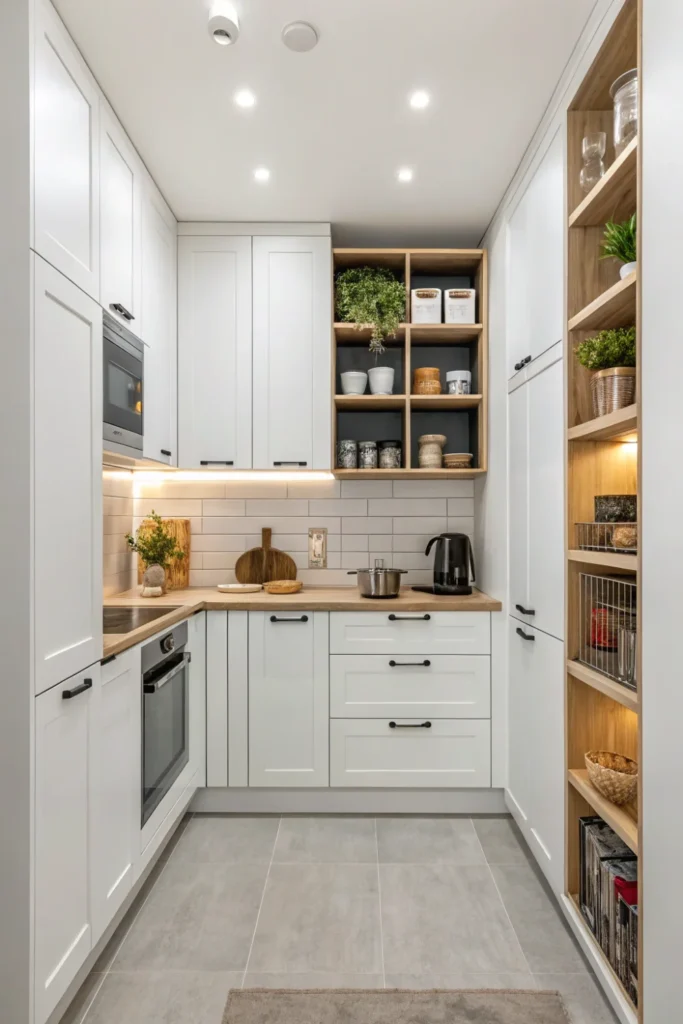
Floor-to-ceiling cabinets and shelving utilize often-wasted vertical space in tiny kitchen design, dramatically increasing storage capacity. The upward focus draws eyes ceiling-ward, creating height illusion.
Open upper shelving displays dishes while closed lower cabinets conceal clutter. Magnetic knife strips, hanging pot racks, and wall-mounted organizers free precious counter space.
Install cabinets to ceiling rather than leaving gaps that collect dust and waste potential. The comprehensive vertical approach maximizes limited footprints effectively.
Pro Tip: Use the top shelves of floor-to-ceiling cabinets in tiny kitchen design for rarely-used items like seasonal serving pieces, keeping daily essentials at easily accessible heights between hip and eye level.
2. Compact Appliance Selection
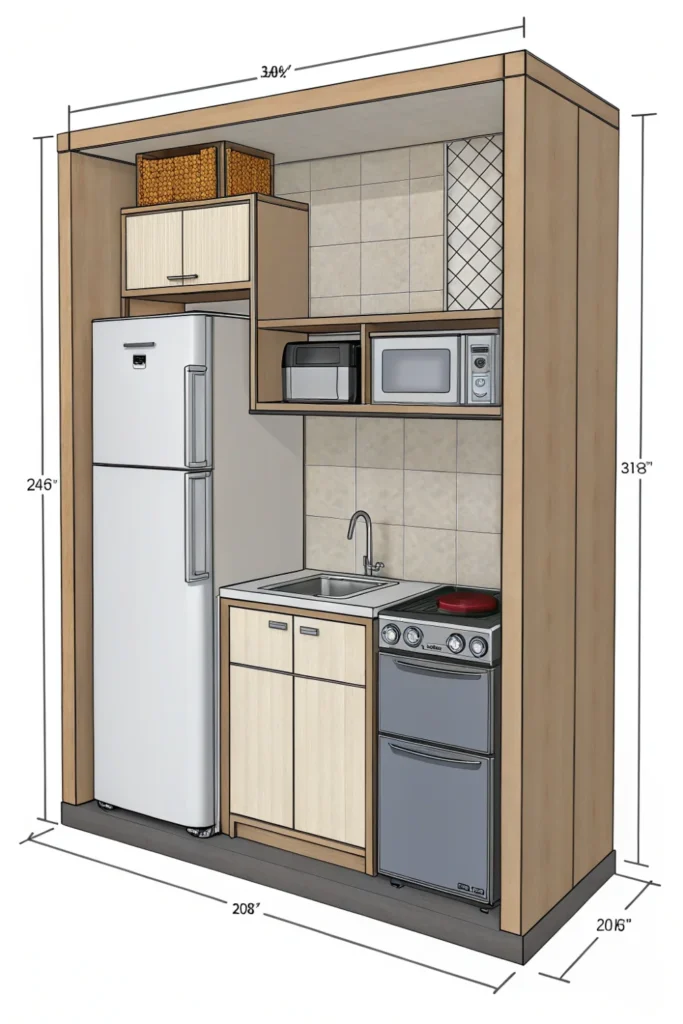
18-inch dishwashers, 24-inch ranges, and apartment-size refrigerators provide full functionality in reduced footprints for tiny kitchen design. The scaled-down appliances maintain performance while conserving space.
Combination microwave-convection ovens eliminate separate appliance needs. Portable induction cooktops and countertop ovens offer flexibility when built-ins won’t fit.
Measure carefully to ensure appliances fit properly with adequate clearances. The right-sized equipment makes tiny kitchens surprisingly capable.
Pro Tip: Choose 24-inch wide appliances (refrigerator, range, dishwasher) as the standard for tiny kitchen design rather than mixing 18, 24, and 30-inch widths to create more cohesive, streamlined appearances.
3. Light Color Palettes
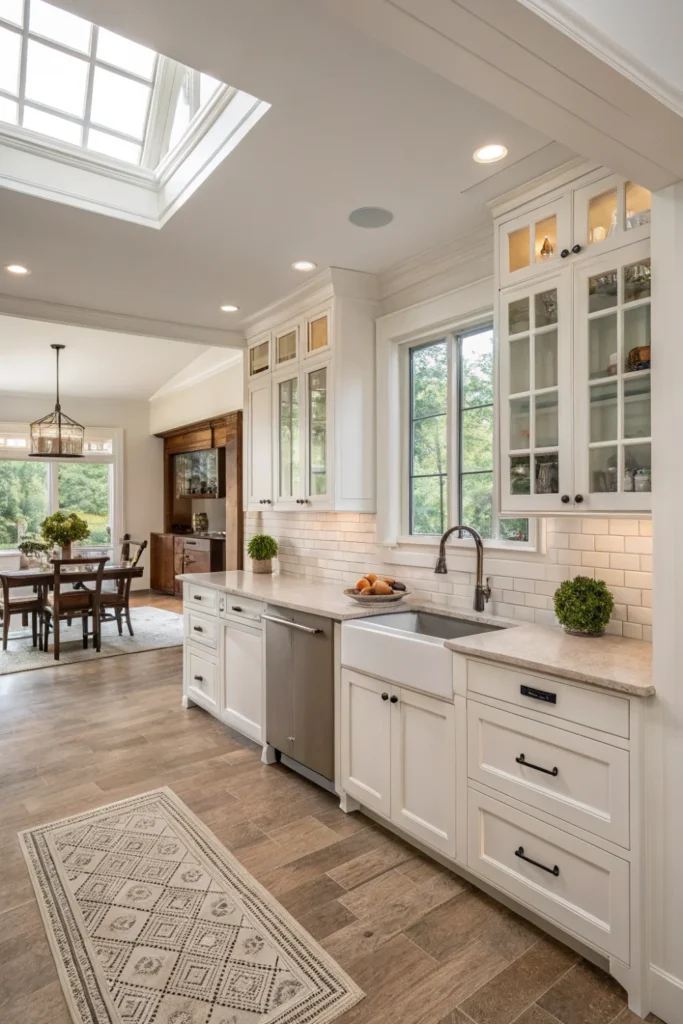
White, soft gray, and pale neutrals create airy, expansive feelings in tiny kitchen design through light reflection. Dark colors absorb light and make tight spaces feel even smaller.
Monochromatic schemes with minimal contrast prevent visual fragmentation that chops spaces into smaller perceived sections. Glossy tile backsplashes reflect maximum light.
Consistent flooring extending from adjacent rooms visually expands kitchens. The flow creates spacious impressions despite compact dimensions.
Pro Tip: Paint ceilings the same color as walls in tiny kitchen design to eliminate visual breaks that segment space, creating seamless continuity that makes rooms feel larger and more open.
4. Open Shelving Display
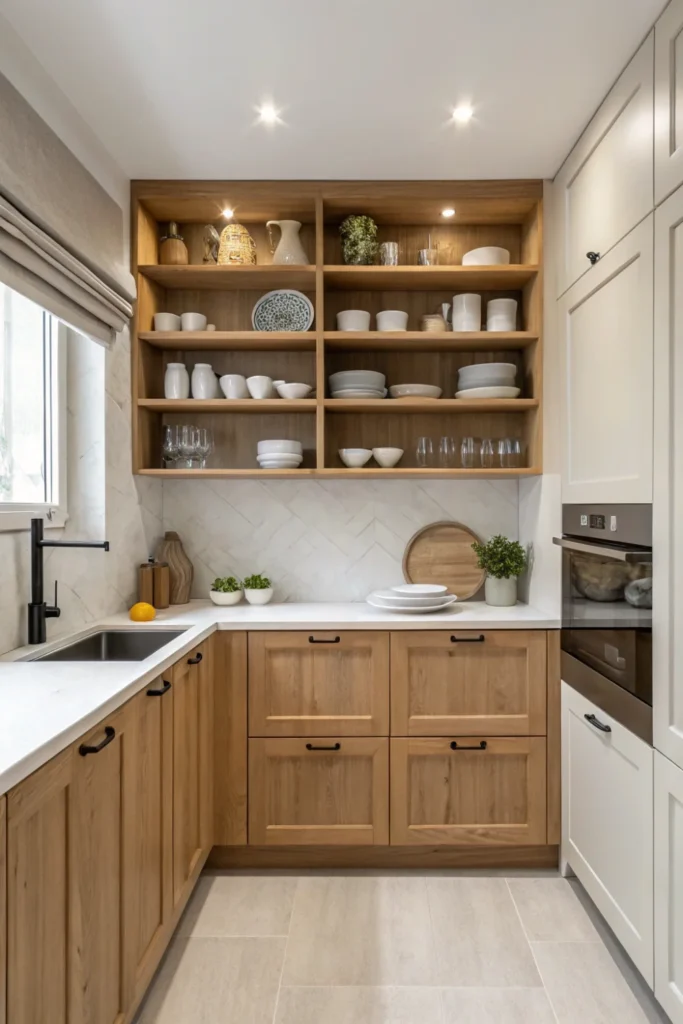
Removing upper cabinet doors creates open shelving that feels less visually heavy in tiny kitchen design. The accessible storage displays beautiful dishware while maintaining functionality.
Color-coordinated dishes and organized displays prevent cluttered appearances. Mix open shelving with some closed cabinets to balance display with concealment.
The lighter visual weight makes tiny kitchens feel more spacious. The approach suits organized individuals committed to maintaining attractive displays.
Pro Tip: Limit open shelving to 2-3 wall sections in tiny kitchen design rather than removing all upper cabinets to maintain adequate concealed storage for less-attractive necessities.
5. Fold-Down or Pull-Out Surfaces
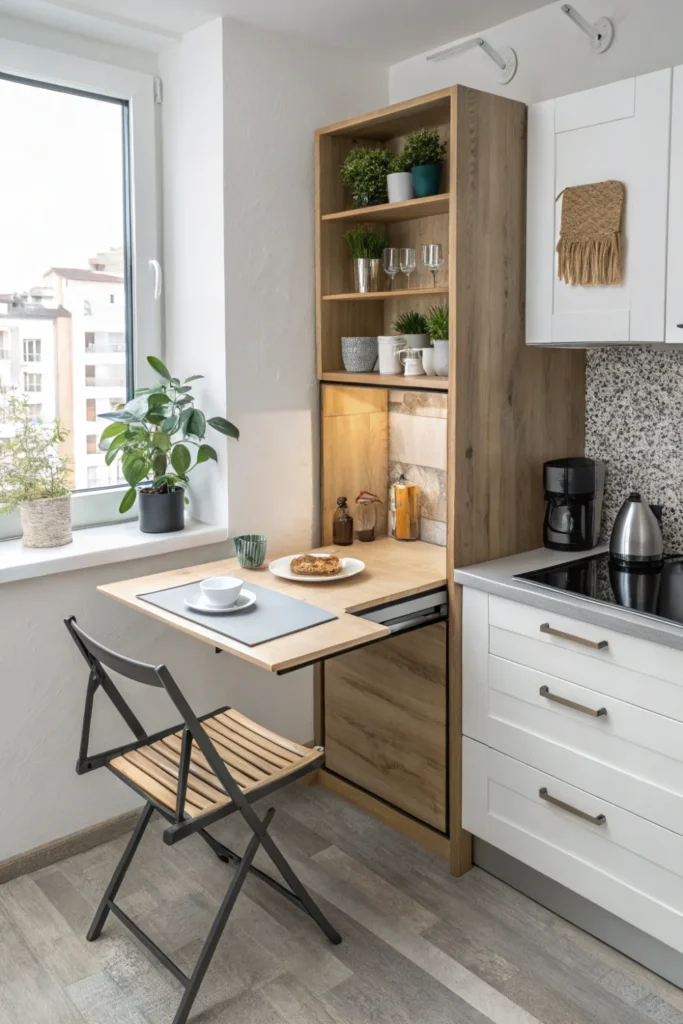
Wall-mounted fold-down tables or pull-out cutting boards create temporary prep space in tiny kitchen design when needed and disappear when not. The flexible surfaces accommodate cooking without permanent space consumption.
Butcher block fold-downs add substantial work area. Pull-out cutting boards installed in cabinets or over drawers provide instant prep zones.
The disappearing workspace maximizes efficiency in minimal footprints. The adaptable approach suits varied cooking needs.
Pro Tip: Install fold-down surfaces at standard counter height (36 inches) in your tiny kitchen design with sturdy brackets rated for at least 100 pounds to safely hold prep work and small appliances.
6. Single-Bowl Deep Sink
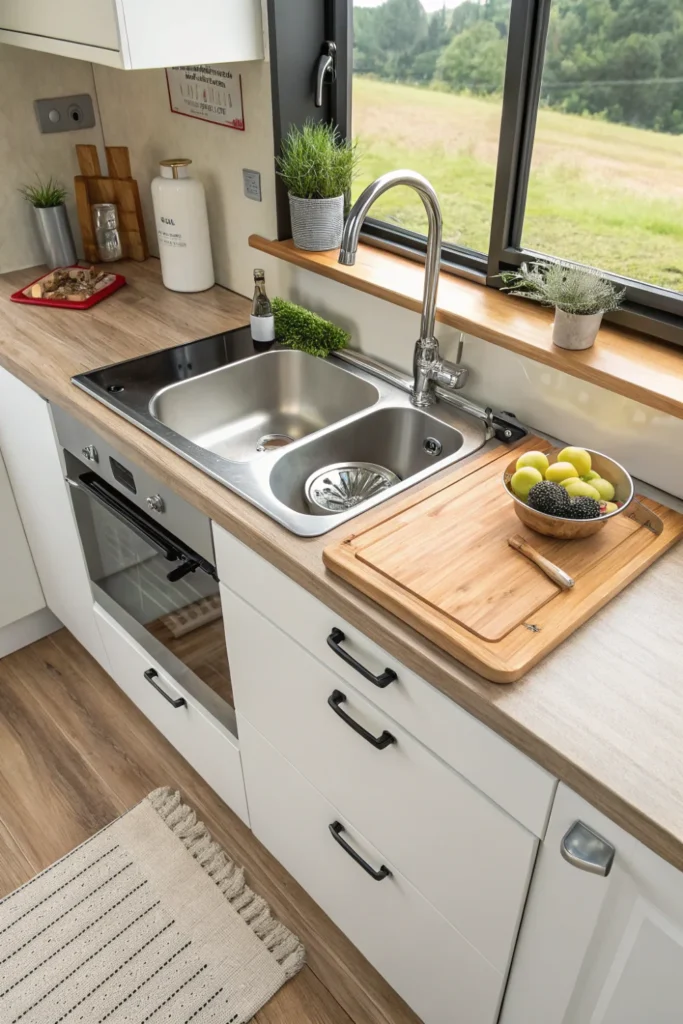
One large deep sink proves more functional than cramped double bowls in tiny kitchen design. The substantial basin accommodates large pots and baking sheets standard doubles cannot fit.
Undermount installation maximizes usable counter space around sinks. Add over-the-sink cutting boards or drying racks to expand workspace when needed.
The single configuration provides surprising versatility. The practical choice optimizes limited counter runs effectively.
Pro Tip: Choose a 27-30 inch single-bowl sink for tiny kitchen design rather than cramming in a 33-inch double bowl that creates two unusably small basins in limited counter space.
7. Slim Rolling Cart Storage
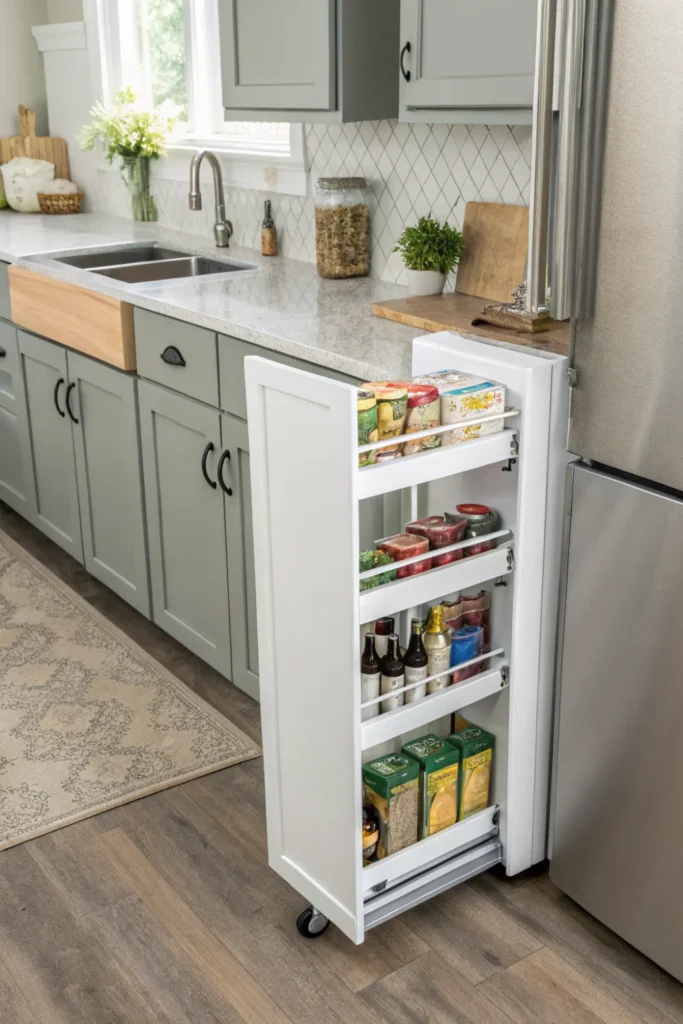
Narrow rolling carts (6-12 inches wide) tucking between appliances or cabinets provide hidden storage in tiny kitchen design. The pull-out units hold spices, oils, or cleaning supplies in otherwise wasted gaps.
Vertical carts with multiple shelves maximize slim footprints. Rolling mobility allows repositioning as needs change or using as portable prep stations.
The space-filling solution utilizes every available inch. The flexible storage adapts to evolving kitchen requirements.
Pro Tip: Measure gap widths precisely before purchasing slim carts for tiny kitchen design—even 1/4 inch miscalculation prevents fitting these space-saving solutions into intended spots.
8. Under-Sink Organization Systems
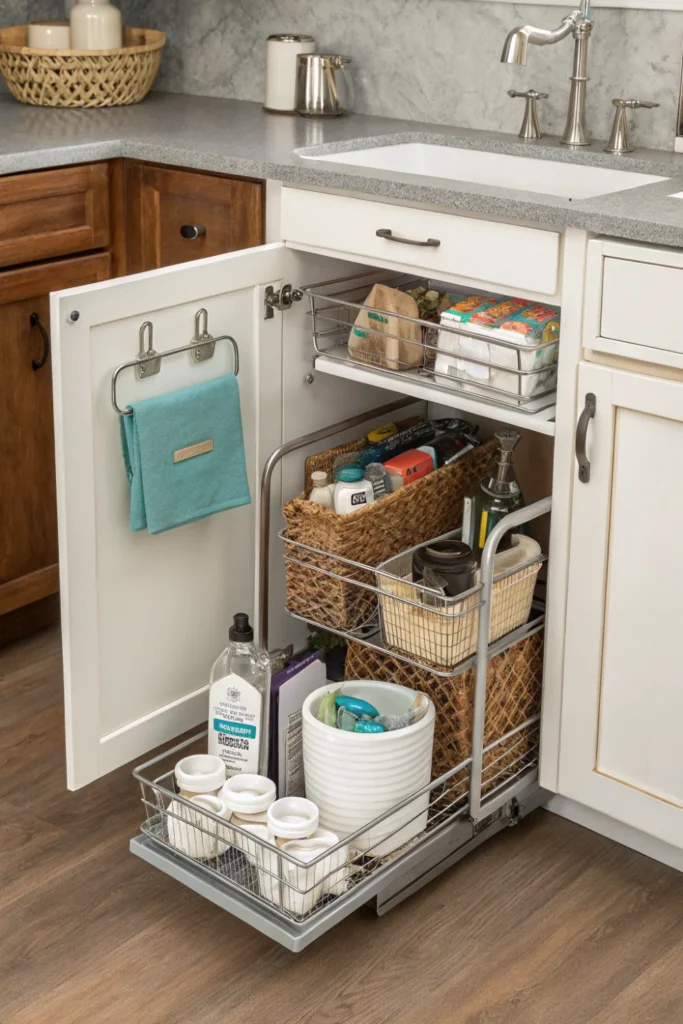
Tiered shelves, sliding baskets, and door-mounted organizers tame chaotic under-sink areas in tiny kitchen design. The awkward space around plumbing becomes surprisingly functional through smart products.
Pull-out caddies bring items forward without crawling into cabinets. Tension rod dividers create vertical storage for cleaning bottles and spray cans.
Maximize every cubic inch in precious cabinet space. The comprehensive organization transforms typically wasted areas.
Pro Tip: Use stackable clear bins under sinks in tiny kitchen design to see contents easily and maximize vertical space, dedicating one bin each for cleaning supplies, trash bags, and dish soap refills.
9. Magnetic Storage Solutions
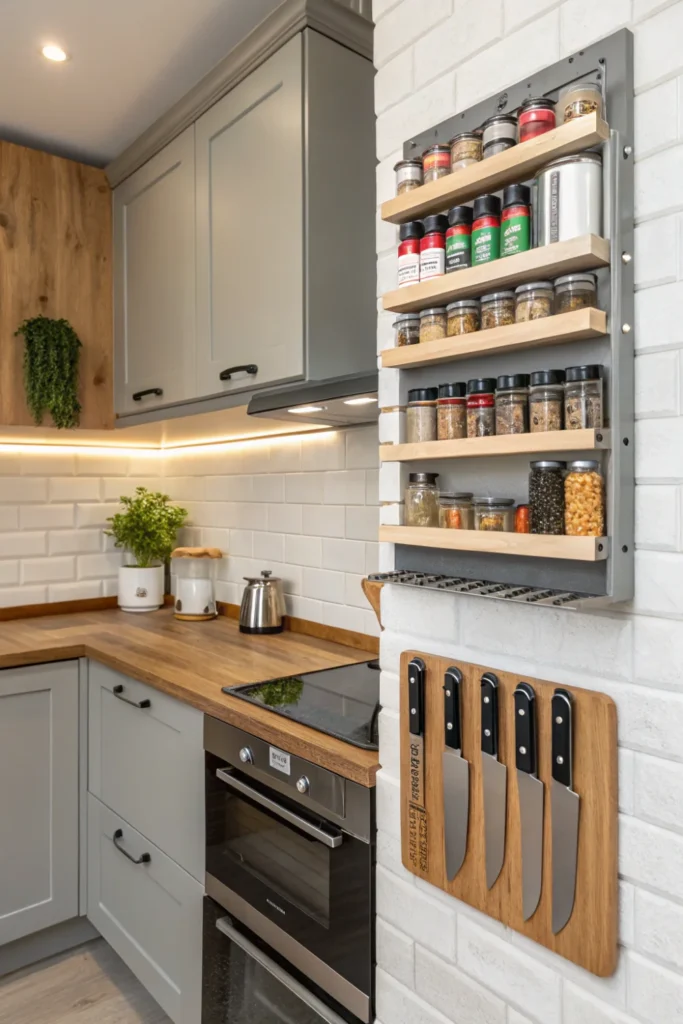
Magnetic knife strips, spice racks, and tool holders mounted on walls or sides of cabinets free drawer and counter space in tiny kitchen design. The vertical storage keeps essentials visible and accessible.
Magnetic strips hold knives safely while displaying beautiful handles decoratively. Magnetic spice tins attach to backsplashes or range hoods conveniently.
The space-saving approach eliminates bulky knife blocks and spice racks. The organized system maintains clear surfaces.
Pro Tip: Install magnetic strips on the inside of cabinet doors in tiny kitchen design to hide frequently-used tools out of sight while keeping them conveniently accessible without consuming counter or wall space.
10. Mirrored or Reflective Surfaces
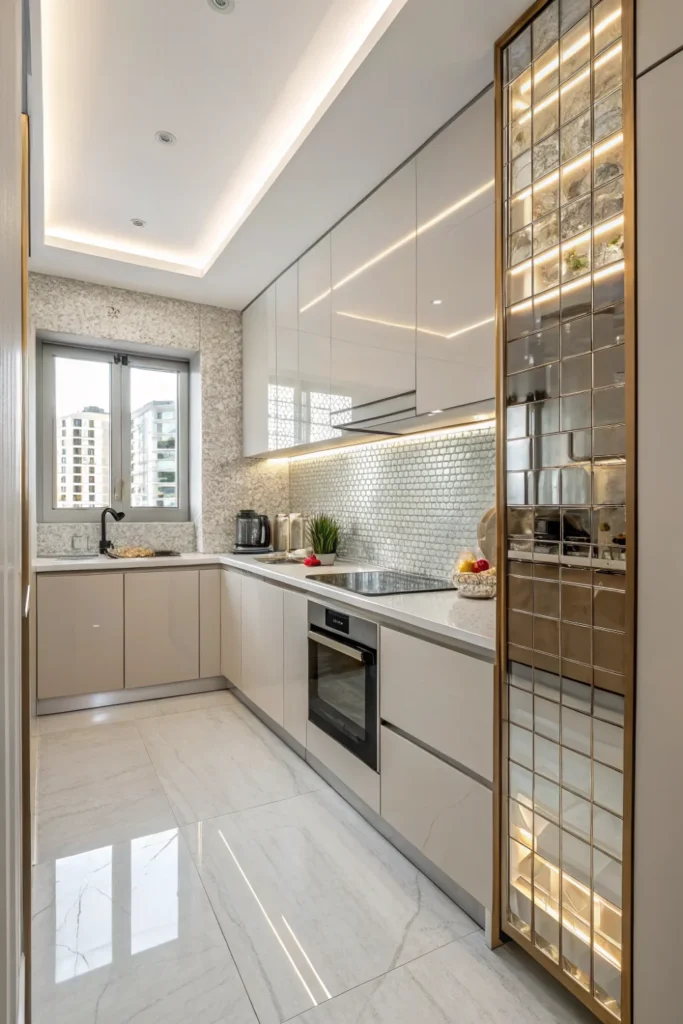
Mirrored backsplashes or glossy tiles multiply light and expand perceived space in tiny kitchen design. The reflective surfaces brighten rooms while creating depth illusions.
Stainless steel appliances and chrome fixtures add subtle reflection. Glass cabinet doors maintain visual lightness while concealing contents.
Strategic reflection doubles the impact of natural and artificial lighting. The light-bouncing approach enhances tiny kitchens dramatically.
Pro Tip: Use antiqued or smoked mirror tiles rather than clear mirror in tiny kitchen design backsplashes to create light reflection without the awkwardness of seeing your reflection constantly while cooking.
11. Peninsula Instead of Island
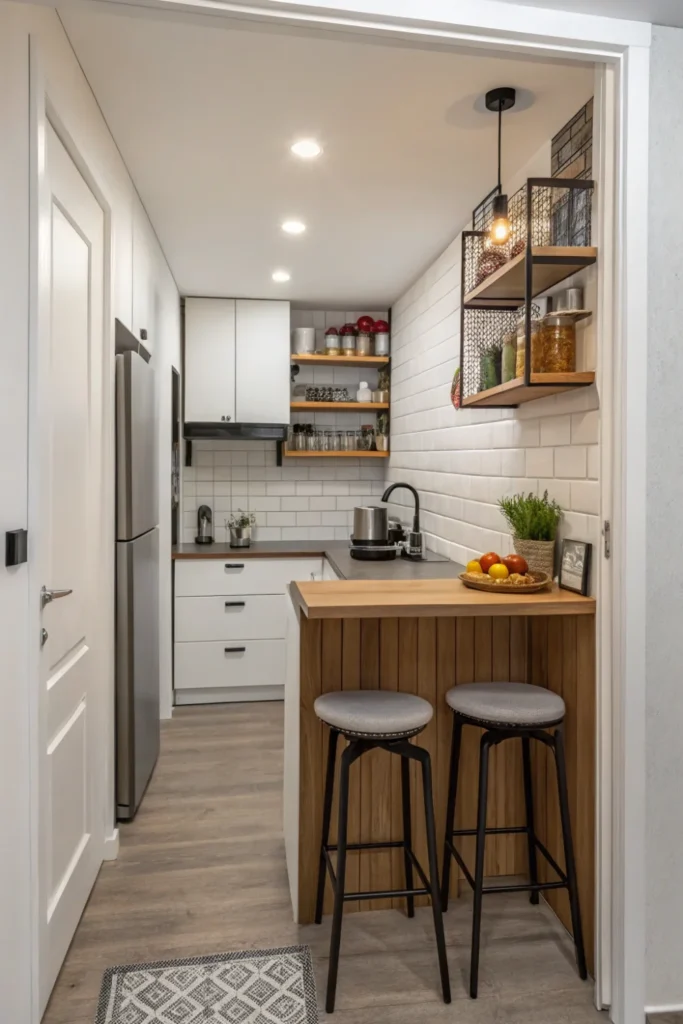
Attached peninsulas provide island benefits in tiny kitchen design spaces too small for freestanding islands. The connected counter extends workspace without requiring clearance on all sides.
One end anchored to wall or cabinets preserves precious floor space. Overhang for bar seating adds dining without separate table needs.
Defines kitchen boundaries while maintaining open flow. The space-efficient alternative delivers functionality without overwhelming.
Pro Tip: Keep peninsulas narrow (24-30 inches deep) in tiny kitchen design to maintain adequate aisle width while still providing valuable additional counter space and casual seating opportunities.
12. Corner Cabinet Solutions
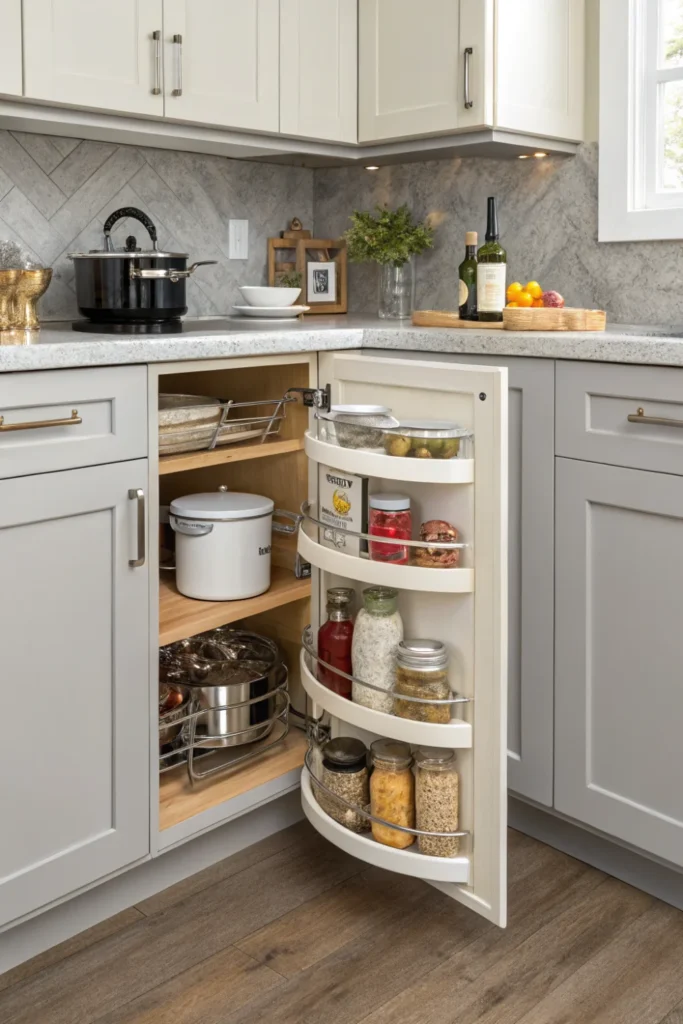
Lazy Susans, pull-out shelves, or swing-out organizers make corner cabinets functional in tiny kitchen design. These awkward spaces become accessible rather than black holes for lost items.
Diagonal corner sinks utilize typically wasted angles efficiently. Corner appliance garages hide small appliances in difficult-to-use spaces.
Maximize every cabinet including challenging corners. The comprehensive approach leaves no storage potential untapped.
Pro Tip: Install LED motion-sensor lights inside corner cabinets in tiny kitchen design to illuminate deep spaces and make stored items visible despite limited natural light in these awkward areas.
13. Integrated Appliances
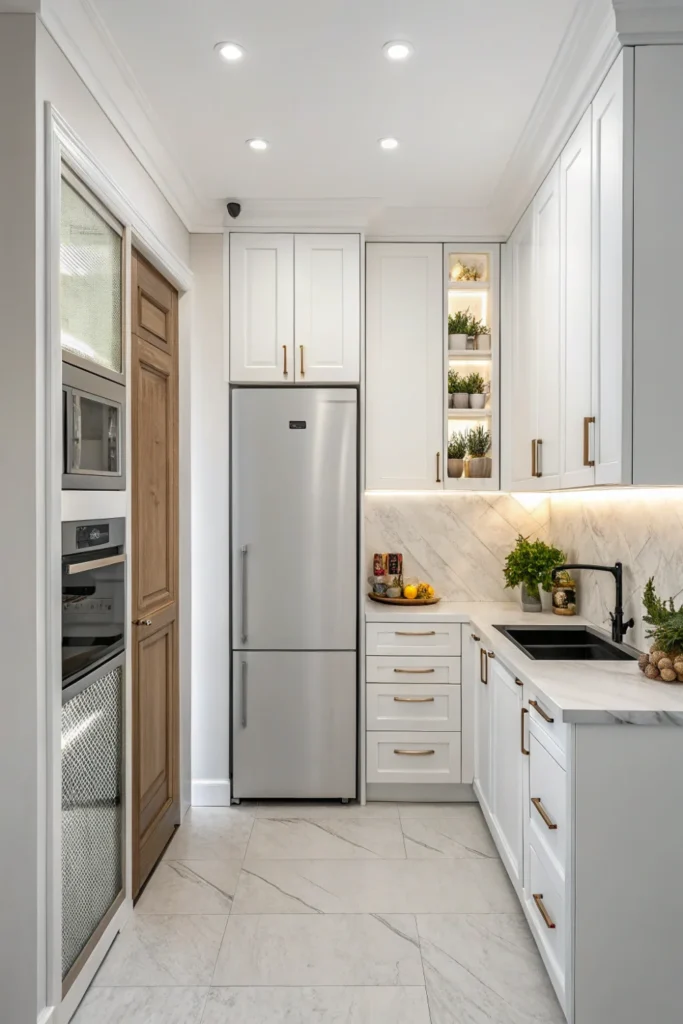
Panel-ready dishwashers and refrigerators disguised behind cabinetry create seamless tiny kitchen design appearances. The hidden appliances maintain visual flow without interruption.
Flush installation eliminates protruding appliances that make spaces feel cramped. Matching cabinet panels complete the built-in custom look.
The cohesive approach makes tiny kitchens appear larger through uninterrupted sightlines. The investment delivers substantial visual payoff.
Pro Tip: Use integrated appliances strategically in tiny kitchen design—typically just the refrigerator—since full integration proves expensive and may not justify costs in compact spaces with limited appliances.
14. Pocket or Sliding Doors
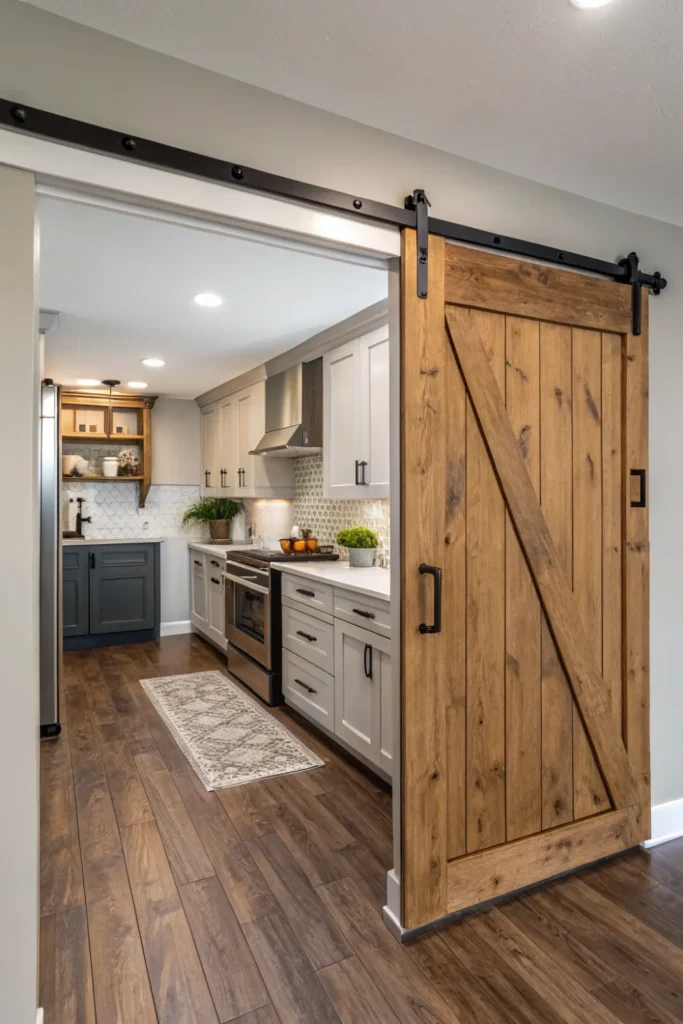
Pocket doors sliding into walls eliminate swing clearance traditional doors require in tiny kitchen design spaces opening to other rooms. The space savings can mean the difference between functional and cramped.
Barn-style sliding doors offer similar benefits when pocket installation isn’t feasible. The exterior mounting preserves interior space while adding character.
Recover 9+ square feet of floor space by eliminating door swing radius. The single change dramatically improves usable area.
Pro Tip: Install soft-close mechanisms on pocket doors in tiny kitchen design to prevent slamming and ensure smooth, quiet operation that maintains the peaceful, organized feeling despite compact quarters.
15. Multi-Purpose Furniture
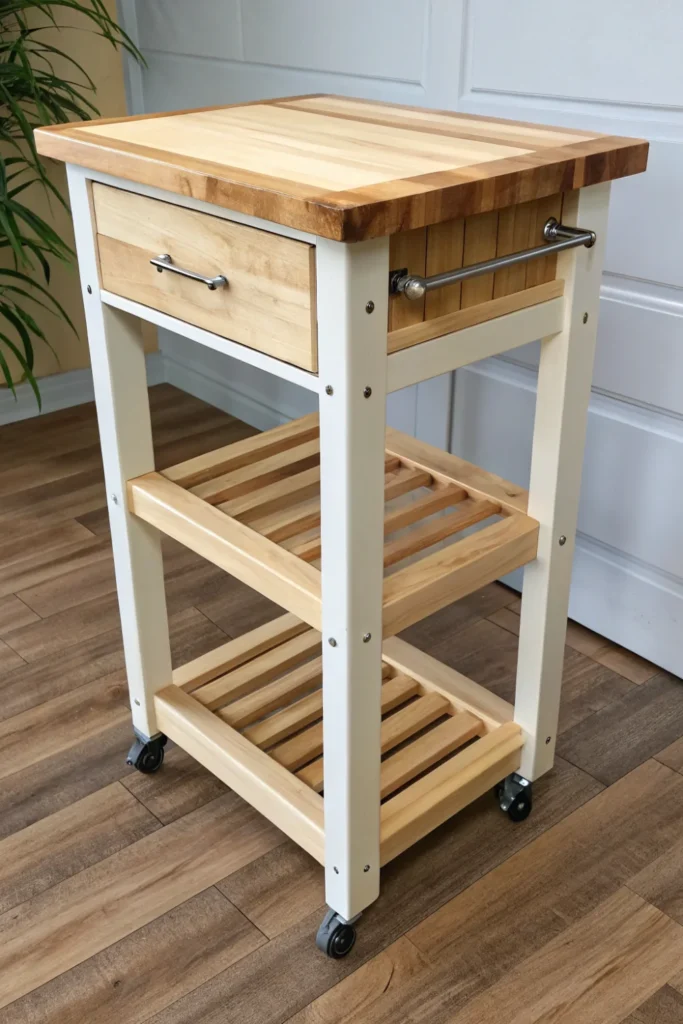
Kitchen carts doubling as prep surfaces and storage, fold-down tables, and step stools with storage serve multiple functions in tiny kitchen design. The versatile pieces maximize utility without consuming excessive space.
Rolling carts provide mobile prep areas moving where needed. Collapsible furniture disappears when not in use, freeing floor space.
Every item earning its place through multiple uses optimizes tiny kitchens. The disciplined approach prevents clutter accumulation.
Pro Tip: Choose furniture pieces serving at least two functions in tiny kitchen design—a cart with storage and prep surface, stools with interior storage, tables that fold flat—to justify the floor space they consume.
Why Tiny Kitchen Design Planning Matters
Workflow efficiency proves even more critical in compact kitchens where poor layouts waste steps and create frustration in already-tight spaces. Thoughtful tiny kitchen design maximizes limited square footage through strategic placement.
Mental wellbeing suffers in chaotic, cramped kitchens that feel overwhelming rather than functional. Good tiny kitchen design creates organized, pleasant spaces that reduce stress despite size constraints.
Property value maintains better with well-designed tiny kitchens proving functional and attractive rather than awkward afterthoughts. Professional tiny kitchen design protects investments in compact urban properties.
Things to Consider Before Tiny Kitchen Design
Evaluate your actual cooking habits honestly before planning tiny kitchen design—elaborate cooking requires different solutions than reheating and simple prep. Design around reality rather than aspirational chef fantasies unlikely to materialize.
Consider your storage needs carefully since tiny kitchens severely limit cabinet space. Ruthlessly edit belongings to essentials, and plan tiny kitchen design storage for items you actually use regularly.
Think about appliance priorities—perhaps a dishwasher matters more than full-size range, or vice versa. Strategic tiny kitchen design choices accommodate your specific priorities within space constraints.
Comparison Table of Tiny Kitchen Design Solutions
| Design Solution | Space Saved | Cost Range | Installation | Impact on Function | Flexibility |
| Vertical Storage | High – utilizes height | $-$$$ | Medium – cabinet install | High – dramatically increases capacity | Low – permanent cabinets |
| Compact Appliances | High – smaller footprints | $$-$$$$ | Medium – appliance install | High – maintains functionality | Medium – replaceable |
| Light Color Palette | None (visual only) | $ | Easy – DIY painting | Medium – feels more spacious | High – repaintable |
| Open Shelving | Medium – lighter visual | $-$$ | Easy – shelf mounting | Medium – requires organization | High – changeable |
| Fold-Down Surfaces | High – temporary workspace | $-$$ | Medium – wall mounting | High – adds prep area | High – adaptable |
| Single Bowl Sink | Medium – counter space | $-$$ | Medium – plumbing | High – accommodates large items | Low – permanent fixture |
| Rolling Cart Storage | Medium – fills gaps | $-$$ | None – portable | Medium – additional storage | Very High – mobile |
| Under-Sink Organization | Medium – maximizes awkward space | $-$ | Easy – insert systems | Medium – accessible storage | High – changeable |
| Magnetic Storage | Medium – frees drawers | $ | Easy – mount strips | Medium – visible organization | High – removable |
| Mirrored Surfaces | None (visual only) | $$-$$$ | Medium-Hard – tile install | Low – light enhancement | Low – permanent tile |
| Peninsula Extension | Medium – attached counter | $$-$$$ | Hard – construction | High – adds workspace/seating | Low – permanent structure |
| Corner Solutions | Medium – awkward spaces | $-$$$ | Medium – specialty hardware | High – makes corners functional | Low – built-in systems |
| Integrated Appliances | High (visual continuity) | $$$-$$$$ | Hard – custom panels | Medium – seamless appearance | Low – expensive investment |
| Pocket/Sliding Doors | High – eliminates swing | $$-$$$ | Hard – wall modification | High – recovers floor space | Low – structural change |
| Multi-Purpose Furniture | Medium – dual functions | $-$$$ | Easy – furniture placement | High – versatile use | Very High – moveable |
Recommended Products for Tiny Kitchen Design
Narrow Rolling Kitchen Cart
This slim 18-inch wide cart fits between appliances or beside counters in tiny kitchen design spaces, providing mobile prep surface and storage. The solid wood top with lower wire shelving holds small appliances and pantry items while locking wheels stabilize during use. Customers praise the quality construction, smooth rolling movement, and how this single piece dramatically increases workspace and storage in impossibly small kitchens without permanent installation.
Under-Shelf Storage Baskets
These hanging wire baskets attach under existing shelves to create additional storage tiers in tiny kitchen design cabinets. The easy slide-on installation requires no tools while the sturdy construction holds dishes, mugs, or packaged goods, effectively doubling shelf capacity. Users love how these simple additions maximize vertical space in cabinets, creating room for significantly more items without adding more cabinets to already-tight kitchens.
Magnetic Knife and Tool Strip
This 18-inch magnetic strip mounts to walls or cabinet sides freeing drawer space in tiny kitchen design for other essentials. The strong magnetic hold safely displays knives while the brushed stainless finish coordinates with modern or traditional aesthetics. Customers appreciate the substantial space savings, easy installation with included screws, and how keeping frequently-used tools visible and accessible speeds cooking in compact kitchens.
Frequently Asked Questions About Tiny Kitchen Design
What is the minimum size for a functional kitchen?
Approximately 50-70 square feet creates basic functional kitchens with essential appliances and minimal prep space in tiny kitchen design contexts. Galley layouts (7×10 feet) maximize efficiency in compact footprints.
30-40 square feet suffices for kitchenettes with mini appliances and very limited cooking in studio apartments. Anything under 30 square feet typically functions as wet bar rather than true kitchen despite tiny kitchen design efforts.
How can I add counter space to a tiny kitchen?
Install fold-down tables or pull-out cutting boards creating temporary surfaces in tiny kitchen design that disappear when not needed. Over-the-sink cutting boards and stove-top covers convert fixtures into usable prep areas.
Add rolling carts or small tables that can move when necessary or serve as islands when space allows. Extend existing counters with butcher block or stone to maximize permanent workspace within tiny kitchen design constraints.
What appliances can I skip in a tiny kitchen?
Dishwashers prove least essential for singles or couples who hand-wash easily in compact tiny kitchen design spaces. The cabinet space liberated often provides more value than dishwasher convenience in minimal kitchens.
Full-size ranges can be replaced with portable induction cooktops plus countertop ovens for flexible cooking without permanent space consumption. Consider your actual cooking patterns when determining which appliances truly justify space in tiny kitchen design reality versus cooking fantasies.
How do I make a tiny kitchen feel bigger?
Use all-white or light neutral colors on cabinets, walls, and backsplashes to maximize light reflection in tiny kitchen design. Eliminate upper cabinets on at least one wall to create visual breathing room and reduce boxed-in feelings.
Install good lighting including under-cabinet LEDs and bright overhead fixtures since well-lit spaces feel more spacious. Extend flooring from adjacent rooms without transitions to visually expand tiny kitchen design footprints through continuity rather than definition.