
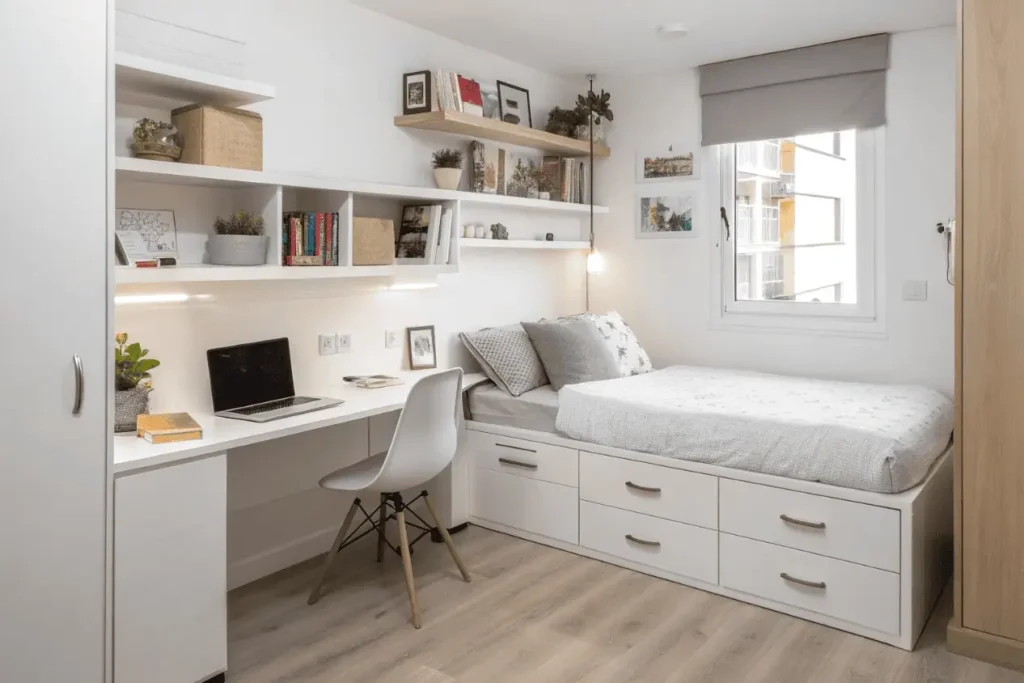
Maximizing limited square footage through strategic bed and desk layout small room planning creates functional, comfortable spaces despite tight dimensions. Thoughtful furniture placement transforms cramped quarters into efficient multipurpose rooms.
Modern small space solutions blend sleeping and working zones seamlessly through creative configurations. Loft beds, Murphy desks, and corner placements optimize every available inch without sacrificing comfort or productivity.
Whether furnishing dorm rooms, studio apartments, or compact bedrooms, effective bed and desk layout small room strategies deliver both rest and work areas successfully. Let’s explore how to fit everything you need into limited space.
List of 13 Best Bed and Desk Layout Small Room Ideas
1. Loft Bed with Desk Underneath
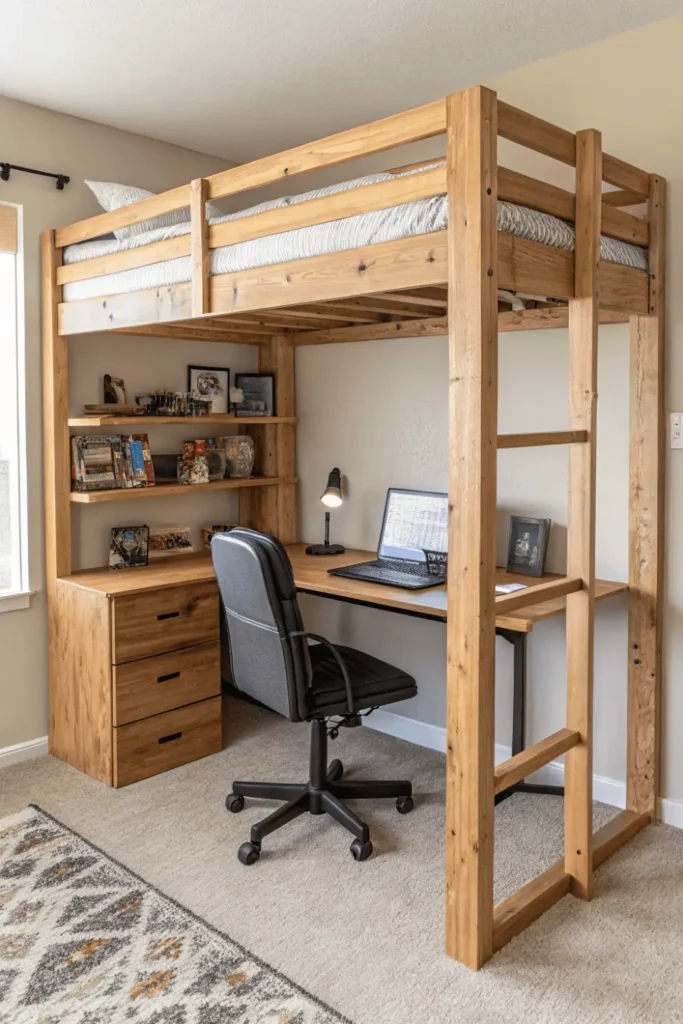
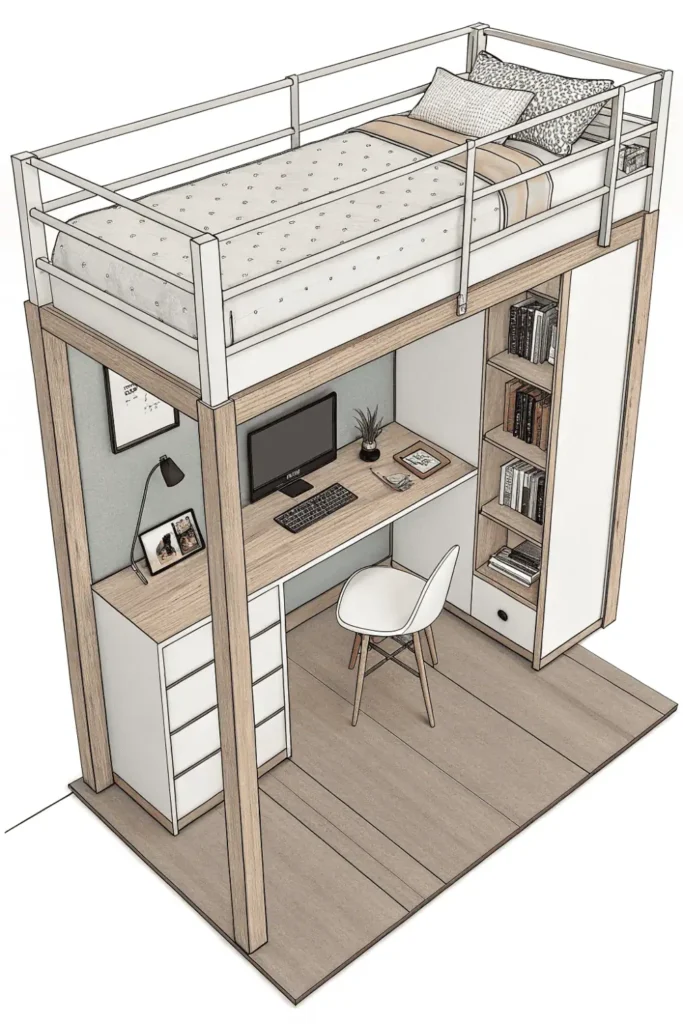
Elevated loft beds free valuable floor space beneath for dedicated work areas in bed and desk layout small room configurations. The vertical solution maximizes tight square footage brilliantly.
Full-size or twin loft frames accommodate adult sleeping needs while creating complete home offices below. Built-in desks or freestanding options suit different budgets and permanence preferences.
Sturdy construction supporting significant weight ensures safety and stability. The comprehensive solution addresses both sleeping and working needs simultaneously.
Pro Tip: Ensure at least 38-42 inches of clearance between loft mattress and ceiling for comfortable sitting up in bed, and install task lighting under the loft for proper workspace illumination in your bed and desk layout small room.
2. Murphy Bed with Fold-Down Desk
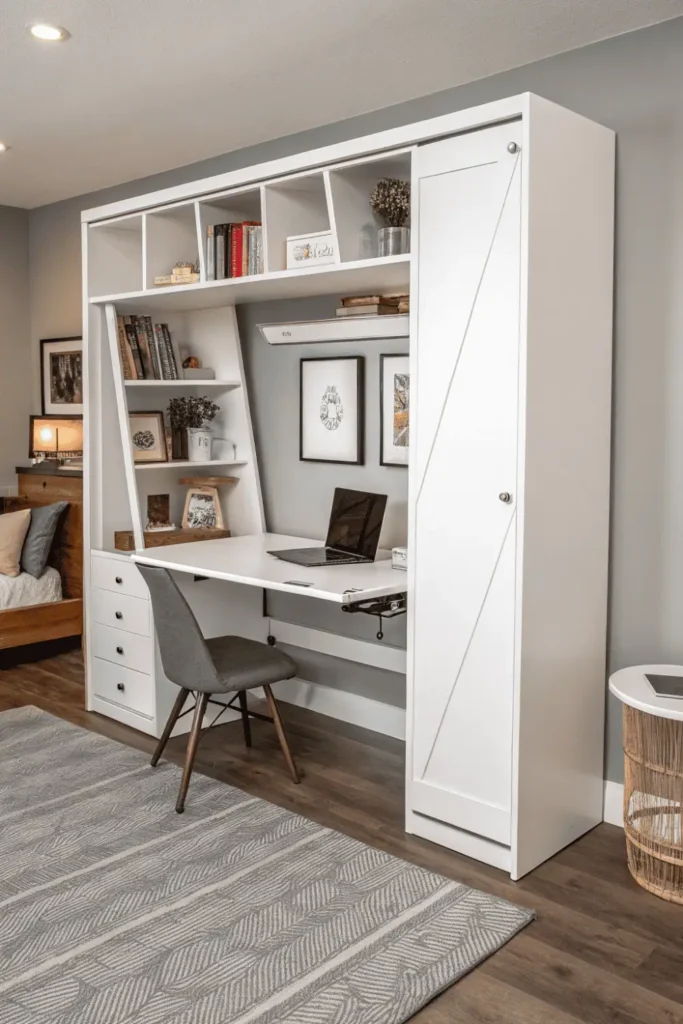
Wall-mounted Murphy beds that fold up reveal integrated desks for ultimate space efficiency in bed and desk layout small room designs. The transforming furniture serves dual purposes without requiring separate floor space.
Horizontal or vertical fold mechanisms accommodate different room dimensions. Attached desks remain usable when bed is raised, maintaining workspace availability throughout the day.
Professional installation required but delivers unmatched flexibility. The investment pays dividends in extremely tight quarters.
Pro Tip: Choose Murphy bed systems with piston-lift mechanisms rather than springs for quieter, easier operation, and ensure the desk surface is properly supported when the bed is raised in your bed and desk layout small room.
3. Daybed Against Wall with Desk Adjacent
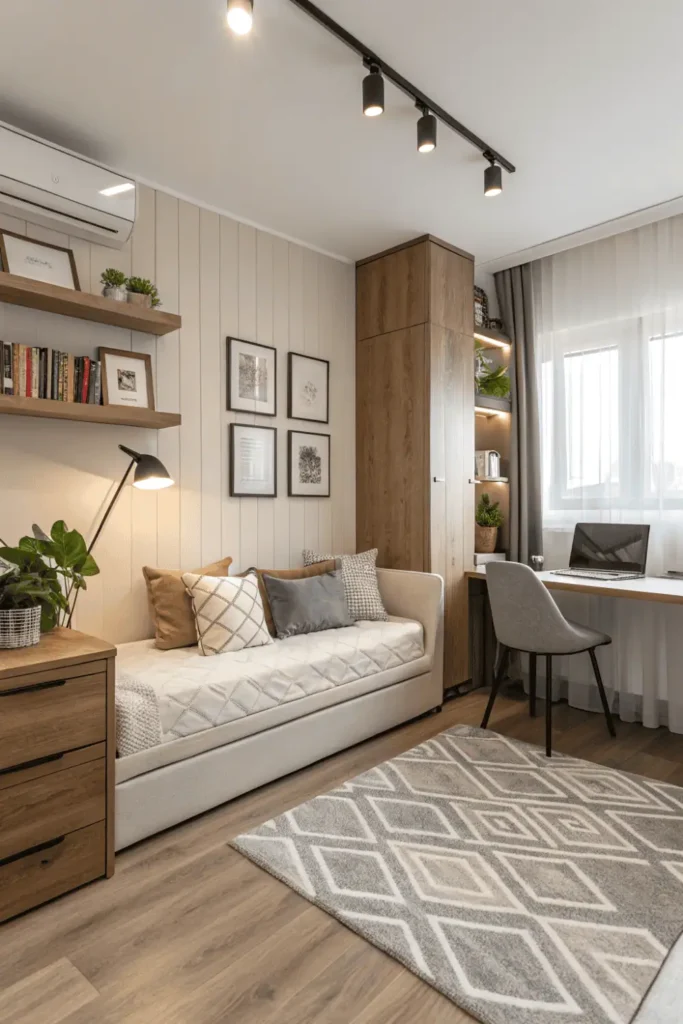
Daybed positioned lengthwise against wall functions as sofa during waking hours while perpendicular desk placement creates defined work zones in bed and desk layout small room arrangements.
Twin or full daybeds with bolster pillows appear intentional seating rather than makeshift bedrooms. Corner or wall-adjacent desk placement preserves traffic flow through compact spaces.
The non-lofted solution suits those uncomfortable with elevated sleeping or preferring traditional bed access. The configuration works in rectangular rooms particularly well.
Pro Tip: Style daybeds with throw pillows against the wall to emphasize sofa qualities during daytime, and position your desk to face away from the bed to mentally separate work and sleep zones in your bed and desk layout small room.
4. Bed in Corner with Floating Desk
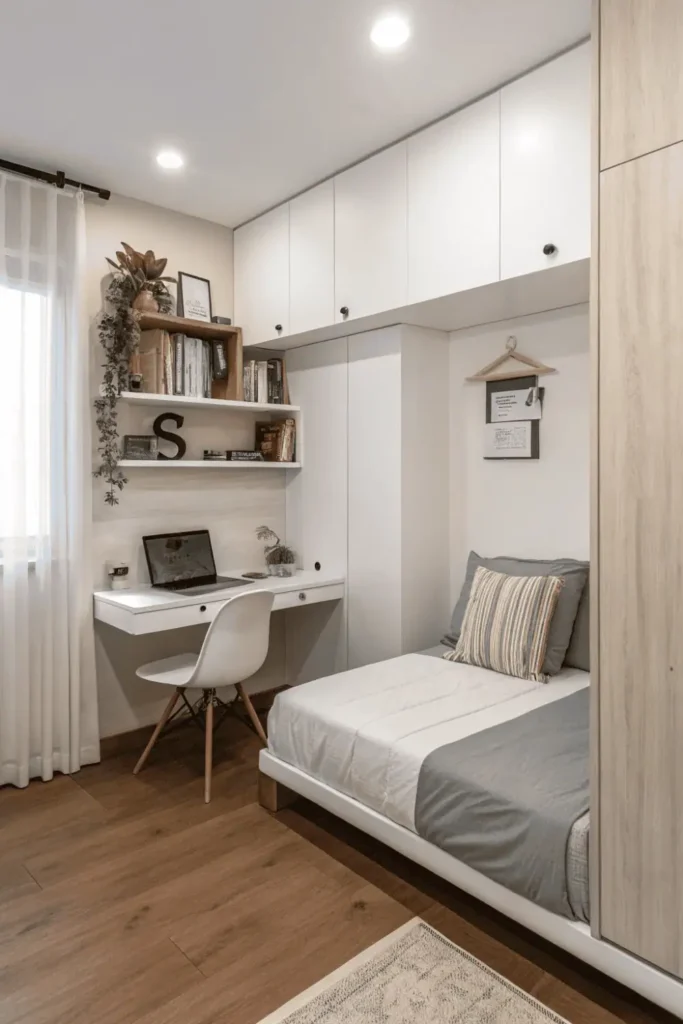
Corner bed placement maximizes usable floor space while wall-mounted floating desk consumes zero floor area in tight bed and desk layout small room configurations. The strategic positioning preserves movement despite limited square footage.
L-shaped corner arrangement creates cozy sleeping nooks. Narrow floating desks (16-20 inches deep) provide adequate workspace without bulk.
Minimize furniture footprint through wall-mounting whenever possible. The approach creates surprisingly livable compact rooms.
Pro Tip: Install floating desks at exact height for your chair (typically 28-30 inches) to ensure ergonomic comfort, and mount sturdy brackets to wall studs to support computer equipment weight in your bed and desk layout small room.
5. Platform Bed with Built-In Desk Extension
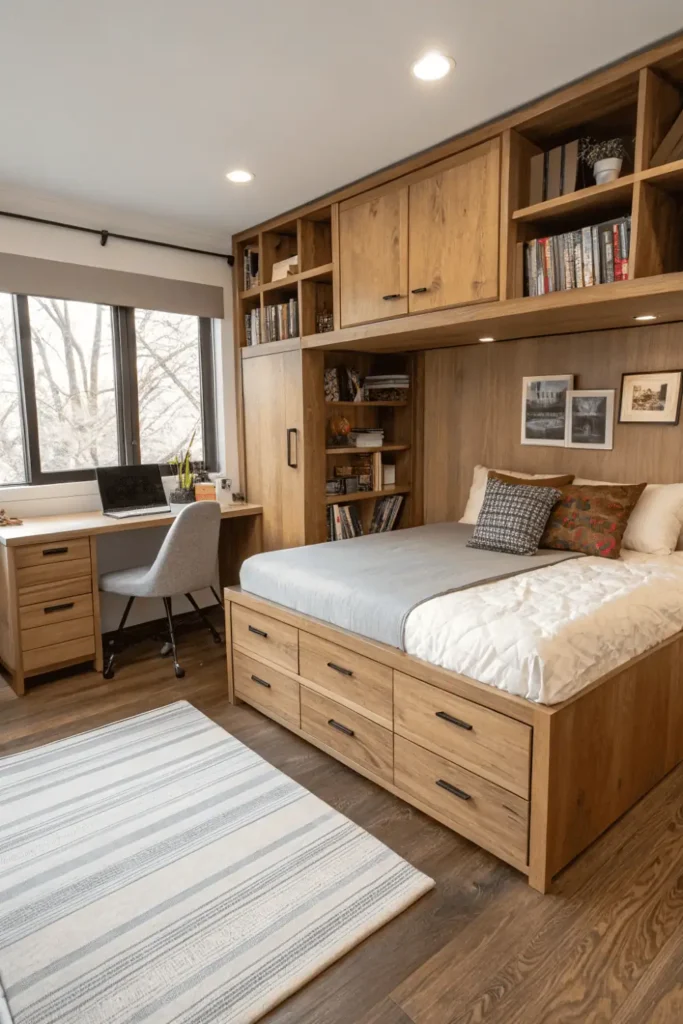
Custom platform beds with integrated desk surfaces extending from the side create seamless bed and desk layout small room solutions. The unified furniture piece eliminates separate desk needs.
Cantilevered desk portions attach to bed frame structurally. Storage drawers beneath platforms maximize every cubic inch efficiently.
Professional carpentry recommended for structural integrity. The permanent installation delivers custom-quality results.
Pro Tip: Ensure the built-in desk extension is at least 24 inches deep to accommodate laptop and work materials comfortably, and include electrical outlets within the platform structure for your bed and desk layout small room convenience.
6. Bunk Bed with Desk on Lower Level
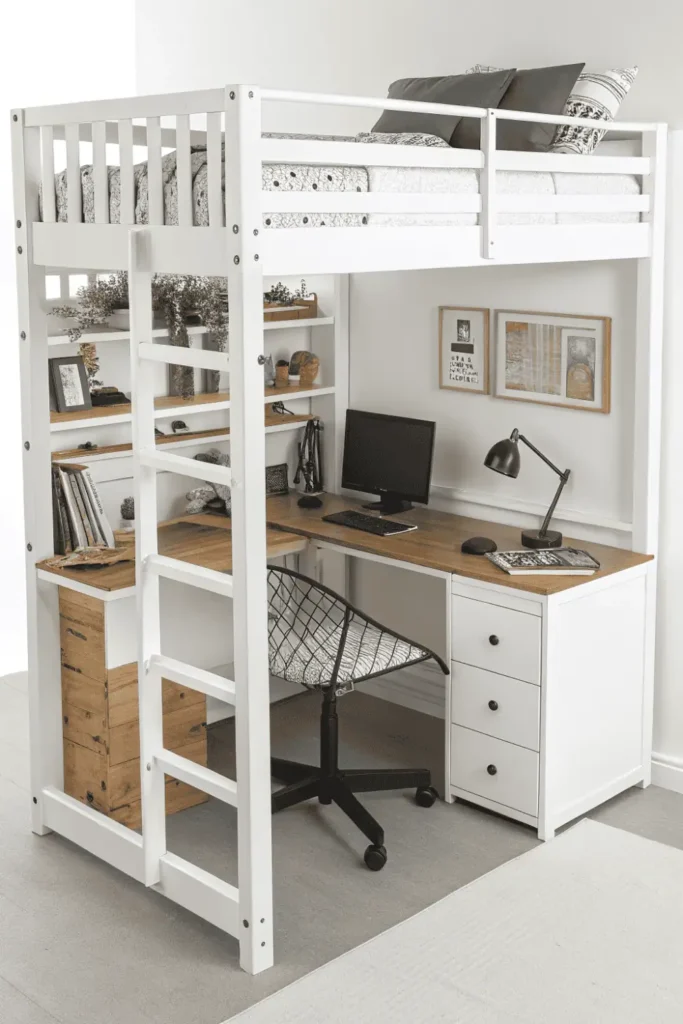
Twin-over-full bunk beds with desk replacing lower sleeping berth create bed and desk layout small room solutions for guest rooms or children’s spaces. The vertical configuration preserves floor space dramatically.
Upper sleeping area accommodates overnight guests while lower workspace serves daily needs. L-shaped desk configurations maximize corner bunk placements.
The dual-purpose approach works beautifully for multipurpose guest rooms. The flexibility accommodates varying needs over time.
Pro Tip: Choose bunk beds with upper rails extending higher than standard to prevent rolling out, and ensure the lower desk area has at least 42 inches of vertical clearance for comfortable seating in your bed and desk layout small room.
7. Twin Bed Parallel to Narrow Desk
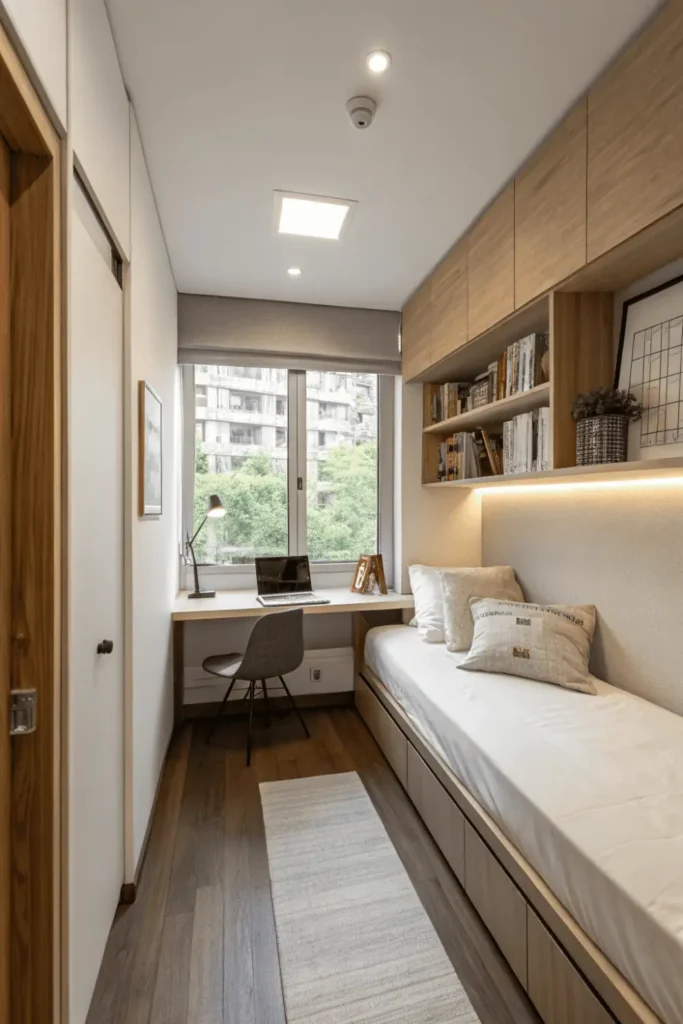
Side-by-side placement of twin bed and narrow desk along same wall creates streamlined bed and desk layout small room in extremely tight quarters. The linear arrangement preserves central floor space for movement.
18-24 inch deep desks fit between bed and opposite wall in rooms as narrow as 8 feet. Matching or coordinating furniture creates cohesive, intentional appearances.
The simple layout proves easiest to arrange in rectangular small rooms. The accessibility from foot of bed maintains functionality.
Pro Tip: Leave at least 24 inches of walking space between the bed and desk for comfortable access to both, and position the desk near the window for natural task lighting in your bed and desk layout small room.
8. Desk at Foot of Bed
Positioning desks perpendicular at bed’s foot creates distinct work zones in bed and desk layout small room layouts. The configuration works when wall space alongside bed remains unavailable.
Standard desks (48-60 inches wide) span bed width comfortably. Swivel chairs allow transitioning between desk work and bed access easily.
Visual separation between sleeping and working areas benefits those working from home. The defined zones support better work-life boundaries.
Pro Tip: Ensure at least 36 inches between the foot of the bed and desk to allow comfortable passage and chair movement in your bed and desk layout small room without feeling cramped.
9. Captain’s Bed with Pull-Out Desk
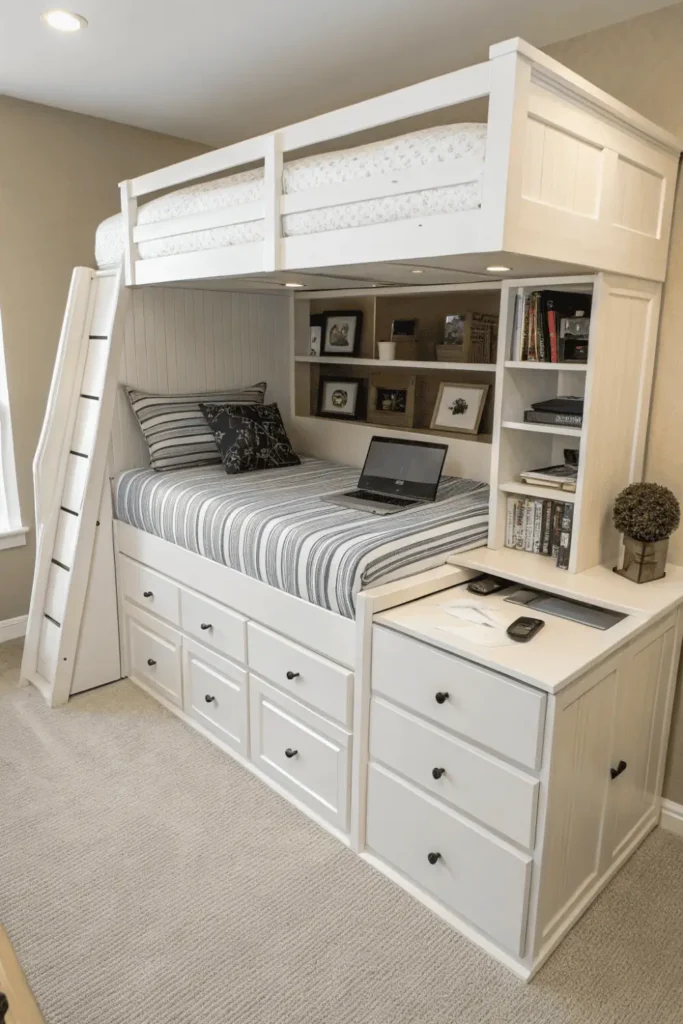
Storage beds with built-in drawers pair with pull-out or slide-out desk extensions for compact bed and desk layout small room solutions. The hidden desk deploys when needed and tucks away afterward.
Drawer storage beneath beds accommodates clothing and belongings. Rolling desk mechanisms slide out smoothly for work sessions.
The concealed approach maintains bedroom aesthetics when workspace isn’t needed. The flexibility suits those preferring minimalist appearances.
Pro Tip: Choose captain’s beds with smooth-gliding drawer slides rated for frequent use, and ensure pull-out desk surfaces lock securely in place when extended in your bed and desk layout small room.
10. Bed Against Window with Desk on Opposite Wall
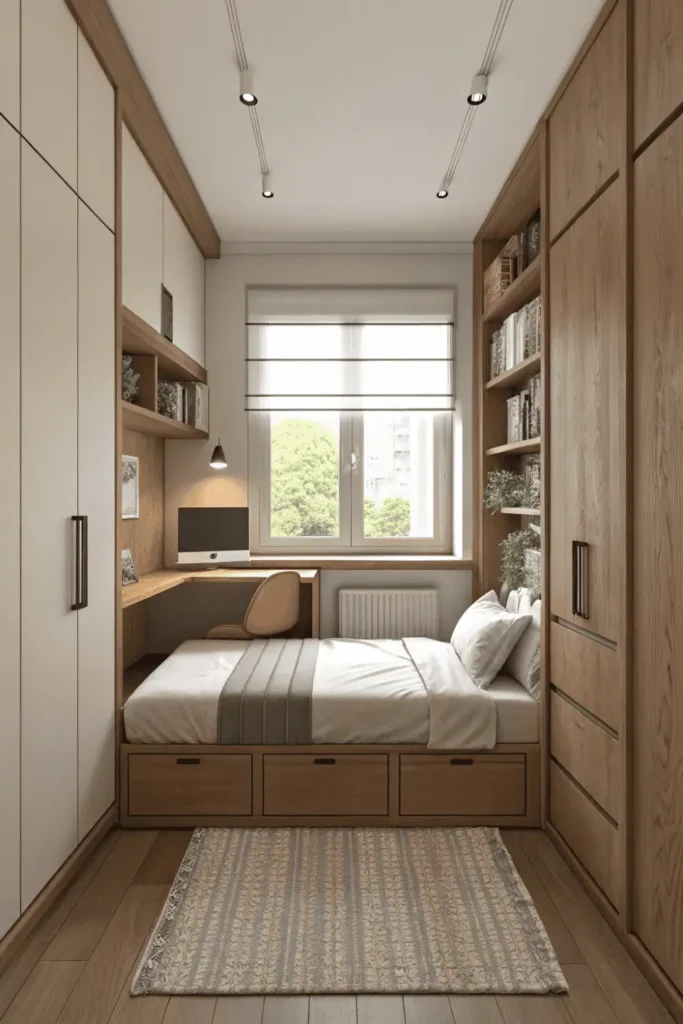
Centering beds under windows creates symmetrical bed and desk layout small room arrangements with desks along opposite walls. The balanced approach works in square or slightly rectangular rooms.
Natural light from windows illuminates sleeping areas pleasantly. Desk placement on solid walls provides stable work surfaces without window distractions.
The separated zones create distinct sleeping and working areas despite shared space. The layout maximizes wall usage efficiently.
Pro Tip: Install blackout shades or curtains on windows behind beds to control morning light for better sleep, and position your desk to receive indirect natural light without screen glare in your bed and desk layout small room.
11. L-Shaped Desk Creating Room Divider
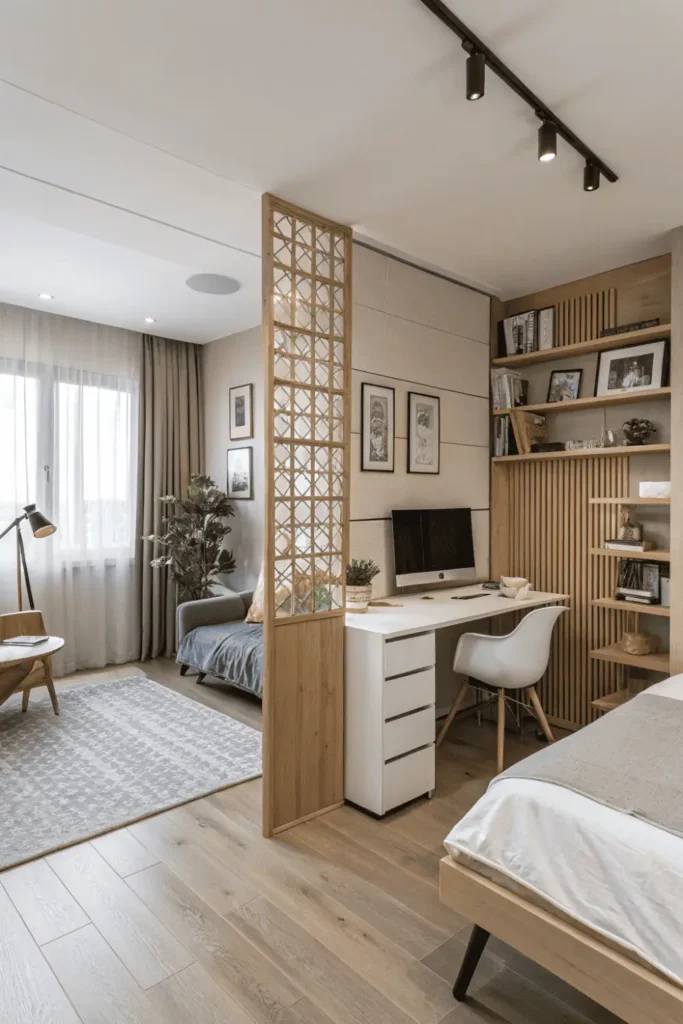
Large L-shaped desks positioned as room dividers separate sleeping and working zones in bed and desk layout small room studio apartments. The substantial furniture creates physical and visual boundaries.
One desk leg along wall, perpendicular section extending into room defines spaces. Open shelving above desk sections maintains visual connection while providing storage.
The divider approach works in larger small rooms (120+ square feet) needing zone definition. The psychological separation improves work-from-home focus.
Pro Tip: Use the back of your L-shaped desk divider as display space for artwork or floating shelves to make both sides visually appealing in your bed and desk layout small room.
12. Folding Wall-Mounted Desk
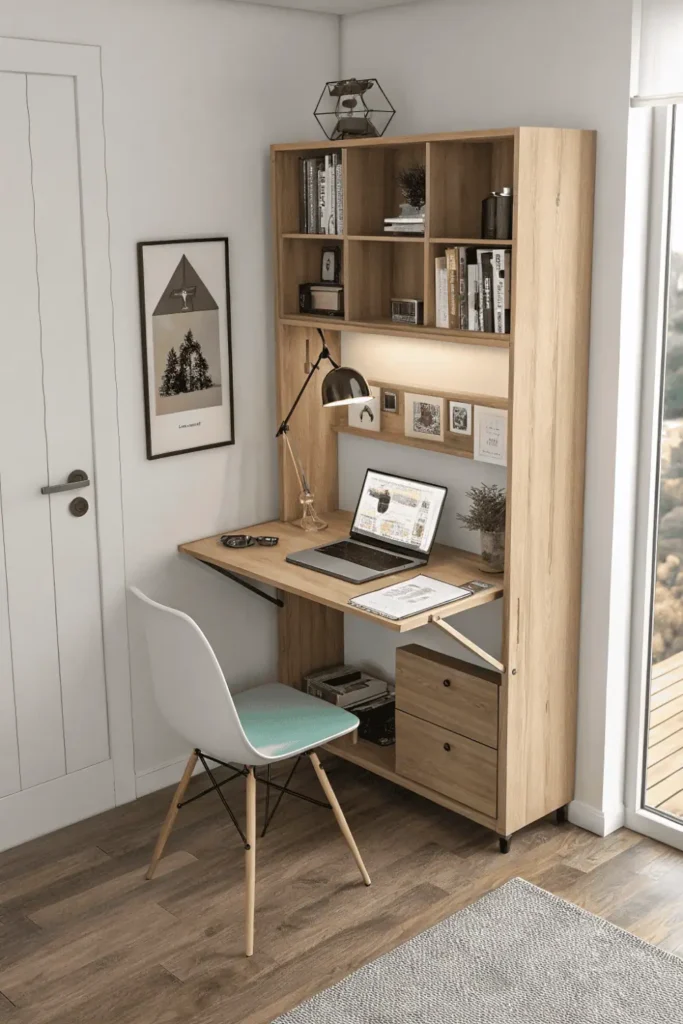
Drop-leaf or fold-down desks mounted to walls create instant workspaces in bed and desk layout small room when needed and disappear when not. The minimal footprint preserves precious floor space.
Desk surfaces fold flat against walls when raised. Built-in storage within desk panels holds supplies compactly.
The temporary workspace suits those working occasionally rather than full-time. The flexibility accommodates changing daily needs.
Pro Tip: Install fold-down desks with proper support brackets rated for at least 50 pounds to safely hold laptop, monitor, and work materials in your bed and desk layout small room.
13. Bed on Platform with Desk Underneath Partially
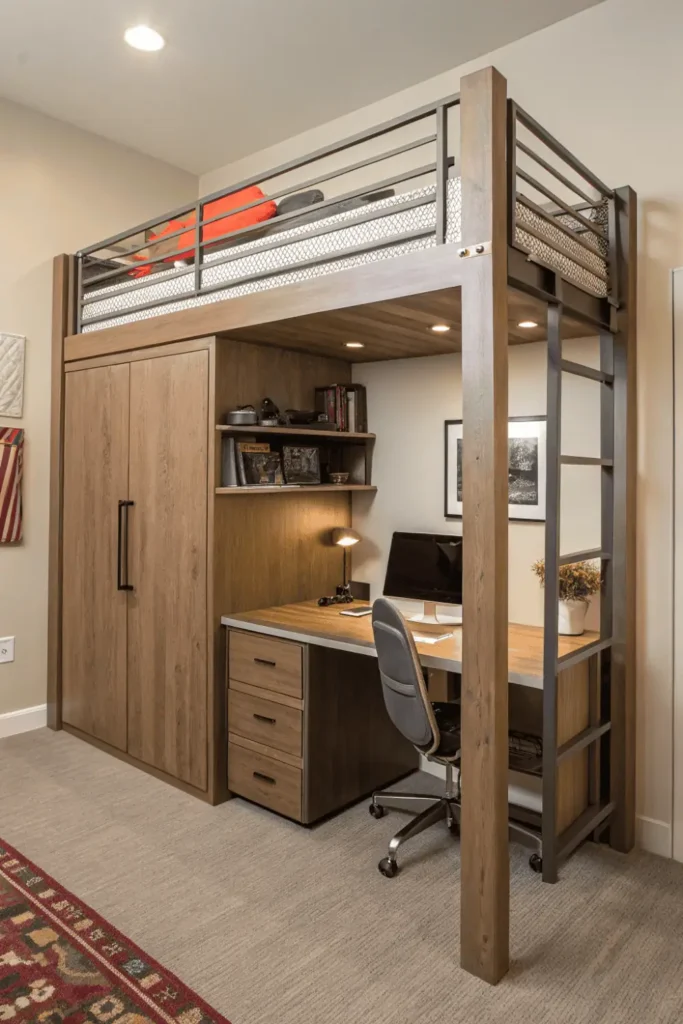
Raised platform beds elevated 18-24 inches create partial desk zones underneath while maintaining easy bed access in bed and desk layout small room layouts. The moderate height avoids full loft challenges.
Desk slides partially under platform with chair tucking completely beneath when not in use. Platform storage drawers maximize the elevated structure’s potential.
The hybrid approach balances vertical efficiency with comfortable bed access. The solution suits those wanting some elevation without full lofts.
Pro Tip: Ensure the platform height allows comfortable sitting at the tucked desk (seat at 18 inches, desk at 29-30 inches) while maintaining easy bed access in your bed and desk layout small room.
Why Bed and Desk Layout Small Room Planning Matters
Thoughtful furniture placement dramatically impacts livability in small spaces, determining whether rooms feel functional or frustratingly cramped. Poor bed and desk layout small room choices waste precious square footage through inefficient arrangements.
Work-from-home functionality requires dedicated desk space even in compact bedrooms, making strategic planning essential rather than optional. The bed and desk layout small room must support both quality sleep and productive work.
Mental wellbeing benefits from proper space planning that creates distinct zones for rest and work despite limited area. Good bed and desk layout small room design supports healthy boundaries between life activities.
Things to Consider Before Bed and Desk Layout Small Room
Evaluate your room’s exact dimensions including ceiling height, window and door placement, and any architectural quirks before selecting bed and desk layout small room approaches. Measure carefully to ensure furniture fits with adequate clearances.
Consider your actual usage patterns—full-time remote workers need different solutions than students with occasional homework. Design bed and desk layout small room around real needs rather than aesthetic preferences alone.
Think about access and safety—loft beds require comfortable climbing while ensuring adequate ceiling clearance. Choose bed and desk layout small room configurations matching your physical abilities and household members’ needs.
Comparison Table of Bed and Desk Layout Small Room Solutions
| Layout Solution | Space Saved | Cost Range | Installation | Flexibility | Best For |
|---|---|---|---|---|---|
| Loft Bed with Desk Under | Very High – vertical | $$-$$$$ | Medium-Hard – assembly | Low – permanent | High ceilings, young adults |
| Murphy Bed with Desk | Very High – transforming | $$$$-$$$$$ | Hard – professional install | Medium – daily operation | Extreme space constraints |
| Daybed with Adjacent Desk | Medium – dual-purpose | $-$$$ | Easy – furniture placement | High – easily rearranged | Non-loft preference, guests |
| Corner Bed/Floating Desk | High – wall-mounted | $-$$ | Medium – wall mounting | Medium – semi-permanent | Minimal floor furniture |
| Platform Bed/Built-In Desk | High – integrated | $$$-$$$$ | Hard – custom carpentry | Low – permanent | Custom solutions, storage needs |
| Bunk with Lower Desk | High – vertical | $$-$$$ | Medium – assembly | Low – permanent structure | Guest rooms, kids |
| Parallel Bed and Desk | Medium – linear | $-$$ | Easy – placement | High – moveable | Narrow rectangular rooms |
| Desk at Foot of Bed | Medium – perpendicular | $-$$ | Easy – placement | High – moveable | Limited side wall space |
| Captain’s Bed/Pull-Out Desk | High – hidden desk | $$-$$$ | Medium – assembly | Medium – slide-out | Concealed workspace preference |
| Bed Under Window/Desk Opposite | Medium – separated | $-$$ | Easy – placement | High – moveable | Square rooms, natural light |
| L-Desk as Divider | Medium – defines zones | $$-$$$ | Easy-Medium | Medium – substantial piece | Studios, larger small rooms |
| Folding Wall Desk | High – disappearing | $-$$ | Medium – wall mounting | High – temporary use | Occasional work needs |
| Platform/Partial Desk Under | High – moderate elevation | $$-$$$ | Medium – platform build | Low – semi-permanent | Compromise between access/space |
Recommended Products for Bed and Desk Layout Small Room
Full-Size Loft Bed Frame
This sturdy metal loft bed accommodates full-size mattresses while creating complete workspace underneath for optimal bed and desk layout small room solutions. The heavy-duty steel construction supports 500+ pounds safely while the 60-inch under-clearance allows full desk and chair setup below. Customers praise the straightforward assembly, solid stability without wobbling, and how this single piece solves both sleeping and working needs in compact spaces.
Wall-Mounted Fold-Down Desk
This space-saving drop-leaf desk mounts securely to walls and folds flat when not in use, perfect for tight bed and desk layout small room configurations. The solid wood construction with metal brackets supports laptops and monitors up to 50 pounds, and the fold-up design leaves only 4 inches of wall projection when closed. Users love the easy installation, smooth operation, and how the disappearing desk preserves floor space in tiny bedrooms.
Twin Captain’s Bed with Storage
This platform storage bed includes six built-in drawers and optional trundle for comprehensive bed and desk layout small room solutions. The substantial under-bed storage eliminates dresser needs while the low profile (14 inches high) works well with adjacent or partially-underneath desk placements. Customers appreciate the solid construction, ample clothing storage, and how the bed’s multifunctional design maximizes every inch of small bedroom space efficiently.
Frequently Asked Questions About Bed and Desk Layout Small Room
What’s the minimum room size for bed and desk?
Approximately 80-100 square feet (8×10 or 7×12 feet) accommodates both twin bed and small desk with minimal walking space in bed and desk layout small room configurations. Loft beds or Murphy beds allow functional setups in even smaller 60-70 square foot spaces.
Full or queen beds plus desks require minimum 100-120 square feet for comfortable arrangements. Extremely tight spaces under 80 square feet benefit most from vertical solutions like loft beds or transforming Murphy bed-desk combinations.
Should my desk face the wall or into the room?
Facing walls minimizes visual distractions and provides stability for monitor mounting, working well for focused tasks in bed and desk layout small room setups. The wall orientation often feels more private and contained.
Facing into rooms or toward windows provides better peripheral awareness and natural light but may increase distractions. Consider your work style and distraction tolerance when positioning desks—those easily distracted benefit from wall-facing orientations in bed and desk layout small room arrangements.
How do I separate work and sleep zones in one room?
Physical dividers like bookcases, curtains, or positioned furniture create visual separation between bed and desk areas in bed and desk layout small room spaces. Even low barriers help mentally distinguish zones.
Lighting differences between areas (bright task lighting at desk, soft ambient near bed) reinforces psychological separation. Establish routines like “closing” your workspace by covering computers or facing desks away from bed sightlines to maintain healthy bed and desk layout small room boundaries.
Can I fit a full or queen bed with a desk in a small room?
Yes, in rooms 100+ square feet—a queen bed (60×80 inches) plus 48-inch desk fits in 10×12 foot rooms with careful bed and desk layout small room planning. Corner bed placement or linear wall arrangements preserve necessary clearances.
Smaller rooms (under 100 square feet) work better with twin or full beds to maintain adequate desk space and walking areas. Loft configurations allow larger mattresses in smaller footprints by utilizing vertical space effectively in bed and desk layout small room designs.