
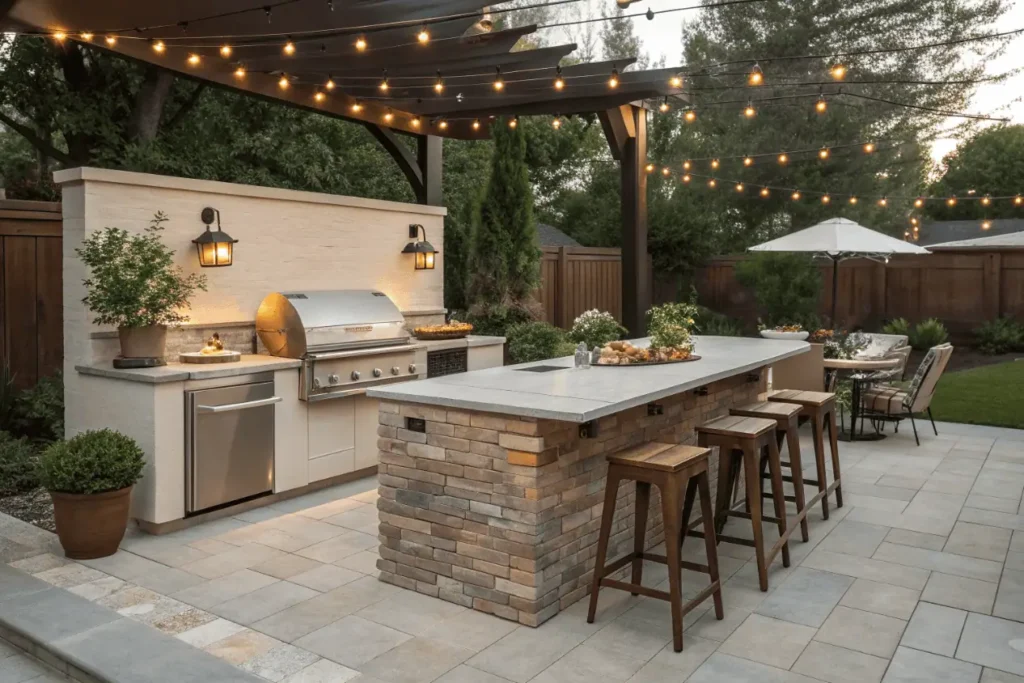
Creating the perfect outdoor kitchen extends your living space beyond four walls while elevating backyard entertaining to restaurant-quality experiences. These functional outdoor cooking zones transform simple grilling into comprehensive culinary operations that keep hosts engaged with guests rather than isolated indoors.
Modern outdoor kitchens range from simple grill islands to fully equipped spaces rivaling indoor kitchens in capability and style. Smart material choices, strategic layouts, and weather-resistant appliances ensure these investments deliver years of enjoyment and impressive returns at resale.
These comprehensive outdoor kitchen concepts will guide you through design options, essential features, and practical considerations. Whether you’re planning a modest upgrade or complete backyard transformation, the right approach creates spaces that become the heart of outdoor gatherings.
List of 11 Best Outdoor Kitchen Ideas
1. Full L-Shaped Kitchen Island with Grill and Sink
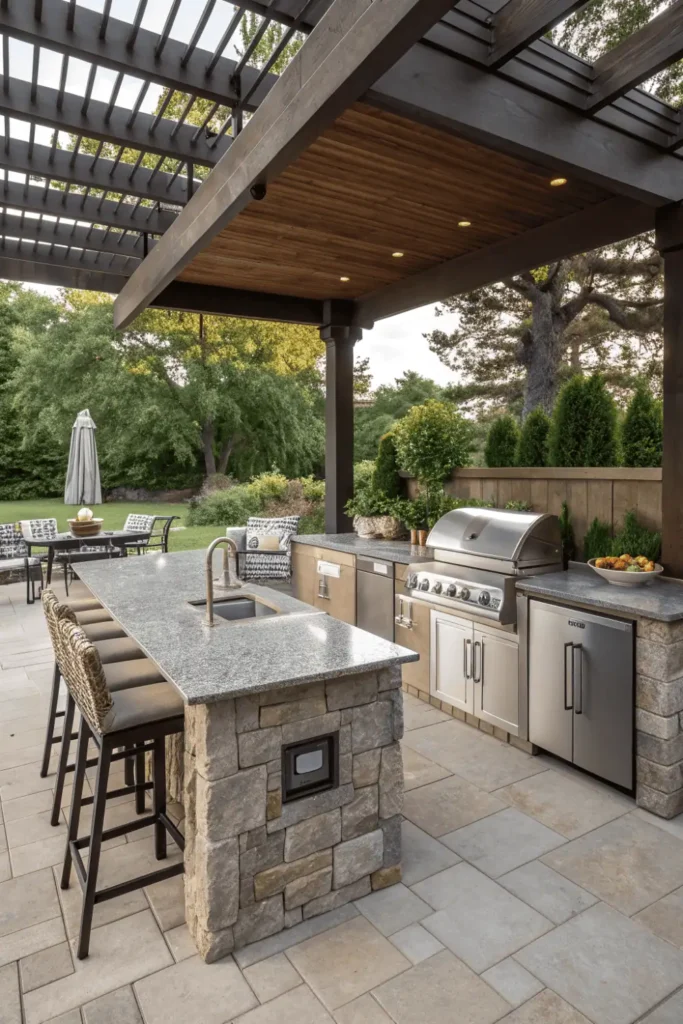
L-shaped outdoor kitchen islands provide maximum counter space and appliance capacity within compact footprints that fit corner placements perfectly. The configuration typically includes built-in gas grill, sink with running water, refrigerator, and ample prep surfaces all within arm’s reach.
This layout creates natural work triangles similar to indoor kitchens, improving cooking efficiency while the perpendicular counter provides bar seating for guests. Covered roof structures or pergolas over L-shaped islands protect equipment and extend usability into weather transitions.
Granite, concrete, or tile countertops withstand outdoor elements while coordinating with home architecture.
Pro Tip: Install the sink on the shorter leg of the L-shape nearest your home’s water connection to minimize plumbing runs and reduce installation costs—long underground pipe runs dramatically increase project budgets.
2. Simple Built-In Grill Station
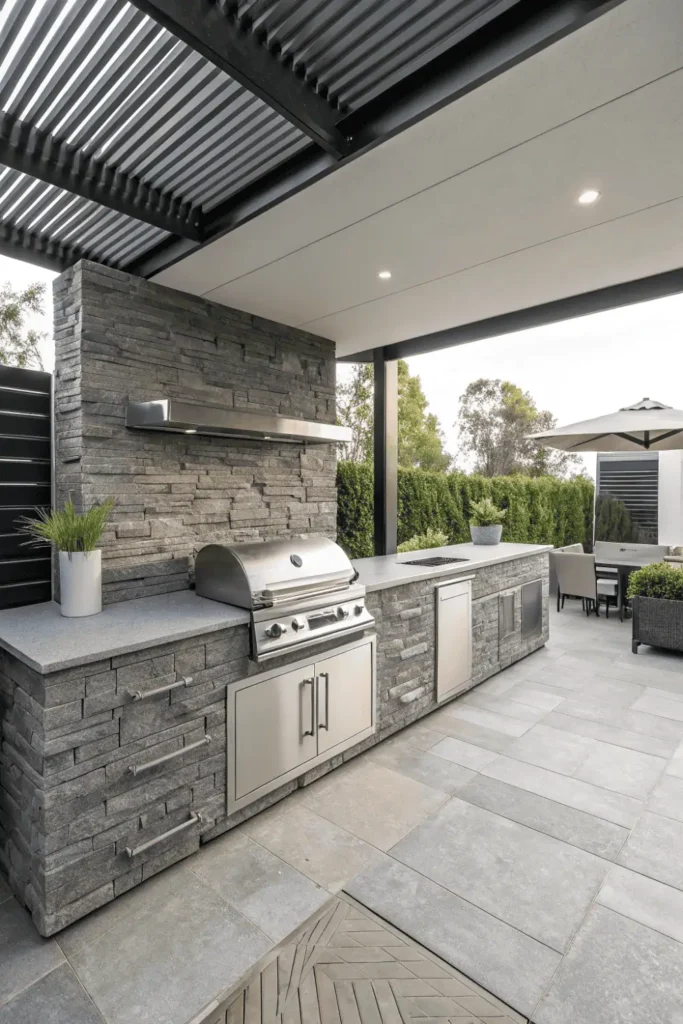
Basic built-in outdoor kitchen stations center on quality gas grills surrounded by matching stonework that creates custom appearance without extensive appliance investments. Side counters provide landing space for platters while storage cabinets below house grilling tools and propane.
This entry-level option delivers professional aesthetics at accessible budgets ($3,000-8,000) while leaving room for future expansion. Stone or stucco exteriors match home facades, and the permanent installation eliminates wheeling portable grills in and out of garages.
Pro Tip: Choose grills with front-mounted controls rather than side-mounted knobs when building in—front controls remain accessible when surrounded by counters, while side controls become trapped behind stonework.
3. Pizza Oven Focal Point Kitchen
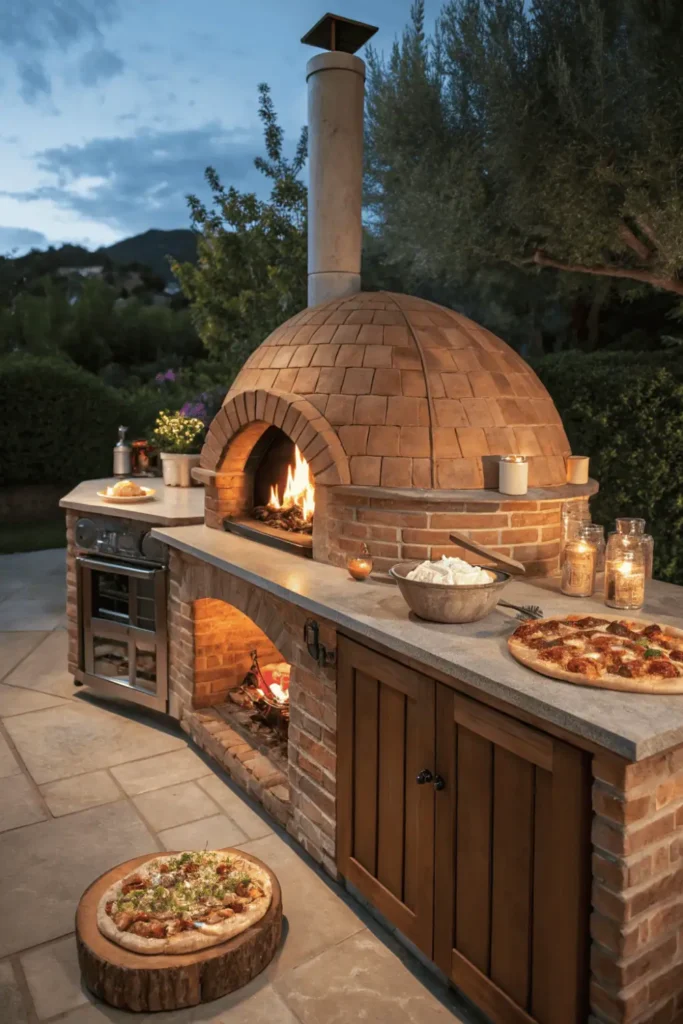
Wood-fired pizza oven outdoor kitchens create dramatic focal points through dome-shaped brick or stone ovens that reach 800°F temperatures for authentic Neapolitan pizzas. The traditional ovens double as bread bakers and roasters while becoming sculptural architectural elements.
Pair pizza ovens with prep counters, wood storage compartments, and small refrigeration for complete pizza-making stations. The specialty cooking method becomes entertainment itself as guests watch dough stretching and pie building before rapid baking.
Pro Tip: Position pizza ovens minimum 8 feet from home structures and combustible materials—the extreme exterior heat and flying sparks create fire hazards when placed too close to wooden decks, siding, or overhangs.
4. Covered Pavilion Complete Kitchen
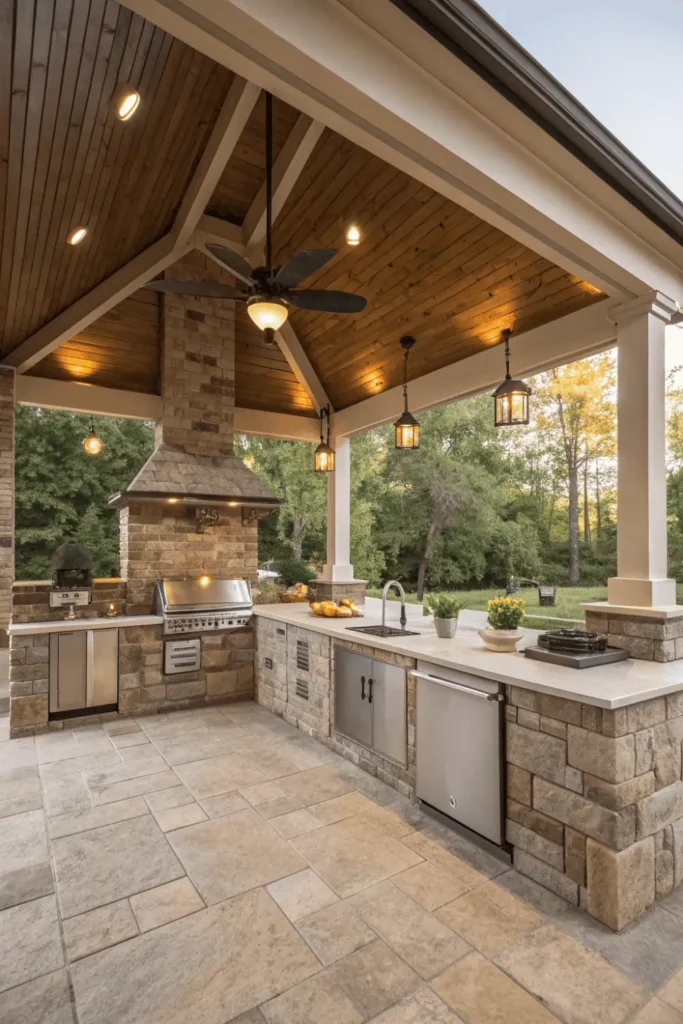
Covered pavilion outdoor kitchens operate year-round under permanent roof structures that protect expensive appliances and extend cooking seasons through rain and intense sun. Full kitchens include grills, side burners, refrigeration, sinks, and ample storage within weather-protected enclosures.
The overhead coverage allows lighting installation, ceiling fans, and even outdoor televisions that transform spaces into true outdoor rooms. Stone or brick columns supporting roofs create architectural presence while defining the kitchen zone within larger patio areas.
Pro Tip: Pitch pavilion roofs minimum 1/4 inch per foot for proper drainage—flat or inadequately sloped roofs pool water that leads to rot, leaks, and structural damage in covered outdoor structures.
5. Compact Apartment Balcony Kitchen
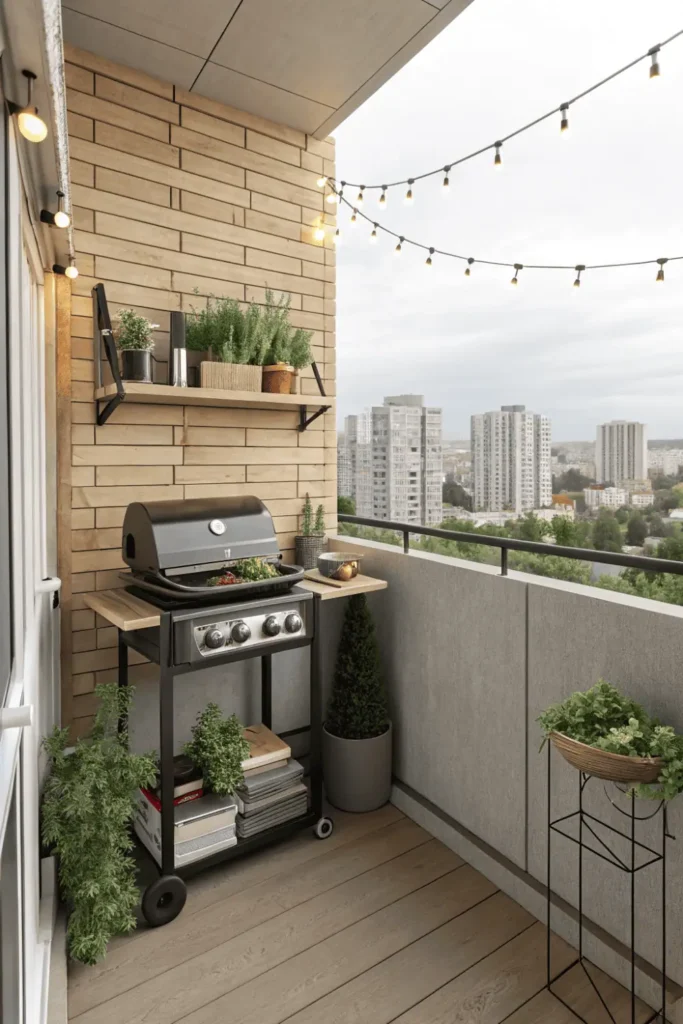
Small-space outdoor kitchens fit apartment balconies and urban patios through scaled equipment like portable electric grills, fold-down counters, and vertical storage maximizing limited square footage. Wall-mounted drop-leaf tables provide prep surfaces that fold away when not in use.
This approach brings outdoor cooking to renters without permanent installations that violate lease terms. Lightweight furniture and portable appliances move indoors during harsh weather, protecting investments while maintaining flexibility.
Pro Tip: Check building codes before installing balcony grills—many municipalities and HOAs restrict open-flame cooking on balconies above ground level, but electric grills typically receive approval for safe operation.
6. Rustic Stone and Timber Kitchen
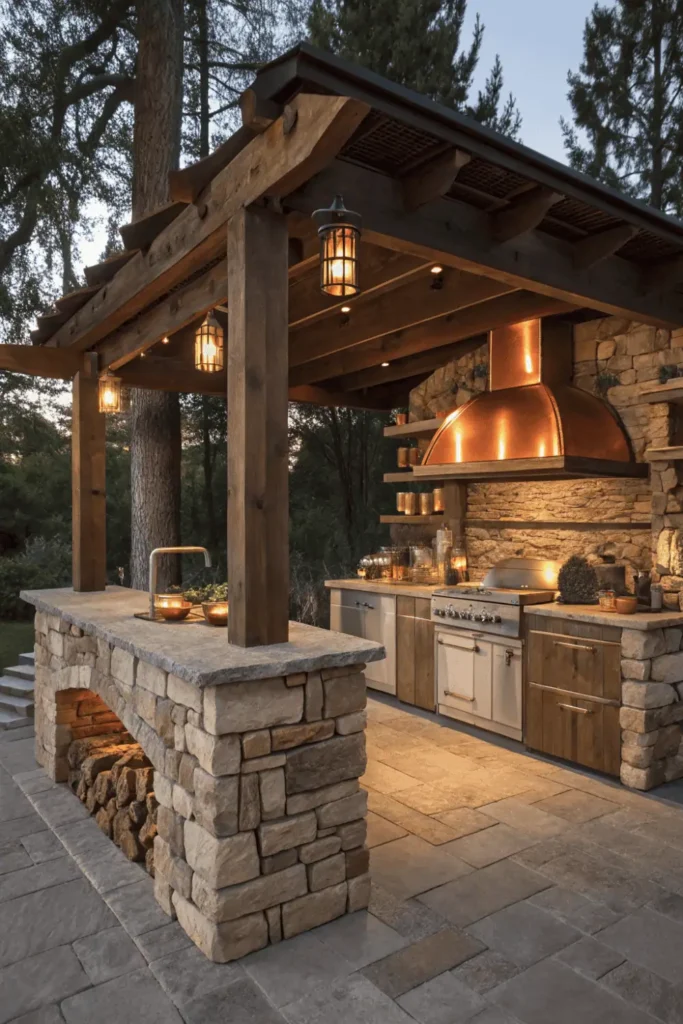
Rustic outdoor kitchens combine natural stacked stone bases with heavy timber pergola structures creating mountain lodge aesthetics perfect for wooded properties and cabin-style homes. The organic materials blend seamlessly with natural surroundings while providing substantial, permanent installations.
Copper range hoods, wrought iron hardware, and reclaimed wood accents enhance the rustic character. Earth-tone granite or soapstone counters continue the natural palette while offering exceptional heat and weather resistance.
Pro Tip: Seal natural stone outdoor kitchen bases annually with penetrating sealer—unsealed stone absorbs food stains, grease, and moisture that cause permanent discoloration and encourage mold growth in damp climates.
7. Modern Minimalist Concrete Kitchen
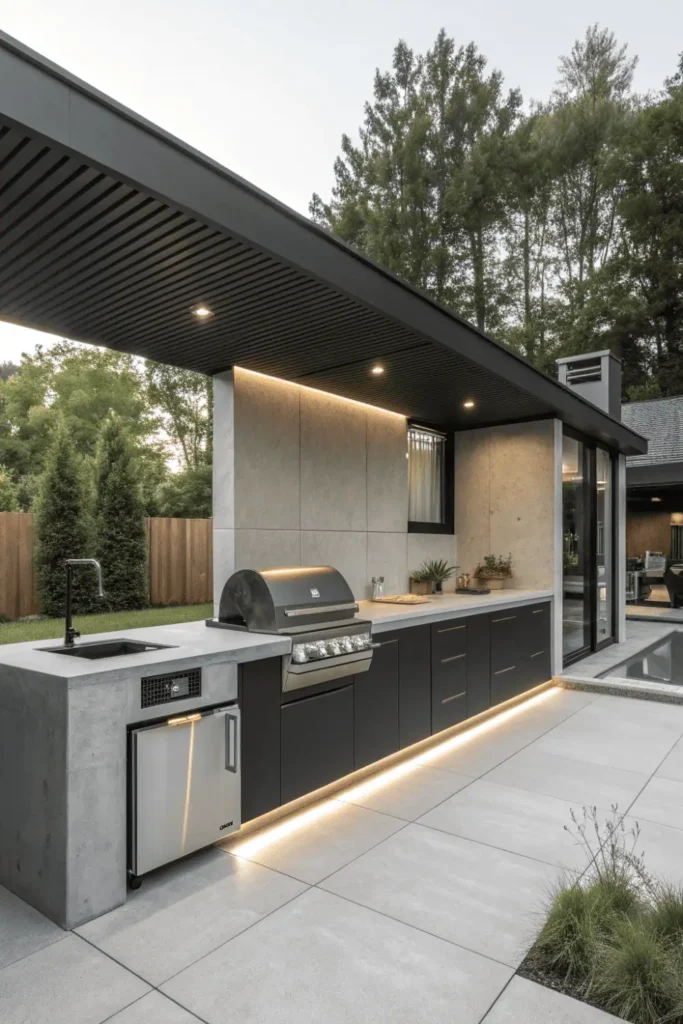
Contemporary outdoor kitchens embrace smooth concrete countertops and sleek stainless appliances with clean-lined cabinetry creating sophisticated modern aesthetics. The monolithic concrete surfaces provide seamless heat-resistant work areas while minimalist design prevents visual clutter.
Matte black or stainless cabinet doors offer weather-resistant storage with push-to-open mechanisms eliminating hardware. Linear LED lighting integrated under counters and within cabinets provides task illumination with architectural presence.
Pro Tip: Apply food-safe concrete sealer to outdoor kitchen counters every 1-2 years—unsealed concrete stains easily from acidic foods like citrus and tomatoes, permanently marking the porous surface.
8. Modular Pre-Fabricated Kitchen Islands
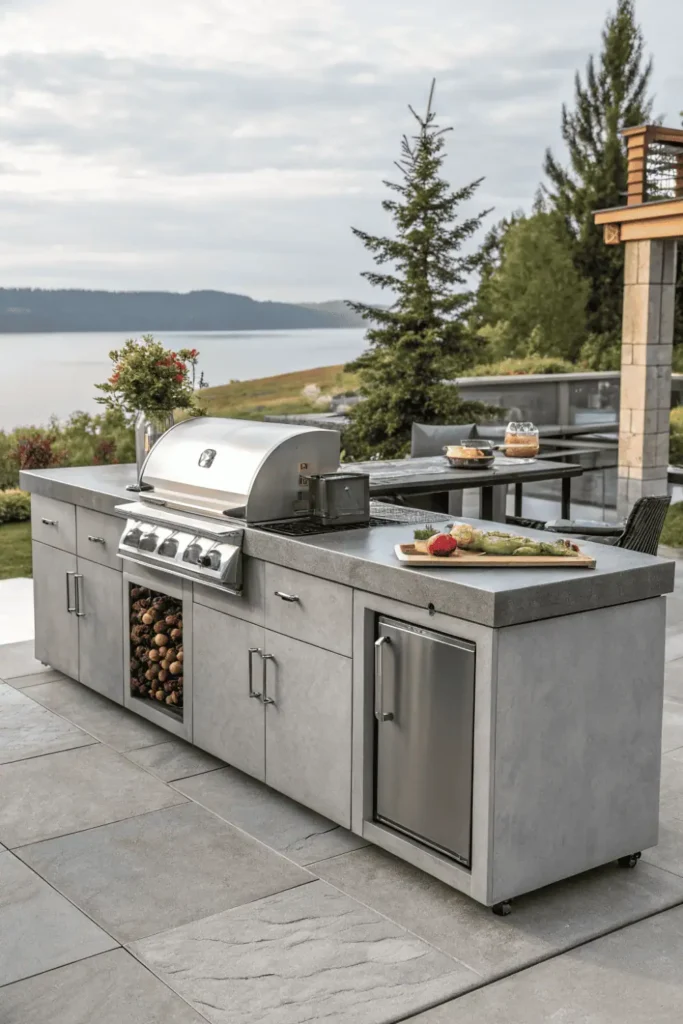
Pre-fabricated outdoor kitchen islands arrive as complete units requiring minimal assembly and avoiding custom masonry costs. Manufacturers offer various configurations mixing grills, storage, refrigeration, and sinks in weather-resistant polymer concrete or marine-grade materials.
These turnkey solutions install in days rather than weeks of construction time while costing 30-50% less than custom built-ins. The portability allows repositioning and relocating if you move, protecting your investment.
Pro Tip: Level pre-fab islands carefully on compacted gravel bases or concrete pads—unlevel installations cause doors to swing open or closed on their own and create standing water in sink areas.
9. Tropical Tiki Bar Kitchen
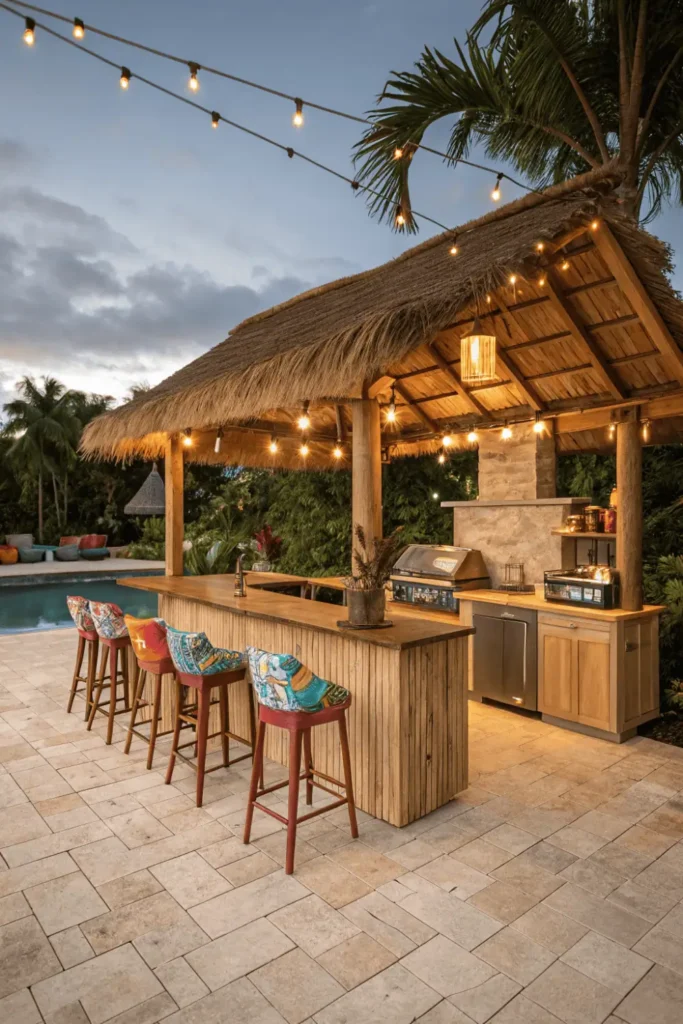
Tiki-style outdoor kitchens feature thatched palm roofs, bamboo accents, and tropical hardwood construction creating vacation resort atmospheres in residential backyards. Built-in bars with extensive seating, ice bins, and blender stations facilitate cocktail service alongside grilling capabilities.
String lights, tiki torches, and colorful tropical decor complete the island getaway aesthetic. This playful approach works beautifully in warm climates with pool areas where entertaining centers on casual outdoor living.
Pro Tip: Replace natural thatch roofing every 3-5 years as it deteriorates—synthetic thatch alternatives made from polyethylene last 15-20 years while maintaining authentic appearance without fire risk and constant maintenance.
10. Built-In Smoker and Grill Combo
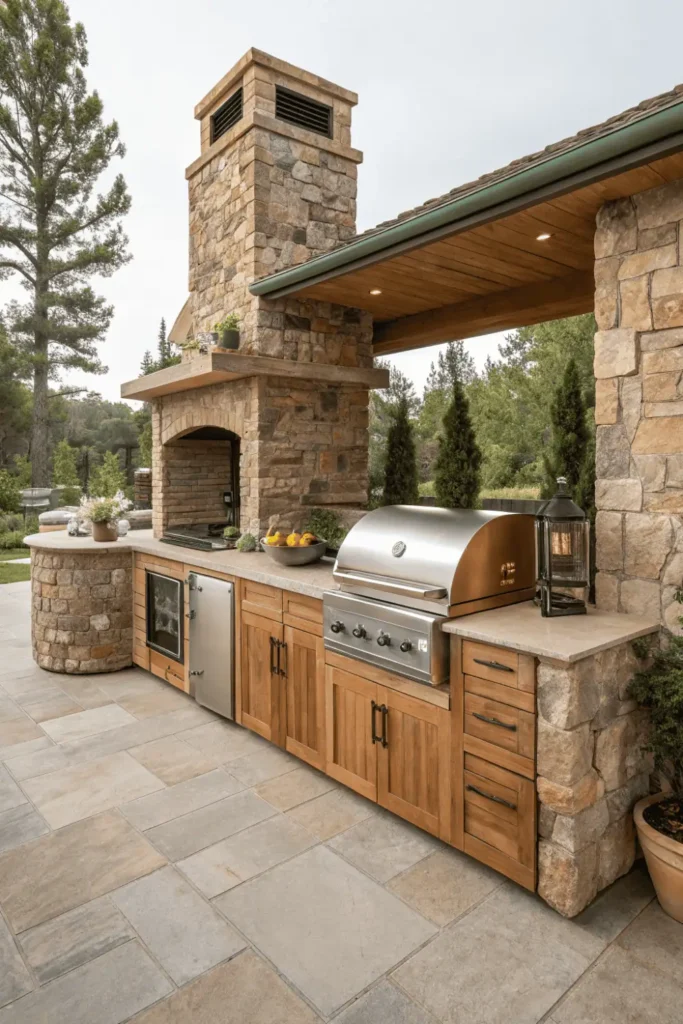
Dual-cooking outdoor kitchens incorporate offset smokers alongside gas grills for versatile cooking methods from quick weeknight dinners to all-day barbecue sessions. The combination accommodates different culinary preferences within one cohesive station.
Dedicated wood storage compartments, spice racks, and warming drawers support serious outdoor cooking enthusiasts. The permanent installations with matched stonework create custom pitmaster setups rivaling competition barbecue operations.
Pro Tip: Position smokers downwind from primary seating areas—8+ hours of smoke exposure during long cooks overwhelms outdoor dining spaces and penetrates cushions with persistent odors.
11. Multi-Level Kitchen with Bar Seating
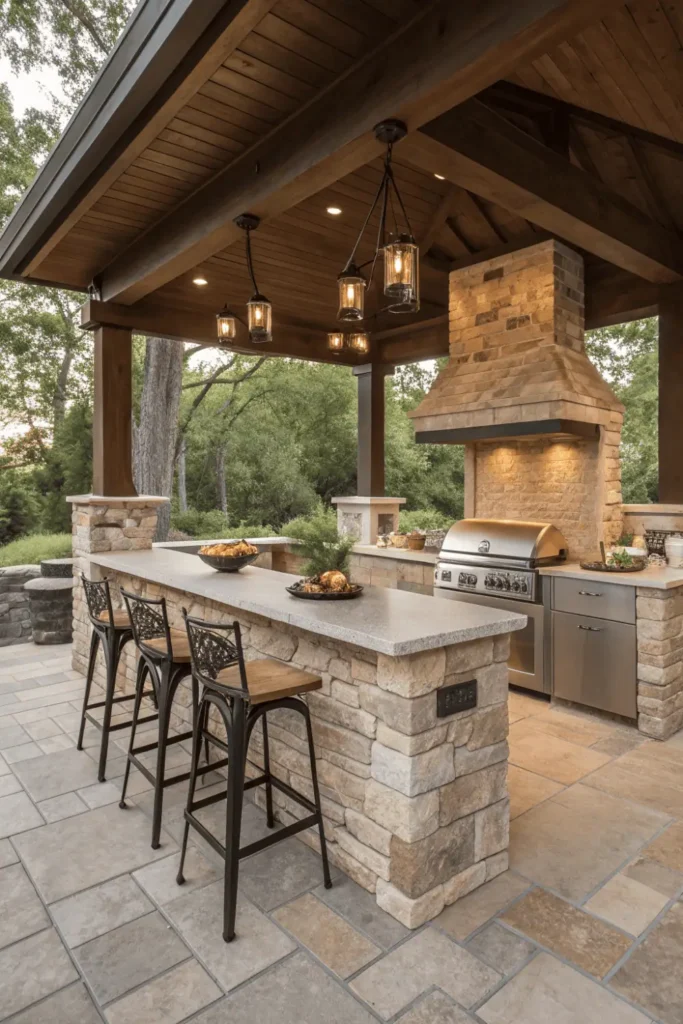
Tiered outdoor kitchens feature raised bar-height eating counters (42 inches) behind standard prep-height work surfaces (36 inches), creating natural divisions between cooking and dining zones. The elevation change provides visual interest while hiding cooking mess from seated guests.
Extended counters accommodate 4-6 bar stools for casual dining and conversation without guests crowding the work zone. The split-level design works particularly well on sloped lots where grade changes integrate naturally with tiered construction.
Pro Tip: Maintain 12-15 inches overhang on bar-height counters for comfortable knee clearance when seated—inadequate overhang forces awkward sitting positions where knees hit cabinet faces or stone bases.
Why Outdoor Kitchens Are Worth the Investment
Quality outdoor kitchens deliver exceptional return on investment, with comprehensive setups recouping 60-80% of costs at resale according to real estate professionals. Homes with well-designed outdoor living spaces sell faster and command premium prices as buyers increasingly prioritize entertaining areas and expanded living space.
Outdoor kitchens dramatically improve quality of life by expanding usable living square footage and encouraging healthier outdoor time with family and friends. The spaces facilitate entertaining without the isolation of indoor cooking, allowing hosts to remain engaged with guests throughout meal preparation.
Strategic outdoor kitchen installations reduce summer cooling costs by keeping heat-generating cooking outdoors rather than heating interior spaces that air conditioning must then cool. Grilling and outdoor cooking consume less energy than conventional ovens while producing superior flavor results.
Things to Consider Before Choosing Outdoor Kitchens
Your outdoor kitchen location requires proximity to utilities—water lines, gas connections, and electrical service—to minimize expensive infrastructure installations. Positioning within 20 feet of existing utility access points significantly reduces plumbing and electrical costs compared to remote placements requiring 50+ foot runs.
Climate and weather patterns affect outdoor kitchen material choices and coverage needs—regions with harsh winters require weather-resistant stainless steel appliances, freeze-proof plumbing, and covered structures protecting investments, while temperate climates accommodate broader material options including standard refrigeration and open-air designs.
Local building codes and HOA regulations govern outdoor kitchen installations through permit requirements, setback distances, and acceptable appliance types. Research restrictions before designing—some municipalities limit outdoor cooking structures near property lines, require licensed contractor installations, or prohibit certain fuel types in specific zones.
Comparison Table of Outdoor Kitchen Ideas
| Kitchen Type | Price Range | Installation Time | Appliances Included | Best For | Longevity |
|---|---|---|---|---|---|
| L-Shaped Island | $8,000-$25,000 | 2-4 weeks | Grill, sink, fridge, storage | Serious entertainers, families | 15-25 years |
| Simple Built-In Grill | $3,000-$8,000 | 3-7 days | Grill, basic storage | Budget-conscious, starters | 10-15 years |
| Pizza Oven Station | $5,000-$20,000 | 1-3 weeks | Pizza oven, prep area | Pizza enthusiasts, entertainers | 20-30+ years |
| Covered Pavilion | $15,000-$50,000+ | 4-8 weeks | Complete kitchen setup | Year-round use, all climates | 20-30+ years |
| Balcony Compact | $500-$2,500 | 1 day | Electric grill, portable | Renters, apartments, small spaces | 5-10 years |
| Rustic Stone/Timber | $12,000-$35,000 | 3-6 weeks | Grill, sink, storage, custom | Mountain homes, rustic style | 20-30 years |
| Modern Concrete | $10,000-$30,000 | 2-4 weeks | Grill, fridge, sleek appliances | Contemporary homes, minimalists | 15-25 years |
| Pre-Fab Modular | $4,000-$15,000 | 1-3 days | Varies by model | DIY, budget, portability | 12-20 years |
| Tiki Bar Style | $8,000-$20,000 | 2-4 weeks | Grill, bar, refrigeration | Tropical climates, pool areas | 10-15 years (thatch maintenance) |
| Smoker/Grill Combo | $6,000-$18,000 | 1-2 weeks | Smoker, grill, storage | BBQ enthusiasts, serious cooks | 15-25 years |
| Multi-Level Bar | $10,000-$28,000 | 2-4 weeks | Grill, sink, bar seating | Entertaining, sloped lots | 15-25 years |
Recommended Products for Outdoor Kitchens
Weber Summit S-670 Built-In Natural Gas Grill
This premium 60-inch built-in grill features six stainless steel burners totaling 60,000 BTUs for powerful, even heat across the expansive cooking surface. The sear station, side burner, and smoker box provide versatile cooking methods while the stainless steel construction withstands outdoor elements indefinitely. Includes LED-lit control knobs and warming rack, perfect for centerpiece outdoor kitchen installations.
Sunstone Island Series 4-Burner Gas Grill with Refrigerator
This complete modular outdoor kitchen combines 34-inch built-in grill with adjacent weatherproof refrigerator in matching stainless steel island construction. The marine-grade 304 stainless steel cabinetry resists rust and corrosion while providing ample storage beneath the 4.5 cubic foot refrigerator. Quick assembly design installs in hours, delivering turnkey outdoor cooking capability.
EdgeStar 15-Inch Wide Built-In Outdoor Refrigerator
This compact stainless steel outdoor refrigerator fits standard 15-inch cabinet openings while providing 1.6 cubic feet of refrigerated storage for drinks and ingredients. The weather-resistant construction and front ventilation allow built-in installation in outdoor kitchens while the reversible door swing accommodates various layouts. Temperature range of 38-50°F maintains proper food safety outdoors.
Frequently Asked Questions About Outdoor Kitchens
How Much Does an Outdoor Kitchen Cost?
Basic outdoor kitchen installations with simple built-in grills and minimal counters start around $3,000-8,000 for DIY-friendly projects using economy materials. These entry-level setups provide permanent grill stations with basic storage and small prep surfaces suitable for casual outdoor cooking.
Comprehensive outdoor kitchens with full appliance suites, extensive counters, and quality materials typically cost $15,000-35,000 professionally installed. Premium installations exceeding $50,000 include complete coverage structures, high-end appliances, custom stonework, elaborate lighting, and luxury finishes creating true outdoor rooms with restaurant-quality capabilities.
What Appliances Do You Need in an Outdoor Kitchen?
Essential outdoor kitchen appliances include a quality built-in gas grill (minimum 36 inches) as the functional centerpiece and primary cooking surface. A sink with running water dramatically improves convenience for hand washing, food prep, and cleanup without constantly running indoors.
Recommended additions to complete outdoor kitchens include weatherproof refrigeration (refrigerator or beverage cooler), side burners for sauce preparation, and adequate storage cabinets for tools and supplies. Advanced setups add warming drawers, ice makers, pizza ovens, or smokers depending on cooking preferences and budget allowances.
Can Outdoor Kitchens Be Used Year-Round?
Outdoor kitchens in mild climates operate comfortably year-round with minimal winterization beyond covering appliances during severe weather. Temperate regions allow outdoor cooking 9-12 months annually, making the investment practical for frequent use throughout most seasons.
Cold-climate outdoor kitchens require proper winterization including draining water lines, disconnecting gas supplies, covering appliances, and protecting surfaces from freeze-thaw damage. Despite seasonal limitations, these installations still provide 6-8 months of use in northern regions while adding significant property value. Covered structures with heaters extend usability into shoulder seasons considerably.
Do Outdoor Kitchens Increase Home Value?
Yes, outdoor kitchens significantly boost home values, with professionally designed installations recouping 60-80% of costs according to real estate appraisers. Quality outdoor living spaces rank among top features desired by homebuyers, particularly in warm climates where outdoor entertaining predominates social activities.
The value increase from outdoor kitchens depends on neighborhood standards and overall home value—luxury properties in areas where outdoor kitchens are common see higher returns than adding premium outdoor spaces to modest homes in regions where they’re unusual. Best returns come from appropriately scaled installations matching home value and local market expectations.