
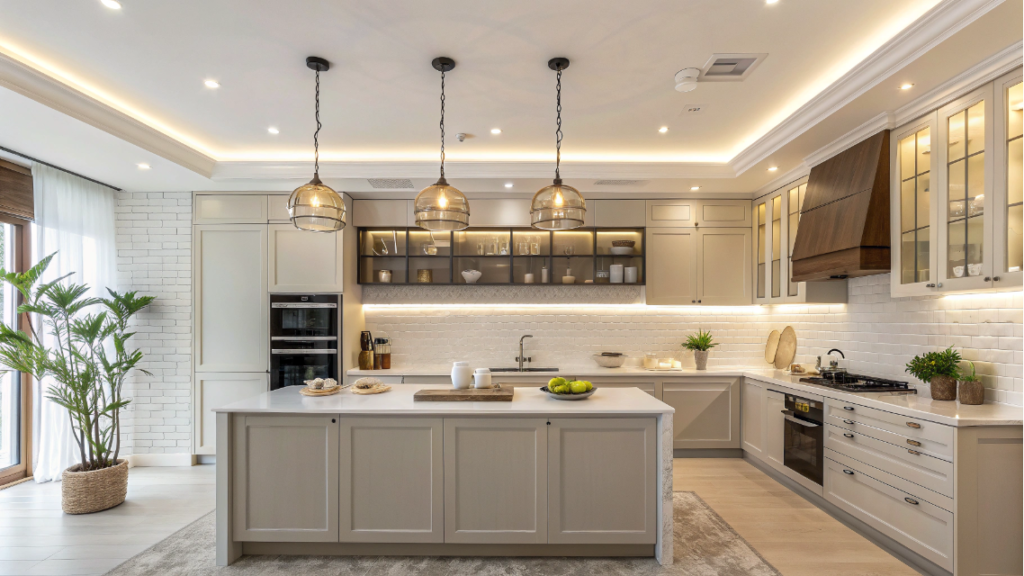
Creating well-illuminated cooking areas through strategic kitchen lighting design transforms functionality, safety, and ambiance. Proper illumination impacts everything from food preparation accuracy to overall room atmosphere and visual comfort.
Modern lighting approaches layer multiple fixture types addressing specific needs through targeted placement. Ambient, task, accent, and decorative lighting work together creating comprehensive illumination schemes suited to various activities.
Whether renovating completely or updating existing fixtures, understanding kitchen lighting principles creates spaces that work beautifully at all hours. Let’s explore how to design lighting that enhances both form and function.
List of 15 Best Kitchen Lighting Ideas and Solutions
1. Layered Lighting Design
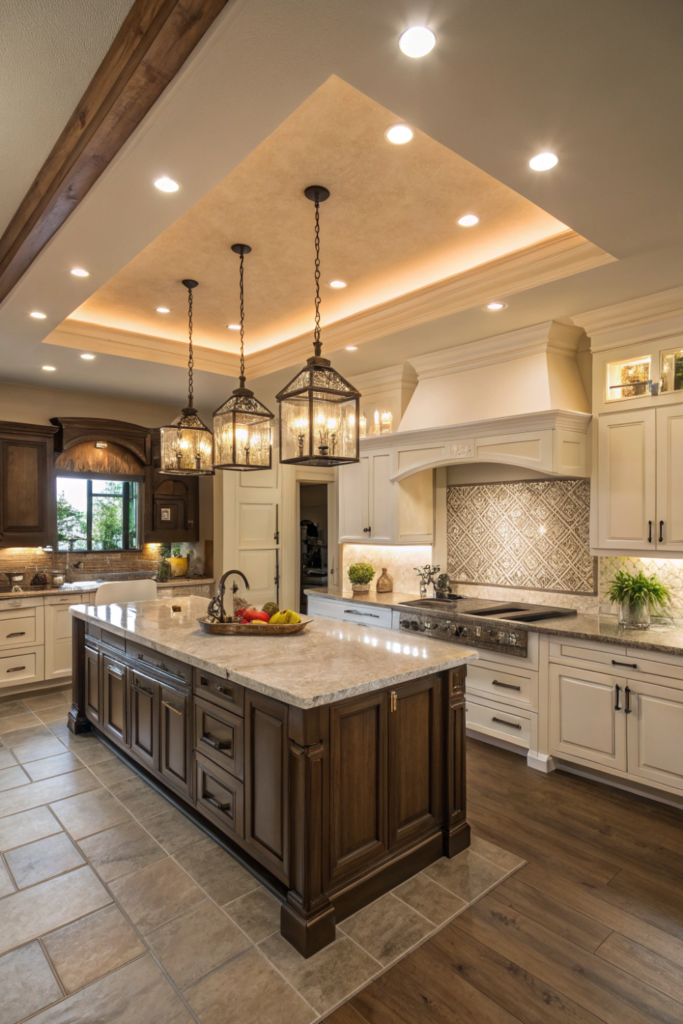
Combining ambient, task, and accent lighting creates comprehensive kitchen lighting addressing all functional needs. The multi-level approach prevents flat, one-dimensional illumination while supporting varied activities.
Recessed ceiling lights provide ambient base, under-cabinet LEDs deliver task illumination, and pendants add decorative accents. Dimmers on each circuit allow adjusting light levels for different times and activities.
The layered strategy proves essential for functional, beautiful kitchens. The thoughtful approach supports everything from detailed prep to relaxed dining.
Pro Tip: Install each lighting layer on separate switches in your kitchen lighting design to control ambient, task, and accent independently, creating maximum flexibility for different activities and times of day.
2. Under-Cabinet LED Task Lighting
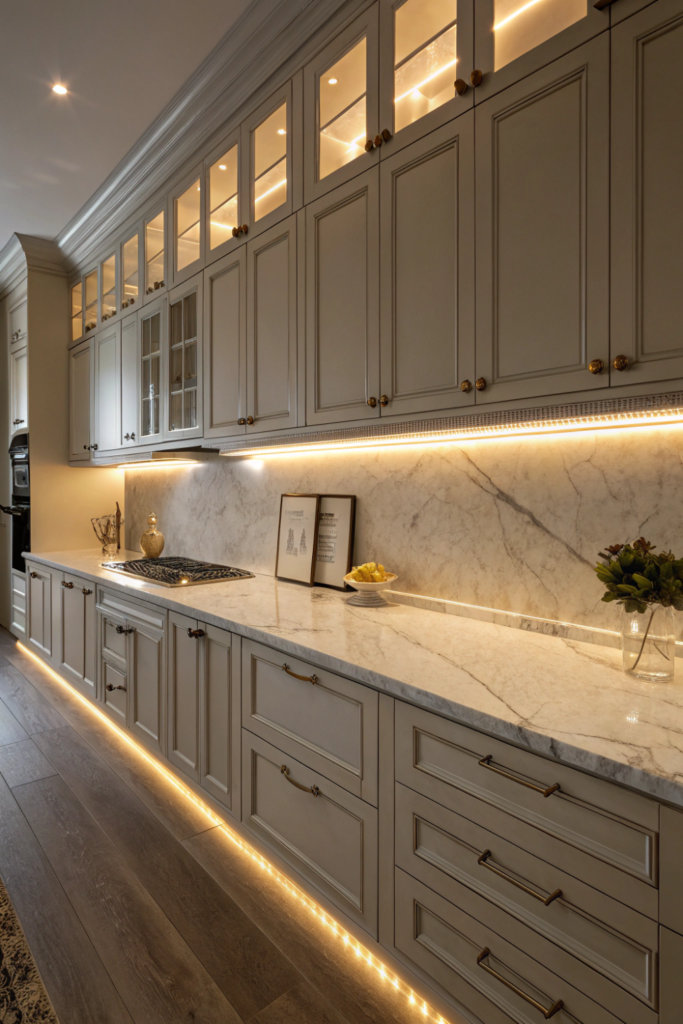
LED strips or puck lights mounted beneath upper cabinets provide essential task kitchen lighting for countertop work areas. The direct illumination eliminates shadows where food prep occurs.
Warm white (2700-3000K) color temperature creates inviting glow without harsh cool tones. Linkable strips allow continuous runs across multiple cabinets seamlessly.
The affordable upgrade dramatically improves workspace visibility. The energy-efficient LEDs last years while consuming minimal electricity.
Pro Tip: Install under-cabinet LED kitchen lighting toward the front edge of cabinets rather than the back to direct light onto counters where you work instead of illuminating the backsplash.
3. Pendant Lights Over Islands
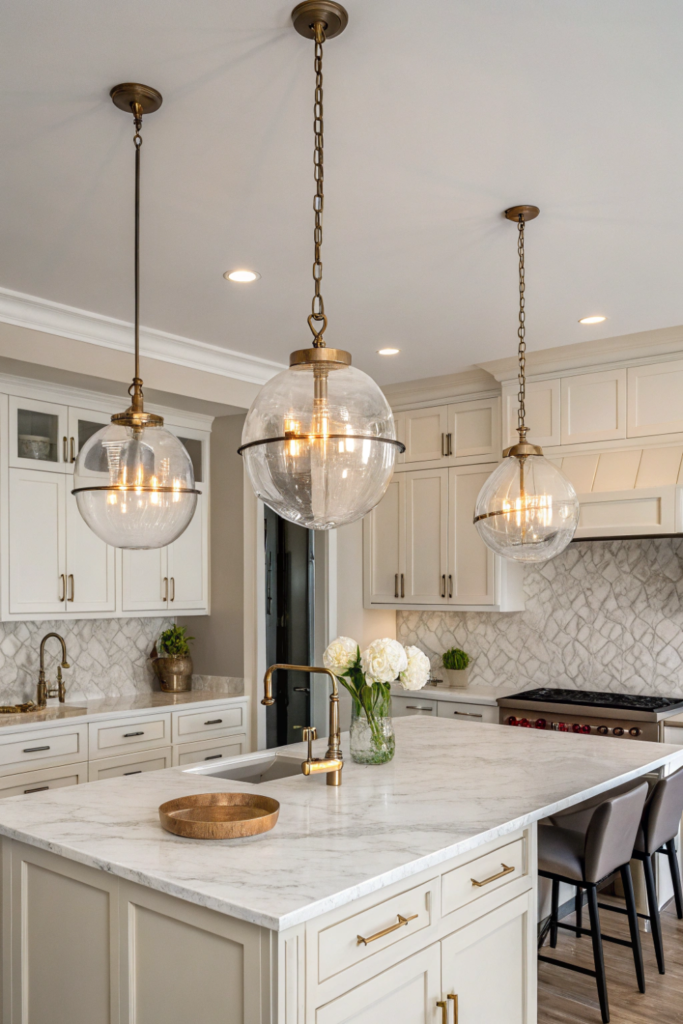
Decorative pendant fixtures suspended over islands provide both task kitchen lighting and visual focal points. The statement pieces add personality while illuminating central work and gathering areas.
Hang 30-36 inches above countertops for optimal lighting without obstructing sightlines. Use odd numbers (typically three) for visual balance across standard islands.
Coordinate pendant styles with overall kitchen aesthetics—industrial, farmhouse, modern, or traditional. The jewelry-like fixtures become design statements.
Pro Tip: Space pendant lights evenly across your island’s length in kitchen lighting plans, leaving 6-8 inches from each end rather than clustering in the center for more balanced illumination.
4. Recessed Can Lighting
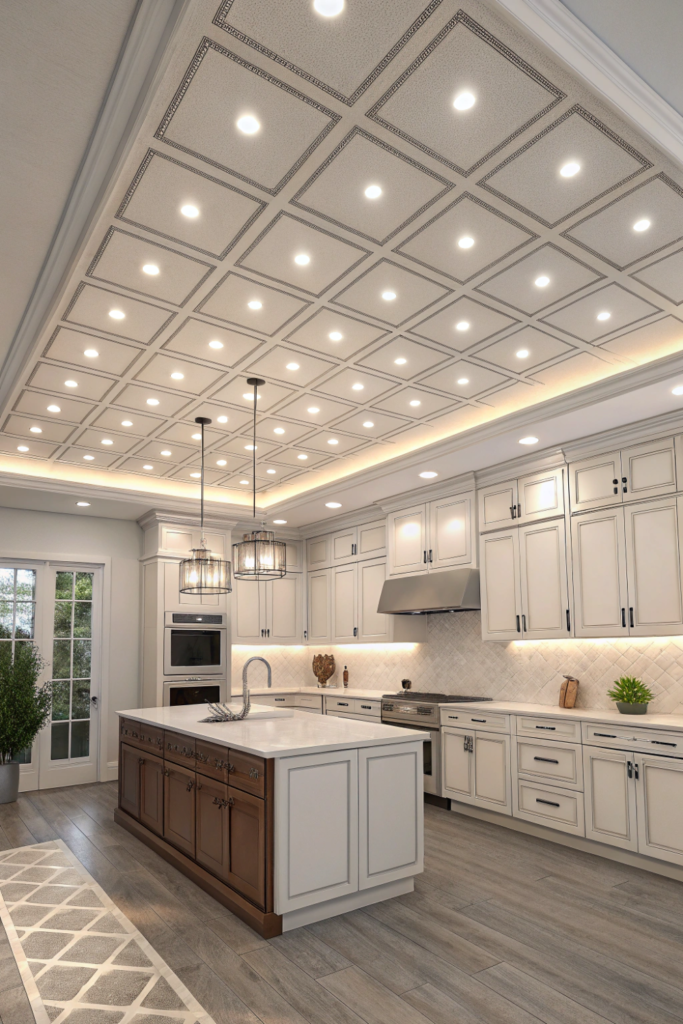
Ceiling-mounted recessed fixtures provide unobtrusive ambient kitchen lighting without visual clutter. The flush installation maintains clean ceiling lines while delivering broad illumination.
Space cans 4-6 feet apart in grid patterns for even coverage. Adjustable or eyeball trims direct light where needed, while standard trims provide general downlighting.
The versatile solution suits all kitchen styles. The hidden fixtures deliver essential ambient light without competing with decorative elements.
Pro Tip: Use IC-rated (insulation contact) recessed lights in kitchen lighting if installing where insulation exists above ceiling to prevent fire hazards and maintain energy efficiency.
5. Statement Chandeliers
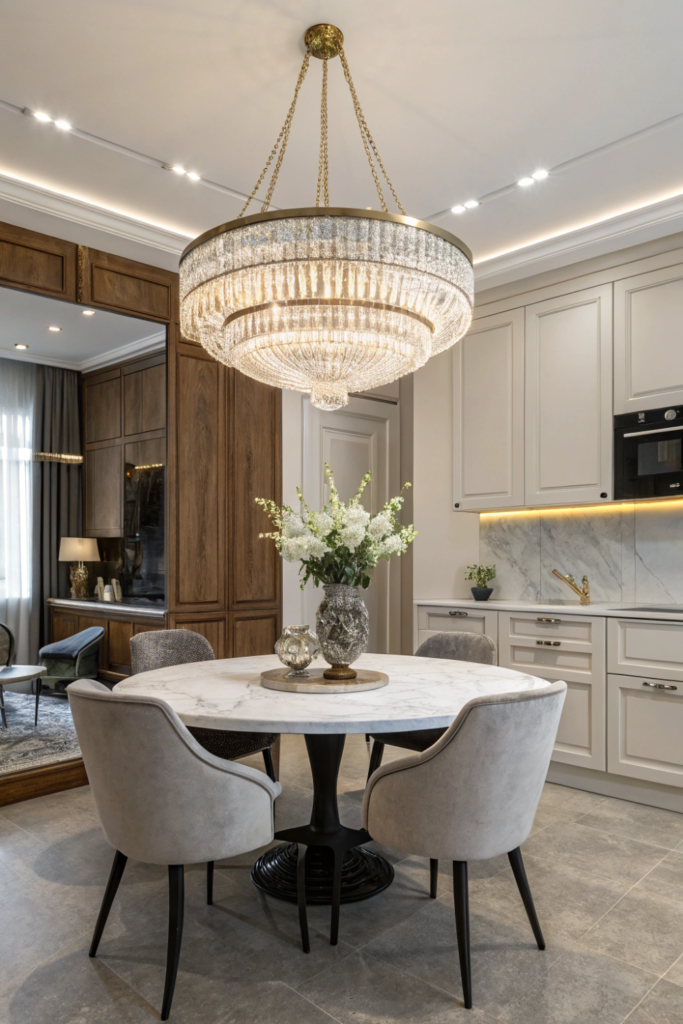
Decorative chandeliers over dining areas or large islands create dramatic kitchen lighting focal points. The substantial fixtures add elegance and personality while providing necessary illumination.
Scale appropriately—fixture diameter should equal room length plus width in feet, converted to inches. Hang 30-34 inches above tables for proper clearance.
The bold choice transforms kitchens into sophisticated spaces. The investment pieces become conversation-starting centerpieces.
Pro Tip: Install chandeliers on dimmers in your kitchen lighting scheme to adjust from bright task lighting during meal prep to soft ambient glow during dining for maximum versatility.
6. Track Lighting Systems
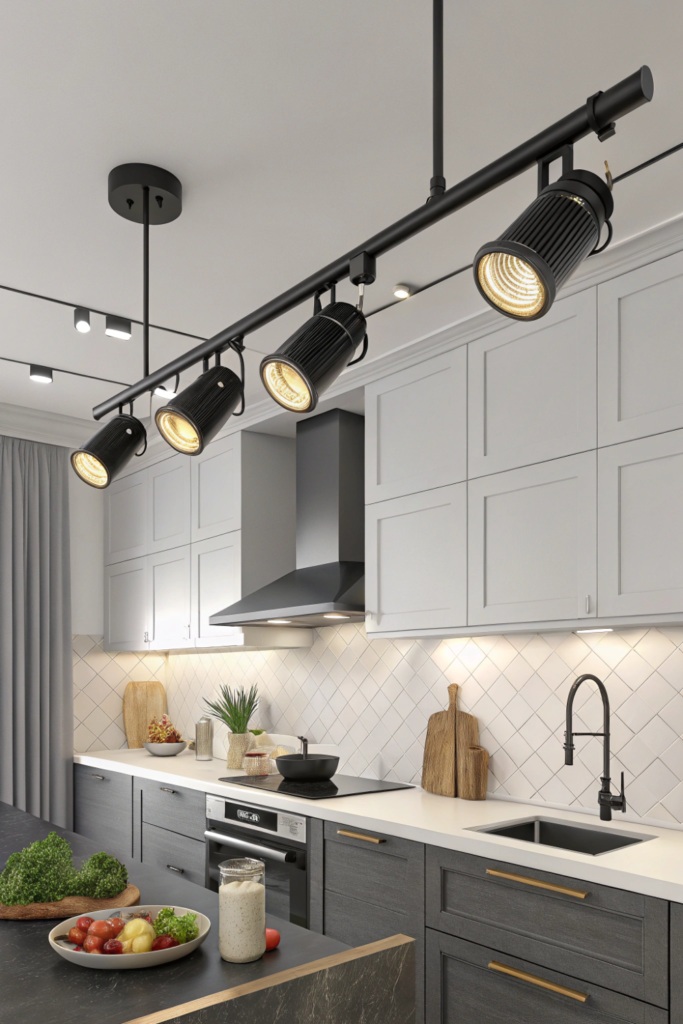
Adjustable track-mounted fixtures provide flexible kitchen lighting directing light where needed. The modular systems adapt as layouts or needs change over time.
Modern low-profile tracks suit contemporary kitchens while cable systems offer industrial edge. Mix spotlight and flood bulbs for varied illumination types.
The adaptable approach allows repositioning fixtures without rewiring. The practical solution suits evolving spaces and rental situations.
Pro Tip: Space track lighting fixtures 24-30 inches apart along the track in your kitchen lighting layout to provide adequate coverage without over-illuminating or creating hot spots.
7. Toe-Kick LED Lighting
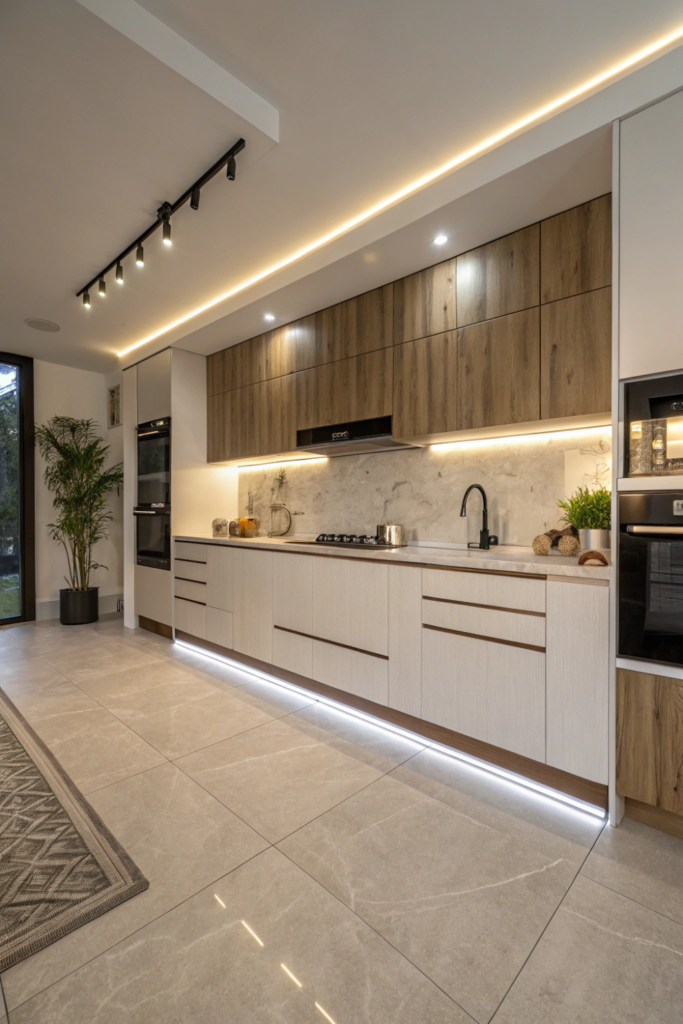
LED strips installed at cabinet base create subtle ambient kitchen lighting while improving safety through floor-level illumination. The unexpected placement adds modern sophistication.
The soft glow helps nighttime navigation without harsh overhead lights. Motion sensors allow hands-free activation during late-night kitchen visits.
The contemporary detail adds luxury touch. The practical safety feature prevents stumbling in dark kitchens.
Pro Tip: Use warm white or amber LEDs for toe-kick kitchen lighting rather than cool white to create welcoming glow that doesn’t feel clinical or disrupt nighttime adjustment to darkness.
8. In-Cabinet Lighting
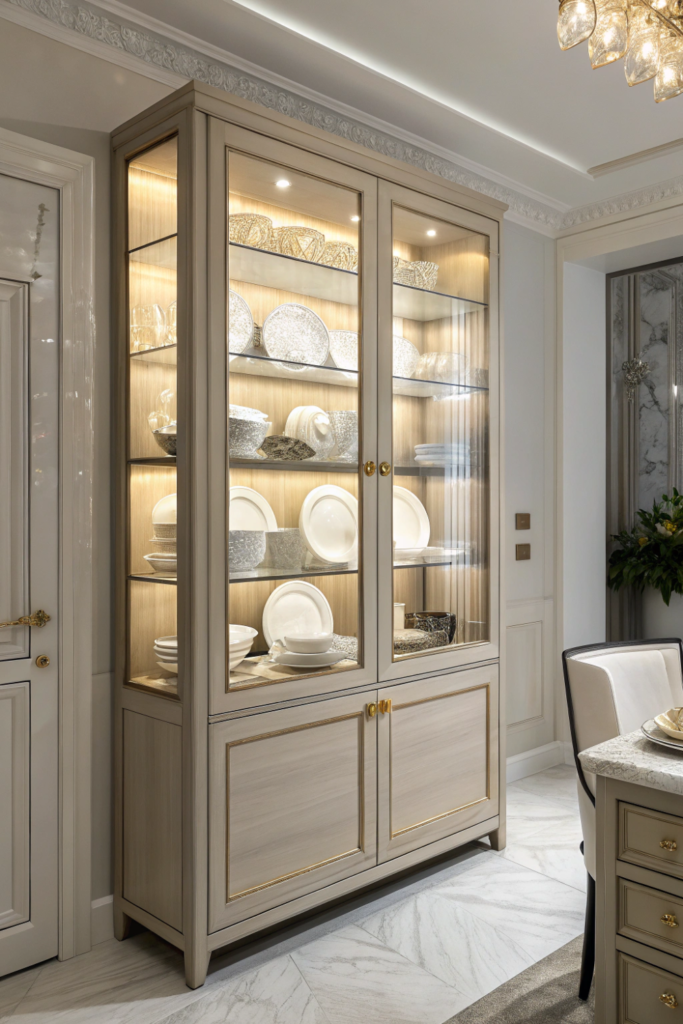
LED strips or puck lights inside glass-front cabinets illuminate displays while providing functional kitchen lighting for locating items. The integrated illumination showcases beautiful dishware.
Automatic door switches turn lights on when opening cabinets. The interior glow creates jewelry-box effects for displayed collections.
The luxurious detail elevates kitchen aesthetics. The practical addition improves functionality within deep or dark cabinets.
Pro Tip: Install cabinet interior kitchen lighting toward the front rather than back of shelves to illuminate displayed items’ fronts and prevent shadows from contents blocking light.
9. Linear Suspended Lighting
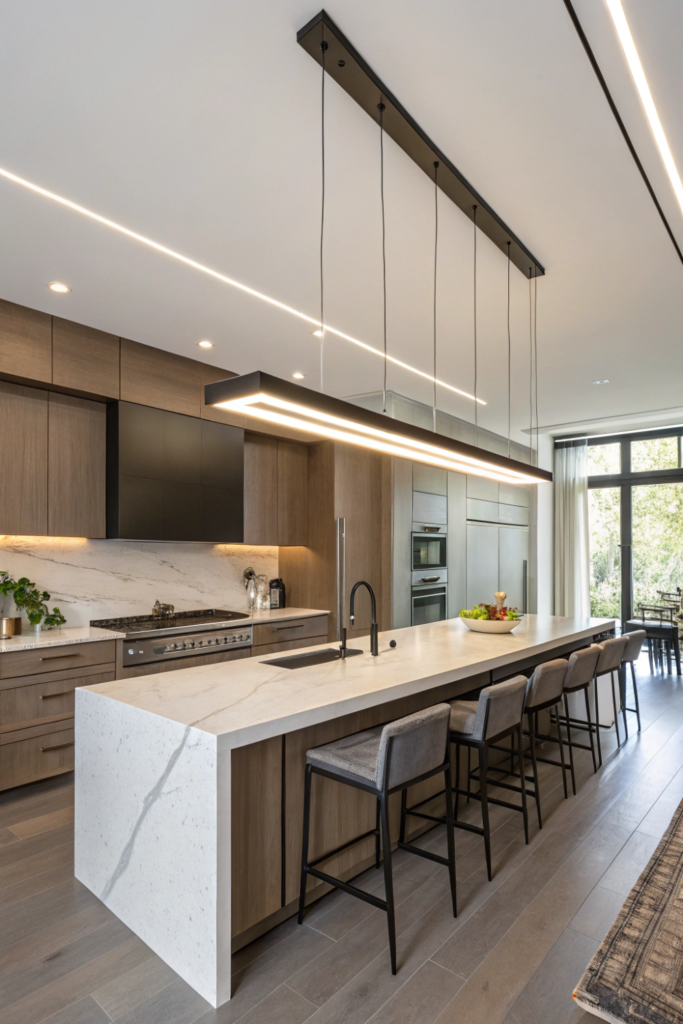
Long linear fixtures hung over islands or tables provide modern kitchen lighting with clean, architectural presence. The streamlined designs suit contemporary and minimalist aesthetics.
LED-integrated fixtures offer energy efficiency and long lifespan. Adjustable height suspension allows customizing to ceiling heights and preferences.
The bold statement creates strong visual impact. The substantial presence anchors open-concept spaces effectively.
Pro Tip: Size linear suspended kitchen lighting fixtures to span 2/3 to 3/4 of your island or table length for proper visual proportion rather than choosing fixtures that are too small.
10. Sconce Lighting
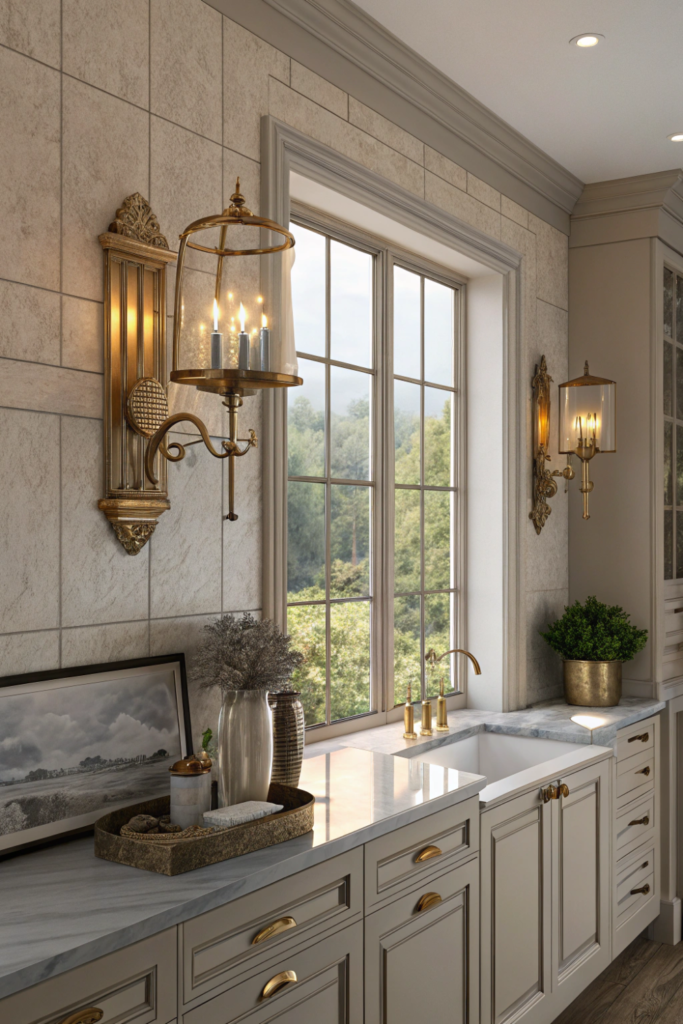
Wall-mounted sconces flanking windows, artwork, or open shelving provide accent kitchen lighting adding dimension and visual interest. The decorative fixtures create layers beyond ceiling illumination.
Install at 60-66 inches from floor (eye level) for optimal light distribution. Coordinate styles with overall kitchen aesthetic and other light fixtures.
The varied light sources create depth and atmosphere. The unexpected placement adds sophistication beyond standard overhead lighting.
Pro Tip: Use sconces with opaque or frosted shades in kitchen lighting to prevent glare at eye level while still providing ambient illumination and decorative presence.
11. Skylight and Solar Tube Lighting
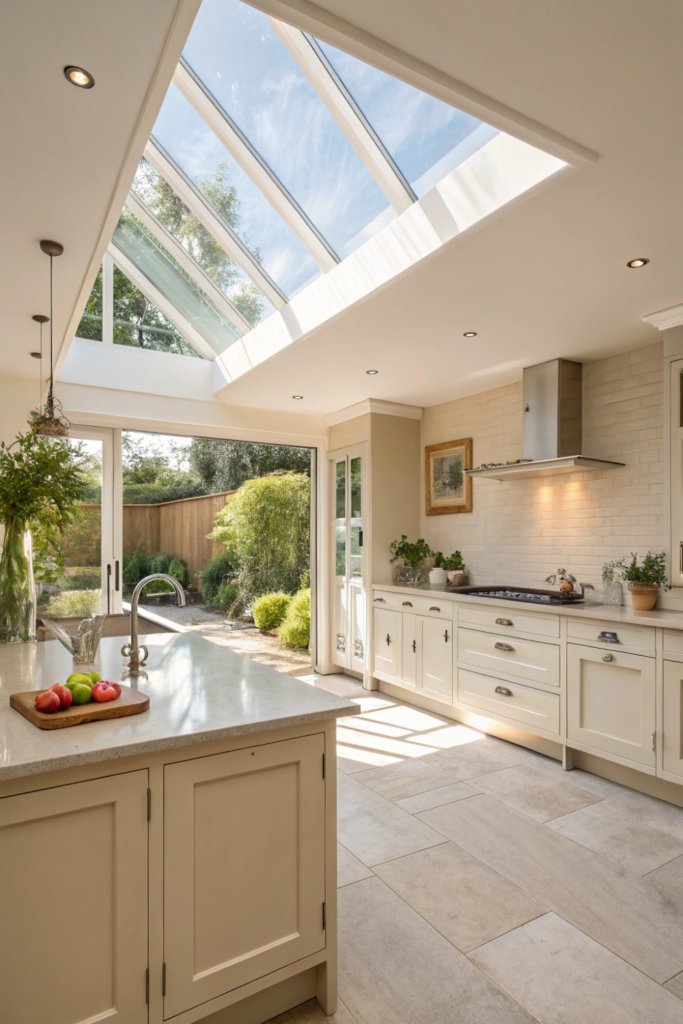
Natural light from above supplements artificial kitchen lighting while reducing daytime energy consumption. The overhead illumination creates bright, cheerful atmospheres connecting interiors with outdoors.
Skylights require roof modifications but deliver maximum light. Solar tubes (light tunnels) provide affordable alternatives capturing and channeling sunlight through reflective tubes.
The natural illumination improves mood and reduces electricity costs. The sustainable approach prioritizes daylight whenever possible.
Pro Tip: Position skylights or solar tubes over primary work areas in your kitchen lighting plan to maximize natural task lighting during daytime hours when most cooking occurs.
12. Strip Lighting in Open Shelving
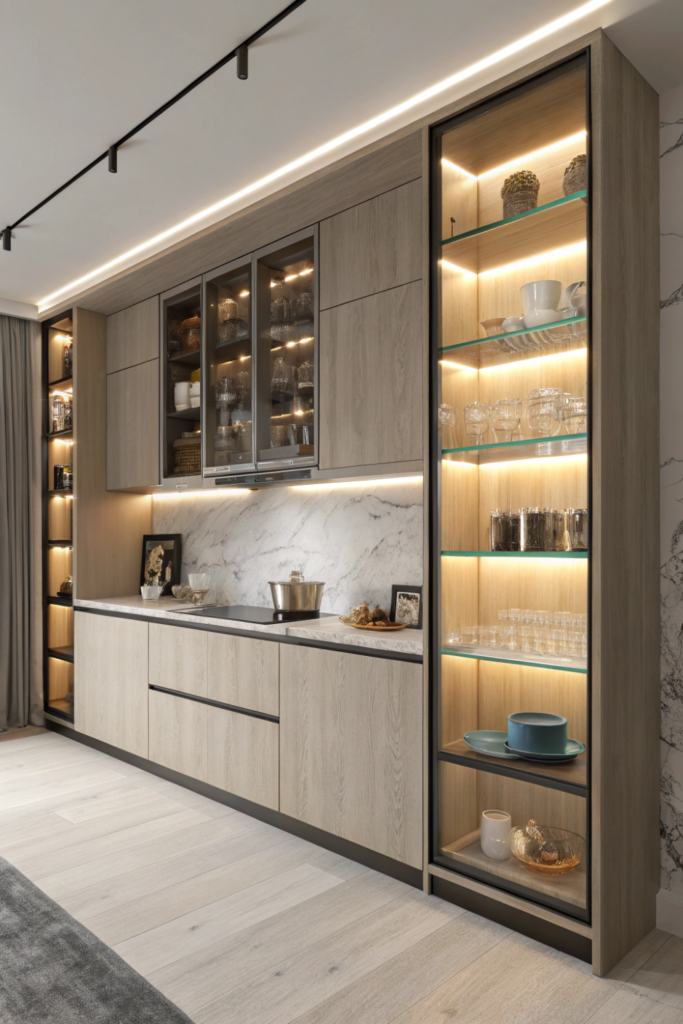
LED strips mounted on shelf undersides illuminate lower levels while showcasing displayed items through kitchen lighting integration. The continuous glow creates floating shelf effects.
The subtle illumination adds depth and dimension to open storage. Warm LEDs create inviting glow enhancing displayed dishware and decor.
The integrated approach makes shelving both functional and beautiful. The thoughtful detail demonstrates design sophistication.
Pro Tip: Recess LED strips slightly behind the front edge of open shelves in your kitchen lighting to hide the light source while directing illumination onto displayed items and the shelf below.
13. Cove or Soffit Lighting
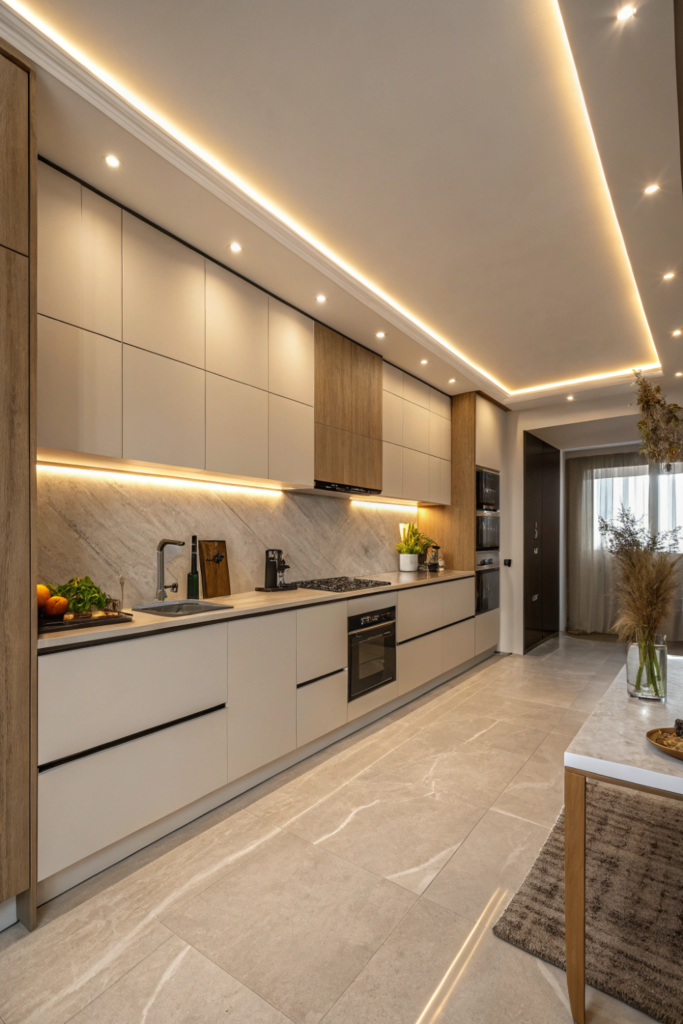
Hidden LED strips above cabinets or in ceiling coves create ambient kitchen lighting through indirect, reflected illumination. The soft uplight adds warmth without harsh glare.
The architectural detail makes ceilings appear taller while adding dimensional glow. Warm white LEDs create cozy atmosphere enhancing kitchen comfort.
The sophisticated approach delivers subtle elegance. The hidden source creates mystery and refinement.
Pro Tip: Install cove or soffit kitchen lighting on dimmers to adjust ambient levels throughout the day, creating bright working light in morning and soft evening ambiance during dinner.
14. Range Hood Lighting
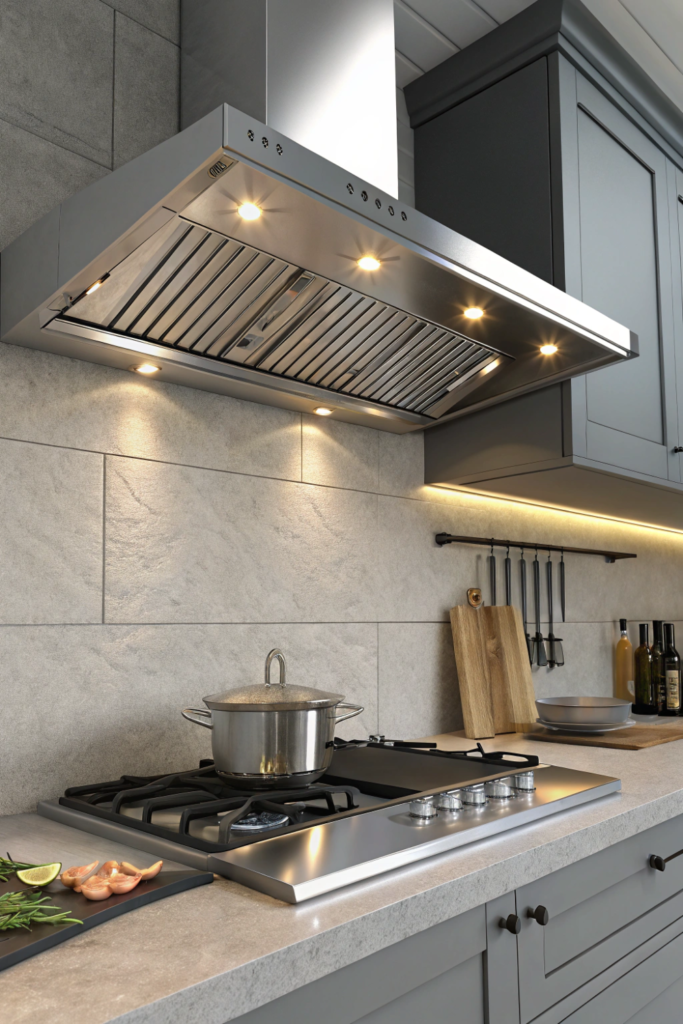
Integrated lights within range hoods provide essential task kitchen lighting for cooktop areas. The dedicated illumination ensures visibility during active cooking on ranges below.
Halogen or LED bulbs in hood underside direct light onto cooking surfaces. The focused illumination proves critical for monitoring food preparation closely.
The functional requirement becomes design opportunity through attractive hood choices. The necessary feature enhances safety and cooking precision.
Pro Tip: Choose range hoods with LED lighting rather than halogen in your kitchen lighting for cooler operation, longer bulb life, and better color rendering for accurate food monitoring.
15. Smart Lighting Controls
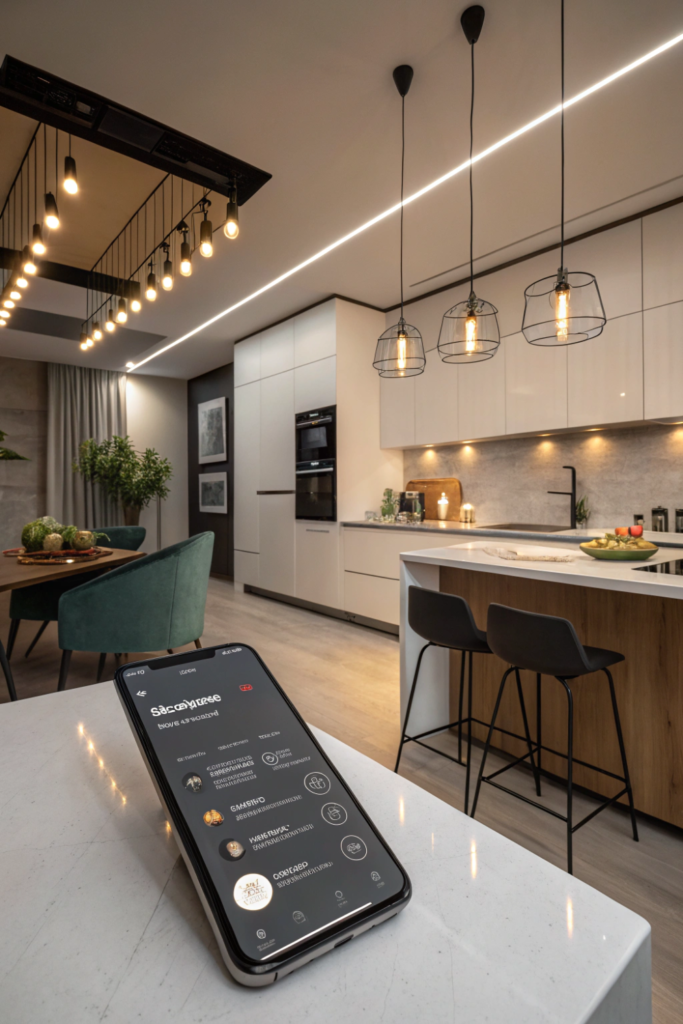
Wi-Fi connected bulbs, switches, and dimmers enable customizable kitchen lighting through smartphone apps or voice commands. The intelligent systems create scenes for different activities and times.
Programmable schedules adjust lighting automatically. Color-changing LEDs set moods from energizing bright white to relaxing warm amber.
The technology integration enhances convenience and energy efficiency. The modern approach adapts lighting effortlessly to varied needs.
Pro Tip: Create custom scenes in your smart kitchen lighting system for common activities—”cooking” (bright task lighting), “dining” (soft ambient), and “cleaning” (maximum brightness)—activated with single commands.
Pinterest Image Prompt: Vertical image of modern kitchen with smart lighting controlled by phone/tablet, adjustable scenes, intelligent kitchen lighting system, customizable ambiance, voice or app controlled, contemporary technology
Why Kitchen Lighting Design Matters
Safety and functionality depend on adequate illumination preventing accidents, burns, and cutting injuries through proper task lighting. Poor kitchen lighting creates hazardous conditions during food preparation activities.
Visual comfort impacts how much time people enjoy spending in kitchens through glare prevention, shadow elimination, and appropriate brightness levels. Thoughtful kitchen lighting creates inviting rather than harsh or dim environments.
Property value increases with professional lighting design demonstrating quality and attention to detail. Well-designed kitchen lighting appeals to buyers and justifies premium pricing through perceived luxury and functionality.
Things to Consider Before Kitchen Lighting
Evaluate your ceiling height and structure since some fixtures require specific clearances while recessed lights need adequate depth. Plan kitchen lighting accommodating structural realities and code requirements.
Consider your budget allocation across fixture types—investing in quality task lighting proves more important than expensive decorative fixtures. Prioritize kitchen lighting spending on functional necessities before aesthetic luxuries.
Think about bulb types and color temperature—warm white (2700-3000K) creates inviting atmosphere while cool white (3500-4100K) enhances visibility for detailed tasks. Choose kitchen lighting temperatures matching your priorities and preferences.
Comparison Table of Kitchen Lighting Types
| Lighting Type | Primary Function | Placement | Cost Range | Installation | Aesthetic Impact |
| Layered Design | Comprehensive – all needs | Throughout kitchen | $$$-$$$$ | Hard – multiple fixtures | Very High – professional |
| Under-Cabinet LED | Task – counter workspace | Below upper cabinets | $-$$ | Easy-Medium – plug-in/hardwire | Medium – functional upgrade |
| Pendant Lights | Task/Decorative – islands | Over islands/tables | $$-$$$$ | Medium – electrical | Very High – statement pieces |
| Recessed Cans | Ambient – general light | Ceiling grid | $$-$$$ | Hard – ceiling cuts | Low – unobtrusive |
| Chandeliers | Ambient/Decorative – dining | Over tables/large islands | $$$-$$$$$ | Medium – ceiling box | Very High – focal point |
| Track Lighting | Task/Ambient – adjustable | Ceiling track | $$-$$$ | Medium – ceiling mount | Medium – modern functional |
| Toe-Kick LED | Ambient/Safety – floor | Cabinet base | $-$$ | Easy – adhesive strips | Medium – modern detail |
| In-Cabinet | Accent – display | Inside glass cabinets | $-$$ | Medium – cabinet wiring | High – luxury showcase |
| Linear Suspended | Task/Decorative – modern | Over islands/tables | $$$-$$$$ | Medium – ceiling mount | Very High – architectural |
| Sconces | Accent – dimension | Walls at eye level | $$-$$$ | Medium – wall box | Medium-High – sophistication |
| Skylight/Solar Tube | Ambient – natural light | Ceiling/roof | $$$$-$$$$$ | Hard – roof penetration | Very High – natural beauty |
| Shelf Lighting | Accent – display | Open shelf undersides | $-$$ | Easy – adhesive strips | Medium – integrated glow |
| Cove/Soffit | Ambient – indirect | Above cabinets/ceiling | $$-$$$ | Medium – hidden install | High – sophisticated subtle |
| Range Hood | Task – cooking surface | Stove hood underside | $ | Easy – hood integrated | Low – functional necessity |
| Smart Controls | All – automated/scenes | Existing fixtures | $$-$$$ | Easy-Medium – switch/bulb | Medium – modern convenience |
Recommended Products for Kitchen Lighting
Linkable Under-Cabinet LED Strips
These hardwired LED light bars provide professional-quality task kitchen lighting beneath upper cabinets with seamless connections. The warm white 3000K output creates inviting glow while the linkable design allows continuous runs across multiple cabinets. Customers praise the bright, shadow-free illumination for food prep, easy hardwired installation hiding wires permanently, and how the slim profile remains invisible from most angles despite powerful light output.
Adjustable Pendant Light Set
This three-light pendant fixture set with adjustable cord lengths creates custom kitchen lighting over islands at perfect heights. The modern glass globe shades in various finishes coordinate with multiple kitchen styles while the included LED bulbs provide warm illumination. Users love the flexible height adjustment accommodating different ceiling heights, the quality construction at accessible price points, and how the coordinated set creates cohesive, professional-looking island lighting.
Smart LED Recessed Light Kit
These WiFi-enabled recessed lights (6-pack) provide app and voice-controlled kitchen lighting with customizable scenes. The color-tunable LEDs adjust from warm amber to cool white while the easy retrofit design fits standard recessed cans without rewiring. Customers appreciate the convenient voice control for hands-free operation while cooking, the energy-efficient LEDs dramatically reducing electricity consumption, and how programmable scenes adapt lighting automatically throughout the day.
Frequently Asked Questions About Kitchen Lighting
How many lumens do I need for kitchen lighting?
50-100 lumens per square foot provides adequate kitchen lighting depending on ceiling height and surface colors. 100-square-foot kitchens need 5,000-10,000 total lumens across all fixtures.
Task areas like counters and islands require brighter illumination (75-100 lumens/sq ft) while ambient lighting can be softer (50 lumens/sq ft). Layer different kitchen lighting types achieving these targets through multiple fixtures rather than single sources.
What color temperature is best for kitchens?
2700-3000K warm white creates inviting, comfortable kitchen lighting for general ambient and dining areas. The slightly yellow tone feels cozy and flattering without appearing too orange or dim.
3500-4100K bright/neutral white enhances visibility and color accuracy for detailed food prep tasks. Many successful kitchen lighting designs mix warm ambient with slightly cooler task lighting, using 2700-3000K for pendants and ambient while 3500K works under cabinets.
How high should I hang pendant lights?
30-36 inches above countertops provides optimal kitchen lighting from pendants without obstructing sightlines or causing head bumping. Taller ceiling installations may require longer drops maintaining this clearance.
Adjust based on ceiling height—in 8-foot ceilings, hang closer to 30 inches; in 10+ foot ceilings, 36 inches works better. The kitchen lighting goal maintains clear conversation views across islands while preventing glare at eye level.
Should all kitchen lights be on dimmers?
Yes—dimming capability dramatically increases lighting versatility in kitchen lighting schemes. Dimmers allow adjusting from bright task lighting during cooking to soft ambient during dining or entertaining.
LED-compatible dimmers prove essential since standard dimmers may cause flickering or buzzing with LED bulbs. Investment in quality dimmers for your kitchen lighting pays dividends through extended bulb life, energy savings, and atmospheric flexibility across all activities and times of day.