
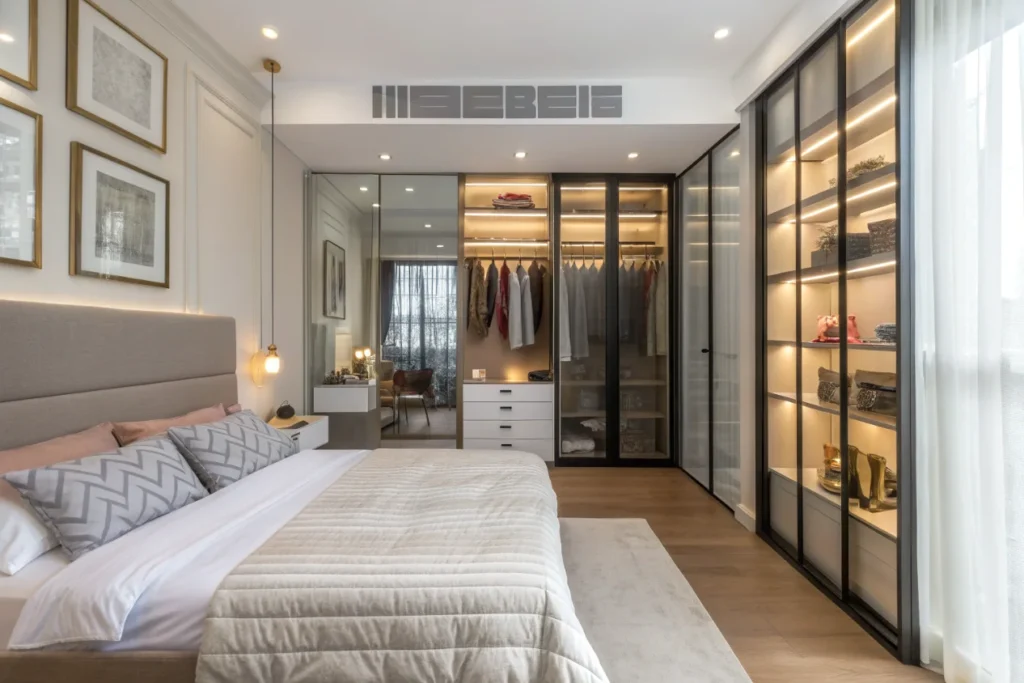
Dressing room behind bed layouts maximize bedroom functionality by creating dedicated closet and vanity spaces in previously unused areas. This innovative approach transforms awkward room configurations into efficient, luxurious bedroom suites that combine sleeping and dressing zones seamlessly.
The concept of a dressing room behind bed arrangement works beautifully in master bedrooms, converted attics, and open-plan spaces where you want distinct functional areas. Strategic placement creates natural room division while maintaining an open, flowing feel throughout your private sanctuary.
When planning your dressing room behind bed setup, focus on circulation flow, storage efficiency, and visual connection between zones. The most successful designs feel like custom bedroom suites rather than afterthought additions, proving that thoughtful space planning creates truly exceptional living environments.
List of 13 Best Dressing Room Behind Bed Ideas
1. Walk-Through Closet Partition
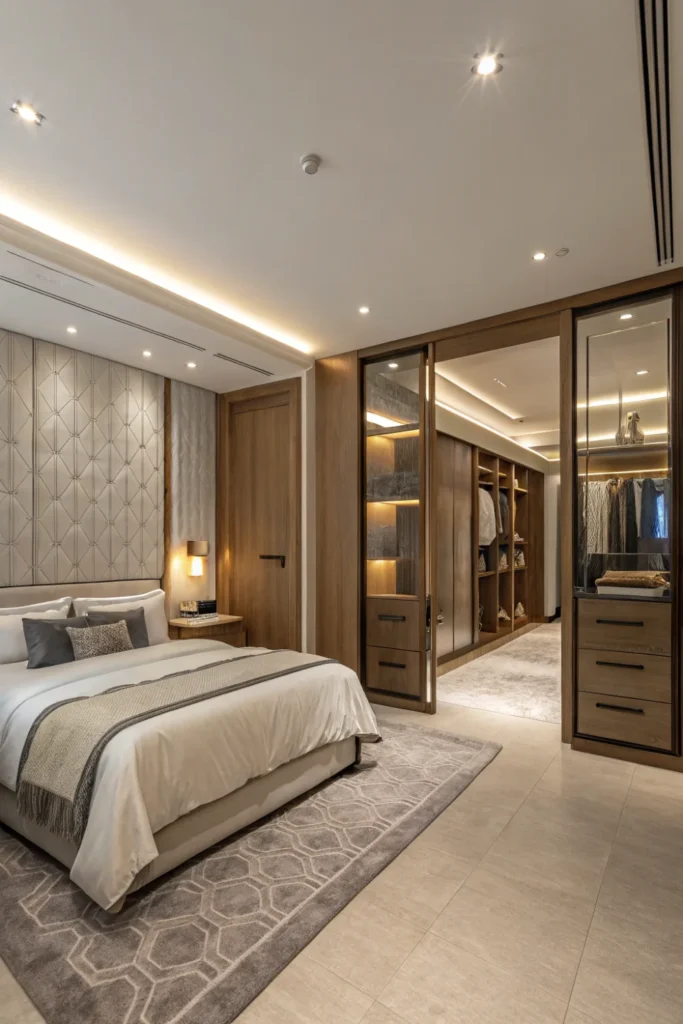
Create a functional walk-through dressing room behind bed that connects your bedroom to an ensuite bathroom, maximizing efficiency and luxury. This layout transforms unused circulation space into valuable storage and dressing areas.
Install floor-to-ceiling wardrobes on both sides of the walkway, add recessed lighting in the ceiling, and include a built-in vanity or island if space allows. The bed acts as a natural room divider that defines sleeping from dressing zones.
Pro Tip: Keep the walkway at least 36 inches wide for comfortable passage, and add motion-sensor lighting for convenient nighttime bathroom access without fumbling for switches.
2. Half-Wall Divider with Open Top
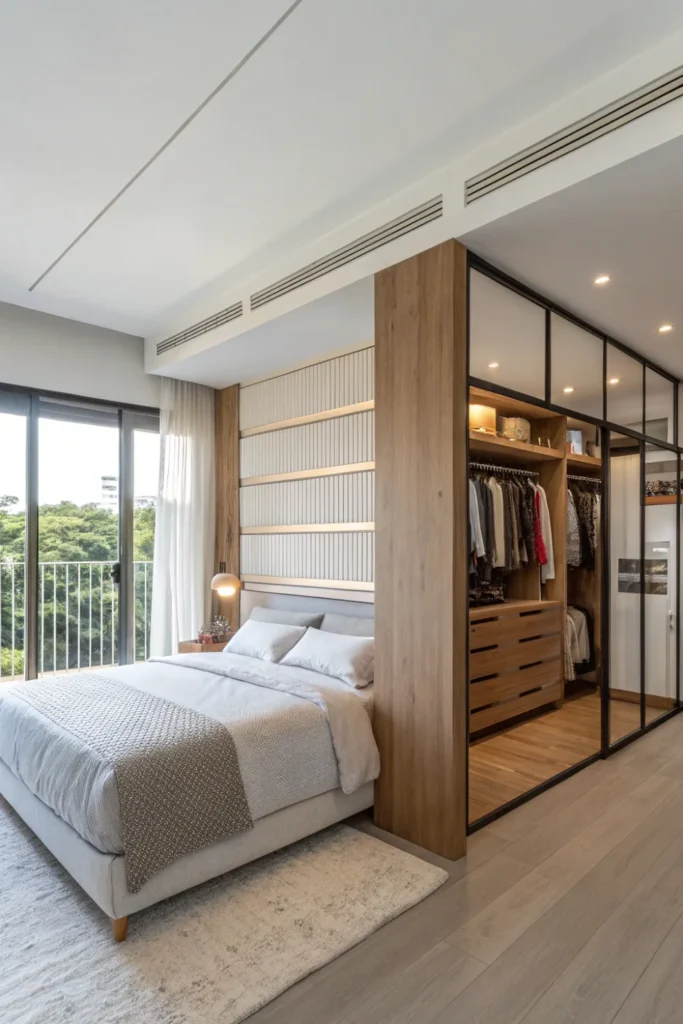
Build a partial wall behind your bed that rises 4-5 feet high, creating dressing room behind bed privacy while maintaining visual connection and airflow. This design preserves the feeling of spaciousness while clearly defining functional zones.
Top the half-wall with glass panels, decorative screens, or leave it open depending on your privacy needs. Use the bedroom side as a headboard or install floating shelves, while the dressing room side provides wall-mounted hooks, mirrors, or storage.
Pro Tip: Run electrical wiring through the half-wall during construction to add outlets and lighting on both sides, maximizing functionality without visible cords.
3. Glass Partition for Light Flow
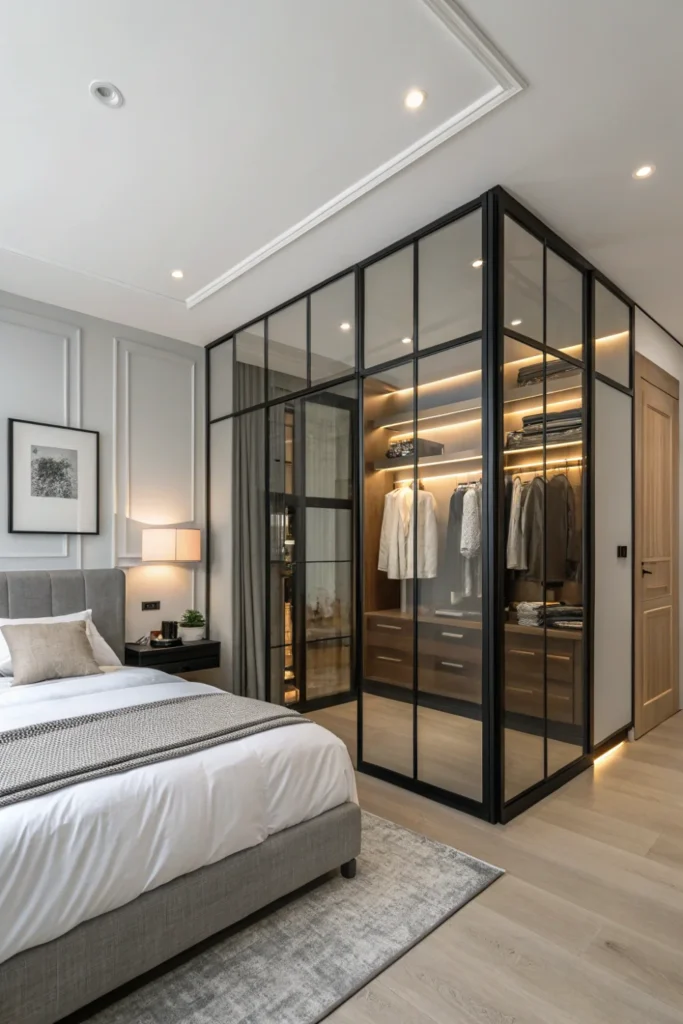
Install floor-to-ceiling glass walls or doors between your sleeping and dressing areas to create a dressing room behind bed that maintains brightness and spaciousness. This luxurious approach works beautifully in smaller bedrooms where solid walls would feel confining.
Choose frosted, fluted, or textured glass for privacy while allowing light transmission, or use clear glass with motorized blinds for flexibility. Black metal-framed glass partitions add industrial elegance, while minimalist frameless glass creates contemporary sophistication.
Pro Tip: Add a privacy film or shade system that you can control for mornings when you want to get dressed without waking a sleeping partner.
4. Sliding Barn Door Separation
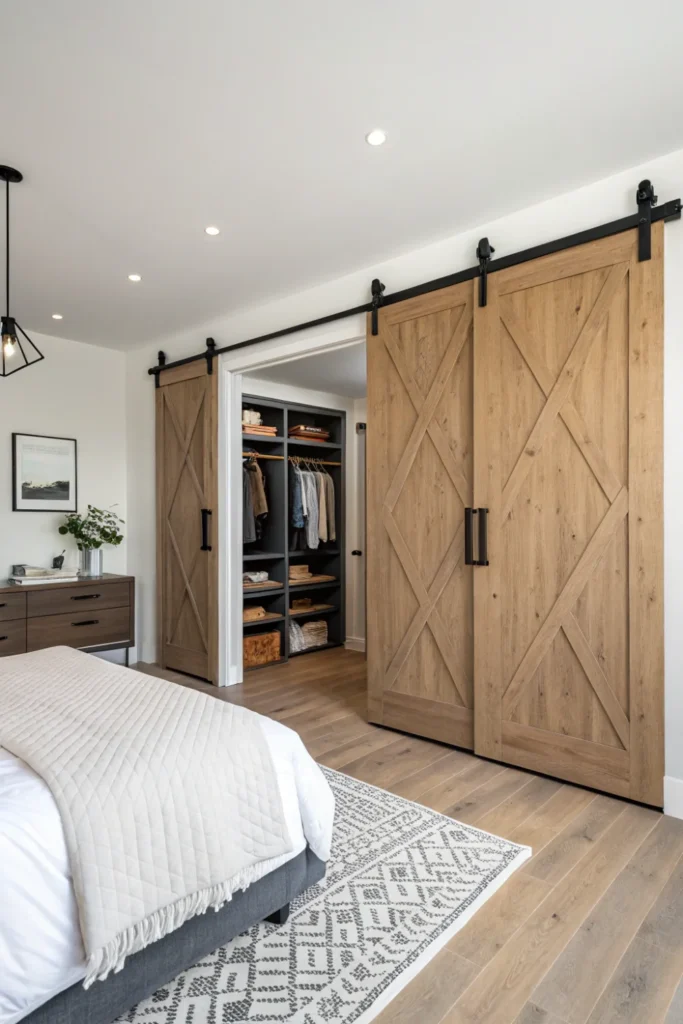
Create flexible dressing room behind bed access with large sliding barn doors that can close for privacy or slide open to integrate the spaces. This practical solution works in traditional, farmhouse, and contemporary bedrooms depending on door style.
Install double doors that meet in the middle or a single oversized door that slides along the wall behind the bed. Choose from rustic reclaimed wood, sleek modern panels, or frosted glass to match your design aesthetic.
Pro Tip: Install soft-close hardware on barn doors to prevent slamming that would disturb sleep, and use quality floor guides to ensure smooth, quiet operation.
5. Bookshelf Room Divider Design
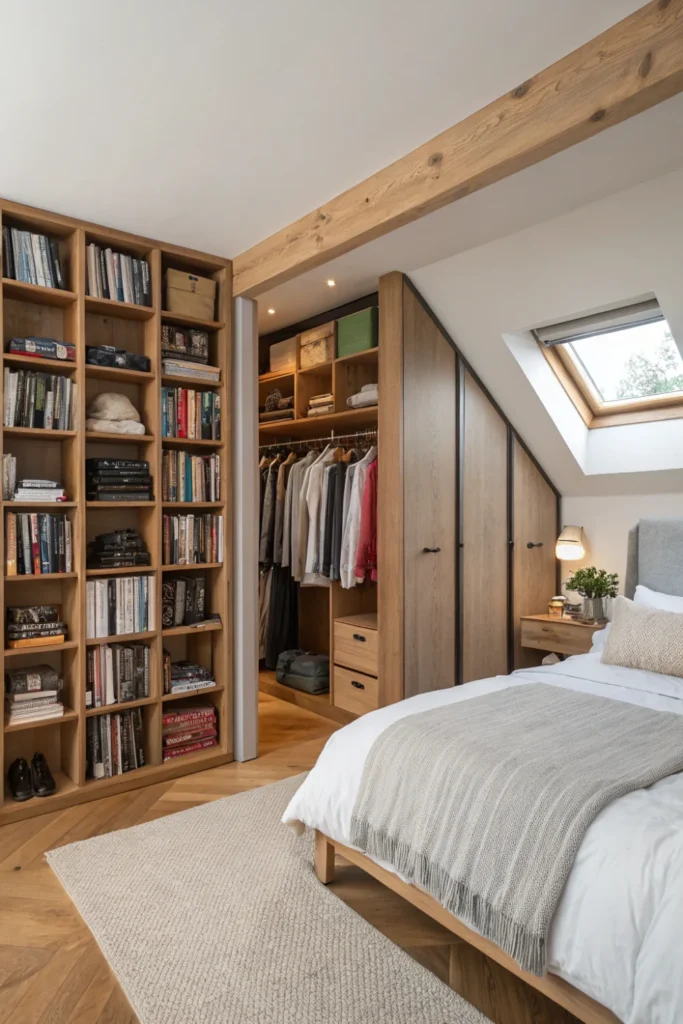
Position a tall open bookshelf or shelving unit behind your bed to create a permeable divider that defines the dressing room behind bed while maintaining visual connection. This works beautifully for those who want separation without complete enclosure.
Use the bedroom-facing side for books, decor, and personal items, while the dressing room side holds accessories, shoes, folded clothes, and beauty products. The double-sided functionality maximizes storage across both zones.
Pro Tip: Anchor the bookshelf securely to walls or ceiling to prevent tipping, especially important when it’s not pushed against a solid wall.
6. Curtain Divider for Flexibility
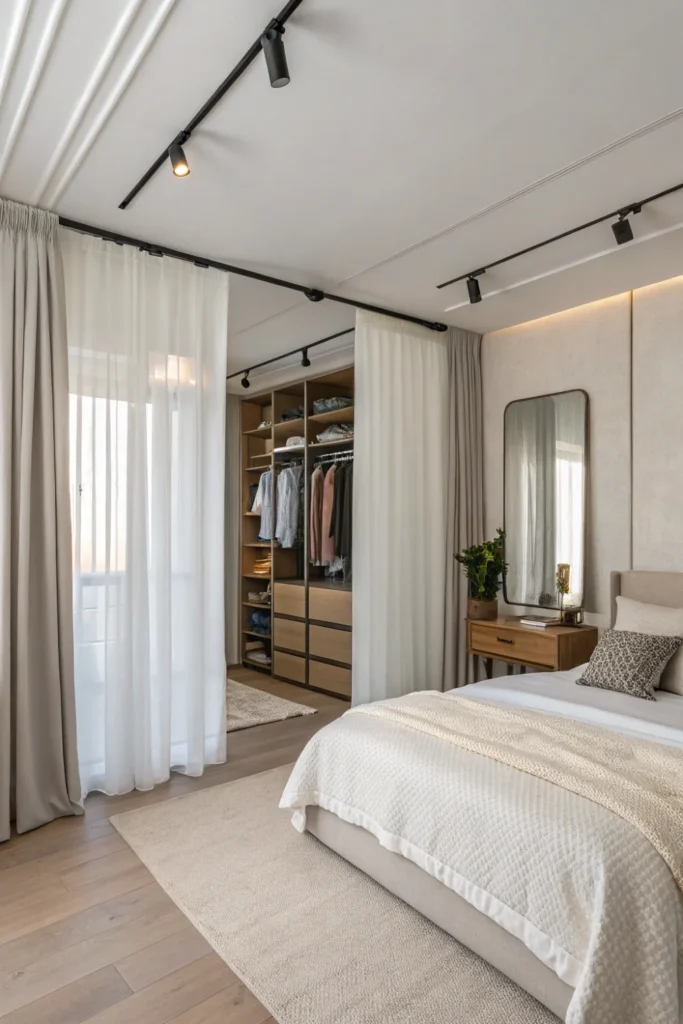
Install ceiling-mounted curtain tracks that create a soft, flexible dressing room behind bed separation you can open or close as needed. This affordable, renter-friendly solution offers maximum adaptability and easy seasonal changes.
Choose heavyweight curtains for sound and light blocking or sheer curtains for gentle visual separation while maintaining brightness. Use coordinating fabrics that complement your bedding for cohesive design throughout the bedroom suite.
Pro Tip: Install hospital-style curtain tracks that wrap around corners for U-shaped curtain configurations that fully enclose the dressing area when desired.
7. Platform Bed with Raised Dressing Area
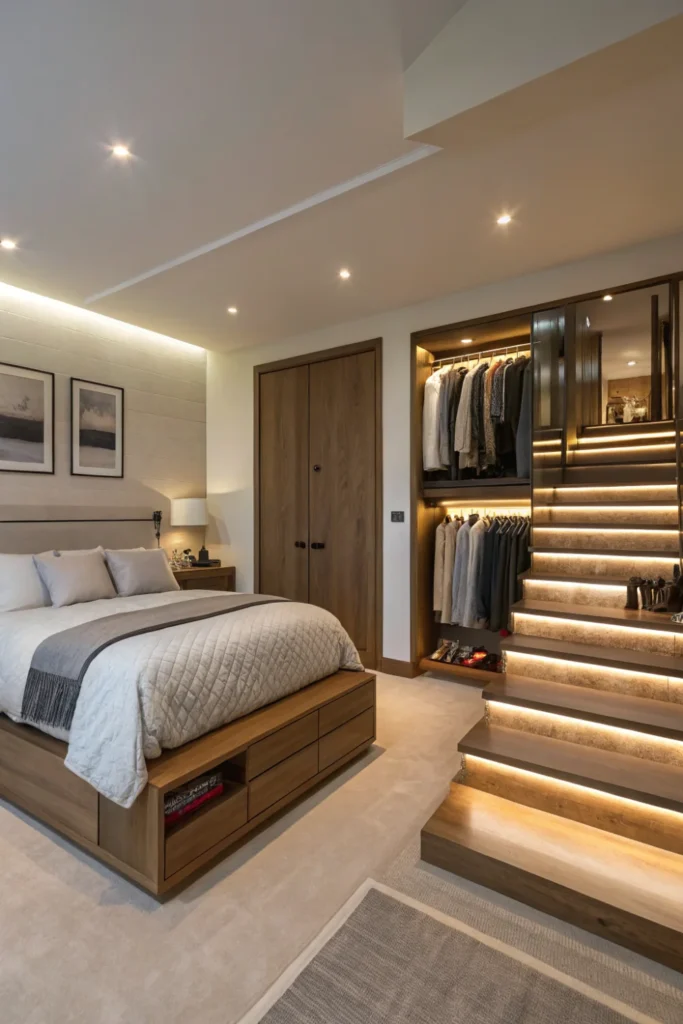
Create a raised platform dressing room behind bed that sits 12-18 inches higher than the sleeping level, naturally defining zones through elevation change. This dramatic approach works beautifully in loft spaces or rooms with high ceilings.
Add built-in storage drawers or cabinets in the platform structure, and use step lighting for safety when moving between levels. The elevated dressing area feels like a separate suite while remaining visually connected to the bedroom.
Pro Tip: Ensure the platform edge is at least 3 feet behind the bed so you don’t feel like you’re sleeping near a drop-off, which can create anxiety.
8. Mirrored Wall Illusion
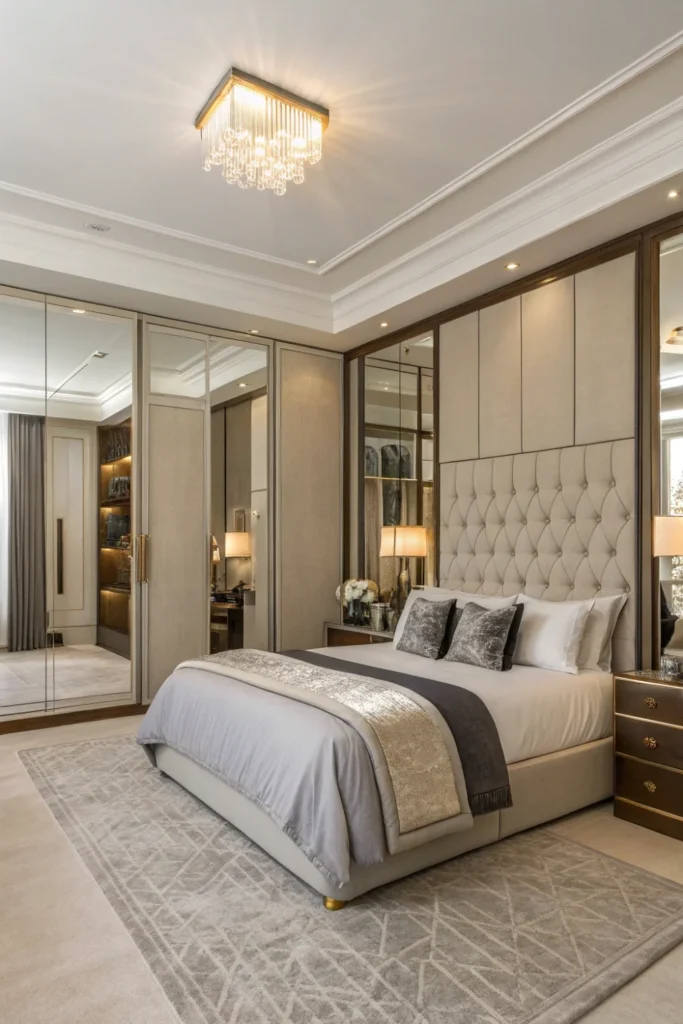
Install a full wall of mirrors behind your bed that creates the illusion of doubled space while concealing the dressing room behind bed entrance. This clever design maintains bedroom aesthetics while hiding functional closet access.
Create a hidden door within the mirrored wall that opens to reveal the dressing area, or position mirrored sliding doors that move to expose the closet. The mirrors make your bedroom feel dramatically larger while serving dual purposes.
Pro Tip: Use quality mirror installation with proper wall anchoring—full-height mirrors are heavy and require professional installation for safety.
9. Built-In Headboard Storage Wall
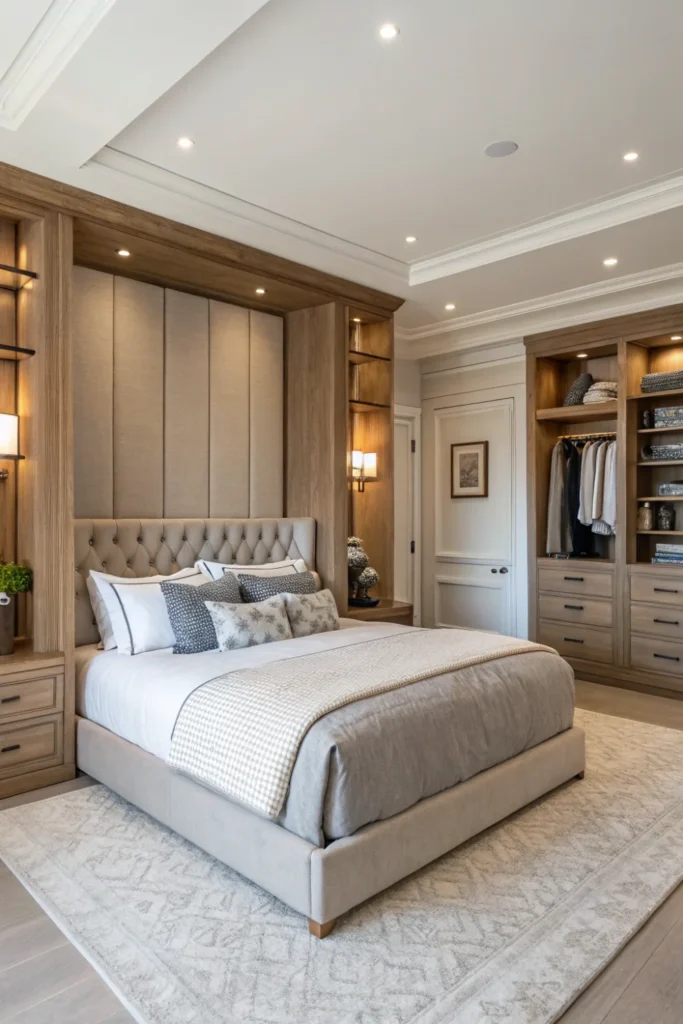
Design a floor-to-ceiling built-in headboard wall with the dressing room behind bed accessed through hidden doors or open walkways on either side. This integrated approach makes the entire sleeping wall a functional storage system.
Include nightstand nooks, overhead cabinets, and display shelving on the bedroom side, while the dressing room behind houses full wardrobes and vanity space. The seamless built-in creates custom suite aesthetics.
Pro Tip: Wire the built-in wall for integrated lighting, charging stations, and switches so all functionality is hidden within the structure for clean, seamless appearance.
10. L-Shaped Dressing Room Configuration
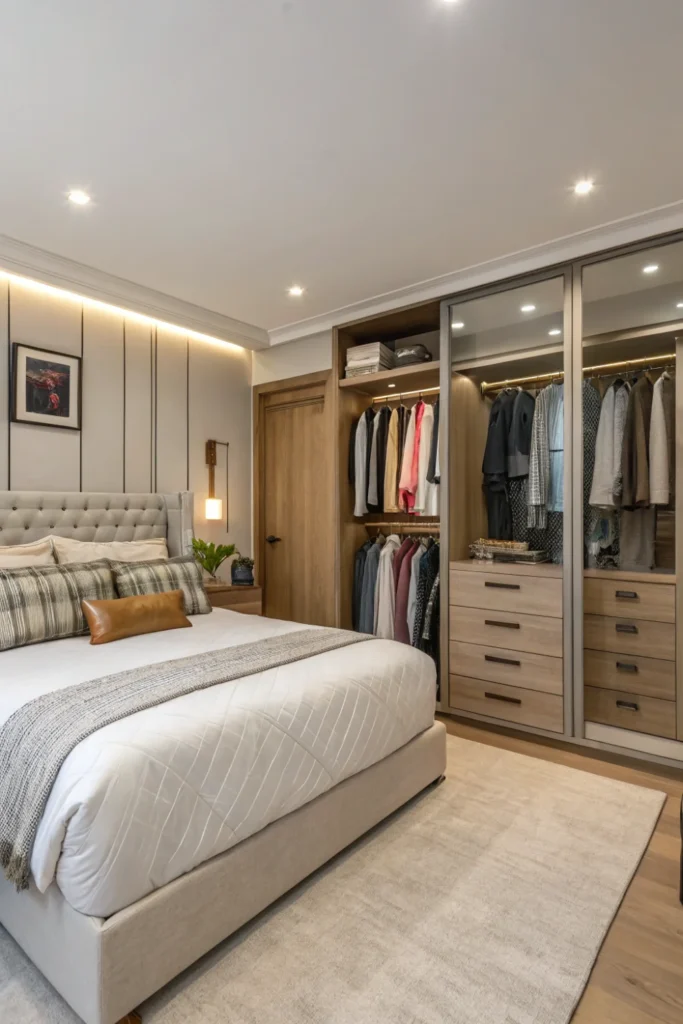
Position your bed to create an L-shaped dressing room behind bed and along one adjacent wall, maximizing storage while maintaining efficient room flow. This configuration works beautifully in square or rectangular bedrooms.
Use the space directly behind the bed for hanging clothes and tall storage, then wrap the dressing area along the perpendicular wall with vanity, drawers, and accessories. The L-shape creates a generous dressing suite feel.
Pro Tip: Place your vanity area along the wall with windows for natural makeup lighting, and use the windowless wall behind the bed for clothing storage that doesn’t need natural light.
Pinterest Image Prompt: Vertical bedroom showing bed positioned to create L-shaped dressing room, hanging clothes behind bed, vanity and drawers along adjacent wall, efficient wraparound closet layout, 2:3 ratio
Why Dressing Room Behind Bed Layouts Are Worth the Investment
Dressing room behind bed configurations dramatically increase functional square footage without expanding your home’s physical footprint. This strategic space planning can eliminate the need for separate walk-in closets or bedroom furniture, effectively creating a custom suite experience that adds significant perceived and actual value to your property.
Real estate professionals report that bedroom suites with integrated dressing areas command 15-25% premium pricing compared to bedrooms with standard closets. The luxurious feeling of a dressing room behind bed appeals strongly to buyers and creates that hotel-suite aesthetic that drives emotional purchase decisions.
This layout solves common bedroom challenges including inadequate closet space, awkward room shapes, and desire for morning routine efficiency. Couples particularly benefit from having a separate dressing space where one person can prepare without disturbing a sleeping partner, improving both relationship harmony and daily functionality.
Things to Consider Before Choosing Dressing Room Behind Bed Layouts
Your room dimensions and ceiling height critically impact whether dressing room behind bed layouts will work effectively. You need minimum 14-16 feet of depth to accommodate a bed, walking space, and functional dressing area, with 8-foot ceilings or higher to prevent the divided space from feeling cramped or claustrophobic.
Consider ventilation and climate control when creating enclosed dressing room behind bed spaces. Closed-off dressing areas need adequate air circulation to prevent mustiness and moisture buildup, potentially requiring additional HVAC venting, exhaust fans, or opening windows that may impact your room layout options.
Think about morning routine logistics and couple dynamics before committing to dressing room behind bed designs. If both partners need simultaneous morning access, ensure the layout accommodates two people comfortably, or plan dual entry points that allow independent access without interfering with each other or walking through the sleeping area.
Comparison Table of Dressing Room Behind Bed Ideas
| Layout Type | Price Range | Space Required | Installation Difficulty | Privacy Level | Light Flow | Flexibility |
|---|---|---|---|---|---|---|
| Walk-Through Closet | $$$-$$$$ | Large | High | High | Medium | Very Low |
| Half-Wall Divider | $$-$$$ | Medium-Large | Medium-High | Medium | High | Low |
| Glass Partition | $$$-$$$$ | Medium-Large | Medium-High | Medium-High | Very High | Low |
| Sliding Barn Doors | $$-$$$ | Medium-Large | Medium | Very High | Low | High |
| Bookshelf Divider | $-$$ | Medium | Low | Low | Very High | High |
| Curtain Divider | $ | Small-Medium | Very Low | Medium | High | Very High |
| Raised Platform | $$$-$$$$ | Large | High | Medium | High | Very Low |
| Mirrored Wall | $$$-$$$$ | Medium-Large | High | Very High | Very High | Low |
| Built-In Headboard | $$$$ | Medium-Large | Very High | High | Medium | Very Low |
| L-Shaped Configuration | $$-$$$$ | Large | Medium-High | High | Medium | Low |
| Industrial Pipe Divider | $$-$$$ | Medium-Large | Medium | Low | High | Medium |
| Alcove Bay Window | $$-$$$ | Medium | Medium | Medium | Very High | Low |
| Shoji Screen | $$-$$$ | Medium-Large | Low-Medium | Medium | High | High |
Recommended Products for Dressing Room Behind Bed Setups
SONGMICS Clothes Rack Heavy Duty
This industrial-style metal clothing rack with wood shelves creates instant dressing room behind bed organization without permanent installation. The heavy-duty construction supports up to 330 pounds of hanging clothes, while adjustable shelves provide folded storage. Perfect for creating functional dressing spaces in rental properties or temporary setups.
Buy from Amazon
NICETOWN Room Divider Curtain Panel
These thermal insulated blackout curtains work perfectly for creating flexible dressing room behind bed separation with sound dampening and privacy. The full-length panels hang from ceiling tracks or tension rods, the heavyweight fabric blocks light and reduces noise, and multiple neutral colors coordinate with any bedroom aesthetic. Machine washable for easy maintenance.
Buy from Amazon
LVSOMT LED Closet Light Motion Sensor
This battery-operated LED light strip with motion sensor solves lighting challenges in dressing room behind bed areas where hardwired fixtures aren’t feasible. The 48-LED bright strip provides excellent illumination, motion activation offers hands-free convenience, and rechargeable battery eliminates the need for outlet access. Includes magnetic mounting for easy installation.
Buy from Amazon
Frequently Asked Questions About Dressing Room Behind Bed Layouts
How much space do you need for a dressing room behind a bed?
You need minimum 14-16 feet total room depth for functional dressing room behind bed layouts—approximately 7 feet for bed and access, 3 feet for walking space, and 4-6 feet for the dressing room itself. Comfortable, luxurious dressing rooms work best with 18-20 feet of total depth that allows spacious circulation and generous storage.
The dressing room width should match or exceed your bed width for proportional aesthetics, with minimum 6-8 feet wide for functional clothing storage, hanging space, and potential vanity areas. Square or rectangular rooms work better than oddly shaped spaces for dressing room behind bed configurations that feel balanced and integrated.
Can you create a dressing room behind the bed in a small bedroom?
Yes, but small bedroom dressing room behind bed setups require creative solutions like curtain dividers, low shelving units, or partial walls rather than full enclosed spaces. You can create a functional dressing zone in rooms as small as 12×12 feet using space-efficient storage systems and flexible dividers.
Focus on vertical storage with tall narrow wardrobes, use the bed itself as the room divider, and choose lightweight separation methods like curtains or folding screens that can be opened to maintain spaciousness. Prioritize hanging space for daily clothes over expansive dressing suites, creating a compact but highly functional getting-ready zone.
How do you prevent a dressing room behind the bed from blocking windows?
Position your bed along a wall perpendicular to windows rather than directly in front of them, allowing the dressing room behind bed to utilize the windowless wall. If windows must be behind the bed, use glass partitions, half-height walls, or open bookshelf dividers that permit light flow into the bedroom.
Consider placing the vanity area directly in front of windows within the dressing room to take advantage of natural light for makeup application, while using the darker areas for clothing storage that doesn’t require illumination. Skylights, light tubes, or additional artificial lighting compensate for blocked windows in unavoidable layouts.
What’s the best way to access a dressing room positioned behind the bed?
The most functional access includes walkways on both sides of the bed leading to the dressing room, allowing independent entry without climbing over the bed or disturbing a sleeping partner. This double-entry approach works best for couples with different schedules or morning routines.
Single-entry layouts work for solo sleepers or those with synchronized schedules, typically placing the entrance on the dominant partner’s side of the bed. Sliding doors, curtains, or open walkways provide the most convenient access, while hinged doors require adequate swing clearance that may not work in compact layouts. Consider your specific morning routine patterns when planning access points.