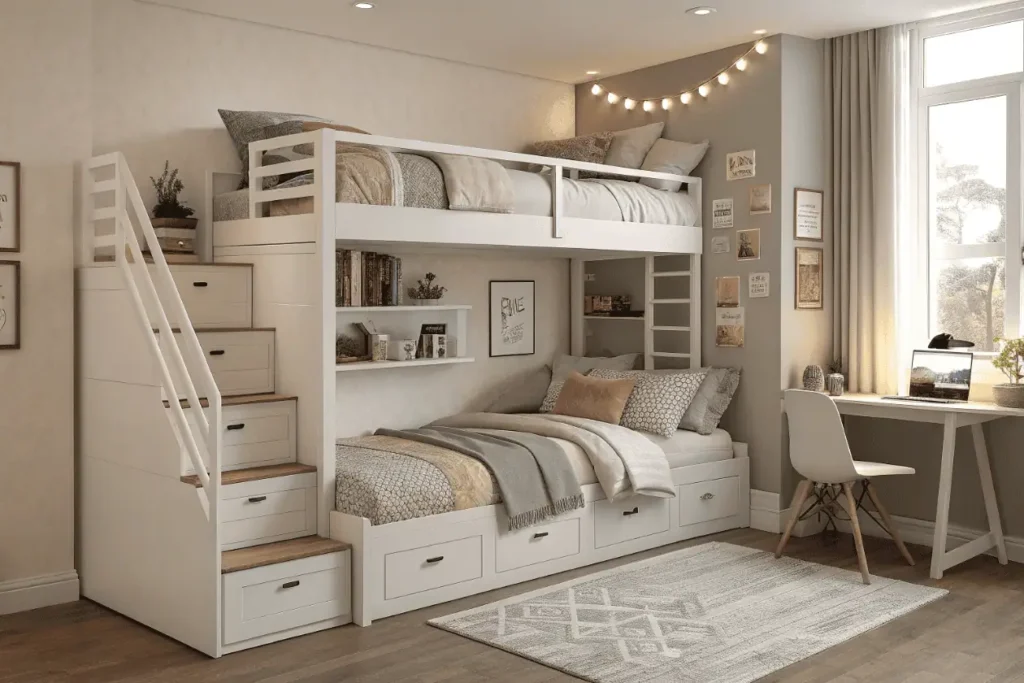
Designing a bunk bed room solves space challenges while creating exciting, functional environments that kids love and parents appreciate. These vertical sleeping solutions maximize square footage in shared bedrooms, vacation homes, and small apartments without sacrificing comfort or style.
Modern bunk beds transcend basic utilitarian designs, offering sophisticated options that incorporate storage, study areas, and architectural interest. From built-in configurations to freestanding models, today’s choices accommodate various ages, room sizes, and aesthetic preferences.
These innovative bunk bed room concepts will inspire you to create spaces that balance practicality with personality. Whether furnishing a children’s room, guest suite, or vacation property, the right approach transforms tight quarters into highly functional retreats.
List of 13 Best Bunk Bed Room Ideas
1. Built-In Wall Bunk Beds with Drawers
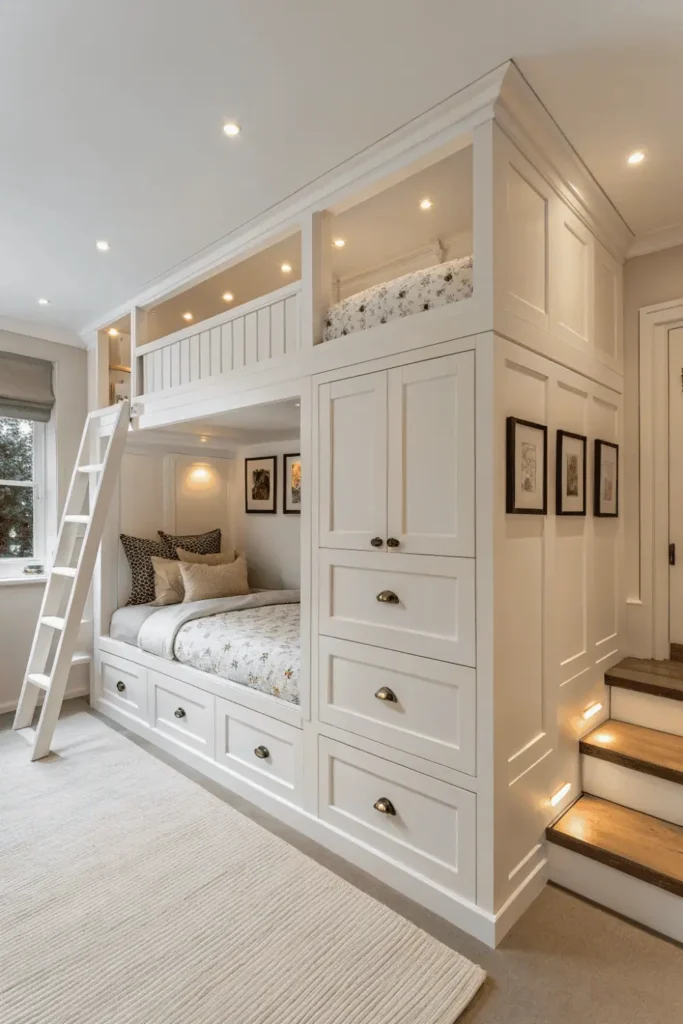
Built-in bunk bed rooms feature custom carpentry that integrates sleeping platforms directly into wall structures, creating seamless architectural elements rather than freestanding furniture. Under-bed drawers utilize every inch of vertical space for clothing, toys, or linens.
This permanent solution delivers maximum storage capacity while maintaining clean lines that make rooms feel organized and intentional. Built-in stairs with additional storage compartments provide safer climbing than traditional ladders.
The custom construction accommodates awkward room dimensions and specific ceiling heights perfectly.
Pro Tip: Include electrical outlets and reading lights in built-in headboard areas during construction—retrofitting power after installation requires expensive electrical work and visible surface-mounted conduit.
2. Triple Bunk L-Shaped Configuration
L-shaped triple bunk bed rooms position one bed perpendicular to two stacked bunks, creating space-efficient corner arrangements perfect for three siblings or frequent sleepovers. The configuration opens up valuable floor space in the room’s center for play or study areas.
This layout works particularly well in square or L-shaped bedrooms where standard linear arrangements waste corner space. The perpendicular bed often sits slightly lower, making it ideal for the youngest child.
Pro Tip: Ensure the perpendicular lower bunk extends at least 6 inches beyond the stacked bunks to prevent head bumps when sitting up—inadequate clearance creates painful collisions and reduces usability.
3. Loft Bunk with Desk and Storage Below
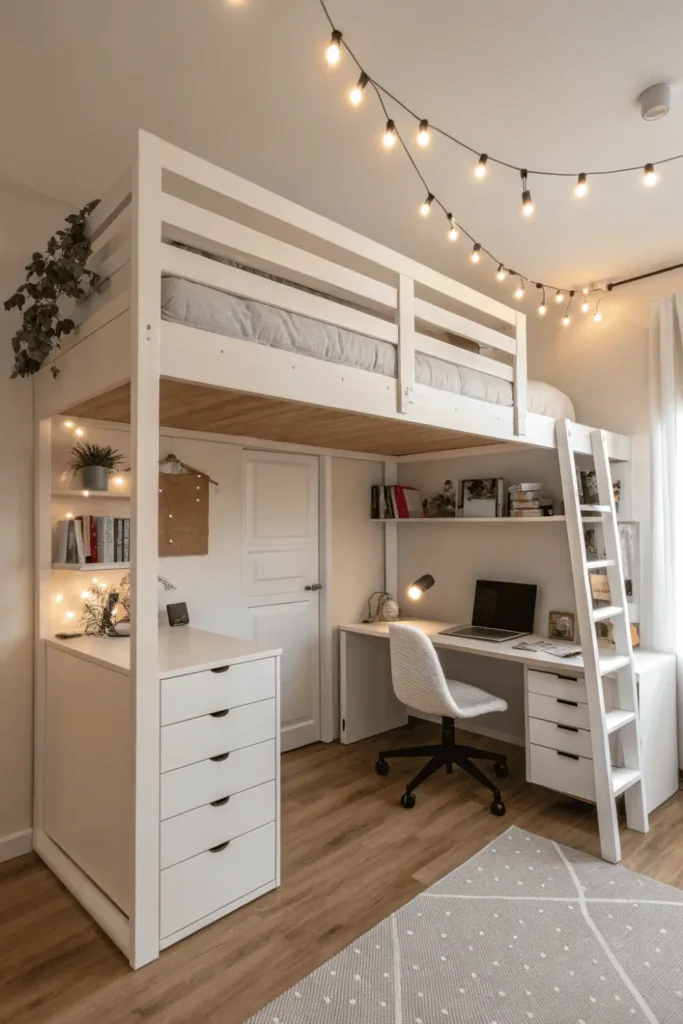
Loft-style bunk bed rooms elevate a single sleeping platform high enough for complete workspace or lounge area beneath, creating dual-purpose vertical zones. The lower level accommodates desks, bookshelves, seating, or additional storage without requiring floor space.
This configuration suits older children and teenagers who need dedicated homework areas in small bedrooms. The elevated sleeping platform feels private and cozy while the workspace below receives natural window light.
Pro Tip: Maintain minimum 36 inches between mattress top and ceiling for comfortable sitting—less clearance creates claustrophobic feelings and makes changing sheets frustratingly difficult.
4. Rustic Wooden Cabin-Style Bunks
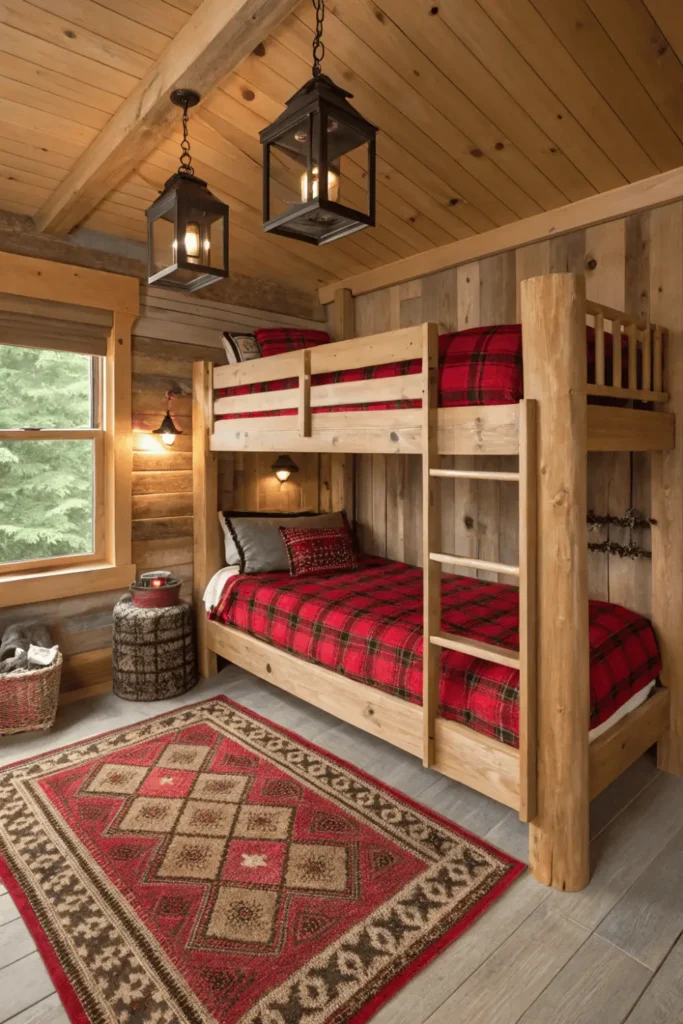
Rustic wooden bunk bed rooms bring mountain lodge charm through natural timber frames in honey tones or darker stains that showcase wood grain. Log-style posts and sturdy timber construction create authentic cabin aesthetics perfect for vacation homes or nature-themed children’s rooms.
Pair wooden bunks with plaid bedding, wildlife artwork, and natural fiber rugs for cohesive outdoor-inspired spaces. The substantial construction provides exceptional durability and timeless appeal that transitions well as children grow.
Pro Tip: Apply multiple coats of water-based polyurethane to wooden bunks for scratch resistance and easy cleaning—oil-based finishes darken over time and emit strong odors in enclosed bedrooms.
5. White Shiplap Coastal Bunk Room
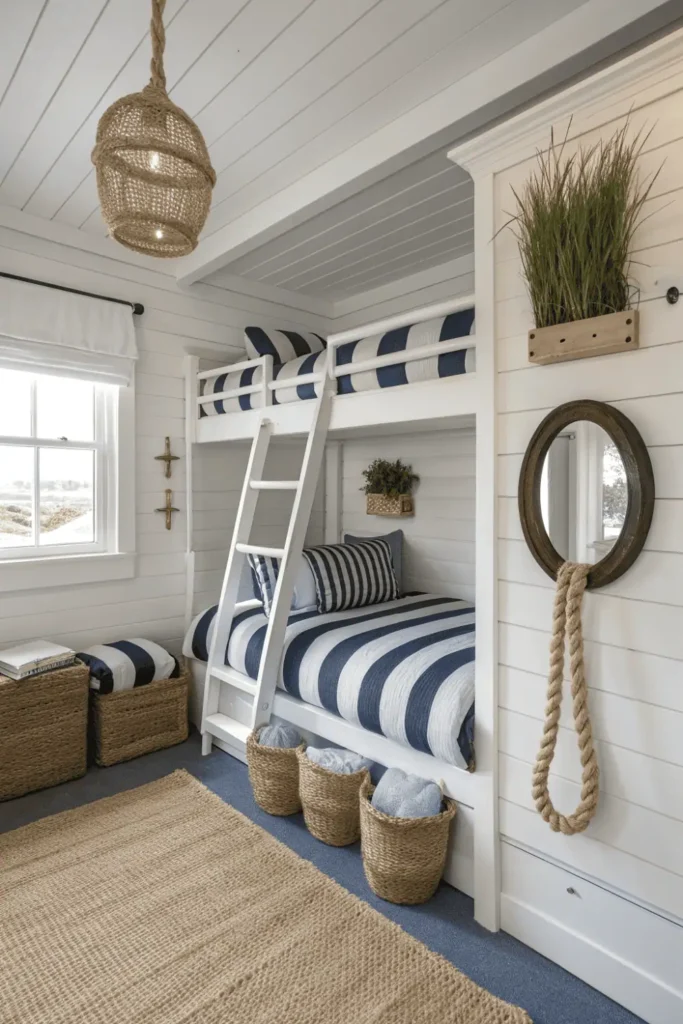
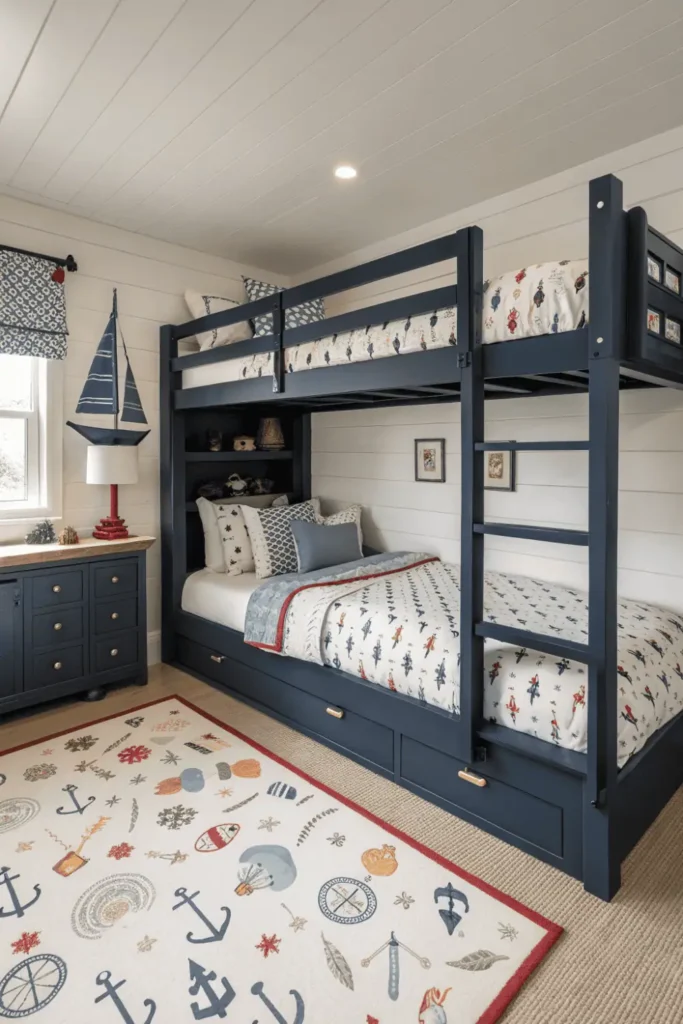
Coastal bunk bed rooms embrace beach house style with crisp white shiplap walls, navy or aqua bedding, and rope or nautical hardware details. The light, airy palette makes small spaces feel larger while evoking seaside vacation vibes.
Built-in or freestanding white bunks disappear against shiplap backgrounds, creating cohesive envelopes. Striped bedding, anchor motifs, and weathered wood accents complete the maritime theme without feeling juvenile.
Pro Tip: Use semi-gloss paint on shiplap in bunk rooms rather than flat—the slight sheen allows easier cleaning of handprints and scuffs inevitable in children’s spaces while maintaining crisp appearance.
6. Industrial Metal Pipe Frame Bunks
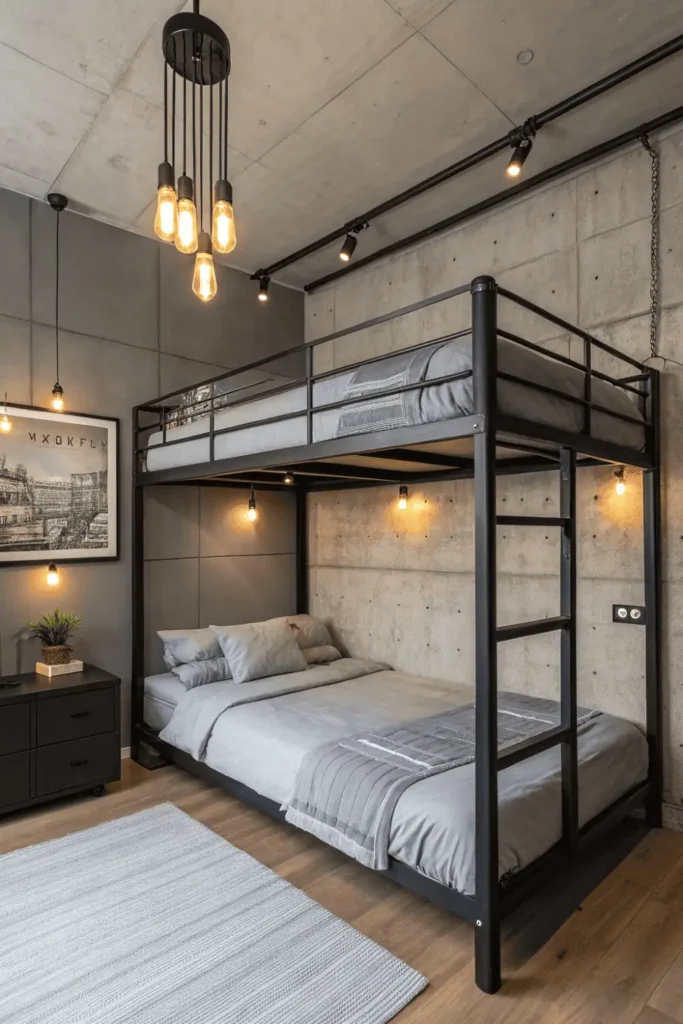
Industrial bunk bed rooms feature black metal pipe framing that creates urban loft aesthetics with exposed hardware celebrating structural honesty. The open framework feels lighter than solid wood construction while providing exceptional stability.
This modern style pairs beautifully with concrete-look accent walls, exposed brick, and minimalist decor. The metal finish resists showing wear and coordinates with contemporary fixtures and hardware throughout the home.
Pro Tip: Add foam pipe insulation to metal bunk frames where children might bump heads—the inexpensive cushioning prevents injuries while matching black insulation blends invisibly with pipe framework.
7. Bunk Room with Privacy Curtains
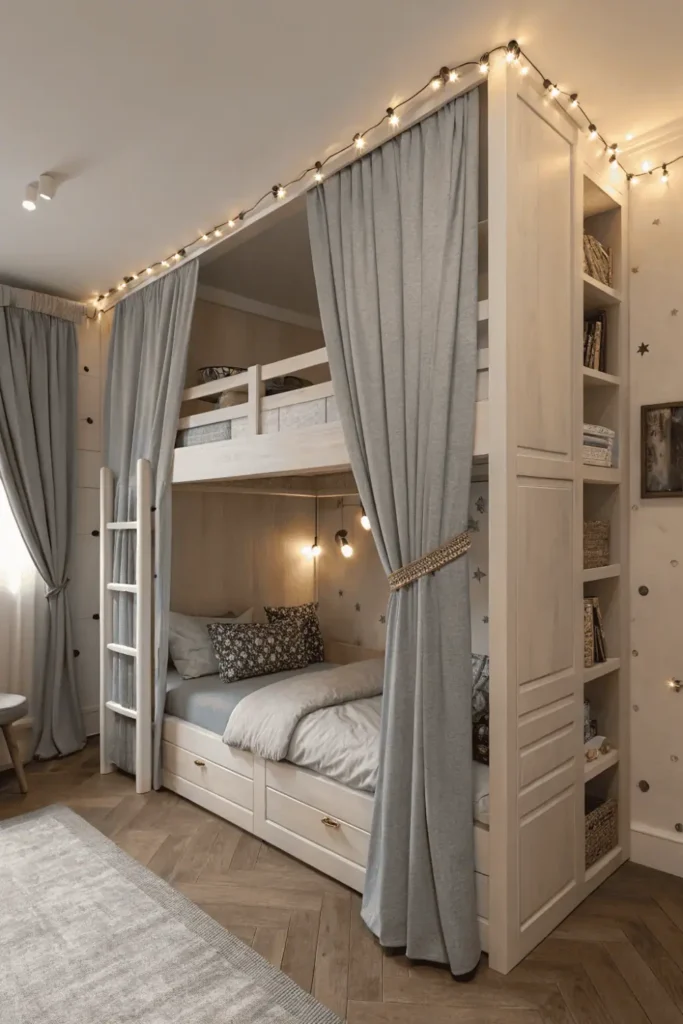
Bunk bed rooms with privacy curtains give each child personal space and visual separation through fabric panels that slide along mounted rods. Curtains create cozy sleeping nooks while reducing light and noise transfer between bunks.
Choose washable cotton or linen fabrics in coordinating colors or patterns that complement room decor. The curtains add softness and texture while providing flexible privacy—open during play time, closed at bedtime.
Pro Tip: Install curtain rods on three sides of bunks (front and both ends) for complete enclosure—single front curtains leave gaps that defeat the privacy purpose and allow light to spill into sleeping areas.
8. Murphy Bunk Beds for Guest Rooms
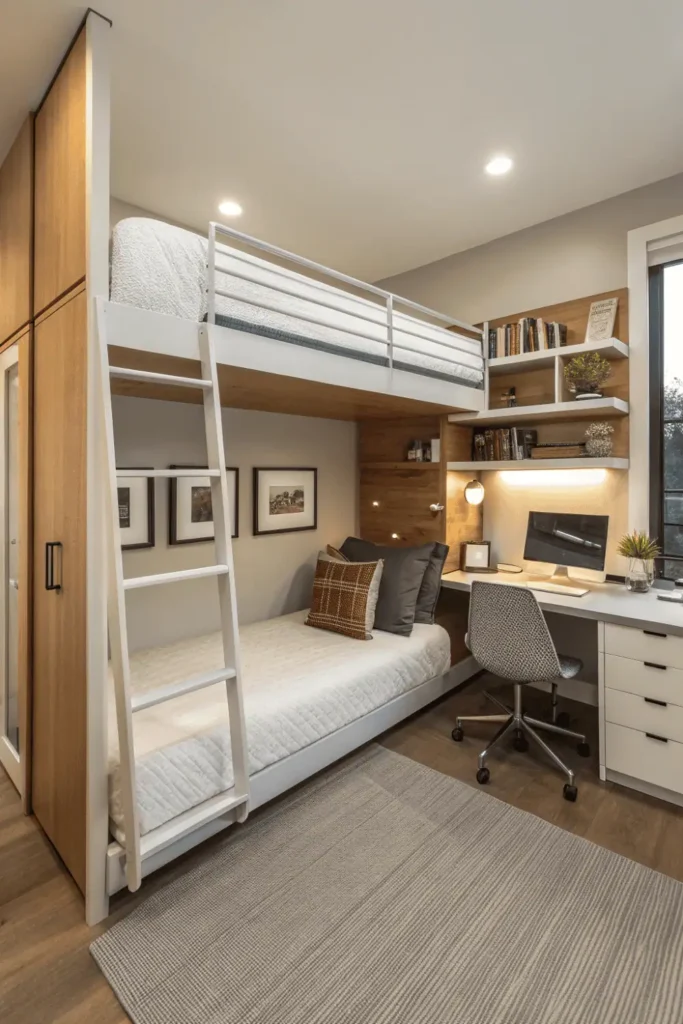
Murphy bunk bed rooms fold vertically against walls when not in use, transforming multi-purpose spaces instantly from home offices or playrooms into guest accommodations. The spring-loaded or piston-assisted mechanisms allow easy operation by one person.
This solution maximizes flexibility in small homes where dedicated guest rooms aren’t practical. When raised, the bunks reveal desks, exercise equipment, or open floor space, making every square foot work harder.
Pro Tip: Choose Murphy bunks with locking mechanisms that secure both up and down positions—inadequate locks create dangerous situations where beds release unexpectedly or don’t stay secured against walls.
9. Scandinavian Minimalist Bunks
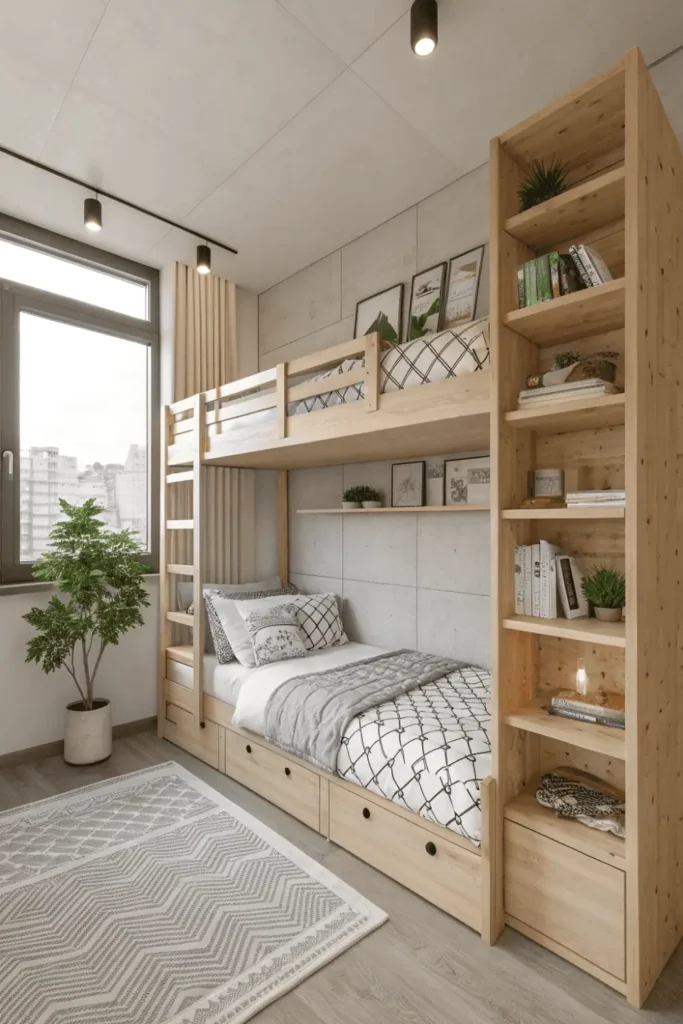
Scandinavian bunk bed rooms embrace simple white or natural wood frames with clean lines and minimal ornamentation that create calm, organized environments. The pared-down aesthetic focuses on function and quality materials over decorative excess.
Pair minimal bunks with geometric bedding, simple artwork, and plenty of negative space that prevents visual clutter. The light woods and whites maximize brightness in small rooms while neutral palettes grow with children through different developmental stages.
Pro Tip: Invest in quality mattresses for minimalist bunks—the spare aesthetic means comfortable bedding becomes the focal luxury element rather than decorative frames demanding attention.
10. Colorful Painted Statement Bunks
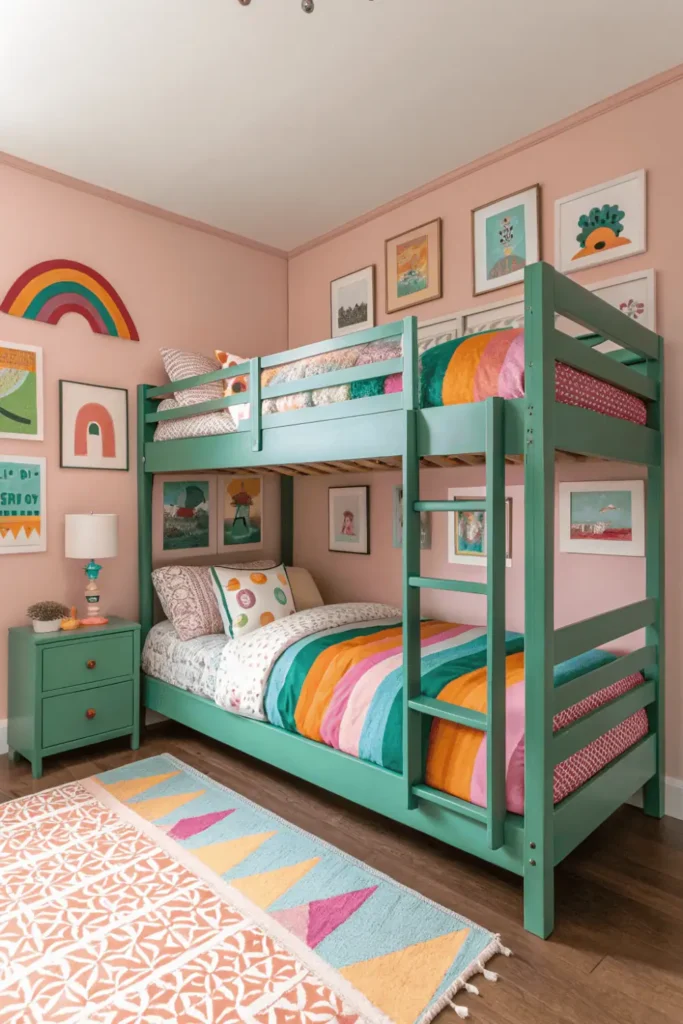
Bold painted bunk bed rooms use vibrant colors like navy, emerald, coral, or sunshine yellow to create playful focal points that energize spaces. The painted finish transforms basic wooden bunks into custom statement pieces that reflect children’s personalities.
Color-blocking techniques with contrasting wall colors or two-tone bunk painting add modern artistic flair. This affordable customization approach updates hand-me-down or basic bunks into fresh, distinctive furniture.
Pro Tip: Use chalk paint or milk paint for DIY bunk refinishing—these low-VOC options dry quickly, require minimal prep work, and produce durable matte finishes perfect for children’s furniture without toxic fume concerns.
11. Bunk Room with Individual Reading Nooks
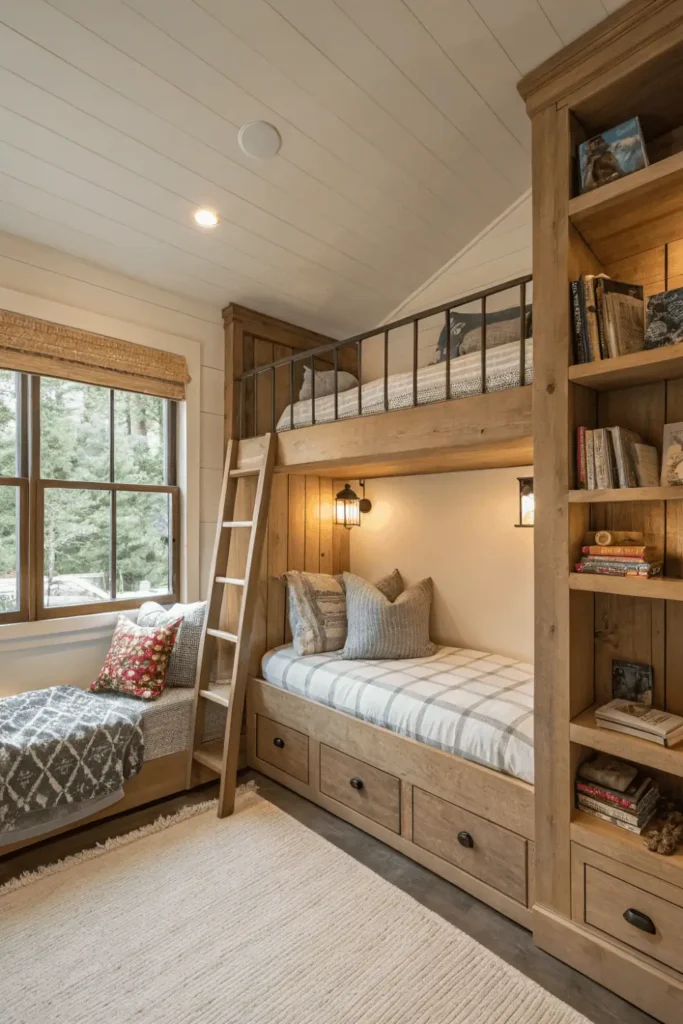
Bunk bed rooms with reading nooks incorporate small shelves, clip-on lamps, and cushioned window seats that give each child dedicated quiet space for books and relaxation. Personal lighting and storage make bedtime reading comfortable and independent.
Window seat cushions between bunks or adjacent to them create versatile lounging spots for daytime activities. Small floating shelves near pillow level keep favorite books within easy reach without requiring nightstand footprints.
Pro Tip: Choose LED clip-on reading lights rather than traditional bulb fixtures—they produce minimal heat near bedding, pose no burn risk if touched, and consume negligible electricity even when left on all night.
12. Bunk Beds with Slide for Play
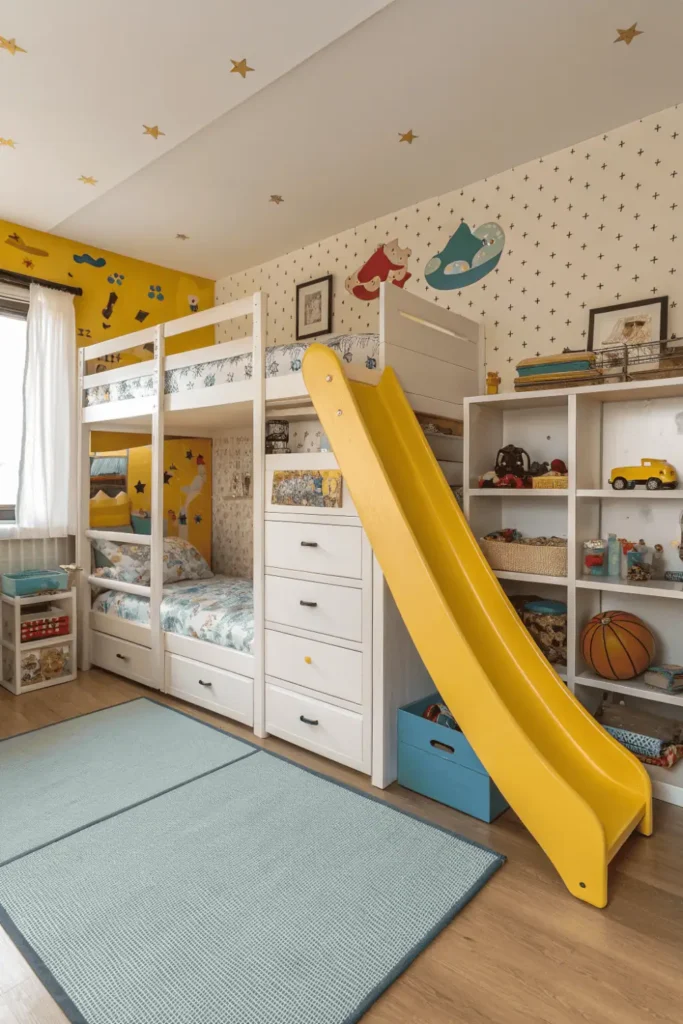
Playful bunk bed rooms incorporate slides from top bunks that transform sleeping areas into exciting play zones kids eagerly anticipate. The slide adds fun factor while encouraging active play and imaginative adventures right in the bedroom.
This design works best for younger children who view bedtime as adventure rather than punishment. Removable slides accommodate changing needs as children mature, converting back to standard ladder access.
Pro Tip: Position beds perpendicular to slides rather than parallel—landing zones need minimum 48 inches of clear space, and perpendicular arrangements prevent slides from extending too far into rooms or hitting walls.
13. Adult Bunk Room with Sophisticated Style
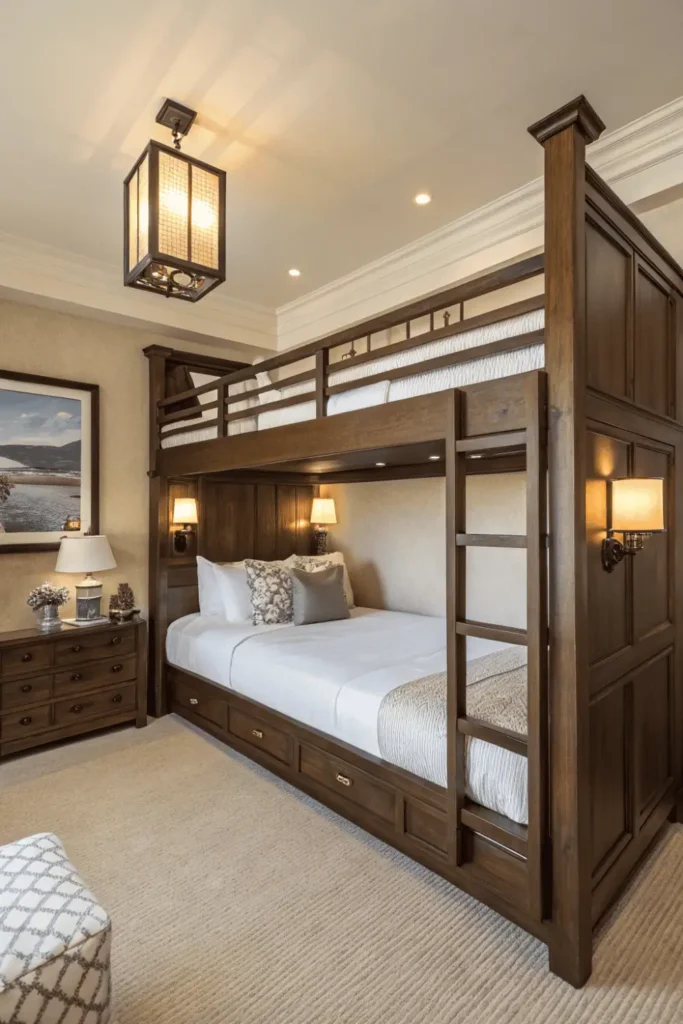
Adult bunk bed rooms serve vacation homes, ski cabins, or urban apartments with refined materials, quality bedding, and mature design that accommodates grown-up guests comfortably. Full or queen-sized bunks replace twin configurations common in children’s rooms.
Sophisticated finishes like stained wood, upholstered headboards, and hotel-quality linens elevate the sleeping experience. Individual reading lights, charging stations, and privacy features ensure each guest enjoys comfortable personal space.
Pro Tip: Specify 12-inch clearance minimum between bunk levels when planning adult sleeping quarters—the standard 36-inch height suitable for children becomes claustrophobic for average-height adults sitting up in bed.
Why Bunk Bed Rooms Are Worth the Investment
Bunk bed rooms dramatically increase sleeping capacity without expanding square footage, making them essential for growing families in fixed-size homes. A standard bedroom accommodating two twin beds comfortably sleeps two children, while the same space with bunks accommodates three or even four kids when triple bunks or additional floor space allows play areas.
Quality bunk bed rooms adapt to changing family needs over 10-15+ years through convertible designs that separate into individual beds when sharing ends. This longevity protects furniture investment by serving multiple configurations rather than requiring complete replacement as children’s needs evolve from shared rooms to privacy.
Strategic bunk bed rooms significantly enhance vacation property rental income by maximizing guest capacity and appeal. Homes sleeping 8-10 people command substantially higher nightly rates than those accommodating 4-6, with creative bunk rooms often becoming highlighted features in rental listings that help properties stand out in competitive markets.
Things to Consider Before Choosing Bunk Bed Room Designs
Ceiling height critically impacts bunk bed room functionality—minimum 8-foot ceilings work for standard twin-over-twin bunks, but comfortable adult bunks or triple configurations require 9-10 feet for adequate sitting headroom. Measure carefully before purchasing, as insufficient clearance creates unusable sleeping spaces and potential head injury hazards.
Safety standards for bunk bed rooms require guardrails on top bunks extending 5 inches above mattress, sturdy ladder construction, and appropriate weight limits clearly marked. Children under six shouldn’t sleep on top bunks due to fall risk, making age considerations essential when planning shared bedroom arrangements.
Room layout affects which bunk bed room configuration works best—perpendicular wall placement for L-shaped bunks, adequate floor space for ladder access, and positioning that avoids blocking windows, closets, or climate vents. Sketch arrangements before purchasing to ensure furniture fits properly with necessary clearances.
Comparison Table of Bunk Bed Room Ideas
| Design Style | Price Range | Age Suitability | Space Efficiency | Installation | Longevity |
|---|---|---|---|---|---|
| Built-In Wall Bunks | $2,500-$8,000 | All ages | Excellent – maximizes space | Very Hard – professional required | 20+ years permanent |
| Triple L-Shaped | $800-$2,500 | Ages 4-18 | Excellent – sleeps 3 | Medium – assembly needed | 10-15 years |
| Loft with Desk Below | $500-$2,000 | Ages 8-18+ | Very Good – dual purpose | Medium – assembly | 10-15 years |
| Rustic Wood Cabin | $600-$2,000 | Ages 4-18 | Good – standard bunks | Medium – assembly | 15-20 years |
| White Shiplap Coastal | $1,000-$3,500 | All ages | Very Good – includes decor | Medium to Hard | 15+ years |
| Industrial Metal Pipe | $500-$1,800 | Ages 6-18+ | Good – open framework | Medium – assembly | 15-20 years |
| Bunks with Curtains | $400-$1,500 + curtains | Ages 4-18 | Very Good – adds privacy | Easy to Medium | 10-15 years |
| Murphy Fold-Up | $2,000-$6,000 | Ages 8-Adult | Excellent – disappears | Hard – professional install | 15-20 years |
| Scandinavian Minimal | $400-$1,500 | All ages | Good – clean design | Easy to Medium | 10-15 years |
| Colorful Painted | $300-$1,200 | Ages 3-12 | Good – playful style | Easy – DIY paintable | 8-12 years (taste changes) |
| Bunks with Reading Nooks | $800-$2,500 | Ages 5-18 | Very Good – multifunctional | Medium – built-ins | 12-18 years |
| Bunks with Slide | $600-$2,000 | Ages 3-10 | Good – play feature | Medium – assembly | 8-12 years (outgrow slide) |
| Adult Sophisticated | $1,500-$4,000+ | Adult/Teen | Very Good – quality builds | Medium to Hard | 15-25 years |
Recommended Products for Bunk Bed Room Designs
Walker Edison Solid Wood Twin Bunk Bed
This classic twin-over-twin bunk bed features solid pine construction with clean-lined design that suits various decor styles. The full-length guardrails and sturdy integrated ladder meet all safety standards while the espresso finish complements both traditional and contemporary rooms. Supports up to 200 pounds per bunk with under-bed clearance allowing storage bins or trundle additions.
DHP Miles Metal Twin Loft Bed with Desk
This space-saving loft bed elevates sleeping quarters 62 inches high, creating complete study area beneath with built-in desk, shelves, and dedicated workspace. The sturdy metal frame in black finish provides industrial modern style while the full-length guardrail ensures top bunk safety. Ideal for teens and college students needing homework space in compact bedrooms.
Max & Lily Solid Wood Twin Triple Bunk Bed
This solid wood triple bunk features low-profile design with all three beds accessible from floor level, eliminating high-climbing concerns for parents. The low bunk bed room design includes full-length guardrails on upper bunks and converts to three separate twin beds when sharing arrangements end. Crafted from knot-free New Zealand pine with choice of grey, white, or natural finishes.
Frequently Asked Questions About Bunk Bed Rooms
What Age Is Safe for Bunk Bed Rooms?
Children should be at least 6 years old before sleeping on top bunks according to the Consumer Product Safety Commission, as younger children lack coordination and judgment to safely navigate ladders and elevated platforms. The bunk bed room bottom bunk accommodates any age including toddlers transitioning from cribs.
Older children and teenagers use bunk bed rooms safely through adulthood when proper guardrails, weight-rated construction, and safe access ladders are installed. The key safety factor is maturity level rather than specific age—some cautious 5-year-olds handle bunks better than impulsive 8-year-olds, making parental judgment essential.
How Much Space Do You Need for a Bunk Bed Room?
Standard twin bunk bed rooms require minimum 10×10 feet for adequate clearance around the furniture, though 10×12 feet or larger provides comfortable circulation. Allow 36 inches of clearance on at least one long side for ladder access and sheet changing, and 24-30 inches on other sides for walking.
Triple bunk bed rooms or L-shaped configurations need minimum 12×12 feet to accommodate the larger footprint and multiple access points. Ceiling height matters as much as floor space—8-foot ceilings work for standard twin-over-twin bunks, while 9-10 feet suit triple bunks or adult-sized configurations comfortably.
Can Adults Sleep in Bunk Bed Rooms?
Yes, adults use bunk bed rooms successfully when bunks feature full or queen-sized mattresses and appropriate weight ratings (minimum 250-300 pounds per bunk for average adults). Purpose-built adult bunks include reinforced frames, wider sleeping surfaces, and increased vertical clearance for comfortable sitting.
Taller ceiling heights prove essential for adult bunk bed rooms—minimum 9-10 feet allows adequate headroom when sitting upright without the claustrophobic feeling standard 8-foot ceilings create. Many vacation homes, hostels, and mountain cabins successfully use adult bunks to maximize sleeping capacity while maintaining comfort.
How Do You Make Bunk Bed Rooms Feel Less Cramped?
Light colors significantly improve bunk bed room spaciousness—white or pale wood bunks against light walls create airiness while dark furniture against dark walls makes spaces feel smaller and more enclosed. Maximize natural light through unobstructed windows and add multiple light sources preventing shadowy corners.
Strategic storage in bunk bed rooms reduces visual clutter that makes spaces feel cramped—built-in drawers, under-bed storage, and vertical shelving contain belongings neatly. Limit decorative items to carefully curated pieces rather than overwhelming surfaces with excessive accessories that create chaotic, crowded feelings in already-compact rooms.