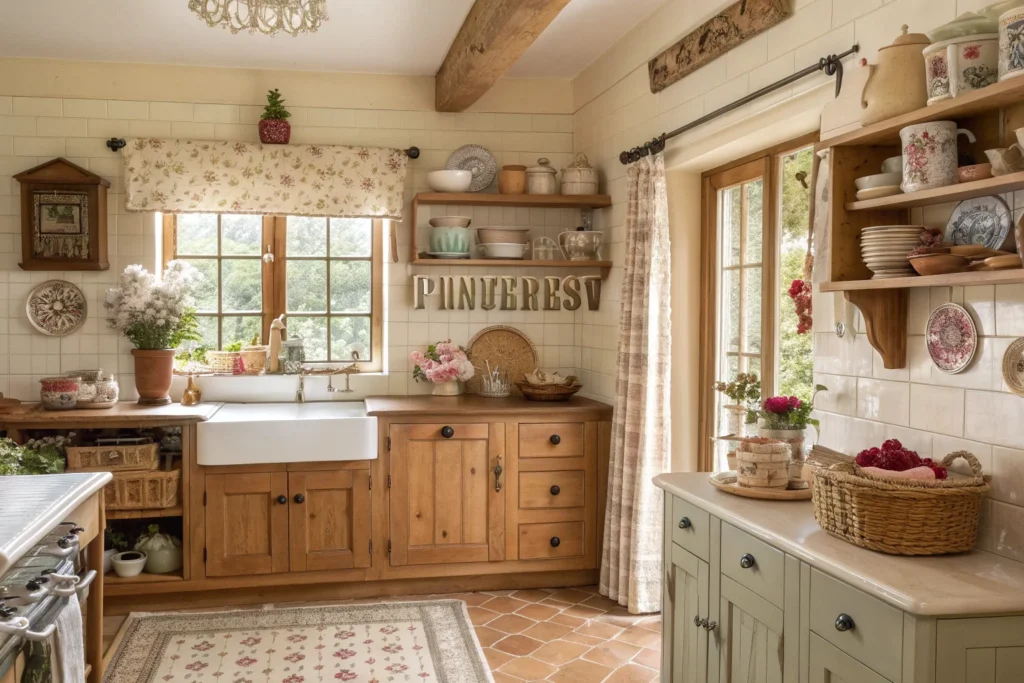
A well-designed cottage kitchen is one of the most warmly welcoming spaces in any home — a place where the smell of baking mingles with morning light through a small-paned window, where worn timber and painted cabinets tell the story of years of good use, and where function and beauty exist in cheerful, unpretentious harmony.
The cottage kitchen aesthetic draws from the best of country living — natural materials aged to perfection, handmade ceramics, open shelves crowded with well-used crockery, and a range or Aga at the heart of the room that seems to anchor the entire house around it. It is an aesthetic defined by warmth, character, and the sense that the kitchen has evolved organically over time rather than arrived fully formed from a showroom.
Whether you are designing a kitchen in a genuine country cottage, bringing rustic character to a suburban home, or simply craving the warmth and charm that only a cottage kitchen provides, these ideas cover every element — from cabinets and worktops to accessories and styling — to help you create the kitchen everyone gathers in.
List of 10 Best Cottage Kitchen Ideas
1 Classic Shaker Cabinets in a Heritage Paint Colour
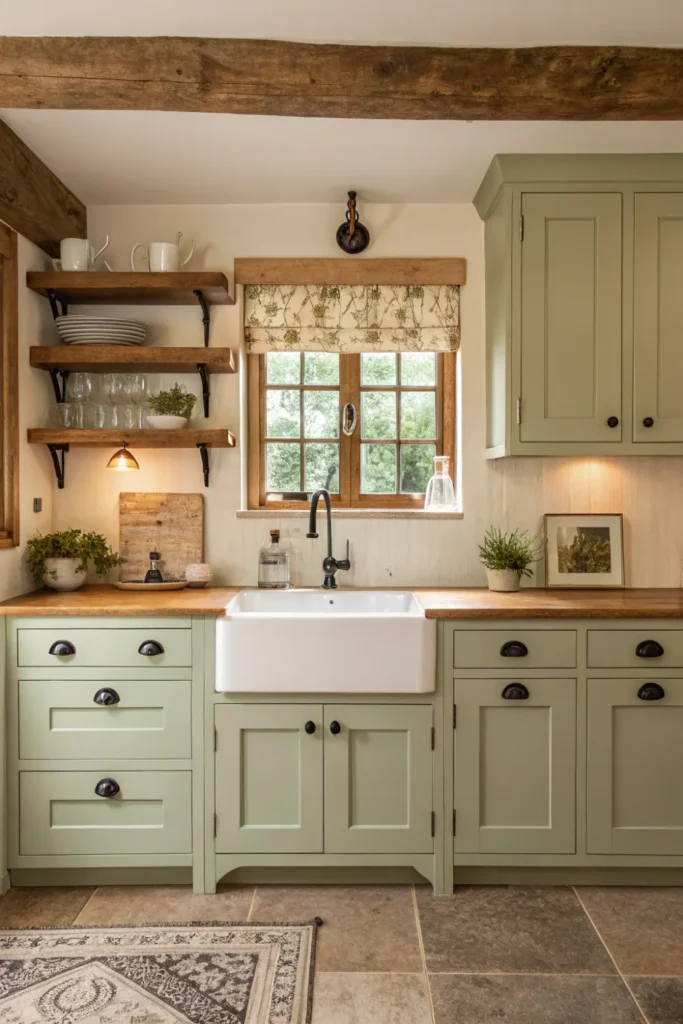
Shaker cabinets in a heritage paint colour — dusty sage, faded duck egg, warm cream, or a deep forest green — are the single most foundational cottage kitchen design decision, establishing the room’s character, palette, and period sensibility in one choice that every other element in the room can follow.
The flat recessed panel of a Shaker door is perfectly suited to the cottage kitchen aesthetic because its honest, unfussy geometry references the craft tradition of the original Shaker movement — a tradition that valued utility, quality of material, and the beauty of honest construction above ornament or excess.
Mix your Shaker cabinet colour between uppers and lowers for a more characterful cottage kitchen — a slightly deeper shade on the lower cabinets and a lighter complementary tone on the uppers, or all-colour lowers with cream uppers, gives the kitchen a two-tone quality that reads as evolved over time rather than installed in a single day.
2 Belfast or Butler Sink as the Kitchen’s Heart
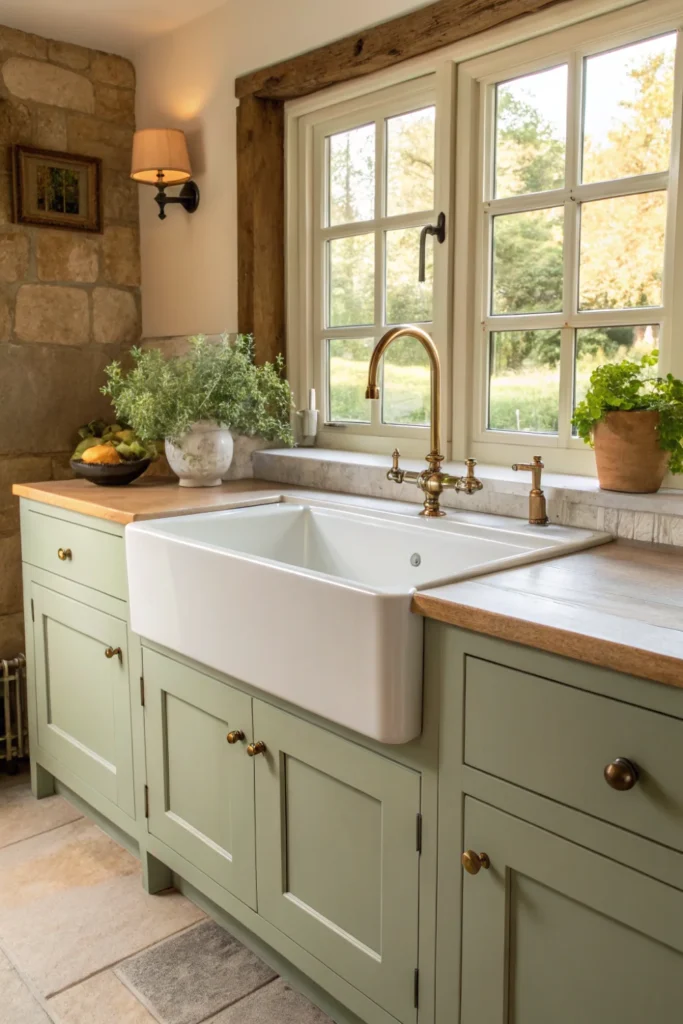
A deep Belfast or butler sink — a large, heavy-duty ceramic basin with an apron front, originally designed for the working kitchens of Victorian houses — is one of the most characteristically cottage kitchen fixtures available, instantly communicating the unpretentious hardworking warmth that defines the aesthetic.
Beyond its symbolic and visual role, the Belfast sink is genuinely superior to standard kitchen sinks for cottage kitchen tasks — the single deep bowl accommodates large pots, roasting trays, and flower bucket filling far better than shallow double-bowl alternatives, making it as practical as it is beautiful.
Pair a Belfast sink with a traditional bridge mixer tap rather than a standard single-hole mixer — the period-appropriate bridge tap form, with its two separate hot and cold risers joined by a spout bridge, complements the Belfast sink and adds an additional layer of heritage character to the cottage kitchen without sacrificing the practicality of a mixer tap.
3 Exposed Wooden Ceiling Beams for Instant Rustic Warmth
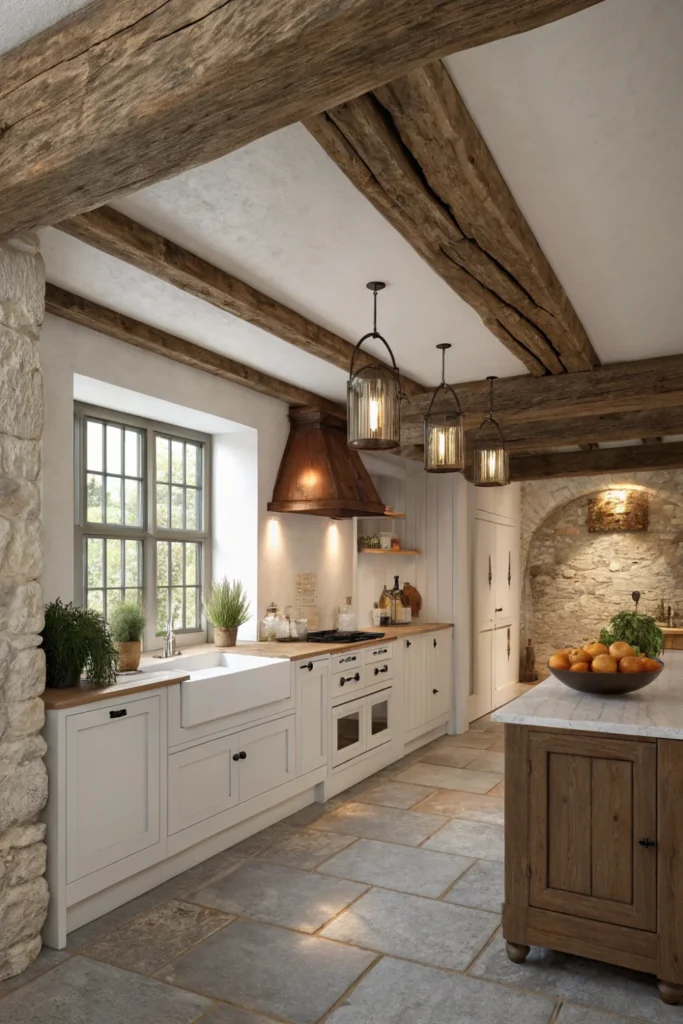
Exposed wooden ceiling beams are the architectural signature of a genuinely charming cottage kitchen — they add structural character from above, frame the room with warm organic material, and contribute the sense of age and permanence that no paint colour, tile, or furniture arrangement can replicate when the ceiling above is flat and modern.
In a cottage kitchen, beams work best when left in their natural state — lightly sanded, perhaps oiled, but never heavily varnished or painted in a uniform colour that removes the variation of grain and weathering that gives them their visual value. The knots, cracks, and tonal variation of raw or naturally finished timber are the features, not the flaws.
If your cottage kitchen ceiling has no original beams, hollow faux beam wraps in real reclaimed wood veneer install in an afternoon and are genuinely indistinguishable from structural beams at ceiling height — they are a widely used and entirely legitimate cottage kitchen design shortcut that professionals use without hesitation.
4 Open Shelving Displaying Vintage Crockery and Jars
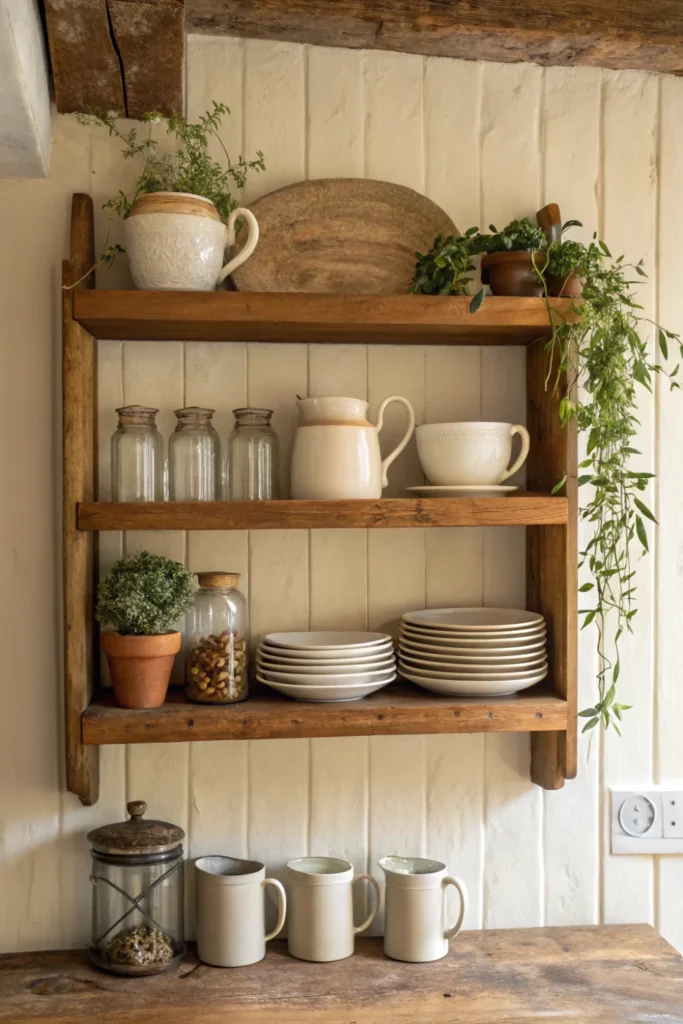
Open wooden shelves displaying a mix of vintage and everyday crockery — stacked white plates, mismatched mugs, glass storage jars of dry goods, and a few well-chosen decorative pieces — are one of the most visually characteristic cottage kitchen elements, communicating the lived-in, collected-over-time quality that flat-fronted cabinets with concealed contents can never provide.
The styling of cottage kitchen open shelves is deliberately imperfect and abundant — not the spare, minimal arrangement of a contemporary kitchen, but a generous, layered display that looks as though it has accumulated naturally through years of use and the addition of favourite pieces found at markets, in charity shops, and received as gifts.
Use shelves of varying depths in a cottage kitchen open display — a deeper lower shelf for everyday stacked plates and bowls, a medium shelf for mugs and glasses, and a shallow upper shelf for decorative pieces. The varied depths make the shelves look like they were fitted over time rather than installed in a single project, which is exactly the quality the cottage kitchen aesthetic requires.
5 Range Cooker or Aga as the Cottage Kitchen Centrepiece
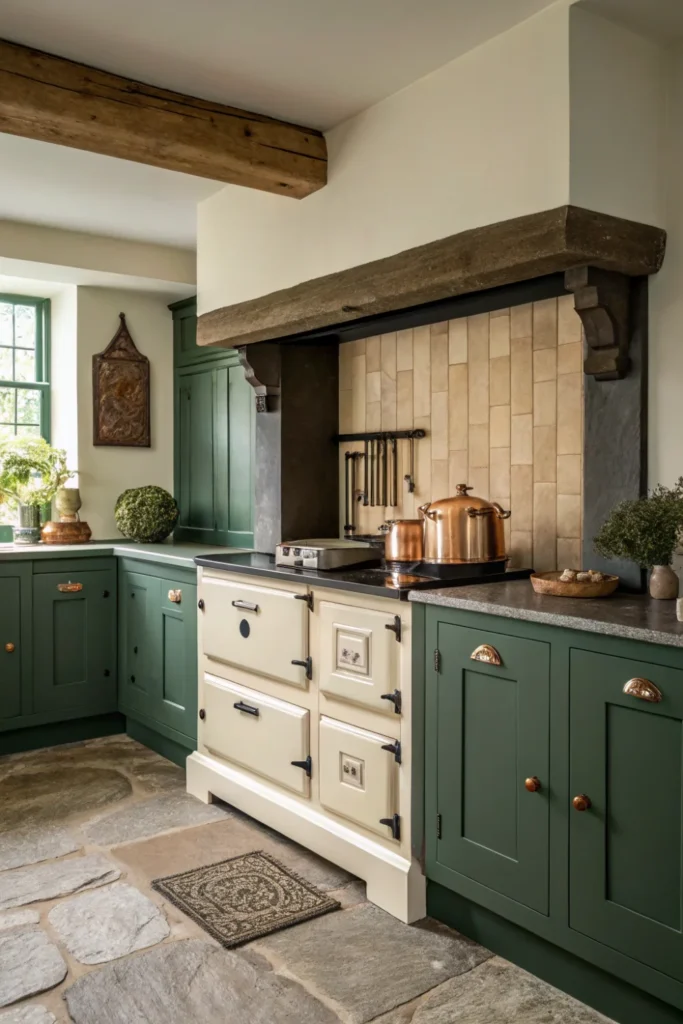
A range cooker or traditional Aga is the heart of a cottage kitchen in the most literal sense — a large, warm, always-on cooking range that heats the room, dries the tea towels, and draws the family toward it in the way that a fireplace draws a living room together. No other single appliance has the same power to establish the cottage kitchen character.
Even where a full Aga is beyond budget or unsuitable for a rental property, a range-style cooker — a freestanding dual-fuel or all-gas range in cream, navy, or hunter green — delivers most of the cottage kitchen visual effect at a fraction of the cost, particularly when framed by a chimney breast or a deep recessed alcove that gives it architectural presence.
The range cooker’s relationship with the rest of the cottage kitchen design should be one of quiet dominance — it anchors the cooker wall, and every other decision in the room should acknowledge and complement rather than compete with its substantial presence.
Choose a range cooker colour that differs from your cabinet colour rather than matching it exactly — a cream range in a sage green kitchen, or a deep blue range in a cream kitchen, creates the layered, collected quality of a cottage kitchen that has evolved over time, while a perfectly matched range looks like a single coordinated purchase that undermines the organic character of the aesthetic.
6 Tongue-and-Groove Wall Panelling Below Dado Height
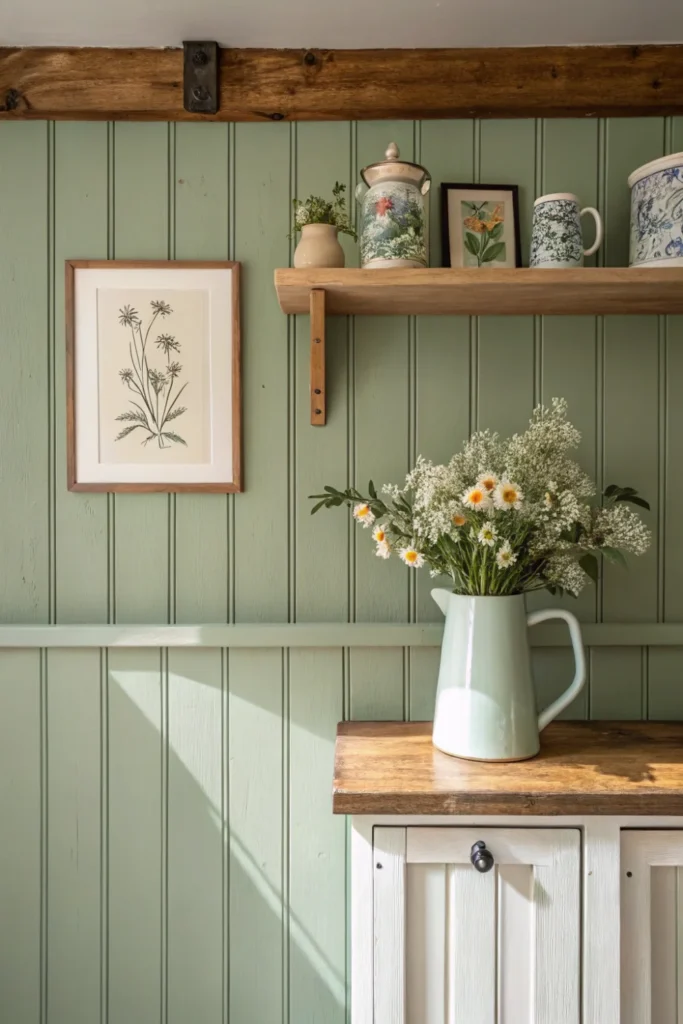
Tongue-and-groove or shiplap wall panelling below dado height is one of the most characteristic and practically effective cottage kitchen wall treatments — it adds the texture, rhythm, and period character of traditional joinery to the lower walls while providing a surface that is far more resistant to kitchen splashes, bumps, and chair-back marks than painted plaster alone.
Painted in the same colour as the lower cabinets or in a complementary shade, tongue-and-groove panelling extends the cottage kitchen’s traditional character from the cabinets onto the walls themselves, creating the sense that the whole kitchen has been fitted by a local carpenter over generations rather than installed by a kitchen company in a single project.
Install tongue-and-groove panelling slightly above rather than exactly at standard dado height — 120–130cm from the floor rather than the typical 90–100cm. The taller panel proportion suits the generous scale of a cottage kitchen and prevents the room from feeling divided into equal horizontal bands that can make the aesthetic look formulaic.
7 Butcher Block or Wooden Worktop for Natural Warmth
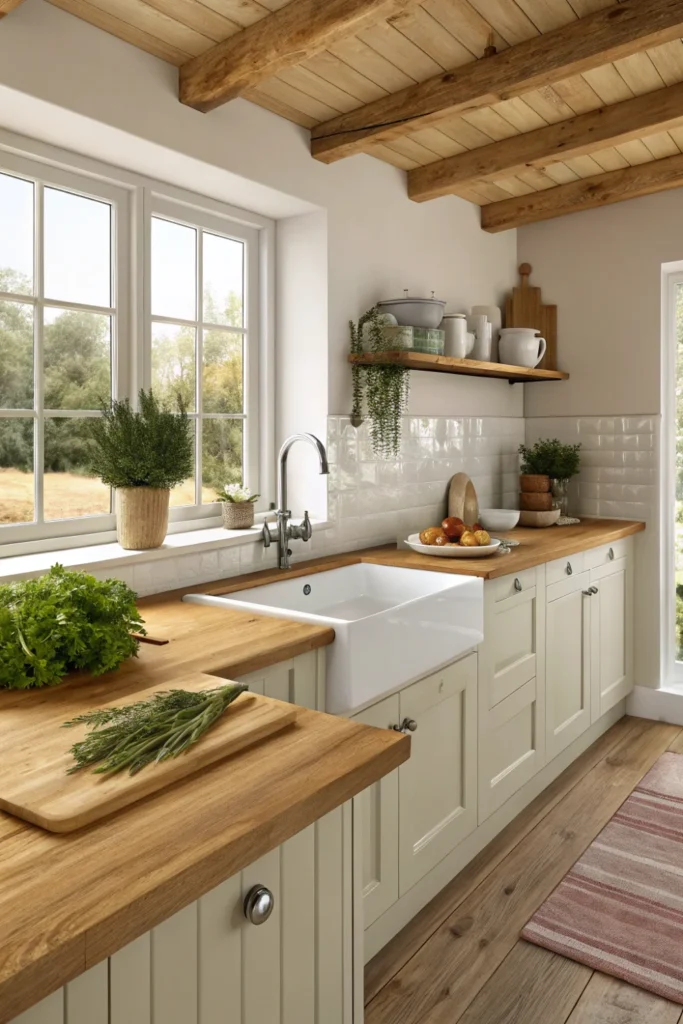
A butcher block or solid wood worktop — in oak, walnut, maple, or beech — is the most warmly organic cottage kitchen surface available, bringing the natural grain, variable toning, and honest imperfection of real timber to the kitchen’s most used horizontal surface and establishing a connection to natural material that stone and composite worktops, however beautiful, cannot replicate in this context.
Wood worktops also age with extraordinary character in a cottage kitchen — the marks of daily use, the oil darkening around the sink, the knife marks around the chopping area — each imperfection becomes part of the surface’s story in a way that is the absolute antithesis of the pristine uniformity of manufactured alternatives. The worktop that looks worse with age is wrong; the worktop that looks better with age is right.
Oil a new wood worktop six times in the first six weeks of installation — one coat per week — before reducing to a monthly maintenance oiling. The repeated early saturation of the timber seals the grain properly and builds the kind of deep, warm surface patina that makes an aged wooden cottage kitchen worktop one of the most beautiful surfaces in any home.
8 Handmade Ceramic Tiles for the Splashback
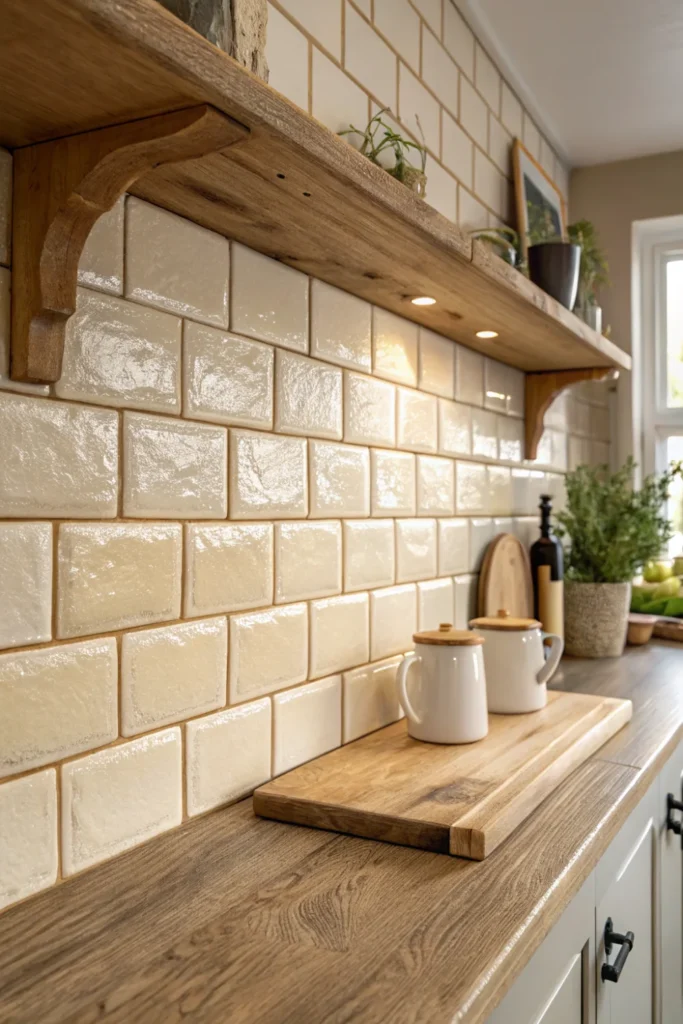
Handmade ceramic tiles — in a warm white, cream, or gently coloured glaze with the characteristic slight surface variation of hand-firing — are the perfect cottage kitchen splashback material, adding the artisanal quality, subtle imperfection, and visual warmth that machine-made tiles, however well-crafted, cannot replicate.
In a cottage kitchen, the splashback tile should feel like something that could have been purchased locally, fired by a nearby craftsperson, and installed over the course of an afternoon — which is essentially the authentic origin story of the handmade tiles used in country kitchens before mass production made factory tiles ubiquitous. That sense of local, human craft is the quality the material communicates today.
Lay handmade splashback tiles in a simple horizontal brick bond rather than a complex pattern — the character of hand-fired ceramics is intrinsic to the material itself, and a complex tile layout pattern competes with rather than complements that inherent character. The simpler the layout, the more the tile’s own quality speaks.
9 Freestanding Dresser or Welsh Dresser for Storage Display
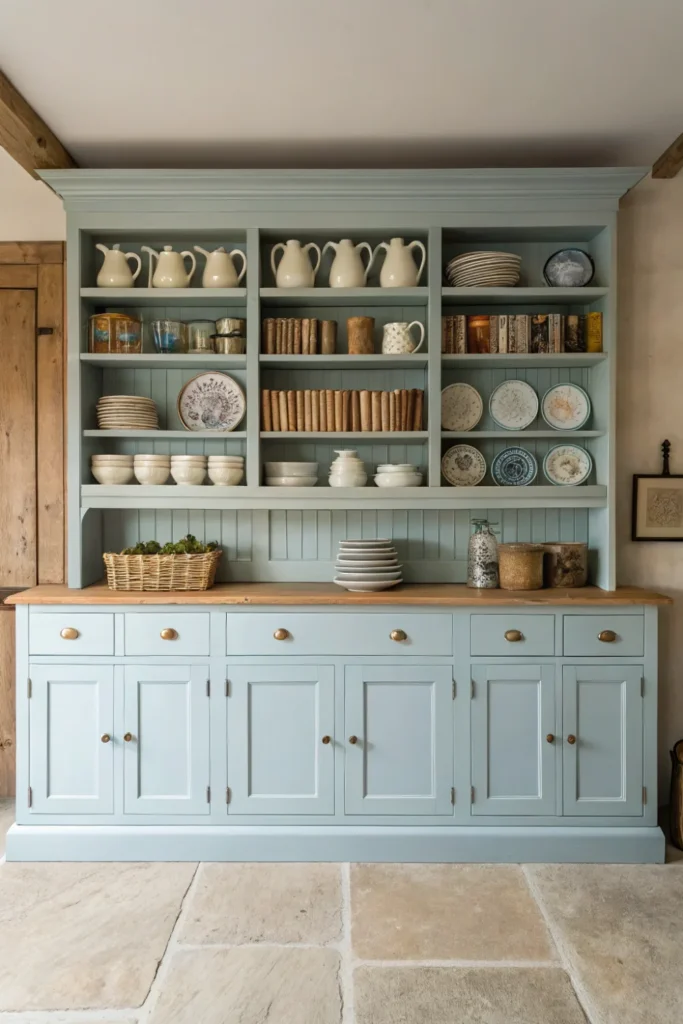
A freestanding kitchen dresser or Welsh dresser — a large unit combining open display shelving above with closed cabinet storage below — is one of the most beloved and distinctive cottage kitchen furniture pieces, providing a generous wall-anchoring storage display that simultaneously organises the kitchen and transforms it into a room that tells a visual story through its collected objects.
A dresser in a cottage kitchen accumulates the room’s personality over time — favourite plates, inherited cups, jugs brought back from travels, cookbooks propped open, a few fresh herbs in a small vase — creating a display that is both practically functional and profoundly personal in a way that built-in cabinetry, however beautiful, rarely achieves.
Position the dresser on the wall that is most visible from the kitchen entrance — it should be the first major visual element encountered when entering the room, establishing the cottage kitchen character immediately before any other detail is registered. A dresser that is tucked away in a corner loses much of its room-anchoring impact.
10 Vintage-Style Pendant Lights Over the Island or Table
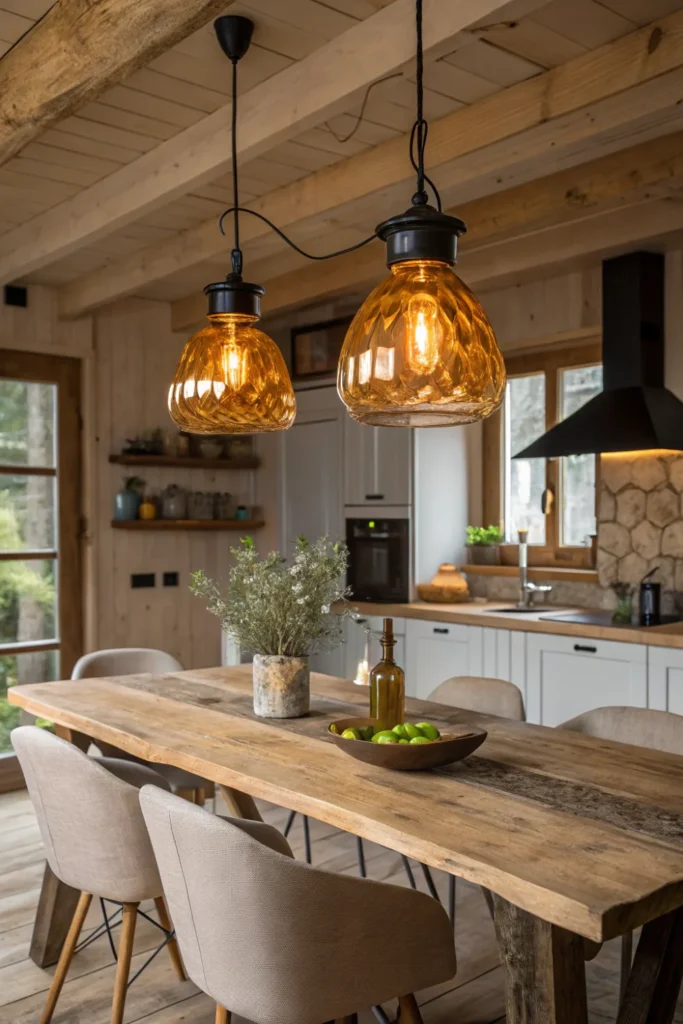
Vintage-inspired pendant lights — hand-blown glass shades, enamel schoolhouse pendants, wicker or rattan shades, or simple painted metal dome lights — hung above the kitchen island or dining table are one of the cottage kitchen design elements that most successfully straddle the line between period character and contemporary practicality, providing genuinely good task light while contributing a warm, storied visual quality from above.
In a cottage kitchen, pendant lights should feel as though they might have been found in an antique shop, inherited, or sourced from a specialist reclamation yard — not manufactured yesterday in a style designed to evoke the feeling of having been found somewhere interesting. The difference between these two sources of vintage-style lighting is subtle but invariably legible.
Hang cottage kitchen pendants slightly lower than you instinctively think is right — a pendant that seems “too low” at 65–70cm above the table surface creates the intimate, pool-of-light warmth that defines good cottage kitchen evening atmosphere, while a pendant hung high enough to not obscure sightlines provides neither good task light nor the warm ambience the aesthetic requires.
Why Cottage Kitchen Ideas Are Worth the Investment
Investing in a genuine cottage kitchen — built on quality natural materials, honest craftsmanship, and considered period character — delivers a room that improves with every year of use, developing the patina, warmth, and accumulated character that make a kitchen genuinely irreplaceable rather than merely functional.
The social and emotional return on a well-designed cottage kitchen is equally significant — the warmth, generosity, and welcoming quality of the cottage kitchen aesthetic consistently makes it the room that draws people in, where gatherings happen naturally, and where the best conversations take place. A kitchen that people want to sit in is worth every penny of additional investment over one that merely processes food.
From a property value perspective, a cottage kitchen executed with quality materials — a Belfast sink, solid wood worktops, a range cooker, and real stone floors — consistently adds significant value to country and suburban properties, commanding a premium that reflects the room’s scarcity relative to the standard contemporary kitchen that dominates the market.
Things to Consider Before Choosing Cottage Kitchen Ideas
Before committing to a cottage kitchen design direction, consider the architecture of your home honestly — the cottage kitchen aesthetic reads most naturally in pre-1930s properties where original features like original fireplaces, low ceilings, small-paned windows, and irregular walls are already present. In a modern open-plan new-build with floor-to-ceiling glazing and double-height ceilings, the same cottage kitchen choices can feel incongruous rather than charming without significant architectural intervention.
Think carefully about the maintenance reality of natural materials in a cottage kitchen — wooden worktops require regular oiling, stone floors need sealing and are cold underfoot in winter, copper pans need polishing and re-tinning over time, and open shelving with displayed crockery accumulates grease and dust faster than closed cabinets in any cooking environment. The authentic cottage kitchen is one that is genuinely cared for; the decision to adopt the aesthetic is also a decision to commit to its material maintenance.
Plan storage generously before finalising any cottage kitchen design — the aesthetic’s emphasis on open shelving, freestanding furniture, and visible display means that the room needs considerably more storage than a contemporary fitted kitchen of the same size to prevent the “lived-in” quality from tipping into genuine clutter. A cottage kitchen with insufficient hidden storage accumulates visual chaos; one with enough concealed space behind the visible display remains charming and composed.
Comparison Table of Cottage Kitchen Ideas
| Design Idea | Cost Range | Character Impact | DIY Friendly | Maintenance | Longevity |
|---|---|---|---|---|---|
| Shaker Cabinets in Heritage Colour | $1,500–$12,000 | Very High | Partial | Low | 15–20+ years |
| Belfast / Butler Sink | $200–$800 | Very High | No | Low | Permanent |
| Exposed Wooden Ceiling Beams | $300–$4,000 | Very High | Partial | Very Low | Permanent |
| Open Shelving with Crockery | $100–$800 | High | Yes | Medium | Permanent |
| Range Cooker or Aga | $1,500–$15,000 | Very High | No | Low–Medium | 20–30+ years |
| Tongue-and-Groove Panelling | $150–$1,500 | High | Yes | Low | Permanent |
| Butcher Block Worktop | $400–$2,500 | High | Partial | Medium | 20+ years |
| Handmade Ceramic Splashback | $300–$2,000 | High | Partial | Low | Permanent |
| Freestanding Dresser | $200–$2,500 | Very High | Yes | Low | Decades |
| Vintage Pendant Lights | $80–$600 | High | Partial | Very Low | 10–20+ years |
| Windowsill Herb Garden | $15–$60 | Medium–High | Yes | Medium | Ongoing |
| Stone / Flagstone Floor | $800–$6,000 | Very High | No | Low–Medium | Permanent |
| Copper and Cast Iron Display | $100–$1,000 | High | Yes | Medium | Decades |
Recommended Products for Cottage Kitchen Ideas
Rangemaster Classic 90 Dual Fuel Range Cooker ~$1,800–$3,200
Rangemaster’s Classic 90 is one of the most authentic-looking and reliably performing range cookers for a cottage kitchen at an accessible price point — its generous 90cm wide format provides a full five-burner gas hob, a large main oven, and a separate grill in a period-appropriate freestanding profile that suits a cottage kitchen alcove or chimney breast position beautifully. Available in cream, hunter green, slate blue, and claret among other heritage colours, each finish is powder-coated for durability and suits the cottage kitchen palette with a degree of period accuracy that flat-black contemporary ranges entirely lack.
Armitage Shanks Contour 21 Belfast Sink ~$250–$450
Armitage Shanks’ Contour 21 Belfast sink is one of the most faithfully proportioned and best-value authentic Belfast sinks for a cottage kitchen — a deep, heavy vitreous china single-bowl sink with the traditional high-back front panel and substantial rim profile that defines the genuine article rather than its shallower imitations. The high-fired vitreous china surface is resistant to staining and chipping, the dimensions suit standard under-counter vanity unit widths, and the quality of the ceramic communicates a permanence and craftsmanship that makes every cottage kitchen it inhabits feel more genuinely rooted in tradition.
Neptune Chichester Kitchen in Scullery White ~$8,000–$25,000 full kitchen
Neptune’s Chichester kitchen range in Scullery White is widely regarded as the benchmark for a properly executed bespoke cottage kitchen — hand-painted solid wood Shaker doors, dovetail-jointed drawer boxes, period-accurate moulding profiles, and a finish quality that is immediately distinguishable from flat-pack Shaker imitations. The Scullery White colourway — a warm, gently aged white that reads as cream in warm light — is one of the most perfectly calibrated cottage kitchen cabinet colours available, and the Chichester’s traditional freestanding-style feet and inframe door construction give each cabinet the quality of a piece of furniture rather than a fitted unit.
Frequently Asked Questions About Cottage Kitchen Ideas
What colours work best for a cottage kitchen?
The most authentically cottage kitchen cabinet and wall colours are those drawn from the traditional British paint heritage — sage green, duck egg blue, warm cream, off-white, dusty rose, and deep forest green are the colours most consistently associated with the aesthetic and most reliably beautiful in a country kitchen context. These are colours with grey or earthy undertones rather than the clean primaries of a contemporary kitchen, and that subtle complexity is what makes them feel genuinely period-appropriate rather than fashion-forward.
The best single colour investment for a cottage kitchen is a quality heritage paint range — Farrow & Ball, Little Greene, and Edward Bulmer Natural Paint all produce colours with the pigment depth, tonal complexity, and chalky finish that standard emulsion cannot match, and in a cottage kitchen where the paint colour is the room’s primary visual statement, that quality difference is immediately and continuously visible.
Can I create a cottage kitchen in a modern home?
Yes — a cottage kitchen can be successfully created in any home provided the design choices are made with enough commitment and consistency to establish the aesthetic’s character throughout the room rather than merely suggesting it with a few token period references. The key is going deep rather than broad — one genuinely excellent cottage kitchen element, such as a real Belfast sink in a beautiful cabinet, a quality range cooker, or a freestanding painted dresser, has far more character impact than a room full of half-measures that each partially reference the aesthetic without fully committing to it.
In a contemporary open-plan home, zoning the cottage kitchen visually within the larger open space using a change of floor material (stone or terracotta tile in the kitchen zone, engineered wood in the living area), a lower ceiling treatment over the kitchen, or a bold paint colour on the kitchen walls helps establish the cottage kitchen’s distinct character without requiring architectural changes that fundamentally alter the open-plan layout.
Is a cottage kitchen practical for everyday family use?
A well-designed cottage kitchen is one of the most practical daily-use kitchen styles available — the Belfast sink handles larger washing-up tasks than standard sinks, the range cooker provides both capacity and the kind of ambient warmth that makes the kitchen a year-round gathering space, the open shelves put daily crockery within immediate reach without opening cabinet doors, and the durable natural materials — stone floors, wood worktops, painted wood cabinets — handle the knocks and scuffs of daily family life with far more forgiving grace than lacquered contemporary finishes.
The one practical consideration specific to cottage kitchen design is storage planning — the aesthetic’s emphasis on open display means that inadequate hidden storage results in visible clutter very quickly. Plan for at least 20–30% more closed storage than you think you need before finalising the cottage kitchen layout, ensuring that the open shelves and display surfaces remain genuinely curated rather than becoming overflow storage for items that have nowhere else to go.
What hardware finish suits a cottage kitchen best?
Oil-rubbed bronze, aged brass, and cup-pull hardware in antique bronze are the most authentically cottage kitchen hardware finishes — their warm, darkened tones complement the painted cabinet colours of the aesthetic and suggest the accumulated patina of hardware that has been in a kitchen for decades rather than installed last month. These finishes are also notably forgiving of fingerprints and minor marks, which is a practical advantage in a style of kitchen that values the beauty of honest use.
Black iron and antique pewter are strong secondary choices for a cottage kitchen with a more rustic or farmhouse character, while unlacquered brass suits the warmer, more refined cottage kitchen styles where the yellow-gold developing patina of living brass complements cream cabinets and warm stone particularly beautifully. Avoid polished chrome and brushed nickel in a cottage kitchen — both finishes belong to a different design era and read as anachronistic intrusions in a room built on period warmth and character.