
Your kitchen sink is one of the most used spots in your home. It’s where you wash veggies, rinse cups, clean up after meals, and deal with everything from quick snacks to big family dinners. When the sink works well, the whole kitchen feels easier to use. When it doesn’t, even small tasks start to feel annoying.
Today, kitchen sinks come in many styles and materials. You’ll see everything from farmhouse and undermount designs to stainless steel, fireclay, and composite options. Some are made for small kitchens, while others are built to handle big pots, baking trays, and busy cooking days.
Choosing the right kitchen sink is not just about how it looks. It’s about how you cook, how much space you have, and how you use your kitchen every day. This guide walks you through the best kitchen sink options and helps you pick one that actually fits your needs.
List of 13 Best Kitchen Sinks
1. Stainless Steel Undermount Double Bowl
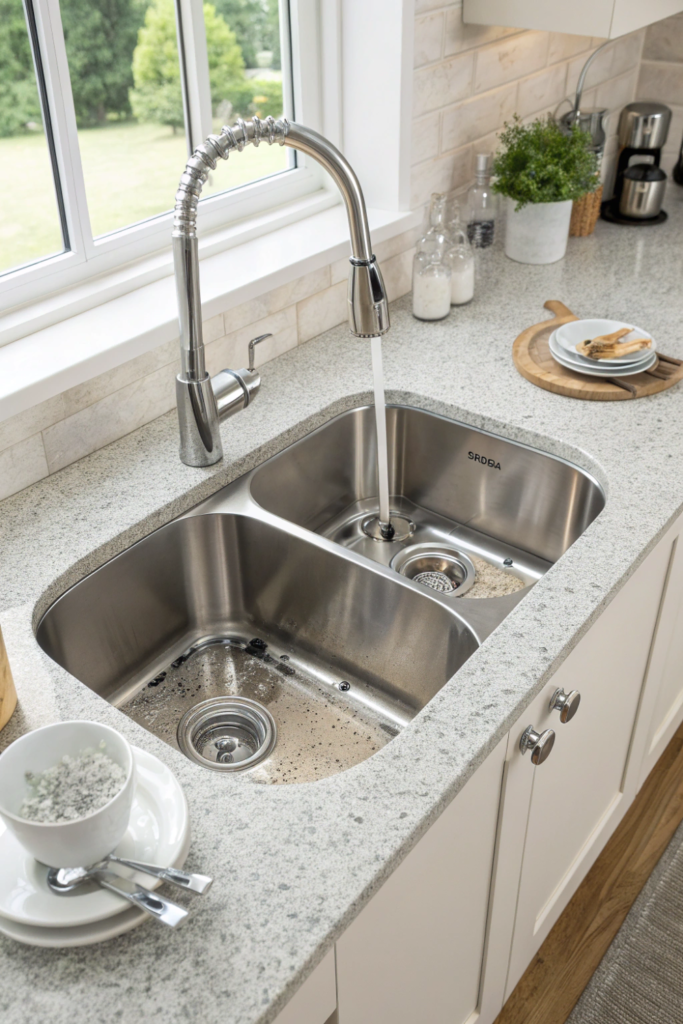
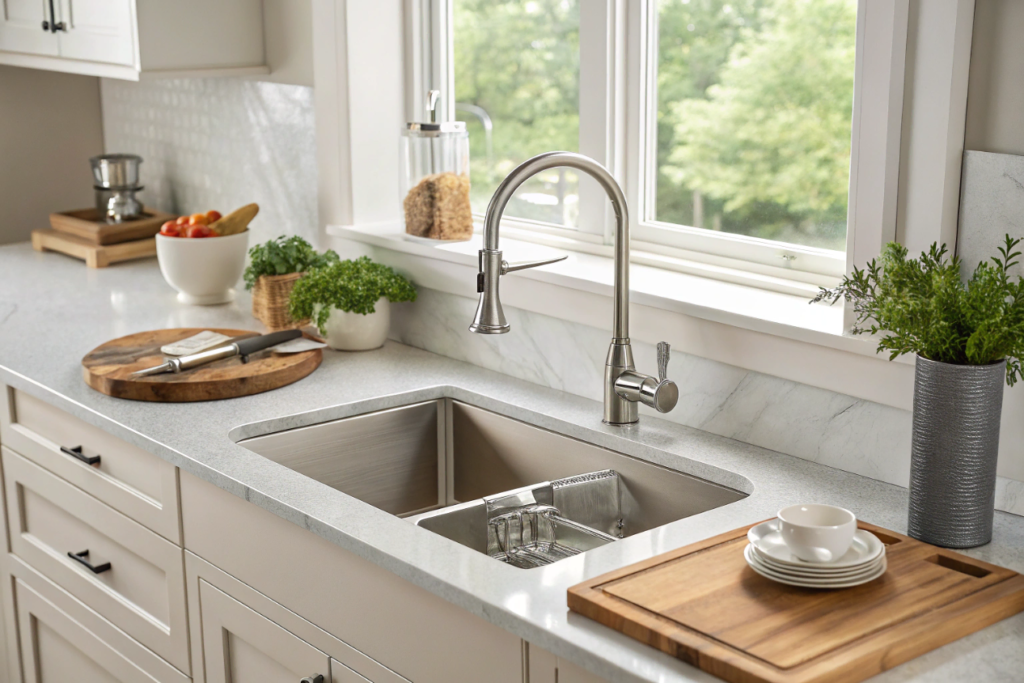
Stainless steel undermount sinks are the gold standard for modern kitchens, offering durability and a sleek appearance. The double-bowl configuration lets you multitask efficiently—wash dishes on one side while prepping food on the other.
These kitchen sink models feature sound-dampening pads that reduce noise from running water and clanking dishes. Most quality options use 16-18 gauge steel, providing excellent resistance to dents and scratches.
Installation sits below the countertop edge, creating a seamless look that makes wiping debris directly into the basin effortless.
Pro Tip: Choose 16-gauge steel over 18-gauge for better durability—the lower the gauge number, the thicker and more durable the steel.
2. Farmhouse Apron-Front Fireclay Sink
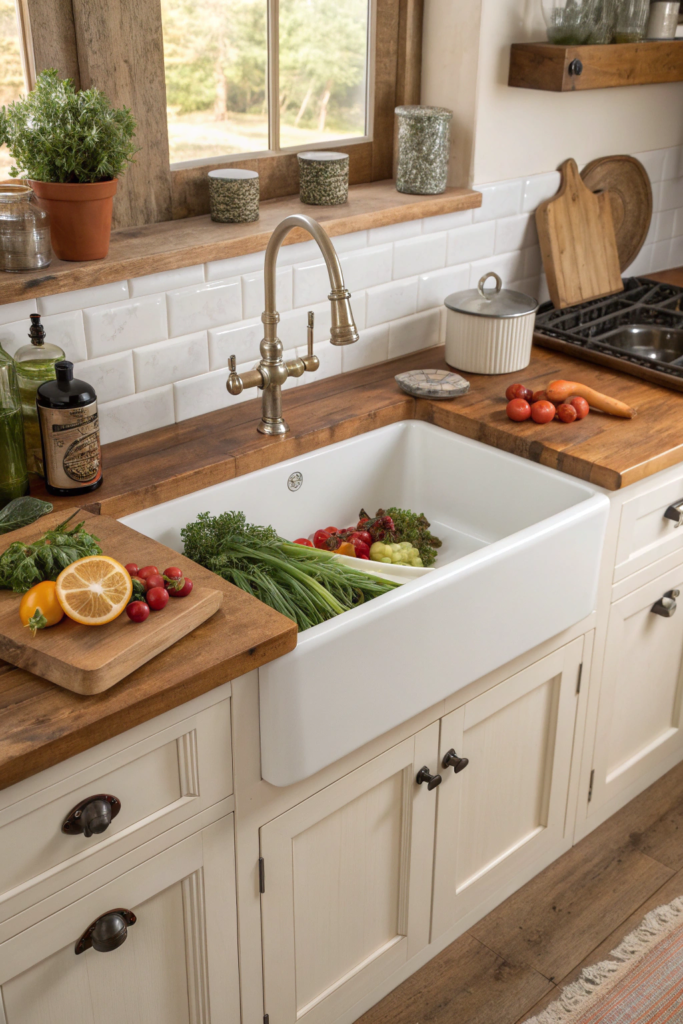
The farmhouse kitchen sink makes a bold design statement with its exposed front panel that extends past the countertop edge. Fireclay construction delivers exceptional durability and a smooth, glossy finish that resists staining and scratching.
These sinks feature deep basins (typically 9-10 inches) that accommodate large pots, baking sheets, and roasting pans with ease. The non-porous surface prevents bacteria growth and makes cleaning simple—just wipe with soap and water.
Pro Tip: Measure your cabinet width carefully—farmhouse sinks require at least 33-36 inches of cabinet space and may need custom support structures during installation.
3. Granite Composite Single Bowl
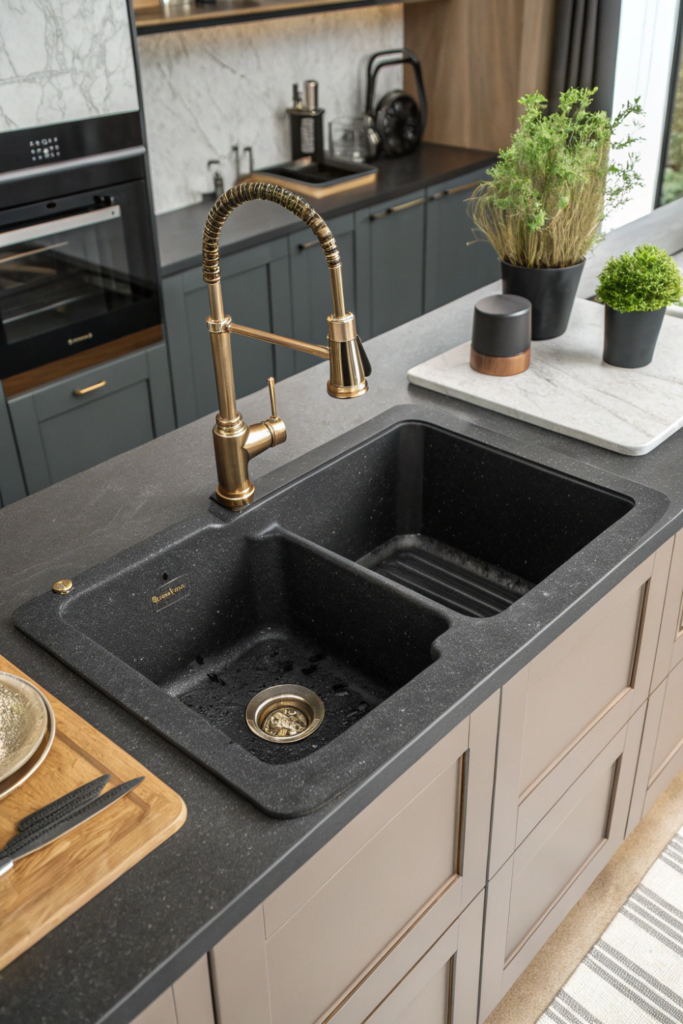
Granite composite kitchen sinks blend natural granite stone with acrylic resins, creating a material that’s 80% natural stone. This construction resists heat up to 535°F, handles dropped pots without chipping, and maintains its color without fading.
The single bowl design maximizes usable space, perfect for washing oversized cookware. Available in multiple colors including black, grey, beige, and brown, these sinks coordinate beautifully with various countertop materials.
Pro Tip: Apply mineral oil monthly to maintain the sink’s rich color and protective coating, especially in high-use households.
4. Cast Iron Enamel Drop-In Sink
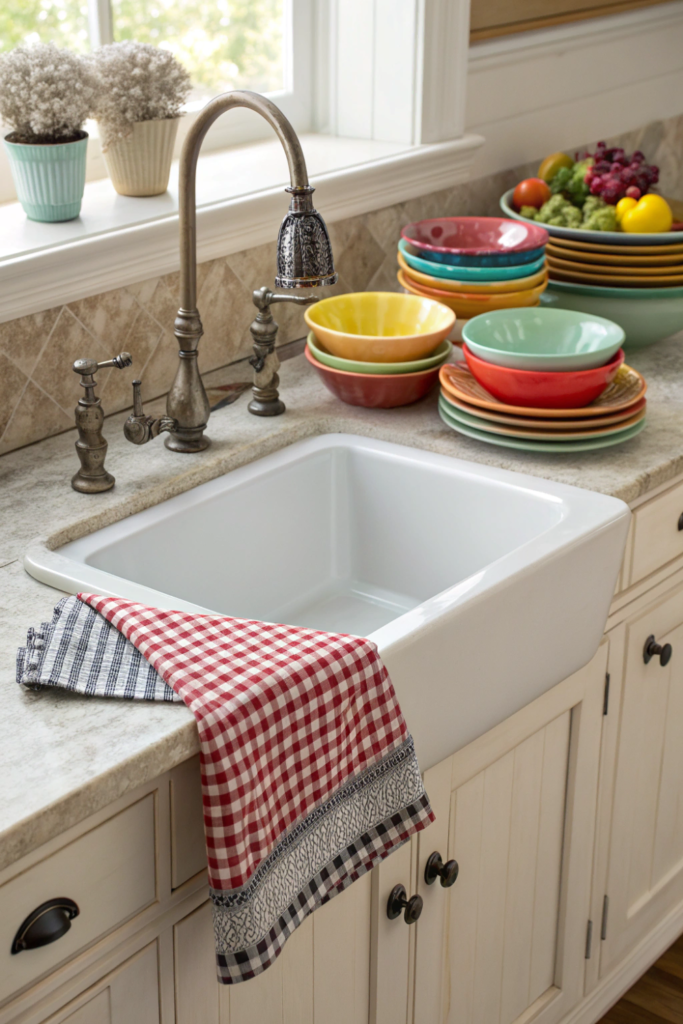
Cast iron kitchen sinks feature a porcelain enamel coating over heavy iron, delivering timeless appeal and incredible longevity. The drop-in installation style makes DIY installation straightforward—simply set the sink into a pre-cut countertop opening.
These sinks excel at noise reduction due to their substantial weight (often 100+ pounds). The enamel surface resists scratches and maintains its glossy finish for decades with proper care.
Color options extend beyond white to include almond, biscuit, black, and pastels, allowing coordination with any kitchen palette.
Pro Tip: Use rubber mats or sink grids to protect the enamel from heavy cookware—while durable, the coating can chip if impacted by cast iron pans dropped from height.
5. Copper Farmhouse Sink
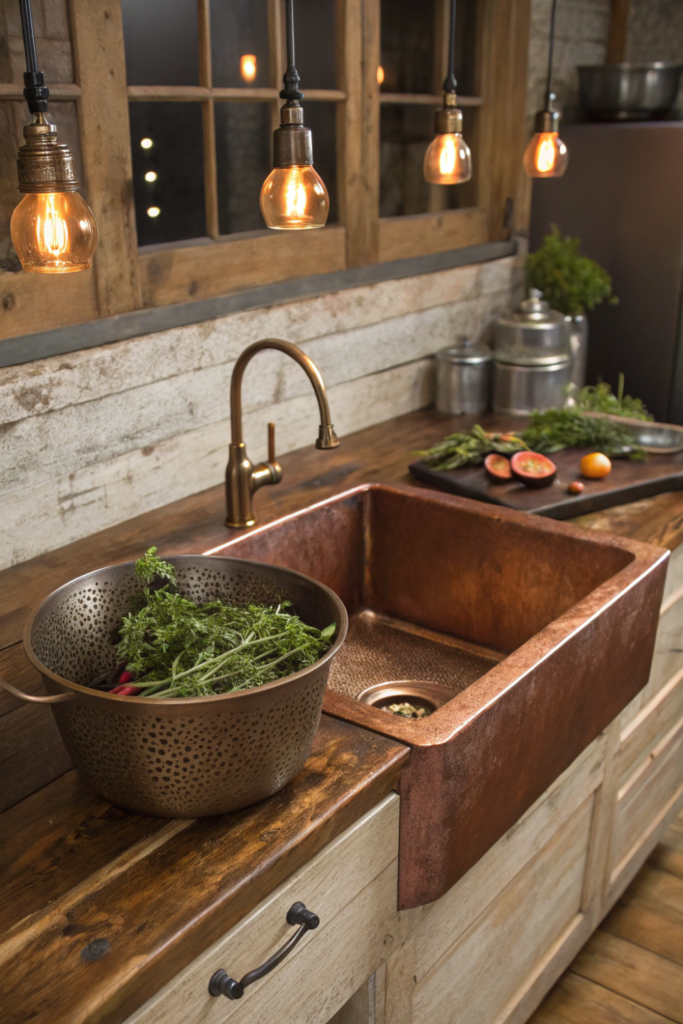
Copper kitchen sinks develop a unique patina over time, creating a living finish that grows more beautiful with age. The natural antimicrobial properties of copper kill 99.9% of bacteria within two hours of contact.
These artisan-crafted sinks feature hand-hammered textures that hide water spots and fingerprints effectively. Copper’s natural warmth complements both rustic and contemporary kitchen designs.
Pro Tip: Embrace the patina—don’t use harsh chemicals or abrasive cleaners that fight the natural aging process. Simply wash with mild soap and dry with a soft cloth.
6. Workstation Sink with Integrated Accessories
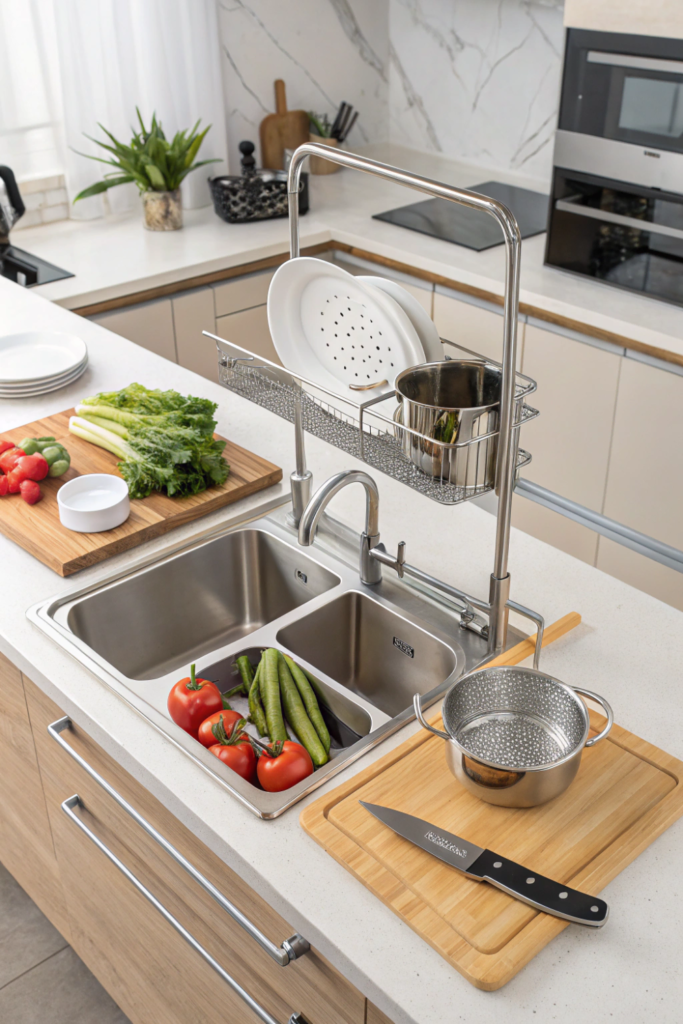
Workstation kitchen sinks transform your basin into a multi-functional prep station with built-in accessories like cutting boards, colanders, and drying racks. Rolling stainless steel grids sit at multiple heights within the basin, creating versatile work surfaces.
The ledge design accommodates accessories that slide along tracks, allowing you to customize your workspace. This innovation maximizes kitchen efficiency by eliminating countertop clutter.
Most models include undermount installation with commercial-grade stainless steel construction for durability.
Pro Tip: Invest in the complete accessory package from the manufacturer—custom-fit components work significantly better than generic alternatives.
7. Undermount Triple Bowl Sink
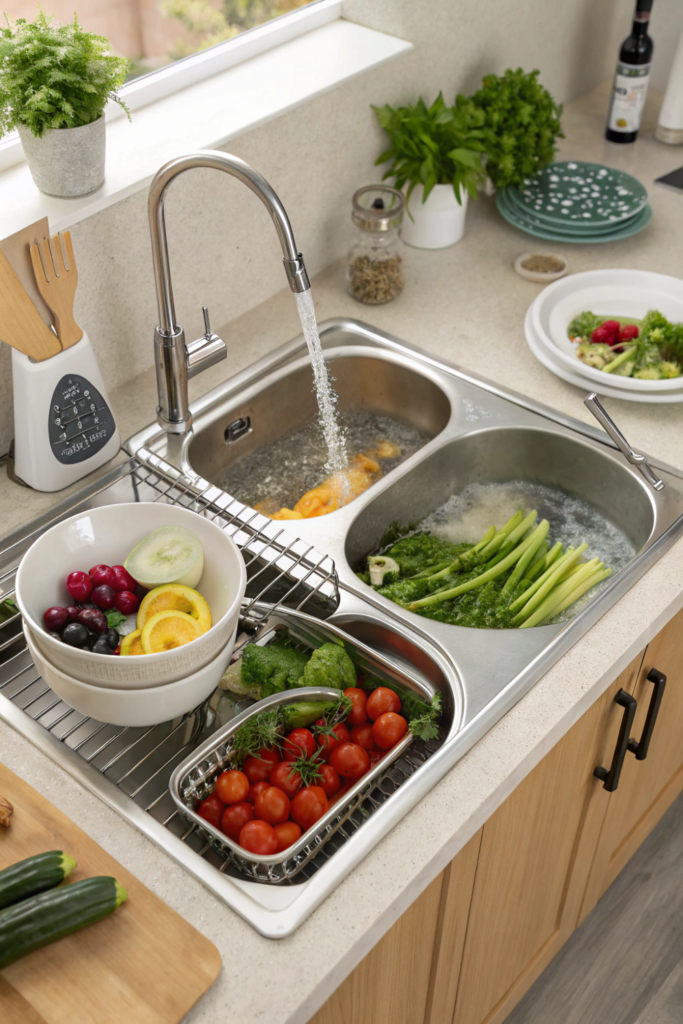
Triple bowl kitchen sinks provide dedicated spaces for washing, rinsing, and food prep or drying. The configuration typically features one large basin flanked by two smaller compartments, offering ultimate multitasking capability.
This design proves particularly valuable in busy households where multiple people cook simultaneously. The low-divide or equal-height basin walls let you slide large items between sections easily.
Pro Tip: Ensure your base cabinet is at least 48 inches wide—triple bowl sinks require substantial space and may necessitate custom cabinetry.
8. Black Stainless Steel Single Bowl
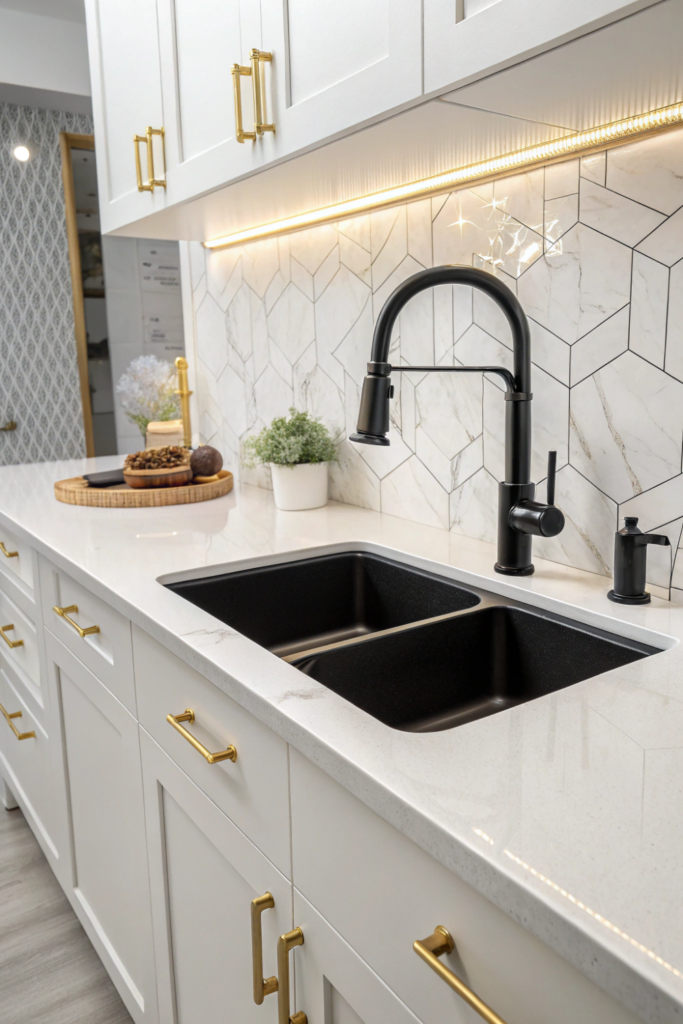
Black stainless steel kitchen sinks offer a dramatic alternative to traditional finishes with smudge-resistant coating that hides fingerprints and water spots. The PVD (Physical Vapor Deposition) finish is scratch-resistant and doesn’t fade over time.
This contemporary option coordinates beautifully with black or slate appliances and creates striking contrast against white or light countertops. The deep single bowl accommodates commercial-sized cookware with ease.
Pro Tip: Match your faucet finish precisely—use the same manufacturer’s black stainless line to ensure color consistency across fixtures.
9. Quartz Composite Double Bowl
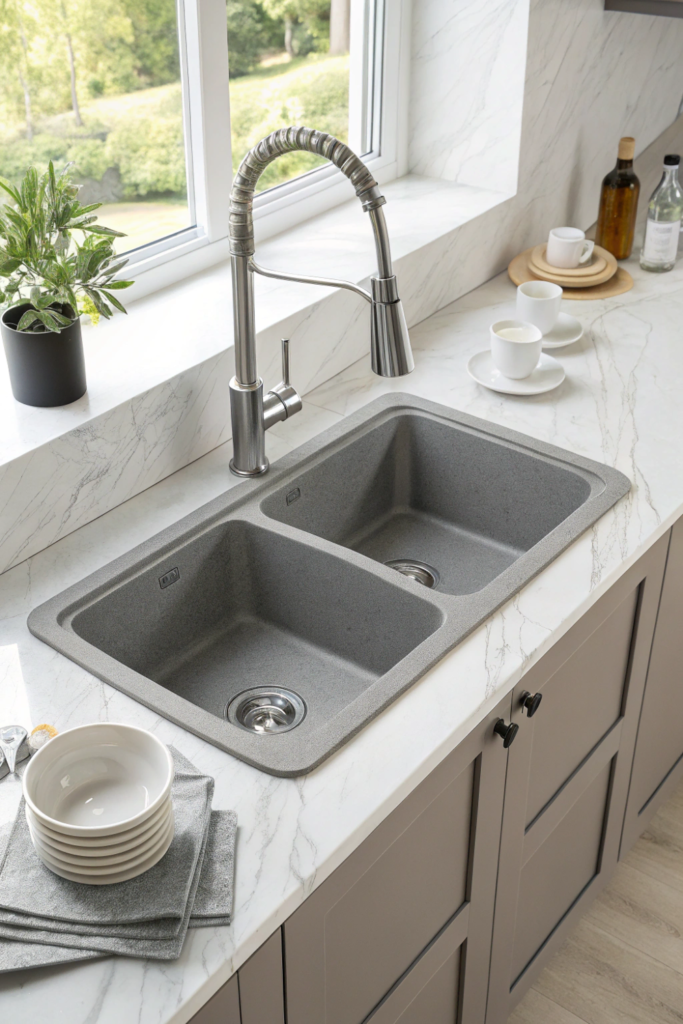
Quartz composite kitchen sinks blend natural quartz with acrylic resins, creating a material that’s harder than granite yet gentler on dropped dishes. The non-porous surface resists bacteria, stains, and odors without requiring sealing.
These sinks withstand temperatures up to 535°F and won’t fade even with constant sun exposure through kitchen windows. The double bowl configuration in various split ratios (60/40, 70/30, or 50/50) adapts to different workflow preferences.
Pro Tip: Choose darker colors for high-traffic kitchens—while all quartz composite sinks resist staining, darker shades camouflage any potential discoloration from hard water or minerals.
10. Topmount Stainless Steel with Low Divider
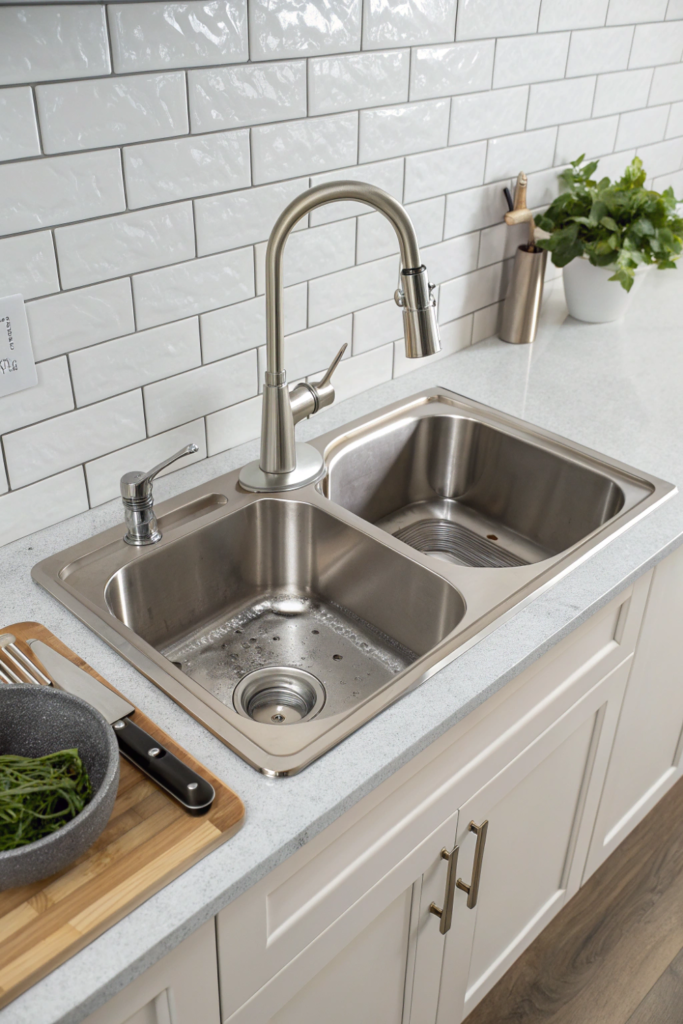
Low-divider kitchen sinks feature a partition that sits several inches below the sink rim, allowing you to slide large pans across both bowls easily. This design combines the benefits of single and double bowl configurations.
The topmount installation style (also called drop-in) makes replacement simple—the sink lip covers any countertop imperfections around the opening. Sound-dampening technology includes thick rubber pads and undercoating.
Pro Tip: The low divider works best when paired with a tall pull-down faucet that clears the center partition—measure carefully before purchasing your faucet.
11. Integrated Sink and Countertop
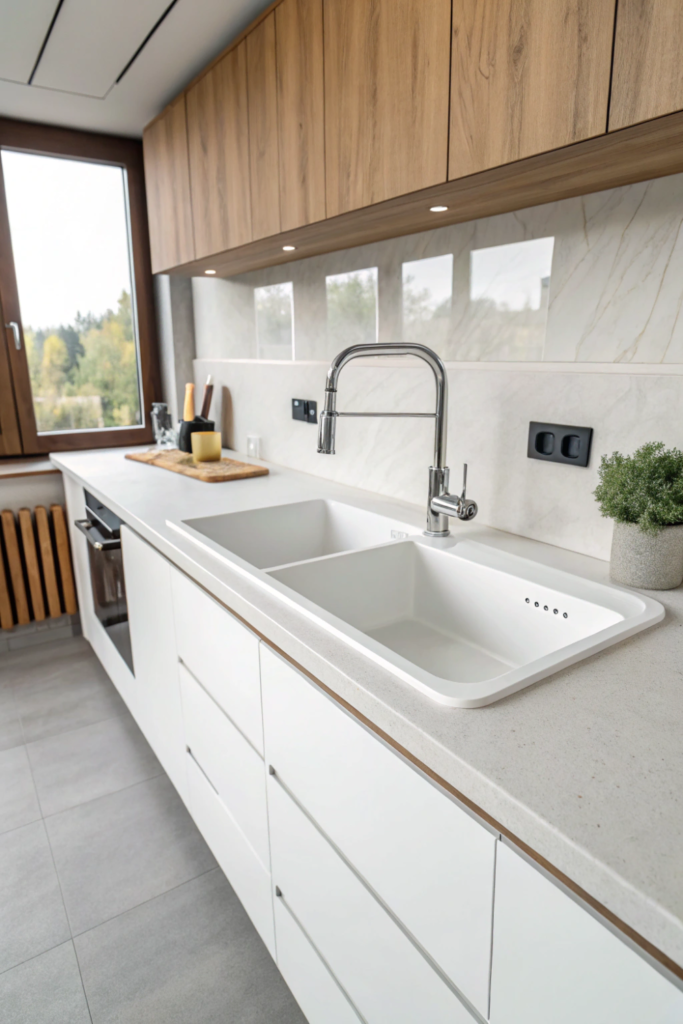
Integrated kitchen sink and countertop combinations create a seamless surface with no joints or seams where dirt can accumulate. Popular in solid surface materials like Corian or quartz, this design offers the easiest cleaning maintenance.
The custom fabrication allows any bowl depth, size, and configuration you desire. Integrated drainboards can be molded directly into the countertop surface.
Pro Tip: This option requires professional fabrication and installation but eliminates the rim-cleaning frustration forever—consider it if you’re doing a complete kitchen renovation.
12. Fireclay Single Basin with Drainboard
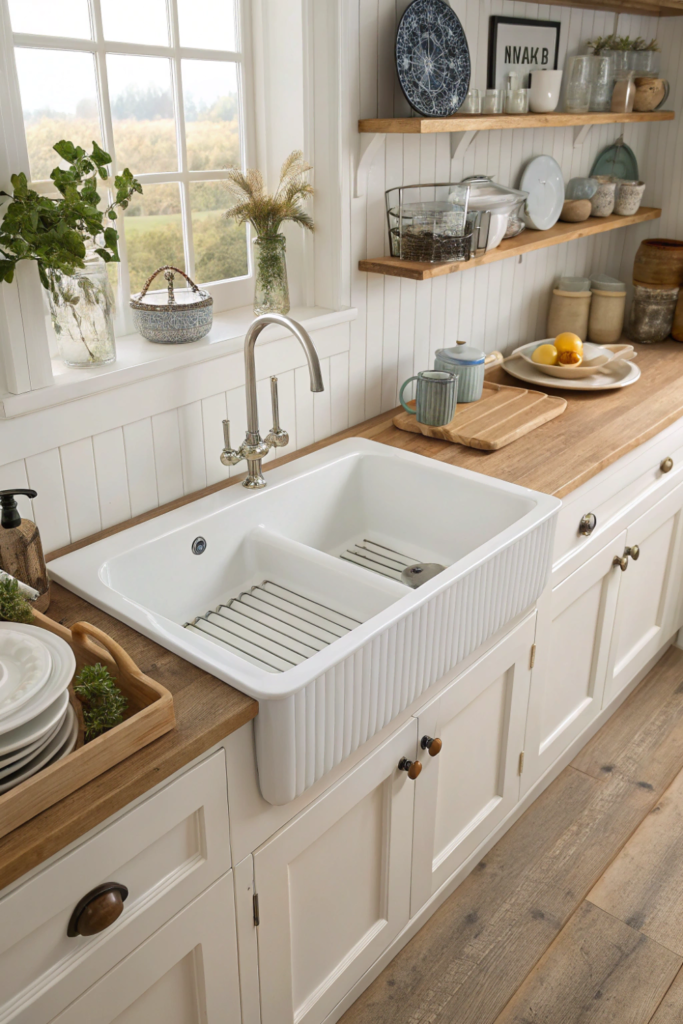
Fireclay kitchen sinks with integrated drainboards provide a dedicated drying area that channels water back into the basin. The drainboard’s ridged surface accommodates dishes, glassware, and cookware without additional drying racks.
These sinks maintain the durability and beauty of traditional fireclay while adding functionality. The glossy finish resists scratching and staining while developing minimal patina over decades.
Pro Tip: Position the drainboard on the same side as your dominant hand for efficient workflow—right-handed users typically prefer right-side drainboards.
13. Bar/Prep Sink with Grid and Cutting Board
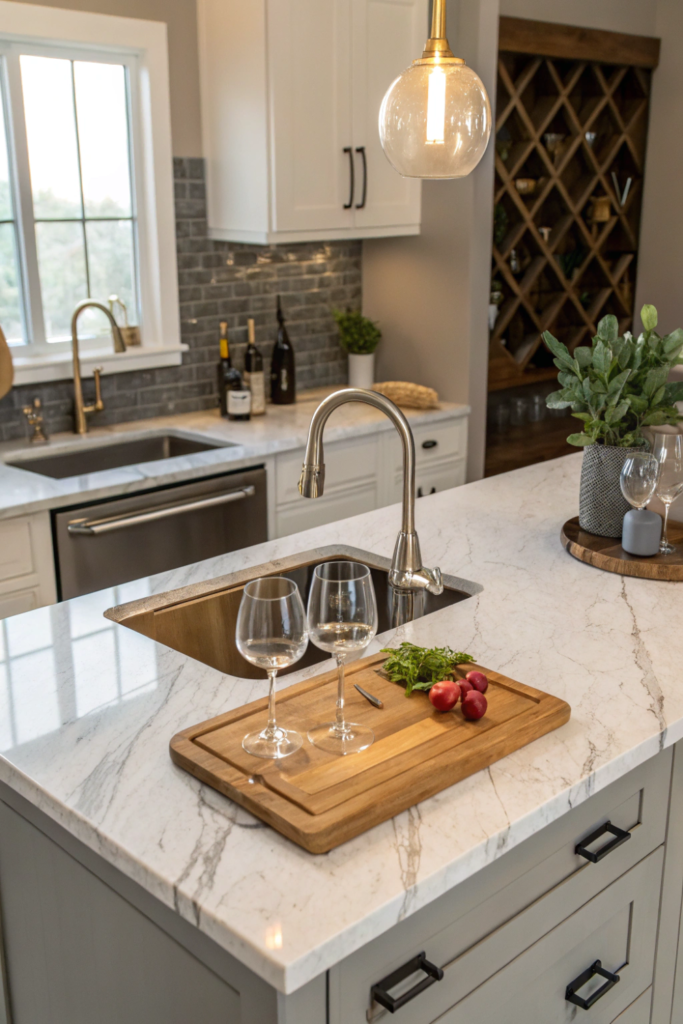
Bar or prep kitchen sinks measure 15-18 inches and serve as secondary workstations on kitchen islands or in butler’s pantries. The compact size handles quick tasks without occupying your main sink.
Quality models include matching accessories like bottom grids for dish protection and custom-fit cutting boards that convert the sink into extra prep space. Deep basin options (6-7 inches) accommodate small pots and mixing bowls.
Pro Tip: Install your prep sink at least 24 inches from your main sink to create distinct work zones—closer placement causes traffic jams during meal preparation.
Why Kitchen Sinks Are Worth the Investment
A quality kitchen sink lasts 15-30 years depending on material, making it one of the longest-lasting fixtures in your home. Premium materials like fireclay, cast iron, and thick-gauge stainless steel maintain their appearance and functionality through decades of daily use, eliminating the need for frequent replacements.
The right kitchen sink significantly improves your cooking efficiency and enjoyment. Features like deep bowls, low dividers, and integrated accessories reduce prep time, minimize countertop mess, and make cleanup faster—saving you hundreds of hours over the sink’s lifetime.
Upgrading your kitchen sink delivers substantial return on investment during home sales, with kitchen renovations recouping 50-80% of costs. A beautiful, functional sink serves as a focal point that elevates your entire kitchen’s perceived value and appeal to potential buyers.
Things to Consider Before Choosing Kitchen Sinks
Your kitchen sink size must match your cabinet dimensions—measure the interior cabinet width before shopping, as farmhouse and extra-wide models require minimum 33-36 inch base cabinets. Depth also matters; deeper bowls (9-10 inches) reduce splashing but may require comfortable reaching for shorter household members.
Installation type affects both appearance and budget for your kitchen sink selection. Undermount installations cost $200-400 more in labor than drop-in models but provide easier countertop cleaning, while integrated sinks require complete countertop replacement and professional fabrication.
Material choice for your kitchen sink should balance durability, maintenance, and aesthetics with your lifestyle. Stainless steel offers affordability and resilience, fireclay provides timeless beauty requiring gentle care, granite composite delivers modern style with low maintenance, and copper develops unique character but needs specific cleaning products.
Comparison Table of Kitchen Sinks
| Kitchen Sink Type | Price Range | Durability | Maintenance | Best For | Lead Time |
| Stainless Steel Undermount | $200-$800 | Excellent (20-30 years) | Low – soap and water | Modern kitchens, high-use homes | 1-2 weeks |
| Farmhouse Fireclay | $400-$1,500 | Excellent (30+ years) | Medium – gentle cleaners only | Traditional, rustic designs | 2-4 weeks |
| Granite Composite | $300-$900 | Excellent (25-30 years) | Low – resistant to stains | Contemporary, color coordination | 1-3 weeks |
| Cast Iron Enamel | $300-$1,200 | Very Good (25+ years) | Medium – protect from chips | Classic, vintage kitchens | 1-2 weeks |
| Copper Farmhouse | $800-$2,500 | Excellent (50+ years) | Medium – develops patina | Rustic, artisan designs | 4-8 weeks (custom) |
| Workstation Sink | $500-$1,800 | Excellent (20-25 years) | Low – stainless steel | Small kitchens, efficiency | 2-3 weeks |
| Triple Bowl | $400-$1,200 | Excellent (20-30 years) | Low – multiple compartments | Large families, busy households | 2-4 weeks |
| Black Stainless | $400-$1,000 | Excellent (20-25 years) | Very Low – hides smudges | Modern, dark appliances | 2-3 weeks |
| Quartz Composite | $350-$1,000 | Excellent (30+ years) | Very Low – non-porous | High-traffic, sun exposure | 1-3 weeks |
| Low Divider Topmount | $250-$700 | Very Good (15-25 years) | Low – easy replacement | Versatile, DIY installation | 1-2 weeks |
| Integrated Sink/Counter | $1,500-$4,000 | Excellent (25-30 years) | Very Low – seamless | Complete renovations, minimalist | 4-6 weeks (custom) |
| Fireclay with Drainboard | $600-$1,800 | Excellent (30+ years) | Medium – traditional care | Space-saving, classic style | 3-4 weeks |
| Bar/Prep Sink | $150-$500 | Very Good (15-20 years) | Low – small size | Islands, secondary stations | 1-2 weeks |
Recommended Products for Kitchen Sinks
Kraus KHU100-30 Standart PRO Undermount Kitchen Sink
This 30-inch stainless steel undermount kitchen sink features commercial-grade 16-gauge steel construction with premium soundproofing that reduces noise by 80%. The single bowl design offers maximum workspace for large cookware, while the rounded corners simplify cleaning and prevent food buildup. Includes bottom rinse grid, drain assembly, and limited lifetime warranty for worry-free ownership.
Ruvati Fireclay Apron Front Farmhouse Kitchen Sink
Crafted from authentic Italian fireclay, this 33-inch farmhouse kitchen sink delivers exceptional durability with a smooth, non-porous glazed surface that resists staining and scratching. The classic white finish and reversible design allow installation with either a traditional lip or smooth front panel. Deep 10-inch basin handles oversized pots while the included grid protector prevents surface damage.
Kraus Quarza Granite Kitchen Sink
This black granite composite kitchen sink combines 80% natural granite stone with premium acrylic resins for unmatched heat and scratch resistance up to 535°F. The non-porous surface prevents bacteria growth and maintains rich color without fading. Includes matching bottom grid, drain assembly, and dual mounting hardware for both undermount and drop-in installation options.
Frequently Asked Questions About Kitchen Sinks
What Kitchen Sink Material Is Most Durable?
Fireclay and cast iron kitchen sinks with porcelain enamel coating offer the longest lifespan, often lasting 30-50 years with proper care. These materials resist scratching, staining, and heat damage exceptionally well.
Granite and quartz composite kitchen sinks provide comparable durability (25-30 years) with the added benefit of superior impact resistance. Stainless steel ranks highly for durability but may show scratches over time, though 16-gauge options maintain appearance better than thinner alternatives.
How Deep Should a Kitchen Sink Be?
Standard kitchen sink depths range from 8-10 inches, with 9 inches being the most versatile for typical households. This depth reduces splashing while remaining comfortable for most users to reach the bottom without strain.
Deeper kitchen sinks (10-12 inches) benefit serious cooks who regularly handle large stockpots and oversized baking sheets. Shallower options (6-8 inches) work better for seniors or wheelchair users who need easier access, while bar or prep sinks typically measure 5-7 inches deep for quick tasks.
Should I Choose a Single or Double Bowl Kitchen Sink?
Single bowl kitchen sinks maximize usable space, making them ideal for washing large cookware, baking sheets, and roasting pans in one continuous basin. They’re particularly valuable in smaller kitchens where every inch of workspace matters.
Double bowl kitchen sinks excel at multitasking—wash dishes on one side while prepping food or defrosting ingredients on the other. The divided configuration works best for households with multiple cooks or those who prefer separating tasks, though each bowl will be smaller than a single basin of equivalent overall size.
How Much Does Kitchen Sink Installation Cost?
Drop-in kitchen sink installation costs $150-300 for straightforward replacements where the new sink matches existing cutout dimensions. This DIY-friendly option requires basic plumbing knowledge and minimal specialized tools.
Undermount kitchen sink installation ranges from $300-600 due to the need for precise countertop cutting, securing hardware, and professional-grade sealants to prevent water damage. Farmhouse and integrated sinks cost $400-800+ for installation since they often require cabinet modifications or custom fabrication work to accommodate their unique mounting requirements.