
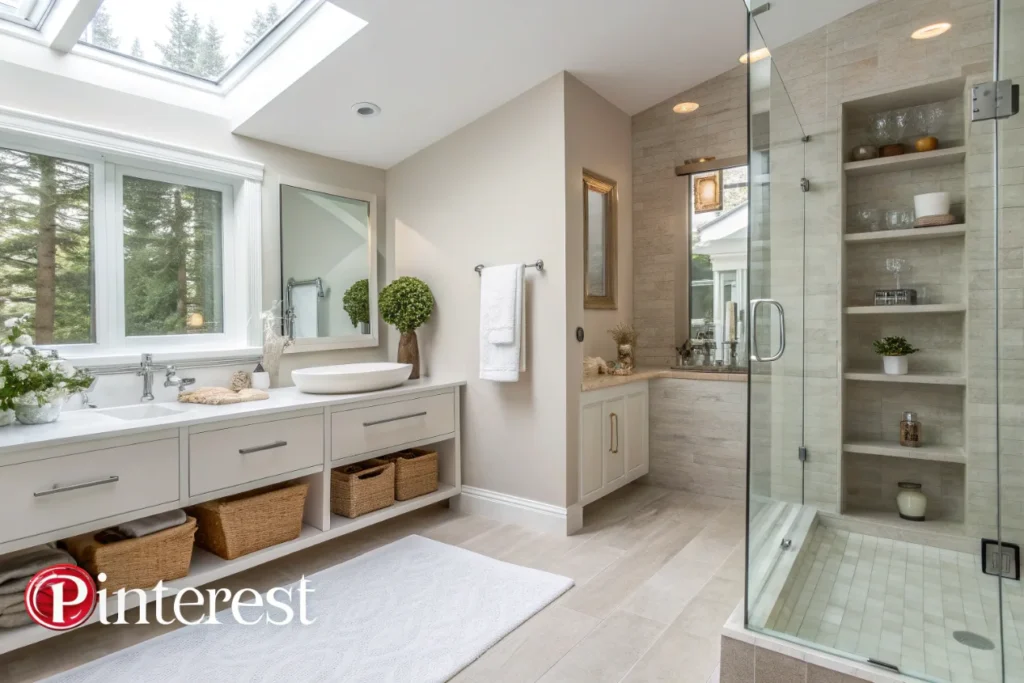
Getting your washroom layout right from the start is one of the most important decisions in any bathroom renovation or new build. A well-planned layout determines how comfortable, functional, and spacious a washroom feels — regardless of its actual size.
From compact powder rooms to full family bathrooms, the way fixtures are positioned affects everything from morning routines to resale value. The difference between a layout that works and one that frustrates is often just a matter of knowing the right principles and proven configurations.
This guide covers the best washroom layout ideas that work across different room sizes and shapes — with practical tips, honest comparisons, and expert advice to help you plan a space that feels great every single day.
List of 13 Best Washroom Layout Ideas
1. Single-Wall Linear Layout
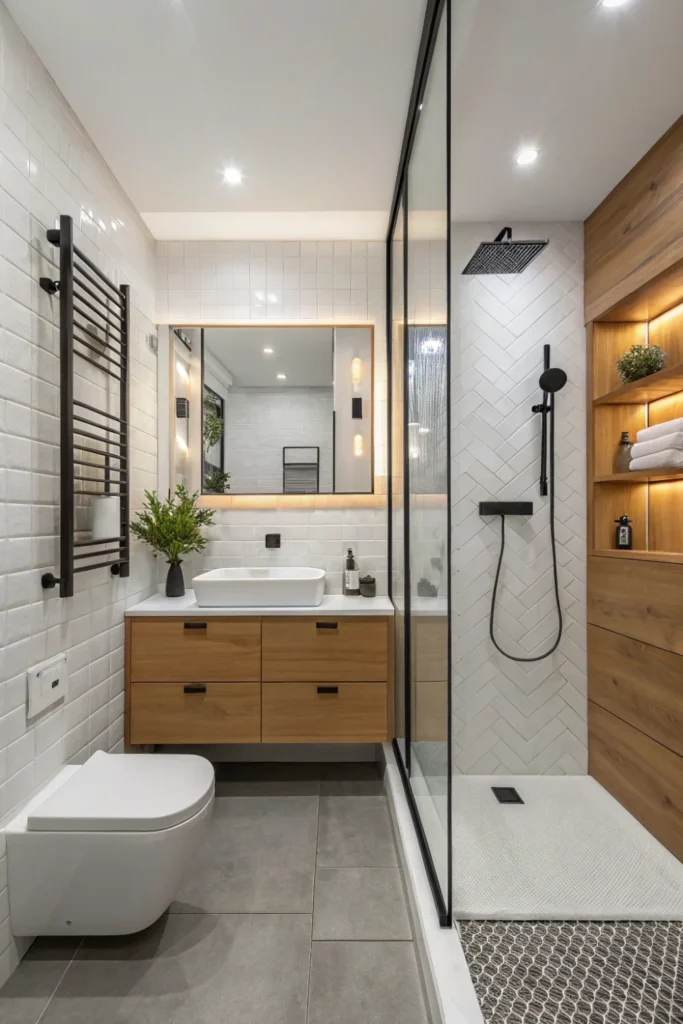
The single-wall linear layout places all washroom fixtures — vanity, toilet, and shower or tub — along one wall in a straight line. It is the most space-efficient configuration available and works exceptionally well in narrow or galley-style washrooms.
This layout keeps plumbing consolidated on a single wall, which significantly reduces installation costs compared to layouts that distribute fixtures across multiple walls.
It works best in rooms that are at least 5 feet wide and 8 to 10 feet long, giving enough linear space to fit all fixtures comfortably without crowding the doorway or creating awkward traffic flow.
Pro Tip: In a single-wall washroom layout, place the toilet between the vanity and shower rather than at the end — this central positioning creates a more balanced visual composition and improves traffic flow between the two most-used fixtures.
2. Wet Room Open-Plan Layout
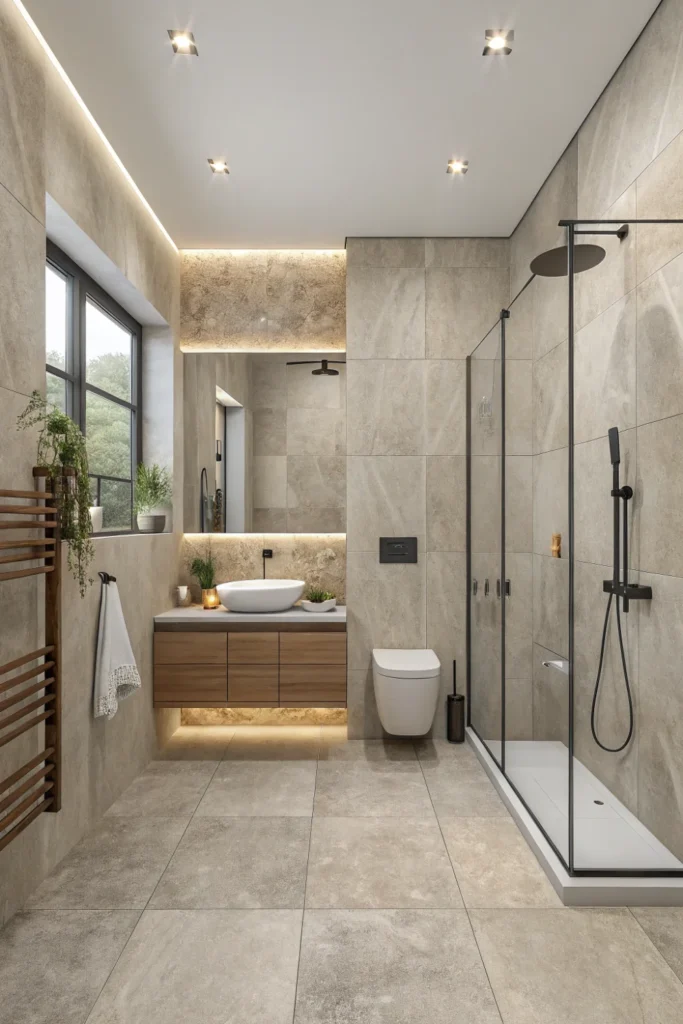
A wet room layout removes all physical barriers between the shower and the rest of the washroom, treating the entire floor as a single waterproofed, drain-equipped surface. It is the most open and spa-like washroom layout available.
The absence of shower screens, trays, or enclosures makes the room feel dramatically larger than its actual square footage — an effect that is particularly valuable in smaller washrooms where every visual inch counts.
This layout requires full waterproofing of all walls and floors, a linear drain set into the floor, and a gentle gradient across the entire room to direct water efficiently — professional installation is strongly recommended.
Pro Tip: Use the same large-format tile across the entire wet room floor without any transition strips or level changes — the seamless continuation makes the washroom layout feel expansive and luxurious regardless of the room’s actual size.
3. L-Shaped Washroom Layout
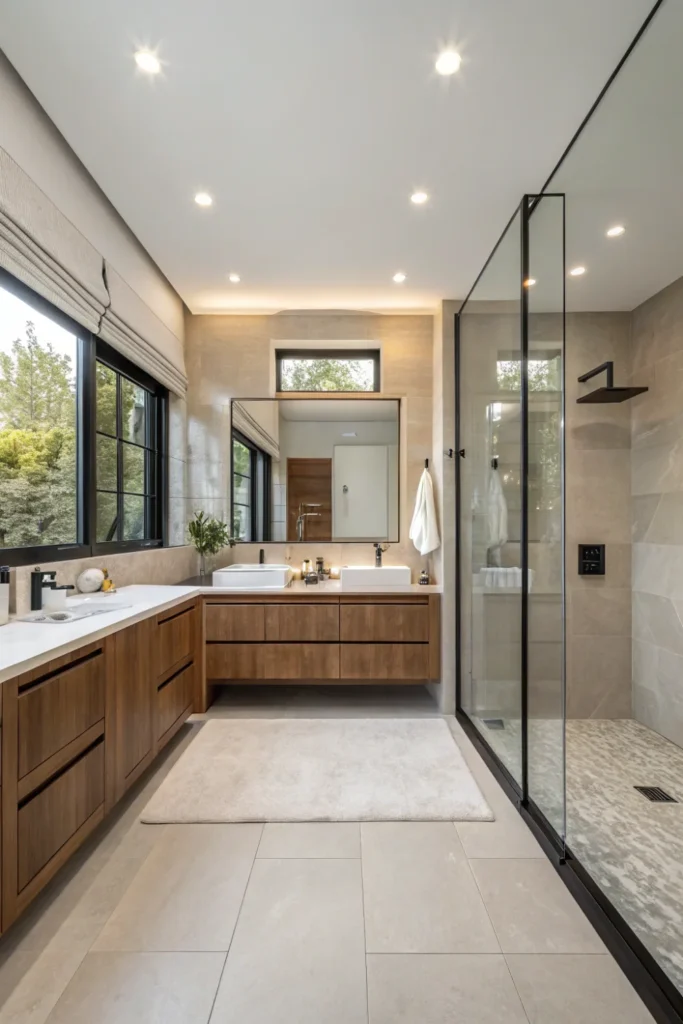
The L-shaped washroom layout distributes fixtures across two adjacent walls forming an L configuration — typically the vanity and toilet on one wall and the shower or tub on the perpendicular wall. It is one of the most practical and widely used layouts for medium-sized washrooms.
The L-shape naturally creates a clear central floor zone that makes the room feel open and easy to move through, while keeping each fixture in its own defined area without crowding.
This layout suits rooms that are roughly square or slightly rectangular — typically between 60 and 80 square feet — where a single-wall layout would feel too compressed and a larger configuration would leave unused dead space.
Pro Tip: Place the shower in the far corner of the L-shape and the vanity closest to the door — this sequence mirrors the natural morning routine flow from washing hands on entry to showering, making the washroom layout intuitive to use.
4. Split or Compartmentalized Washroom Layout
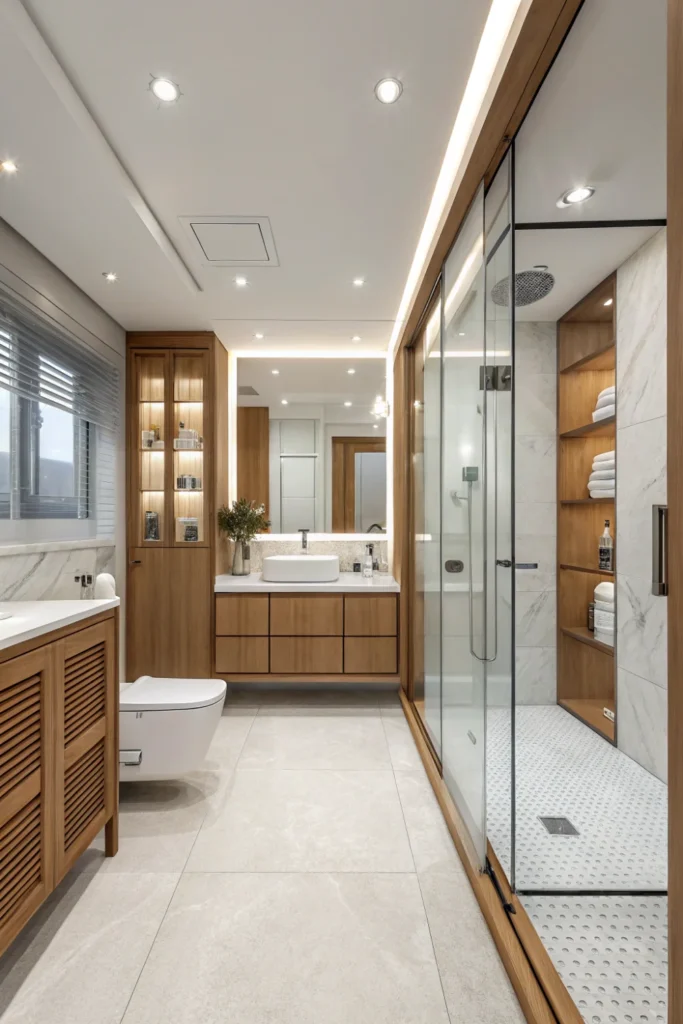
A split or compartmentalized washroom layout separates the toilet into its own enclosed area — sometimes called a water closet — while the vanity and shower share the main bathroom space. This is the most functional layout for shared or family washrooms.
This configuration means multiple people can use different parts of the washroom simultaneously — one person at the vanity while another uses the toilet — without any privacy compromise or scheduling conflicts.
The compartmentalized approach works best in larger washrooms of 80 square feet or more where there is enough room to dedicate a partition wall or separate door to the toilet zone without making either space feel cramped.
Pro Tip: Add a small wall-hung sink inside the toilet compartment of a split washroom layout — guests and family members can wash hands privately without needing to access the main vanity area, which dramatically improves the room’s overall functionality.
5. U-Shaped Washroom Layout
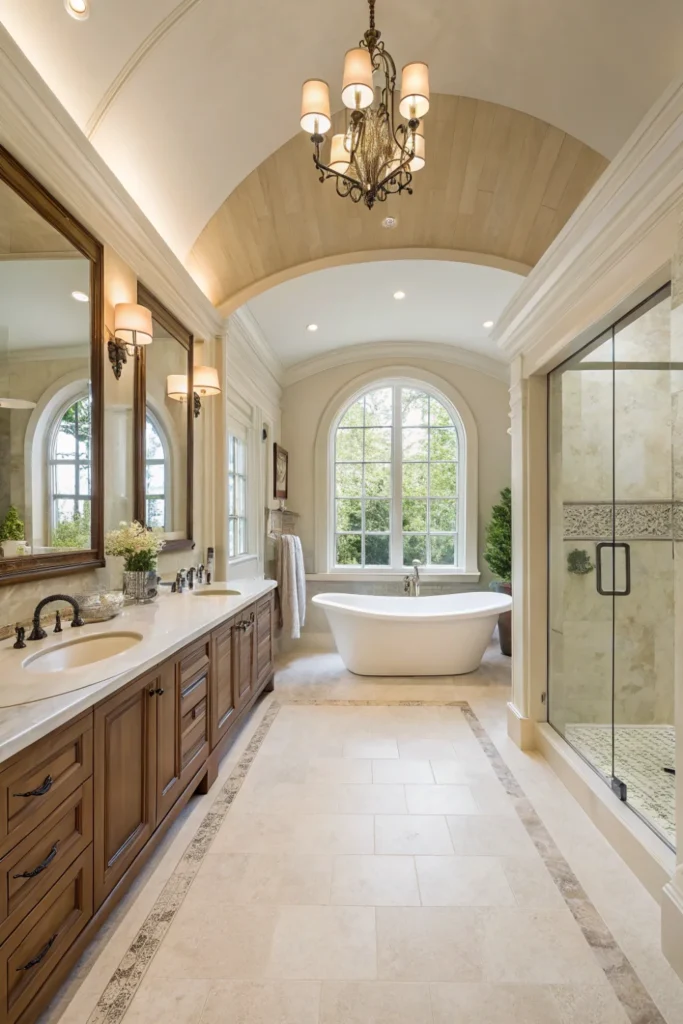
The U-shaped washroom layout positions fixtures along three walls — typically the vanity on one wall, the toilet on the opposite wall, and the shower or tub on the third wall between them. It maximizes storage and counter space more than any other layout configuration.
The three-wall arrangement creates a highly functional, enclosed feeling that suits larger washrooms and master bathrooms where luxury and extensive storage are priorities alongside function.
A U-shaped washroom layout works best in rooms that are at least 7 feet wide to ensure comfortable movement through the central aisle without fixtures on opposing walls feeling oppressive or uncomfortably close.
Pro Tip: In a U-shaped washroom layout, keep the central floor aisle at least 30 to 36 inches wide at all points — this minimum clearance ensures two people can use the space simultaneously without constantly moving around each other.
6. Jack and Jill Washroom Layout
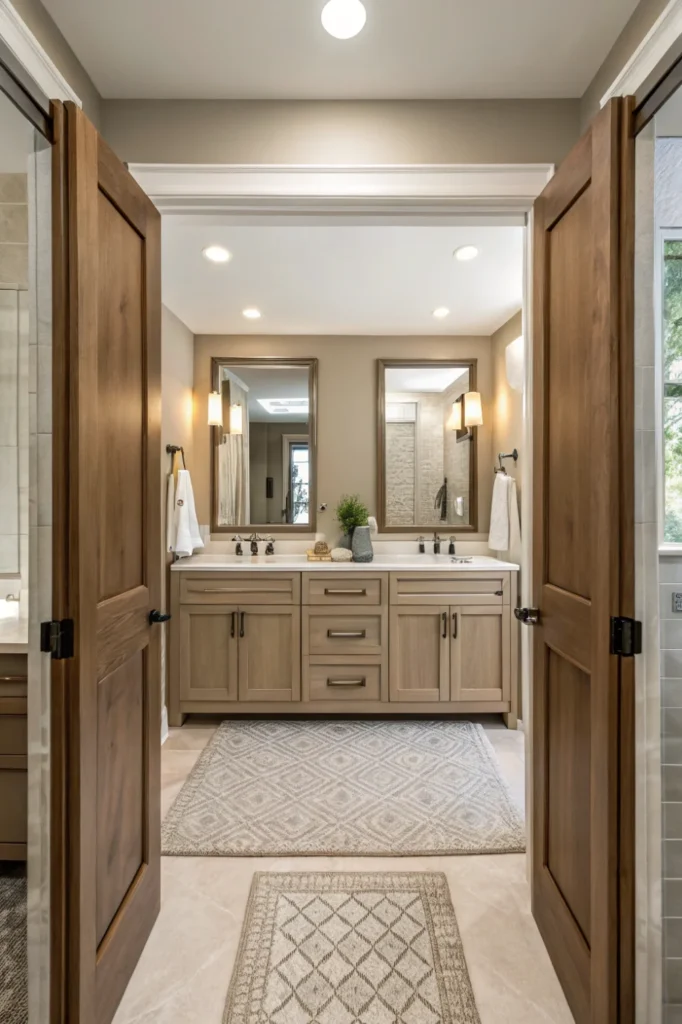
A Jack and Jill washroom layout connects two separate bedrooms through a shared bathroom, with a door on each side providing independent access from both rooms. It is the most efficient washroom layout for maximizing bathroom access across multiple bedrooms.
The classic Jack and Jill configuration places the toilet and shower in the central shared space while each bedroom side has its own vanity in a separate anteroom — giving each user privacy at the sink while sharing the core plumbing fixtures.
This layout is particularly popular in children’s bedrooms and guest room wings where multiple occupants need bathroom access but installing individual ensuite bathrooms is not feasible within the available space or budget.
Pro Tip: Install individual door locks that can be engaged from both inside the bathroom and from within each bedroom — this simple hardware detail prevents the most common frustration of the Jack and Jill washroom layout, which is accidental walk-ins.
7. Powder Room Half Bath Layout
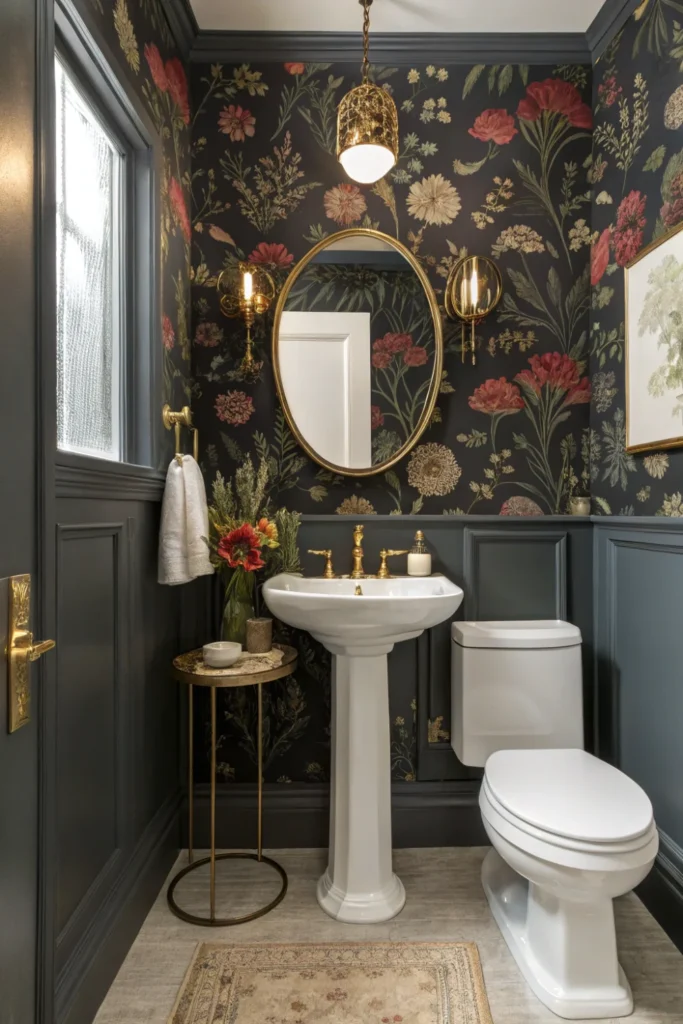
A powder room layout is a compact half-bath configuration containing only a toilet and a small vanity or pedestal sink — no shower or tub. It is the most space-efficient washroom layout and fits into rooms as small as 18 to 20 square feet.
Despite its small size, a powder room is one of the highest-impact spaces in any home for design investment — it is the room guests use most frequently and the one where bold design choices like wallpaper, statement mirrors, and decorative fixtures make the biggest impression.
Position the toilet against the back wall of a powder room layout with the vanity on the adjacent side wall — this maximizes the visual depth of the space and ensures both fixtures are comfortably accessible without the room feeling pinched.
Pro Tip: Use a wall-hung toilet in a very small powder room layout — the absence of a visible cistern adds several inches of perceived floor space and creates a cleaner, more contemporary look in the room’s most prominent position.
8. Walk-In Shower Only Layout
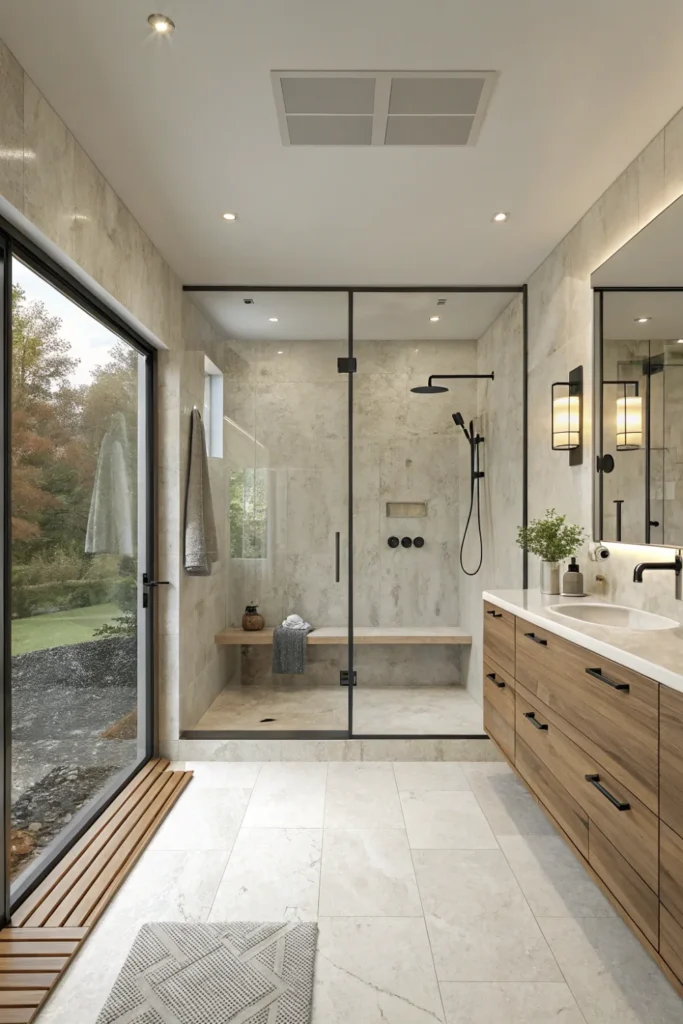
A shower-only washroom layout replaces the traditional tub-and-shower combination with a single large walk-in shower, giving that liberated space to a more generous shower footprint, expanded vanity, or additional storage.
This layout is increasingly popular in master bathrooms and ensuite washrooms where the tub is rarely or never used and the shower is the primary daily fixture — eliminating the tub makes every other element of the washroom layout more generous.
A walk-in shower of at least 36 by 36 inches is the functional minimum, but 48 by 36 inches or larger feels genuinely comfortable and luxurious as a daily-use shower without a door or screen.
Pro Tip: If you are removing a tub from your washroom layout entirely, verify your local real estate conventions first — in some markets, at least one full bathroom with a tub is expected by buyers and its absence can affect resale value.
9. Freestanding Tub Feature Layout
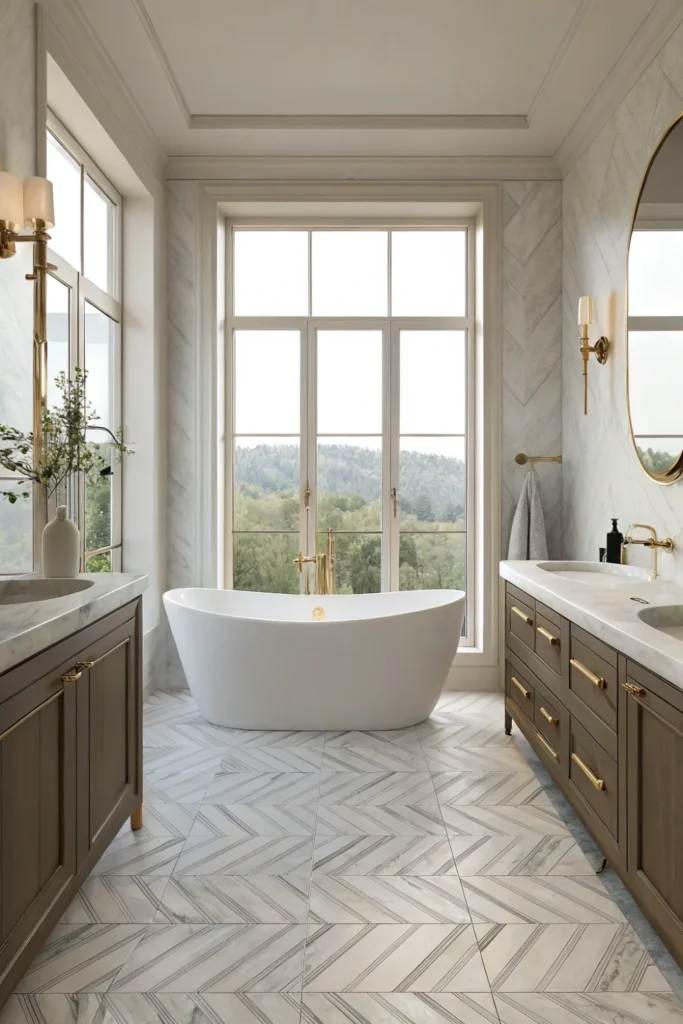
A freestanding tub feature layout positions a sculptural soaking tub as the visual centerpiece of the washroom — typically placed in the center of the room, against a feature wall, or beneath a window for maximum impact.
This washroom layout communicates luxury immediately — a freestanding tub seen upon entering the room sets a tone that no other single fixture can match in terms of visual drama and perceived value.
The layout requires careful plumbing planning because freestanding tubs need floor-mounted or wall-mounted faucets positioned specifically for the tub’s placement — moving a tub after installation is expensive and disruptive.
Pro Tip: Position a freestanding tub so it is visible from the washroom entrance — the view into the room from the doorway is the first impression of the entire layout, and a beautiful sculptural tub in that sightline creates an immediate and lasting impact.
10. Ensuite Master Washroom Layout
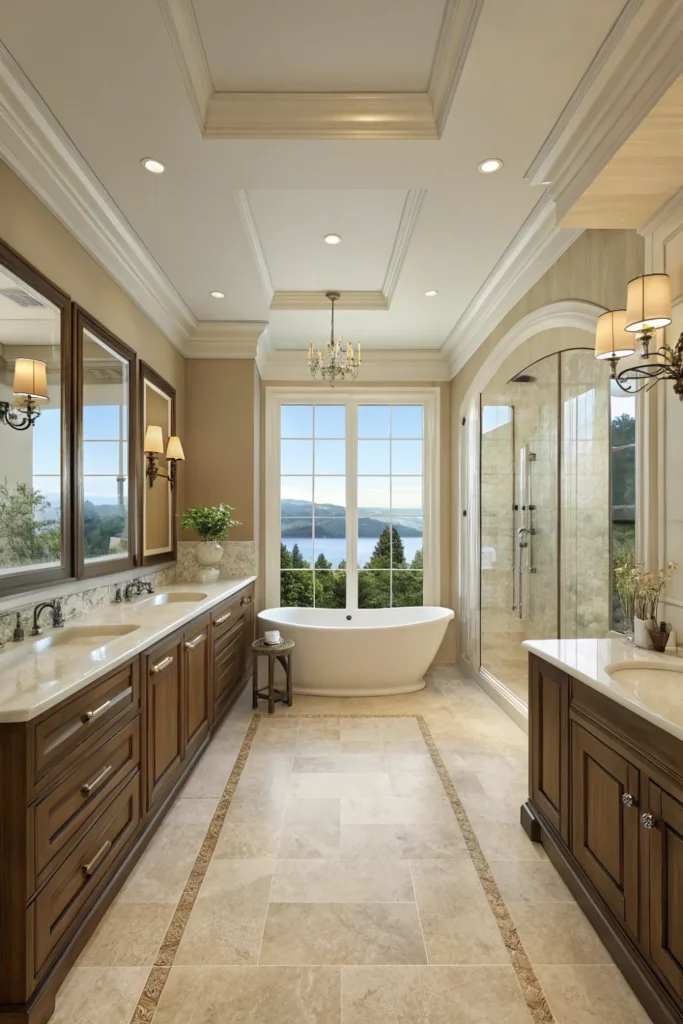
An ensuite master washroom layout is designed exclusively for one or two primary occupants and typically includes a double vanity, walk-in shower, soaking tub, and private toilet area — all within a single connected space accessed directly from the master bedroom.
The defining feature of a well-planned ensuite washroom layout is zoning — each functional area has its own dedicated space and clear circulation path so two people can use the room simultaneously without interfering with each other.
Ensuite layouts benefit most from positioning the shower and tub together in a wet zone at one end of the room, with the vanity in the center and the toilet in a private compartment or alcove closest to the bedroom entrance.
Pro Tip: Include a pocket door between the master bedroom and ensuite washroom layout rather than a standard swing door — it saves the clearance space a door swing requires and creates a cleaner, more seamless visual transition between the two connected rooms.
11. Narrow Long Washroom Layout
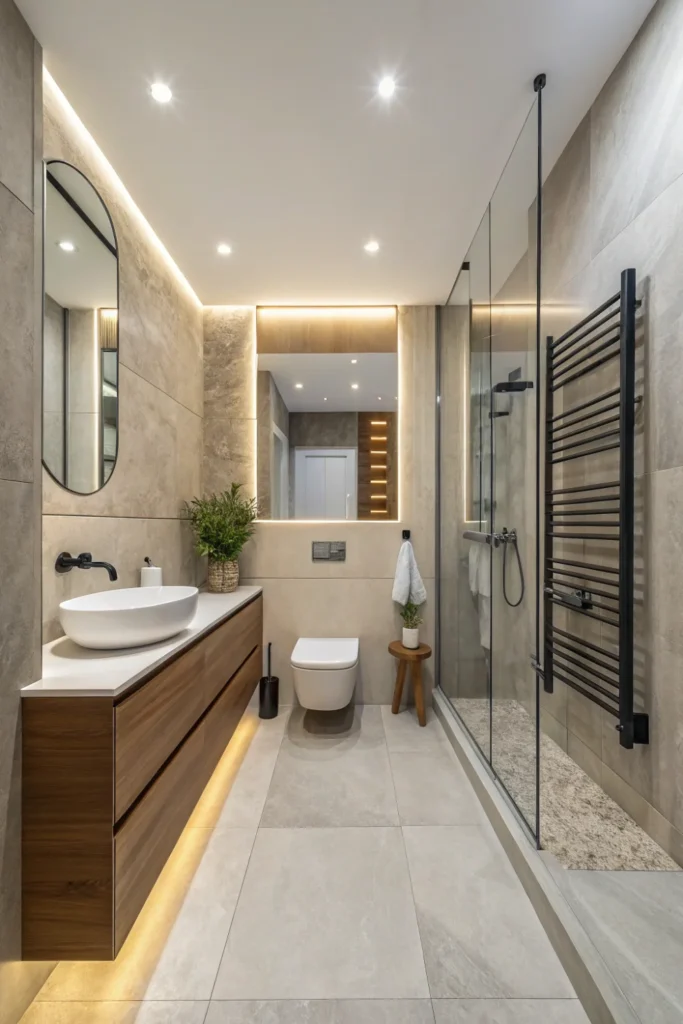
A narrow long washroom layout — typically rooms that are 5 to 6 feet wide and 10 to 14 feet long — requires strategic fixture placement to prevent the space from feeling like a corridor rather than a functional bathroom.
The most effective approach for this washroom layout is to place the vanity at the entry end and the shower at the far end, with the toilet in the middle — this sequence draws the eye down the length of the room and creates purposeful movement through the space.
Use wall-hung fixtures wherever possible in a narrow long layout — a floating vanity, wall-hung toilet, and recessed shelving all reduce visual bulk and make the narrow room feel wider than its actual dimensions.
Pro Tip: Run floor tiles lengthwise rather than across the short dimension in a narrow washroom layout — tiles oriented along the length of the room visually widen the space and reduce the tunnel-like effect that transverse tile patterns create.
12. Small Square Washroom Layout
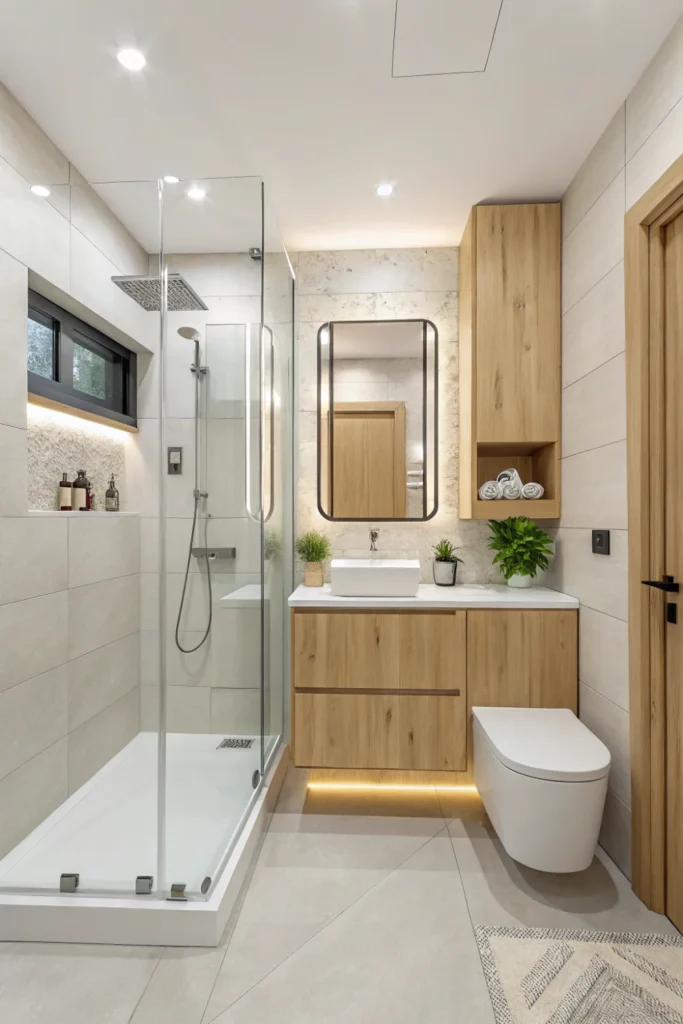
A small square washroom layout — typically 5 by 5 feet or 6 by 6 feet — is one of the most common and most challenging configurations to plan well. The equal dimensions mean every fixture competes for the same limited space from every direction.
The most effective approach is to use a corner shower enclosure, a compact wall-hung toilet, and a small pedestal or wall-mounted vanity — this combination of space-saving fixtures keeps all required functions within the footprint while maintaining minimum clearances.
Keeping all three fixtures on three different walls rather than clustering two together distributes the visual weight evenly and prevents any single corner from feeling cramped or overwhelmed.
Pro Tip: Install a large mirror that spans the full width of the vanity wall in a small square washroom layout — an oversized mirror reflects light across the entire room and visually doubles the perceived depth of the space more effectively than any other single design decision.
13. Accessible and Universal Washroom Layout
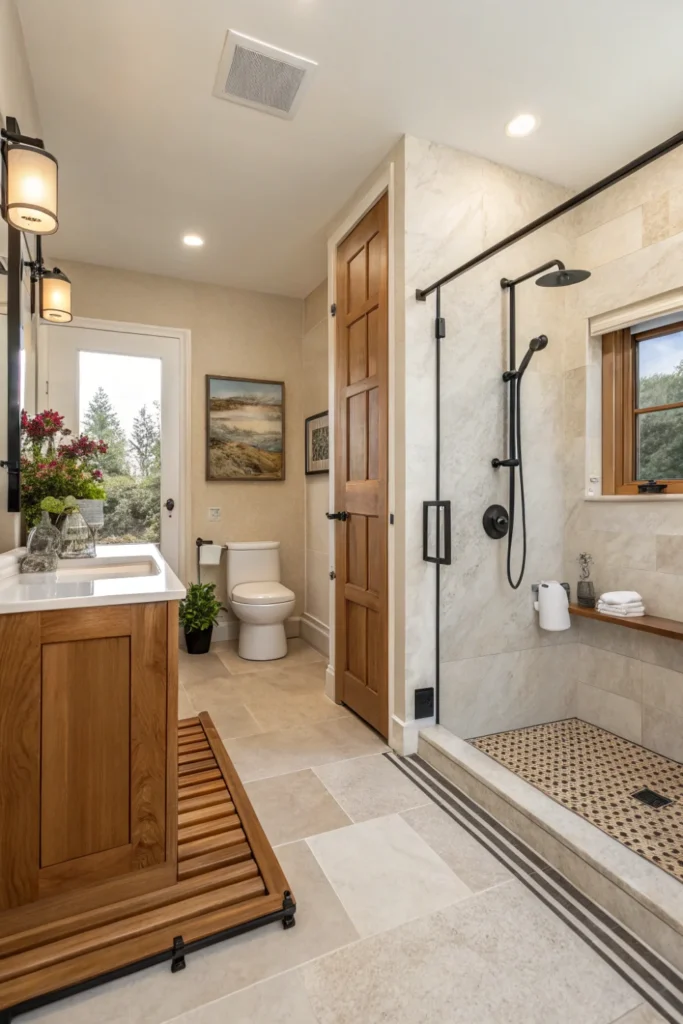
An accessible or universal washroom layout is designed to be comfortable and safe for users of all ages, mobility levels, and physical abilities — including wheelchair users, elderly occupants, and people recovering from injury or surgery.
Key features include a curbless walk-in shower at least 36 by 60 inches, grab bars at the toilet and shower, a comfort-height toilet at 17 to 19 inches, and at least 60 inches of turning radius for wheelchair clearance in the central floor area.
Beyond its practical benefits, a thoughtfully designed accessible washroom layout is a genuine long-term investment — it allows occupants to remain in their home safely and comfortably as needs change, avoiding costly modifications later.
Pro Tip: Install blocking inside the walls during initial construction or renovation even if grab bars are not needed immediately — adding solid wood blocking between studs at the appropriate heights costs very little upfront and makes future grab bar installation simple, safe, and inexpensive.
Why Getting Your Washroom Layout Right Is Worth the Investment
A well-planned washroom layout is one of the highest-return investments in home renovation — bathrooms consistently rank among the top two or three rooms that influence buyer decisions and property valuations.
Daily quality of life improves immediately with a functional washroom layout — when fixtures are positioned logically, storage is accessible, and traffic flow is clear, even a simple morning routine becomes noticeably faster and less frustrating.
The cost of changing a washroom layout after construction is significant — moving plumbing, retiling, and replastering can cost thousands — making thorough planning before a single tile is laid one of the most financially sound decisions in any renovation project.
Things to Consider Before Choosing a Washroom Layout
Before finalizing any washroom layout, identify the location of existing plumbing rough-ins — moving drain and supply lines is the most expensive aspect of any bathroom renovation, and layouts that work with existing plumbing positions save significantly on installation costs.
Think about who will use the washroom and how — a master ensuite used by two adults has very different layout priorities than a family bathroom shared by three children or a powder room used exclusively by guests.
Always observe your washroom at different times of day before finalizing a layout — natural light position, door swing direction, and the sightline from the doorway all affect the daily experience of the space in ways that a floor plan drawing alone cannot fully communicate.
Comparison Table of Washroom Layout Ideas
| Layout Type | Minimum Size | Best For | Plumbing Cost | Privacy Level | Complexity |
|---|---|---|---|---|---|
| Single-Wall Linear | 5 x 8 ft | Narrow rooms, rentals | Low | Low | Simple |
| Wet Room Open Plan | 5 x 7 ft | Modern, spa-style | Medium–High | Medium | High |
| L-Shaped | 6 x 8 ft | Medium family baths | Medium | Medium | Medium |
| Split / Compartmentalized | 8 x 10 ft | Shared family bathrooms | Medium–High | High | Medium–High |
| U-Shaped | 7 x 10 ft | Master baths, storage needs | Medium | Medium | Medium |
| Jack and Jill | 5 x 8 ft | Two adjoining bedrooms | Medium | Medium | Medium |
| Powder Room Half Bath | 3 x 6 ft | Guest WC, tight spaces | Low | High | Simple |
| Walk-In Shower Only | 6 x 8 ft | Master ensuite, modern | Medium | Medium | Medium |
| Freestanding Tub Feature | 8 x 10 ft | Luxury master baths | High | Medium | High |
| Ensuite Master Layout | 10 x 12 ft | Master bedroom suites | High | High | High |
| Narrow Long | 5 x 10 ft | Galley or corridor rooms | Low–Medium | Medium | Medium |
| Small Square | 5 x 5 ft | Compact apartments | Low–Medium | Medium | Medium |
| Accessible Universal | 8 x 10 ft | All ages, mobility needs | Medium–High | High | Medium–High |
Frequently Asked Questions About Washroom Layout
What Is the Best Washroom Layout for a Small Bathroom?
The most effective washroom layout for a small bathroom is one that uses wall-hung fixtures — a floating vanity, wall-hung toilet, and curbless shower — to free up as much visible floor space as possible, which makes the room feel significantly larger.
A corner shower enclosure in a small square washroom layout is particularly effective because it uses the inherently dead corner space efficiently while leaving the remaining floor area open for comfortable movement.
How Much Space Do I Need Between Fixtures in a Washroom Layout?
The minimum clearances recommended for a functional washroom layout are 15 inches from the toilet centerline to any side wall or obstruction, 21 inches of clear floor space in front of the toilet, and 24 inches in front of the vanity for comfortable use.
For a premium washroom layout that feels genuinely spacious, aim for 18 inches from the toilet centerline to adjacent walls and 30 to 36 inches of clearance in front of all primary fixtures — these generous clearances are what distinguish a luxurious bathroom from a merely functional one.
Should I Keep My Existing Washroom Layout or Change It?
Keeping the existing washroom layout and working with the current plumbing positions is almost always the more cost-effective choice — moving drain lines in particular can add thousands to a renovation budget with little visible return.
Only change your washroom layout if the current configuration genuinely fails to meet your functional needs — such as inadequate storage, poor traffic flow, or fixtures in positions that create daily friction — rather than simply because a different arrangement looks appealing on paper.
What Is the Most Timeless Washroom Layout?
The most enduringly popular and resale-friendly washroom layout is the L-shaped or linear configuration with a separate shower and toilet, a generous double vanity, and clear walking paths between all fixtures — this arrangement suits the widest range of occupants and lifestyles.
Avoid overly trend-driven layout decisions like removing all storage, eliminating the tub in a home’s only full bathroom, or creating ultra-narrow circulation paths in pursuit of a larger shower — these choices can feel dated or limiting more quickly than a classic, well-proportioned washroom layout.