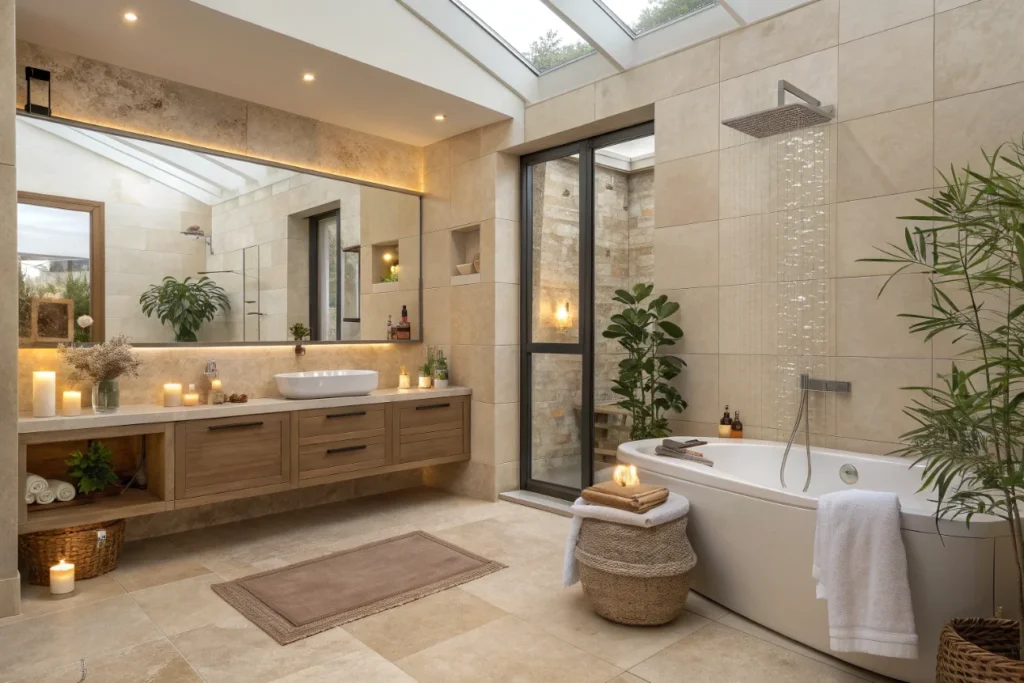
A beige washroom is one of the most calming and timeless design choices you can make for your home. Warm, neutral, and endlessly versatile, beige creates a spa-like atmosphere that feels both inviting and sophisticated.
Unlike stark white or bold color schemes, a beige washroom works with natural light, wood tones, and organic textures to build a space that feels genuinely relaxing. It pairs beautifully with everything from matte black hardware to brushed gold fixtures and natural stone.
This guide walks you through the best beige washroom ideas that actually work in real homes — with practical tips, honest comparisons, and product picks to help you create a warm, elegant space with confidence.
List of 13 Best Beige Washroom Ideas
1. Beige Travertine Tile Walls and Floors
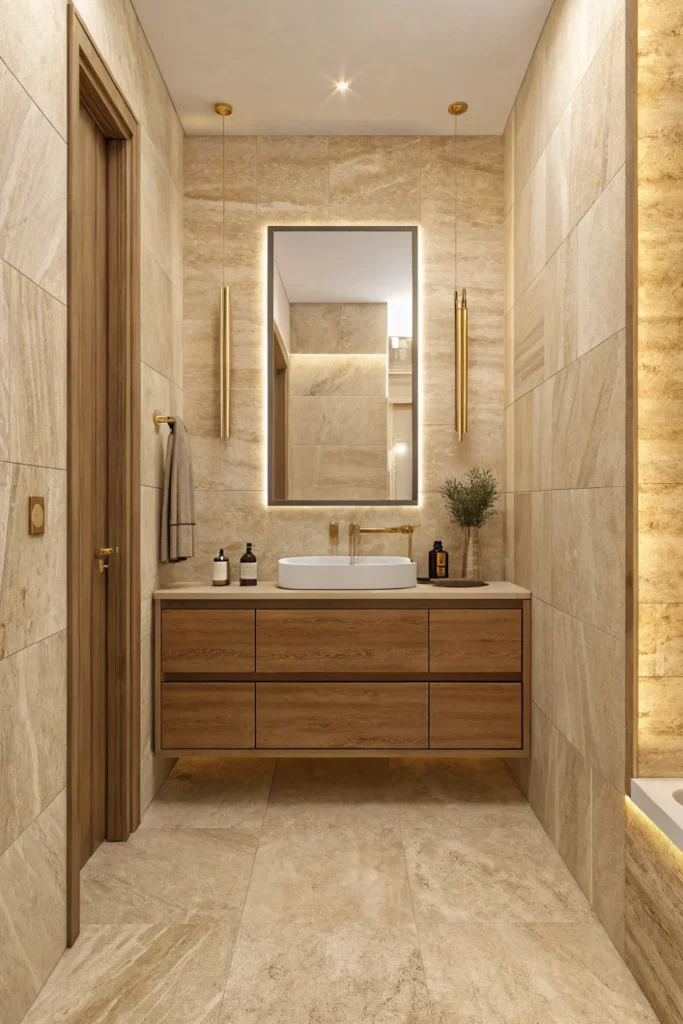
Beige travertine tile is the most luxurious and nature-inspired choice for a beige washroom. Its natural variation in tone — from creamy ivory to warm caramel — means no two rooms look exactly alike.
Travertine brings an organic, European spa quality that manufactured tiles simply cannot replicate. It works beautifully on both walls and floors, creating a seamlessly warm envelope around the entire space.
Use a filled and honed finish rather than a polished one for a more matte, contemporary look that is also safer underfoot and easier to maintain in a humid environment.
Pro Tip: Seal travertine tile every one to two years without fail — its natural porosity makes it vulnerable to water and soap staining if left unsealed in a washroom environment.
2. Beige Limewash or Venetian Plaster Walls
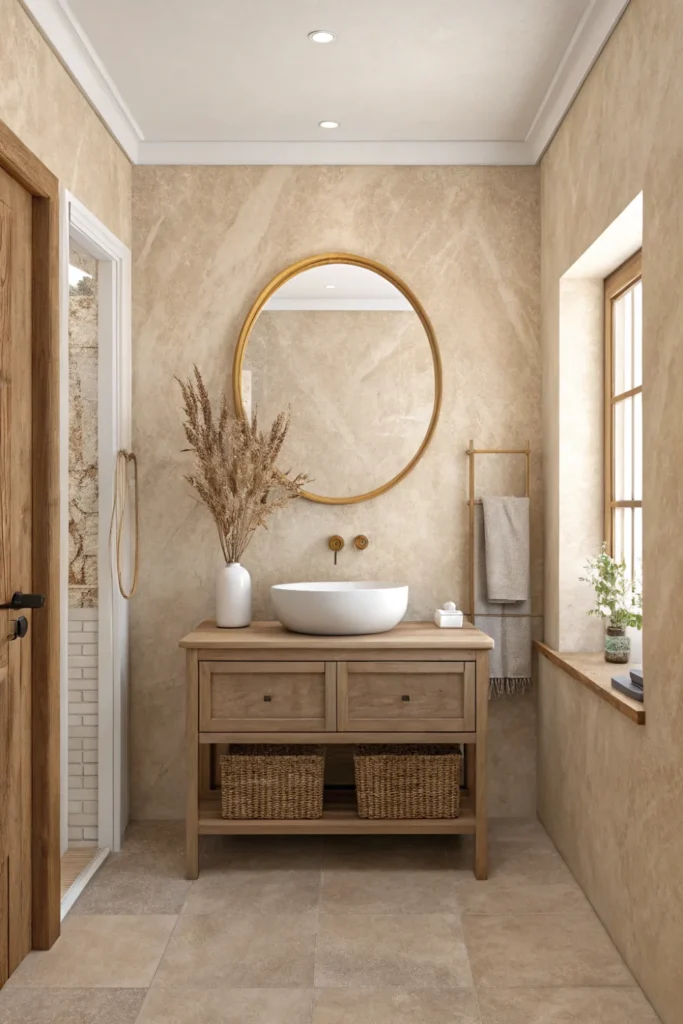
Limewash or Venetian plaster walls in warm beige tones are one of the most beautiful and design-forward finishes for a beige washroom. The layered, matte texture adds depth and artisanal character that paint alone can never achieve.
Each application is unique — the soft variation in tone and texture across the wall surface gives a beige washroom an organic, handcrafted quality that feels both ancient and completely contemporary.
Choose a warm sand or raw linen tone rather than a cool or grey-leaning beige to keep the room feeling genuinely cozy and inviting rather than flat.
Pro Tip: Apply a protective wax sealer over Venetian plaster in washrooms to guard against moisture and humidity — without sealing, even high-quality plaster finishes will deteriorate in a wet environment.
3. Warm Beige Subway Tiles with Matching Grout
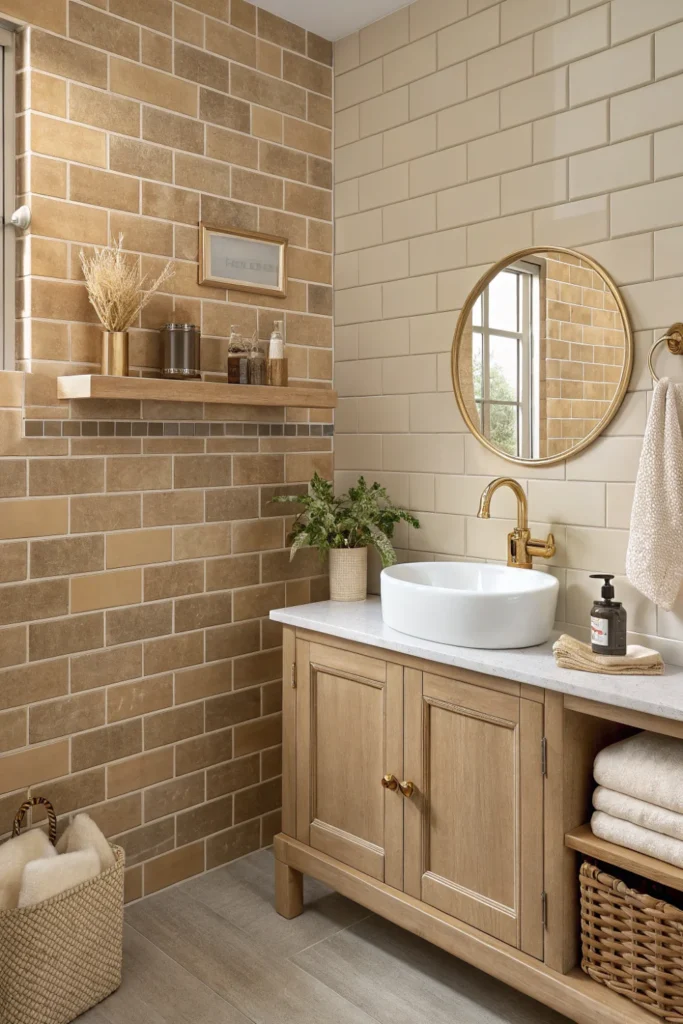
Beige subway tiles with tonal matching grout create one of the softest and most cohesive looks in a beige washroom. Unlike white subway tiles that read crisp and clinical, beige subway tiles feel immediately warmer and more relaxed.
Using a grout color that closely matches the tile creates a seamless, almost texture-only effect on the wall — the surface reads as a single warm field rather than a grid pattern.
This approach works beautifully in small beige washrooms where a strong grout grid might feel visually busy or overpowering in a compact space.
Pro Tip: For a more intentional and layered look, use a grout that is one shade darker than your beige tile — enough contrast to define the pattern without the graphic boldness of a strongly contrasting grout.
4. Beige Marble Countertops and Sink Surrounds
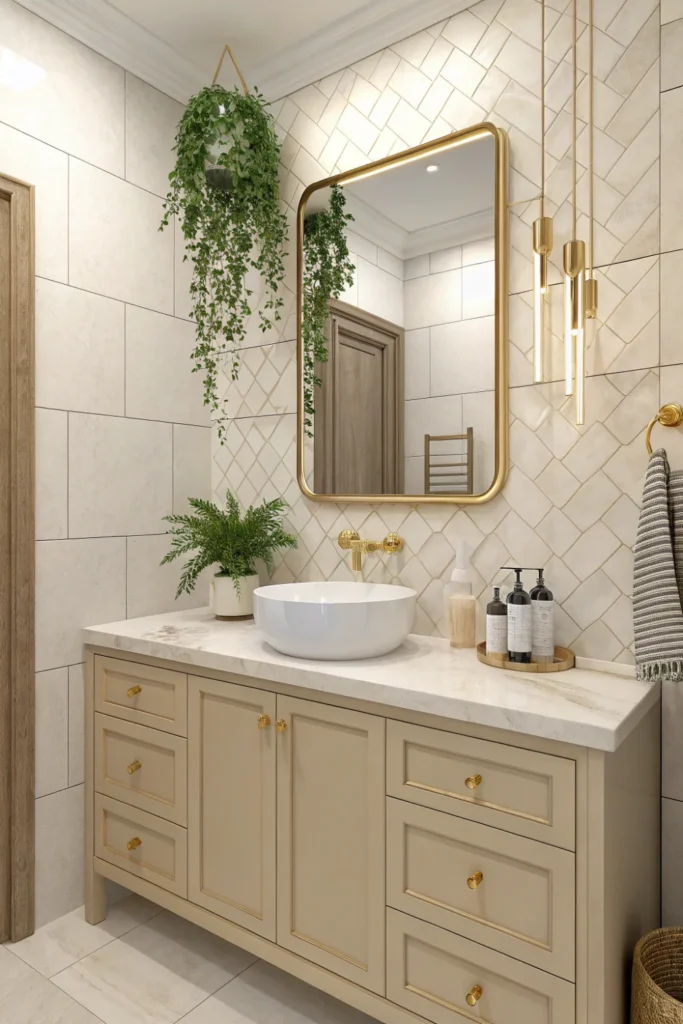
Beige marble countertops — particularly Crema Marfil, Botticino, or emperador light varieties — bring natural warmth and subtle veining to a beige washroom that manufactured surfaces cannot match.
The soft gold, cream, and ivory tones within beige marble complement brushed gold, unlacquered brass, and warm chrome fixtures exceptionally well, creating an effortlessly luxurious palette.
Choose a honed rather than polished finish for countertops and sink surrounds to reduce glare, hide fine scratches, and give the marble a softer, more organic quality that suits the warmth of a beige washroom.
Pro Tip: Seal beige marble surfaces every six to twelve months and wipe up water immediately after use — hard water deposits are particularly visible on light marble and difficult to remove once they set.
5. Natural Wood Vanity with Beige Walls
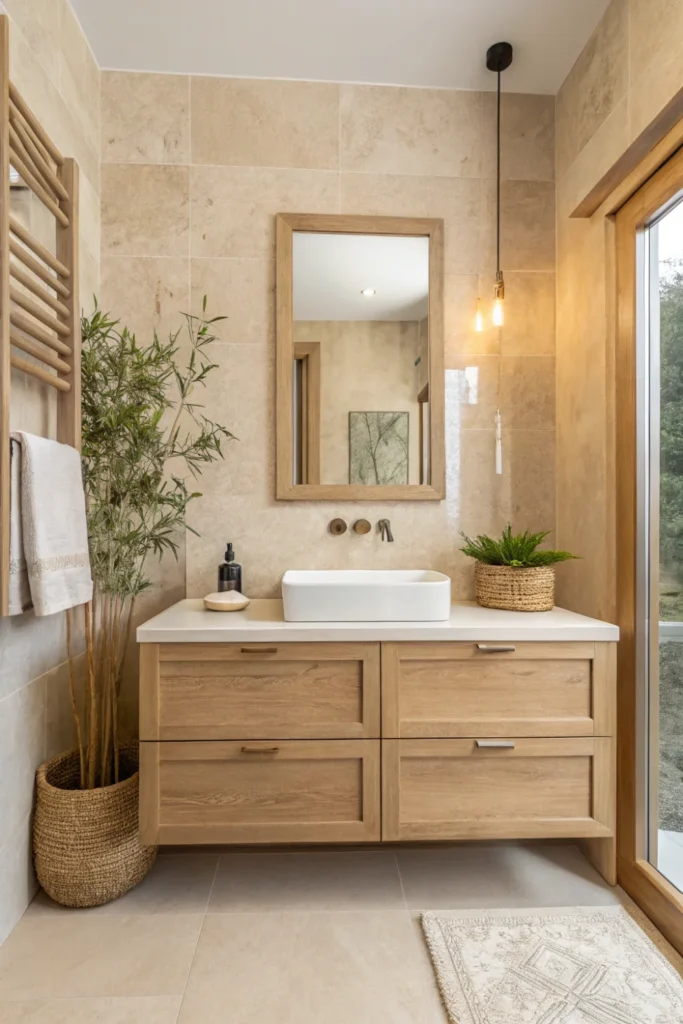
A natural wood vanity paired with beige walls is the most organic and warm interpretation of the beige washroom. Wood grain and beige tones are natural partners — together they create a space that feels grounded, calming, and genuinely spa-like.
White oak, walnut, and teak are the most popular wood species for bathroom vanities because of their natural moisture resistance and beautiful warm grain patterns.
Pair a floating wood vanity with beige walls and a simple white ceramic sink for a clean, Japandi-inspired beige washroom that feels both minimal and deeply warm at the same time.
Pro Tip: Always choose a vanity with a properly sealed or lacquered wood finish specifically designed for bathroom humidity — untreated or poorly sealed wood will warp, crack, and discolor within months in a washroom environment.
6. Beige Large Format Porcelain Tiles
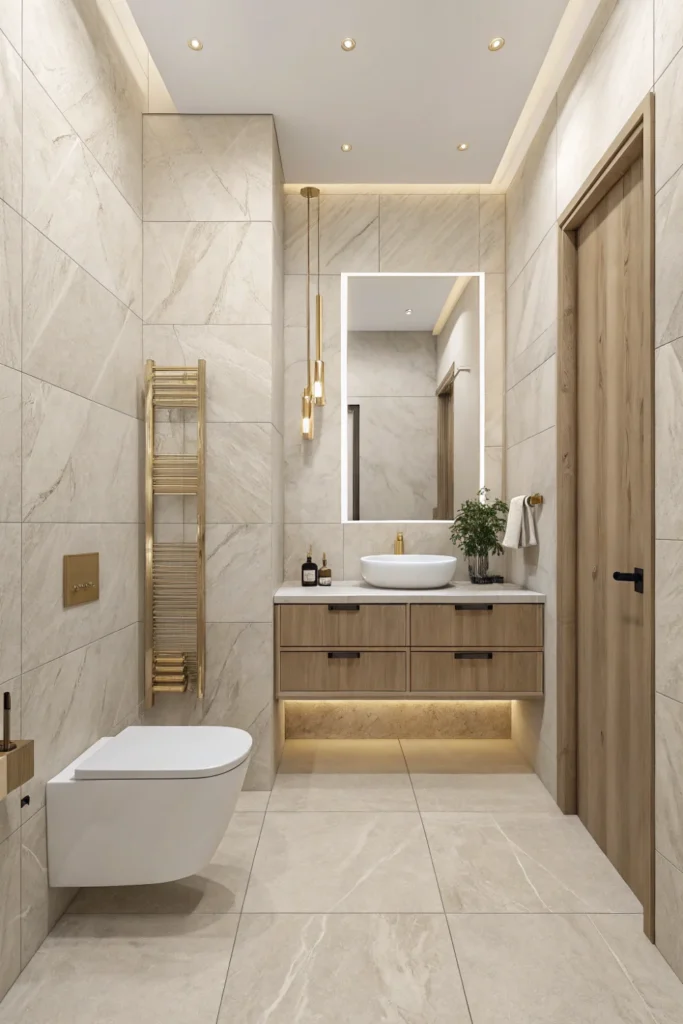
Large format beige porcelain tiles — typically 24×24 or 24×48 inches — create one of the most seamless and spa-like finishes in a beige washroom. Fewer grout lines mean the surface reads as a continuous, uninterrupted field of warm tone.
Large tiles make small washrooms appear significantly larger by removing the visual fragmentation that smaller tiles with more grout lines create.
Choose tiles with a matte or silk finish and subtle surface variation that mimics natural stone — this adds visual depth and organic warmth that plain flat porcelain lacks.
Pro Tip: Run large format floor tiles continuously into the shower without a threshold or transition strip where possible — the seamless continuation makes the entire washroom floor feel expansive and luxurious.
7. Brushed Gold or Brass Hardware Against Beige
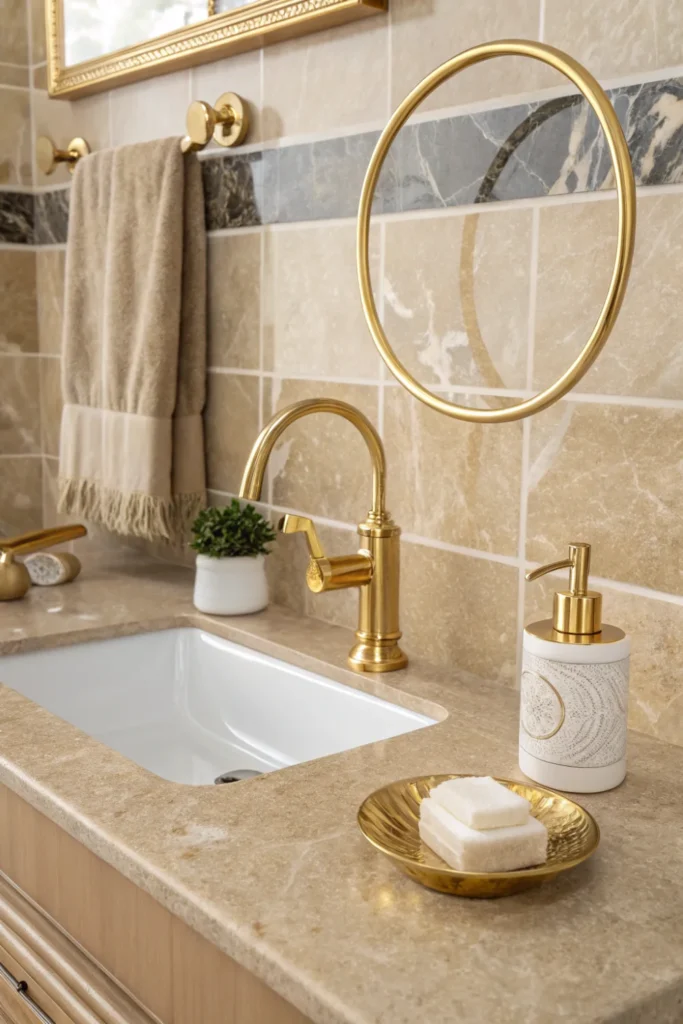
Brushed gold or unlacquered brass hardware is the most popular and complementary metal finish for a beige washroom. The warm amber tones of gold and brass echo the warm undertones in beige tile and stone naturally.
Faucets, towel bars, toilet paper holders, mirror frames, and cabinet pulls all in brushed gold create a cohesive, intentional look that elevates even the most budget-friendly beige washroom materials.
Avoid overly shiny or polished gold finishes — brushed or satin gold shows fewer water spots, ages more gracefully, and reads as more sophisticated and contemporary than high-gloss alternatives.
Pro Tip: Commit to one metal finish throughout the entire beige washroom rather than mixing multiple metals — consistency in hardware is one of the simplest ways to make a room look professionally designed.
8. Beige Wainscoting or Wall Paneling
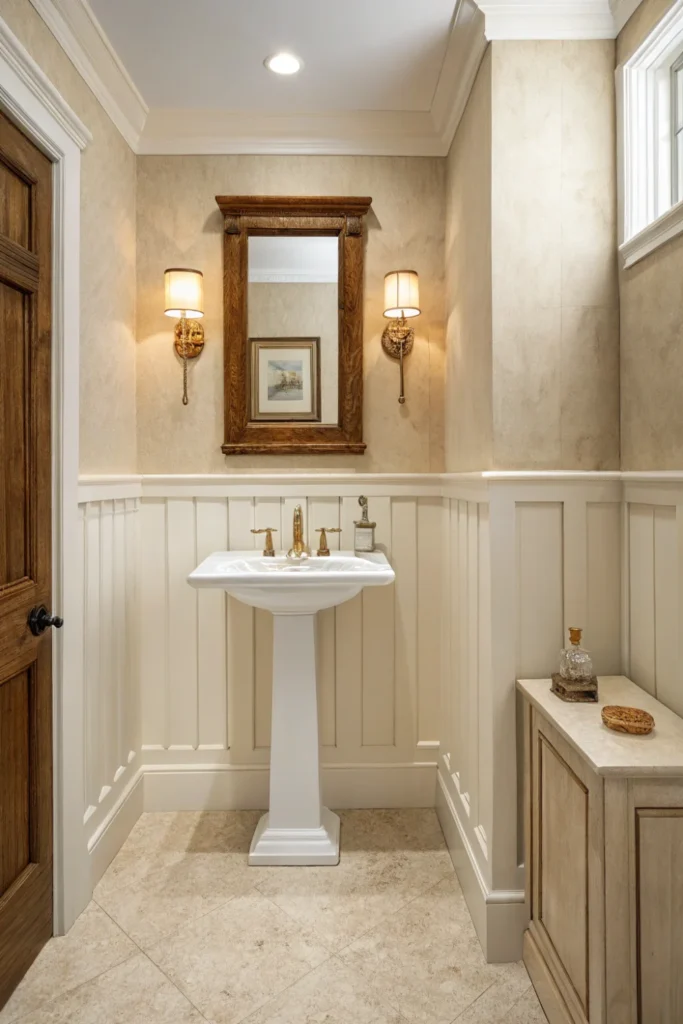
Beige-painted wainscoting or wall paneling adds architectural texture and classic elegance to a beige washroom. The three-dimensional surface of paneling creates shadow lines and depth that flat walls simply cannot offer.
Shaker-style paneling on the lower half of the wall paired with beige plaster or tile on the upper portion creates a beautifully layered beige washroom that feels both traditional and current.
Paint paneling in a slightly deeper or warmer beige than the upper walls to create gentle tonal separation and visual interest without introducing a contrasting color.
Pro Tip: Use moisture-resistant MDF or PVC-based panels specifically designed for bathroom installation — standard wood paneling will swell and crack in washroom humidity even with paint protection.
9. Beige Terrazzo Tile Floors
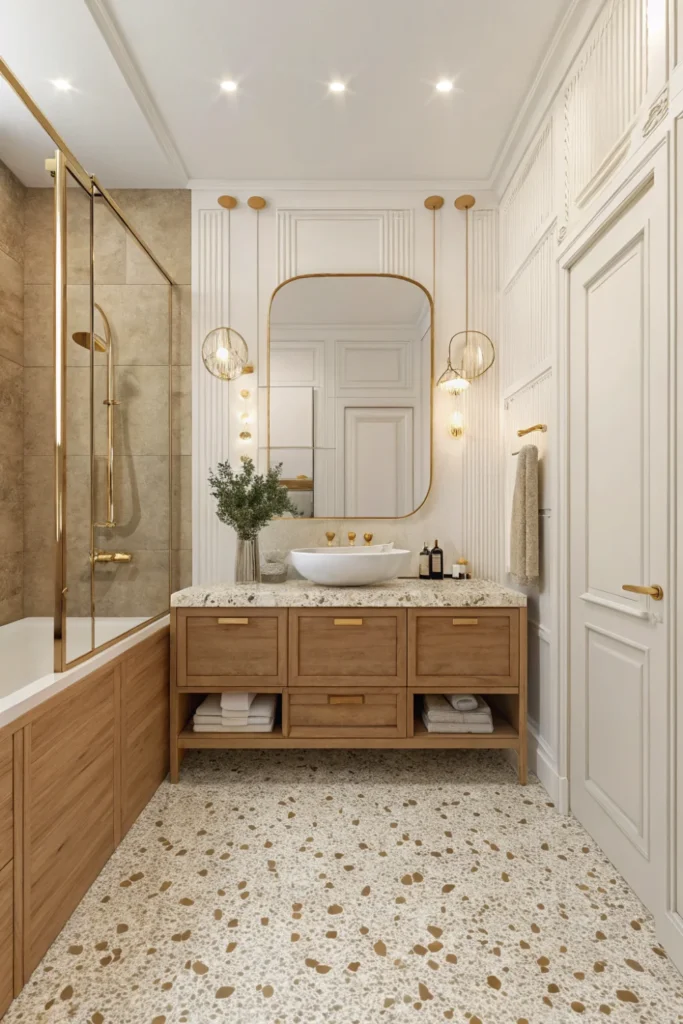
Beige terrazzo tile floors bring playful texture and subtle color variation to a beige washroom without straying from its warm, neutral palette. The chips of marble, quartz, and stone embedded in a beige or cream base create an organic mosaic effect.
Terrazzo is having a significant design revival and brings a retro-modern quality that suits both contemporary and more eclectic beige washroom aesthetics equally well.
Choose a honed or matte terrazzo finish with warm-toned chips in ivory, tan, and soft grey for a result that feels cohesive with the overall beige washroom palette.
Pro Tip: Terrazzo is naturally dense and non-porous, making it one of the most hygienic and lowest-maintenance flooring options for a washroom — a simple regular mopping is all it needs to stay beautiful.
10. Rattan and Natural Fiber Accessories
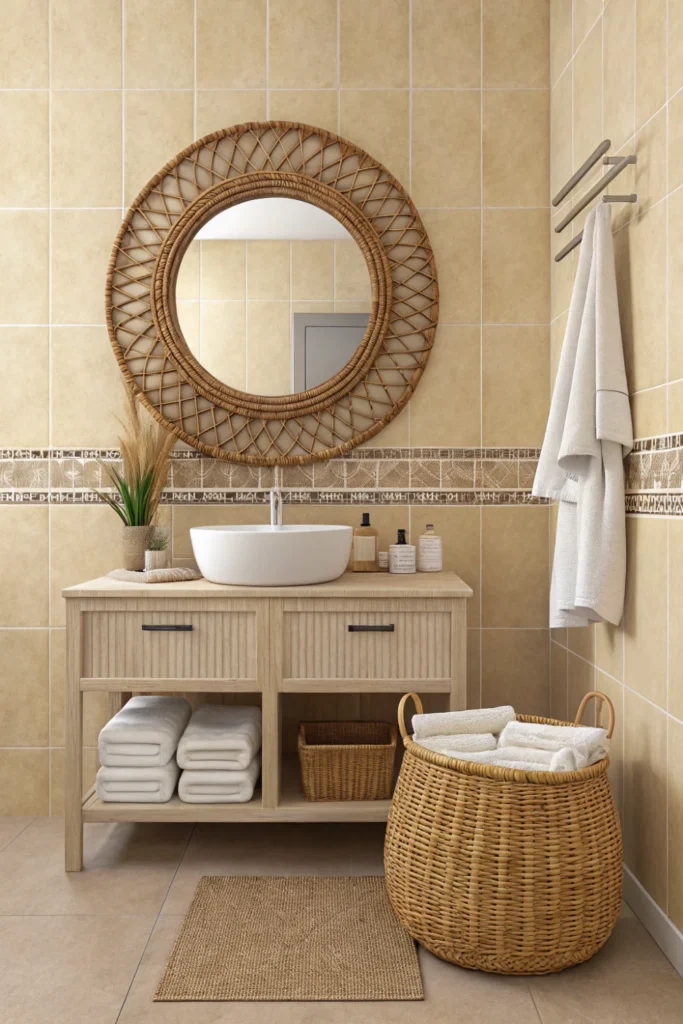
Rattan, seagrass, and natural fiber accessories are the finishing touches that complete a warm beige washroom beautifully. Mirror frames, storage baskets, towel rings, and shelving in natural woven materials reinforce the organic, earthy palette of a beige scheme.
These materials add texture and warmth at low cost — a rattan mirror frame or a woven storage basket beside the sink can transform a plain beige washroom into something that feels genuinely curated.
Mix rattan accessories with brushed gold hardware and white ceramics for a cohesive trio of materials that reads as warm, natural, and effortlessly stylish.
Pro Tip: Spray natural rattan and seagrass accessories with a light protective lacquer before placing them in a washroom — the added moisture resistance significantly extends their lifespan in a humid environment.
11. Beige Zellige or Handmade Ceramic Tiles
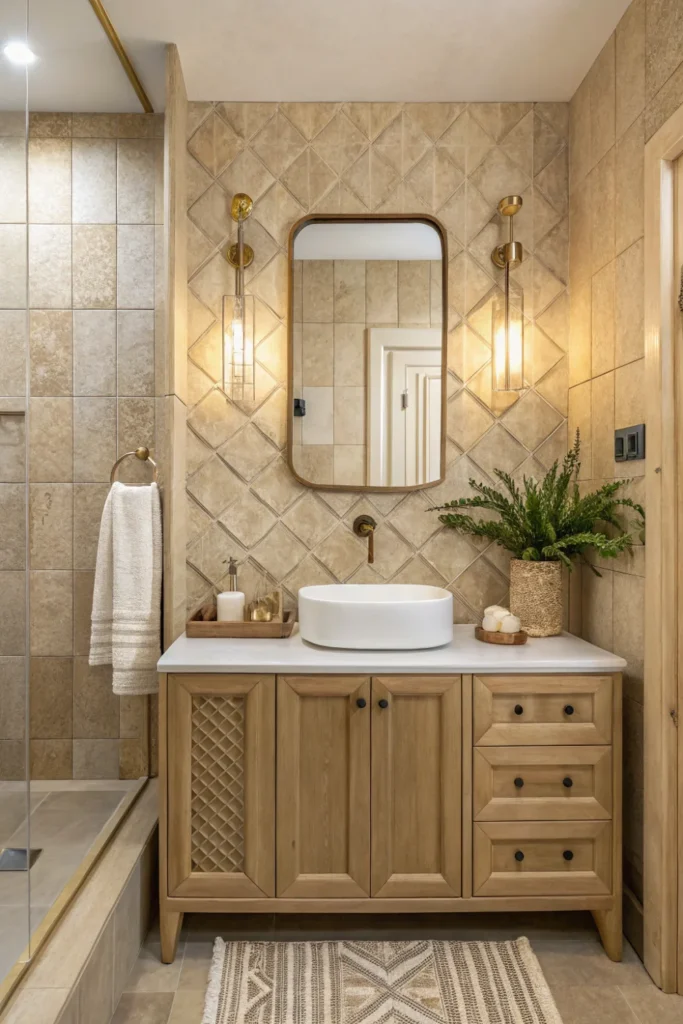
Beige zellige or handmade ceramic tiles bring irregular, handcrafted texture and warm tonal variation to a beige washroom that machine-made tiles cannot replicate. Each tile is slightly different in tone, reflectivity, and surface texture, creating a living, dynamic wall surface.
Moroccan-inspired zellige tiles in warm beige, sand, and cream tones are among the most sought-after materials in contemporary bathroom design — they add artisan craftsmanship and a sense of collected authenticity.
Use zellige tiles as a feature wall behind the vanity or as a full shower surround and keep remaining surfaces simple to let the handmade texture take center stage.
Pro Tip: Because zellige tiles have an uneven surface, use a non-sanded grout and a skilled tile installer experienced with handmade tiles — improper installation can cause lippage, uneven lines, and grout cracking over time.
12. Beige Painted Walls with White Trim and Fixtures
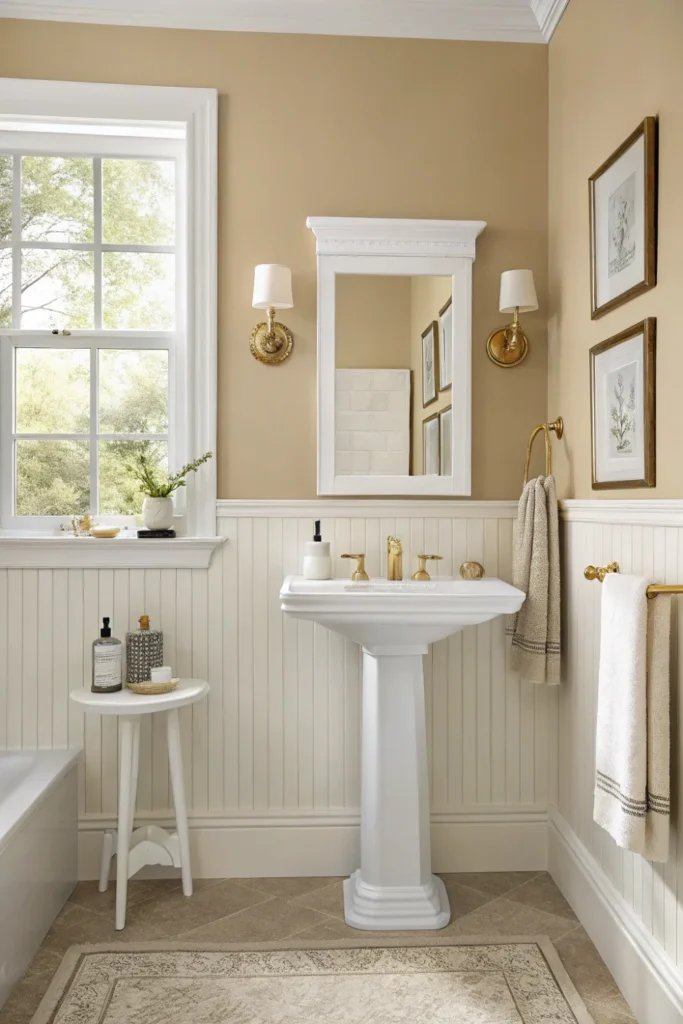
Beige painted walls with crisp white trim and white fixtures is the most accessible and budget-friendly approach to a beige washroom — and when done well, it is one of the most elegant.
The contrast between warm beige walls and bright white trim, door frames, and fixtures creates a clean, structured look that feels fresh without the coldness of an all-white scheme.
Choose a beige with warm yellow or pink undertones rather than grey undertones — grey-beige (greige) reads colder and loses the warmth that makes a beige washroom so appealing in the first place.
Pro Tip: Test at least three beige paint samples on your actual washroom walls and observe them at different times of day before committing — beige is one of the most deceptive colors and shifts dramatically under different light conditions.
13. Beige and White Mosaic Accent Wall
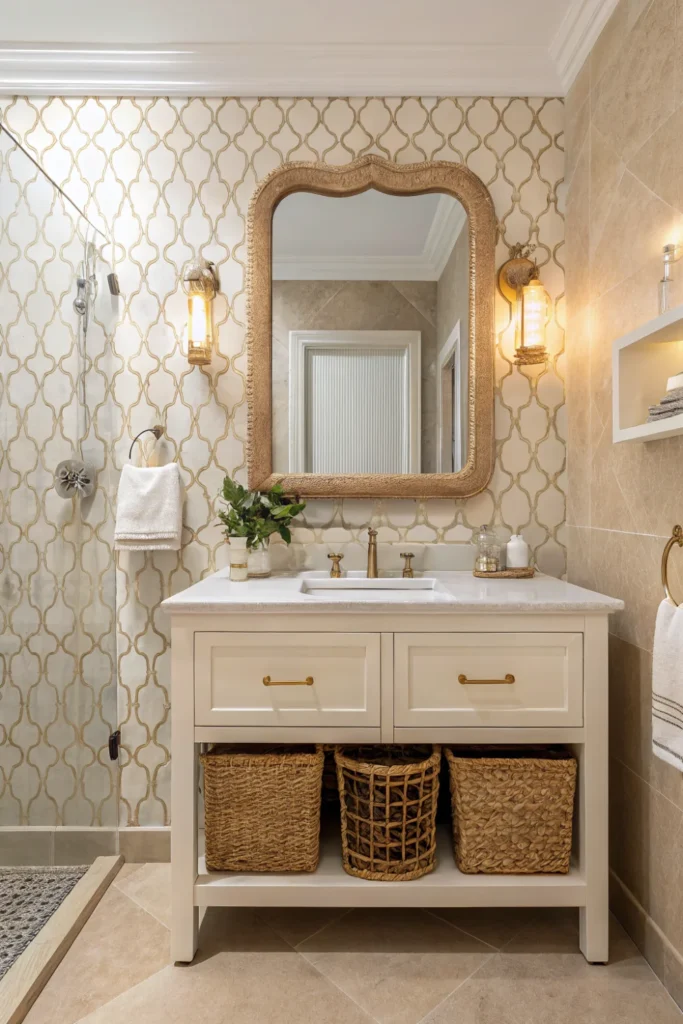
A beige and white mosaic tile accent wall adds pattern, texture, and visual depth to a beige washroom without introducing any color that breaks the warm neutral palette.
Mosaic patterns in mixed beige, ivory, cream, and white tones — whether geometric, arabesque, or organic — create a focal point that reads as intentional and high-end while remaining completely cohesive with the overall beige scheme.
Use a mosaic accent wall behind the toilet, vanity, or in the shower niche to concentrate the pattern in one impactful location rather than spreading it across every surface.
Pro Tip: Choose mosaic tiles on mesh backing for significantly easier installation — individual tile placement on an accent wall is time-consuming and prone to alignment errors that mesh-backed sheets eliminate.
Why a Beige Washroom Is Worth the Investment
A beige washroom has one of the longest design lifespans of any palette choice — it doesn’t trend up and down the way bold colors or graphic patterns do, meaning you won’t feel compelled to renovate again in five years.
The warm, neutral quality of beige appeals to the broadest range of buyers and visitors, making it one of the safest and most universally appreciated choices for resale value and rental appeal.
Because beige is so compatible with almost every accent color and material, updating the look of a beige washroom over time is simple — new towels, hardware, or accessories are all it takes to refresh the space without touching the tile or paint.
Things to Consider Before Choosing a Beige Washroom
Before selecting materials, identify the undertone of your beige carefully — beige ranges from warm yellow and peachy tones to cool grey and taupe, and mixing undertones across tile, paint, and fixtures creates a muddy, unresolved result.
Consider your natural light levels before committing to a deeper or darker beige tone — rooms with limited windows need lighter, warmer beige surfaces and reflective finishes to prevent the space from feeling dim and enclosed.
Always sample beige tiles and paint colors together in the actual washroom before purchasing in quantity — beige is one of the most light-sensitive neutrals and can shift dramatically between the showroom or hardware store and your specific space.
Comparison Table of Beige Washroom Ideas
| Design Idea | Cost Range | Durability | Maintenance | Best For | Style Suits |
|---|---|---|---|---|---|
| Travertine Tile | $10–$35/sq ft | Very High | Seal annually | Walls and floors | Luxury, Mediterranean |
| Limewash / Venetian Plaster | $8–$25/sq ft | High | Seal and touch up | Walls | Bohemian, organic modern |
| Beige Subway Tiles | $4–$12/sq ft | Very High | Seal grout yearly | Walls | Transitional, classic |
| Beige Marble Countertops | $60–$200/sq ft | High | Seal every 6–12 months | Counters | Luxury, classic |
| Natural Wood Vanity | $400–$3,500 | High | Seal and wipe clean | Vanity | Japandi, organic, modern |
| Large Format Porcelain | $5–$18/sq ft | Very High | Easy — mop regularly | Floors and walls | Modern, minimalist |
| Brushed Gold Hardware | $80–$600+ | Very High | Wipe regularly | Fixtures | Any style |
| Beige Wainscoting | $5–$15/sq ft | High | Paint every 5 years | Lower walls | Traditional, farmhouse |
| Beige Terrazzo Tile | $8–$25/sq ft | Very High | Mop regularly | Floors | Retro-modern, eclectic |
| Rattan Accessories | $20–$200 | Medium | Lacquer and dust | Styling | Coastal, boho, organic |
| Zellige / Handmade Ceramic | $15–$45/sq ft | High | Seal grout | Feature wall | Eclectic, artisan, Moroccan |
| Beige Painted Walls | $30–$80 (paint) | Medium | Repaint every 5 years | Walls | Any style |
| Beige and White Mosaic | $10–$30/sq ft | Very High | Seal grout | Accent wall | Any style |
Frequently Asked Questions About Beige Washrooms
What Colors Go Best with a Beige Washroom?
Warm whites, natural wood tones, brushed gold, and soft terracotta are the most complementary accent colors and materials for a beige washroom — they share the same warm undertones and feel cohesive and intentional together.
Soft sage green and muted dusty rose are also beautiful accent options that add a hint of color to a beige washroom without disrupting the warm, calm atmosphere that makes the palette so appealing.
Is Beige a Good Color Choice for a Small Washroom?
Absolutely — lighter beige tones with warm undertones make small washrooms feel cozy and inviting rather than cold and clinical, which is a common problem with stark white schemes in compact spaces.
The key in a small beige washroom is to use large format tiles, reflective surfaces like mirrors, and good lighting to maximize the sense of space — beige handles all of these strategies beautifully without sacrificing warmth.
How Do I Prevent a Beige Washroom from Looking Boring or Dated?
The secret to a fresh and current beige washroom is layering textures rather than relying on color variation — combine matte tiles with natural wood, woven accessories, and tactile plaster finishes to create depth and visual interest within the neutral palette.
Updating hardware is the single fastest way to modernize a beige washroom on a small budget — swapping outdated chrome fixtures for brushed gold or matte black instantly changes the room’s entire character.
What Lighting Works Best in a Beige Washroom?
Warm white LED bulbs in the 2700K to 3000K color temperature range are ideal for a beige washroom — they enhance the warm undertones of beige materials and create a flattering, spa-like glow.
Avoid cool daylight bulbs above 4000K in a beige washroom — they shift beige tones toward grey and green, undermining the warmth that makes the palette so appealing in the first place.