
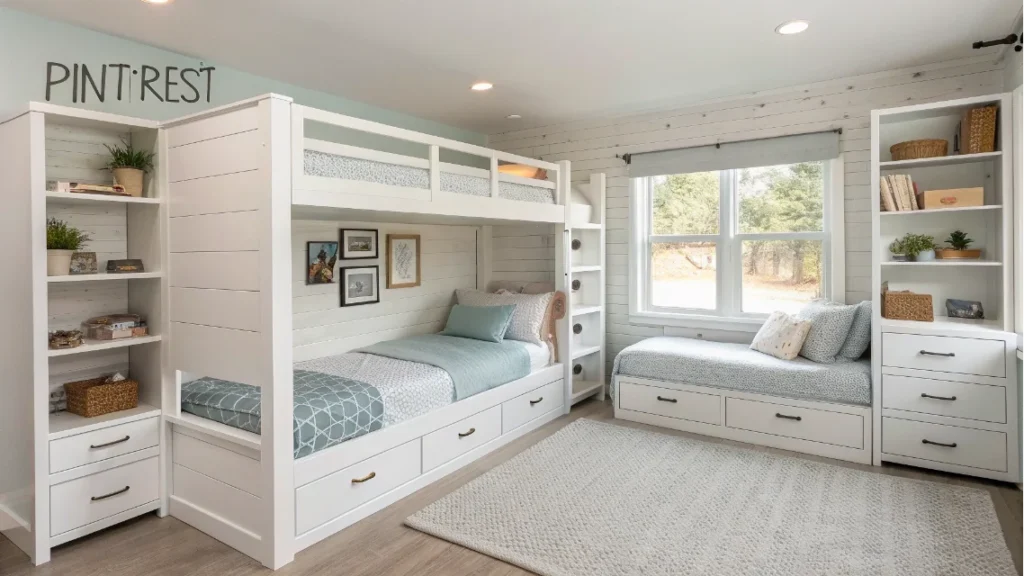
Fitting beds in one room might sound like a challenge, but with the right layout and furniture choices, it’s entirely possible to create a space that feels organized, comfortable, and even stylish. The key is thinking vertically, multifunctionally, and intentionally.
Whether you’re designing a kids’ shared bedroom, a vacation rental, a guest room, or a compact family space, there are creative solutions that maximize every square foot. Smart planning makes all the difference between a room that feels cramped and one that genuinely works.
This guide covers the best beds in one room ideas that real families and designers actually use — with practical tips, honest comparisons, and product recommendations to help you get it right the first time.
List of 11 Best Beds in One Room Ideas
1. Triple Bunk Bed with Three Stacked Bunks
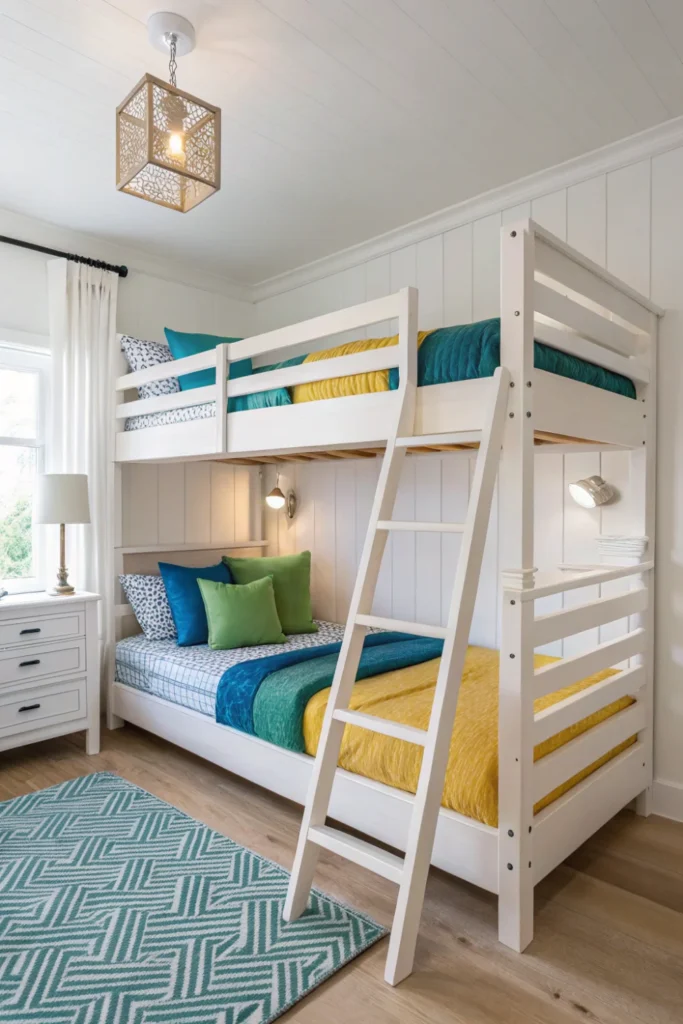
A triple bunk bed is the most space-efficient solution for fitting 3 beds in one room. By stacking three beds vertically, you free up the entire floor footprint for play, storage, or a study area.
Triple bunks work especially well in rooms with higher ceilings of at least 9 feet, giving each sleeper enough clearance above their mattress to sit up comfortably without bumping their head.
Look for models with built-in safety rails on all upper levels, a sturdy ladder, and solid wood or heavy-gauge steel construction for long-term durability and peace of mind.
Pro Tip: Assign each bunk a distinct color of bedding so children immediately identify their own space — this small detail reduces arguments and makes the room feel personalized for each child.
2. L-Shaped Bunk Bed with a Third Pull-Out Bed
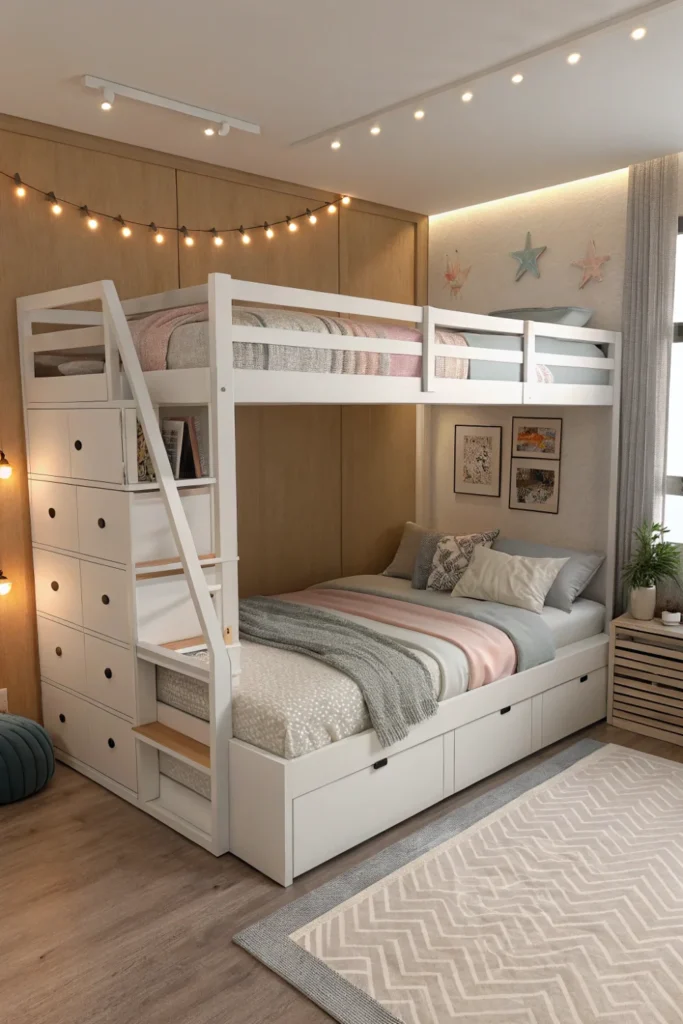
An L-shaped bunk bed with a pull-out trundle is one of the most versatile configurations for 3 beds in one room. Two bunks stack in one direction while a third bed extends perpendicularly at floor level.
The L-shape uses corner space that would otherwise go to waste, and the lower pull-out can be tucked away during the day to open up floor space for play or activities.
This configuration works best in square or near-square rooms where the corner placement feels natural and doesn’t block windows or doorways.
Pro Tip: Choose an L-shaped bunk with the lower perpendicular bunk at desk height rather than floor level — it doubles as a study station during the day and converts back to a sleeping surface at night.
3. Bunk Bed Plus Single Bed Against the Third Wall
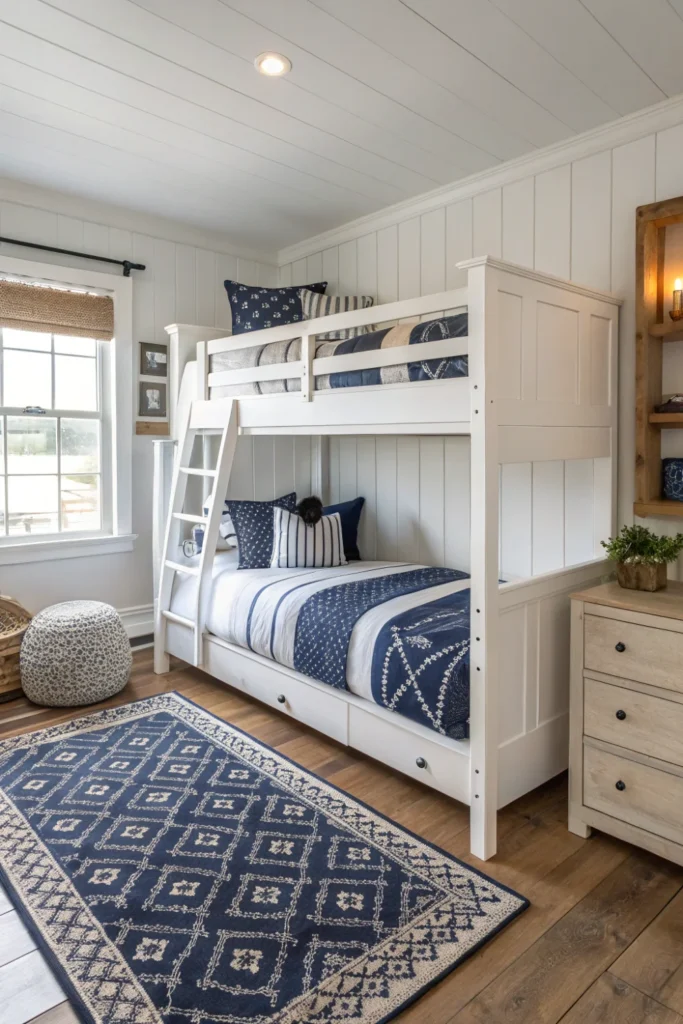
A bunk bed combined with a single bed on the opposite or adjacent wall is the most flexible and beginner-friendly approach to 3 beds in one room. It requires no specialty furniture — just a standard bunk and one additional twin or single bed.
This layout works well when children are different ages and one child prefers not to sleep elevated, or when ceiling height limits a triple stack configuration.
Place the single bed along the wall perpendicular to the bunk bed to create a clear central floor space that doesn’t feel blocked or claustrophobic.
Pro Tip: Use matching bed frames or a consistent bedding color palette across the bunk and single bed to make the mixed furniture look intentional and cohesive rather than mismatched.
4. Three Twin Beds in a Row (Dormitory Style)
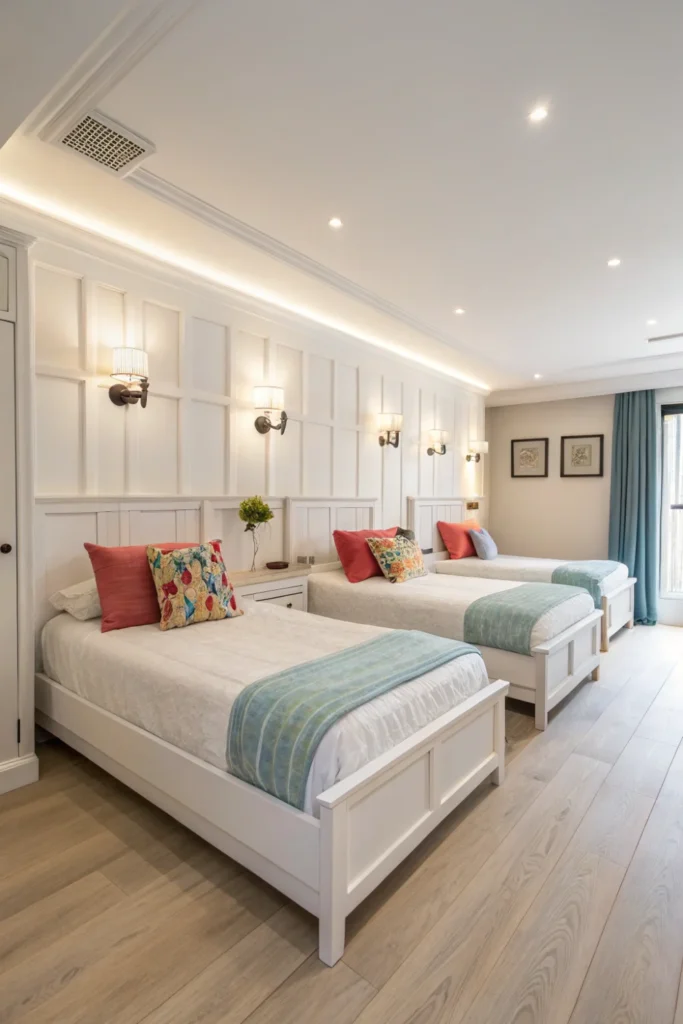
Three twin beds lined up in a row against one long wall is a clean, elegant, and surprisingly stylish approach to 3 beds in one room — often called the dormitory or hostel-chic layout.
When executed well with matching or coordinating beds, this arrangement looks intentional and design-forward rather than crowded. It works especially well in narrow, elongated rooms.
Use matching bed frames, uniform bedding in different accent colors, and wall-mounted lighting above each bed to give every sleeper their own distinct zone within the shared layout.
Pro Tip: Install individual curtain tracks above each bed so each child can draw a curtain for privacy when needed — this simple addition transforms three beds in one room from a compromise into a genuinely desirable setup.
5. Murphy Beds (Wall Beds) for Three Sleepers
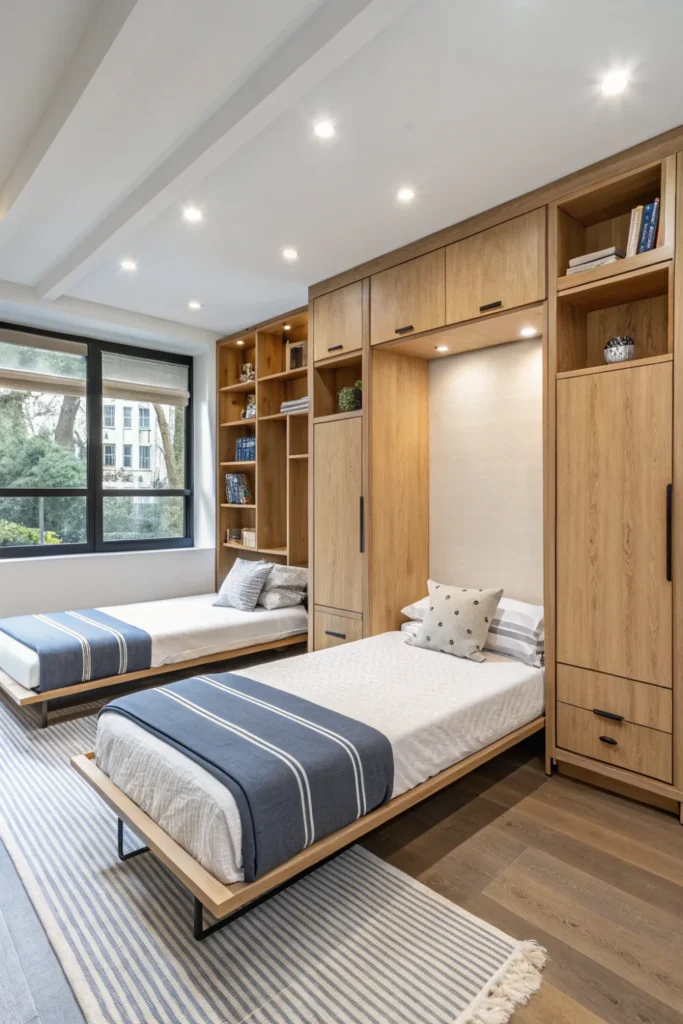
Murphy beds — also called wall beds — fold up vertically into a cabinet when not in use, making them one of the most space-transforming solutions for 3 beds in one room.
During the day, the room functions as a playroom, study, or living space. At night, all three beds fold down in minutes, making it ideal for vacation rentals, guest rooms, or multipurpose family spaces.
Modern Murphy bed systems come with integrated shelving, desks, and sofa units built into the cabinet face, so the room remains fully functional during waking hours.
Pro Tip: Choose Murphy beds with a pneumatic piston lift system rather than spring-loaded mechanisms — they open and close more smoothly, last longer, and are safer for children to operate independently.
6. Loft Beds with Dedicated Zones Underneath
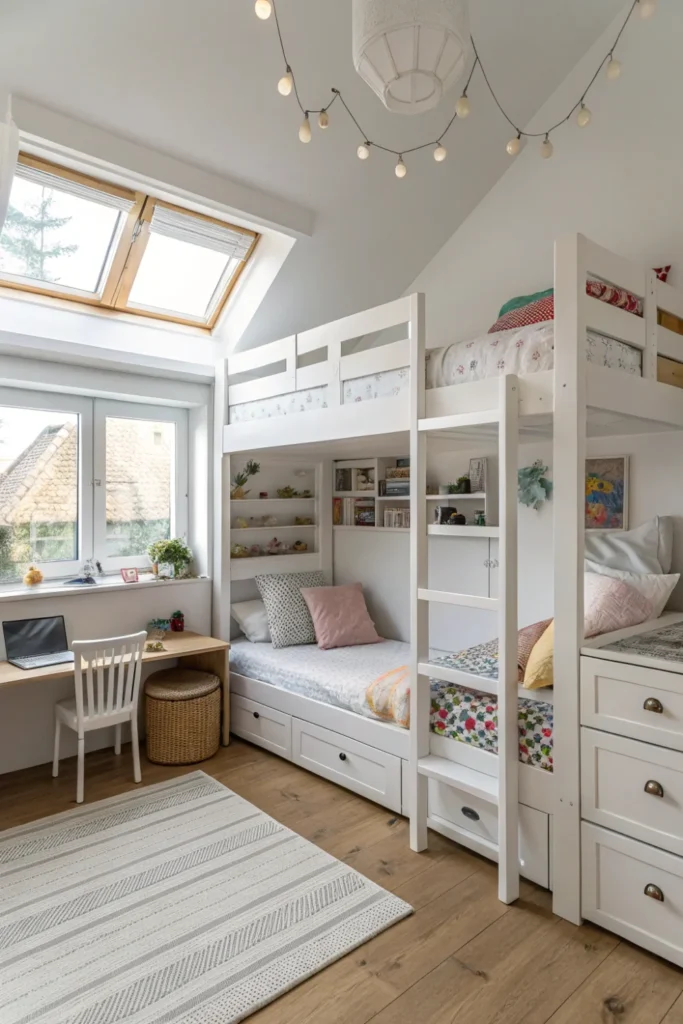
Three loft beds — each elevated to free up floor space underneath — are an excellent way to fit 3 beds in one room while also creating individual functional zones for each child.
The space beneath each loft can become a dedicated desk area, reading nook, wardrobe zone, or play corner — effectively tripling the usable square footage of the room without adding any floor space.
This works best in rooms with ceilings of at least 8.5 to 9 feet and is particularly popular in Scandinavian and modern minimalist children’s room designs.
Pro Tip: Use the under-loft zones to give each child a distinct activity area — one for studying, one for art, one for reading — so the room serves three children’s individual needs simultaneously.
7. Bunk Bed with a Trundle for the Third Bed
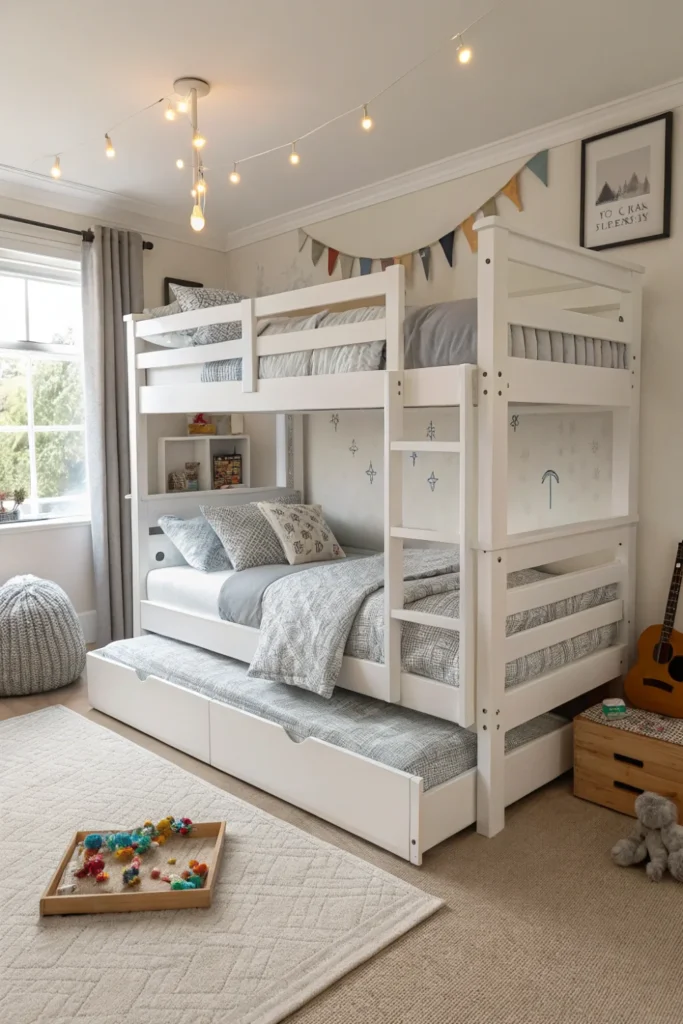
A bunk bed with a built-in trundle drawer is one of the most practical and affordable ways to achieve 3 beds in one room without purchasing a specialty triple-bunk unit.
The trundle slides out from beneath the lower bunk at night and tucks completely away during the day, keeping the floor clear and the room feeling open when all three beds aren’t actively in use.
This is an ideal solution for occasional use scenarios — like a guest room that primarily houses two children but occasionally needs a third sleeping spot for sleepovers or visiting cousins.
Pro Tip: Opt for a trundle with pop-up functionality that raises the mattress to the same height as the lower bunk — it creates a more comfortable sleeping surface and makes the third bed feel as deliberate as the other two.
8. Alcove or Nook Beds Built Into the Walls
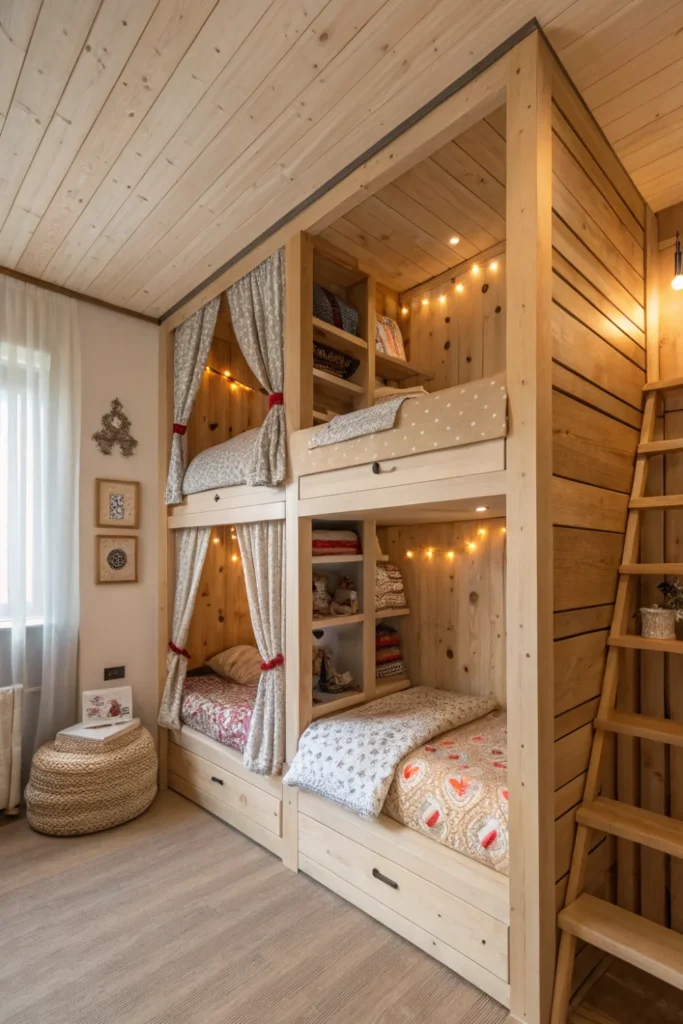
Built-in alcove beds — inspired by the Scandinavian “box bed” and the French “lit clos” tradition — tuck each sleeping space into a dedicated wall nook, making them one of the most architecturally beautiful ways to fit 3 beds in one room.
Each sleeper gets a semi-enclosed, private sleeping nook with their own curtain or sliding panel, creating a cozy, den-like atmosphere that children particularly love.
This approach requires some carpentry or built-in furniture work but delivers unparalleled space efficiency and a completely custom look that no off-the-shelf furniture can replicate.
Pro Tip: Line the inside of each sleeping nook with a warm material — tongue-and-groove wood panels, soft wallpaper, or painted color — to make each child’s space feel distinctly personal and cozy.
9. Cabin or House-Shaped Bunk Beds
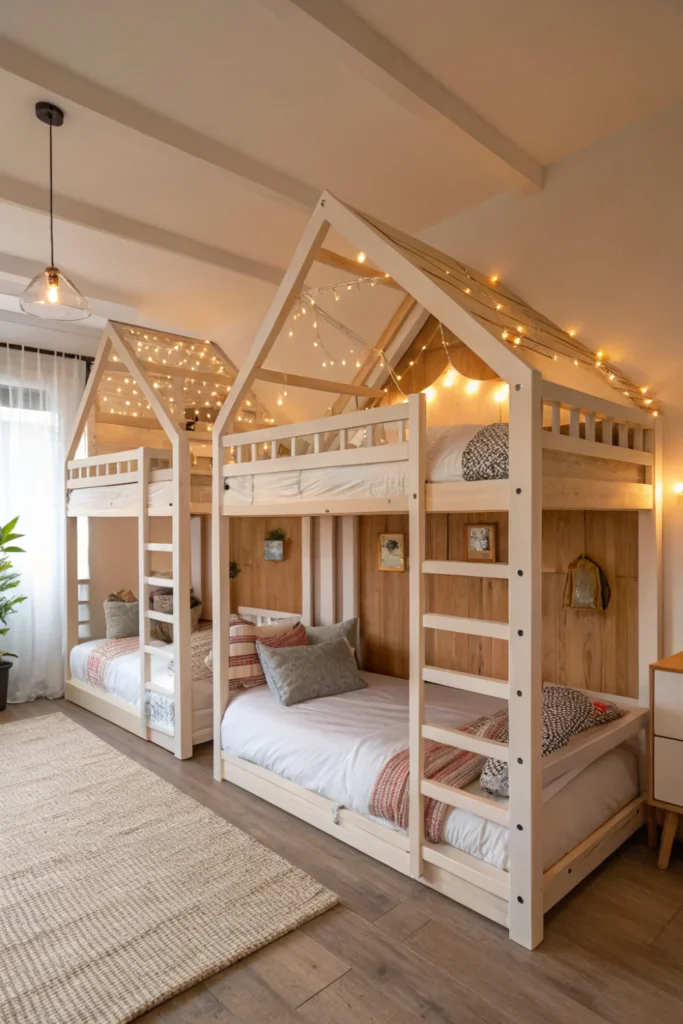
Cabin-style or house-shaped bunk beds are a playful and design-forward way to approach 3 beds in one room — the roofline frames on each bunk give children a sense of their own private space within the shared room.
These beds are available in triple configurations and are enormously popular in Montessori-inspired and children’s interior design circles for the imaginative play they encourage.
Choose models in natural pine, white-painted wood, or birch for a timeless look that grows with children from toddlerhood through the early teen years without feeling babyish.
Pro Tip: Add fairy lights along the roofline frame of each cabin bunk — it makes bedtime feel magical and gives each child a warm, personal light without requiring additional wall-mounted fixtures.
10. Storage Beds with Built-In Drawers for Three
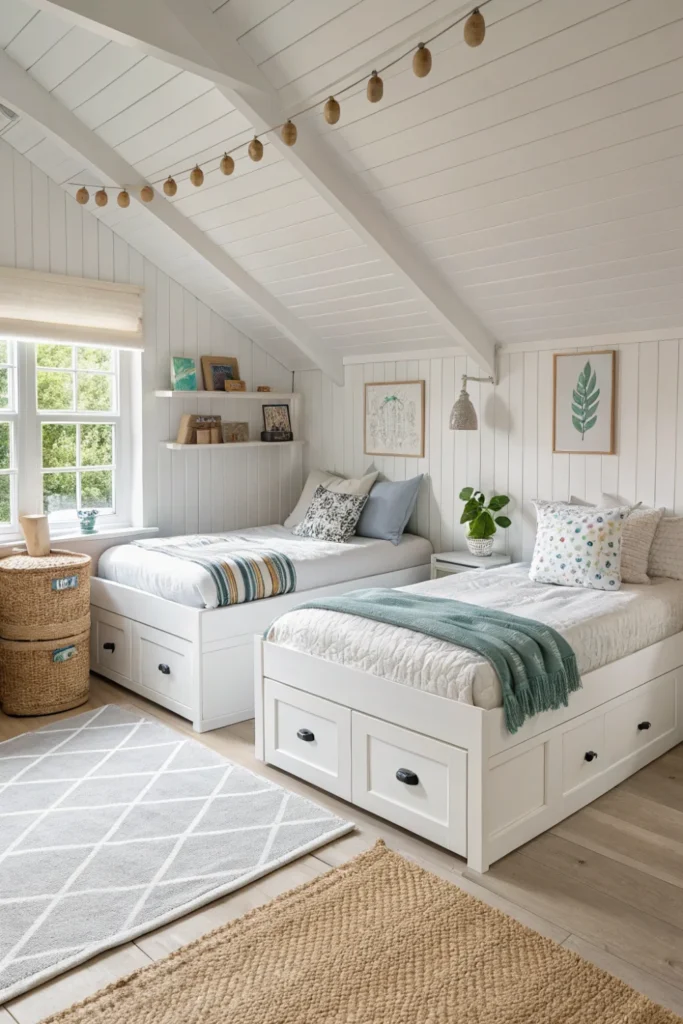
Using three single storage beds with built-in drawers underneath is a practical, floor-level solution for 3 beds in one room that prioritizes accessibility and organization equally.
Each bed provides its own dedicated under-bed storage for clothes, toys, or linens — eliminating the need for separate dressers and freeing up wall space for other uses.
This works particularly well for older children or teenagers who value privacy and prefer not to sleep elevated, or for rooms where ceiling height makes bunk beds impractical.
Pro Tip: Use the under-bed storage drawers for each child’s off-season clothing or bulky items like extra blankets — keeping everyday essentials in accessible drawers prevents clutter from accumulating on surfaces.
11. Convertible Sofa Beds and Daybeds for Flexible Use
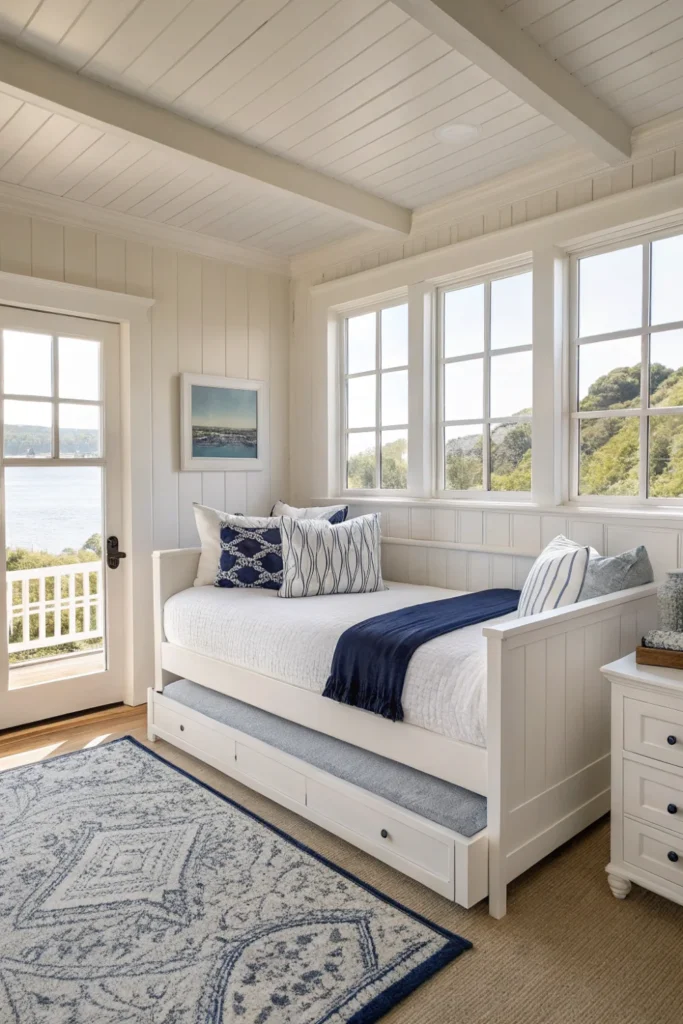
Convertible sofa beds and daybeds offer the most flexible approach to 3 beds in one room — during the day the space functions as a comfortable lounge or play area, and at night the seating converts to sleeping surfaces.
This works exceptionally well in vacation homes, studio-style spaces, or multipurpose rooms where the room needs to serve different functions depending on the time of day or season.
Look for daybeds with pull-out trundles so two of the three beds stack into one furniture piece during the day, maximizing the room’s daytime usability.
Pro Tip: Choose sofa beds and daybeds with high-density foam mattresses of at least 4 inches rather than basic pull-out springs — the sleeping experience is significantly better and guests or children won’t dread bedtime.
Why 3 Beds in One Room Ideas Are Worth the Investment
Investing thoughtfully in a 3 beds in one room setup pays off immediately in the daily life of a family — reducing the number of rooms needed, freeing up space elsewhere in the home, and eliminating the need for costly additions or moves.
Shared bedrooms built with intention foster closer sibling bonds, teach children to respect shared spaces, and develop organizational skills that benefit them well beyond childhood.
From a real estate standpoint, a well-designed room that sleeps three — particularly in a vacation rental or investment property — commands significantly higher nightly rates and accommodates larger groups who pay a premium for sleeping together under one roof.
Things to Consider Before Choosing 3 Beds in One Room
Before selecting any furniture, measure your ceiling height carefully — this is the single most important factor in determining whether bunk beds, loft beds, or floor-level solutions are appropriate for your specific room.
Think about the ages and needs of the children or guests sharing the space — younger children need lower, safer sleeping arrangements with full guardrails, while older children or teens may prioritize privacy and personal storage over vertical space savings.
Always plan for individual lighting and at least one personal storage zone per sleeper — these two elements are what separate a truly functional 3 beds in one room setup from one that creates daily friction and conflict between occupants.
Comparison Table of 3 Beds in One Room Ideas
| Idea | Cost Range | Space Required | Min. Ceiling Height | Best For | Privacy Level |
|---|---|---|---|---|---|
| Triple Bunk Bed | $400–$2,500 | Small footprint | 9 ft+ | Kids, small rooms | Low |
| L-Shaped Bunk + Pull-Out | $600–$3,000 | Corner space | 8.5 ft+ | Kids, square rooms | Low–Medium |
| Bunk + Single Bed | $300–$2,000 | Medium | 7 ft+ | Mixed ages | Medium |
| Three Twin Beds in a Row | $500–$3,000 | Long wall needed | 7 ft | Teens, dorms | Low–Medium |
| Murphy Wall Beds (x3) | $2,500–$8,000+ | Minimal (folded) | 7 ft | Guest rooms, rentals | High |
| Three Loft Beds | $900–$4,500 | Medium–Large | 9 ft+ | Kids with activity zones | Medium |
| Bunk + Trundle | $350–$1,800 | Small footprint | 7 ft | Occasional 3rd sleeper | Low |
| Built-In Alcove Beds | $3,000–$15,000+ | Wall-integrated | 7 ft | Custom homes | High |
| Cabin / House Bunk Beds | $800–$4,000 | Medium | 8.5 ft+ | Young children | Medium |
| Storage Beds (x3) | $600–$3,500 | Large floor area | 7 ft | Teens, older kids | Medium–High |
| Sofa Beds / Daybeds | $800–$4,000 | Medium | 7 ft | Guest rooms, flex spaces | Medium |
Frequently Asked Questions About 3 Beds in One Room
What Is the Minimum Room Size Needed for 3 Beds in One Room?
For 3 beds in one room using a triple bunk configuration, a room as small as 9 x 10 feet can work since the beds stack vertically. For three floor-level twin beds in a row, you’ll need at least 10 x 14 feet to fit the beds comfortably with walking clearance.
The general rule is a minimum of 30 inches of walking space beside each bed — this ensures the room remains safe and functional rather than feeling like an obstacle course.
Are Bunk Beds Safe for Young Children Sharing a Room?
Bunk beds are generally recommended for children aged 6 and older for the upper bunks — younger children lack the coordination and awareness to safely navigate ladders and elevated sleeping surfaces at night.
For rooms with children under 6, consider a bunk bed with trundle where younger children sleep on the trundle or lower bunk, reserving upper bunks exclusively for older siblings until the youngest reaches a safe age.
How Do You Give Each Child Privacy in a 3 Beds in One Room Setup?
Individual bed curtains are the single most effective privacy solution for shared bedrooms — they can be installed on ceiling-mounted tracks or directly on bunk bed frames and give each child a sense of their own enclosed space.
For floor-level beds, room divider screens, bookcase dividers, or curtain panels hung from the ceiling can section the room into individual zones while still keeping the space open and connected when the dividers are pulled back.
What Is the Best Way to Organize Storage for 3 Children in One Room?
The most effective approach is assigning each child their own dedicated storage zone — whether that’s a specific drawer, shelf, closet section, or under-bed storage unit — so ownership is clear and shared frustration is minimized.
Color-coding storage by child (each child has one consistent accent color for their bins, hangers, and labels) is a practical system that works especially well for younger children who can identify their belongings by color before they can reliably read labels.