A washroom with bathtub is one of the most coveted features in any home — a dedicated soaking space that transforms a purely functional bathroom into a genuine daily retreat. The right bathtub design elevates every evening routine from ordinary to extraordinary.
Whether you are planning a full bathroom renovation or simply reimagining the layout and styling of an existing space, the decisions you make around the bathtub — its style, position, material, and surrounding decor — determine how luxurious, functional, and beautiful the room feels for years to come.
This guide covers the best washroom with bathtub ideas that interior designers and bathroom specialists actually recommend — with practical tips, honest comparisons, and product picks to help you create a bathing space that feels genuinely indulgent every single day.
List of 10 Best Washroom with Bathtub Ideas
1. Freestanding Soaking Tub as the Room’s Centerpiece
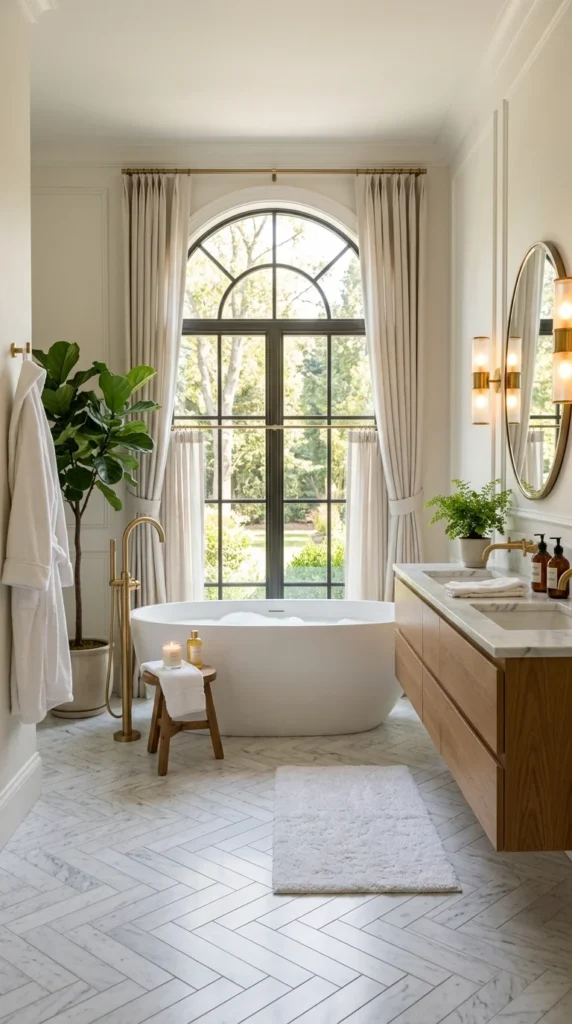
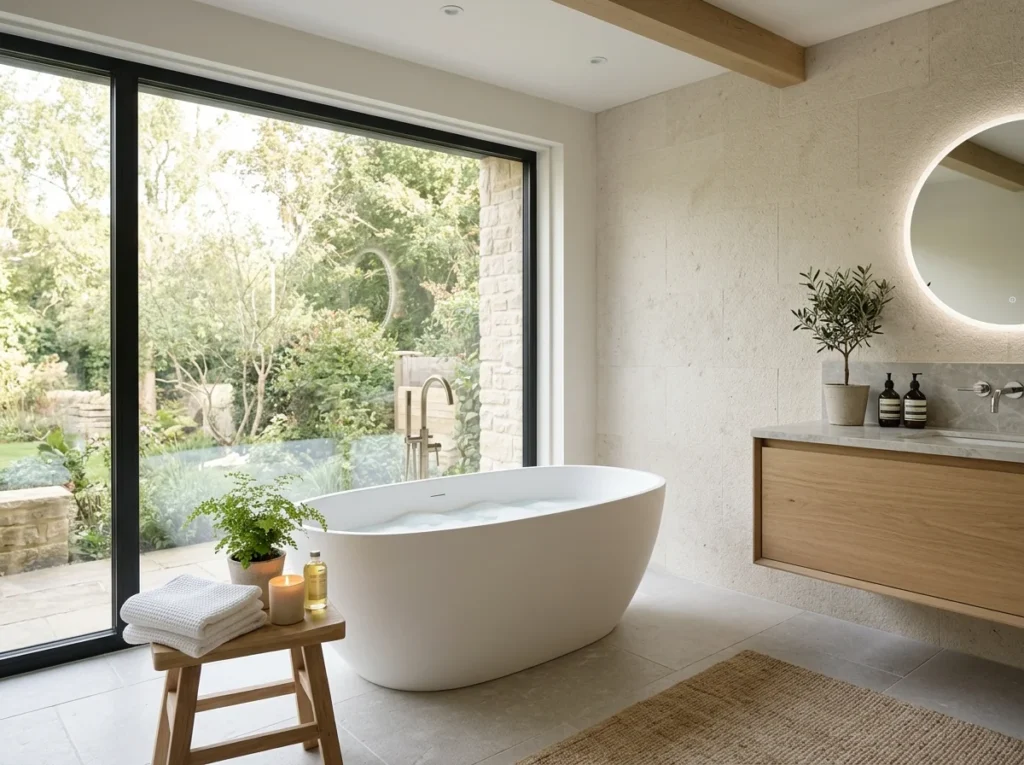
A freestanding soaking tub positioned as the visual centerpiece of the washroom is the most dramatic and unambiguously luxurious expression of a washroom with bathtub design. Unattached to any wall, a sculptural freestanding tub commands attention from every angle and transforms the bathroom into something that feels genuinely spa-like.
Oval, slipper, double-ended, and pedestal freestanding tubs each create a distinct visual character — oval tubs feel modern and organic, slipper tubs feel classically elegant, double-ended tubs feel symmetrical and grand, and pedestal tubs feel architectural and formal.
Position a freestanding tub with at least 18 to 24 inches of clearance on all sides — this generous surround allows comfortable entry and exit, accommodates a floor-mounted faucet, and prevents the tub from appearing squeezed into a space that cannot properly showcase its sculptural form.
Pro Tip: Place a freestanding tub in front of a large window or facing the room’s primary view wherever the plumbing configuration allows — the combination of a beautiful tub and a view creates the most indulgent bathing experience available in a residential washroom with bathtub, and positions the room’s most beautiful object to be seen from the doorway as a first impression.
2. Built-In Alcove Bathtub with Surround
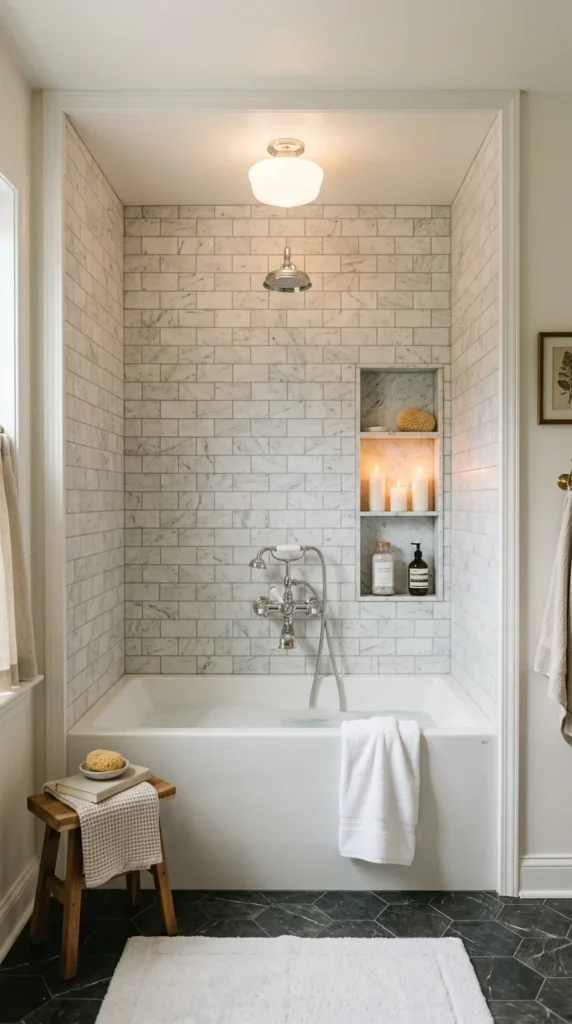
A built-in alcove bathtub — fitted between three walls with a tiled surround — is the most practical and space-efficient bathtub configuration for a washroom with bathtub that also needs to function as a daily shower. The alcove format maximizes the usable floor area of the washroom while providing a genuinely comfortable bathing and showering experience.
The tiled surround of an alcove bathtub creates the largest single design surface in a washroom with bathtub — the choice of tile material, pattern, color, and grout creates the primary aesthetic statement of the entire room, making this surface worth investing in with genuinely beautiful materials.
Large format marble tiles, handmade zellige ceramics, classic white subway tiles with dark grout, and dramatic book-matched stone slabs are all exceptional choices for an alcove bathtub surround — each creates a completely different atmosphere around the same basic bathtub configuration.
Pro Tip: Extend the bathtub surround tile from the tub deck to the full ceiling height on the back wall rather than stopping at a standard 6-inch tile rail — full-height tiling creates a continuous, seamless surface that reads as a deliberate architectural decision and makes the washroom with bathtub feel significantly more luxurious than a part-tiled surround.
3. Japanese Soaking Tub for a Spa Experience
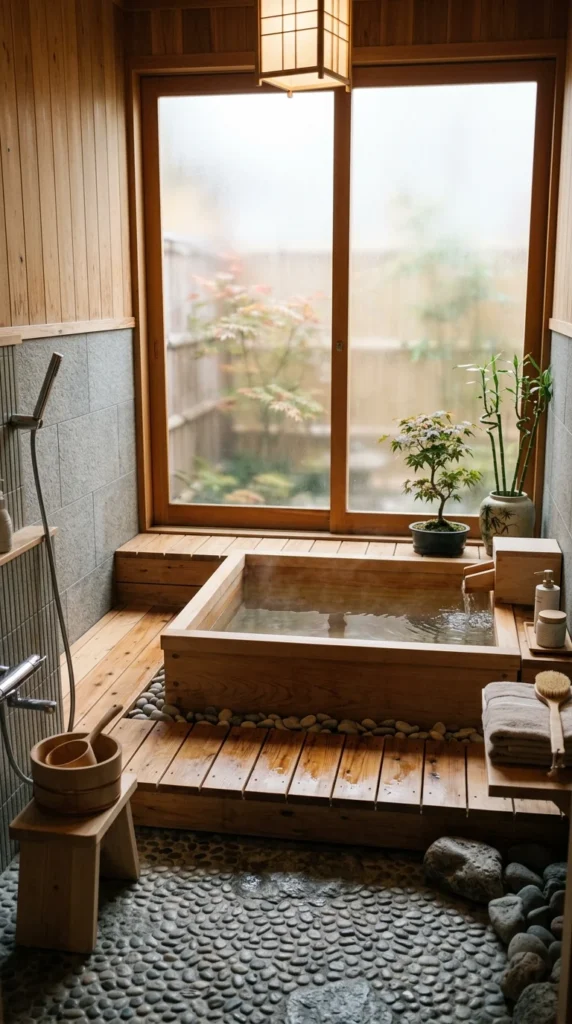
A Japanese soaking tub — a deep, compact vessel designed for immersive soaking in an upright seated position rather than a reclined lying position — is one of the most space-efficient and culturally distinctive bathtub choices for a washroom with bathtub that prioritizes the bathing experience over bathtub size.
The deep soak of a Japanese ofuro tub allows complete submersion of the body up to the shoulders in a footprint significantly smaller than a standard Western bathtub — making it an ideal choice for washrooms where floor space is limited but the desire for a genuine soaking bathtub experience is non-negotiable.
Cedar wood, acrylic, and stone-effect composite Japanese soaking tubs each create a different aesthetic and sensory experience — cedar brings an extraordinary warm, woody fragrance that intensifies with heat and steam, while stone-effect composites create a more visual, architectural statement.
Pro Tip: Install a built-in bench or step beside a Japanese soaking tub — the deep entry of a Japanese tub requires stepping down into the vessel, and a low bench or step provides a safe, comfortable transition point that is both practically necessary and an opportunity to introduce a beautiful natural material like teak or stone into the washroom with bathtub design.
4. Clawfoot Bathtub for Vintage Charm
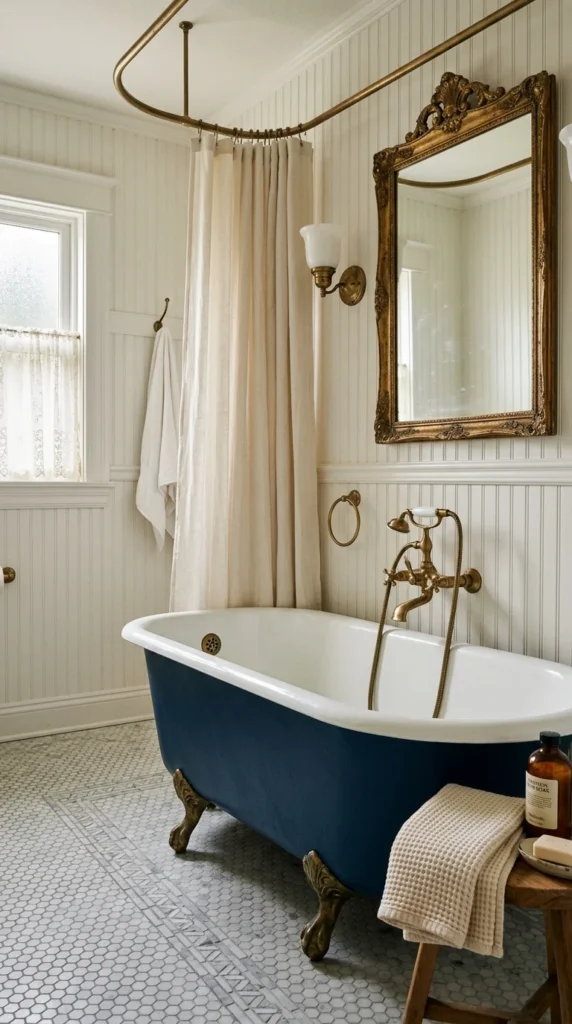
A clawfoot bathtub — a freestanding cast iron or acrylic tub raised on four decorative feet — is the most historically evocative and romantically beautiful bathtub choice for a washroom with bathtub that celebrates classic, vintage, or eclectic interior aesthetics.
The elevated profile of a clawfoot tub creates a visual presence and spatial drama that floor-level bathtubs cannot match — the visible feet, the curved rolled rim, and the standalone sculptural quality of a clawfoot tub make it one of the most recognizable and beloved bathroom features in residential design history.
Cast iron clawfoot tubs are the most authentic and thermally superior choice — the heavy cast iron retains bath water heat significantly longer than acrylic alternatives, making every soak genuinely warmer and more relaxing. Their weight requires confirmed floor structural support before installation.
Pro Tip: Paint the exterior of a clawfoot bathtub in a bold accent color — navy, forest green, matte black, or deep burgundy — while keeping the interior white. The colored exterior transforms the clawfoot tub from a traditional fixture into a genuine design statement that anchors the entire washroom with bathtub aesthetic around a single dramatic choice.
5. Bathtub and Shower Combination
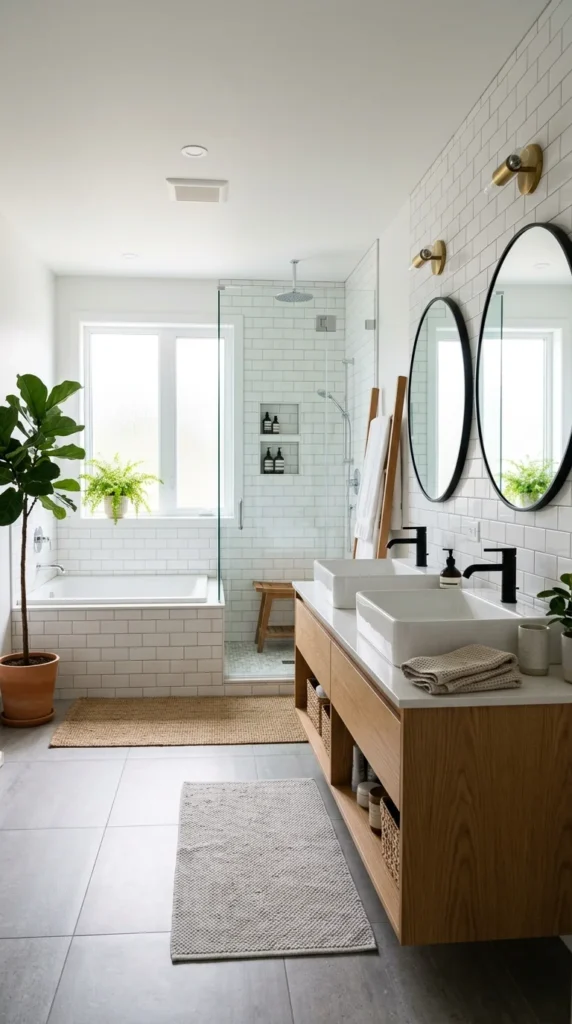
A bathtub and shower combination within the same washroom — either as an integrated unit or as separate dedicated zones — is the most practically complete and family-friendly configuration for a washroom with bathtub that needs to serve multiple users with different daily requirements.
The separate dedicated bathtub and shower zone — a freestanding or built-in tub at one end of the washroom and a walk-in shower enclosure at the other — creates the most luxurious and functionally complete washroom with bathtub possible, eliminating every compromise that integrated combination units impose on both experiences.
An over-bath shower — a showerhead installed above an alcove bathtub — is the most space-efficient combined solution for smaller washrooms, providing both bathing and showering functions within a single footprint while the glass screen or curtain separates the two activities appropriately.
Pro Tip: Install a thermostatic shower valve rather than a manual mixer above a combination bathtub and shower — thermostatic valves maintain the pre-set water temperature regardless of pressure changes elsewhere in the building, eliminating the sudden cold or scalding water surprises that manual mixer valves create in households where multiple water outlets are used simultaneously.
6. Bathtub Niche with Built-In Shelving
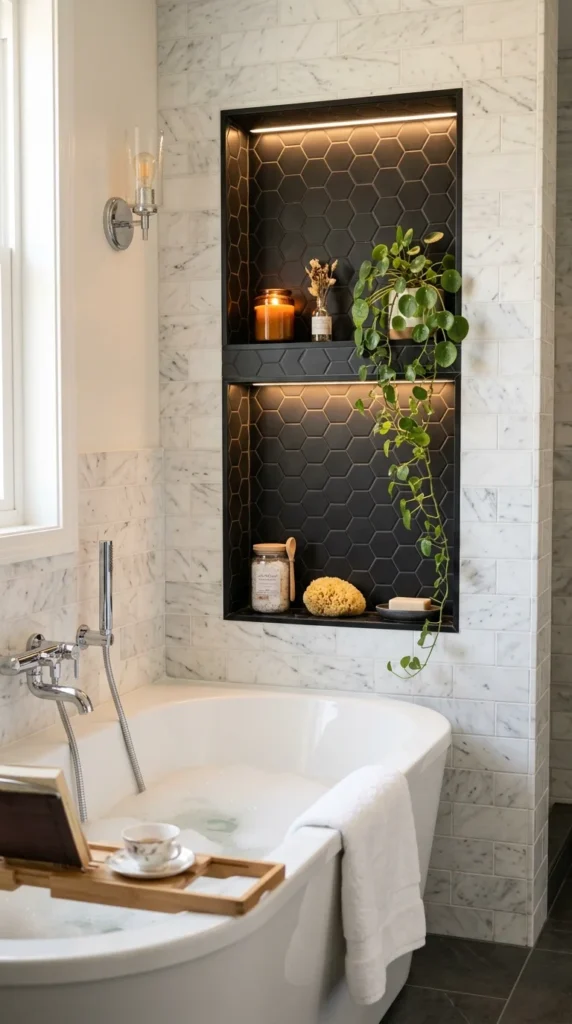
A bathtub niche with built-in shelving — recessed shelf space built into the wall at the bathtub end or side — is one of the most practical and architecturally elegant design details in a washroom with bathtub. It provides a dedicated, waterproof surface for bath products, candles, and accessories without requiring any external rack or caddy.
A properly tiled niche with an internal tile in a contrasting color or material to the surrounding wall creates a framed, gallery-like effect that elevates the niche from purely functional storage to a genuine design feature — one of the most impactful small details in the entire washroom with bathtub design.
Multiple niche shelves at different heights — one wide niche for large bottles and accessories, one narrow niche for smaller items — create a more organized and visually interesting storage arrangement than a single-depth niche that treats all products as equally sized.
Pro Tip: Waterproof the niche interior with a dedicated waterproof membrane and properly sloped niche floor that directs water toward the bathtub rather than allowing it to pool — an improperly waterproofed niche is the most common source of hidden water damage in a washroom with bathtub, often remaining undetected for months before causing structural problems.
7. Bathtub Positioned Under a Skylight
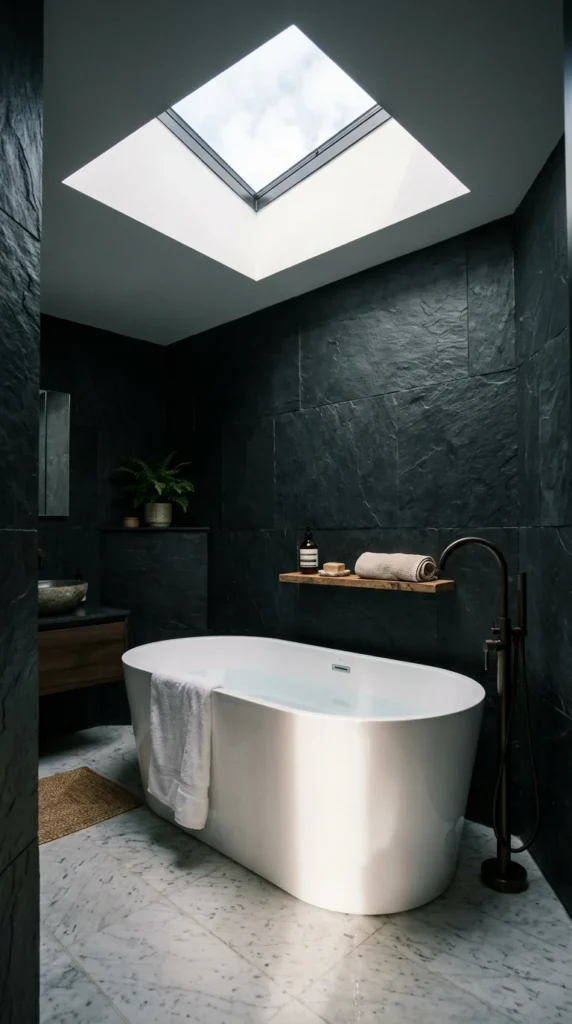
A bathtub positioned directly beneath a skylight is one of the most extraordinary and emotionally resonant configurations possible in a washroom with bathtub — soaking in natural light falling vertically from above creates a genuinely transcendent bathing experience that no other window configuration can replicate.
The overhead natural light of a skylight illuminates the bathtub and surrounding water from directly above, creating a quality of light that is simultaneously dramatic and intimate — sunlight during the day, stars on clear nights, and rain on the glass overhead during storms all create a changing, living overhead canvas.
A frosted or textured skylight above a bathtub provides the full benefit of natural light without privacy concerns — diffused light through obscure glass creates a soft, even illumination that is equally beautiful and flattering for the bathing experience.
Pro Tip: Install a thermally insulated skylight with a low-e coating above a washroom with bathtub — standard skylights create significant heat loss in winter and heat gain in summer that makes the bathing zone uncomfortable during seasonal extremes. A properly specified insulated skylight delivers natural light year-round without the thermal performance penalty.
8. Bathtub Deck in Natural Stone or Wood
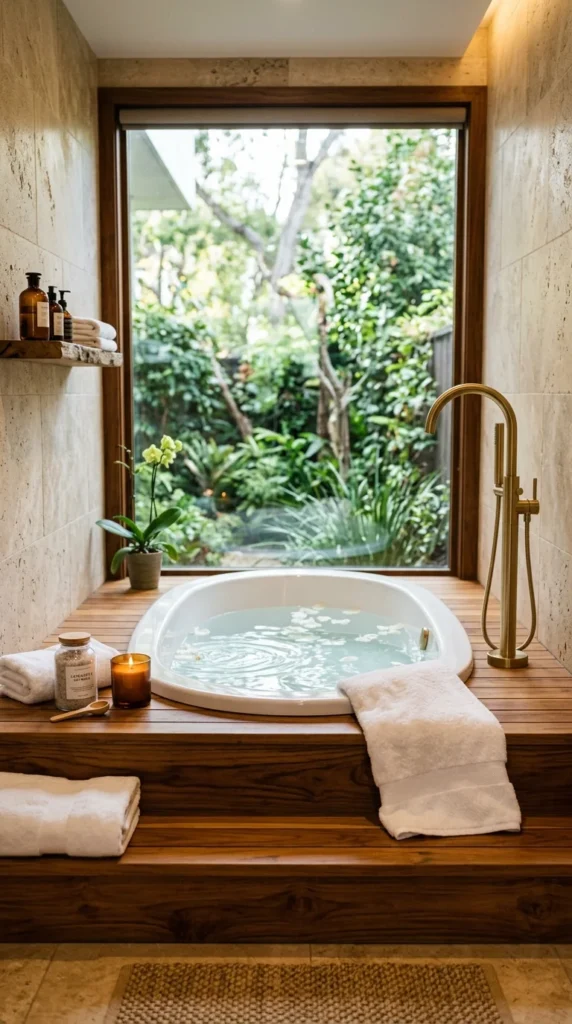
A raised bathtub deck — an elevated platform in natural stone, marble, or timber surrounding and framing a drop-in bathtub — creates one of the most architectural and design-forward bathtub configurations in a washroom with bathtub. The deck elevates the tub both literally and visually, making it a genuine room feature rather than a floor-level fixture.
Marble, travertine, slate, and teak wood decks each create a completely different atmosphere around the same drop-in tub — marble feels classical and luxurious, travertine feels warm and Mediterranean, slate feels dramatic and contemporary, and teak feels spa-like and organic.
A teak wood bathtub deck is the warmest and most spa-inspired choice — the natural oils in teak provide exceptional water resistance, the warm honey grain adds organic beauty, and the tactile warmth of wood underfoot and underhand creates a bathing environment that cold stone cannot match for comfort.
Pro Tip: Build the bathtub deck with at least two steps leading up to the tub rather than a single high step — multiple low steps create a more graceful, architectural approach to the elevated bathtub and eliminate the physical awkwardness of a single tall step that makes entry and exit feel ungainly rather than elegant.
9. Bathtub with a View — Positioning for Maximum Impact
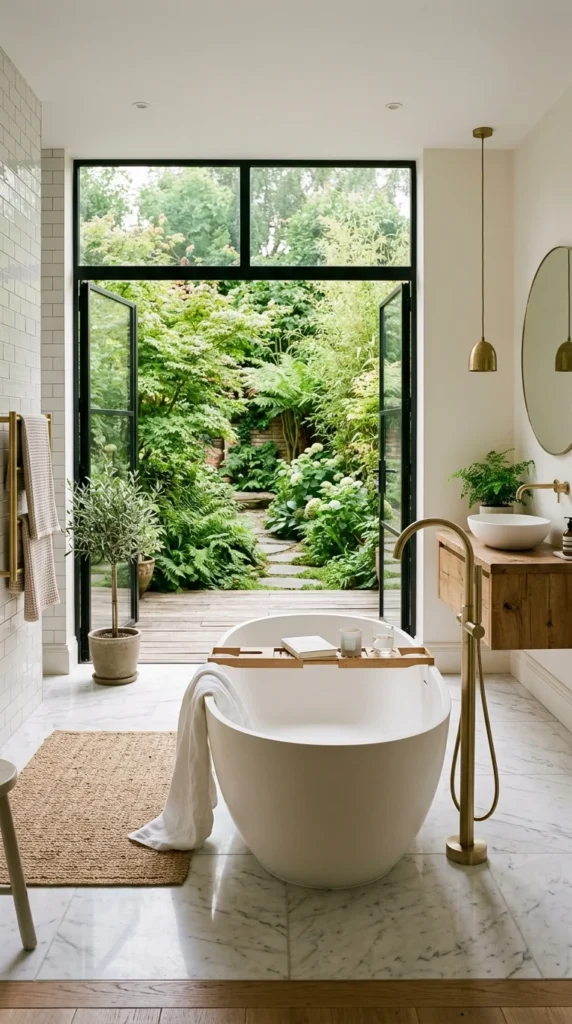
Positioning the bathtub to maximize a specific view — of a garden, a landscape, a city skyline, or a dramatic interior feature — is one of the most lifestyle-defining decisions in designing a washroom with bathtub. The view from the bathtub is what makes every soak genuinely restorative rather than simply functional.
A bathtub facing floor-to-ceiling windows or glass doors opening to a private garden creates the most coveted luxury residential bathing experience — the visual connection to landscape, sky, and natural movement transforms a standard bath into a meditative, genuinely relaxing ritual.
Even in urban settings where an outdoor view is not available, positioning the bathtub to face a beautiful interior feature — a fireplace, a dramatic marble wall, a gallery of art — creates a composed, intentional visual experience that makes every bath feel like a considered moment rather than a rushed necessity.
Pro Tip: Install privacy film on lower window panes in a washroom with bathtub that faces outside — a window film that is opaque from exterior viewing but clear from interior viewing allows the bather to enjoy an unobstructed view while preventing visibility from the outside, combining the privacy of frosted glass with the visual experience of clear glazing.
10. Romantic Candlelit Bathtub Atmosphere
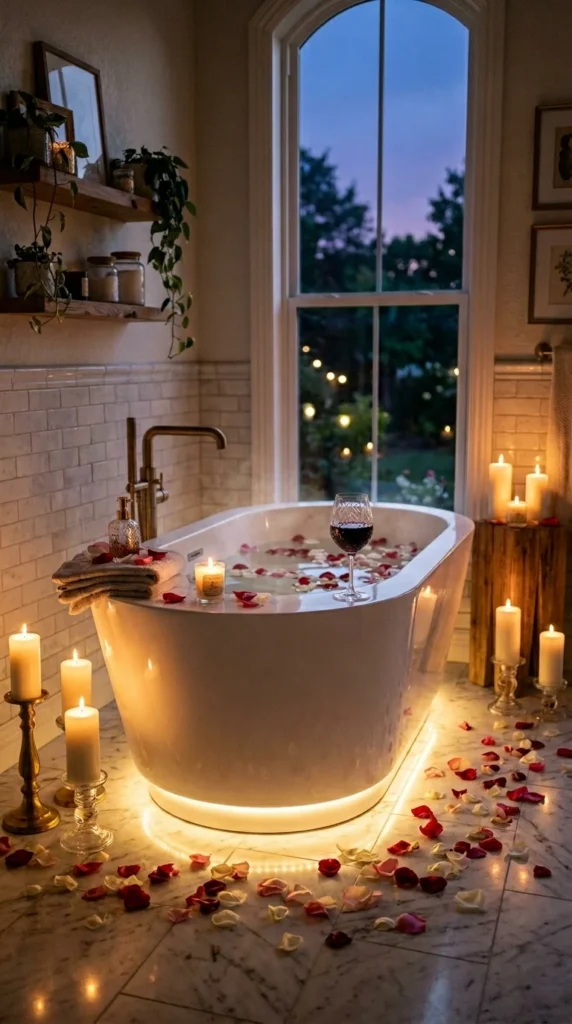
Creating a romantic candlelit bathtub atmosphere through strategic lighting design, candle placement, and sensory accessories is one of the most accessible and immediately transformative washroom with bathtub ideas — turning the same physical space into an emotionally different experience through lighting and atmosphere alone.
Dimmable lighting circuits in a washroom with bathtub are the most important infrastructure investment for creating a romantic bathing atmosphere — the ability to dim overhead lights to near-zero and rely on candlelight and low-level accent lighting transforms the room from a bright functional space to an intimate, deeply relaxing sanctuary at the touch of a dimmer.
Grouped candle arrangements on the bathtub deck, surrounding windowsill, and nearby shelving — pillar candles of different heights, tea lights in glass holders, and scented candles in beautiful vessels — create the warm, flickering light that no artificial source can replicate for genuine bathing atmosphere.
Pro Tip: Install LED strip lighting beneath a freestanding bathtub or along the bottom of a bathtub deck — the soft underlighting glow creates a floating, magical effect that makes the bathtub appear to hover above the floor and transforms the entire room’s atmosphere in the evening without any additional accessories or candles required.
Why a Well-Designed Washroom with Bathtub Is Worth the Investment
A beautifully designed washroom with bathtub is one of the most personally valuable investments in a home — it creates a daily ritual space for decompression, physical recovery, and genuine relaxation that has measurable benefits for mental and physical health that extend far beyond the moments spent bathing.
Property value is directly and significantly influenced by the presence and quality of a bathtub in the primary bathroom — real estate professionals consistently report that a well-appointed washroom with bathtub commands stronger buyer interest, faster sales, and meaningfully higher valuations than equivalent properties without a dedicated bathing space.
The return on investment of a quality bathtub installation extends over decades of daily use — a well-specified cast iron, stone, or quality acrylic bathtub installed correctly in a properly waterproofed washroom will provide reliable, beautiful service for 20 to 30 years, making the cost per use of even a premium bathtub extraordinarily low across its full service life.
Things to Consider Before Designing a Washroom with Bathtub
Before finalizing any washroom with bathtub design, assess the floor structural capacity of the room carefully — a full cast iron clawfoot bathtub filled with water and occupied by an adult can weigh over 500 pounds, and many residential upper-floor bathroom structures require reinforcement before safely supporting this load.
Think carefully about how frequently the bathtub will genuinely be used in your household before investing in a premium bathtub specification — a stunning freestanding soaking tub that is used once a month delivers far less value than a well-specified alcove combination tub and shower used by the family daily, and honest self-assessment of actual bathing habits is the most important factor in making the right bathtub investment.
Always plan the plumbing rough-in position carefully before finalizing the bathtub location in a washroom with bathtub — the drain, overflow, and supply positions determine where a bathtub can practically be placed, and moving plumbing rough-ins after concrete or tile work is completed is one of the most expensive and disruptive changes in any bathroom renovation.
Comparison Table of Washroom with Bathtub Ideas
| Bathtub Style | Cost Range | Space Required | Installation | Maintenance | Best Style |
|---|---|---|---|---|---|
| Freestanding Soaking Tub | $800–$6,000+ | Large clearance | Medium | Low | Modern, luxury |
| Built-In Alcove Tub | $400–$2,500 | Compact | Medium | Low | Any style |
| Japanese Soaking Tub | $600–$4,000 | Compact | Medium | Low–Medium | Spa, Japanese |
| Clawfoot Bathtub | $800–$5,000 | Medium | Medium–High | Low | Vintage, eclectic |
| Tub and Shower Combo | $600–$4,000 | Medium–Large | Medium–High | Low | Family, practical |
| Bathtub with Niche | $400–$2,500 | Standard | High | Low | Any style |
| Tub Under Skylight | $1,000–$5,000+ | Standard | Very High | Low | Modern, dramatic |
| Raised Deck Bathtub | $1,500–$8,000 | Large | Very High | Medium | Luxury, spa |
| Tub with a View | $800–$6,000 | Depends on layout | Medium–High | Low | Any style |
| Romantic Candlelit Setup | $200–$2,000 | Standard | Low | Low | Any style |
| Tub with Side Table | $50–$500 | Standard | Low | Low | Any style |
| Plant-Surrounded Bathtub | $100–$1,000 | Standard | Low | Medium | Organic, spa |
| Minimalist Bathtub | $800–$5,000 | Medium–Large | Medium–High | Low | Modern, minimalist |
Frequently Asked Questions About a Washroom with Bathtub
What Is the Best Bathtub Style for a Small Washroom?
The best bathtub for a small washroom is a built-in alcove tub in a compact 54 or 60-inch length — it maximizes floor space efficiency by fitting between three walls, provides both bathing and showering functions in a single footprint, and leaves the remaining washroom floor area clear for vanity, toilet, and movement.
A Japanese soaking tub is the second-best option for small washrooms with bathtubs — its shorter but deeper format provides a genuinely immersive soaking experience in a smaller footprint than a standard reclining bathtub, making it an excellent choice for washrooms where floor area is genuinely constrained but the desire for a bathtub is non-negotiable.
How Much Space Does a Freestanding Bathtub Need?
A freestanding bathtub requires a minimum of 6 inches of clearance on all sides from surrounding walls and fixtures — but 18 to 24 inches of clearance on at least the long sides and one end creates a significantly more comfortable and visually generous bathtub zone that allows proper entry, exit, and access to floor-mounted fixtures.
The minimum recommended room size for a freestanding bathtub washroom that also includes a separate shower, vanity, and toilet is approximately 100 to 120 square feet — smaller rooms can accommodate a freestanding tub but require very careful layout planning to maintain adequate clearances around every fixture simultaneously.
Is It Worth Having a Bathtub in a Washroom?
A bathtub is worth including in a washroom when the household includes young children who need regular bathing, when the occupants genuinely enjoy and use a bathtub for soaking and relaxation, or when the property’s market position makes a bathtub-equipped primary bathroom an expected feature that significantly affects buyer appeal.
For households where the bathtub would genuinely be unused, replacing it with a larger walk-in shower typically improves daily functional satisfaction significantly — but removing the only bathtub in a home is a decision that warrants careful research into local property market expectations, as some buyer demographics consider a tub-free primary bathroom a meaningful negative regardless of how beautiful the shower replacement is.
How Do I Make a Washroom with Bathtub Feel More Luxurious?
The most impactful upgrades for making a washroom with bathtub feel more luxurious are investing in a quality bathtub tray for books and candles, installing dimmable lighting on a separate circuit, adding two or three large plants around the bathtub zone, upgrading towels and bath accessories to high-quality matching sets, and installing under-tub LED strip lighting for evening bathing atmosphere.
Upgrading the bathtub faucet and fixtures to a more premium finish — brushed gold, brushed nickel, or matte black — is the single most visible hardware change in a washroom with bathtub and delivers an immediate improvement in perceived luxury without requiring any structural changes to the room or its plumbing configuration.