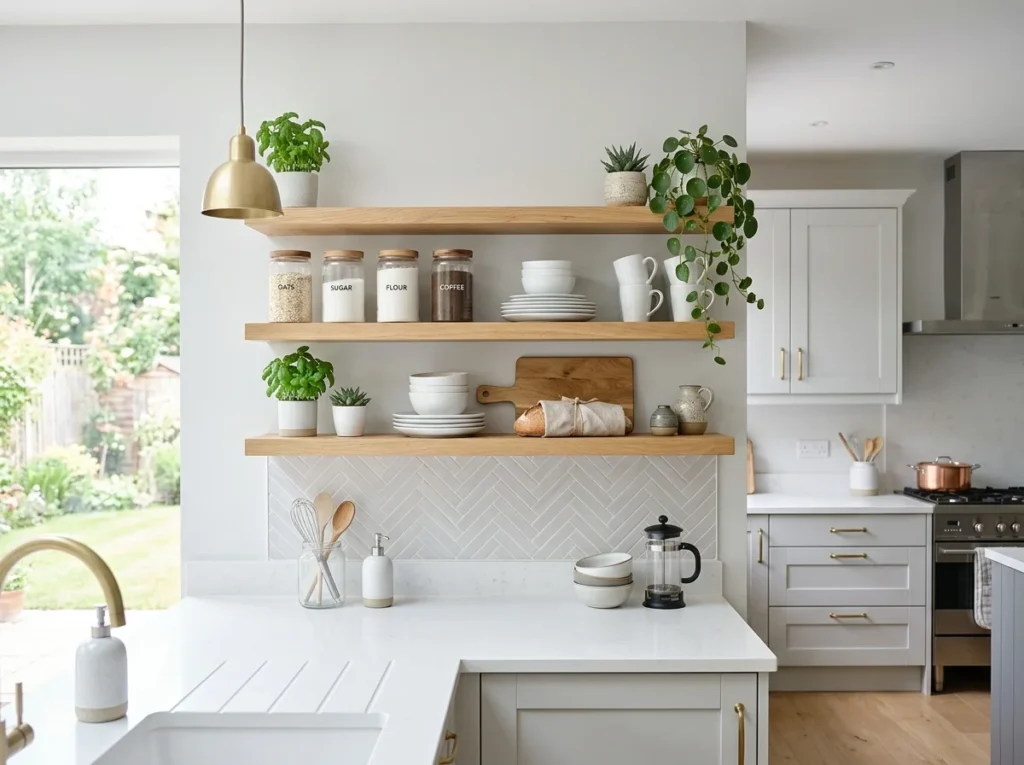
The right kitchen shelves do far more than hold your dishes — they define the character of the entire room, create opportunities for personal expression, and make everyday cooking faster and more enjoyable. A beautifully styled kitchen shelf turns the most functional room in the home into one of the most visually compelling.
Whether you are replacing closed upper cabinets, adding extra storage to a compact kitchen, or simply looking for smarter ways to display your ceramics and cookbooks, there is a kitchen shelf solution for every layout, style, and budget. The best kitchen shelves balance accessible storage with genuine aesthetic appeal.
This guide covers the best kitchen shelves ideas that home cooks and kitchen designers actually recommend — with practical tips, honest comparisons, and product picks to help you create a kitchen that is as organized as it is beautiful.
List of 10 Best Kitchen Shelves Ideas
1. Solid Wood Open Floating Shelves
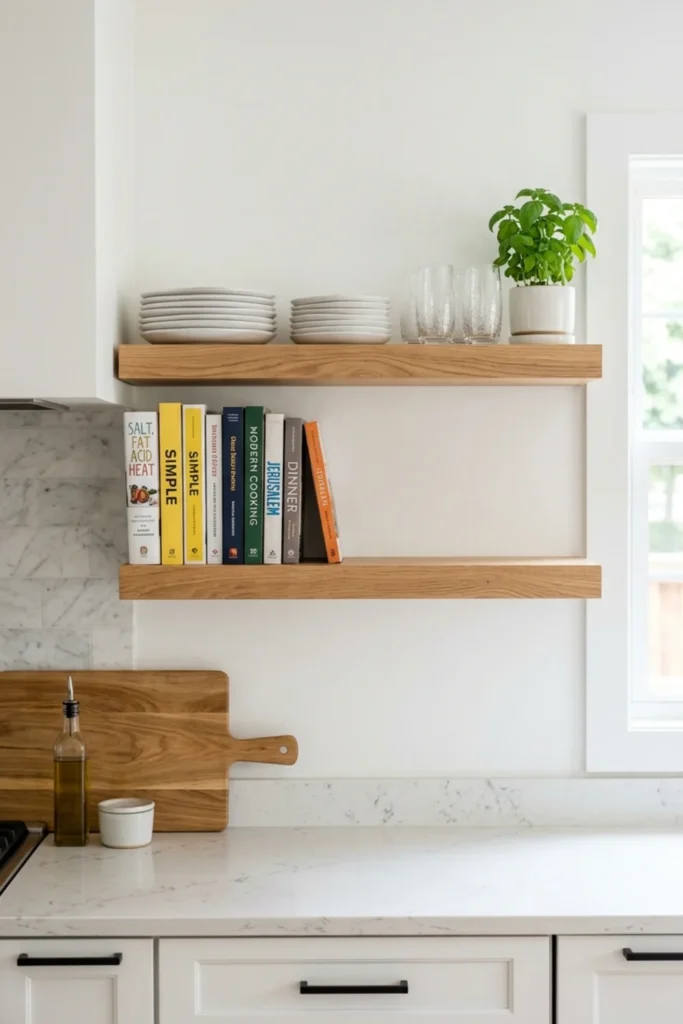
Solid wood open floating shelves are the most popular and enduringly beautiful kitchen shelves choice for contemporary interiors. Replacing upper cabinets with clean, bracket-free floating shelves in white oak, walnut, or pine immediately opens up the kitchen, adds warmth, and creates a display surface for everyday ceramics and glassware.
The natural grain and warmth of solid wood creates a visual counterpoint to the hard surfaces of tile, stone, and cabinetry that dominate most kitchens — a run of solid wood kitchen shelves introduces organic character that no laminate or painted alternative can replicate.
Style solid wood kitchen shelves with a disciplined mix of white ceramics, clear glassware, a few cookbooks, and one small plant — consistency of the displayed objects is what makes open kitchen shelves look curated rather than cluttered.
Pro Tip: Fix solid wood kitchen shelves directly into wall studs or use heavy-duty toggle anchors rated for at least 50 pounds per bracket — a fully loaded kitchen shelf carrying stacks of dishes and glassware exerts significant weight, and anchors that pull from drywall alone create both a safety hazard and a costly wall repair.
2. Black Metal Bracket Shelves
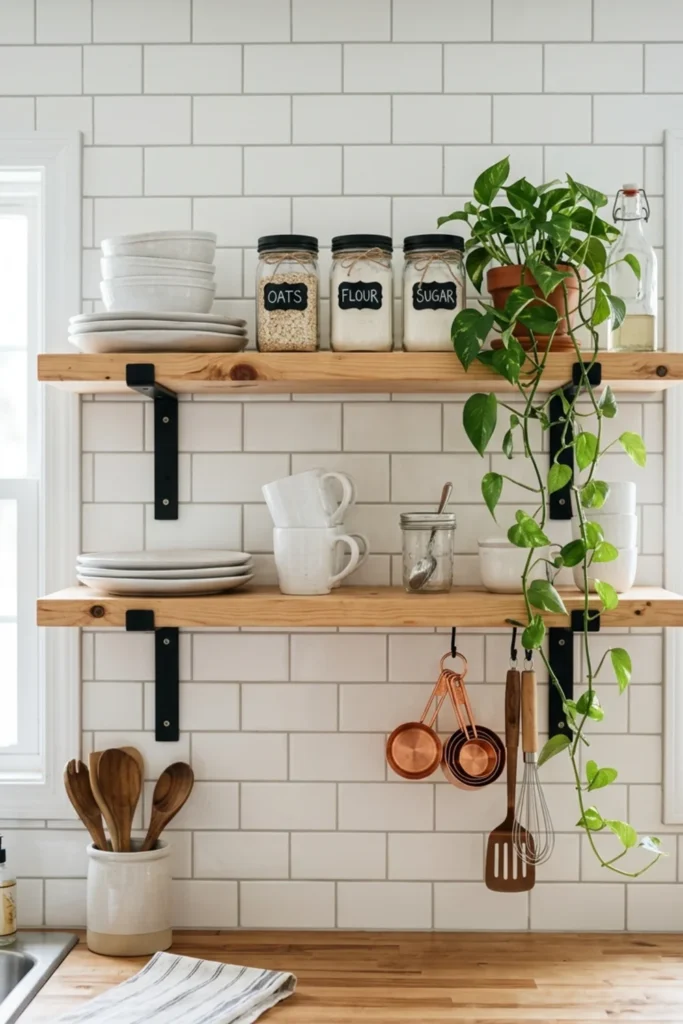
Black metal bracket shelves are one of the most popular kitchen shelves styles in contemporary and industrial-inspired kitchens — the contrast of dark metal hardware against a light shelf surface and white wall creates a graphic, intentional aesthetic that suits modern farmhouse, industrial, and Scandi interiors beautifully.
The visible bracket in black powder-coated steel or cast iron is a design feature rather than a purely structural element — the bracket’s form, finish, and size are all visible design decisions that contribute to the kitchen’s overall aesthetic as much as the shelf surface itself.
Pair black metal bracket kitchen shelves with a natural wood shelf board in white oak or pine for the most popular and widely loved combination — the warm wood grain against the cool dark metal creates a perfect material balance that suits almost every kitchen color palette.
Pro Tip: Space black bracket kitchen shelves at least 12 to 14 inches apart vertically — this clearance accommodates the tallest standard dinner plates standing upright, the most common and frustrating measurement oversight in kitchen shelves planning that results in plates that cannot stand without hitting the shelf above.
3. Corner Kitchen Shelves
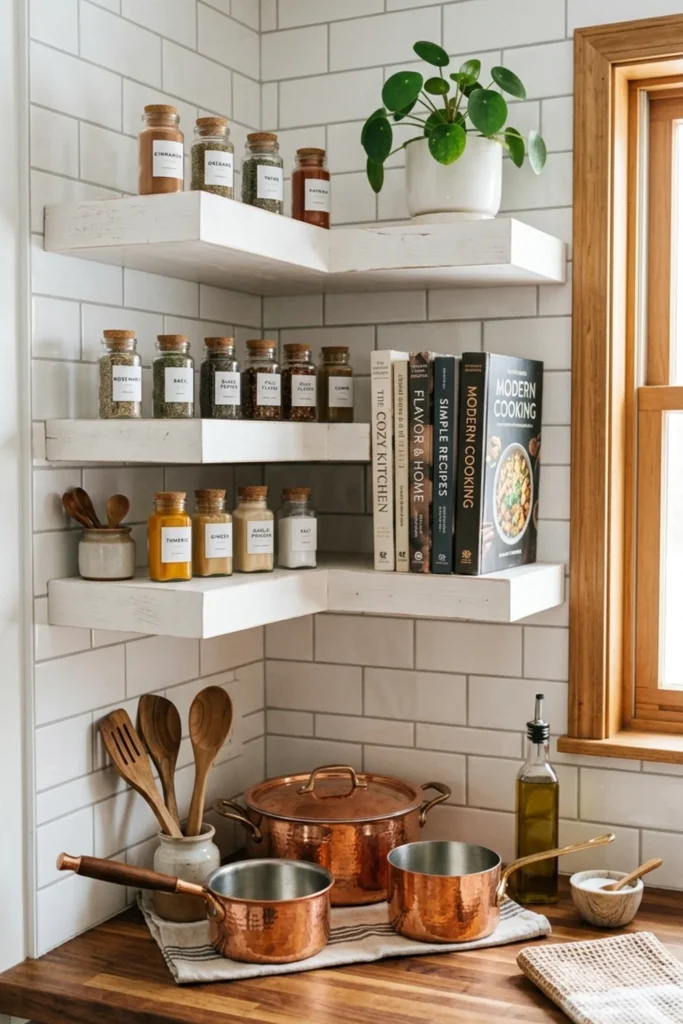
Corner kitchen shelves are one of the most space-efficient and underutilized kitchen shelves solutions — they occupy the dead corner space that standard rectangular shelving and cabinets cannot reach and transform it into functional, attractive display and storage.
Floating corner shelves, triangular bracket corner shelves, and wraparound corner shelf systems all make excellent use of corner wall space in kitchens where every square inch of storage and display surface counts, particularly in compact galley and apartment kitchens.
A tiered corner shelf unit with three or four levels creates significant storage capacity in a single corner footprint — enough for a complete set of spice jars, small pantry containers, and everyday cooking essentials within easy reach of the stove.
Pro Tip: Position corner kitchen shelves at eye level beside the stove or prep area rather than in a remote corner — kitchen shelves are most useful when the items on them are within arm’s reach of the primary cooking zone, and a beautiful corner shelf on the far side of the kitchen from where you cook delivers far less daily value than its position suggests.
4. Pegboard Kitchen Shelves and Wall Organization
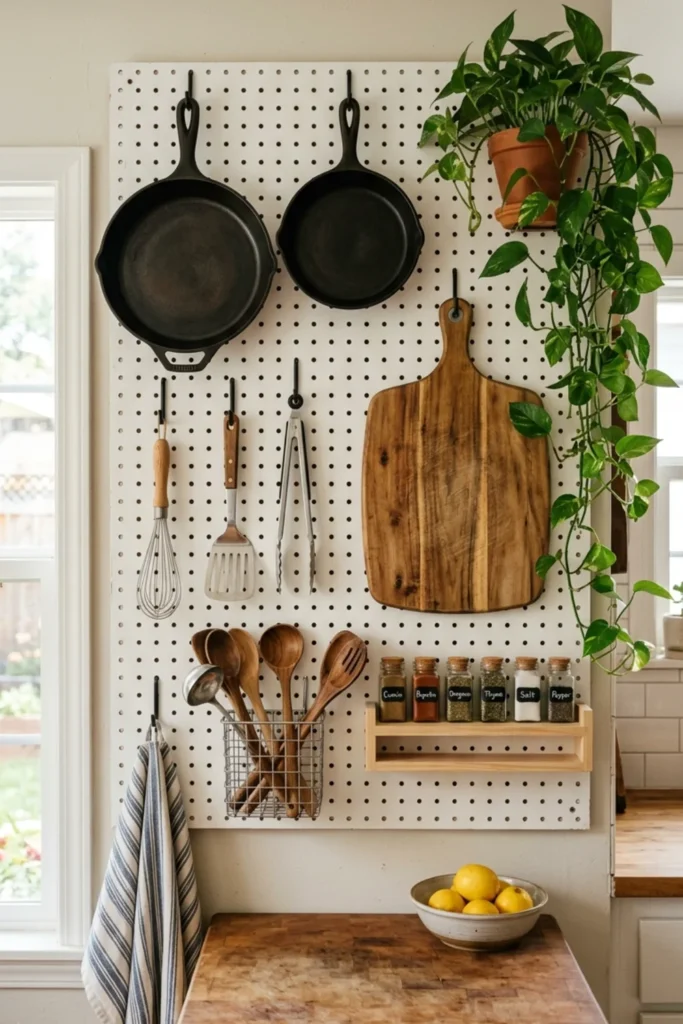
A kitchen pegboard system combines the flexibility of open kitchen shelves with the organizational versatility of wall-mounted hooks, rails, and accessories — creating a completely customizable wall that holds everything from pots and pans to spice jars, utensils, and small shelf brackets.
The pegboard’s defining advantage as a kitchen shelves solution is its complete reconfigurability — every hook, shelf, bin, and rail can be repositioned in minutes as your kitchen tools, workflow, and storage needs change, making it the most future-proof wall storage investment in any kitchen.
Painted pegboards in white, black, or a bold accent color create a visually cohesive kitchen wall organization system — a single color treatment unifies the board and all its accessories into one composed element rather than a collection of mismatched hardware.
Pro Tip: Mount kitchen pegboard with spacer blocks between the board and wall — at least half an inch of clearance behind the board is essential for hooks to engage properly. Mounting the board flush against the wall prevents hooks from fitting and makes the entire pegboard system nonfunctional.
5. Glass-Front Cabinet Shelves
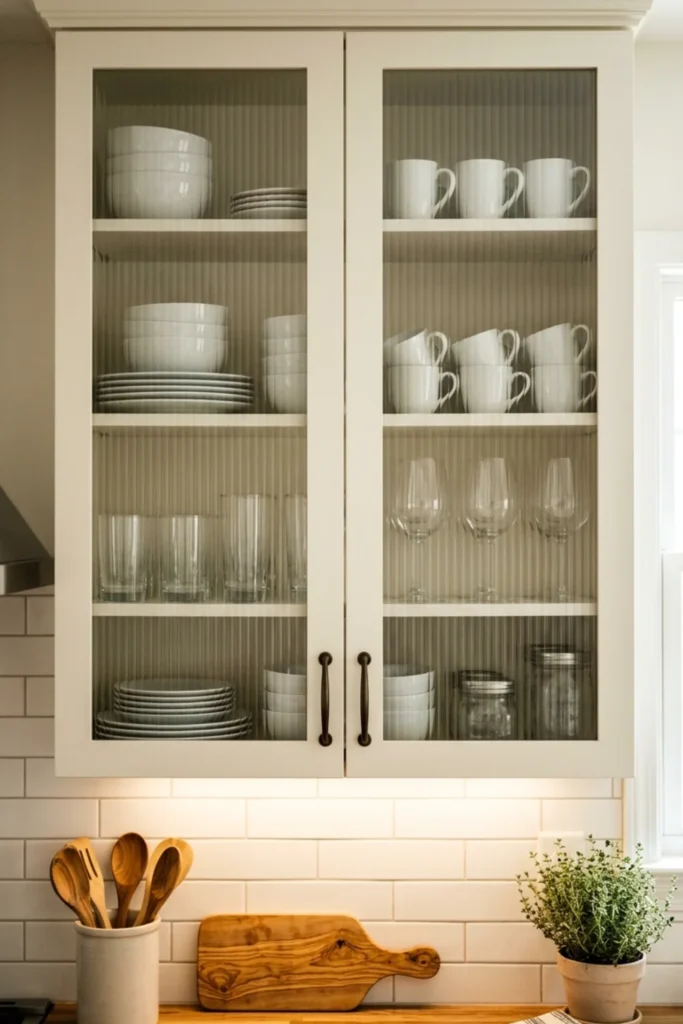
Glass-front cabinet shelves — standard upper kitchen cabinets with glass panels replacing solid doors — are the perfect middle ground between fully open kitchen shelves and completely closed storage. They protect contents from dust and grease while keeping everyday items visible and accessible.
The glass door creates a display case quality for the kitchen shelves within — carefully arranged ceramics, glassware, and pantry containers become deliberate displays rather than purely hidden storage, bringing the aesthetic benefits of open shelving without the maintenance demands.
Clear glass, seeded glass, fluted glass, and reeded glass door panels each create a different quality of display — clear glass shows everything precisely, while textured glass options soften the display and conceal imperfect organization behind a beautiful light-diffracting surface.
Pro Tip: Line glass-front kitchen cabinet shelves with adhesive shelf liner in a color that complements the cabinet interior — a cream, sage green, or dark navy shelf liner creates a beautiful backdrop that makes the displayed ceramics and glassware pop visually and makes the cabinet interior look intentionally designed rather than incidental.
6. Floating Shelf Above the Kitchen Sink
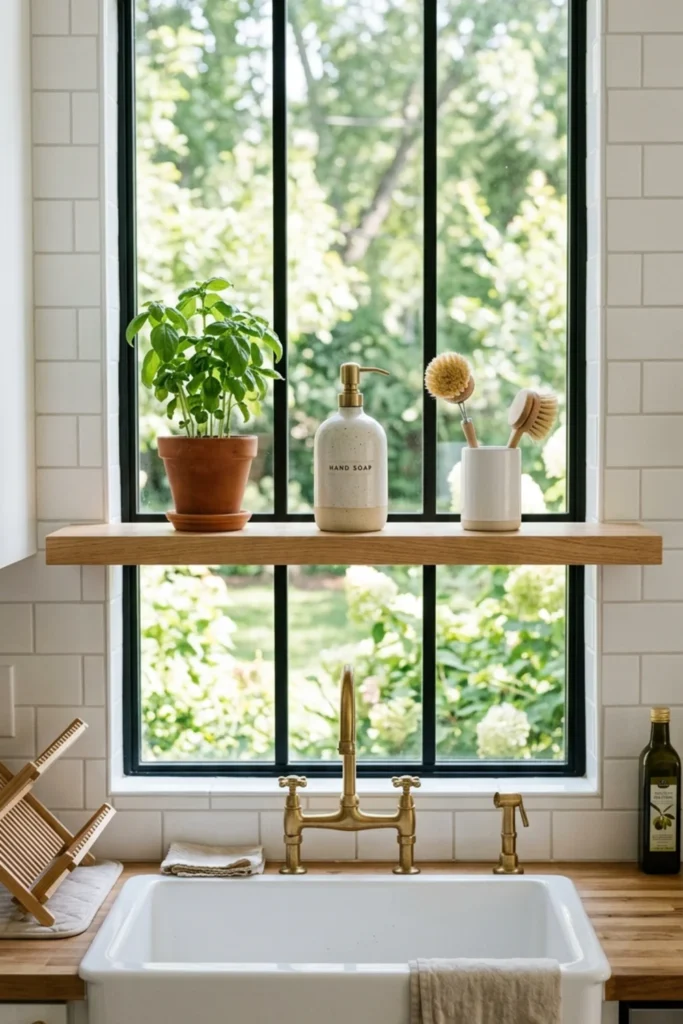
A single floating shelf above the kitchen sink is one of the most practical and stylistically effective kitchen shelves ideas — it provides dedicated storage for washing-up liquid, sponges, and small plants directly above the sink without interrupting the backsplash’s visual flow.
The above-sink kitchen shelf is also one of the most visually prominent positions in the kitchen — a beautiful piece of timber, a sculptural ceramic rail shelf, or a slim marble shelf in this position creates an immediate focal point that guests and family members see constantly during the most frequently performed kitchen task.
Choose a moisture-resistant material for an above-sink kitchen shelf — sealed solid wood, stainless steel, powder-coated steel, or porcelain tile shelf surfaces are all appropriate choices, while unsealed timber or particleboard will deteriorate rapidly from the daily water splash and steam generated at a kitchen sink.
Pro Tip: Mount the above-sink kitchen shelf at least 18 inches above the tap height — this clearance prevents the shelf from interfering with the tap arc and ensures comfortable hand washing and dish rinsing without constantly bumping into the shelf above.
7. Built-In Kitchen Shelves Beside the Fridge
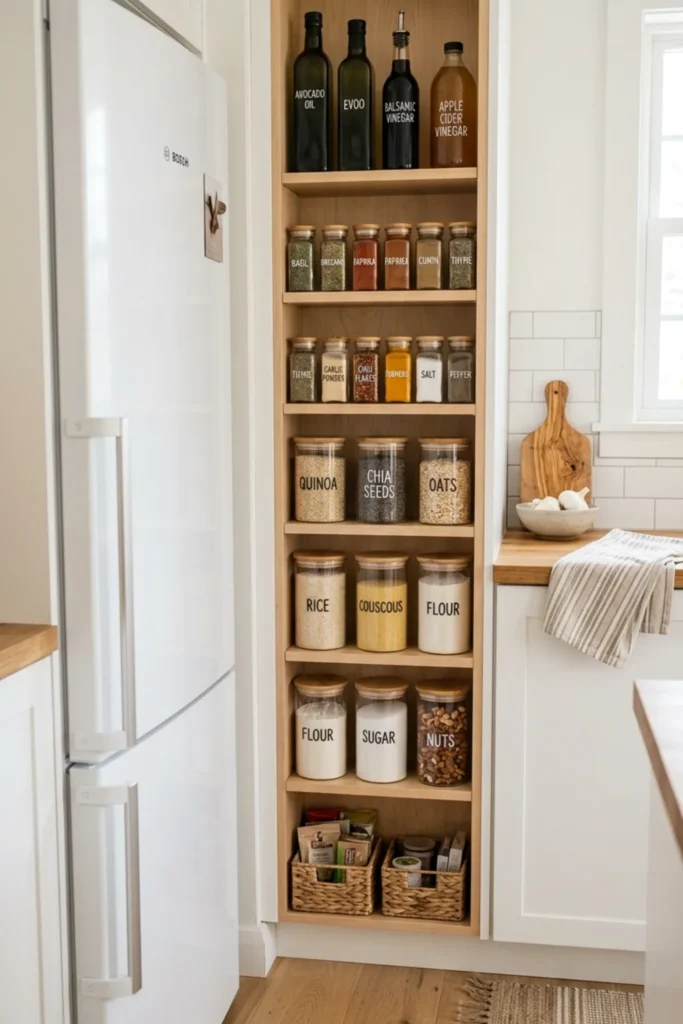
Built-in kitchen shelves installed beside the refrigerator are one of the most space-efficient and visually satisfying kitchen shelves ideas for maximizing the often-wasted vertical space beside a full-height appliance.
The narrow zone beside a refrigerator — sometimes as little as 6 to 12 inches wide — is deep enough for a floor-to-ceiling run of slim shelves that perfectly accommodates spice jars, cooking oils, vinegars, canned goods, and small pantry staples in an organized, visible, and easily accessible column.
Floor-to-ceiling built-in kitchen shelves beside the fridge create a visual continuation of the kitchen’s cabinet height and prevent the refrigerator from appearing as an isolated white box interrupting the kitchen’s architectural continuity.
Pro Tip: Install built-in kitchen shelves beside the fridge with adjustable shelf positions rather than fixed heights — cooking pantry items vary dramatically in height from short spice jars to tall oil bottles, and adjustable shelving allows the column to accommodate every height combination without wasted vertical space above shorter items.
8. Rustic Reclaimed Wood Kitchen Shelves
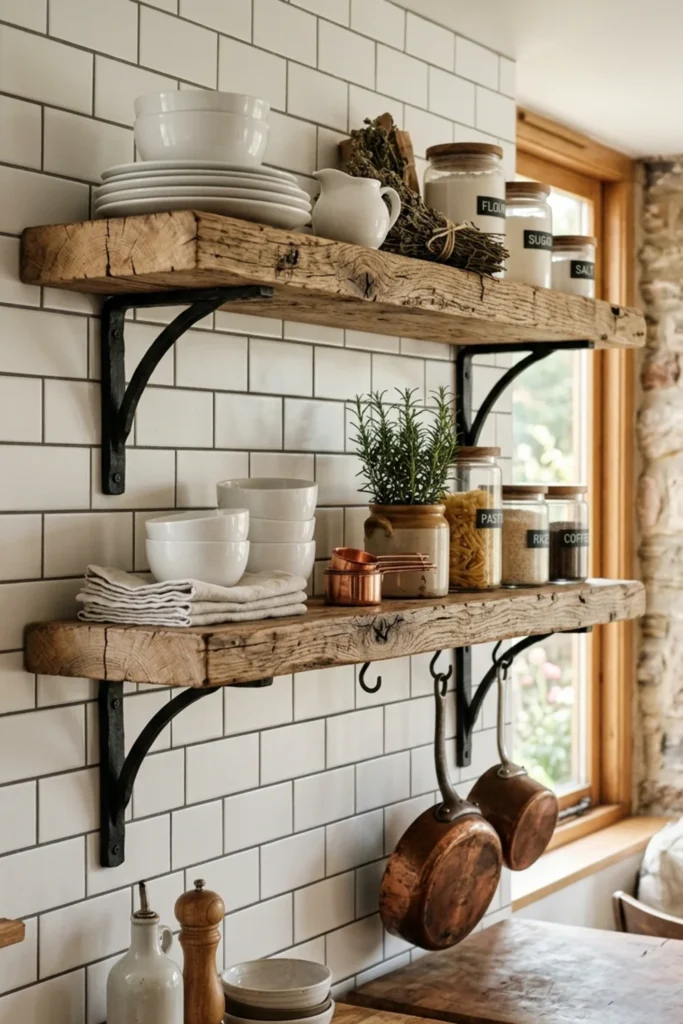
Rustic reclaimed wood kitchen shelves bring the warmth, patina, and organic character of genuinely aged timber to the kitchen — the visible knots, nail holes, saw marks, and weathered grain of reclaimed wood create kitchen shelves with a depth of character that new timber takes decades to develop.
The warmth and imperfection of reclaimed wood kitchen shelves creates a beautiful visual tension against the precision of modern kitchen fixtures, clean tile, and polished hardware — the contrast between the aged natural material and the contemporary kitchen context is precisely what makes reclaimed wood kitchen shelves so compelling.
Reclaimed barn wood, salvaged factory timber, and old scaffold planks are the most popular reclaimed wood sources for kitchen shelves — each brings its own distinct patina, color range, and surface history that makes every shelf installation completely unique.
Pro Tip: Seal reclaimed wood kitchen shelves with a food-safe hardwax oil rather than a standard polyurethane varnish — oil penetrates the wood grain and preserves the natural matte surface character of aged reclaimed timber, while varnish creates a plastic-like film that obscures the grain’s detail and contradicts the authentic, organic quality that makes reclaimed wood kitchen shelves so desirable.
9. Spice Rack and Dedicated Spice Shelves
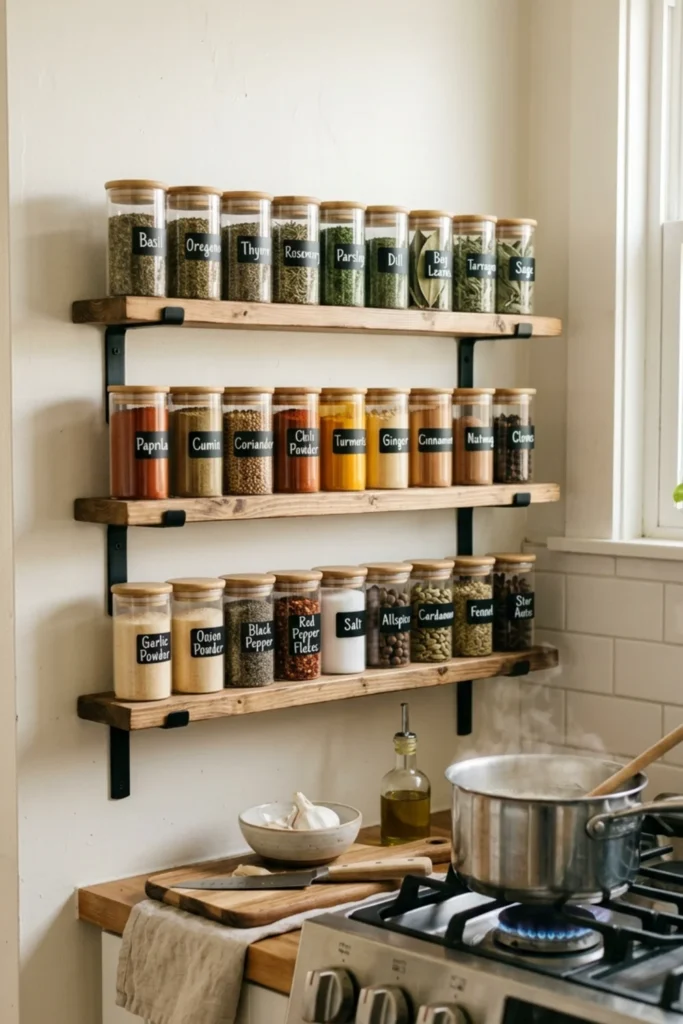
Dedicated spice shelves and spice racks are the most organizationally impactful kitchen shelves upgrade for home cooks — when every spice is visible, labeled, and immediately accessible, cooking becomes faster, more creative, and significantly less frustrating than hunting through overcrowded cabinet shelves.
Wall-mounted spice shelf rails, magnetic spice tin systems, tiered countertop spice shelf inserts, and dedicated pull-out spice drawer organizers each offer a different organizational approach — the right choice depends on the available wall space, the size of the spice collection, and the primary cooking zone’s position in the kitchen.
A dedicated wall-mounted spice shelf beside or above the stove is the most practically efficient configuration — keeping spices within arm’s reach of the cooking surface eliminates the mid-recipe cabinet search that disrupts cooking flow.
Pro Tip: Decant spices into matching uniform jars with labels before placing them on dedicated kitchen spice shelves — consistent jar sizes and clear labeling create a visually clean and organized spice display that is significantly faster to navigate than a mix of original manufacturer packaging in different shapes, sizes, and label designs.
10. Under-Cabinet Kitchen Shelves and Rails
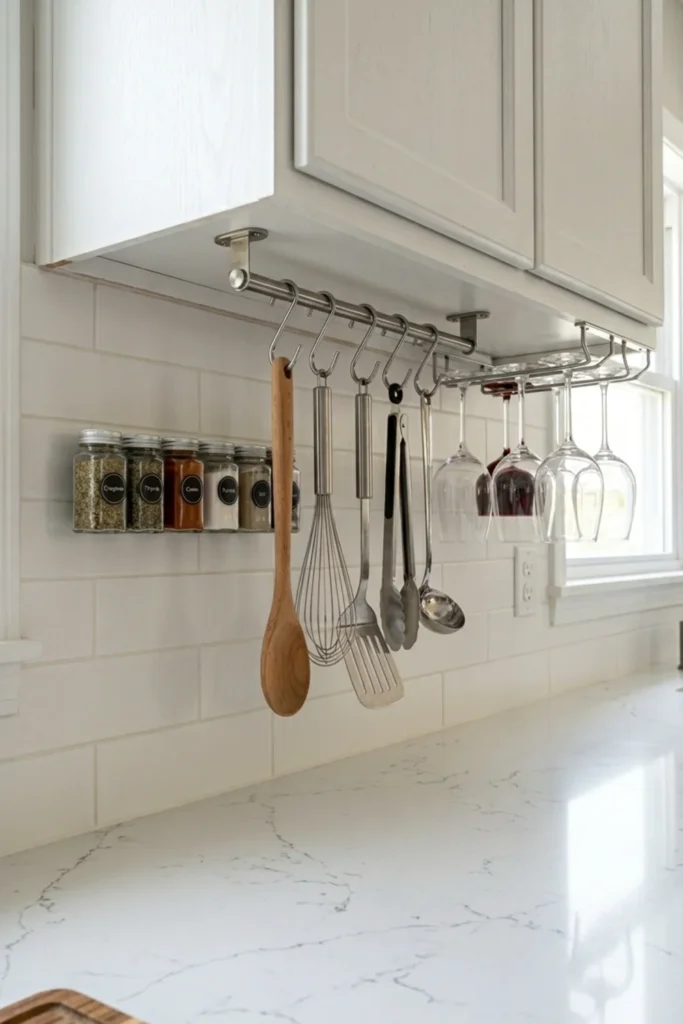
Under-cabinet kitchen shelves and rail systems mount beneath existing upper cabinets to create additional storage capacity in the most accessible zone of the kitchen — directly above the countertop work surface and within easy reach during food preparation.
Under-cabinet spice rails, mug hooks, knife magnetic strips, and small shelf accessories that mount to the underside of upper cabinets convert the underused space immediately above the countertop into a highly practical, zero-floor-space kitchen storage zone.
A slim under-cabinet stemware rack that stores wine glasses and mugs upside down from the cabinet base is one of the most space-efficient and visually elegant under-cabinet kitchen shelves accessories — it frees the cabinet interior for other storage while creating a professional, bar-quality display beneath.
Pro Tip: Use adhesive-mounted under-cabinet rails and hooks for a rental-friendly kitchen shelves solution that requires no drilling or permanent wall modification — modern adhesive mounting systems rated for up to 10 pounds per hook hold kitchen tools, spice rails, and small accessories reliably without damaging cabinet surfaces.
Why Investing in the Right Kitchen Shelves Is Worth It
The right kitchen shelves deliver a daily quality of life improvement that extends far beyond aesthetics — when the items you use most frequently are visible, accessible, and organizationally clear, every cooking session becomes faster, more fluid, and more genuinely enjoyable.
Open kitchen shelves specifically increase the perceived spaciousness of a kitchen more effectively than any other single design decision — removing closed upper cabinet boxes and replacing them with open shelves visually opens the room and makes even a compact kitchen feel more generous, airy, and considered.
From a property value perspective, well-designed kitchen shelves — particularly custom built-ins, beautiful open shelving, and quality floating shelf installations — are consistently cited by real estate professionals as one of the most impactful and cost-effective kitchen improvements for increasing both buyer appeal and perceived property value.
Things to Consider Before Choosing Kitchen Shelves
Before installing any kitchen shelves, honestly assess the organizational discipline required by open shelving — open kitchen shelves look beautiful when styled and maintained but reveal every piece of clutter, mismatched item, and organizational lapse. If the reality of your household makes maintaining a curated open shelf display impractical, closed cabinet shelves or glass-front doors deliver the aesthetic benefit with far less daily maintenance pressure.
Think carefully about the weight of the items you intend to store on kitchen shelves before choosing brackets, fixings, and shelf materials — a single shelf of stacked ceramic plates and cast iron cookware can weigh 30 to 50 pounds, and the shelf system must be designed and installed to handle this load safely without deflection or failure.
Always consider the effect of kitchen steam, grease, and moisture on your chosen shelf materials before purchasing — open kitchen shelves are exposed to the cooking environment far more directly than closed cabinet shelves, and materials that would perform beautifully in a living room can deteriorate rapidly in the moisture and airborne grease of an active kitchen.
Comparison Table of Kitchen Shelves Ideas
| Shelf Type | Cost Range | Difficulty | Load Capacity | Maintenance | Best Style |
|---|---|---|---|---|---|
| Solid Wood Floating Shelves | $50–$400 | Medium | High | Oil annually | Any style |
| Black Metal Bracket Shelves | $40–$300 | Low–Medium | Very High | Wipe clean | Farmhouse, industrial |
| Corner Kitchen Shelves | $30–$200 | Low–Medium | Medium | Wipe clean | Any style |
| Pegboard System | $30–$150 | Low | Medium | Dust regularly | Modern, industrial |
| Glass-Front Cabinet Shelves | $500–$3,000 | High | Very High | Wipe glass | Any style |
| Above-Sink Floating Shelf | $30–$200 | Low–Medium | Medium | Wipe clean | Any style |
| Built-In Beside Fridge | $200–$1,500 | High | Very High | Wipe clean | Any style |
| Reclaimed Wood Shelves | $50–$400 | Medium | High | Oil annually | Rustic, farmhouse |
| Spice Rack and Shelves | $20–$200 | Low | Low–Medium | Wipe clean | Any style |
| Under-Cabinet Rails | $15–$100 | Low | Low | Wipe clean | Any style |
| Industrial Pipe Shelves | $60–$400 | Medium | High | Wipe and oil | Industrial, loft |
| Pot Rail and Hanging Shelves | $80–$500 | Medium–High | Very High | Wipe hooks | Any style |
| Styled Open Shelves | $50–$400 | Low–Medium | High | Dust regularly | Any style |
Frequently Asked Questions About Kitchen Shelves
Are Open Kitchen Shelves a Good Idea?
Open kitchen shelves are an excellent idea for households with the organizational discipline to keep displayed items consistently neat, curated, and dust-free. They open the kitchen visually, make everyday items more accessible, and create genuine opportunities for personal expression through the displayed objects.
The honest consideration is that open kitchen shelves require more regular maintenance than closed cabinet shelves — kitchen grease, steam, and dust settle on open shelves and their contents, making weekly wiping and seasonal reorganization a necessary routine that closed cabinets largely avoid. For busy households that prioritize low maintenance over aesthetic impact, glass-front cabinet shelves deliver a middle-ground solution.
How Deep Should Kitchen Shelves Be?
Standard kitchen shelves should be 10 to 12 inches deep — deep enough to accommodate a standard dinner plate standing upright or lying flat, a row of standard-size glasses, and most common pantry containers without items overhanging the front edge dangerously.
Spice and herb kitchen shelves can be as shallow as 3 to 4 inches — a depth that accommodates standard spice jars and small bottles in a single row without the excessive depth that causes items at the back to become hidden and inaccessible behind front-row items.
How Far Apart Should Kitchen Shelves Be Spaced?
Standard kitchen shelf spacing should be at least 12 to 14 inches between shelf surfaces — this vertical clearance accommodates standard dinner plates standing upright (10 to 11 inches), the most common and practically important item dimension for kitchen shelf planning.
For open display kitchen shelves combining dishes, glasses, and cookbooks, 16 inches of vertical spacing between shelves is more comfortable — it accommodates tall glasses and bottles, allows easy hand access to stacked plates, and prevents the compressed, cluttered appearance that comes from shelves spaced too closely together.
What Is the Strongest Kitchen Shelf Bracket System?
Solid steel L-brackets fixed into wall studs provide the strongest and most reliable support for heavy-duty kitchen shelves — properly installed steel brackets fixed directly into structural studs can support hundreds of pounds per shelf, making them appropriate for any loading scenario in a residential kitchen.
For floating kitchen shelves without visible brackets, concealed steel rod systems fixed into studs are the strongest alternative — the steel rods embed into the shelf’s underside and fix into studs at two or more points, providing excellent load capacity with a completely clean shelf face appearance that is appropriate for the most design-forward kitchen shelves installations.