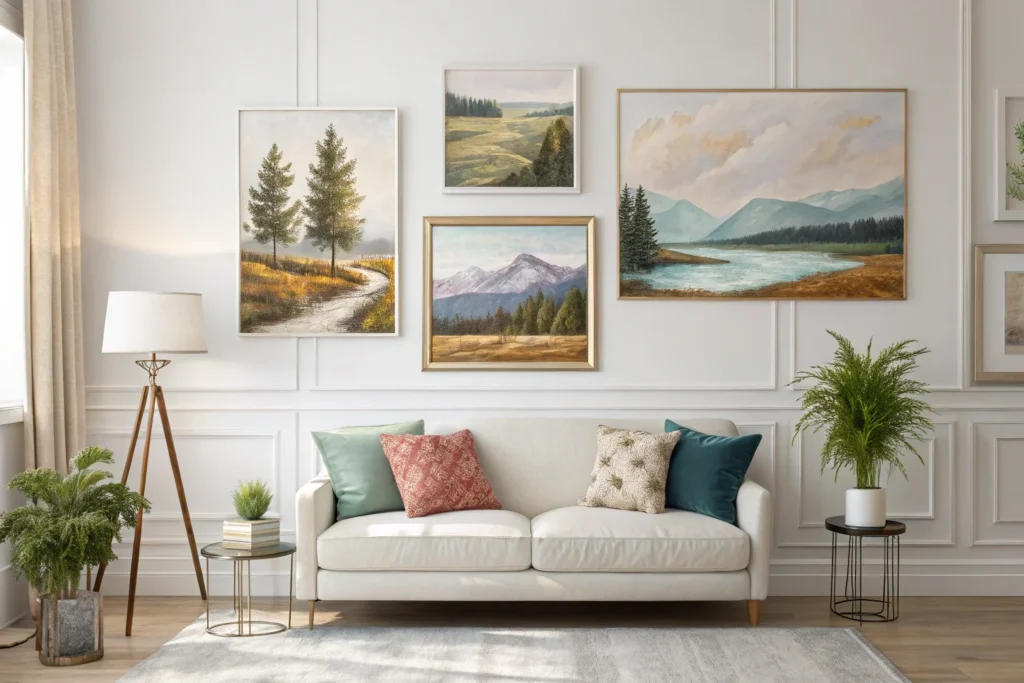
The right home decor paintings do more than fill empty wall space — they set the emotional tone of a room, express personal style, and create a focal point that ties every other design element together. Art is the single most transformative addition you can make to any interior.
From bold abstract canvases to delicate botanical illustrations, the world of decorative painting covers every aesthetic, color palette, and budget imaginable. The challenge is not finding paintings — it is knowing which styles, scales, and placement strategies will genuinely elevate your specific space.
This guide covers the best home decor paintings styles and ideas that interior designers and art collectors actually recommend — with practical tips, honest comparisons, and product picks to help you choose and display artwork that makes your home feel beautifully complete.
List of 13 Best Home Decor Paintings
1. Large Abstract Canvas Paintings
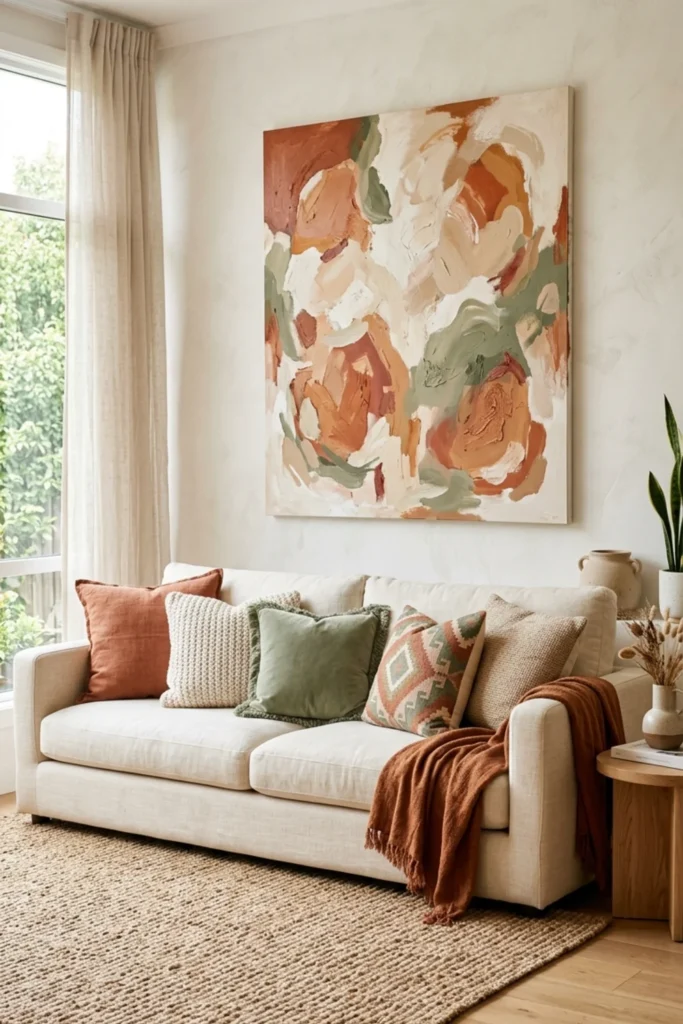
A large abstract canvas painting is the most impactful single piece of home decor art you can introduce to a living room, dining room, or bedroom. Its scale commands attention, its color palette ties the room together, and its open interpretation invites personal connection.
Abstract paintings work in virtually every interior style — a loose, expressive brushwork piece suits bohemian and organic interiors, while a geometric abstract suits modern and minimalist spaces, and a soft color-wash canvas suits coastal and Scandinavian aesthetics equally well.
When choosing a large abstract painting for home decor, pull colors directly from your existing furniture, cushions, and rugs — an abstract that echoes two or three of the room’s existing tones creates cohesion that makes the painting feel like it was always meant to be there.
Pro Tip: Size the painting so it occupies two-thirds to three-quarters of the wall width it hangs on — a common mistake is choosing a canvas that is too small for the wall, which makes even a beautiful painting look like an afterthought rather than a considered design statement.
2. Botanical and Floral Paintings
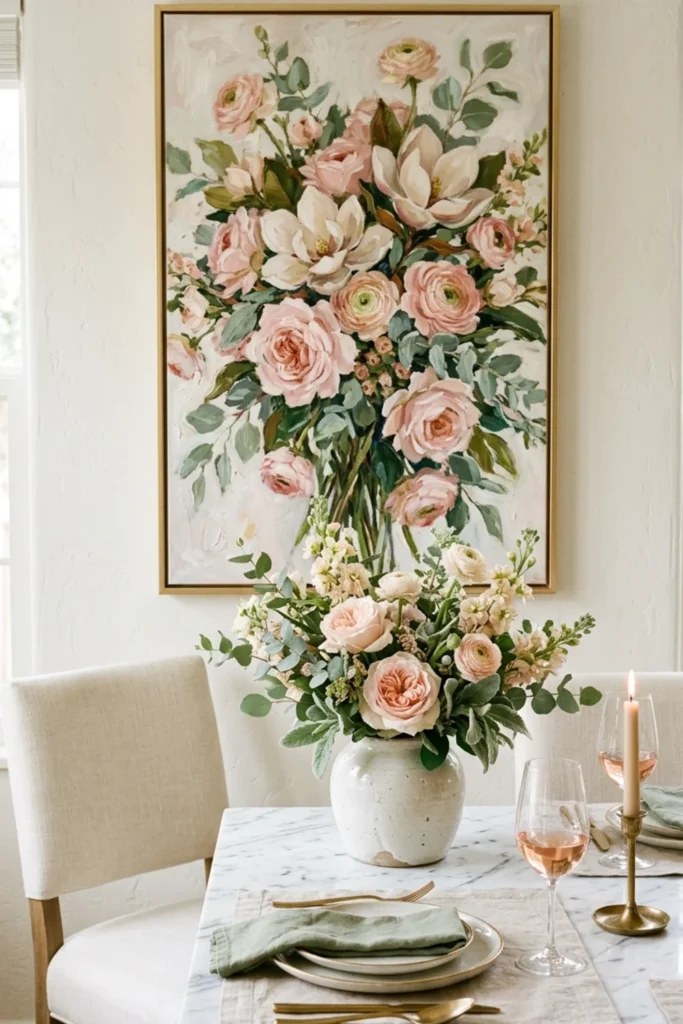
Botanical and floral paintings are among the most universally loved and versatile home decor paintings — their natural subject matter suits every room in the house and bridges the gap between classical tradition and contemporary freshness with ease.
Loose, painterly floral compositions in watercolor, oil, or acrylic bring organic beauty and color to a space without the commitment of live plants — a large floral canvas above a dining table or in a bedroom creates warmth and life that geometric or abstract work cannot replicate.
A series of smaller botanical paintings in matching frames creates a cohesive gallery wall that is more approachable in both scale and cost than a single large canvas while delivering equal visual impact across the full arrangement.
Pro Tip: Choose botanical home decor paintings in colors that complement rather than match your room palette exactly — a painting that introduces one new accent tone pulls the eye and creates the visual tension that makes art feel dynamic rather than decorative.
3. Black and White Photography Art Prints
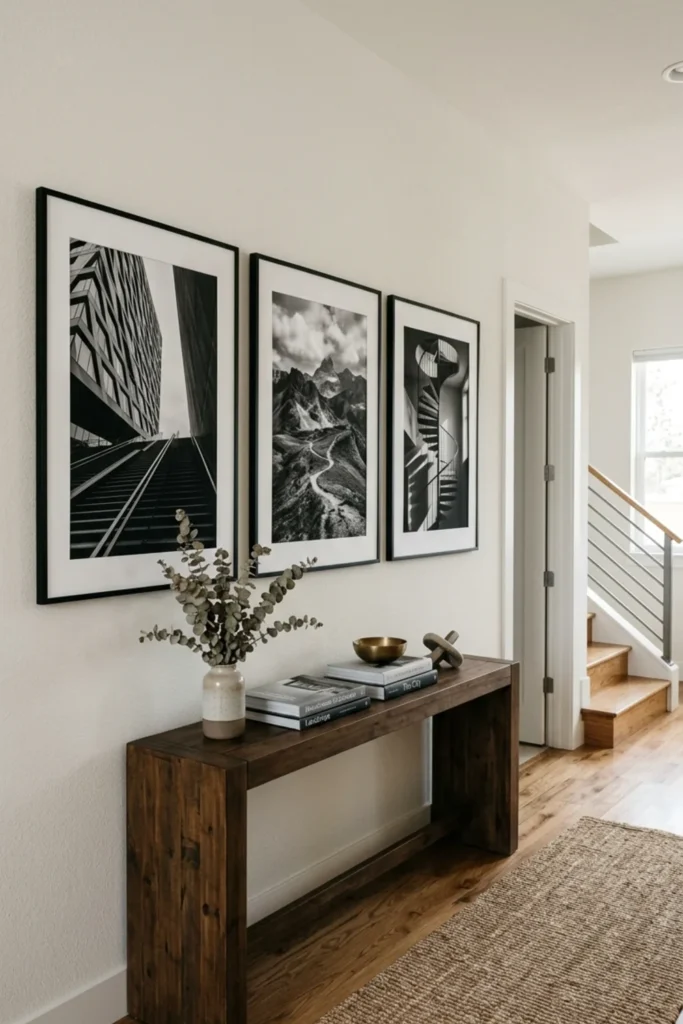
Black and white photography printed as wall art is one of the most sophisticated and timeless home decor paintings alternatives — monochrome photography brings graphic strength, emotional depth, and visual clarity that color prints sometimes lack.
Fine art black and white photography — architectural studies, landscape abstracts, figure studies, and close-up nature photography — all translate beautifully to large-format prints that function as genuine statement pieces in living rooms, hallways, and home offices.
The strict monochrome palette of black and white photography makes these prints exceptionally easy to style with — they complement every color scheme and interior direction without competing with existing furniture or art.
Pro Tip: Print black and white photography art on fine art cotton rag paper rather than standard photographic paper — the matte, textured surface of fine art paper gives photographic prints a painted quality that elevates them from photograph to artwork and makes them indistinguishable from hand-produced pieces at gallery distance.
4. Impressionist Style Landscape Paintings
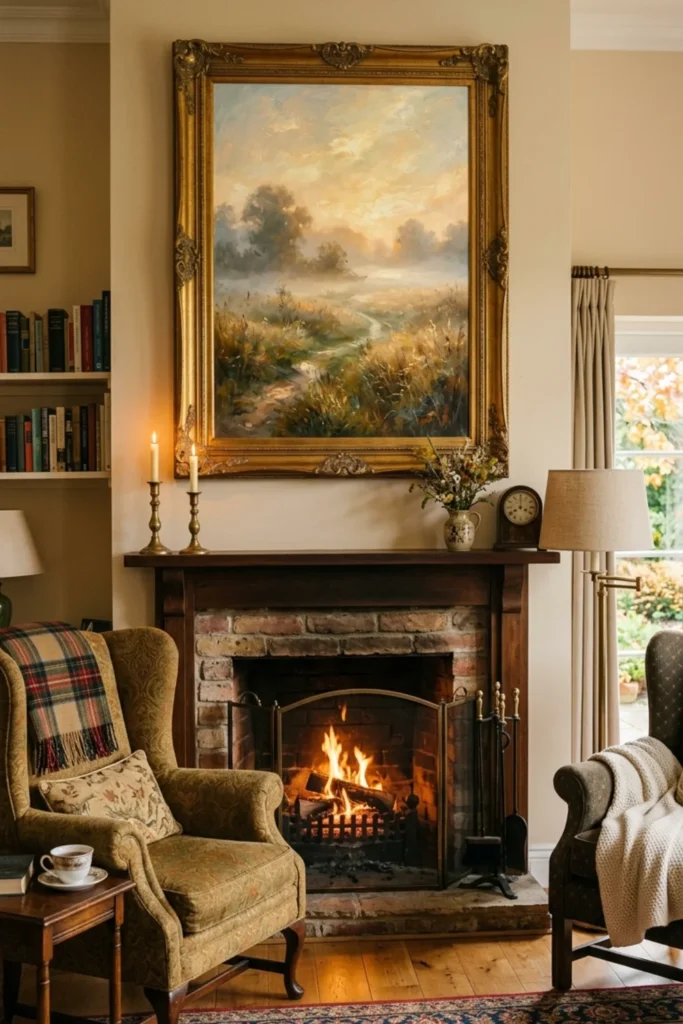
Impressionist style landscape paintings — with their loose, expressive brushwork, soft color harmonies, and atmospheric light — are among the most emotionally resonant home decor paintings for living rooms, dining rooms, and bedrooms where a sense of calm and warmth is the primary design goal.
The impressionist landscape tradition from Monet and Pissarro to contemporary interpretations translates beautifully into home decor — scenes of water, fields, woodland, and coastline in muted, harmonious palettes create an immediate sense of peace and spaciousness that few other painting styles can match.
Look for impressionist home decor paintings in oil or oil-effect acrylic — the impasto texture of visible brushwork adds physical dimension to the canvas surface that creates a genuine sense of craft and value even in affordable prints.
Pro Tip: Hang landscape paintings so the horizon line in the painting sits at your eye level when standing — this natural alignment makes the viewer feel as though they could step into the painting rather than looking up or down at the scene, which is the most immersive and emotionally engaging way to experience landscape art.
5. Portrait and Figure Paintings
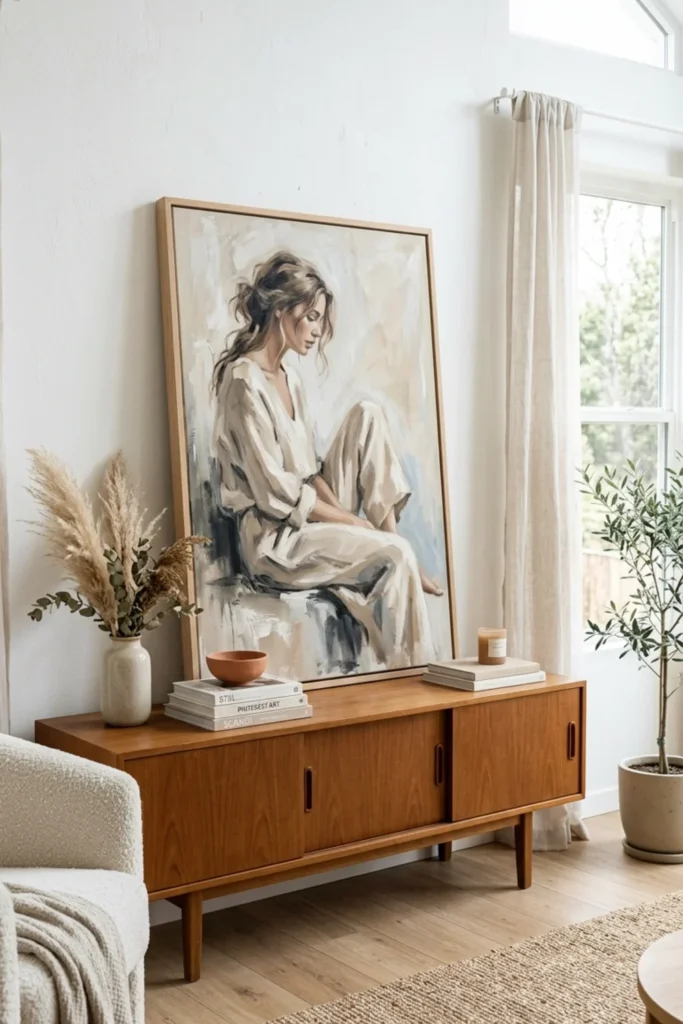
Portrait and figure paintings bring a human presence and psychological depth to home decor that landscape and abstract work simply cannot achieve. A striking figure painting in a living room or study creates an immediate conversation piece and signals a sophisticated, art-confident interior.
Contemporary figurative paintings in loose, expressive styles are among the most collected home decor paintings right now — works that capture a figure with minimal detail but maximum emotional presence sit beautifully between the classical and the modern, suiting a wide range of interior aesthetics.
Antique portraits sourced from auction houses, antique dealers, or online platforms add genuine historical character and provenance to a home — a Victorian or Edwardian portrait hung in a hallway or library creates an instant sense of depth and heritage that no reproduction can replicate.
Pro Tip: When displaying a portrait or figure painting in a home, ensure the figure’s gaze does not follow you uncomfortably throughout the room — a figure whose eyes are cast downward, sideways, or slightly away from the viewer is significantly more comfortable to live with daily than one whose direct gaze follows movement around the room.
6. Geometric and Minimalist Paintings
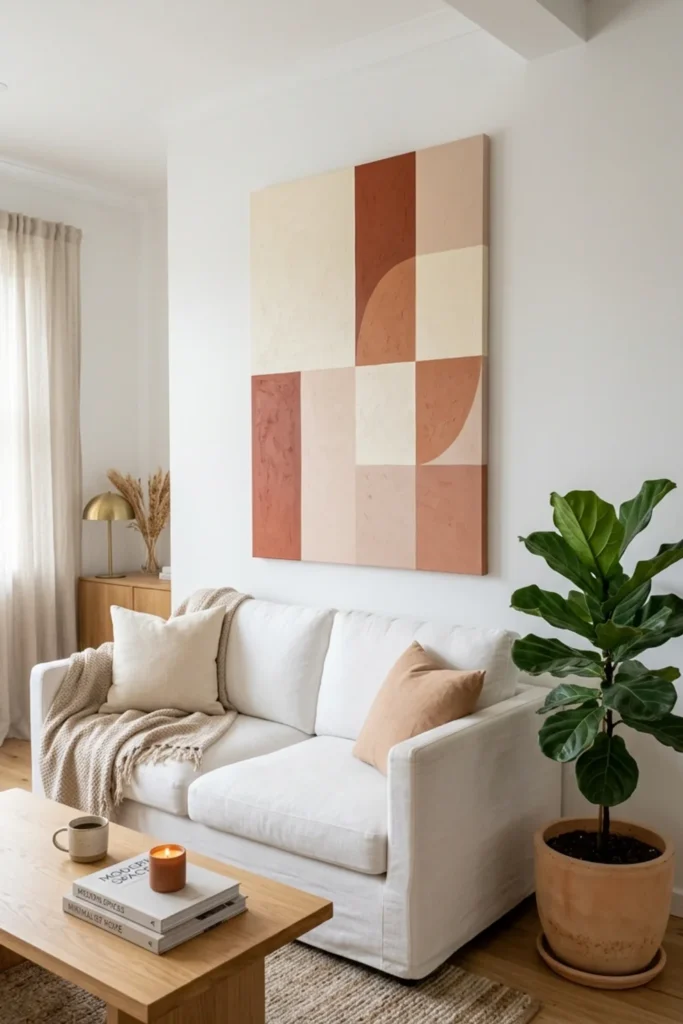
Geometric and minimalist paintings — precise arrangements of shapes, lines, and color fields — are the most architecturally compatible home decor paintings for modern, Scandinavian, and minimalist interior styles. Their clean visual language complements rather than competes with contemporary architecture and furniture.
Color field paintings — large canvases divided into two or three areas of solid, carefully chosen color — are deceptively simple but extraordinarily powerful in the right interior. The relationship between the colors and their proportions creates visual tension and harmony that rewards extended looking.
Minimalist geometric paintings in black, white, and one or two accent colors suit home offices, hallways, and bedrooms particularly well — their calm, ordered quality supports focused thinking and restful sleeping environments.
Pro Tip: In a room with strong horizontal lines — low furniture, wide windows, and long rugs — choose a geometric painting with predominantly vertical elements to introduce counterbalancing energy. Conversely, a room with tall ceilings and vertical architecture benefits from horizontal geometric compositions that ground the space visually.
7. Vintage and Retro Poster Art
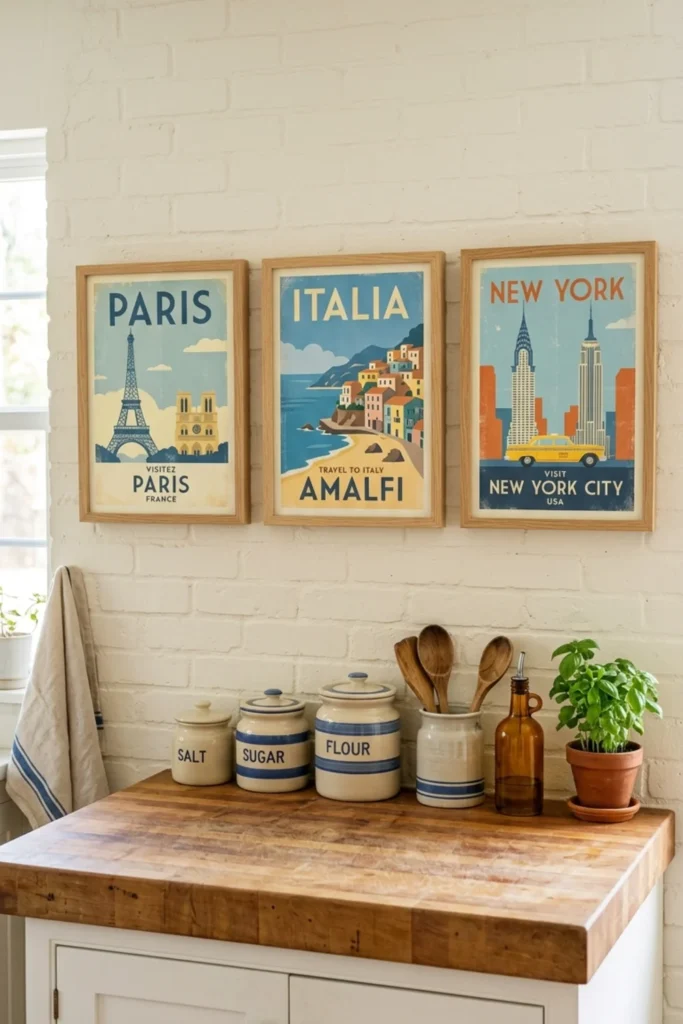
Vintage and retro poster art — travel posters, botanical charts, food and drink advertising graphics, and mid-century illustration — is one of the most characterful and affordable categories of home decor paintings that brings nostalgic warmth and graphic energy to kitchens, dining rooms, studies, and hallways.
The flat graphic quality of vintage poster illustration suits kitchen and dining room walls particularly well — food and drink subjects, restaurant graphics, and vintage culinary prints feel naturally at home in the room where eating and entertaining happen.
Vintage travel posters in the classic styles of the 1920s through 1960s — Art Deco railway posters, airline destination prints, and national park WPA prints — make stunning home office and study wall art that adds both visual appeal and a sense of adventure.
Pro Tip: Frame vintage and retro poster art in simple wooden or thin metal frames without mats for a relaxed, informal quality that suits their graphic, populist origins — heavy gilt or ornate framing creates a tonal mismatch between the casual character of vintage poster art and the formality of a traditional picture frame.
8. Watercolor Paintings for Soft, Dreamy Spaces
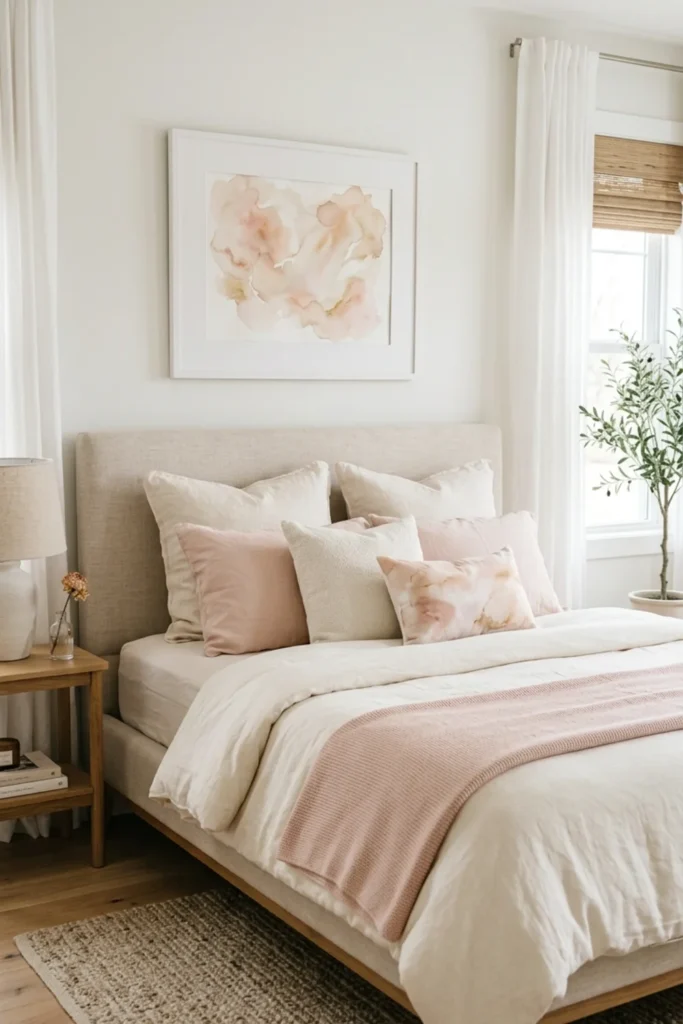
Watercolor paintings — with their soft edges, luminous transparency, and gentle color gradations — are the most delicate and dream-like of all home decor paintings, creating an atmosphere of quiet beauty that suits bedrooms, reading nooks, and nurseries particularly well.
The inherent softness and transparency of watercolor makes these paintings naturally well-suited to rooms where a calm, serene atmosphere is the priority — the technique’s characteristic soft edges and layered washes create a visual gentleness that heavier oil and acrylic paintings cannot replicate.
Watercolor landscapes, botanicals, and abstract wash compositions in soft blush, sage, dusty blue, and warm neutral palettes are among the most sought-after home decor paintings for bedroom walls, where the art should support restful sleeping rather than stimulate visual excitement.
Pro Tip: Always frame watercolor paintings with a mat board between the painting and the glass and never allow the glass to touch the painted surface — moisture trapped between glass and watercolor paper causes irreversible staining and foxing, even in climate-controlled home environments.
9. Oversized Statement Paintings as Furniture Alternatives
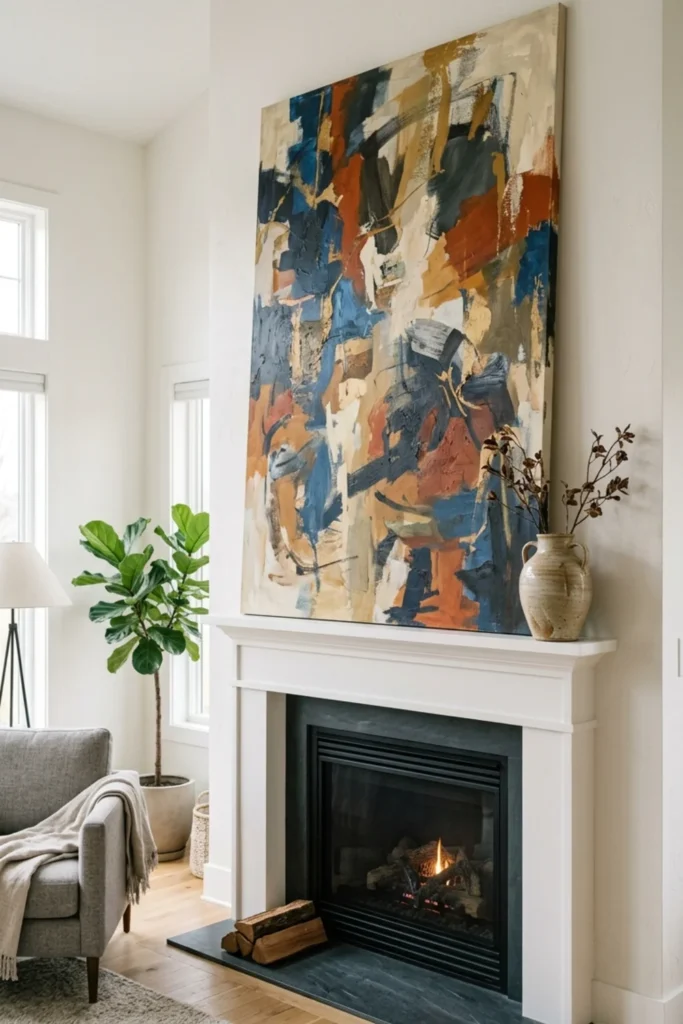
Oversized statement paintings — large enough to substitute for furniture — leaned against a wall or hung as the sole focal point of a room are one of the most dramatic and design-forward home decor paintings strategies used by professional interior designers.
A single large canvas leaning against the wall above a fireplace, behind a sofa, or at the end of a hallway creates an immediate gallery-quality impact that a traditionally hung painting cannot achieve — the casual lean communicates artistic confidence and creates a sense of scale that makes the room feel intentional and curated.
The oversized format allows the painting to function architecturally as well as aesthetically — a large canvas can define a seating zone, create a visual headboard in a bedroom, or anchor a dining room wall as powerfully as a piece of furniture.
Pro Tip: Lean oversized home decor paintings slightly forward at the top rather than perfectly vertical — a slight forward lean prevents the painting from appearing to fall backward into the wall and creates the natural, relaxed quality that distinguishes a deliberately leaned canvas from one that simply has not been hung yet.
10. Original Art from Emerging Artists
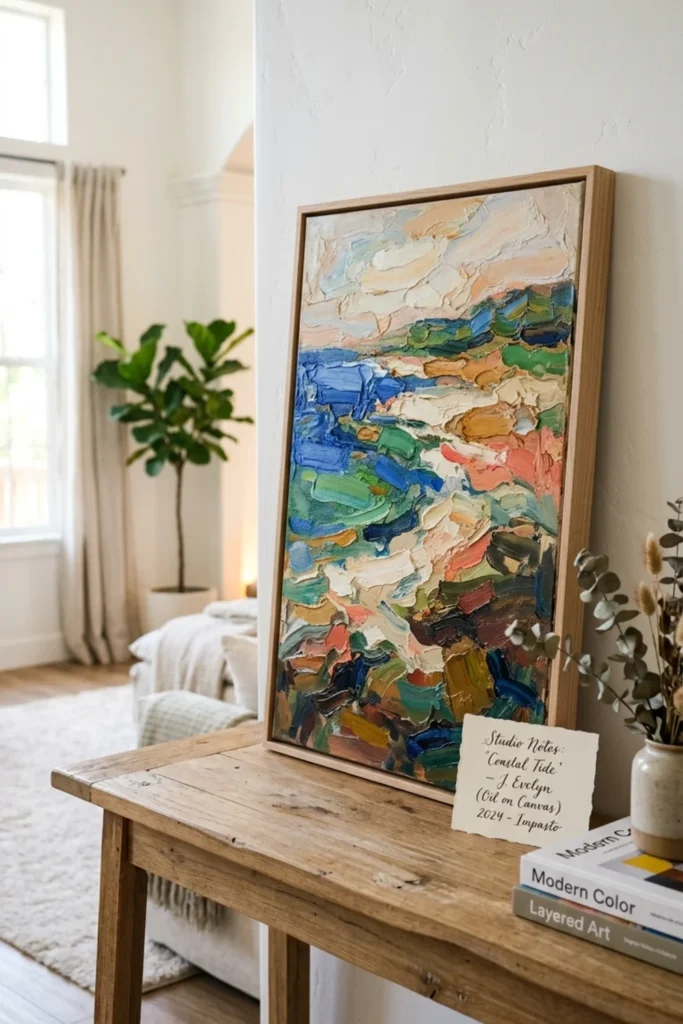
Original paintings by emerging artists are the most personally meaningful and investment-worthy category of home decor paintings — every original artwork is unique, comes with genuine provenance, and has the potential to appreciate in both monetary and sentimental value over time.
Platforms like Etsy, Saatchi Art, Artfinder, and local gallery open studio events make original art from emerging and mid-career artists more accessible than at any previous point in art history — genuinely original oil, acrylic, and mixed media paintings are available from $100 to $1,000 at this level.
The energy and authenticity of an original painting — the visible texture of brushwork, the subtle variations of hand-mixed color, and the physical presence of canvas and paint — creates a different and richer experience of living with art than even the highest quality reproduction print can provide.
Pro Tip: When purchasing original home decor paintings from emerging artists, ask for the painting’s title, date, medium, and a signed certificate of authenticity — these details establish provenance that becomes increasingly important if the artist’s reputation grows, and they make the painting a fully documented work of art rather than simply a decorative object.
11. Triptych and Multi-Panel Paintings
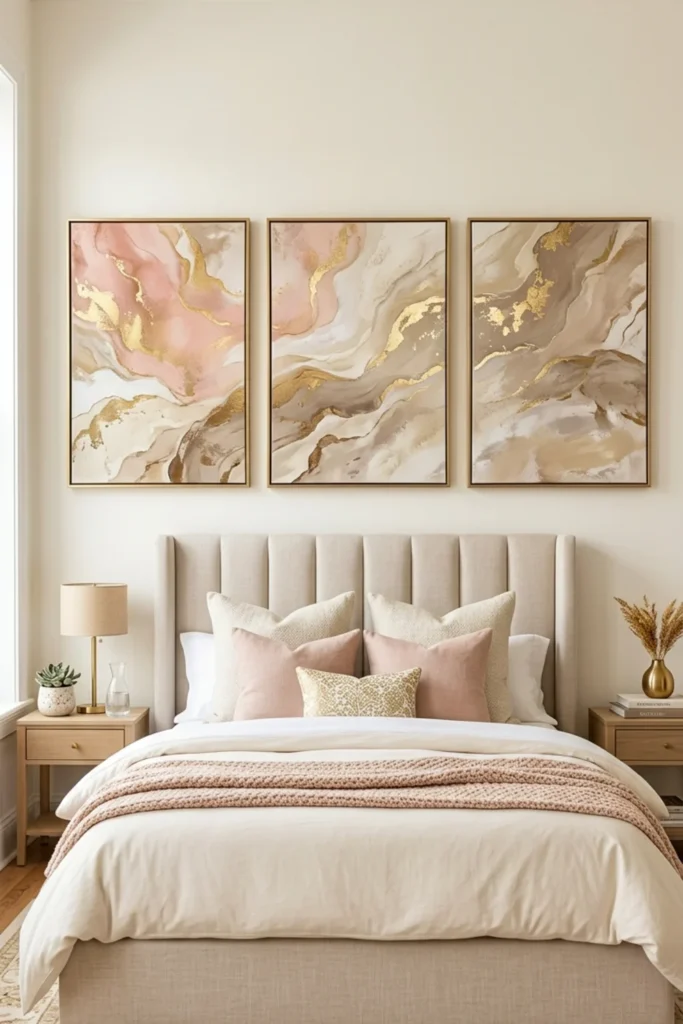
Triptych and multi-panel paintings — a single composition divided across two, three, or more canvases — are one of the most contemporary and architecturally sophisticated home decor paintings formats for wide walls above sofas, beds, and dining tables.
The multi-panel format allows a large-scale composition to be broken into manageable pieces that are easier to ship, hang, and adjust — each panel is individually manageable while the complete set creates a wall installation with the scale and impact of a single oversized canvas.
Abstract triptychs in coordinated color palettes are among the most versatile home decor paintings for contemporary interiors — the distributed format suits the horizontal proportions of sofa walls and bed walls particularly well and creates a sense of movement and flow across the full width.
Pro Tip: Hang triptych panels with equal, consistent spacing between each canvas — the gap between panels is as much a part of the composition as the painted surfaces themselves, and inconsistent or excessive spacing disrupts the visual continuity that makes a multi-panel painting read as a unified work.
12. Cultural and Traditional Folk Art Paintings
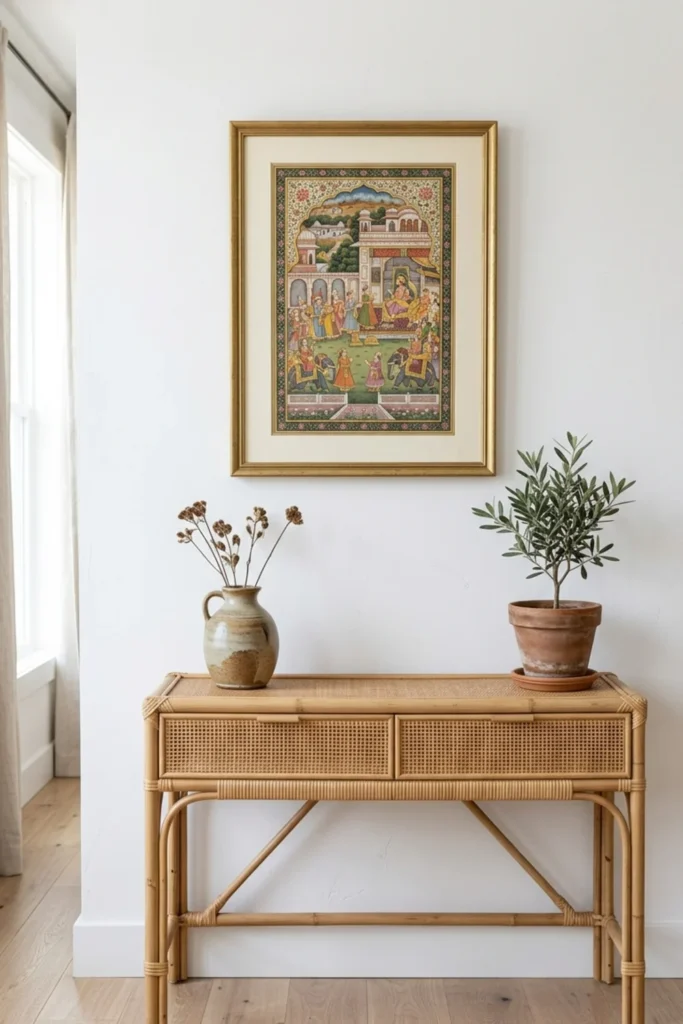
Cultural and traditional folk art paintings — from Mexican Talavera-inspired works and African textile patterns to Indian miniature paintings and Japanese woodblock-style art — are among the most distinctive and globally inspired home decor paintings for creating interiors with genuine cultural depth and personal narrative.
These paintings bring color, pattern, and historical richness that purely decorative Western painting traditions often lack — they tell stories, preserve cultural practices, and introduce visual vocabularies that make a home feel genuinely traveled and intellectually engaged with the wider world.
Display folk art home decor paintings with generous wall space around each piece — the visual complexity of traditional cultural painting styles requires breathing room that simpler contemporary abstracts do not, and crowding these works together diminishes both individual pieces.
Pro Tip: Mix cultural and traditional paintings with simple, neutral surroundings — white walls, natural wood furniture, and minimal other accessories allow the richness and complexity of folk art home decor paintings to read clearly without visual competition from equally busy surrounding elements.
13. DIY and Custom Hand-Painted Canvases
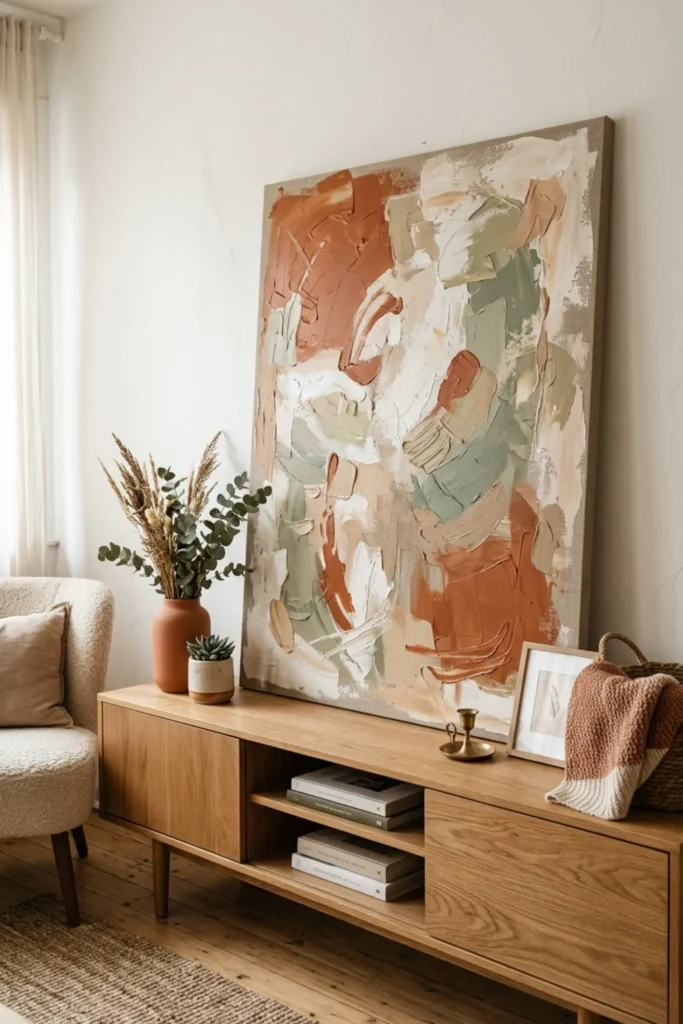
DIY and custom hand-painted canvases are one of the most personally meaningful and surprisingly achievable home decor paintings ideas — creating your own artwork for your home produces a piece that is entirely unique, perfectly matched to your palette, and carries the irreplaceable satisfaction of self-expression.
Abstract painting is the most forgiving starting point for first-time DIY painters — the absence of representational accuracy requirements means that a combination of color mixing, brush texture, and compositional instinct produces genuinely beautiful results even without formal art training.
Techniques like color washing, palette knife work, sponging, and pouring paint create dramatic, large-scale abstract canvases with professional visual impact that require no drawing ability and very little painting experience to execute successfully.
Pro Tip: Invest in artist-quality acrylic paints rather than craft store alternatives for DIY home decor paintings — the pigment density, color vibrancy, and archival stability of artist-grade paint is significantly superior to student or craft quality, and the difference is immediately visible in the finished painting’s richness and depth of color.
Why Home Decor Paintings Are Worth the Investment
Home decor paintings are the highest-impact decorating investment per square foot of any element in an interior — a single well-chosen painting transforms the entire character of a room in a way that new furniture, fresh paint, or additional accessories cannot match for the same expenditure.
Original paintings and high-quality art prints appreciate in cultural and sometimes financial value over time — unlike furniture that depreciates with wear, art gains meaning and relevance as it accumulates years of family history and as artists’ reputations develop.
The emotional and psychological impact of living with art you love is one of the most consistently cited contributors to home happiness and wellbeing — the daily experience of a painting that moves you, interests you, or simply makes you smile as you pass it is a genuinely measurable quality of life benefit that no other home investment delivers quite as directly.
Things to Consider Before Choosing Home Decor Paintings
Before purchasing any home decor painting, identify the primary function of the art in the room — whether you need a focal point above the sofa, a mood-setting piece for the bedroom, a conversation starter in the dining room, or a professional backdrop for the home office determines which style, scale, and color direction will be most successful.
Think carefully about scale relative to the wall and surrounding furniture before committing — the most common home decor paintings mistake is choosing art that is too small for the wall it occupies, creating an effect of timidity and imprecision that undermines the room’s design regardless of the painting’s intrinsic quality.
Always consider framing as part of the total visual decision rather than an afterthought — the frame finish, width, and style significantly affect how a painting reads in a room, and the same painting in a thin black frame versus a wide gilt frame communicates an entirely different aesthetic message.
Comparison Table of Home Decor Paintings
| Painting Style | Price Range | Best Room | Suits Style | Longevity | Framing Recommendation |
|---|---|---|---|---|---|
| Large Abstract Canvas | $100–$5,000+ | Living room, bedroom | Any style | Very High | Simple float or gallery wrap |
| Botanical and Floral | $50–$2,000+ | Any room | Any style | Very High | White mat, thin frame |
| Black and White Photography | $50–$1,500 | Hallway, office, living | Modern, minimalist | Very High | Thin black or white frame |
| Impressionist Landscape | $100–$10,000+ | Living room, dining | Traditional, transitional | Very High | Warm wood or gilt frame |
| Portrait and Figure | $200–$20,000+ | Study, hallway, living | Traditional, eclectic | Very High | Classic or antique frame |
| Geometric and Minimalist | $80–$3,000 | Office, bedroom, living | Modern, Scandi | Very High | Simple thin frame |
| Vintage and Retro Poster | $20–$300 | Kitchen, dining, office | Eclectic, retro | High | Thin wood or metal frame |
| Watercolor Paintings | $50–$2,000 | Bedroom, nursery, study | Soft, romantic | High | Wide white mat, simple frame |
| Oversized Statement Paintings | $200–$8,000+ | Living room, bedroom | Any style | Very High | Unframed or simple float |
| Original Emerging Artist | $100–$5,000 | Any room | Any style | Very High | Artist recommendation |
| Triptych Multi-Panel | $150–$3,000 | Living room, bedroom | Modern, contemporary | Very High | Unframed canvas or simple frame |
| Cultural Folk Art | $100–$3,000 | Any room | Eclectic, global | Very High | Simple gold or dark wood frame |
| DIY Hand-Painted Canvas | $20–$80 (materials) | Any room | Any style | Very High | Simple float frame or unframed |
Frequently Asked Questions About Home Decor Paintings
How Do I Choose Home Decor Paintings That Suit My Interior?
The most reliable approach to choosing home decor paintings for your space is to work from your existing color palette — identify the two or three dominant colors in your furniture, rugs, and textiles, then choose a painting that includes at least two of those tones while introducing one new accent color that you want to bring into the room.
Style compatibility matters as much as color — a highly realistic oil portrait will feel jarring in a minimalist Scandi interior no matter how beautiful it is, while a loose abstract that echoes the room’s palette will integrate naturally. Being honest about your interior’s actual style before shopping prevents the most common and costly home decor paintings mismatches.
What Size Painting Do I Need for Different Walls?
For a wall above a sofa, the painting or arrangement should span two-thirds to three-quarters of the sofa’s width — this proportional relationship creates visual balance between the furniture and the art and prevents the painting from floating disconnectedly above its anchor piece.
For a dining room feature wall, a single large canvas or a gallery arrangement that fills at least half the wall width creates the boldest and most satisfying result — undersized dining room art is the most common proportion mistake in home decor paintings placement and creates a sense of visual incompleteness in an otherwise well-designed room.
Should Home Decor Paintings Match the Room’s Color Scheme?
Paintings do not need to match the room’s color scheme exactly — in fact, a painting that introduces one new accent tone that complements but does not duplicate the existing palette is often more interesting and dynamic than one that simply mirrors existing colors.
The relationship between home decor paintings and the surrounding room works best when the painting shares at least one or two tones with the existing palette while bringing its own distinct character and energy — too much matching creates visual monotony, while too little creates dissonance that makes the art feel like it belongs in a different room.
How High Should Home Decor Paintings Be Hung?
The standard guideline for hanging home decor paintings is to position the center of the painting at 57 to 60 inches from the floor — this height corresponds to the average adult eye level and is the standard used by most commercial galleries and museums for precisely this reason.
When hanging paintings above furniture, adjust this rule so the bottom of the painting sits 6 to 8 inches above the top of the furniture piece — this close visual relationship connects the painting and the furniture into a single composition rather than leaving an awkward gap that makes both elements feel unanchored.