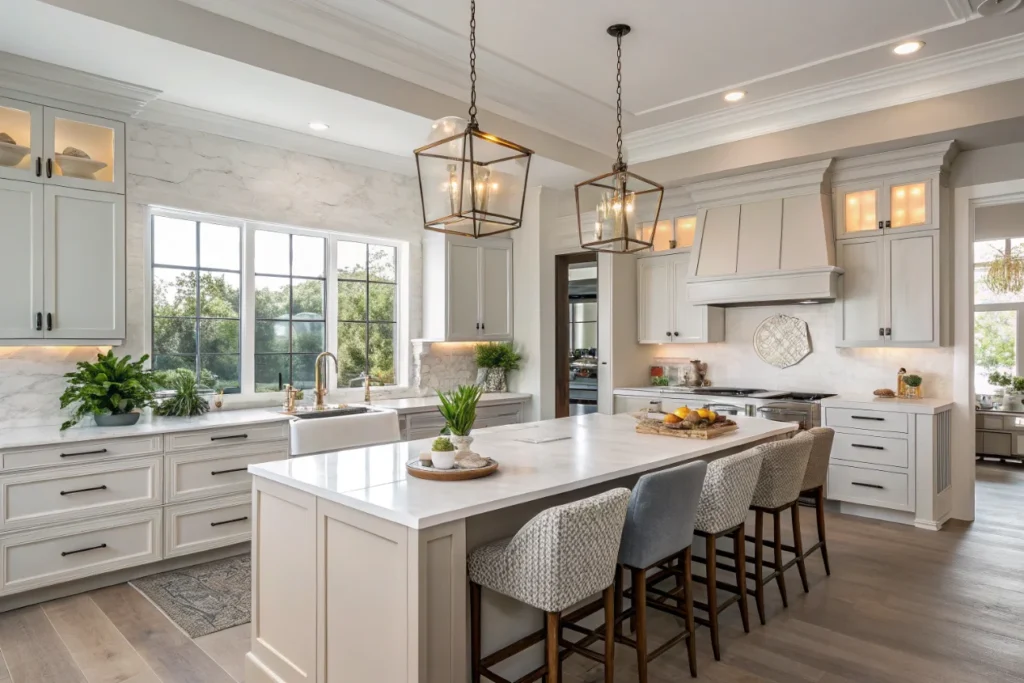
The right kitchen design ideas can completely transform the most used room in your home — turning a dated, inefficient layout into a space that is as beautiful to look at as it is practical to cook in every single day.
From cabinet choices and countertop materials to lighting and layout, every decision in a kitchen renovation builds toward an environment that reflects your personal style while genuinely supporting how you live and cook. The best kitchens are never just about aesthetics — they are about how the space makes you feel each time you walk in.
This guide covers the best kitchen design ideas that professional designers and home cooks actually recommend — with practical tips, honest comparisons, and product picks to help you plan a kitchen that you will love for decades.
List of 10 Best Kitchen Design Ideas
1. Two-Tone Cabinet Color Scheme
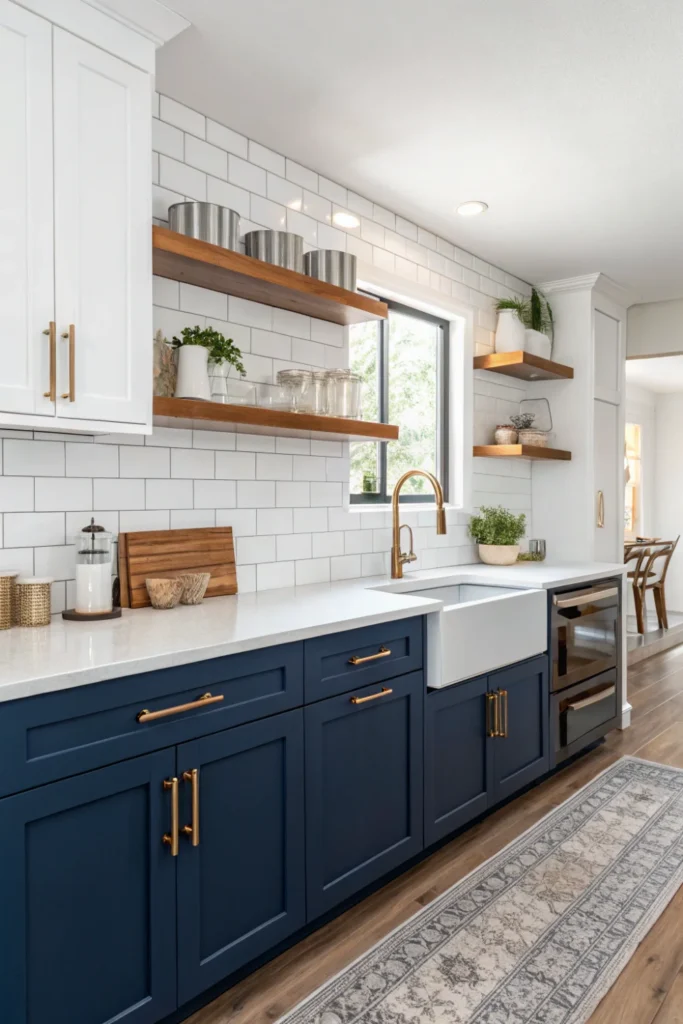
A two-tone cabinet color scheme — using one color on upper cabinets and a contrasting or complementary tone on lower cabinets — is one of the most popular and design-forward kitchen design ideas right now. It adds visual depth and personality that an all-one-color kitchen simply cannot achieve.
Classic two-tone combinations include white uppers with navy, sage green, or charcoal lowers, or natural wood uppers paired with painted lower cabinets in a warm cream or deep green. The upper-lighter, lower-darker combination grounds the room visually and prevents the kitchen from feeling top-heavy.
The beauty of this approach is its flexibility — if you tire of the lower cabinet color in several years, repainting the lower cabinets alone is a far more manageable project than repainting everything.
Pro Tip: Keep the island a third distinct color or material in a two-tone kitchen — a natural wood island between white and navy cabinets creates a beautifully balanced three-element palette that feels intentional and sophisticated rather than simply split down the middle.
2. Open Shelving as a Design Feature
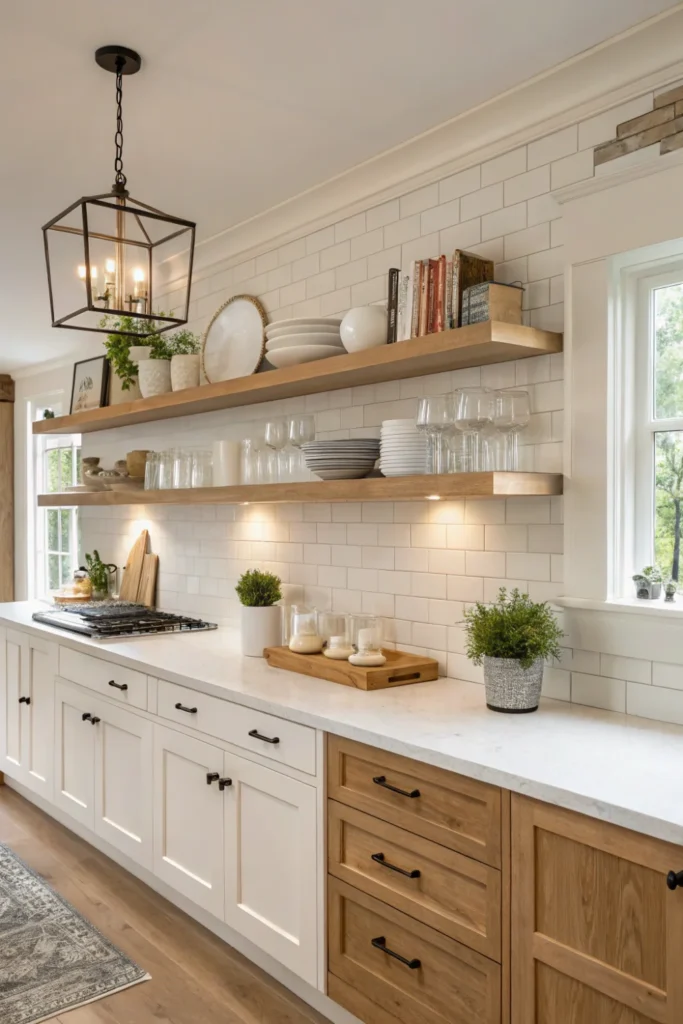
Open shelving replacing some or all upper cabinets is one of the most transformative kitchen design ideas for making a kitchen feel more open, airy, and personally curated. Removing upper cabinet doors immediately lightens the visual weight of the room and creates space for a styled display of everyday items.
The most effective open shelf kitchens use solid wood shelves in white oak, walnut, or painted pine mounted on minimal brackets — the shelf material and bracket finish become design elements in their own right alongside the displayed items.
Style open shelves with a disciplined mix of everyday ceramics, glassware, a few cookbooks, and one or two plants or decorative objects — the key is keeping everything visible intentional and organized rather than allowing the shelves to become a dumping ground.
Pro Tip: Limit open shelving to one or two runs of shelves in the kitchen rather than replacing all upper cabinets — keeping some closed storage for less attractive items like cereal boxes and cleaning products means the open shelves can remain curated and beautiful without requiring daily reorganization.
3. Waterfall Edge Kitchen Island
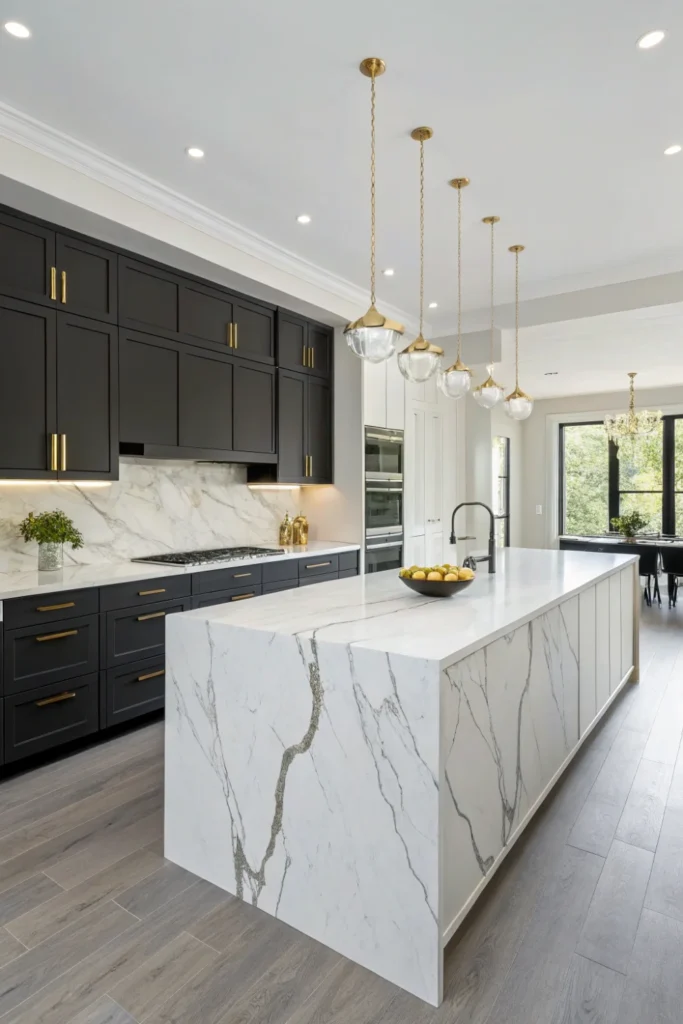
A waterfall edge kitchen island — where the countertop material continues vertically down one or both sides of the island to the floor — is one of the most architecturally striking kitchen design ideas for a modern or contemporary kitchen.
The seamless continuation of marble, quartz, or wood down the island side creates a sculptural, furniture-quality centerpiece that elevates the entire kitchen’s aesthetic from standard renovation to something genuinely design-led.
White Carrara marble, Calacatta quartz, and book-matched stone slabs are the most popular materials for a waterfall island countertop — each creates a different effect, from the classical veining of marble to the graphic symmetry of book-matched stone.
Pro Tip: Choose a quartz rather than natural stone for a waterfall island if the kitchen sees heavy daily use — quartz replicates the look of marble without the porosity and maintenance requirements that make natural stone challenging in a high-traffic cooking environment.
4. Statement Kitchen Island with Seating
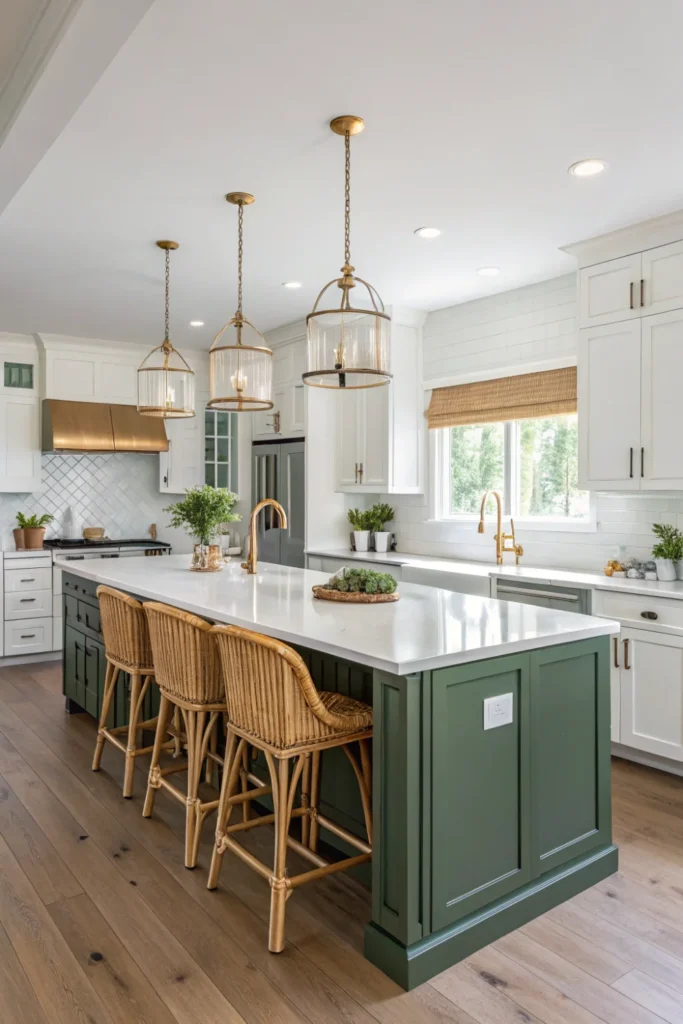
A statement kitchen island with integrated seating is one of the most functional and socially impactful kitchen design ideas — it transforms the kitchen from a purely cooking space into the genuine hub of the home where family gathers, homework is done, and guests naturally congregate.
An island with bar stool seating on one side and working counter on the other creates a natural division between the cooking zone and the social zone, allowing food preparation and conversation to happen simultaneously without one disrupting the other.
Choose an island size that allows at least 42 inches of clearance on all working sides — this minimum passage width ensures comfortable movement and safe working around an island without the constant obstacle course that undersized kitchen layouts create.
Pro Tip: Select bar stools with backs and footrests for an island used primarily for meals and extended sitting — backless stools look cleaner and more minimal but become genuinely uncomfortable after more than 20 to 30 minutes of seated use.
5. Dramatic Dark Kitchen Cabinets
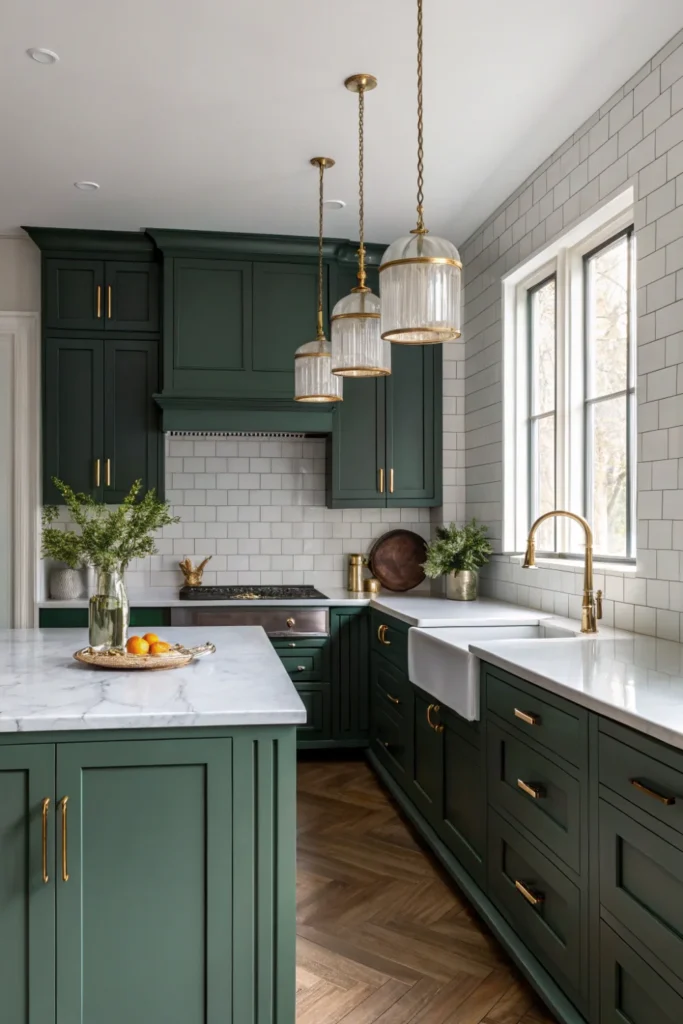
Dark kitchen cabinets — in deep navy, forest green, charcoal, slate, or matte black — are one of the most sophisticated and dramatic kitchen design ideas for creating a kitchen with genuine depth and personality.
Contrary to the common assumption that dark kitchens feel small, a well-lit dark kitchen with adequate natural light, under-cabinet lighting, and bright countertops feels luxurious and enveloping rather than confined — the key is ensuring sufficient light sources rather than avoiding the dark color.
Pair dark cabinets with light countertops in white quartz or pale stone, white or cream walls, and warm metallic hardware in brushed gold or unlacquered brass for the most balanced and visually successful dark kitchen result.
Pro Tip: Use matte or satin paint finishes on dark kitchen cabinets rather than high gloss — dark gloss cabinet doors show every fingerprint, water splash, and smear almost immediately, while matte finishes conceal daily marks and maintain a cleaner appearance with far less wiping.
6. Handleless Sleek Modern Kitchen
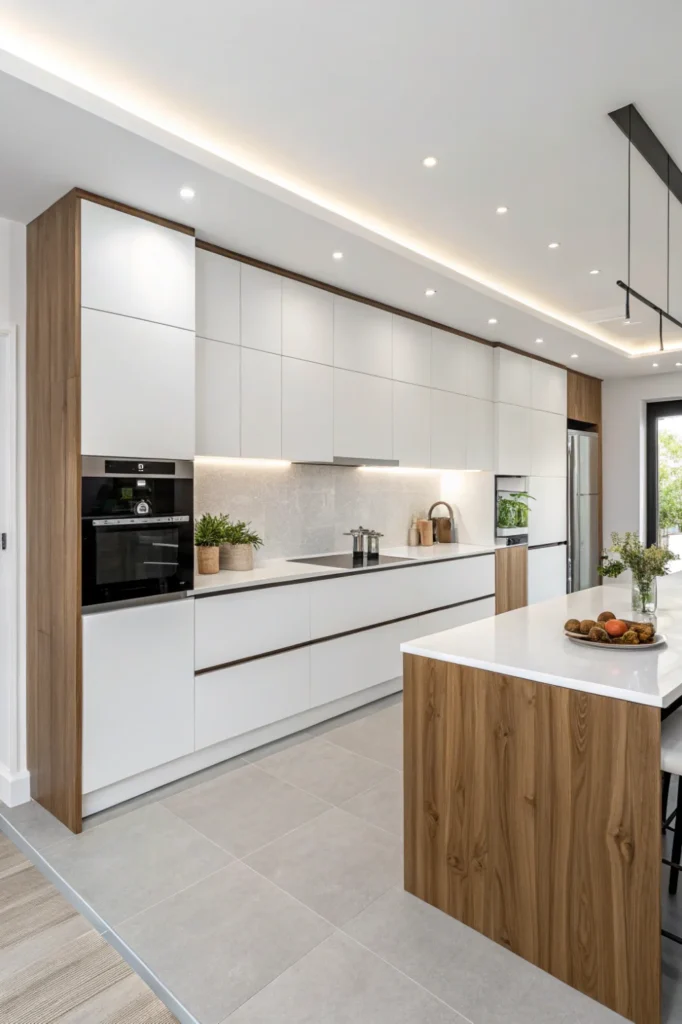
A handleless or push-to-open kitchen is one of the most minimalist and architecturally clean kitchen design ideas — the absence of handles creates an uninterrupted, seamless cabinet face that reads as a single continuous surface rather than a collection of individual doors.
Handleless kitchens rely on J-pull integrated grip profiles, touch-latch mechanisms, or push-to-open hardware hidden within the cabinet structure itself — the result is a kitchen that looks almost impossibly clean and graphic from every angle.
This approach works best in high-gloss lacquer, matte lacquer, or solid color thermofoil finishes that emphasize the seamless quality of the handleless design — wood grain finishes can also work beautifully but require particularly clean door edges to maintain the streamlined effect.
Pro Tip: Include at least one tactile material as a contrast in a handleless kitchen — a wood breakfast bar, a stone feature wall, or a textured backsplash tile prevents the kitchen from feeling sterile or showroom-like and adds the human warmth that pure minimalism can lack.
7. Subway Tile Backsplash with Statement Grout
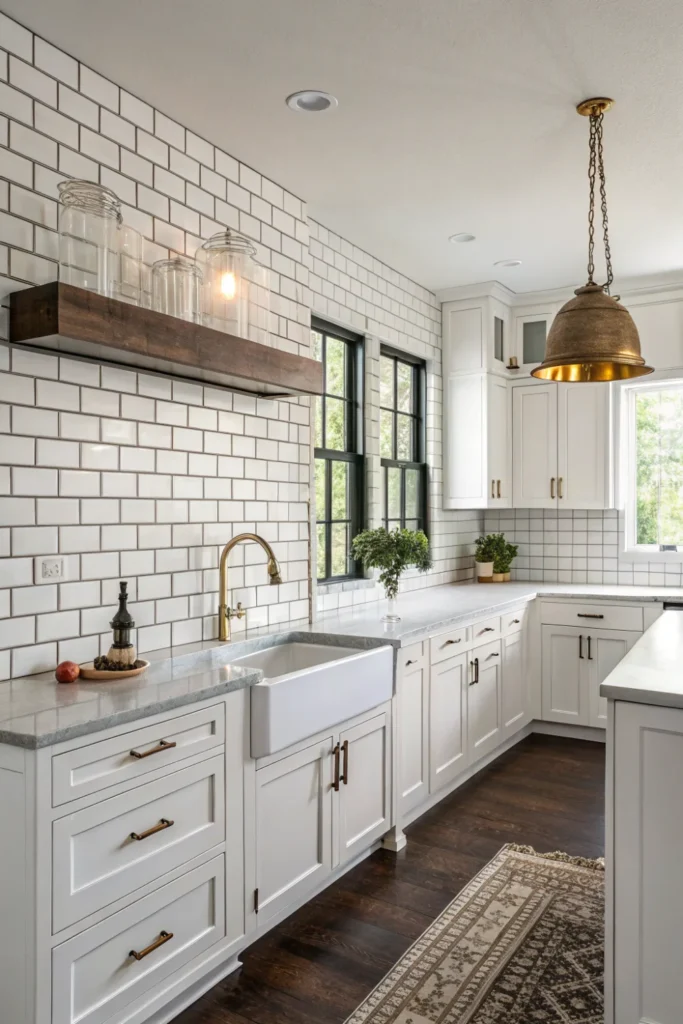
White subway tile with a contrasting dark grout is one of the most enduring and currently popular kitchen design ideas — the classic tile format given graphic impact by the bold grout lines that define every individual tile clearly.
The dark grout transforms the standard white subway tile from a background element into an active design component — the grid becomes a visual feature that adds rhythm, texture, and intentionality to the kitchen wall.
Beyond the classic white tile and dark grout combination, colored subway tiles in sage green, dusty blue, warm terracotta, or soft blush are increasingly popular kitchen design ideas that introduce a carefully controlled color accent at the most prominent wall surface in the kitchen.
Pro Tip: Seal dark grout in a kitchen backsplash immediately after installation and annually thereafter — cooking splashes, steam, and grease penetrate unsealed grout rapidly and cause permanent staining that is extremely difficult to remove once the grout has absorbed the discoloration.
8. Integrated Appliances for a Seamless Look
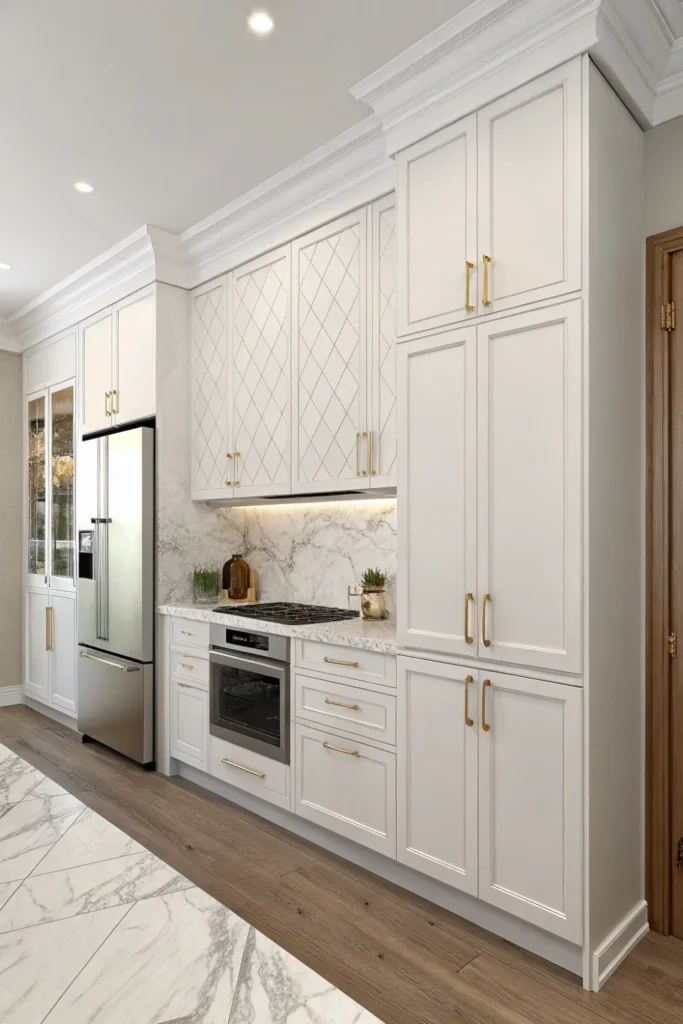
Integrated or panel-ready appliances concealed behind cabinet-matching door fronts are one of the most transformative kitchen design ideas for achieving a truly seamless, furniture-quality kitchen aesthetic.
Integrated refrigerators, dishwashers, and even microwave drawers hidden behind matching cabinet panels create a kitchen where the appliances disappear entirely into the cabinetry — the result is a clean, uncluttered room where the eye is drawn to beautiful surfaces rather than stainless steel machinery.
This approach works in every kitchen style from minimalist modern to classic traditional — because the appliance fronts match the cabinets exactly, the integration suits any cabinet finish without requiring a specific aesthetic direction.
Pro Tip: Always specify panel-ready appliances before finalizing cabinet design — the door panel dimensions, hinge positions, and handle alignments required for integrated appliances affect the surrounding cabinet layout significantly, and retrofitting integration after cabinetry is installed is costly and often impossible.
9. Warm Wood Accents and Natural Material Kitchen
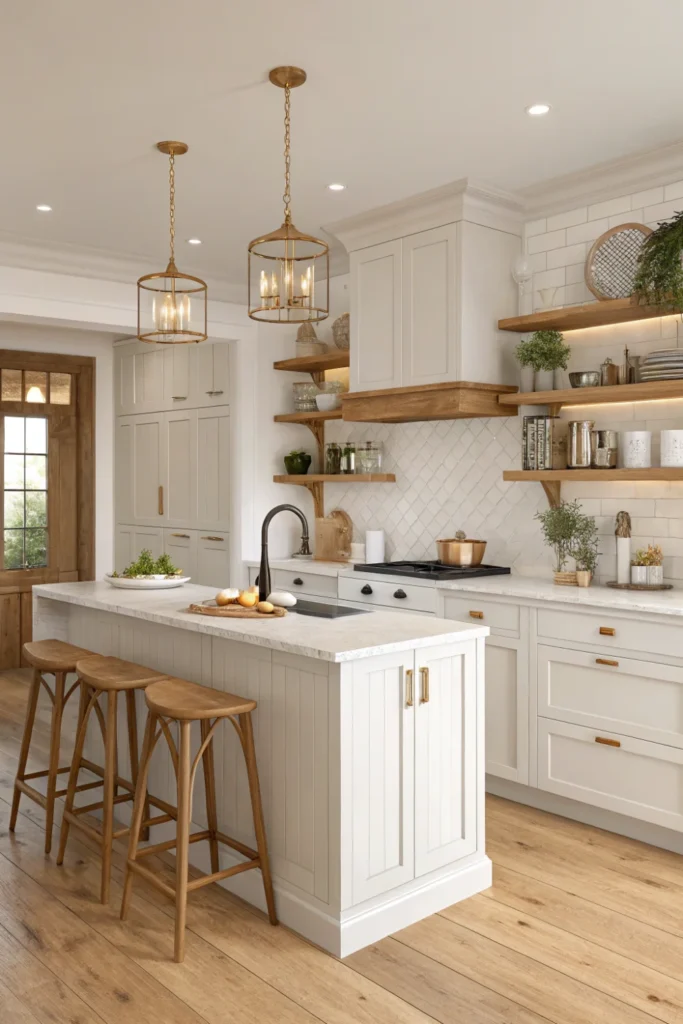
A warm wood accent kitchen — combining painted or stone cabinets with natural wood elements like open shelving, an island countertop, floating breakfast bar, or cabinet door inserts — is one of the most human and welcoming kitchen design ideas in contemporary interior design.
The combination of cool or neutral cabinet tones with warm natural wood grain creates a visual tension that prevents a kitchen from feeling either too cold and clinical or too rustic and informal — it is a balance that describes the most universally appealing kitchen design ideas across every style category.
White oak, American walnut, and European beech are the most popular wood species for kitchen accents — each brings a distinct grain character and warmth level that suits different cabinet colors and overall kitchen palettes.
Pro Tip: Apply food-safe hardwax oil or a dedicated wood countertop oil to any natural wood kitchen surface every three to six months — regular oiling prevents the grain from drying and cracking, repels water and stains, and maintains the rich, warm color that makes natural wood one of the most beautiful of all kitchen design ideas.
10. Bold Patterned or Zellige Tile Backsplash
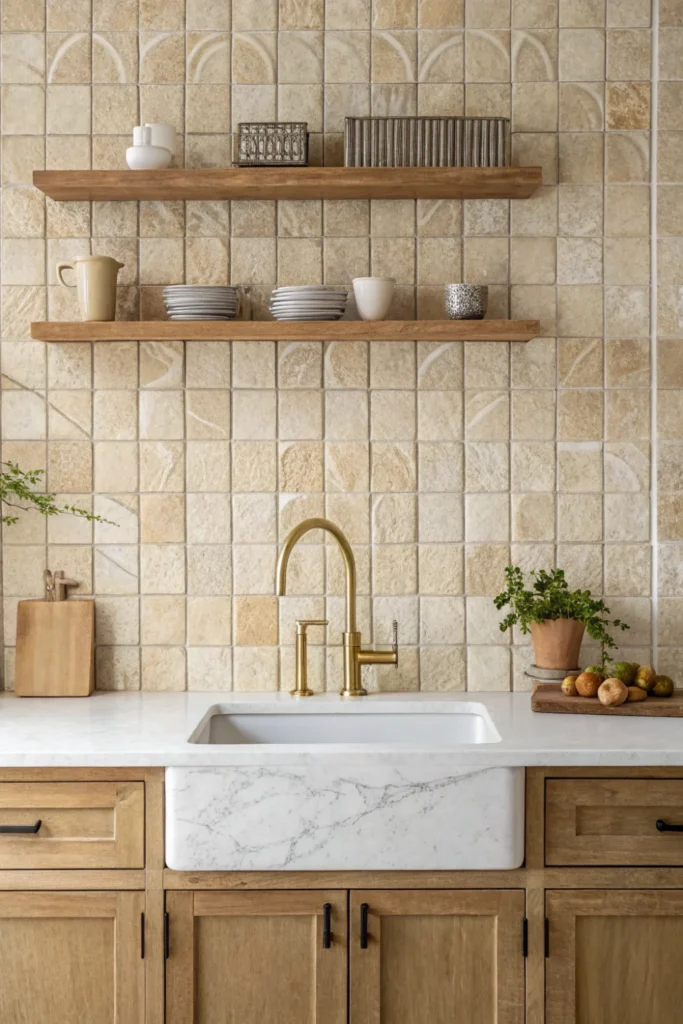
A bold patterned or zellige tile backsplash is one of the most personality-rich kitchen design ideas — a single wall of handmade ceramic zellige, encaustic cement, or hand-painted tiles transforms the kitchen into a space with genuine artisan character.
Moroccan zellige tiles in warm whites, cream, and sand tones create a richly textured, light-catching surface that changes appearance throughout the day as natural light shifts — their irregular surfaces and subtle color variation give a kitchen a handcrafted quality that no mass-produced tile achieves.
Bold encaustic cement tiles in black and white geometric patterns create a more graphic, design-forward backsplash statement that suits maximalist, eclectic, and Art Deco-influenced kitchen design ideas particularly well.
Pro Tip: Use a non-sanded grout for handmade zellige and encaustic tiles — their slightly uneven surfaces and irregular edges require a finer grout that fills gaps without cracking, and an experienced tile installer familiar with handmade materials is strongly recommended for achieving a professional result.
Why Investing in Great Kitchen Design Ideas Is Worth It
Great kitchen design ideas deliver a return on investment that no other room in the home can match — consistently cited by real estate agents as the single highest-value renovation category, a well-designed kitchen directly and measurably increases property value while improving daily quality of life from the day it is completed.
The time spent in the kitchen makes its design more impactful than any other room in the home — most families spend more waking hours in the kitchen than any other single space, meaning a kitchen that functions beautifully and feels inspiring has a daily wellness effect that multiplies across every year it is used.
Thoughtfully executed kitchen design ideas also reduce the hidden costs of a poorly designed kitchen — inefficient layouts that create unnecessary movement, inadequate storage that leads to countertop clutter, and poor lighting that makes cooking difficult all represent a daily tax on time, energy, and enjoyment that a well-designed kitchen eliminates entirely.
Things to Consider Before Choosing Kitchen Design Ideas
Before committing to any aesthetic direction, establish your kitchen’s primary function and the way your household actually uses it — a kitchen used primarily for serious daily cooking has very different design priorities than one used mainly for occasional cooking and daily coffee making, and the best kitchen design ideas are always grounded in honest self-assessment of real use patterns.
Think carefully about the natural light available in your kitchen before choosing cabinet colors, countertop materials, and flooring — north-facing kitchens with limited daylight require lighter palettes and more reflective surfaces than south-facing rooms that receive generous natural light throughout the day.
Always plan kitchen design ideas around the work triangle — the relationship between the sink, stove, and refrigerator — ensuring that the three most-used work stations are positioned within comfortable reach of each other without creating crossing traffic patterns that make cooking inefficient and the space frustrating to use.
Comparison Table of Kitchen Design Ideas
| Design Idea | Cost Range | Difficulty | Longevity | Maintenance | Best Style |
|---|---|---|---|---|---|
| Two-Tone Cabinets | $2,000–$15,000 | Medium | Very High | Wipe clean | Any style |
| Open Shelving | $200–$1,500 | Low–Medium | High | Dust regularly | Organic, modern, Scandi |
| Waterfall Edge Island | $1,500–$8,000 | High | Very High | Seal and wipe | Modern, contemporary |
| Statement Island with Seating | $2,000–$12,000 | High | Very High | Wipe clean | Any style |
| Dark Kitchen Cabinets | $3,000–$20,000 | Medium–High | Very High | Wipe with care | Modern, transitional |
| Handleless Modern Kitchen | $4,000–$25,000 | High | Very High | Wipe clean | Minimalist, modern |
| Subway Tile Backsplash | $500–$3,000 | Medium | Very High | Seal grout annually | Any style |
| Integrated Appliances | $3,000–$15,000+ | High | Very High | Standard cleaning | Modern, transitional |
| Warm Wood Accents | $500–$5,000 | Low–Medium | High | Oil regularly | Organic, Japandi, farmhouse |
| Zellige Tile Backsplash | $1,000–$5,000 | Medium–High | Very High | Seal grout | Eclectic, artisan, boho |
| Scullery / Butler’s Pantry | $5,000–$30,000+ | Very High | Very High | Wipe and maintain | Any style |
| Statement Pendant Lights | $200–$3,000 | Low–Medium | High | Dust and wipe | Any style |
| Quartz Slab Countertops | $2,000–$8,000 | High | Very High | Wipe clean | Any style |
| Kitchen Banquette Nook | $1,500–$8,000 | Medium–High | Very High | Wipe and launder | Farmhouse, transitional |
| Smart Kitchen Technology | $500–$5,000 | Medium | Medium–High | Update software | Modern, contemporary |
Frequently Asked Questions About Kitchen Design Ideas
What Are the Most Timeless Kitchen Design Ideas?
The most enduringly popular kitchen design ideas are those that prioritize quality materials, classic proportions, and a restrained palette over trend-driven details — white or neutral Shaker cabinets, stone or quartz countertops, subway tile backsplashes, and warm wood accents have remained consistently desirable for decades and show no signs of dating.
Investing in quality hardware, fixtures, and appliances rather than decorative trends is the single most reliable strategy for creating a kitchen that remains beautiful and relevant long after more fashion-conscious kitchen design ideas have become dated.
What Is the Most Important Element of Good Kitchen Design?
Layout and workflow are consistently cited by kitchen designers and professional chefs as the most important element of good kitchen design — a kitchen with a poor layout frustrates daily use regardless of how beautiful its surfaces and finishes are, while a well-planned layout makes even modest kitchen design ideas perform beautifully.
The work triangle between sink, stove, and refrigerator remains the foundational planning principle of kitchen design — ensuring these three stations are within 4 to 9 feet of each other and not crossed by major traffic paths creates the efficient, intuitive cooking environment that all great kitchen design ideas are built upon.
How Do I Make a Small Kitchen Feel Bigger?
The most effective kitchen design ideas for small spaces focus on maximizing vertical storage, minimizing visual clutter, and using light, reflective surfaces that bounce light around the room — handleless cabinets in light colors, large format floor tiles laid diagonally, under-cabinet lighting, and a mirrored or glass backsplash all make a compact kitchen feel significantly more spacious.
Removing upper cabinets on one wall and replacing them with open shelves or a single large mirror is one of the most dramatic small kitchen design ideas available — the visual openness created by eliminating a full wall of upper cabinets transforms the perceived scale of even a very compact kitchen.
How Much Should I Budget for a Kitchen Renovation Using These Design Ideas?
A basic kitchen renovation implementing foundational kitchen design ideas — new cabinet doors and hardware, updated countertops, and a new backsplash without changing the layout — typically costs between $8,000 and $25,000 depending on material choices and kitchen size.
A full kitchen renovation implementing more ambitious kitchen design ideas — new cabinets, countertops, appliances, flooring, lighting, and layout changes — typically ranges from $30,000 to $80,000 or more, with the largest variables being cabinet quality, appliance specification, and the extent of any structural or plumbing changes required.