
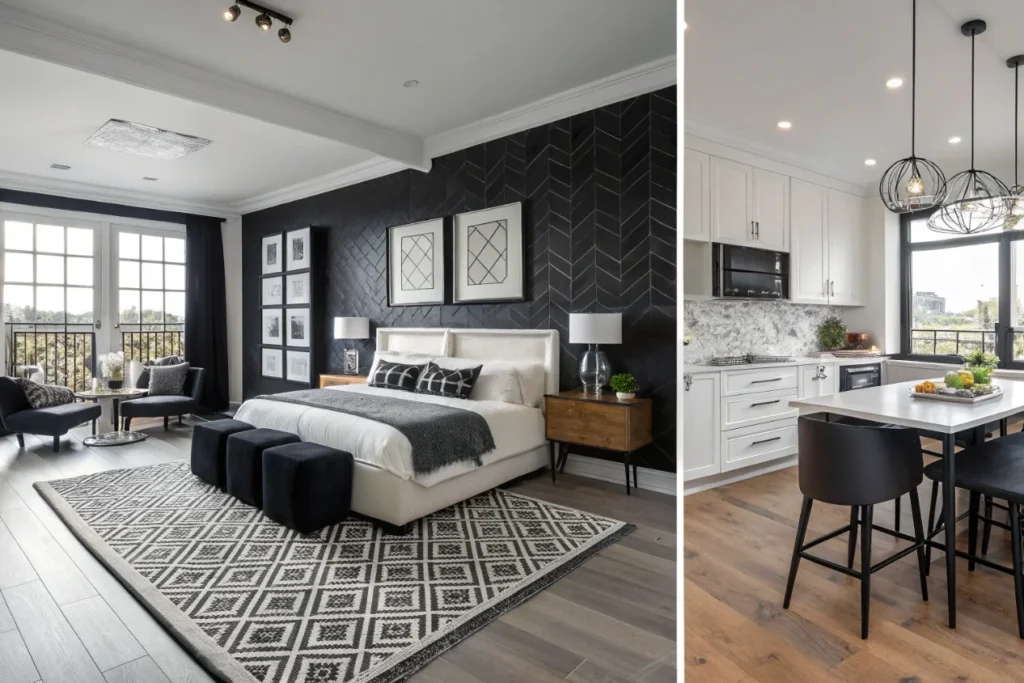
Black and white house interior decor is one of the most sophisticated and enduring design choices you can make for your home. The bold contrast of these two opposites creates spaces that feel simultaneously striking and serene — dramatic without being overwhelming.
From minimalist modern to classic traditional, black and white works across every architectural style and room type. It is a palette that never trends out, never clashes with accent colors, and always photographs beautifully — making it as practical as it is stunning.
This guide covers the best black and white house interior decor ideas that professional designers and stylish homeowners actually use — with practical tips, honest comparisons, and product recommendations to help you create a cohesive, beautiful home from room to room.
List of 10 Best Black and White House Interior Decor Ideas
1. Black and White Geometric Wallpaper
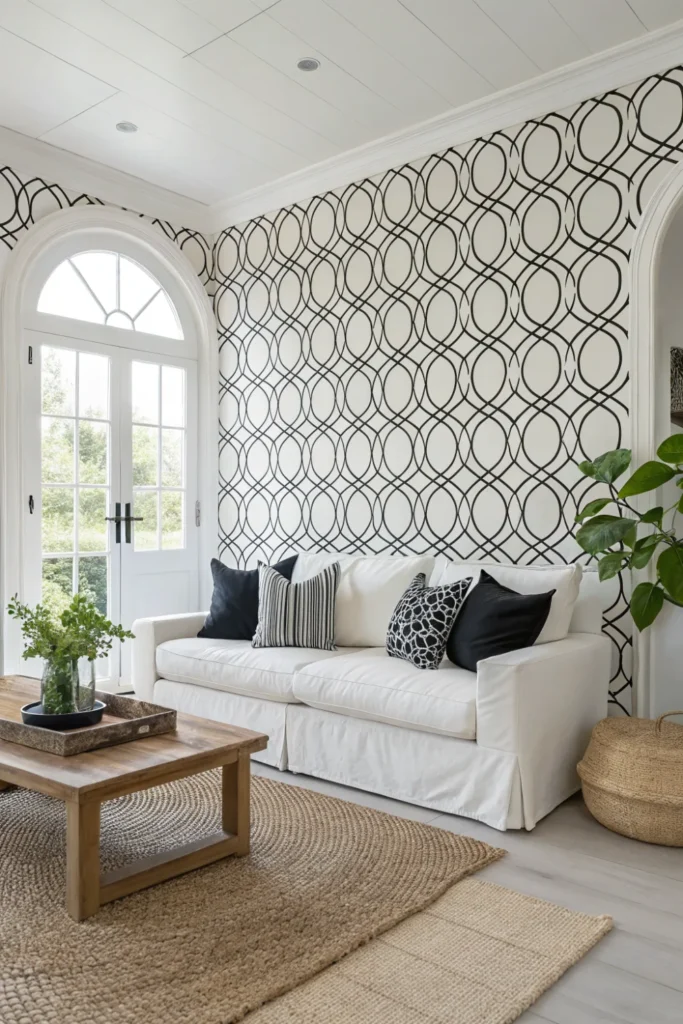
Black and white geometric wallpaper is one of the most powerful and transformative elements of black and white house interior decor. A single feature wall in a bold geometric pattern — chevron, trellis, hexagon, or diamond — creates an immediate visual statement that anchors the entire room.
The graphic quality of geometric patterns suits modern, Art Deco, and Scandi interior styles particularly well, and the strict two-color palette means the pattern never fights with existing furniture or accessories.
Use large-scale geometric patterns in main living spaces for maximum drama, and smaller, more delicate repeats in hallways, studies, and powder rooms where the pattern wraps all four walls.
Pro Tip: Balance a bold black and white geometric wallpaper with soft, organic textures in the same room — linen cushions, a jute rug, or a wooden coffee table prevent the graphic pattern from feeling cold or clinical and add essential warmth to the scheme.
2. White Walls with Black Trim and Molding
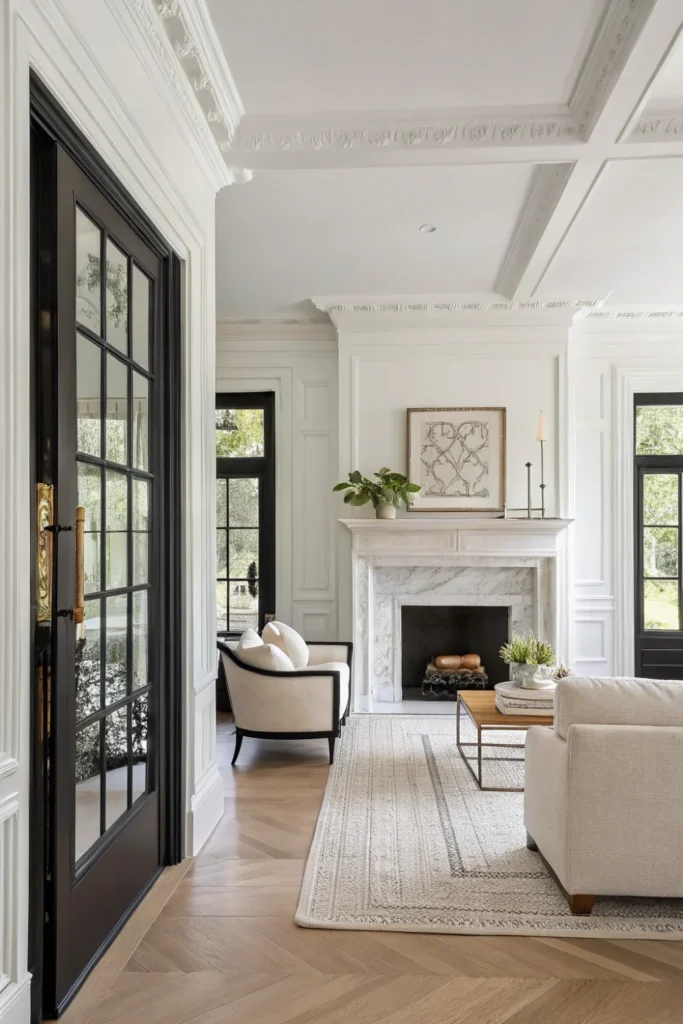
White walls with black-painted trim, baseboards, window frames, and crown molding is one of the most architecturally sophisticated expressions of black and white house interior decor. The dark trim frames every surface and element in the room like a work of art.
This approach has its roots in historic Scandinavian and Dutch interiors and has experienced a major contemporary revival — it suits both period properties with existing ornate moldings and modern new builds with clean architectural lines.
Choose a pure bright white for walls and a matte or satin black for all trim work — the contrast between flat white and slightly sheen black creates a visual depth that both colors in the same finish cannot achieve.
Pro Tip: Paint interior door frames, window reveals, and skirting boards black while keeping door faces white — this selective application of black trim creates a framing effect that makes every doorway and window feel like a deliberate architectural feature.
3. Black and White Checkerboard Floors
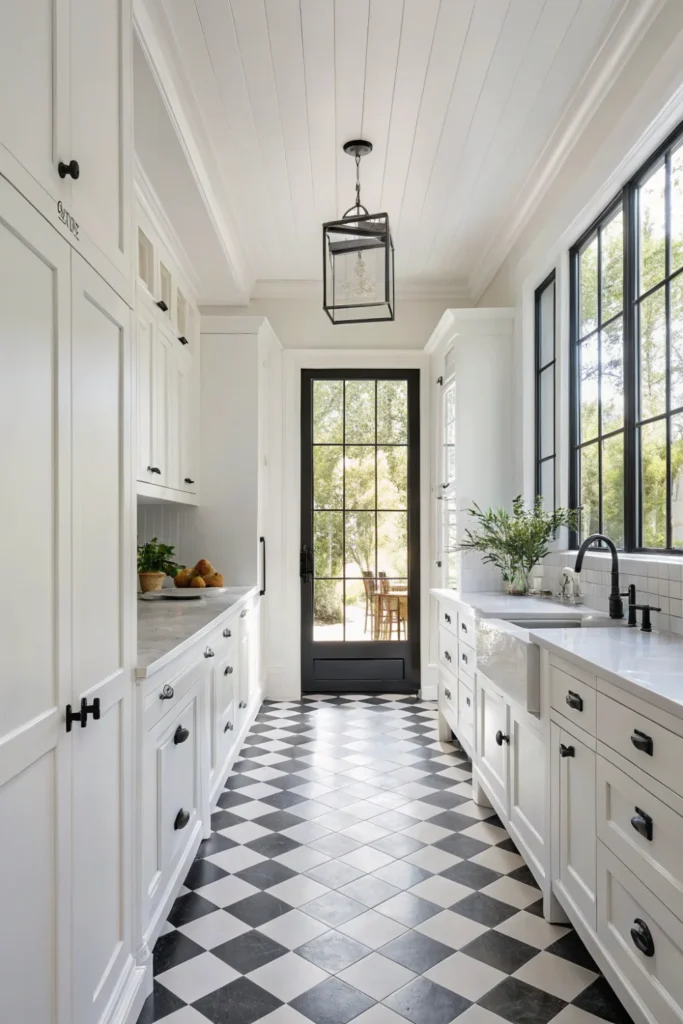
Black and white checkerboard floors are one of the most iconic and characterful elements in black and white house interior decor — instantly recognizable, endlessly classic, and equally at home in kitchens, entryways, hallways, and bathrooms.
The equal squares create a graphic, retro-modern energy that works in both traditional period homes and contemporary interiors — the pattern is bold enough to be the design focal point of any room it occupies.
Use larger 12 by 12 inch squares for a more contemporary, sophisticated feel and smaller 4 by 4 inch tiles for a more vintage, classic aesthetic — the scale of the check dramatically changes the overall mood of the floor.
Pro Tip: Keep walls, cabinets, and furniture simple and neutral when using a checkerboard floor — the pattern is strong enough to carry the entire design of the room, and competing wall treatments or busy furniture choices create visual chaos rather than the clean graphic impact the floor deserves.
4. Monochrome Art Gallery Wall
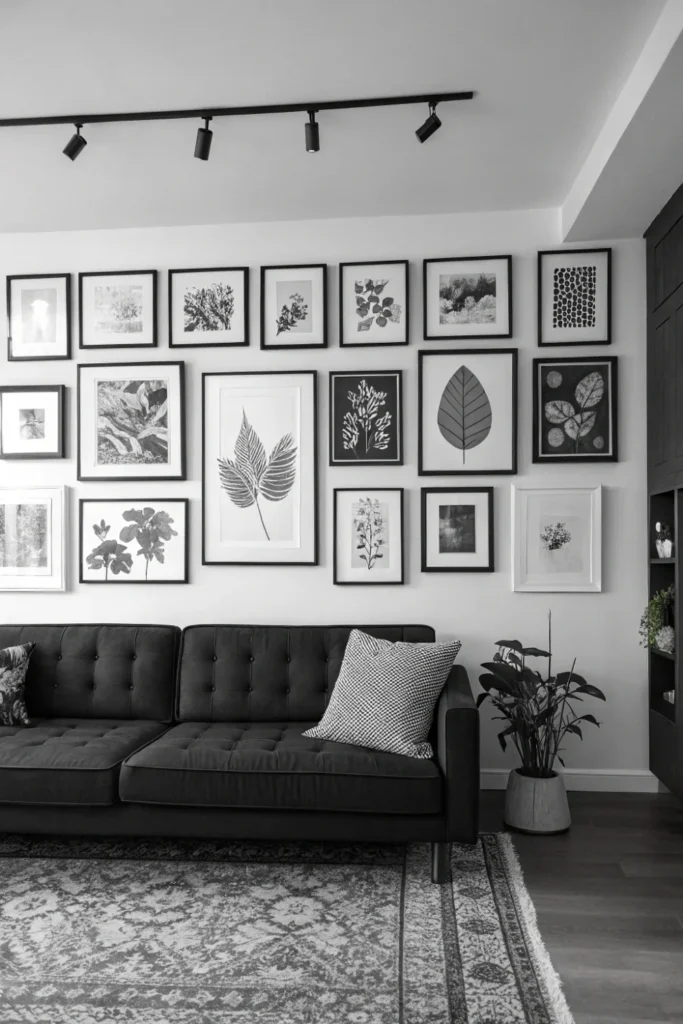
A monochrome art gallery wall in black and white frames and prints is one of the most cohesive and visually striking expressions of black and white house interior decor. It transforms a blank wall into a curated, museum-quality focal point.
Mix black and white photography, graphic art prints, typographic pieces, botanical line drawings, and abstract works — the content can vary widely as long as every print, frame, and mat remains strictly within the black and white palette.
The consistency of the two-color constraint creates a gallery wall that feels unified and intentional even when the individual pieces are very different in style, subject, and scale — a liberating approach that makes curation easy.
Pro Tip: Use both black frames and white frames within the same gallery wall — an all-black or all-white frame selection looks flat, while the alternation between the two frame colors creates depth and movement across the arrangement.
5. Black Kitchen Cabinets with White Countertops
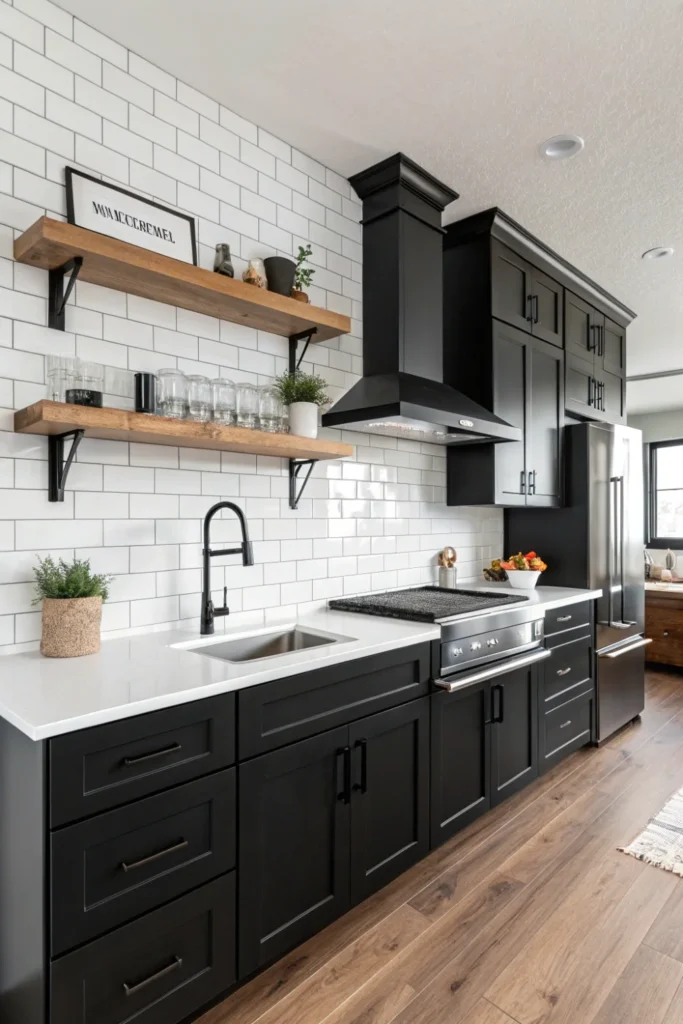
Black kitchen cabinets paired with white countertops are one of the boldest and most sophisticated applications of black and white house interior decor — and one of the highest-impact room transformations available in any home renovation.
Matte black lower cabinets with white quartz or marble countertops create a dramatic, high-contrast kitchen that feels simultaneously luxurious and graphic — the countertop becomes a bright, clean working surface that floats visually above the dark base.
Pair with white subway tile backsplash and matte black hardware to keep the palette cohesive throughout every element of the kitchen, from the largest cabinet to the smallest drawer pull.
Pro Tip: Balance an all-black and white kitchen with warm wood accents — open shelving in white oak, a butcher block island top, or wooden bar stools introduce the organic warmth that prevents a strictly monochrome kitchen from feeling stark or cold.
6. Black and White Striped Textiles and Soft Furnishings
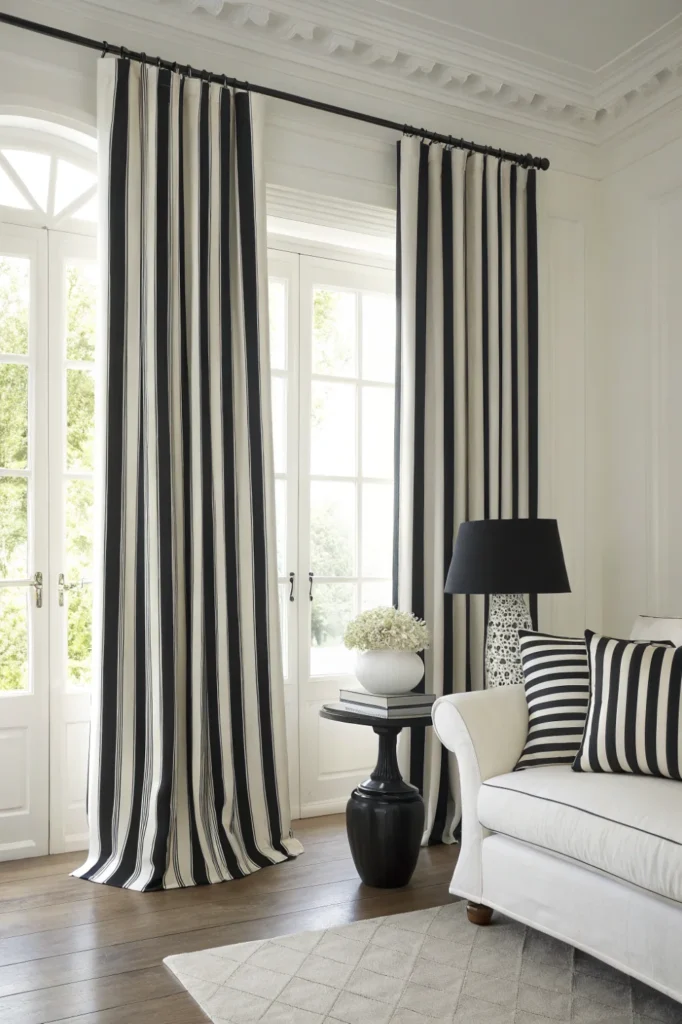
Black and white striped textiles — cushions, throws, curtains, bedding, and upholstery — are among the most accessible and versatile elements of black and white house interior decor. Stripes bring energy, rhythm, and classic elegance to any room in any style.
Ticking stripe, wide bold stripe, pinstripe, and nautical stripe each create a very different mood — ticking stripe reads rustic and French country, bold stripe reads modern and graphic, and pinstripe reads tailored and traditional.
Layer striped cushions with solid black and white pieces rather than combining multiple different stripe widths and directions — consistency in one variable (either width or orientation) keeps the look cohesive rather than chaotic.
Pro Tip: Use vertical stripes on curtains in rooms with standard ceiling heights — the vertical orientation draws the eye upward and creates the impression of greater ceiling height, which is one of the most effective visual tricks in black and white house interior decor.
7. White Bedroom with Black Furniture Accents
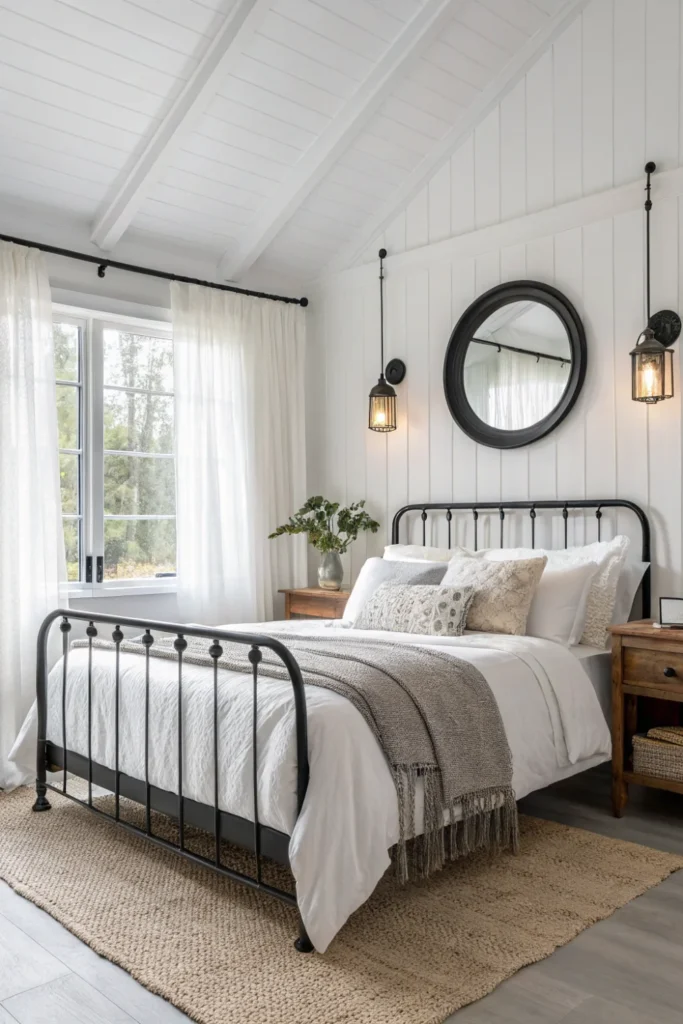
A white bedroom with black furniture accents — a black bed frame, black nightstands, or a black dresser against white walls — is one of the most elegant and restful expressions of black and white house interior decor in a sleeping space.
The white-dominant palette keeps the bedroom feeling calm, airy, and expansive while the black furniture pieces provide visual weight and definition that prevents the room from feeling washed out or featureless.
Layer white and off-white bedding in different textures — crisp cotton percale, waffle weave, and linen — to create depth within the white palette and add tactile interest that prevents the bedroom from feeling flat.
Pro Tip: Add a black-framed mirror as a fourth black element alongside the bed frame, nightstands, and one additional piece — four black anchor points in a white bedroom create visual balance from every angle and prevent the black pieces from feeling randomly placed.
8. Black Statement Furniture in White Rooms
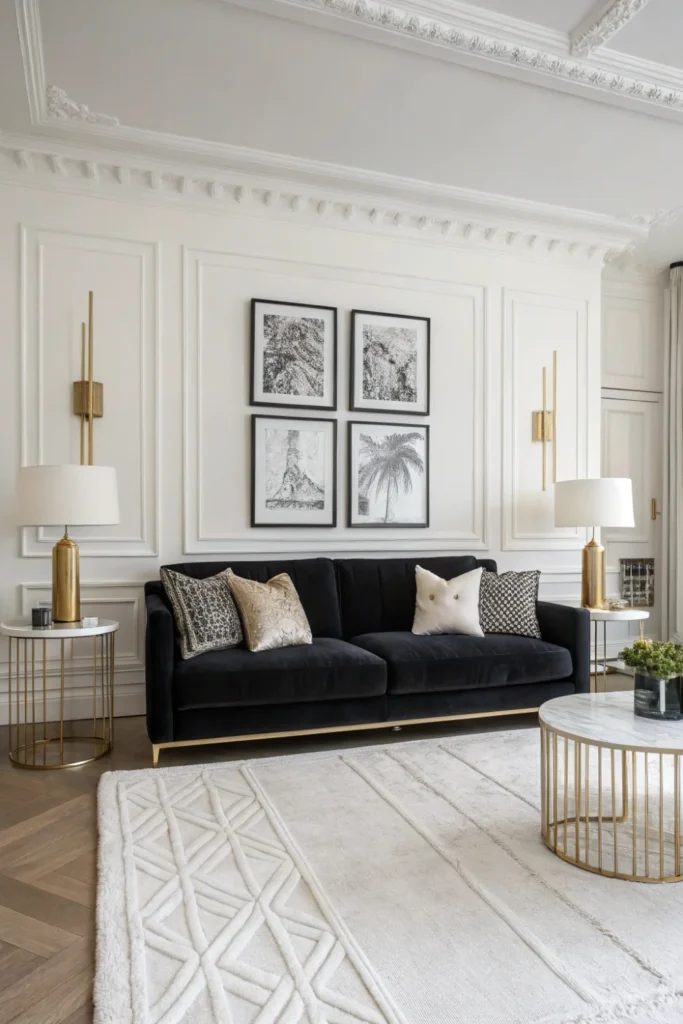
A single black statement furniture piece in an otherwise white or neutral room is one of the most impactful and design-forward expressions of black and white house interior decor — one bold piece does more work than an entire room of matched furniture.
A black velvet sofa in a white living room, a black dining table in a white dining room, or a black wardrobe in a neutral bedroom each create an immediate focal point that commands attention and elevates the entire space around it.
This approach gives enormous flexibility — the black statement piece can change over time as tastes evolve, while the neutral white backdrop remains a permanently versatile foundation for any direction the decor takes.
Pro Tip: Place a large light-colored rug beneath a black statement sofa or dining table — the rug creates a visual base that grounds the dark furniture in the room rather than letting it appear to float disconnectedly in a sea of white floor.
9. Black and White Patterned Tiles Throughout
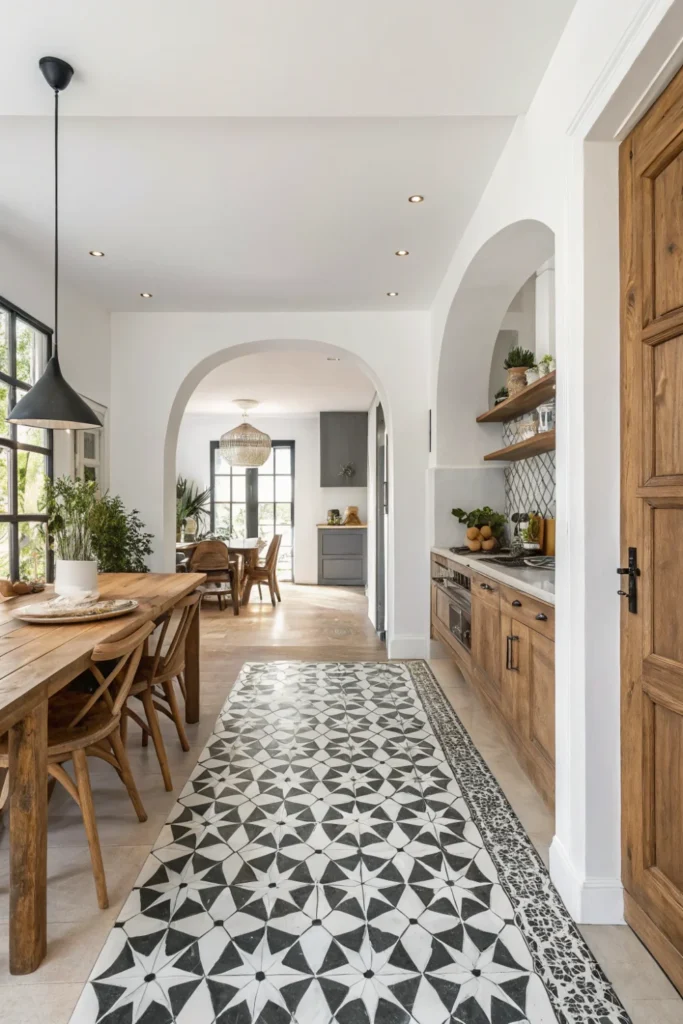
Black and white patterned encaustic or cement tiles used consistently throughout connected spaces — kitchen into hallway into dining room — create a powerful visual thread that ties a home together as a cohesive design statement.
Moroccan star patterns, cement hexagons, Victorian encaustic patterns, and Art Deco geometric designs are among the most beloved tile choices for black and white house interior decor — each brings a distinct historical reference and graphic energy.
Running the same tile continuously across multiple connected rooms without a threshold creates a sense of visual flow and spatial generosity that different flooring in each room actively works against.
Pro Tip: Use matte rather than polished finishes for black and white patterned floor tiles in high-traffic areas — matte tiles show fewer footprints, scuff marks, and water spots than glossy versions and age far more gracefully under daily household use.
10. Monochrome Entryway with Bold Impact
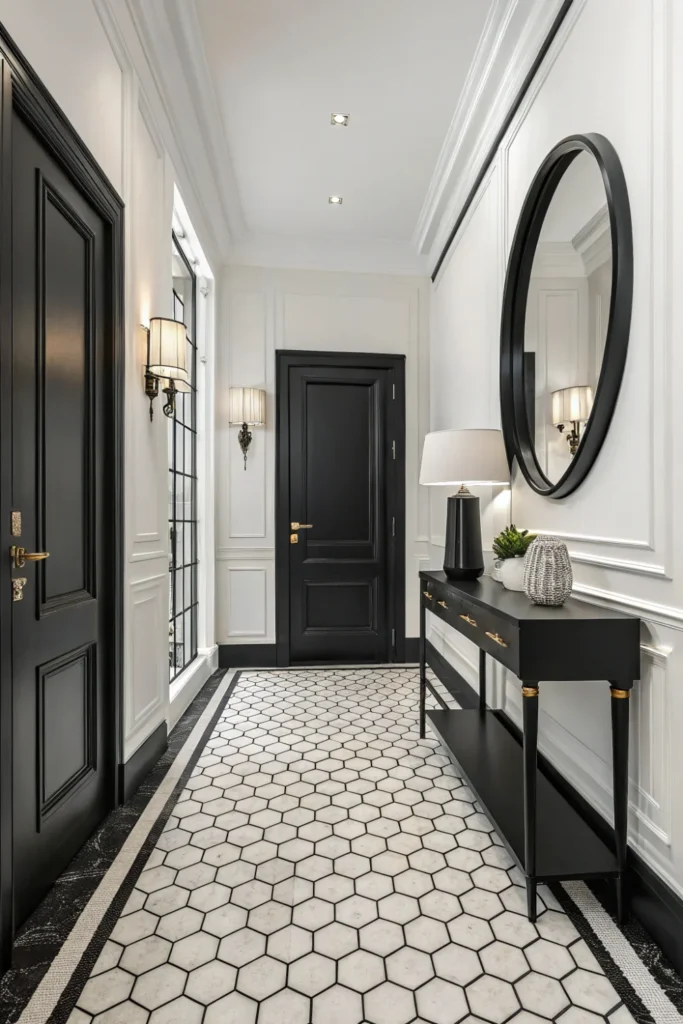
A monochrome black and white entryway is one of the highest-impact and most design-efficient applications of black and white house interior decor — the first impression of the entire home is set in this single transitional space.
A bold black front door, black and white tiled floor, white walls with black trim, and a statement mirror in a dark frame create a complete, cohesive black and white entry that signals the design intention of the entire home from the moment a guest steps inside.
Keep the entryway deliberately uncluttered — the graphic power of black and white house interior decor depends on clean surfaces and visible contrast, which disappears under the daily accumulation of bags, shoes, and coats.
Pro Tip: A console table in black with a white ceramic lamp and a single framed black and white print above is the simplest and most elegant entryway vignette in black and white house interior decor — three elements, perfectly balanced, that require no further addition to feel complete.
Why Black and White House Interior Decor Is Worth the Investment
Black and white house interior decor is one of the most financially sound design investments you can make — the palette never dates, never clashes with new furniture or art purchases, and requires no wholesale redecorating as trends change around it.
The universal photographic appeal of black and white interiors adds genuine monetary value in today’s real estate market — homes with cohesive, well-executed monochrome decor photograph exceptionally well online, attracting more viewings, stronger offers, and faster sales.
From a daily living perspective, black and white house interior decor creates spaces that feel calm, ordered, and intentional — the elimination of color decisions extends to how the room feels to inhabit, reducing visual noise and creating environments that are genuinely restful to come home to.
Things to Consider Before Choosing Black and White House Interior Decor
Before committing to a black and white house interior decor scheme throughout your home, consider the natural light levels in each room carefully — north-facing rooms with limited daylight need a higher ratio of white to black to prevent spaces from feeling dark and cave-like.
Think about the ratio of black to white as a deliberate design decision rather than an afterthought — the most common guideline for black and white house interior decor is 70% white to 30% black in living and sleeping spaces, shifting to a more equal split in smaller accent spaces like powder rooms and entryways.
Always consider texture as the third element alongside black and white — rooms that rely solely on color contrast without layering different materials, finishes, and tactile surfaces feel flat and unresolved regardless of how carefully the black and white balance has been calculated.
Comparison Table of Black and White House Interior Decor Ideas
| Design Idea | Cost Range | Difficulty | Best Room | Maintenance | Style Suits |
|---|---|---|---|---|---|
| Geometric Wallpaper | $80–$400/roll | Low–Medium | Living, bedroom, study | Wipe clean | Modern, Art Deco, Scandi |
| White Walls Black Trim | $50–$200 (paint) | Low–Medium | Any room | Repaint every 5–7 yrs | Any style |
| Checkerboard Floors | $6–$25/sq ft | Medium | Kitchen, entry, bath | Seal grout annually | Retro, classic, modern |
| Monochrome Gallery Wall | $100–$1,000 | Low | Living, hallway, study | Dust occasionally | Any style |
| Black Kitchen Cabinets | $2,000–$15,000+ | High | Kitchen | Wipe clean daily | Modern, transitional |
| Striped Textiles | $50–$500 | Low | Any room | Wash regularly | Any style |
| White Bedroom Black Accents | $200–$2,000 | Low | Bedroom | Dust and wipe | Modern, minimalist |
| Black Statement Furniture | $400–$5,000 | Low | Any room | Vacuum and spot clean | Any style |
| Patterned Tiles Throughout | $8–$30/sq ft | Medium–High | Kitchen, entry, bath | Seal grout | Eclectic, traditional |
| Monochrome Entryway | $200–$2,000 | Low–Medium | Entryway | Wipe clean | Any style |
| Black and White Home Office | $300–$3,000 | Low | Home office | Dust and wipe | Modern, minimalist |
| Black and White Dining Room | $500–$5,000 | Low–Medium | Dining room | Wipe and launder | Any style |
| Layered Monochrome Living Room | $500–$5,000 | Low | Living room | Vacuum and spot clean | Modern, transitional |
Frequently Asked Questions About Black and White House Interior Decor
Does Black and White House Interior Decor Work in Every Room?
Yes — black and white house interior decor works in every room, but the ratio and application method should adjust based on the room’s function and natural light. Bedrooms benefit from a predominantly white scheme with black accents for a restful atmosphere, while kitchens, entryways, and bathrooms can handle a more equal split.
The key to making black and white work in every room is varying the texture and finish of materials rather than relying solely on color contrast — a room where every surface is flat paint in black or white will feel clinical, while a room with layered textures reads as warm and intentional.
How Do I Add Warmth to Black and White House Interior Decor?
Natural materials are the most effective warmth-bringer in black and white house interior decor — solid wood floors, rattan accessories, linen textiles, jute rugs, and leather upholstery all introduce organic warmth within the strict two-color palette without introducing a third color.
Warm white rather than cool white is also an important distinction — choosing whites with yellow or cream undertones for walls and large furniture surfaces rather than stark blue-toned whites creates a significantly warmer and more liveable black and white interior.
What Accent Colors Work Best with Black and White House Interior Decor?
Warm metallics — brushed gold, unlacquered brass, and antique bronze — are the most universally complementary accent tones for black and white house interior decor. They add warmth and luxury without introducing a competing color, reading almost as neutrals within the monochrome scheme.
For those wanting a true color accent, a single carefully chosen tone — deep emerald green, rich terracotta, dusty blush pink, or warm caramel — introduced through cushions, a vase, or a single piece of art creates a beautiful and controlled pop of color that feels deliberate rather than accidental.
Is Black and White House Interior Decor Hard to Keep Clean?
White surfaces show dirt and dark surfaces show dust — this is the honest reality of black and white house interior decor maintenance, and understanding it helps in planning the placement of each color.
The practical solution is to use white on walls and upper surfaces where dust settles less and reserve black for furniture frames, hardware, and lower surfaces where fingerprints and marks are more manageable. Matte and honed finishes on both black and white surfaces hide marks significantly better than high-gloss alternatives and are strongly recommended for family homes and high-traffic areas.