
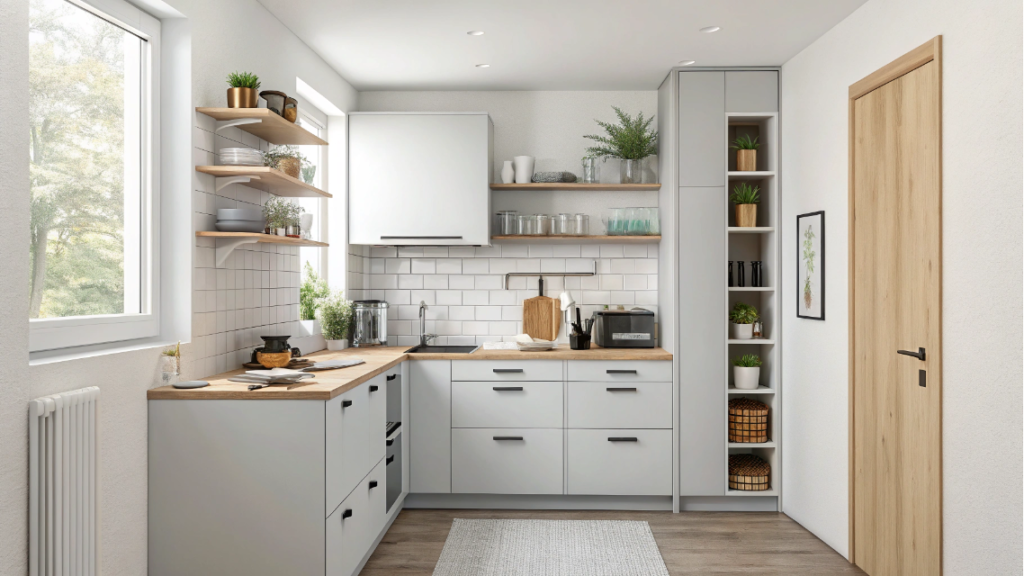
Creating functional cooking areas despite severe space limitations requires strategic mini kitchen planning that maximizes every inch. Clever design transforms impossibly small footprints into surprisingly capable culinary spaces through innovation and efficiency.
Modern compact living demands kitchen solutions accommodating essential functions within minimal square footage. Space-saving appliances, vertical storage, and multifunctional elements prove small kitchens can work beautifully with thoughtful design.
Whether furnishing studio apartments, tiny homes, or basement kitchenettes, effective mini kitchen principles create workable spaces supporting daily needs. Let’s explore how to design highly functional kitchens in extremely limited areas.
List of 15 Best Mini Kitchen Design Solutions
1. Compact All-in-One Kitchen Units
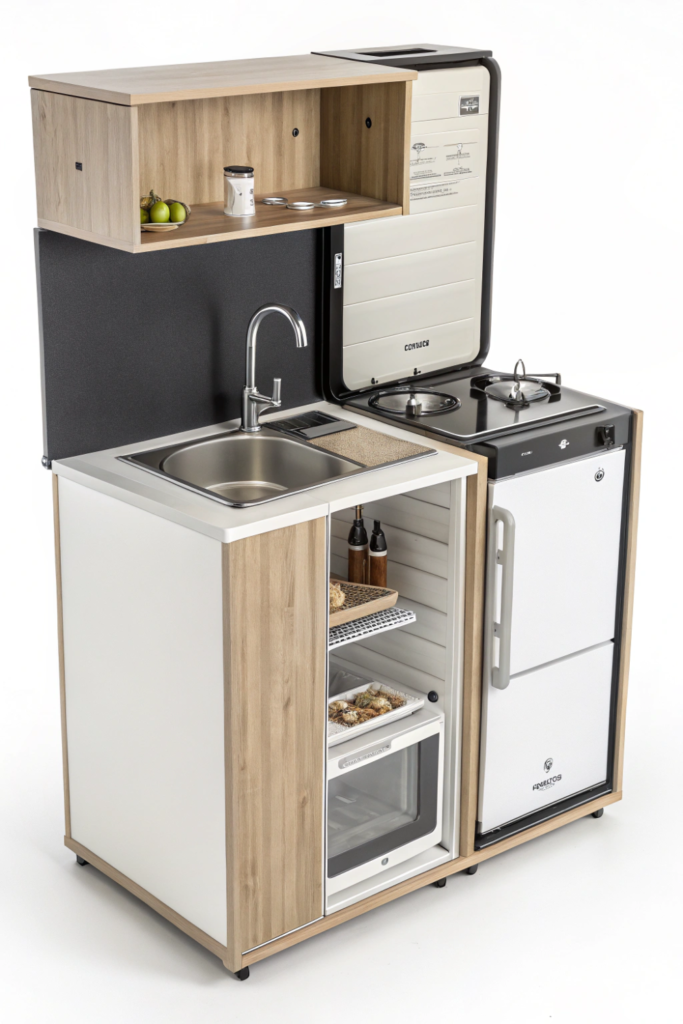
Integrated kitchen modules combining sink, cooktop, storage, and mini refrigerator in single units create complete mini kitchen solutions in 4-6 feet. The self-contained systems maximize functionality within tiny footprints.
European manufacturers like Boffi and Respekta produce elegant compact units. Plug-and-play installation simplifies setup without extensive plumbing or electrical work.
The comprehensive approach delivers surprising capability despite extreme compactness. The cohesive design maintains aesthetic unity within small spaces.
Pro Tip: Choose mini kitchen units with fold-down covers over cooktops and sinks to create additional counter workspace when appliances aren’t in use, maximizing limited surface area.
2. Single-Burner Induction Cooktop
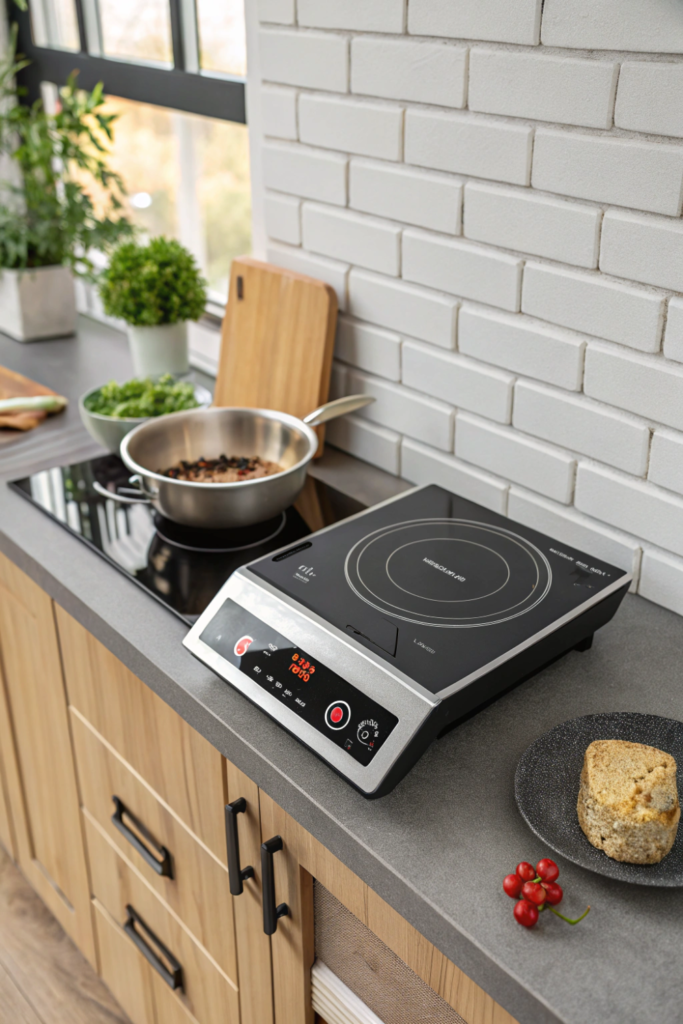
Portable induction burners provide flexible cooking in mini kitchen designs without permanent range installation. The compact appliances store away when not needed, freeing precious counter space.
Precise temperature control rivals traditional ranges while consuming minimal energy. The cool-touch surface enhances safety in tight quarters where accidental contact proves more likely.
Multiple units allow multi-pot cooking when needed. The flexible, affordable solution suits various cooking needs without spatial commitment.
3. Wall-Mounted Fold-Down Table
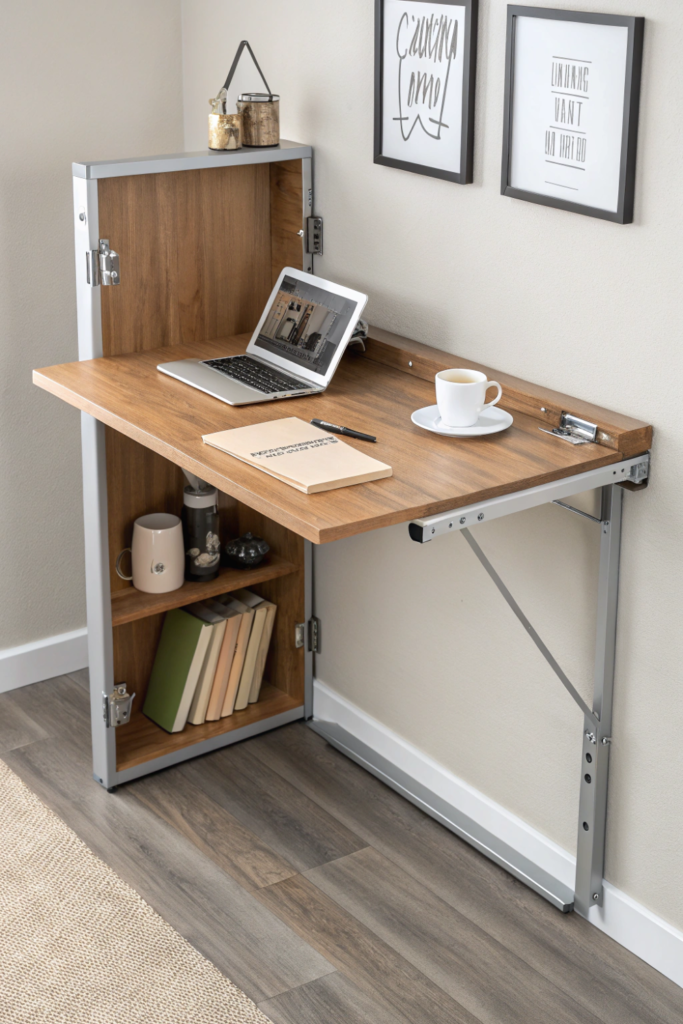
Drop-leaf tables attached to walls create temporary dining and prep surfaces in mini kitchen spaces, folding flat against walls when not needed. The disappearing workspace preserves floor area.
Sturdy mounting brackets support substantial weight safely. Coordinate table finish with cabinetry for cohesive aesthetics rather than afterthought appearances.
The flexible surface serves multiple functions from meal prep to dining to work desk. The adaptable approach maximizes limited square footage.
Pro Tip: Install fold-down tables at standard counter height (36 inches) in mini kitchens to create continuous work surface with adjacent counters when extended, rather than dining height that creates awkward height differences.
4. Over-the-Sink Cutting Board
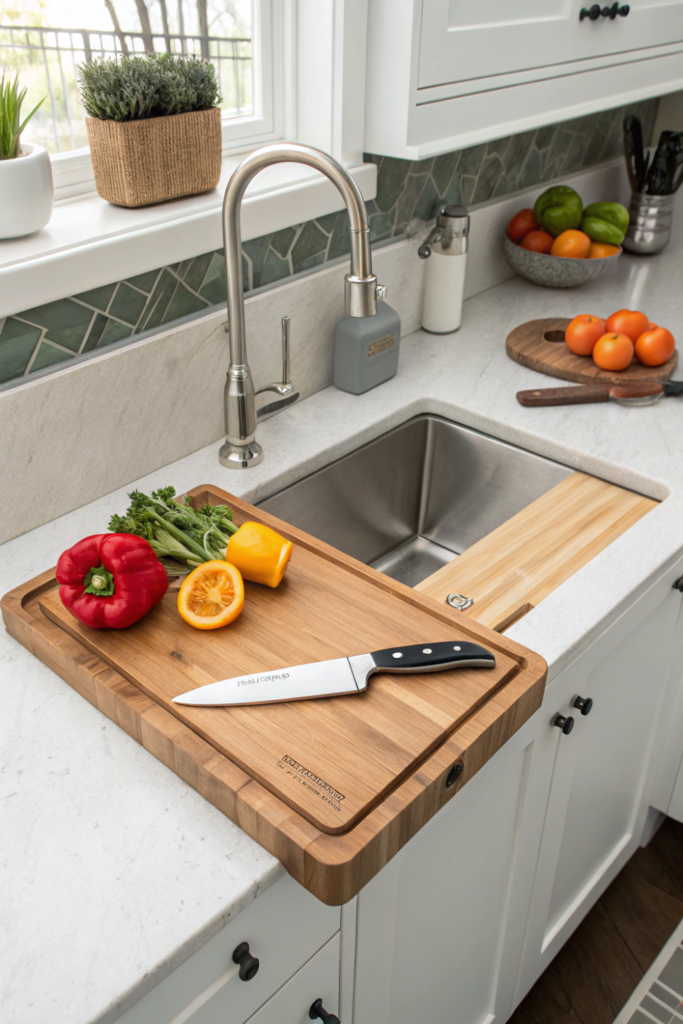
Custom cutting boards spanning sinks create instant prep space in mini kitchen designs. The removable surfaces double usable workspace without permanent counter additions.
Wooden or composite boards with handles for easy removal. Integrated colanders or drainage holes allow direct food prep over sinks.
The affordable solution dramatically increases workspace. The simple addition transforms sink areas into functional prep zones.
Pro Tip: Measure sink dimensions precisely and order cutting boards 1/4 inch smaller than opening for your mini kitchen to ensure proper fit without binding while providing stable work surface.
5. Magnetic Knife Strips and Spice Racks
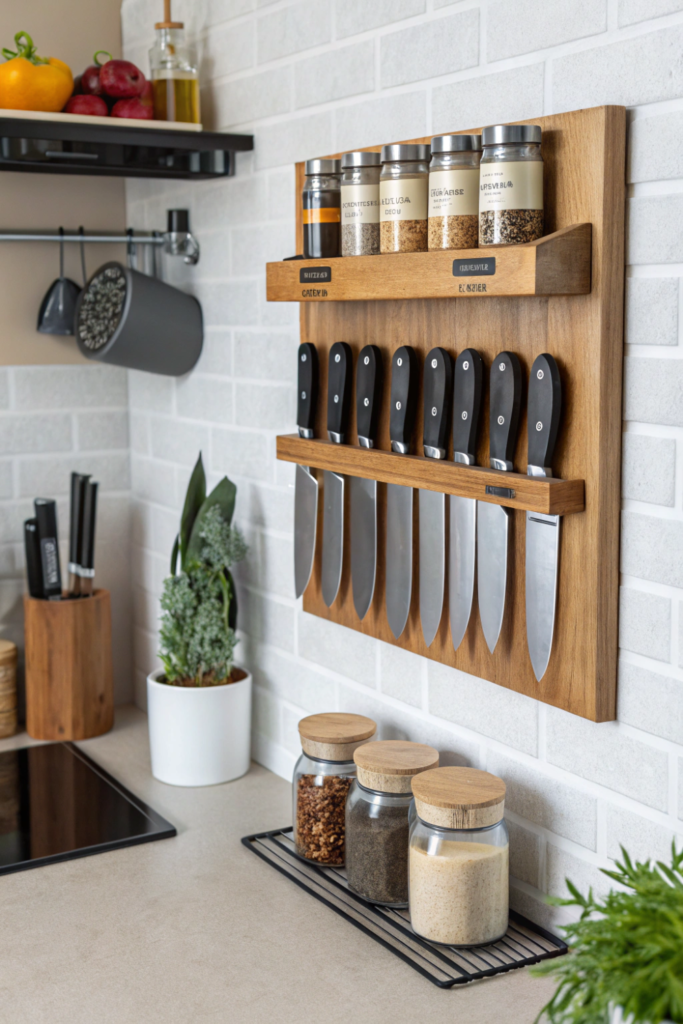
Magnetic wall storage frees drawer and counter space in mini kitchen designs by utilizing vertical surfaces. The accessible organization keeps essentials visible and within reach.
Mount strips on backsplashes or cabinet sides for knives, tools, and magnetic spice tins. The space-saving approach eliminates bulky knife blocks and spice racks.
Vertical organization proves essential in mini kitchens. The simple magnetic solution maximizes precious storage without consuming counter or cabinet space.
Pro Tip: Install magnetic strips on the inside of cabinet doors in mini kitchens to hide frequently-used tools out of sight while keeping them conveniently accessible without consuming visible wall space.
6. Under-Cabinet Appliances
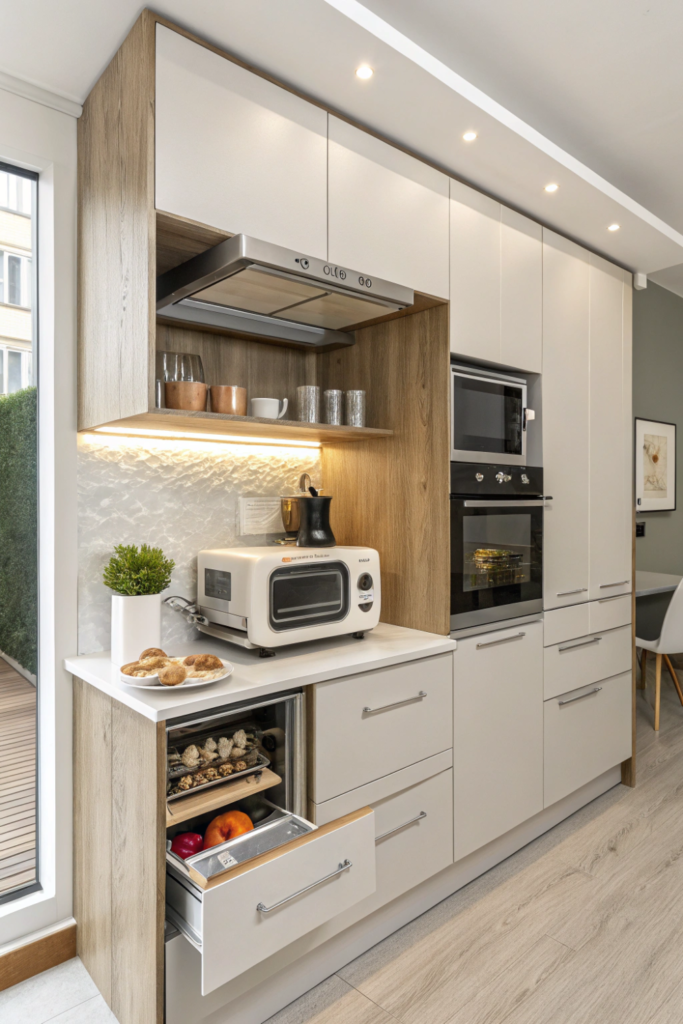
Mounted coffee makers, toaster ovens, or microwaves beneath upper cabinets free counter space in mini kitchen designs. The suspended appliances maintain accessibility while preserving work surfaces.
Specialized mounting brackets support appliance weight safely. Coordinate appliance finishes with cabinetry for cohesive appearances.
The elevated storage keeps counters clear for prep work. The strategic placement maintains functionality without sacrificing precious horizontal space.
Pro Tip: Ensure adequate clearance (18-24 inches minimum) between under-cabinet appliances and counter surfaces in your mini kitchen for safe use and proper ventilation around heat-generating units.
7. Narrow Pull-Out Pantry
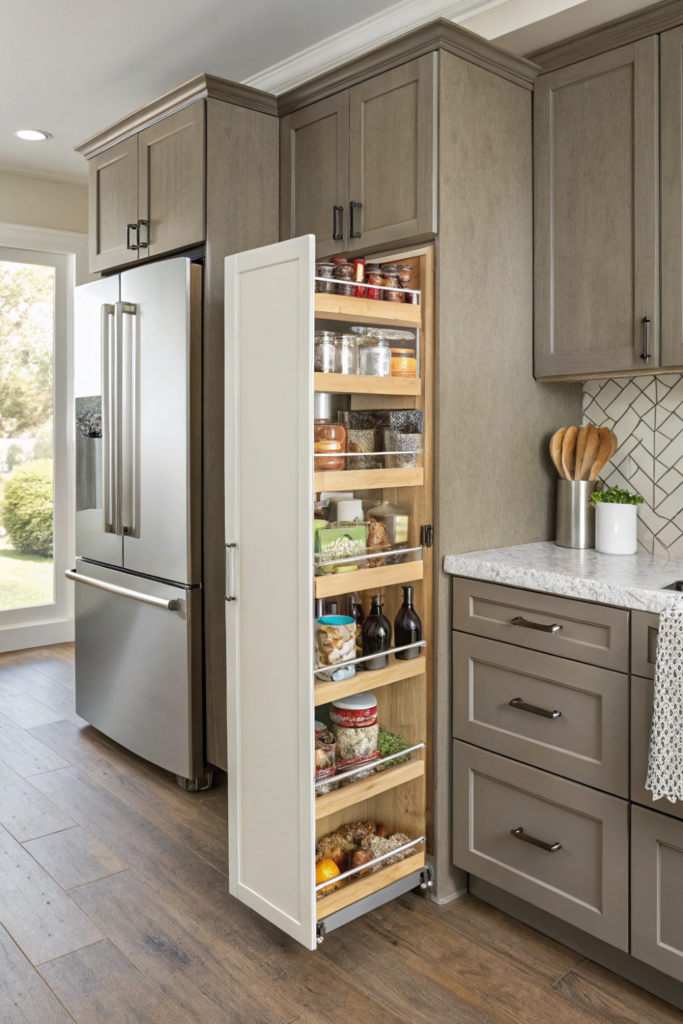
Slim rolling storage (6-12 inches wide) fitting between appliances or cabinets provides hidden pantry space in mini kitchen designs. The vertical units maximize otherwise wasted gaps.
Multiple shelves hold spices, oils, and canned goods efficiently. Pull-out access brings items forward without digging into deep spaces.
The space-filling solution utilizes every available inch. The mobile storage adapts to evolving needs through repositioning.
Pro Tip: Measure gap widths precisely before purchasing slim pantries for mini kitchens—even 1/4 inch miscalculation prevents these critical space-savers from fitting into intended locations.
8. Combination Microwave-Convection Oven
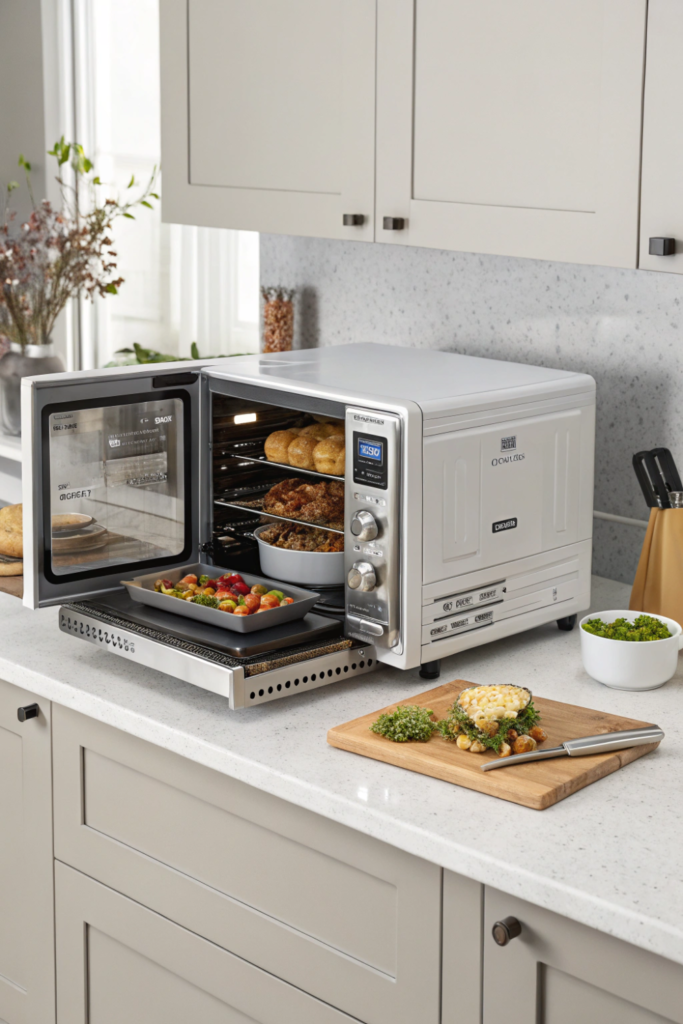
Dual-function appliances serving as both microwave and convection oven eliminate separate appliance needs in mini kitchen designs. The versatile units provide multiple cooking methods within single footprints.
Countertop or built-in models suit different spatial constraints. The multifunctional capability handles reheating, baking, roasting, and more without requiring traditional oven space.
The consolidated approach proves essential in extremely compact kitchens. The single appliance replaces two separate units effectively.
Pro Tip: Choose combination units with inverter technology in mini kitchens for more even heating and defrosting, justifying the premium cost through superior performance in your primary cooking appliance.
9. Tension Rod Storage Systems
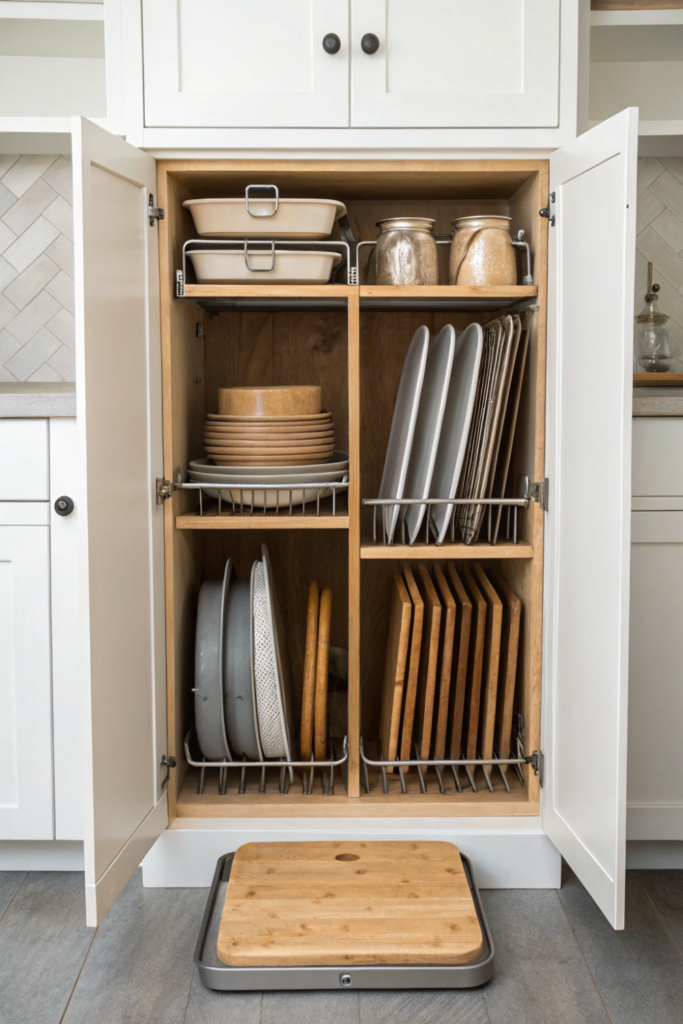
Adjustable tension rods installed vertically in cabinets create dividers for baking sheets, cutting boards, and lids in mini kitchen storage. The customizable organization maximizes cabinet interiors without permanent modifications.
Install multiple rods creating compartments suited to specific items. The removable system adapts as storage needs change without drilling or hardware.
The affordable solution dramatically improves cabinet functionality. The simple addition prevents jumbled stacks and lost items in limited storage.
Pro Tip: Use spring-loaded curtain rods as vertical dividers in mini kitchen cabinets rather than expensive cabinet organization systems—they’re adjustable, removable, and cost a fraction of specialty products.
10. Apartment-Size Appliances
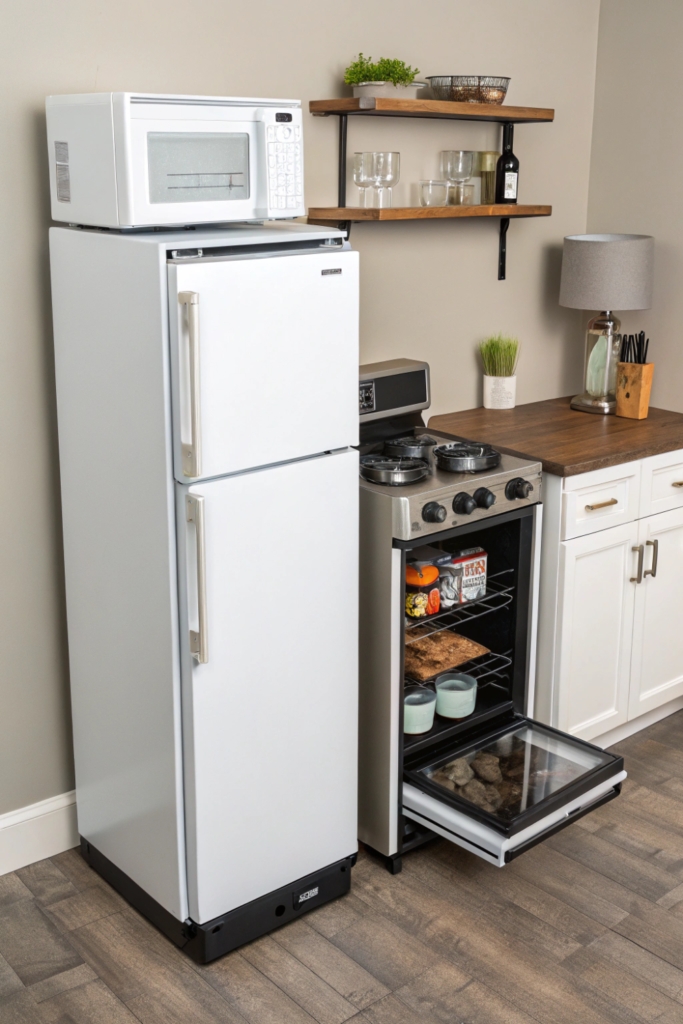
18-24 inch appliances including refrigerators, dishwashers, and ranges provide full functionality in reduced footprints for mini kitchen designs. The scaled equipment maintains capability while respecting space constraints.
Measure doorways and spaces carefully ensuring appliances fit through entries and into designated spots. European brands often offer more compact options than American manufacturers.
The appropriately-sized equipment prevents overwhelming tiny kitchens. The proportional appliances maintain balance within small spaces.
Pro Tip: Choose 24-inch wide appliances as the standard for mini kitchens rather than mixing 18, 24, and 30-inch widths to create more cohesive, streamlined appearances and simpler layout planning.
11. Open Shelving Instead of Uppers
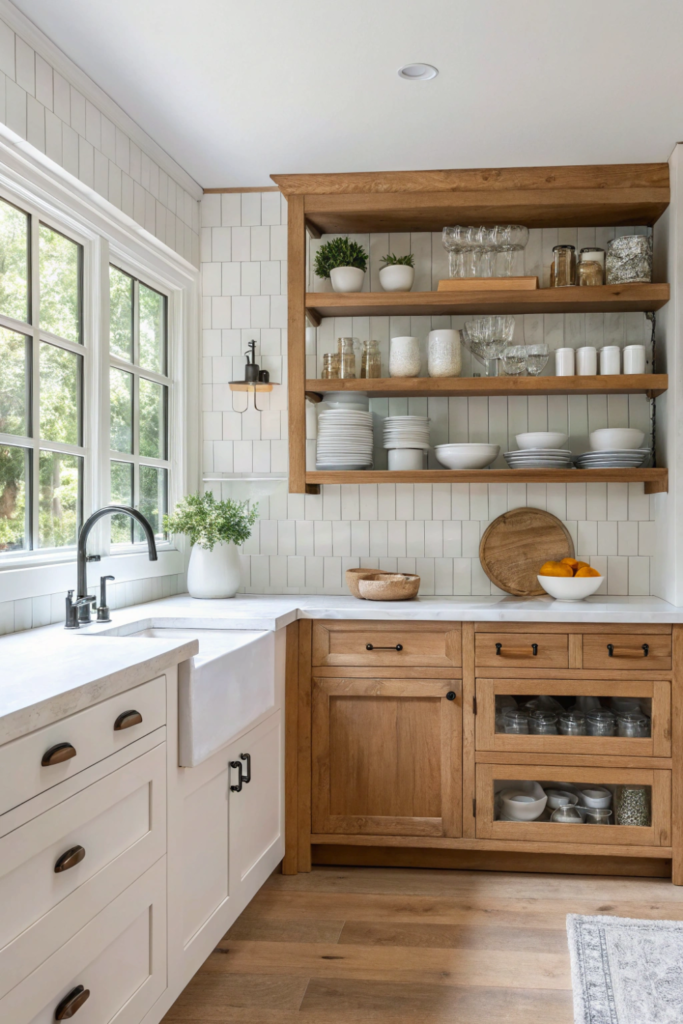
Exposed shelving replacing upper cabinets creates visual openness in mini kitchen designs while maintaining storage. The lighter aesthetic prevents closed-in feelings in tight quarters.
Display coordinated dishes and glassware for attractive, organized appearances. The accessible storage simplifies daily use without cabinet door manipulation in cramped spaces.
Maintain discipline keeping only attractive, frequently-used items visible. The commitment to organization becomes essential with open display.
Pro Tip: Limit open shelving to 2-3 wall sections in mini kitchens rather than removing all upper cabinets to maintain adequate concealed storage for less-attractive necessities.
12. Mini Dishwasher Drawers
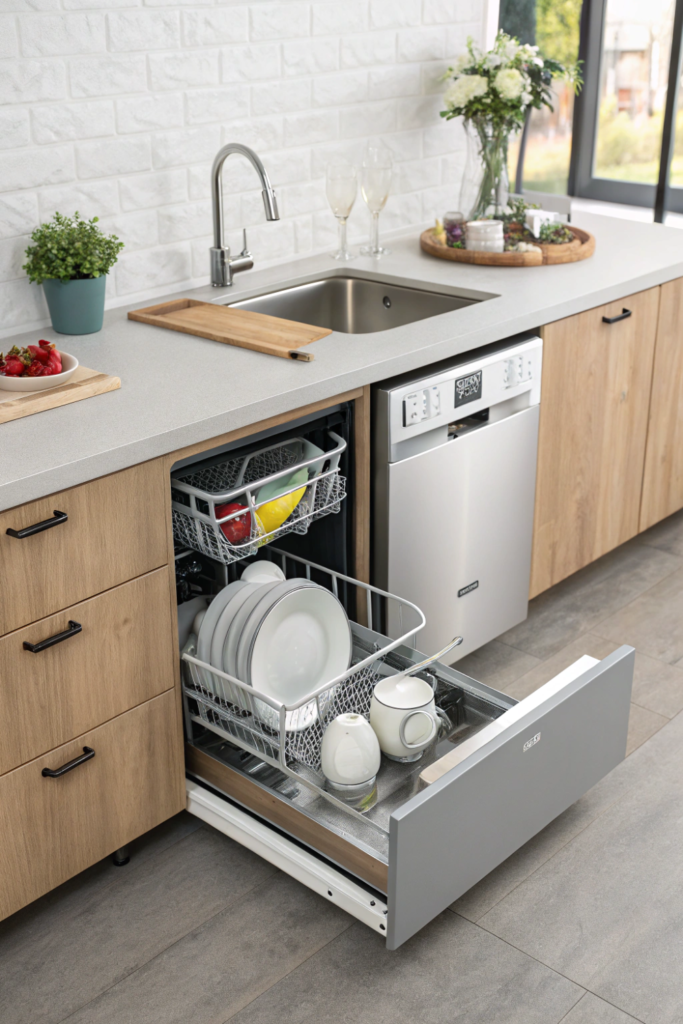
18-inch dishwasher drawers provide cleaning capability in mini kitchen spaces too small for standard units. The compact appliances fit where traditional dishwashers cannot.
Single or double drawer configurations suit different needs and budgets. The space-saving design maintains functionality without dominating limited cabinet runs.
The luxury addition eliminates hand-washing in tiny sinks. The scaled appliance proves small kitchens can include modern conveniences.
Pro Tip: Install dishwasher drawers at raised heights (6-12 inches off floor) in mini kitchens to create toe-kick storage beneath while improving ergonomics by reducing bending during loading.
13. Sliding Cabinet Doors
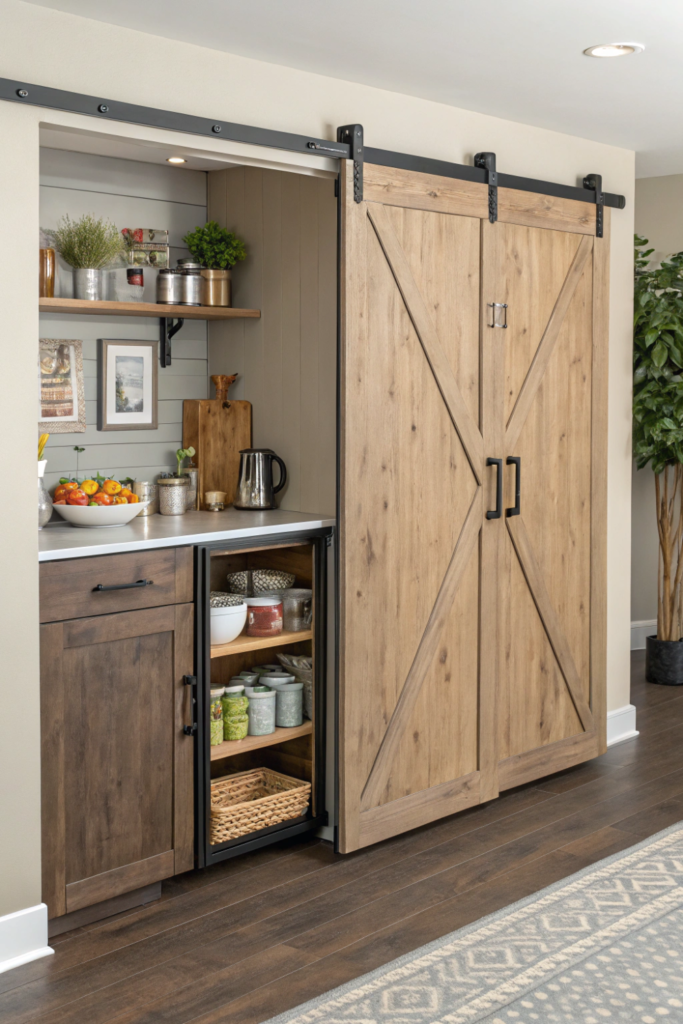
Bypass sliding doors on cabinets save clearance space traditional swing doors require in mini kitchen designs. The space-efficient hardware prevents door collisions in tight quarters.
Barn door-style tracks or pocket door systems eliminate protrusion into walkways. The compact operation improves functionality in constrained layouts.
The alternative hardware recovers usable space. The simple change dramatically impacts movement and workflow in cramped kitchens.
Pro Tip: Use soft-close mechanisms on sliding cabinet doors in mini kitchens to prevent slamming and ensure smooth, quiet operation despite the different hardware from traditional hinged doors.
14. Pegboard Wall Organization
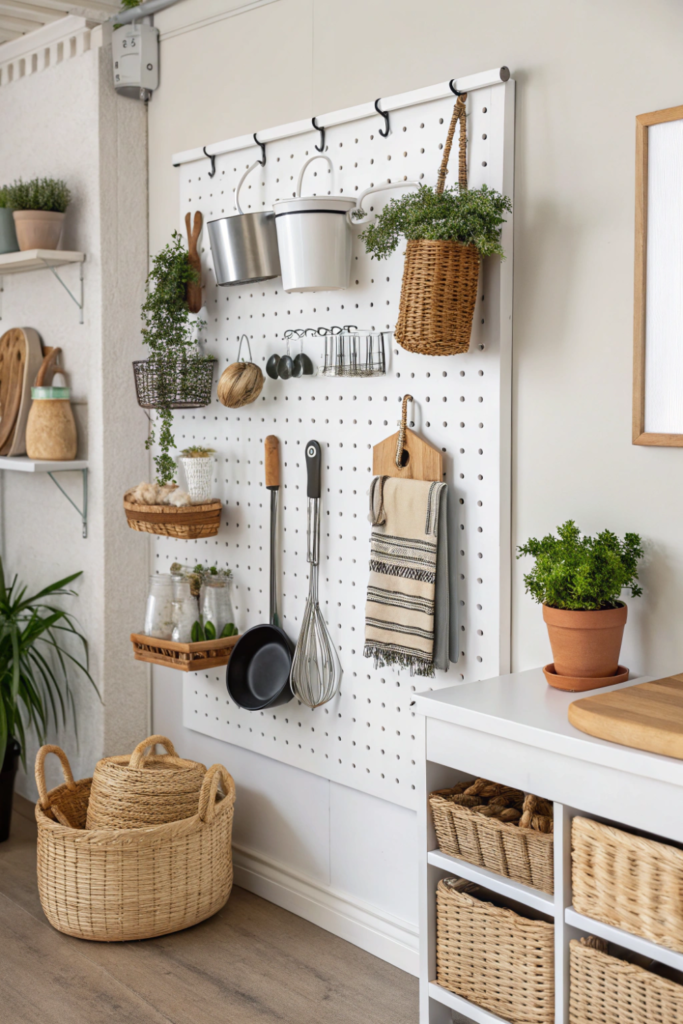
Mounted pegboard panels create customizable vertical storage in mini kitchen designs. The flexible system holds utensils, pots, and tools while adapting to changing needs.
Paint pegboard matching kitchen colors for intentional design rather than utilitarian appearance. Mix hooks, shelves, and baskets creating comprehensive wall storage.
The affordable solution maximizes wall space efficiently. The adaptable approach grows and changes with evolving storage requirements.
Pro Tip: Frame pegboard panels with simple trim in your mini kitchen to create finished, intentional appearances rather than workshop aesthetics, elevating functional storage into design element.
15. Stackable and Nesting Cookware
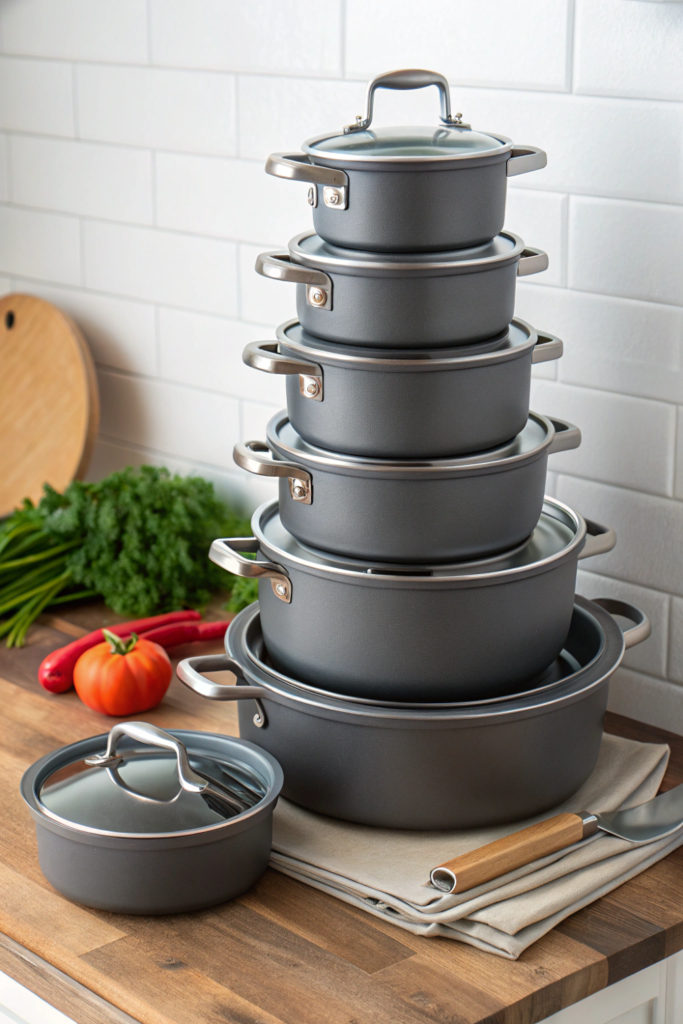
Pots, pans, and storage containers designed to nest inside each other minimize storage space in mini kitchen cabinets. The space-conscious design dramatically reduces required storage volume.
Quality sets specifically engineered for compact storage prove worthwhile investments. Removable handles on cookware further reduce storage footprints.
The strategic equipment selection maximizes limited cabinet space. The thoughtful purchasing prioritizes spatial efficiency alongside functionality.
Pro Tip: Invest in one high-quality set of nesting cookware for your mini kitchen rather than accumulating random pieces—the coordinated set stacks efficiently while ensuring you have necessary sizes without duplicates.
Why Mini Kitchen Design Matters
Spatial efficiency determines whether tiny kitchens function adequately or create daily frustration through poor planning. Thoughtful mini kitchen design maximizes severely limited square footage through strategic choices.
Quality of life in small living spaces depends heavily on functional kitchens supporting basic cooking needs. Well-designed mini kitchen spaces enable home cooking rather than forcing constant dining out.
Property value maintains better with thoughtfully-designed compact kitchens proving functional and attractive. Professional mini kitchen planning protects investments in small urban properties where space commands premiums.
Things to Consider Before Mini Kitchen Design
Evaluate your actual cooking habits honestly before planning mini kitchen equipment and layout. Minimal cooks need different solutions than those preparing elaborate meals regularly in compact spaces.
Consider your storage needs realistically since mini kitchens severely limit capacity. Edit belongings ruthlessly to essentials, planning mini kitchen storage only for frequently-used items.
Think about appliance priorities—perhaps dishwasher matters more than full oven, or vice versa. Strategic mini kitchen choices accommodate specific priorities within extreme space constraints.
Comparison Table of Mini Kitchen Design Solutions
| Design Solution | Space Saved | Cost Range | Installation | Functionality | Best For |
| All-in-One Units | Very High – complete kitchen | $$$$-$$$$$ | Medium – professional | High – comprehensive | Studios, tiny homes |
| Portable Cooktop | High – removable appliance | $-$$ | None – plug-in | Medium – single burner | Minimal cooking needs |
| Fold-Down Table | High – disappearing surface | $-$$ | Medium – wall mount | High – multipurpose | Dining and prep needs |
| Sink Cutting Board | Medium – temporary counter | $-$ | None – removable | Medium – prep space | Counter-limited kitchens |
| Magnetic Storage | Medium – frees drawers | $ | Easy – mount strips | High – accessible tools | Wall space available |
| Under-Cabinet Appliances | High – freed counters | $$-$$$ | Medium – mounting brackets | High – elevated access | Counter space priority |
| Pull-Out Pantry | Medium – fills gaps | $-$$ | Medium – rolling installation | High – vertical storage | Gap spaces available |
| Combo Microwave-Oven | High – dual function | $$-$$$ | Easy – countertop | Very High – versatile | Primary cooking appliance |
| Tension Rod Dividers | Medium – organizes cabinets | $ | Easy – spring-loaded | High – vertical organization | Cabinet optimization |
| Apartment Appliances | High – scaled equipment | $$$-$$$$ | Medium – standard install | High – full function | Permanent mini kitchens |
| Open Shelving | High (visual lightness) | $-$$ | Easy – shelf mounting | High – accessible | Organized households |
| Mini Dishwashers | Medium – scaled cleaning | $$-$$$$ | Hard – plumbing/electric | High – convenience | Luxury addition |
| Sliding Doors | High – no swing clearance | $$-$$$ | Medium – special hardware | High – space-efficient | Tight clearances |
| Pegboard Walls | High – vertical storage | $ | Easy – panel mounting | High – customizable | Wall space available |
| Nesting Cookware | High – compact storage | $$-$$$ | None – equipment choice | High – complete sets | Limited cabinet space |
Recommended Products for Mini Kitchen
Compact Countertop Dishwasher
This portable countertop dishwasher (18 inches wide) provides cleaning capability in mini kitchens without built-in space or plumbing modifications. The 6-place setting capacity handles daily dishes while the quick-connect adapter attaches to standard faucets. Customers praise the space-saving design perfect for studio apartments, effective cleaning despite compact size, and how the portable unit eliminates hand-washing without permanent installation or extensive counter consumption.
Portable Induction Cooktop
This 1800-watt portable induction burner delivers precise cooking in mini kitchens without permanent range installation. The compact single-burner design stores in cabinets when not needed while the digital controls provide temperature precision rivaling full ranges. Users love the energy efficiency, cool-touch safety in tight quarters, and how the affordable, flexible solution provides serious cooking capability without spatial commitment or expensive built-in appliances.
Over-Sink Cutting Board with Colander
This bamboo cutting board sized for standard sinks creates instant prep space in mini kitchens by spanning sink openings. The integrated colander section allows washing and chopping in one location while the removable design stores flat when not needed. Customers appreciate the doubled workspace without permanent counter additions, the quality bamboo construction, and how this simple addition dramatically improves functionality in impossibly compact cooking spaces.
Frequently Asked Questions About Mini Kitchen
What is the minimum size for a functional kitchen?
Approximately 25-30 square feet creates minimal functional mini kitchens with compact appliances and limited prep space. Galley layouts (4×8 feet) maximize efficiency in tight footprints through parallel counter runs.
15-20 square feet suffices for kitchenettes with very limited cooking—mini fridge, microwave, small sink. Anything under 15 square feet typically functions as wet bar rather than true mini kitchen despite best efforts.
Can I fit a dishwasher in a mini kitchen?
18-inch compact or drawer dishwashers fit where standard 24-inch units cannot in mini kitchens. Position strategically near sinks to simplify plumbing connections and maintain workflow efficiency.
Countertop portable dishwashers provide alternatives when built-in installation proves impossible. Evaluate whether mini kitchen cabinet space justifies dishwasher over additional storage—some prioritize hand-washing to preserve precious cabinets.
How do I add counter space to a mini kitchen?
Install fold-down wall tables or pull-out cutting boards creating temporary surfaces in mini kitchens that disappear when not needed. Over-sink cutting boards instantly double usable prep area without permanent additions.
Add rolling carts serving as mobile prep stations and additional storage. Extend existing counters with matching materials where structural walls allow in mini kitchen renovations, though this requires construction and expense.
What appliances are essential in mini kitchens?
Mini refrigerators (under-counter or apartment-size) and portable cooktops prove most essential in mini kitchens for food storage and basic cooking. Microwave or combination microwave-ovens provide reheating and baking capabilities.
Single-bowl sinks maintain washing capability while optional dishwashers add convenience if space and budget allow. Prioritize mini kitchen appliances matching your actual cooking habits rather than aspirational equipment rarely used.