
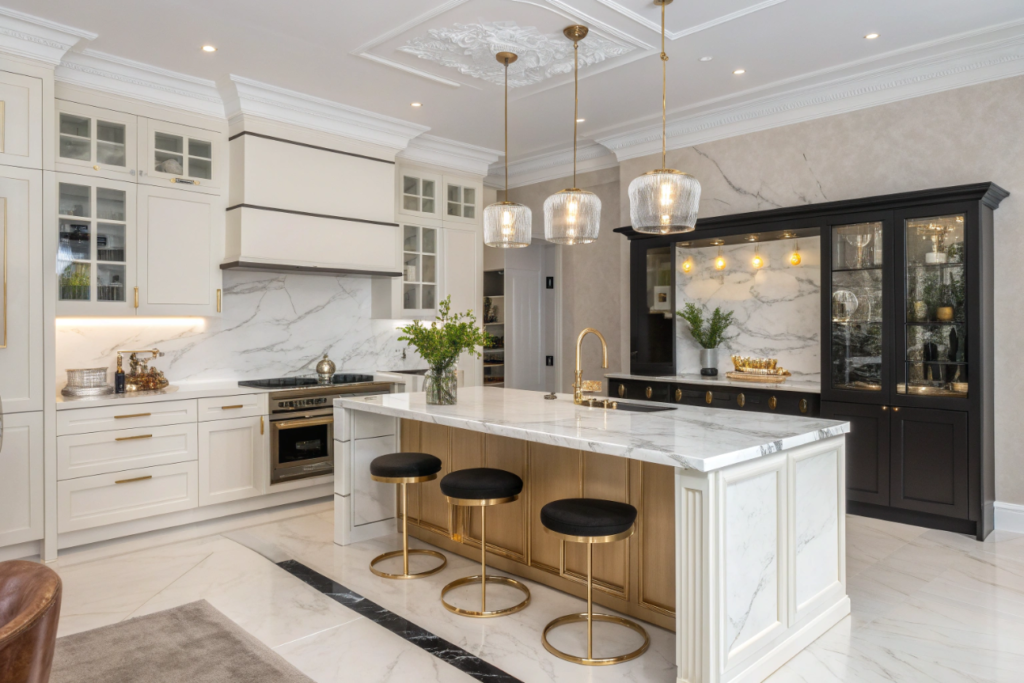
Selecting optimal configurations through strategic kitchen layout planning determines workflow efficiency, storage capacity, and overall functionality. The foundational arrangement impacts every cooking task, making thoughtful design critical to kitchen success.
Classic layout types suit different spatial constraints and household needs through distinct work triangle configurations. Galley, L-shaped, U-shaped, and island layouts offer varying advantages depending on available square footage and lifestyle requirements.
Whether building new construction or renovating existing spaces, understanding kitchen layout principles creates kitchens that work beautifully for decades. Let’s explore how to choose and optimize configurations for your specific needs.
List of 13 Best Kitchen Layout Types and Ideas
1. Classic Work Triangle Layout
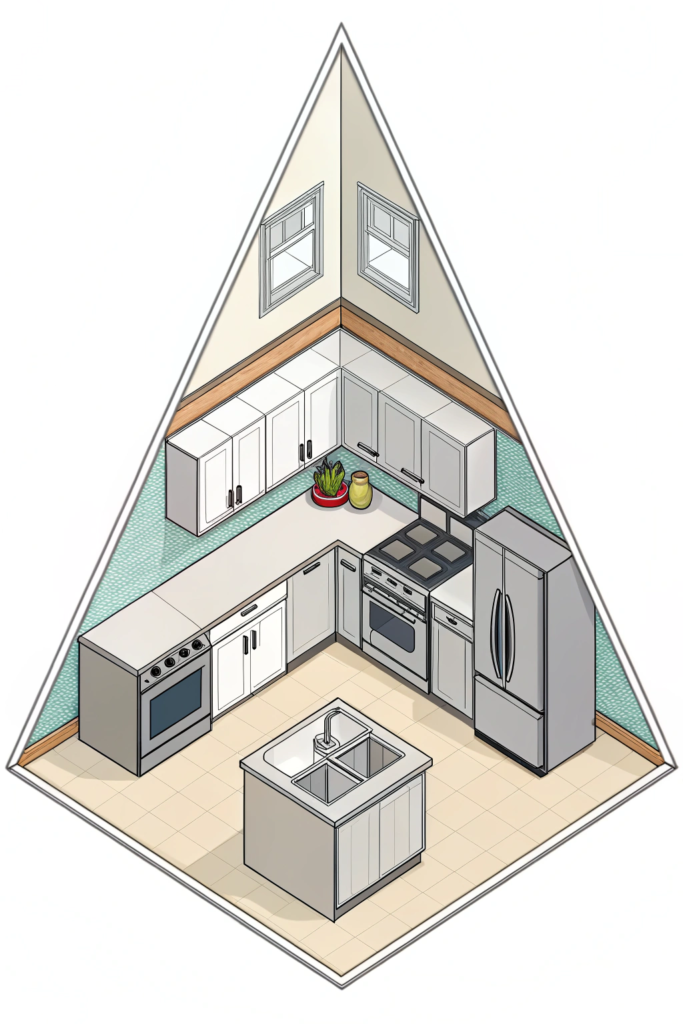
Positioning sink, stove, and refrigerator in triangular formation creates efficient kitchen layout with minimal walking between primary work zones. The time-tested principle reduces wasted steps during meal preparation.
Total triangle perimeter of 12-26 feet proves optimal—less feels cramped while more requires excessive walking. Each leg measuring 4-9 feet maintains comfortable working distances.
No major traffic patterns should cut through the work triangle. The protected zone allows cooks working uninterrupted by household traffic flow.
Pro Tip: Measure your existing or planned kitchen layout work triangle by connecting the centers of your sink, range, and refrigerator to ensure the total distance falls within the optimal 12-26 foot range for efficiency.
2. Galley Kitchen Layout
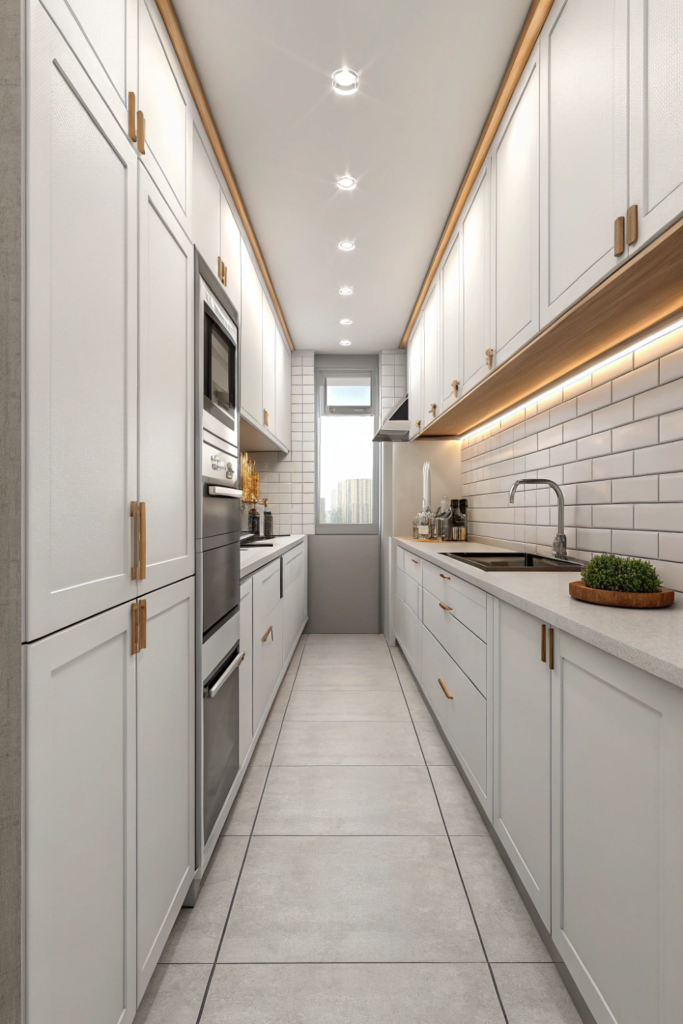
Two parallel walls with walkway between create efficient galley kitchen layout maximizing limited space. The corridor configuration suits narrow footprints beautifully through streamlined design.
Minimum 4-foot aisle width allows comfortable movement and cabinet access. One-cook kitchens work perfectly while multiple cooks may feel cramped.
Place sink and stove on one side, refrigerator on opposite to maintain work triangle efficiency. The compact layout minimizes steps between work zones.
Pro Tip: Install cabinets to ceiling height in galley kitchen layouts to maximize vertical storage since limited floor space restricts lower cabinet quantity, and use light colors to prevent narrow spaces from feeling claustrophobic.
3. L-Shaped Kitchen Layout
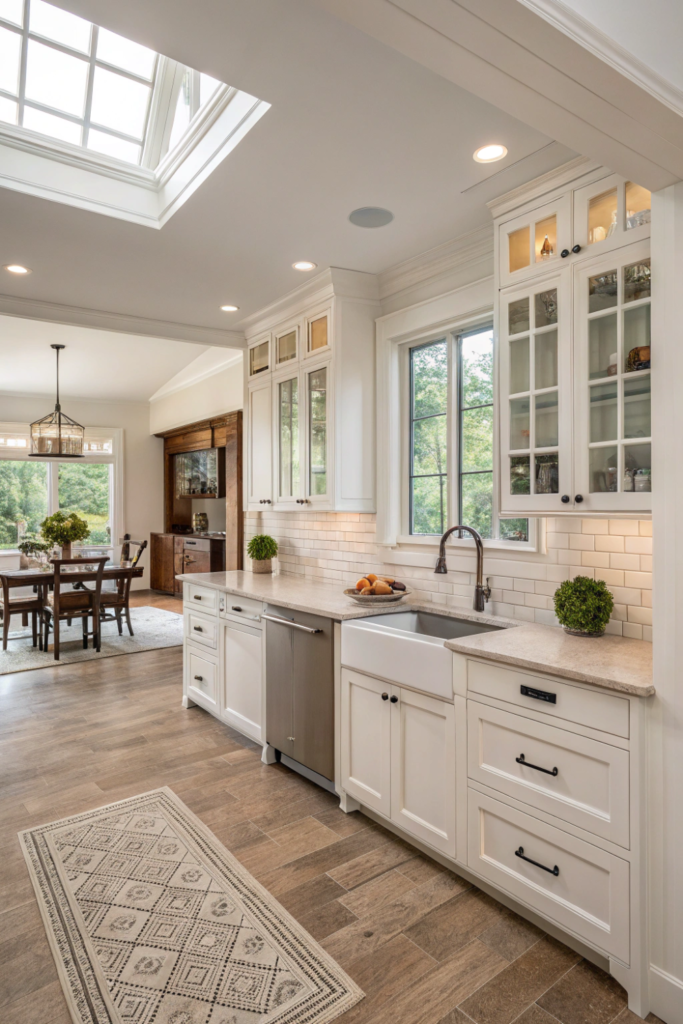
Cabinets and appliances along two perpendicular walls create versatile L-shaped kitchen layout suiting various room sizes. The open configuration provides flexibility for dining tables or islands.
Corner cabinets with lazy Susans or pull-outs maximize typically wasted corner space. Work zones spread naturally across the two walls maintaining comfortable distances.
Open to adjacent rooms for conversational cooking and entertaining. The layout accommodates multiple cooks without bottlenecks.
Pro Tip: Position your sink in the corner of L-shaped kitchen layouts to centralize plumbing and create equal counter workspace on both legs, optimizing functionality and reducing installation costs.
4. U-Shaped Kitchen Layout
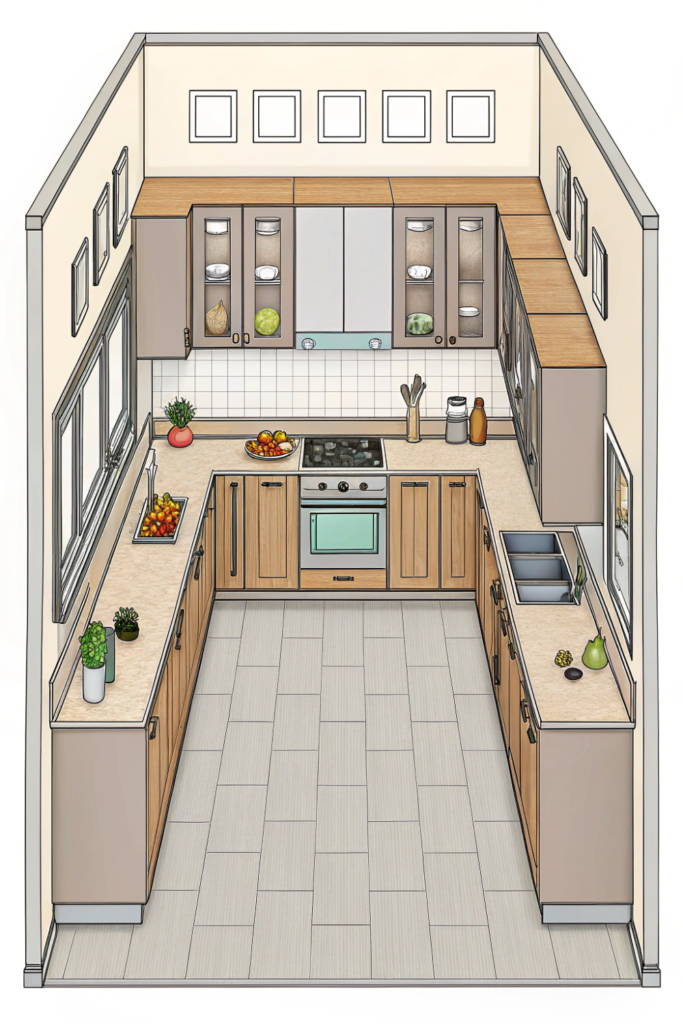
Three walls of cabinetry create enclosed U-shaped kitchen layout maximizing storage and counter space. The configuration suits dedicated kitchen rooms separate from living areas.
Minimum 10×10 foot space required to avoid cramped feelings. Abundant countertop along three walls provides extensive prep areas for serious cooks.
Multiple cooks work comfortably without interfering with each other. The contained workspace keeps everything within easy reach.
Pro Tip: Maintain at least 4-5 feet of clearance between opposite legs of U-shaped kitchen layouts to allow cabinet doors and appliances to open fully while providing comfortable passage for multiple users.
5. Island Kitchen Layout
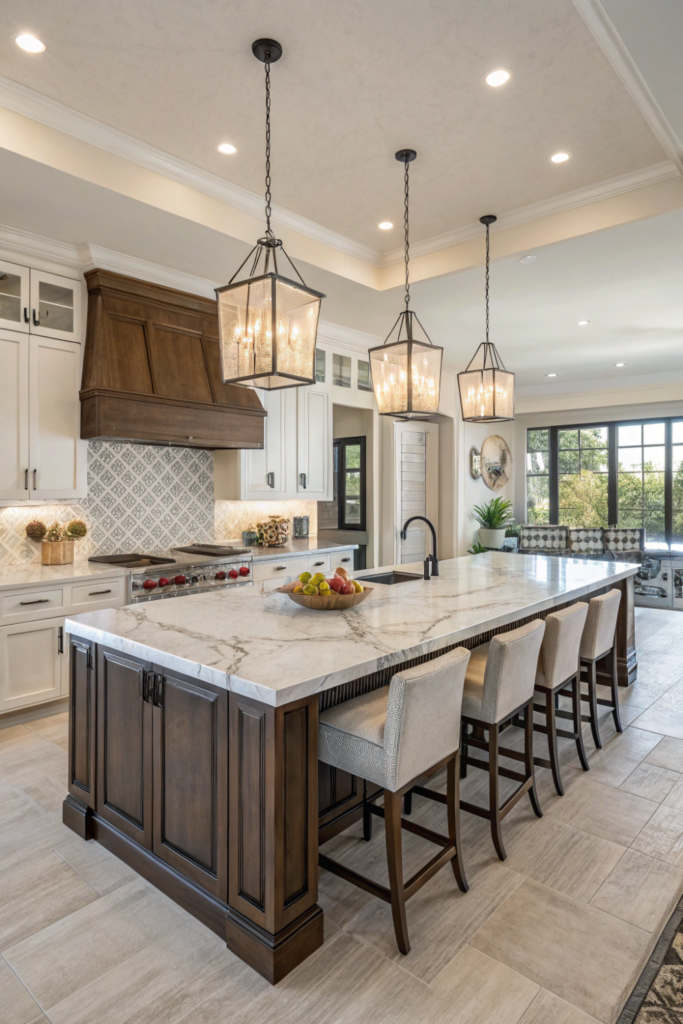
Freestanding island adds prep space, storage, and seating to kitchen layout configurations. The versatile element works in L-shaped, U-shaped, or one-wall kitchens exceeding 150 square feet.
Minimum 42-48 inches clearance around all island sides ensures comfortable traffic flow and cabinet access. Integrate sink, cooktop, or seating to maximize island functionality.
Additional electrical outlets in islands support small appliances. The expanded workspace dramatically improves kitchen efficiency and gathering potential.
Pro Tip: Size kitchen islands proportionally to room dimensions—typically 4 feet long minimum and 2 feet deep—and maintain 42 inches of clearance on all sides (48 inches if multiple cooks use the kitchen layout regularly).
6. Peninsula Kitchen Layout
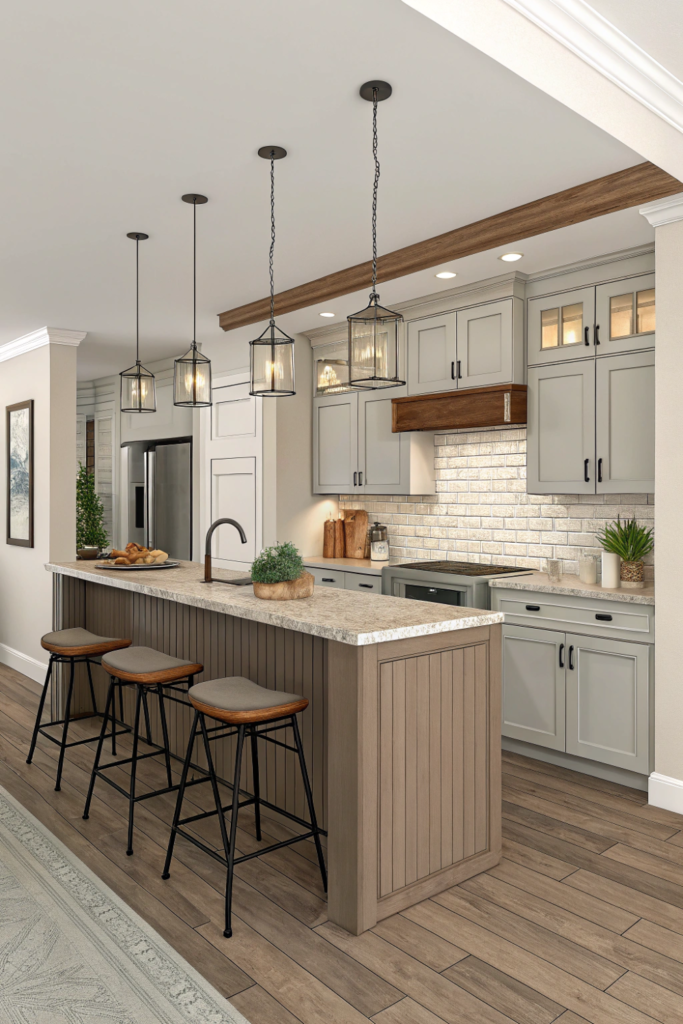
Attached island creating L or U shape provides island benefits in kitchen layout spaces too small for freestanding islands. The connected counter extends workspace without requiring clearance on all sides.
One end anchored to wall or cabinets reduces required floor space. Overhang for bar seating adds casual dining without separate table needs.
Defines kitchen boundaries in open floor plans while maintaining visual connection. The peninsula creates natural room division without walls.
Pro Tip: Install electrical outlets on the side or end of peninsula counters in your kitchen layout rather than the top surface to avoid visible outlets disrupting the clean countertop appearance.
7. Single Wall (One-Wall) Kitchen Layout
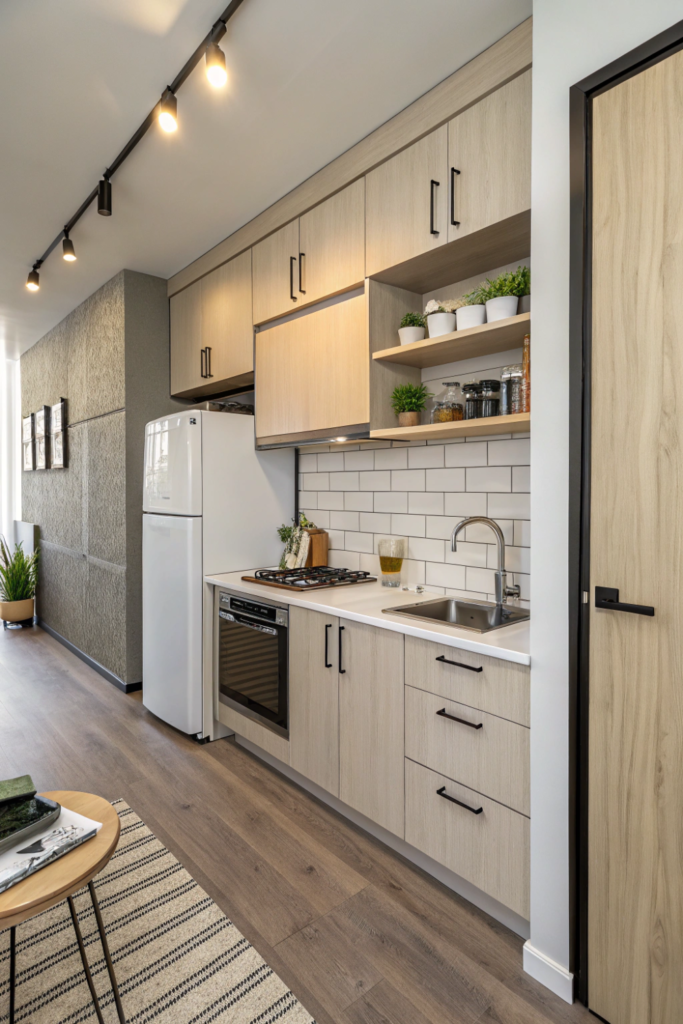
All appliances and cabinets along single wall create ultra-compact kitchen layout for studios, tiny homes, or secondary kitchens. The minimal configuration maximizes open floor space.
Logical appliance placement—refrigerator, sink, stove in that order—maintains work triangle principles linearly. Upper and lower cabinets provide essential storage vertically.
Best for single cooks and light cooking needs. The simplified layout suits budget-conscious projects and space-constrained situations.
Pro Tip: Install a fold-down or pull-out table attached to the wall opposite your one-wall kitchen layout to add temporary prep space or dining surface without permanently consuming floor area.
8. G-Shaped Kitchen Layout
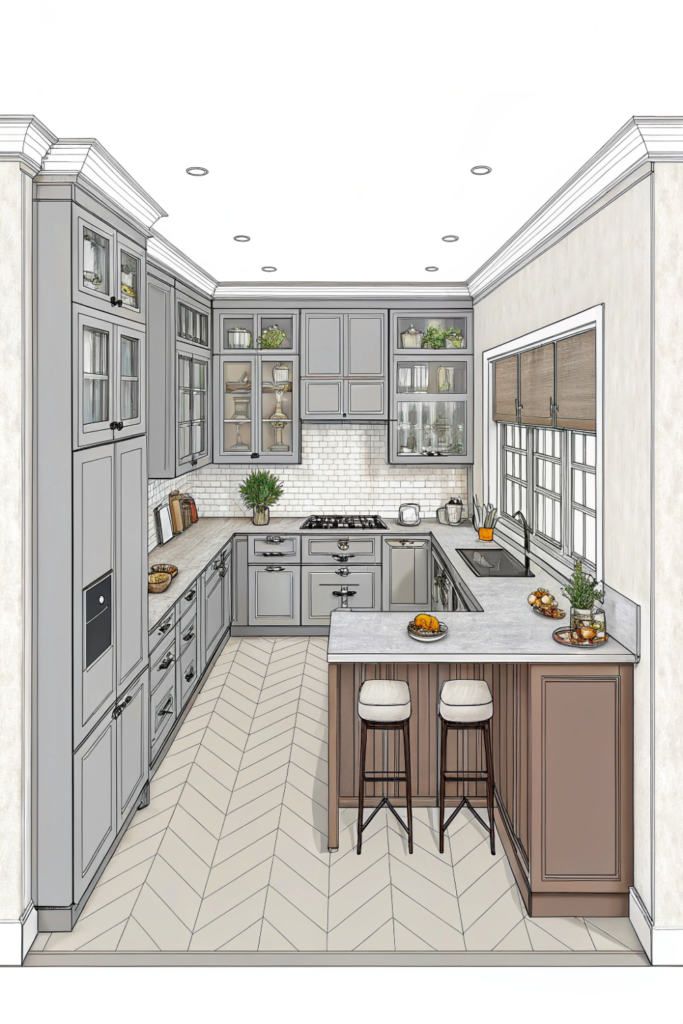
U-shaped layout with peninsula extension creates G-shaped kitchen layout offering maximum storage and counter space. The enclosed configuration suits large kitchens and serious cooks.
Four walls of cabinetry provide extraordinary storage capacity. Peninsula adds casual seating and defines kitchen boundaries in open plans.
Risk of feeling enclosed in smaller spaces—requires 15×15 feet minimum for comfortable proportions. The substantial footprint demands appropriate room size.
Pro Tip: Leave at least one opening in G-shaped kitchen layouts wider than 4 feet to prevent the space from feeling like a bowling alley and allow easier access for multiple household members.
9. L-Shaped with Island Layout
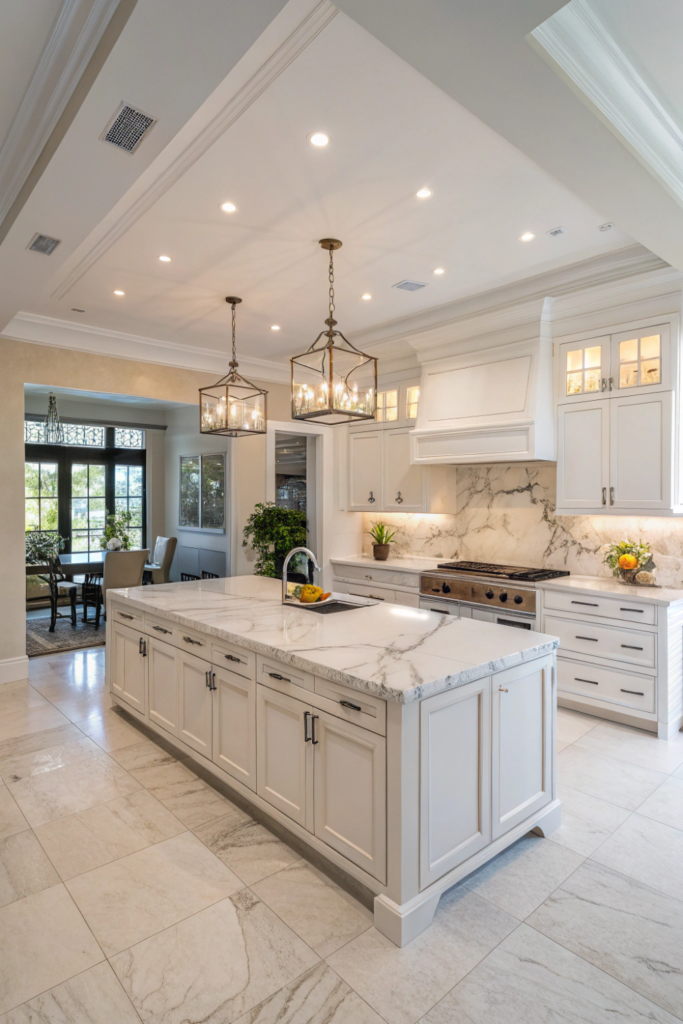
Combining L-shaped perimeter with central island creates highly functional kitchen layout for medium to large spaces. The hybrid configuration offers work triangle efficiency plus island benefits.
Island positioned strategically maintains proper clearances while optimizing workflow. Minimum 13×13 feet required to accommodate both L-shape and island comfortably.
Multiple cooks work efficiently with distinct zones. The layout balances enclosed workspace with social openness beautifully.
Pro Tip: Position your island parallel to one leg of the L-shaped kitchen layout rather than centered in the room to create more usable counter runs and better traffic flow patterns.
10. Open Concept Kitchen Layout
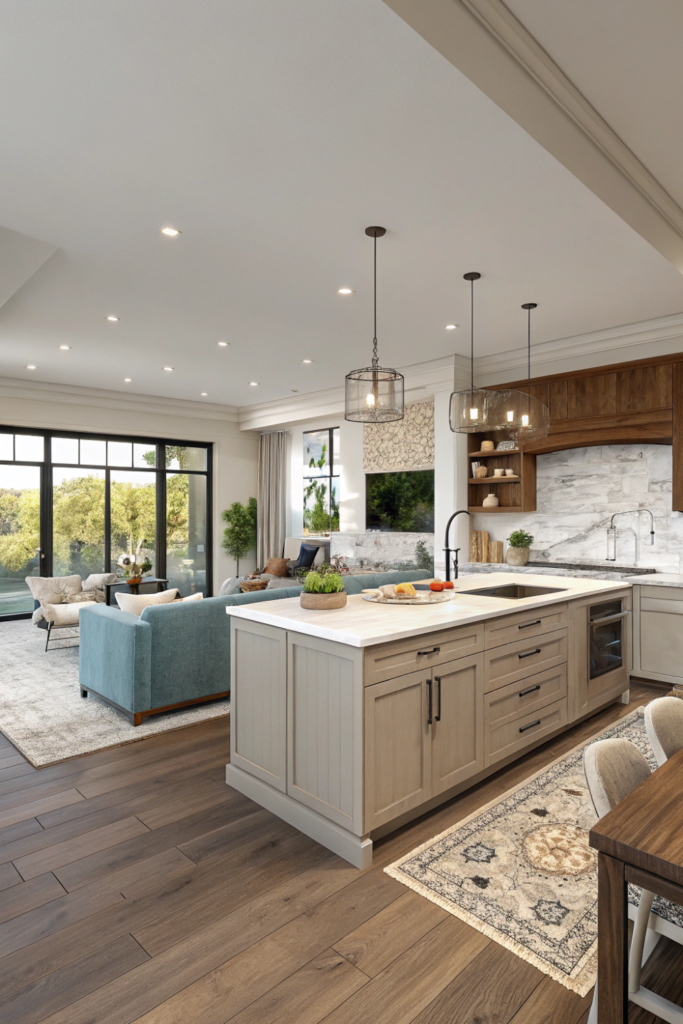
Kitchen integrated with living/dining spaces without walls creates modern open kitchen layout emphasizing social connection. The flowing floor plan suits contemporary lifestyles prioritizing togetherness.
Islands or peninsulas define boundaries without blocking sightlines. Consistent flooring throughout unified spaces visually expands square footage.
Requires excellent ventilation to prevent cooking odors permeating living areas. The open design demands tidiness since kitchens remain constantly visible.
Pro Tip: Use changes in ceiling height, lighting fixtures, or flooring materials to subtly define the kitchen zone within open concept kitchen layouts without erecting visual barriers that defeat the purpose.
11. Galley with Island Layout
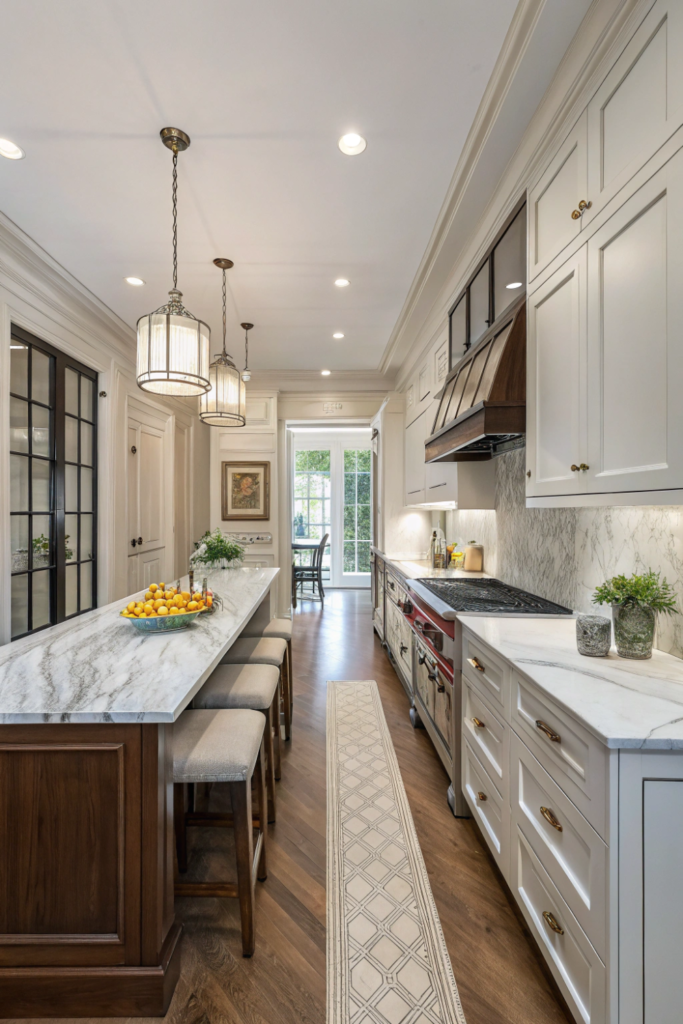
Traditional galley enhanced with island creates efficient kitchen layout for wider spaces. The addition provides extra prep space and casual seating without compromising galley efficiency.
Minimum 8-foot width between parallel galley walls accommodates 4-foot central island plus necessary clearances. Work triangle spans galley and island strategically.
The hybrid maximizes tight rectangular footprints. The configuration suits serious cooks needing abundant workspace in constrained square footage.
Pro Tip: Keep the galley kitchen layout island narrow (24-30 inches) and shorter than the galley run to maintain the corridor’s efficiency while adding valuable surface area without overwhelming the space.
12. Broken Plan Kitchen Layout
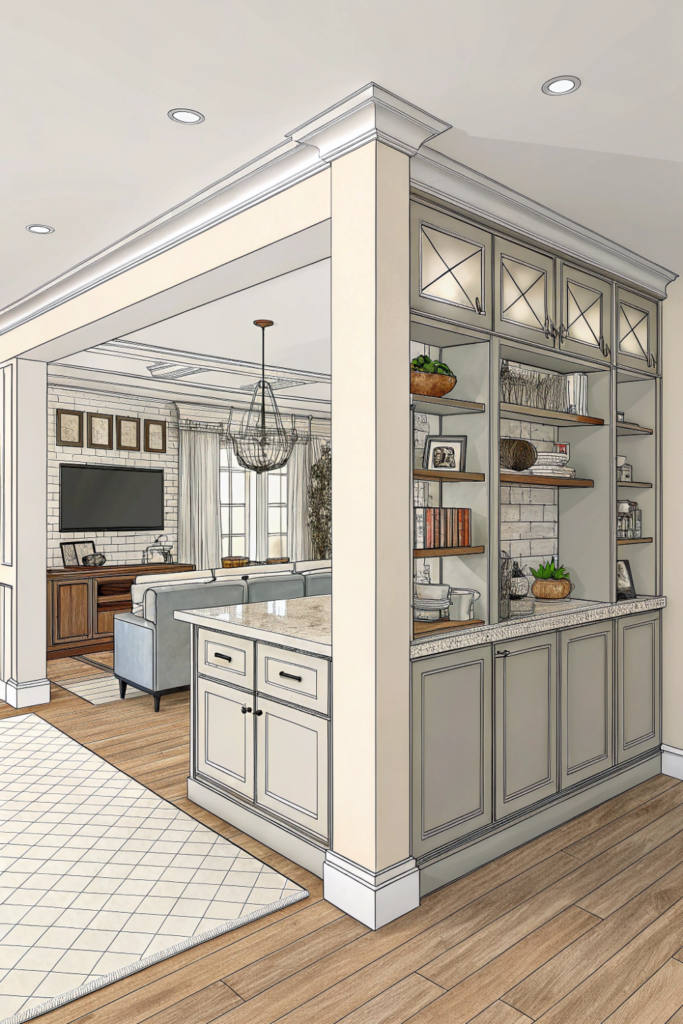
Partial walls, half walls, or transparent partitions create semi-open kitchen layout balancing connection and separation. The compromise suits those wanting both openness and defined boundaries.
Glass walls, open shelving, or pony walls maintain visual connection while providing practical separation. Sound and smell containment improves over fully open concepts.
Subtle boundaries allow flexible entertaining and daily family life. The middle-ground approach offers benefits of both open and closed kitchens.
Pro Tip: Install a half-height wall or shelving unit between your kitchen layout and living area at 42-48 inches high to create separation while maintaining sightlines and conversation flow across spaces.
13. Zone-Based Kitchen Layout
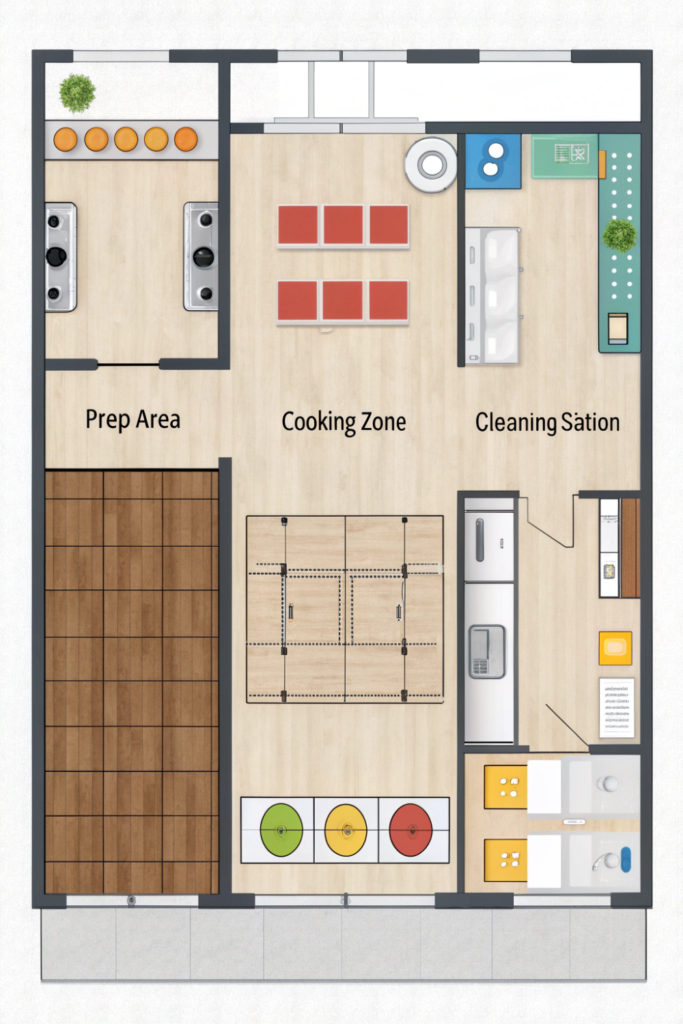
Organizing by activity zones—prep, cooking, cleaning, storage—creates efficient kitchen layout regardless of shape. The functional approach optimizes workflow through thoughtful organization.
Prep zone with ample counter near refrigerator, cooking zone clustering stove, oven, and spices, cleaning zone around sink and dishwasher establish logical groupings. Landing zones near appliances facilitate efficient use.
Storage positioned logically near relevant zones—baking supplies by ovens, pots near stove, dishes by dishwasher. The organizational strategy maximizes any layout type.
Pro Tip: Create a dedicated coffee/beverage station separate from main work zones in your kitchen layout to allow multiple household members preparing different items simultaneously without bottlenecks.
Pinterest Image Prompt: Vertical image of kitchen floor plan showing labeled activity zones, prep area, cooking zone, cleaning station, zone-based kitchen layout, functional organization, efficient workflow, color-coded zones, strategic planning
Why Kitchen Layout Planning Matters
Workflow efficiency determines whether cooking feels effortless or frustrating through proper distances between key work stations. Poor kitchen layout wastes time, energy, and square footage through illogical appliance placement.
Property value enhancement results from well-designed kitchens that appeal to broad buyer audiences. Professional kitchen layout planning protects renovation investments through functional, attractive configurations.
Long-term satisfaction depends on layouts serving your actual cooking habits, family size, and entertaining style. Thoughtful kitchen layout choices create spaces that remain functional across decades and life changes.
Things to Consider Before Kitchen Layout Design
Evaluate your actual cooking habits and household patterns honestly before selecting kitchen layout types—serious multi-cook households need different configurations than single occasional cooks. Design around reality rather than aspirational cooking fantasies.
Consider your available square footage and room shape since some layouts require minimum dimensions while others suit irregular spaces. Measure carefully and ensure chosen kitchen layout fits appropriately with adequate clearances.
Comparison Table of Kitchen Layout Types
| Layout Type | Minimum Size | Best For | Traffic Pattern | Cook Capacity | Storage Level | Cost to Install |
| Work Triangle | Varies | All kitchens | Good – protected | 1-2 cooks | N/A – principle | N/A – principle |
| Galley | 7×10 ft | Small spaces, narrow rooms | Poor – corridor | 1 cook | Medium-High | Low-Medium |
| L-Shaped | 10×10 ft | Most home sizes | Excellent – open | 2-3 cooks | High | Medium |
| U-Shaped | 10×10 ft | Medium-large dedicated rooms | Good – contained | 2-3 cooks | Very High | Medium-High |
| Island | 12×12 ft+ | Large kitchens | Excellent – multiple paths | 3+ cooks | Very High | High |
| Peninsula | 10×12 ft | Medium spaces | Good – defined | 2 cooks | High | Medium |
| Single Wall | 8×8 ft | Studios, tiny homes | Excellent – linear | 1 cook | Low-Medium | Low |
| G-Shaped | 15×15 ft | Large dedicated kitchens | Fair – can feel enclosed | 2-3 cooks | Maximum | High |
| L-Shape + Island | 13×13 ft | Large open kitchens | Excellent – flowing | 3+ cooks | Very High | High |
| Open Concept | 15×20 ft+ | Modern homes | Excellent – integrated | Varies | Varies | Medium-High |
| Galley + Island | 10×14 ft | Wider rectangular rooms | Good – enhanced | 2-3 cooks | High | Medium-High |
| Broken Plan | 12×15 ft | Semi-open preference | Good – balanced | 2 cooks | High | Medium-High |
| Zone-Based | Varies | Any layout type | Excellent – organized | Varies | Optimized | Varies |
Recommended Products for Kitchen Layout Planning
Kitchen Design Software
This professional 3D kitchen planning software allows visualizing different kitchen layout options before committing to renovations. The user-friendly drag-and-drop interface includes appliances, cabinets, and fixtures from major manufacturers with accurate dimensions. Customers praise how the virtual walkthroughs reveal workflow issues invisible in 2D plans, preventing costly mistakes and ensuring optimal kitchen layout choices before construction begins.
Kitchen Layout Planning Book
This comprehensive kitchen design guide explains all major kitchen layout types with detailed pros, cons, and dimensional requirements for each configuration. The 500+ page hardcover includes case studies, measurement guidelines, and professional designer insights making complex planning accessible to homeowners. Readers appreciate the clear explanations of work triangle principles, traffic patterns, and how to adapt classic layouts to unique spaces during kitchen layout planning.
Measuring and Planning Tools Kit
This professional measuring toolkit includes laser distance measurer, graph paper, templates, and planning guides for accurate kitchen layout design. The digital laser measures to 1/16-inch accuracy while the scaled templates represent standard appliances and cabinets for physical layout planning. Users love how proper measuring tools prevent expensive ordering errors and ensure chosen kitchen layout configurations fit precisely in available spaces.
Frequently Asked Questions About Kitchen Layout
What is the most efficient kitchen layout?
U-shaped and L-shaped layouts with proper work triangles consistently rank most efficient for kitchen layout functionality, providing abundant counter space, storage, and logical workflow for 2-3 simultaneous cooks without bottlenecks.
Galley kitchens excel in efficiency for single cooks in compact spaces through minimal steps between work zones. The best kitchen layout matches your specific space constraints, household size, and cooking habits rather than following universal rules.
How much space do you need around a kitchen island?
Minimum 42 inches of clearance on all sides allows comfortable passage and cabinet door opening in kitchen layout with islands. 48 inches proves preferable for busy kitchens with multiple cooks or high traffic.
36 inches might work on one side if that area receives minimal traffic, though this compromises functionality. Proper clearances prove non-negotiable for comfortable kitchen layout despite temptations to squeeze oversized islands into inadequate spaces.
Can I change my kitchen layout without moving plumbing?
Absolutely—many effective kitchen layout modifications work within existing plumbing locations through creative appliance positioning. Sinks remaining in current locations while moving stoves and refrigerators creates new configurations affordably.
Moving plumbing adds $1,000-5,000+ to renovation costs depending on distance and complexity. Sometimes kitchen layout compromises based on infrastructure locations make financial sense without significantly sacrificing function, particularly in budget-conscious projects.
What kitchen layout is best for small spaces?
Galley kitchens maximize efficiency in compact footprints through parallel walls utilizing all available space. L-shaped layouts work beautifully when one wall measures longer, providing surprising functionality in modest square footage.
Single-wall configurations suit extremely tight spaces under 80 square feet, though storage and counter space remain limited. The best small kitchen layout balances your spatial constraints with realistic cooking needs and storage requirements.