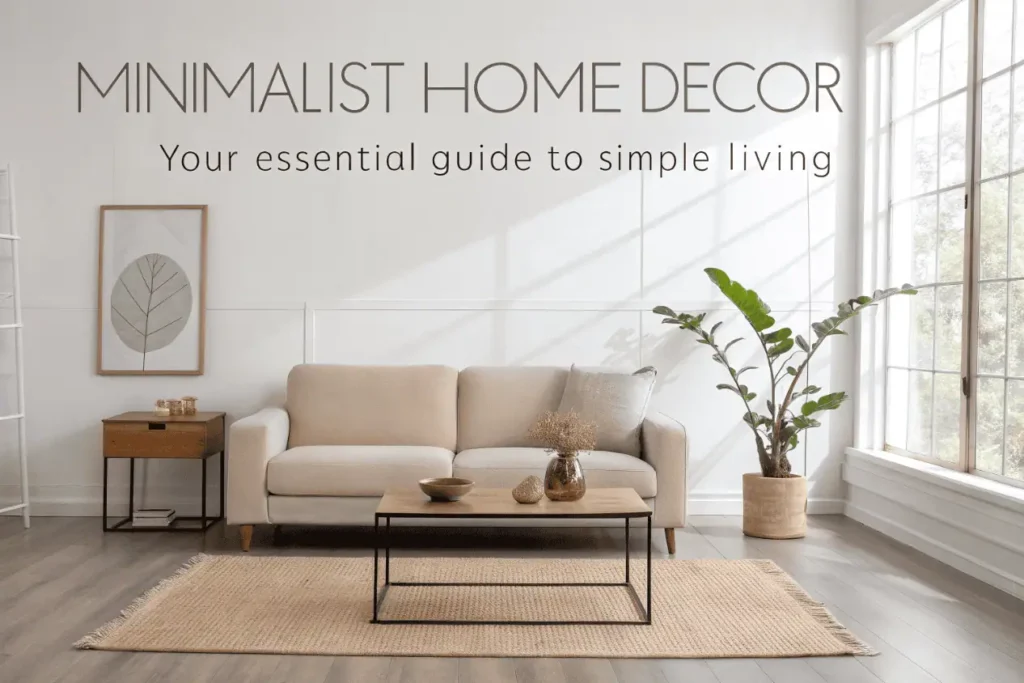
Embracing minimalist home decor creates serene, uncluttered spaces that prioritize quality over quantity and intentionality over excess. This design philosophy celebrates the beauty of simplicity, allowing each carefully chosen element to shine while eliminating the visual noise that creates stress and overwhelm.
The minimalist approach extends beyond aesthetics into lifestyle benefits, reducing cleaning time, simplifying decision-making, and fostering mental clarity through organized environments. Clean lines, neutral palettes, and purposeful furnishings combine to create calming retreats from our increasingly complex world.
These comprehensive minimalist home decor strategies will help you curate spaces that feel spacious, peaceful, and authentically yours. Whether you’re starting fresh or editing existing rooms, these principles guide you toward intentional, beautiful simplicity.
List of 13 Best Minimalist Home Decor Ideas
1. Neutral Color Palette Foundation
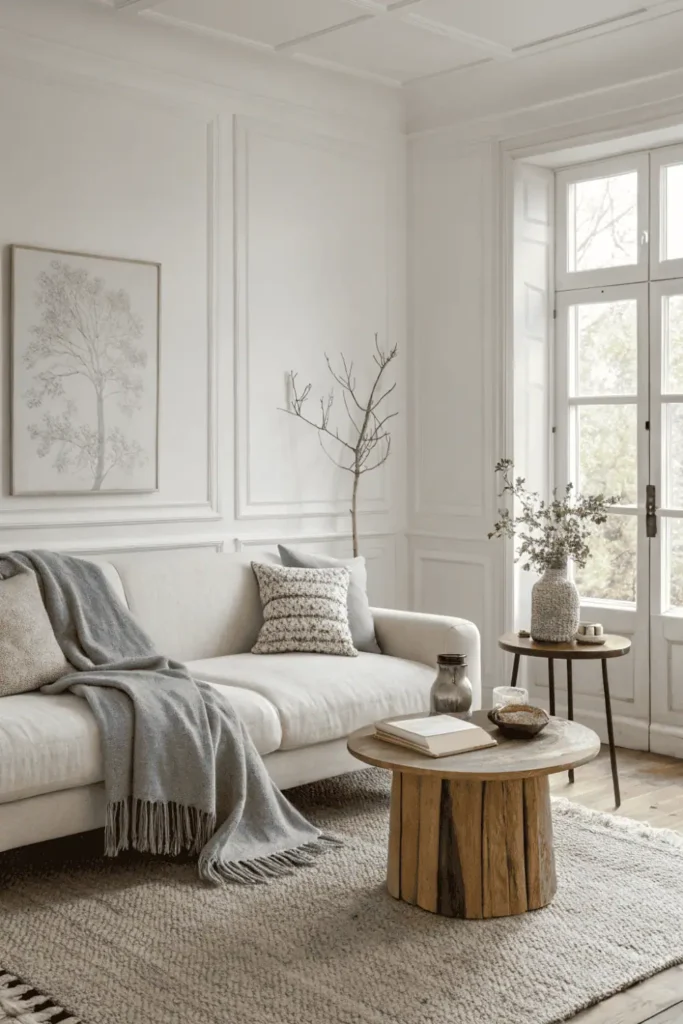
Neutral color schemes form the cornerstone of minimalist home decor through whites, greys, beiges, and soft taupes that create calm, cohesive environments. The monochromatic or limited palette eliminates visual competition, allowing architectural elements and furnishings to command attention through form rather than color.
Layer multiple shades within your chosen neutral family for depth without chaos—warm whites against cool greys, various taupe tones, or graduated beiges prevent flat appearance. The restrained palette provides timeless backdrop that won’t date quickly or require frequent updates.
Natural materials introduce subtle color variation through wood tones and stone without disrupting minimalist serenity.
Pro Tip: Test paint samples on multiple walls to observe how natural light affects neutrals throughout the day—”warm white” can appear yellow in afternoon sun, while “cool grey” may look blue in north-facing rooms.
2. Quality Over Quantity Furniture Selection
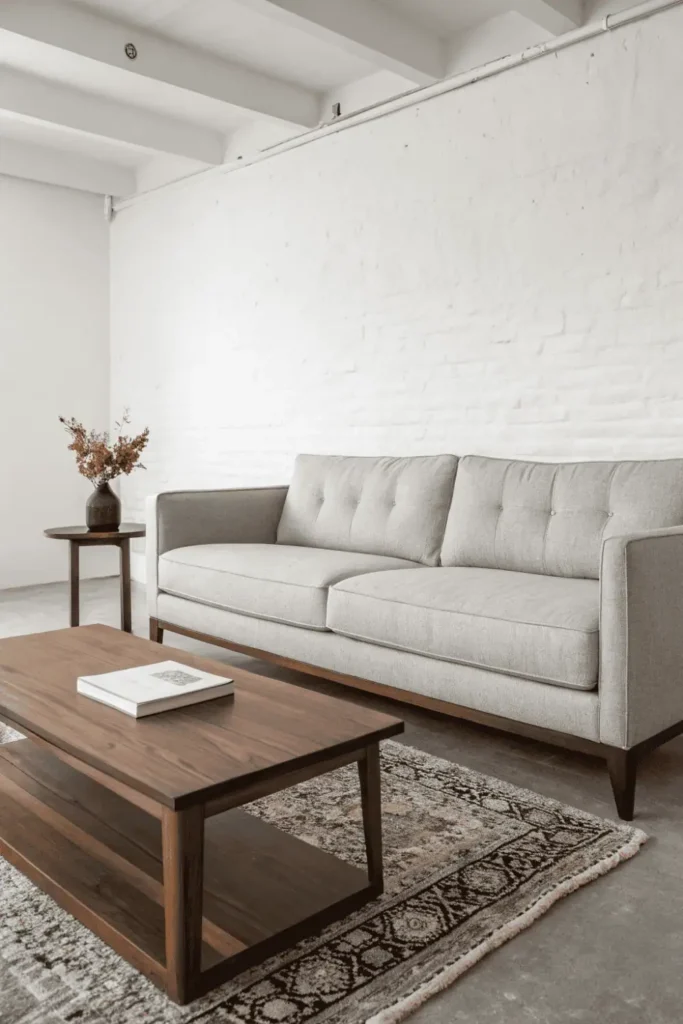
Essential furniture pieces define minimalist home decor through investment in fewer, higher-quality items rather than numerous mediocre pieces. Choose well-crafted sofas, beds, and tables with clean lines and excellent construction that will last decades rather than disposable fast-furniture requiring frequent replacement.
Each furniture item serves clear purpose without redundancy—one excellent sofa rather than sofa plus loveseat plus chairs cluttering space. The breathing room around quality pieces allows their design and craftsmanship to register visually.
Pro Tip: Apply the “one in, one out” rule when acquiring furniture—before bringing new pieces home, remove existing items maintaining the minimalist balance and preventing accumulation creep over time.
3. Hidden Storage Solutions
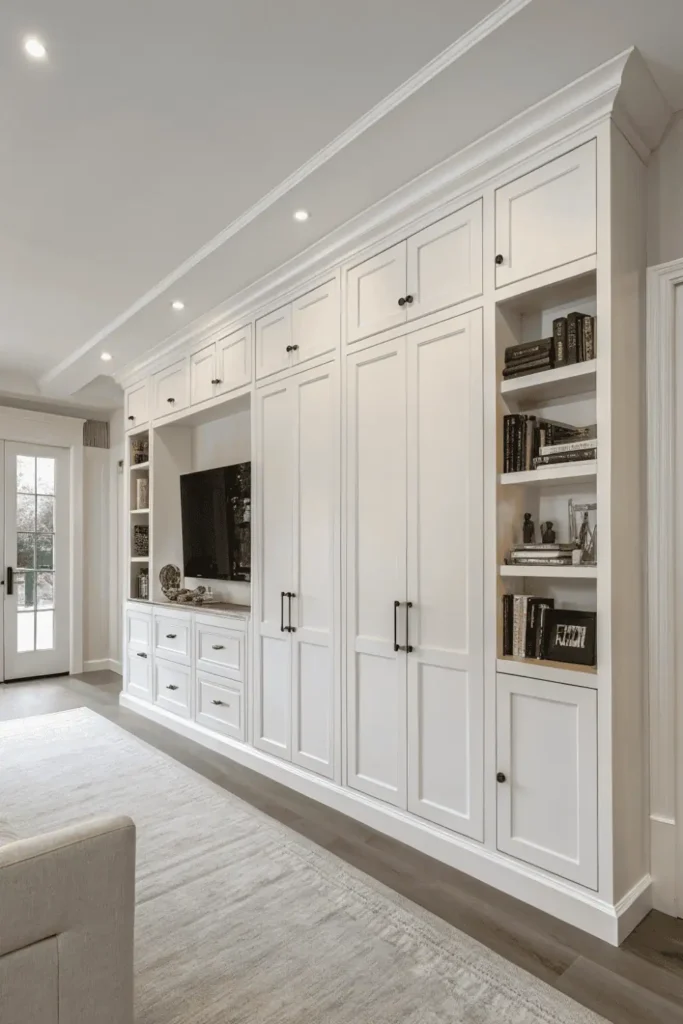
Concealed storage maintains minimalist home decor aesthetics by hiding necessities behind closed doors rather than exposing clutter on open shelving. Built-in cabinets, floating vanities with drawers, and beds with under-platform storage keep belongings accessible yet invisible.
The seamless integration of storage prevents visual fragmentation while accommodating real-life needs. Push-to-open cabinets eliminate hardware that interrupts clean surfaces, while uniform cabinet fronts create cohesive walls of storage that disappear into backgrounds.
Pro Tip: Measure your actual belongings before designing custom storage—inadequate capacity defeats the purpose, forcing items into view and undermining the clean aesthetic you’re working to achieve.
4. Statement Lighting as Focal Points
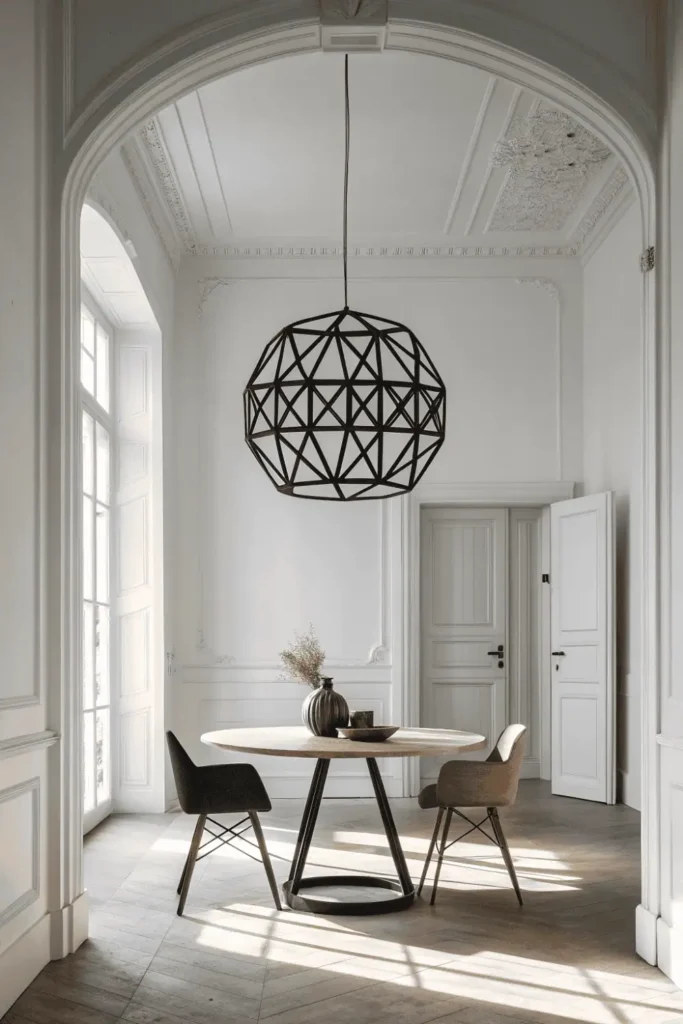
Sculptural light fixtures become primary decorative elements in minimalist home decor where few accessories compete for attention. Choose one dramatic pendant, chandelier, or floor lamp with interesting form that provides both illumination and visual interest.
The singular focus on lighting as art allows bold choices without overwhelming spaces—geometric metal pendants, organic-shaped floor lamps, or architectural chandeliers command attention appropriately. Black, brass, or natural materials coordinate with neutral palettes while providing contrast.
Pro Tip: Size statement lighting generously—too-small fixtures look timid in minimalist spaces lacking other decorative elements, while appropriately scaled pieces anchor rooms and justify their spotlight role.
5. Single Large-Scale Artwork
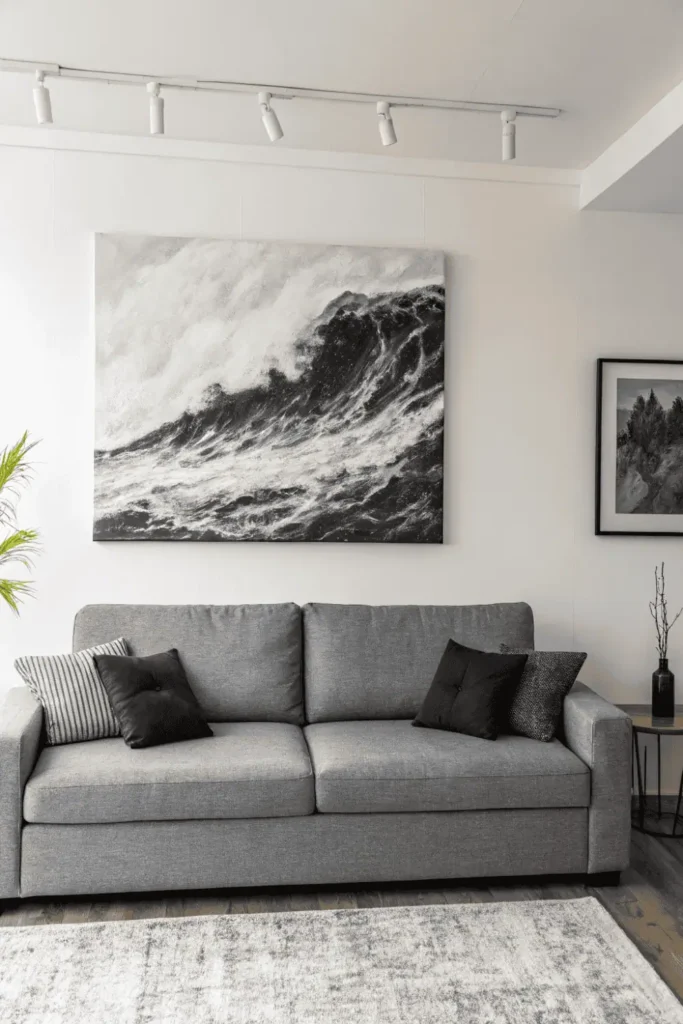
One substantial art piece creates powerful visual impact in minimalist home decor without the gallery wall clutter that fragments attention. Choose oversized abstract paintings, black and white photography, or line drawings that resonate personally while complementing your neutral palette.
The singular focal point draws eyes immediately while negative space around the artwork enhances its presence. Large-scale pieces (minimum 40×60 inches for standard living rooms) provide appropriate weight for minimalist spaces with limited accessories.
Pro Tip: Hang artwork at proper height—center should align 57-60 inches from floor (gallery standard eye level), not centered between floor and ceiling which places pieces too high.
6. Natural Material Textures
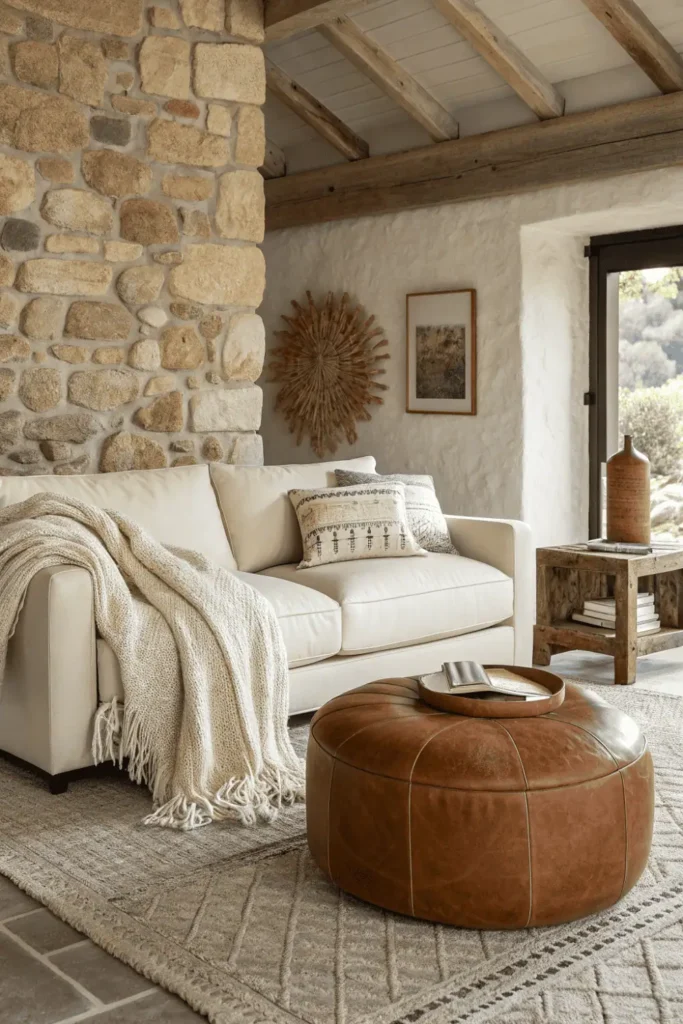
Organic materials including linen, wool, leather, wood, and stone introduce warmth and tactile interest to minimalist home decor without visual complexity. The natural variations in grain, weave, and texture provide subtle engagement while maintaining clean aesthetics.
Layer different natural materials—linen curtains, wool area rug, leather accent chair, wooden side table—creating dimensional interest through texture rather than color or pattern. The honest materials age beautifully, developing patina that enhances rather than detracts over time.
Pro Tip: Invest in 100% natural fibers and solid wood rather than synthetic blends or veneers—authentic materials look and feel distinctly better while their longevity justifies higher initial costs in minimalist environments.
7. Floor-to-Ceiling Sheer Curtains
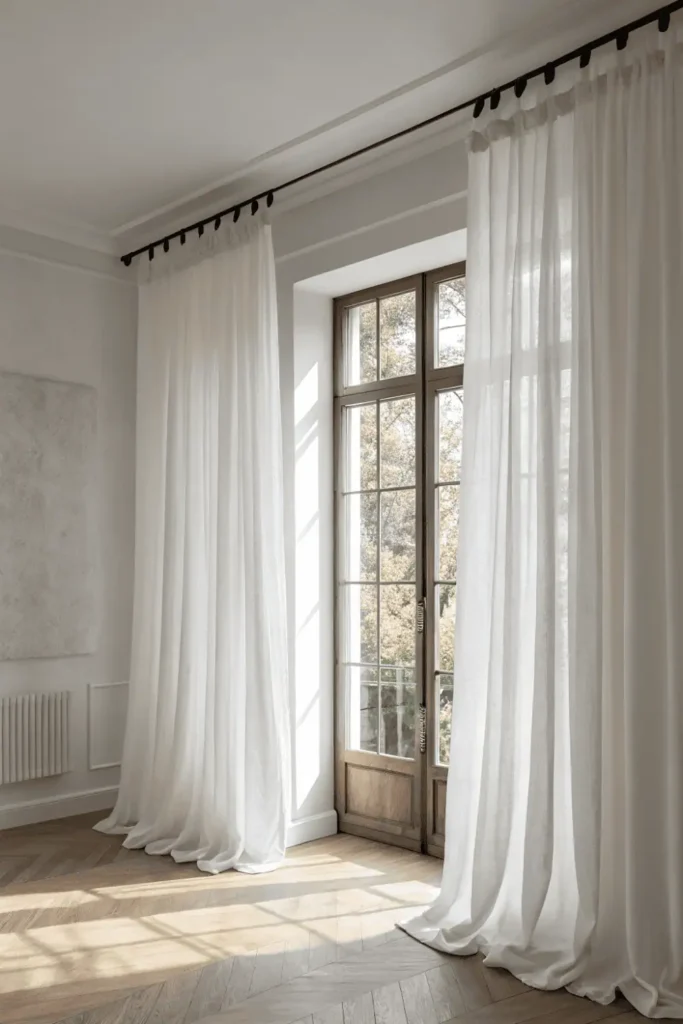
Simple window treatments using floor-length sheer linen or cotton curtains soften minimalist home decor while maintaining airiness and light flow. The unlined, lightweight fabrics filter sunlight gently without heavy drapes’ visual weight.
Mount curtains at ceiling height and extend to floor for vertical emphasis that makes ceilings appear higher. Choose white, ivory, or soft grey sheers that blend with walls, and use minimal hardware—simple rods in brushed nickel or matte black without ornate finials.
Pro Tip: Order curtains 1.5-2x window width for proper fullness—skimpy flat panels look cheap and unfinished, while adequate fabric creates elegant folds even with simple materials.
8. Negative Space Emphasis
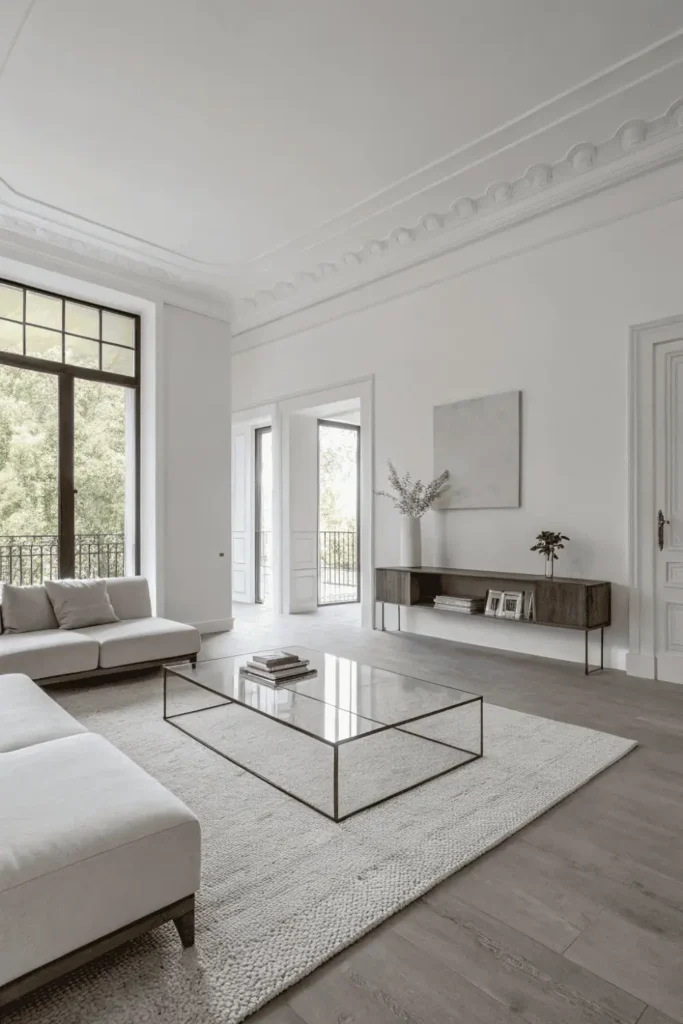
Intentional emptiness defines minimalist home decor by leaving walls, surfaces, and floors deliberately unadorned to create breathing room and visual rest. The negative space allows eyes to pause rather than constantly processing decorative elements.
Resist the urge to fill every surface—empty coffee tables, bare countertops, and undecorated walls communicate intentionality rather than incompleteness. The spaciousness makes rooms feel larger while reducing cleaning and maintenance demands significantly.
Pro Tip: Follow the “less than you think” rule—style spaces with 50% fewer items than feels comfortable initially, then live with it for two weeks before adding anything back to avoid overcorrecting toward clutter.
9. Floating Vanities and Furniture
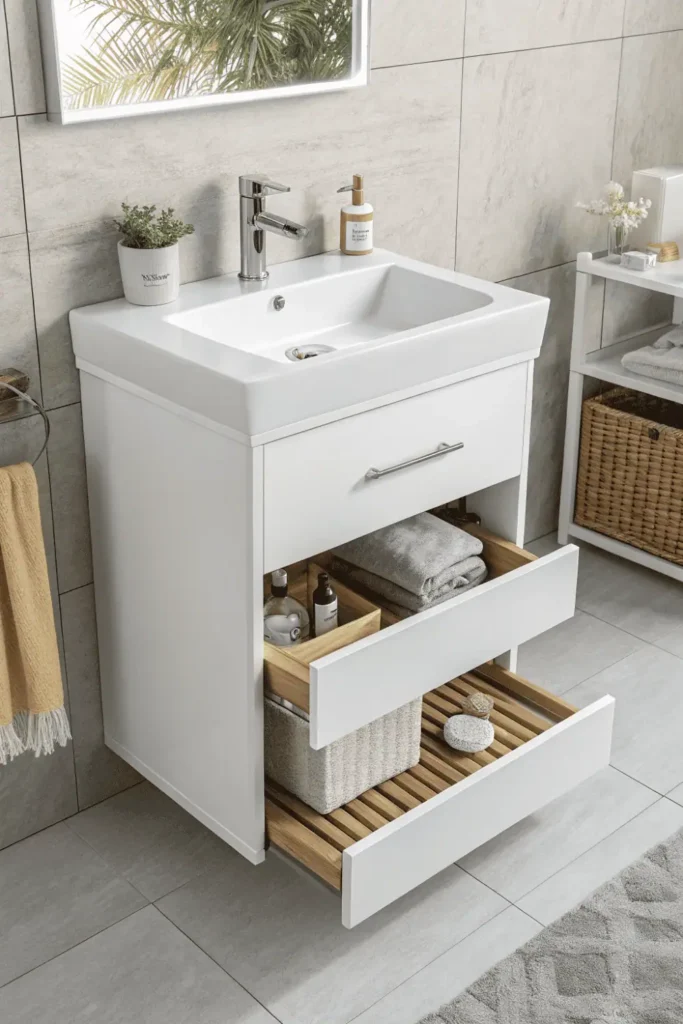
Wall-mounted furniture creates airy, spacious feeling in minimalist home decor by revealing floor space beneath cabinets, desks, and vanities. The floating effect makes rooms feel larger while simplifying floor cleaning.
Bathroom vanities, TV consoles, nightstands, and desks mounted to walls rather than sitting on floors reduce visual weight dramatically. The continuous floor plane visible beneath furniture enhances the clean, uncluttered aesthetic essential to minimalism.
Pro Tip: Ensure proper wall anchoring for floating furniture—mount into wall studs or use heavy-duty toggle bolts rated for 2-3x the anticipated weight to prevent dangerous failures over time.
10. Monochromatic Bedding
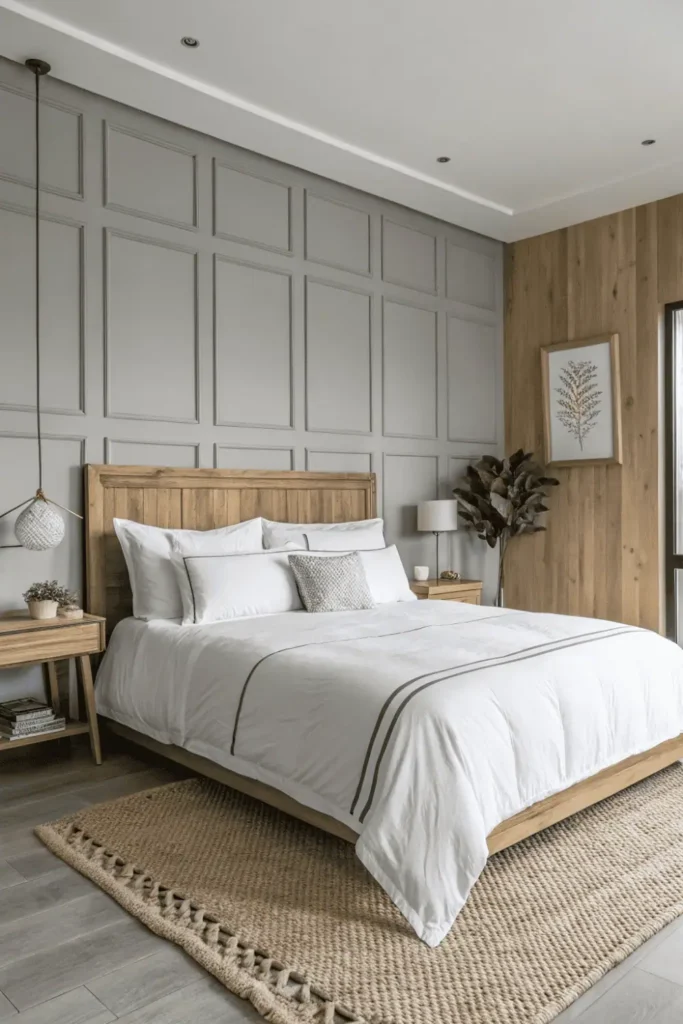
All-white or single-color bedding creates hotel-like serenity in minimalist home decor bedrooms through crisp, uniform linens without pattern or color variation. The consistent palette emphasizes quality materials and excellent bed-making while eliminating visual noise.
Choose high thread count cotton or linen in white, ivory, grey, or soft taupe with simple styling—flat sheets, duvet covers, and standard pillows without excessive decorative cushions. The uniform appearance feels luxurious and calming.
Pro Tip: Use duvet covers rather than bedspreads for easiest maintenance—they launder simply and create clean lines when properly fluffed, unlike complicated bedding layers requiring daily arranging.
11. Single Potted Plant as Accent
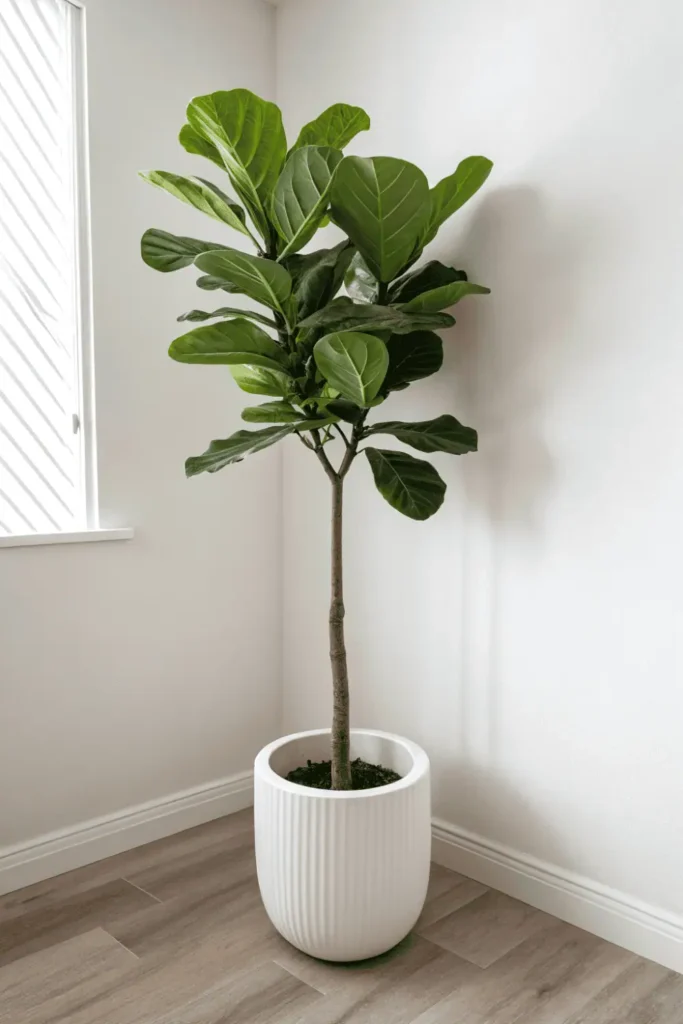
One substantial plant provides living element in minimalist home decor without the visual clutter of multiple small plants scattered throughout. Choose statement plants like fiddle leaf figs, monstera, or tall snake plants in simple ceramic or concrete pots.
The singular green presence introduces life and air purification while the architectural plant form functions as sculptural element. Position strategically in corners or beside seating where the scale creates impact without obstructing space.
Pro Tip: Match pot style to overall aesthetic—smooth cylindrical ceramics in white, grey, or black maintain minimalist cohesion, while decorative pots with patterns or colors disrupt the intentional simplicity.
12. Handleless Kitchen Cabinets
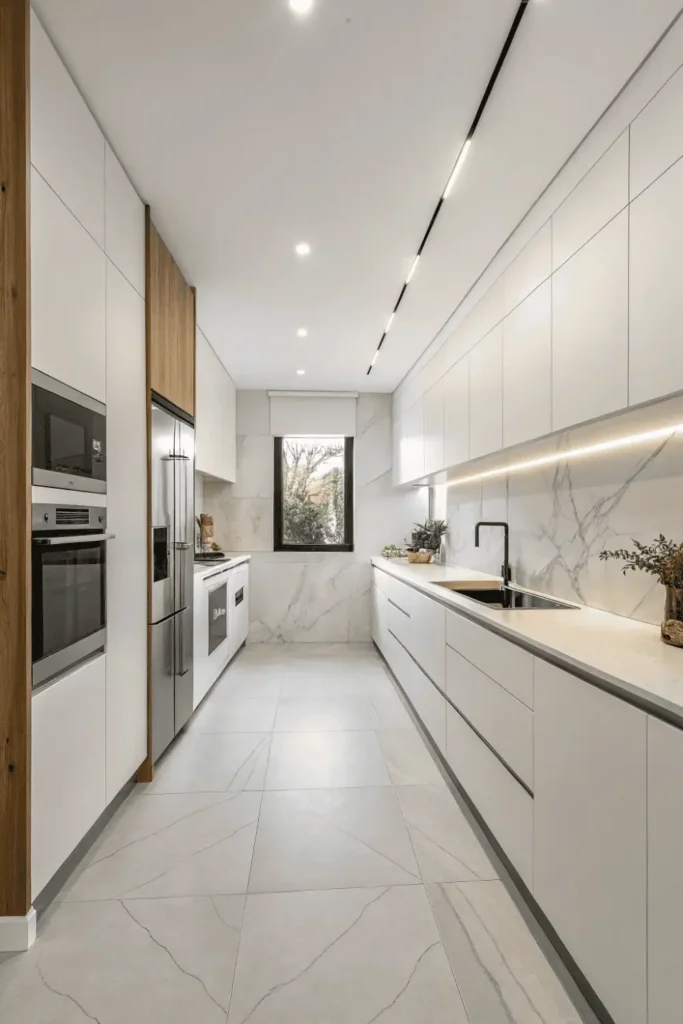
Push-to-open or integrated pull cabinets eliminate hardware in minimalist home decor kitchens, creating seamless surfaces without visual interruption. The handleless design produces clean cabinet fronts appearing as continuous walls when closed.
This approach works with both traditional swing doors and modern drawer systems. Flat-front cabinet doors in matte white, grey, or wood grain maximize the sleek appearance while touch-latch or recessed pull mechanisms maintain functionality.
Pro Tip: Install soft-close mechanisms with push-to-open cabinets—they prevent slamming that damages touch-latches over time while the gentle closing maintains the quality feel appropriate to minimalist investments.
13. Scandinavian-Inspired Minimalism
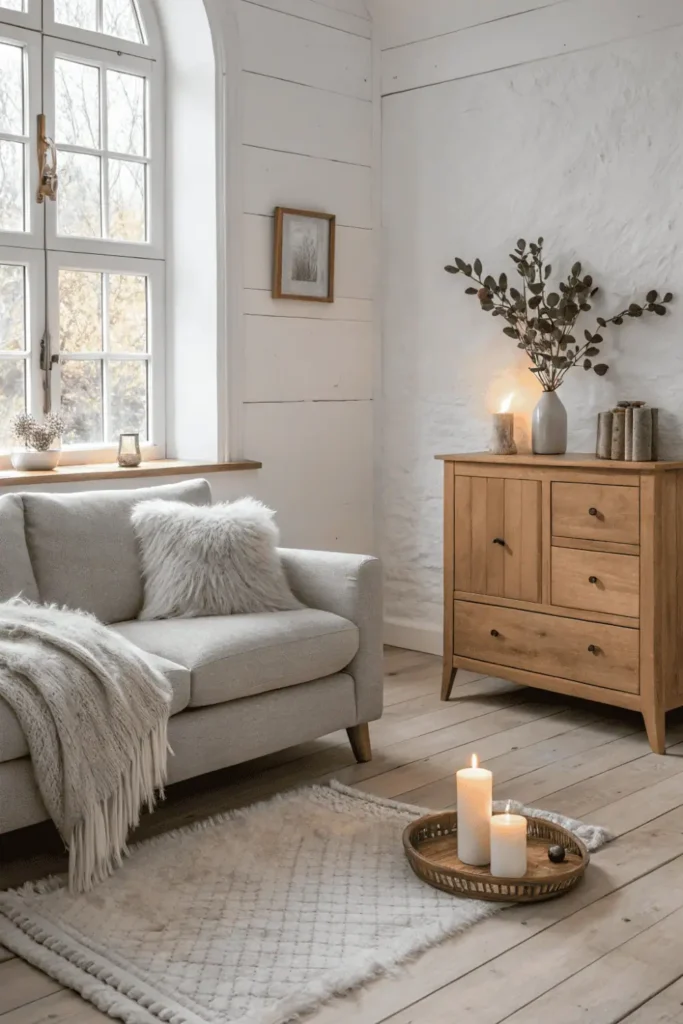
Scandinavian minimalist style adds warmth to stark minimalism through light woods, cozy textiles, and hygge elements while maintaining essential simplicity. The Nordic approach balances minimalist principles with livable comfort and subtle personality.
Incorporate blonde wood furniture, sheepskin throws, and simple candles within neutral palettes. The functional beauty and craftsmanship focus creates spaces feeling both serene and inviting rather than cold or sterile.
Pro Tip: Limit Scandinavian decor to 5-7 carefully chosen pieces per room—the style’s accessibility makes over-buying tempting, but true Scandinavian minimalism maintains restraint despite the warmer aesthetic approach.
Why Minimalist Home Decor Is Worth the Investment
Minimalist home decor dramatically reduces stress and mental fatigue by eliminating visual clutter that subconsciously demands attention and processing. Research shows that organized, simplified environments lower cortisol levels and improve focus, making minimalist spaces particularly valuable for remote workers and those seeking calm home sanctuaries.
Quality-focused minimalist home decor saves money long-term through durable purchases replacing frequent cheap replacements. While initial investments in solid wood furniture and natural fiber textiles cost more upfront, their 15-25 year lifespans dramatically outperform fast-furniture requiring replacement every 3-5 years, ultimately costing less per year of use.
Minimalist home decor significantly reduces cleaning and maintenance time by limiting surfaces, objects, and complicated arrangements requiring dusting and organizing. Homeowners report saving 3-5 hours weekly on household tasks when embracing minimalism, freeing time for activities that genuinely enhance quality of life rather than furniture maintenance.
Things to Consider Before Choosing Minimalist Home Decor
Your lifestyle and household composition affects minimalist home decor feasibility—families with young children find strict minimalism challenging due to toy storage needs and daily clutter, making modified minimalism with abundant hidden storage more realistic than sparse showcase rooms requiring constant maintenance.
Climate considerations impact minimalist home decor material choices—abundant textiles necessary for warmth in cold regions add layers contrary to stark minimalism, while warm climates accommodate sparser furnishings comfortably, making geographic location relevant to which minimalist interpretation feels livable year-round.
Personality alignment with minimalist home decor determines long-term satisfaction—collectors, hobbyists, and expressive personalities may find extreme minimalism psychologically uncomfortable despite aesthetic appeal, making it essential to honestly assess whether simplified environments feel peaceful or sterile to your temperament.
Comparison Table of Minimalist Home Decor Ideas
| Design Element | Price Range | Implementation Time | Maintenance | Impact Level | Best Room |
|---|---|---|---|---|---|
| Neutral Color Palette | $200-$2,000 (paint) | 2-5 days painting | Low – touch-ups | Very High – defines aesthetic | All rooms, foundation |
| Quality Furniture | $500-$5,000 per piece | Immediate placement | Very Low – durable | Very High – room anchors | Living room, bedroom |
| Hidden Storage | $1,000-$10,000+ | 1-4 weeks install | Very Low – concealed | High – maintains clean look | All rooms, built-ins |
| Statement Lighting | $200-$2,000 | 1-3 hours install | Very Low – dust occasionally | High – focal point | Dining, living room, entry |
| Large-Scale Artwork | $100-$3,000+ | 30 minutes hanging | Very Low – dust | High – visual anchor | Living room, bedroom |
| Natural Materials | $300-$3,000 | Immediate placement | Medium – varies by material | High – adds warmth | All rooms, layering |
| Sheer Curtains | $50-$300 per window | 1-2 hours install | Medium – regular washing | Medium – softens space | Living room, bedroom |
| Negative Space | $0 | Ongoing curation | Very Low – less to clean | Very High – defines style | All rooms, philosophy |
| Floating Furniture | $300-$2,000 per piece | 2-4 hours install | Very Low – easy floor cleaning | Medium – creates airiness | Bathroom, bedroom, office |
| Monochrome Bedding | $100-$800 | Immediate | Medium – regular laundering | High – serene bedroom | Bedroom exclusively |
| Single Statement Plant | $30-$200 | Immediate | Low – water weekly | Medium – living element | Living room, bedroom, entry |
| Handleless Cabinets | $5,000-$25,000 kitchen | 2-4 weeks install | Very Low – seamless clean | Very High – sleek kitchen | Kitchen exclusively |
| Scandinavian Minimal | $500-$5,000 | 1-2 weeks sourcing | Low – quality pieces | High – warm minimalism | Living room, bedroom |
Recommended Products for Minimalist Home Decor
IKEA SÖDERHAMN Modular Sofa in Grey
This clean-lined modular sofa features low-profile design with removable, washable covers perfect for minimalist aesthetics. The Finnsta grey fabric provides neutral foundation while the modular sections allow custom configurations fitting various spaces. Deep seats and simple silhouette create comfortable, unfussy seating that disappears visually against neutral walls while providing excellent functionality.
West Elm Mid-Century Wood Bed Frame in Acorn
This solid wood platform bed showcases warm walnut-finished acorn wood with tapered legs and simple headboard embodying minimalist principles. The low-profile design and clean lines suit minimalist bedrooms while the quality construction ensures 15-20 year lifespan. No box spring required, and the elevated design allows visible floor space maintaining airy aesthetic.
Pottery Barn Linen Drape in White
These 100% Belgian flax linen curtains provide naturally textured window treatments in pure white perfect for minimalist spaces. The unlined construction filters light gently while the rod pocket or ring top hanging options suit various installation preferences. Available in lengths from 63 to 124 inches ensuring proper floor-to-ceiling draping essential to minimalist proportion.
Frequently Asked Questions About Minimalist Home Decor
What Is the Difference Between Minimalist and Modern Decor?
Minimalist home decor prioritizes radical simplification and removal of excess, focusing on essential furnishings and abundant negative space regardless of style era. The philosophy emphasizes “less is more,” with quality over quantity and intentional emptiness as core principles.
Modern decor refers to specific mid-century design period (1920s-1950s) featuring clean lines, organic curves, and innovative materials but doesn’t necessarily limit quantity or embrace extreme simplicity. Modern spaces may include numerous decorative objects, while minimalist spaces deliberately restrict items regardless of their design period or style.
How Do You Make Minimalist Decor Feel Warm?
Warm minimalist home decor incorporates natural materials like wood, wool, and linen rather than exclusively using cold materials like metal and glass. Choose warm-toned neutrals (beiges, taupes, warm greys) over stark whites and cool greys, and include soft textiles through area rugs, throw blankets, and curtains.
Strategic lighting transforms minimalist spaces—layer warm-toned LED bulbs (2700K) in table lamps, floor lamps, and dimmers rather than relying solely on harsh overhead fixtures. Include living elements like plants and natural light while maintaining simplified quantities, creating warmth through quality and material choice rather than abundance.
Can You Have Personal Items in Minimalist Homes?
Yes, minimalist home decor accommodates personal items through highly selective curation rather than elimination of all sentiment. Display only the most meaningful photographs, travel souvenirs, or collections in intentional arrangements with ample surrounding space allowing each item to register individually.
The key is conscious limitation—one framed family photo rather than gallery walls, a single meaningful sculpture rather than surface-covering collections. Rotating displays allow enjoying various personal items seasonally while maintaining minimalist visual simplicity, storing non-displayed items in hidden storage until their turn.
How Much Does It Cost to Achieve Minimalist Decor?
Minimalist home decor paradoxically costs both more and less than traditional decorating. Initial investment runs higher due to quality furniture emphasis—expect $5,000-15,000 for essential living room pieces (sofa, coffee table, lighting) versus $2,000-5,000 for fast-furniture equivalents.
However, long-term costs decrease dramatically through fewer purchases, longer-lasting quality items, and elimination of constant accessory buying. Many achieve minimalist style through aggressive editing of existing possessions at zero cost, then slowly acquiring quality replacements over years, making the transition financially accessible through gradual investment in timeless pieces.