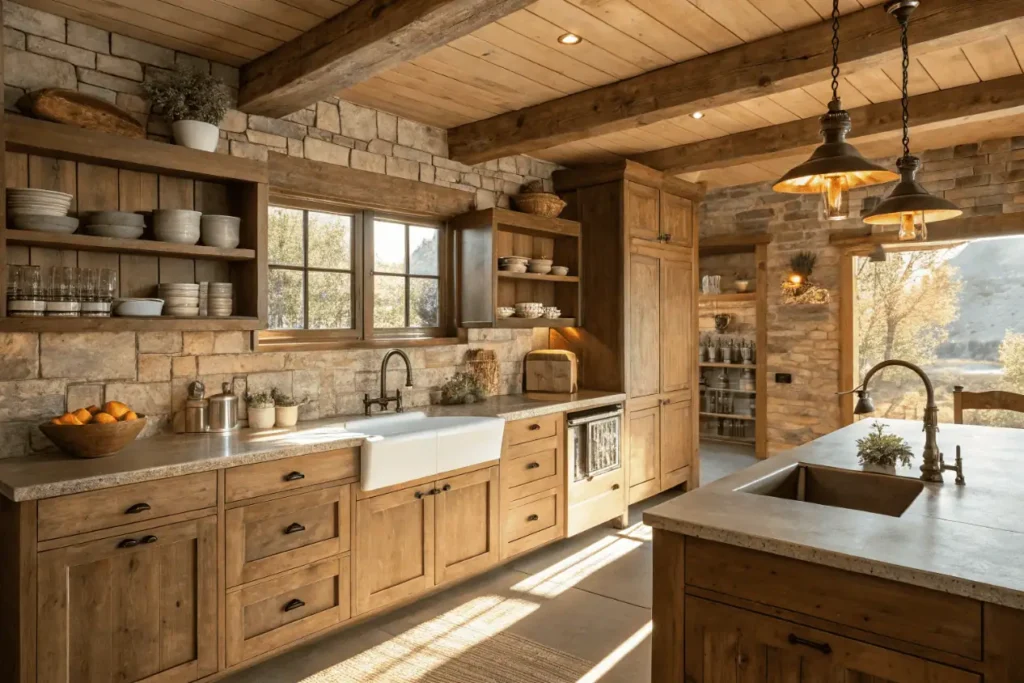
Creating a rustic kitchen brings warmth and character into the heart of your home. This timeless design style combines natural materials, vintage elements, and cozy textures that make every meal feel special.
Rustic kitchens blend functionality with charm, offering endless possibilities for customization. From reclaimed wood beams to farmhouse sinks, each element tells a unique story.
Whether you’re renovating or building from scratch, a rustic kitchen creates an inviting atmosphere that never goes out of style. Let’s explore the best ways to achieve this beloved aesthetic.
List of 13 Best Rustic Kitchen Design Elements
1. Reclaimed Wood Ceiling Beams
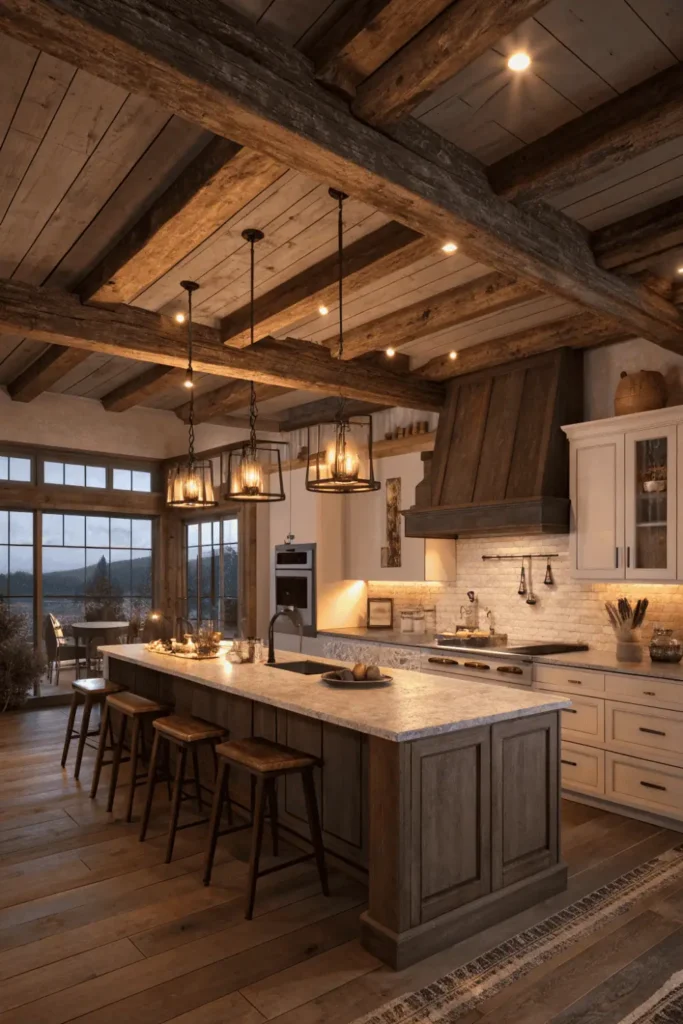
Exposed ceiling beams instantly add architectural interest and authentic character to your rustic kitchen. These salvaged timbers bring history and texture overhead, creating a focal point that draws the eye upward.
Reclaimed beams work beautifully in both large and compact kitchens, offering versatility in placement and finish. You can leave them natural, stain them dark, or even paint them for a lighter farmhouse feel.
Pro Tip: Source beams from local salvage yards or barn demolitions to ensure authentic age marks and patina that new wood simply can’t replicate.
2. Farmhouse Apron-Front Sink
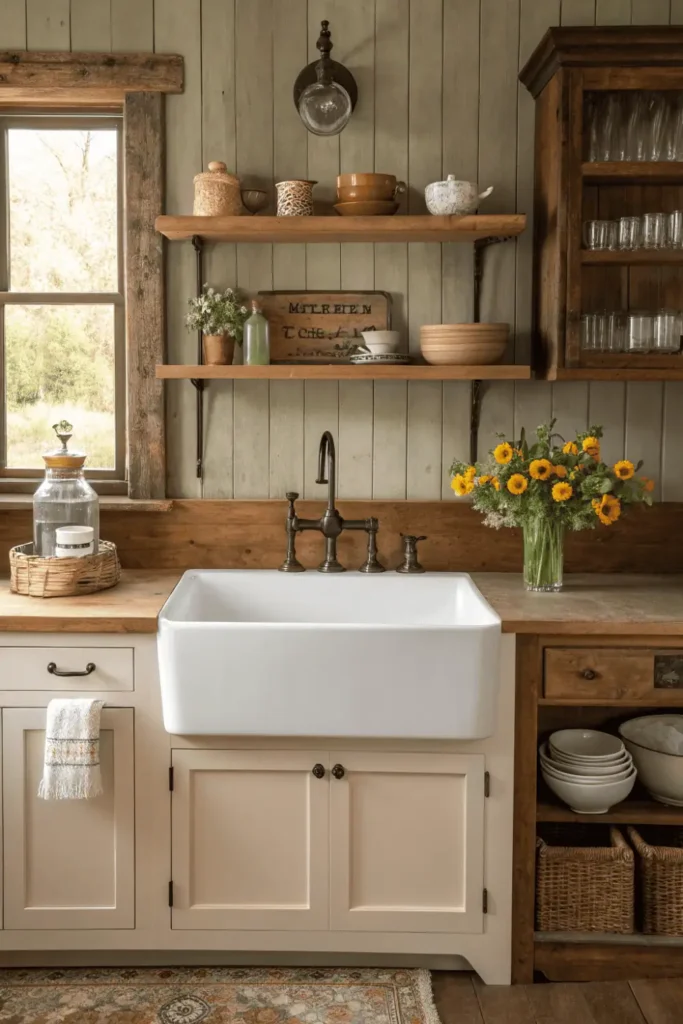
A farmhouse sink serves as both a functional workspace and a stunning design statement in any rustic kitchen. These deep, wide basins make washing large pots and pans effortless while adding vintage charm.
Available in fireclay, copper, or stainless steel, farmhouse sinks complement various rustic styles from traditional to modern farmhouse. The exposed front panel becomes a focal point that anchors your entire kitchen design.
Pro Tip: Choose a fireclay sink in white or cream for classic appeal, or opt for hammered copper to add warm metallic tones that develop a beautiful patina over time.
3. Open Wooden Shelving
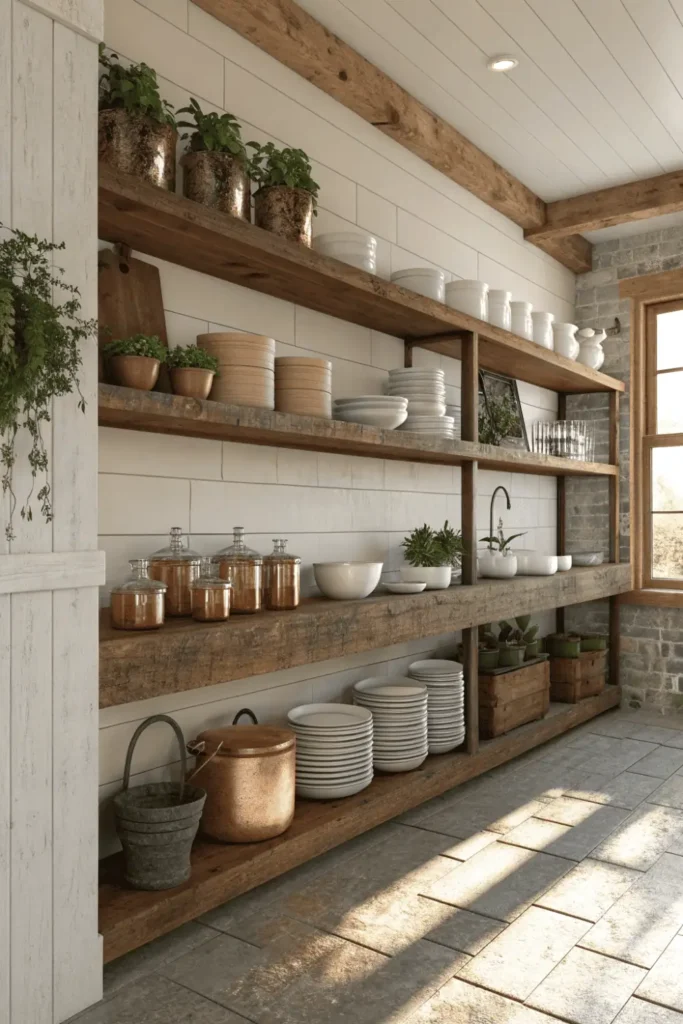
Open shelving constructed from thick wood planks brings both practicality and rustic beauty to your kitchen walls. This design choice showcases your favorite dishes, glassware, and decorative items while keeping essentials within easy reach.
Reclaimed barn wood or live-edge lumber creates the most authentic rustic kitchen appearance. The natural grain patterns and imperfections add character and warmth that closed cabinets simply can’t match.
Pro Tip: Mix functional items with decorative pieces like vintage crocks, copper pots, and woven baskets to create visual interest while maintaining the practical benefits of open storage.
4. Butcher Block Countertops
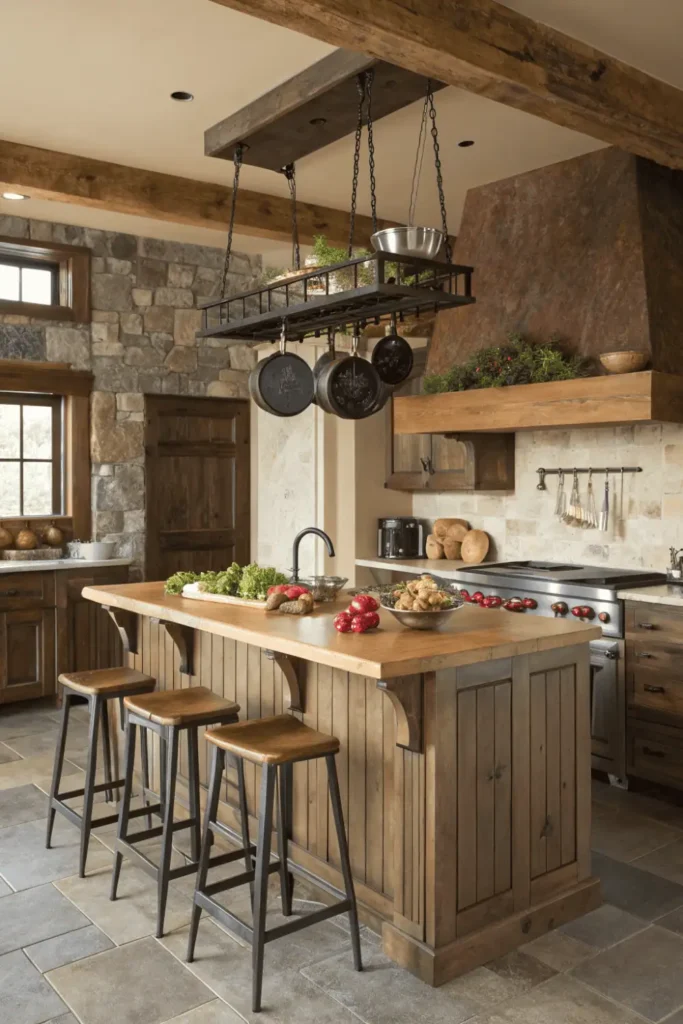
Butcher block countertops provide a warm, organic surface that softens the look of any rustic kitchen. These solid wood surfaces develop character over time, with each knife mark and stain telling the story of meals prepared.
The natural wood tones create visual warmth and pair beautifully with stone, concrete, or tile. Regular oiling maintains the wood’s luster and provides food-safe protection.
Pro Tip: Use butcher block on your island or a section of counter space rather than throughout the entire kitchen to balance maintenance requirements with aesthetic appeal.
5. Vintage-Style Range and Hood
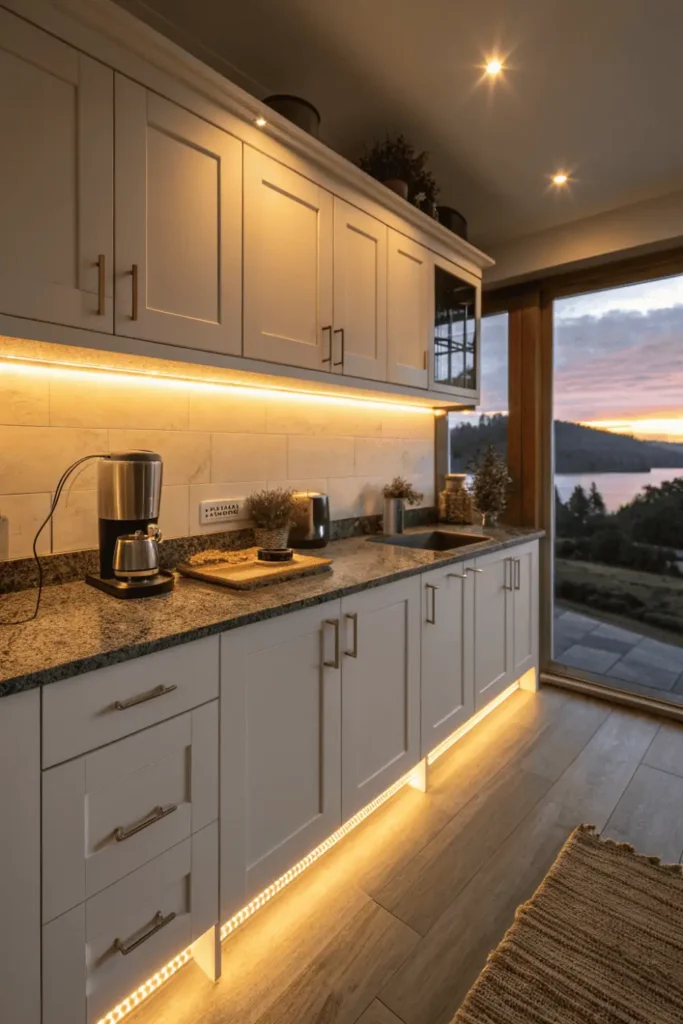
A statement range with a vintage-inspired design becomes the centerpiece of your rustic kitchen. Professional-style ranges in colors like cream, sage green, or classic black bring both performance and period charm.
Pair your range with a custom wood or copper hood to complete the authentic look. These architectural elements draw attention while providing essential ventilation for cooking.
Pro Tip: Consider brands like AGA, La Cornue, or Big Chill for authentic vintage styling, or retrofit a modern range with a custom rustic hood to achieve the look at a lower cost.
6. Stone or Brick Accent Walls
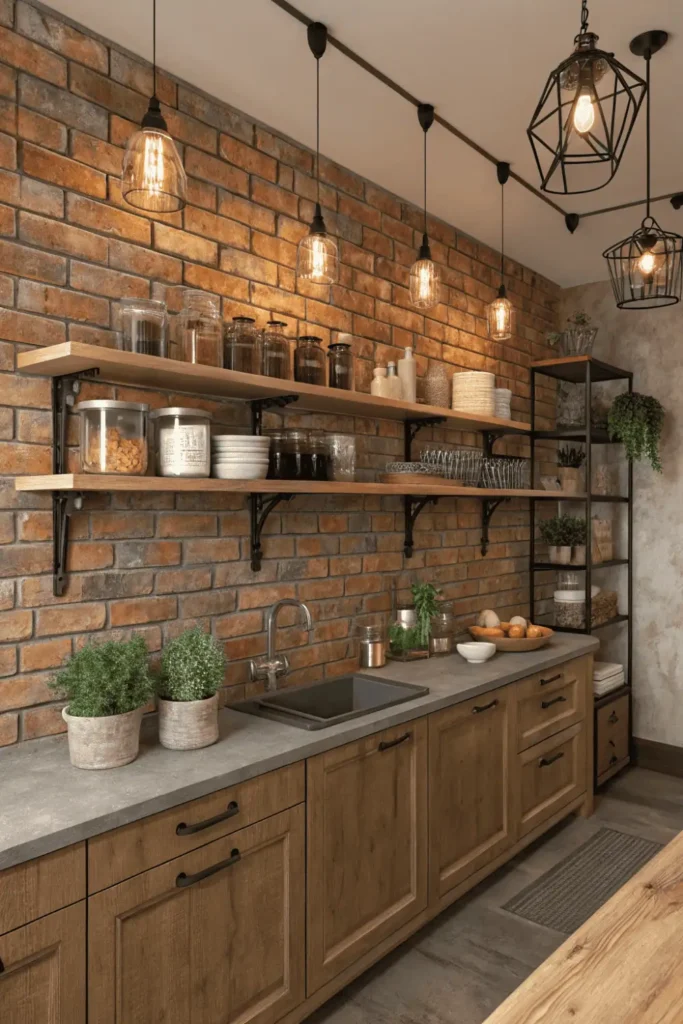
Exposed stone or brick walls add texture and old-world character that defines rustic kitchen design. These natural materials provide visual weight and authenticity that can’t be replicated with paint or wallpaper.
Whether using original structural elements or adding veneer, stone and brick create a stunning backdrop for open shelving or as a striking backsplash. The irregular surfaces and color variations add depth and interest to your space.
Pro Tip: If your home lacks original masonry, use thin brick veneer or manufactured stone for a fraction of the cost and weight while achieving the same rustic kitchen aesthetic.
7. Wrought Iron Hardware and Fixtures
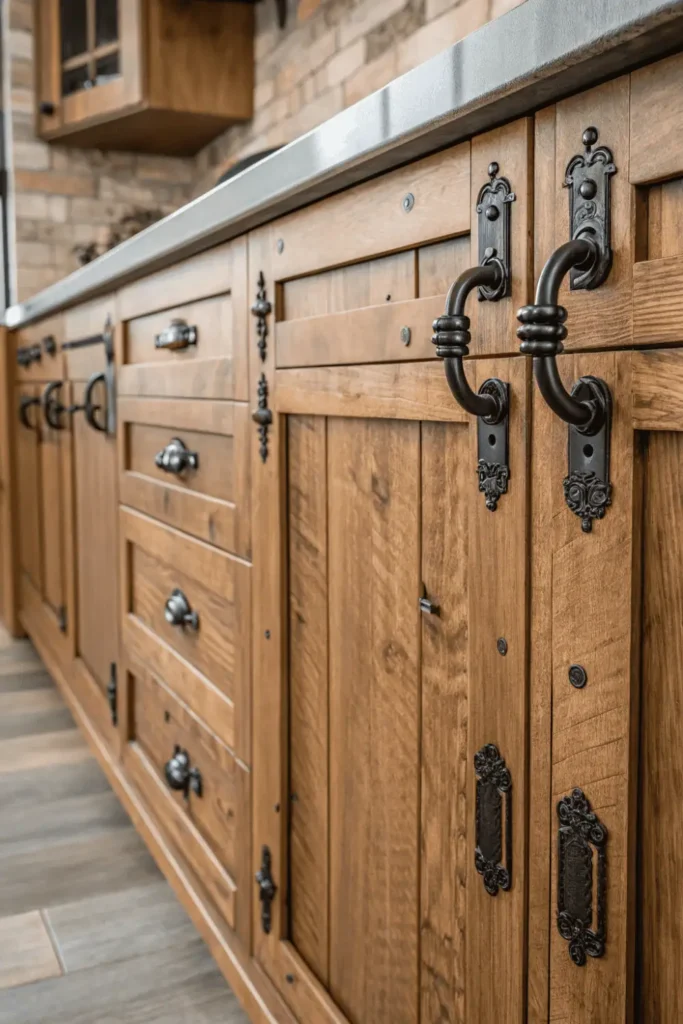
Black wrought iron hardware brings an industrial edge to rustic kitchen design while maintaining period authenticity. Cabinet pulls, drawer handles, and door hinges in matte black create bold contrast against natural wood tones.
Extend the iron aesthetic to light fixtures, pot racks, and shelf brackets for cohesive design. The durability of iron ensures your hardware will last for decades while developing an attractive patina.
Pro Tip: Mix iron hardware finishes slightly—some matte black, some oil-rubbed bronze—to create a collected-over-time appearance that feels more authentic than perfectly matched sets.
8. Natural Stone Backsplash
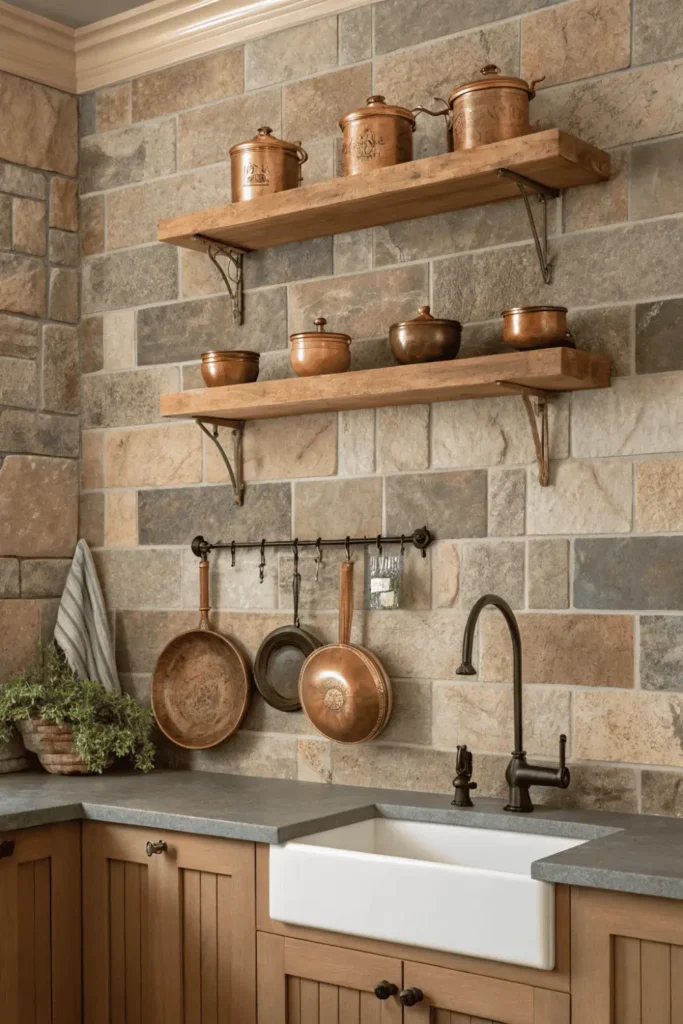
A natural stone backsplash introduces organic texture and earthy colors that anchor your rustic kitchen design. Slate, limestone, or tumbled marble tiles create visual interest with their irregular surfaces and natural color variation.
Stone backsplashes work particularly well behind ranges and sinks, providing durable protection while making a design statement. The natural material complements wood elements and adds permanence to your space.
Pro Tip: Choose larger format tiles or stone slabs to minimize grout lines, which can be challenging to keep clean in heavily used kitchen areas while maintaining the rustic aesthetic.
9. Rustic Wood Island with Seating
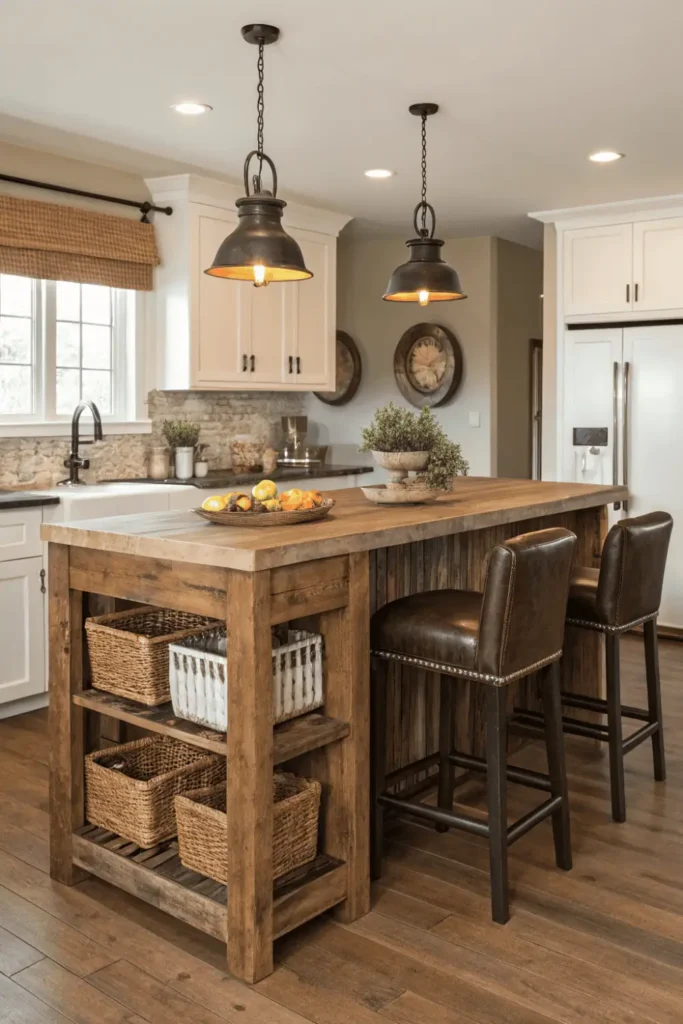
A custom wood island serves as the functional and visual centerpiece of any rustic kitchen. Built from reclaimed lumber or finished with distressed techniques, these islands provide prep space, storage, and casual dining in one beautiful piece.
Incorporate open shelving on the sides for cookbook storage or display. Add bar seating with vintage-inspired stools to create a gathering spot for family and friends.
Pro Tip: Use contrasting wood tones or colors between your island and perimeter cabinets to add depth—try a darker walnut island against lighter oak cabinets for dimensional interest.
10. Copper Pots and Hanging Pot Rack
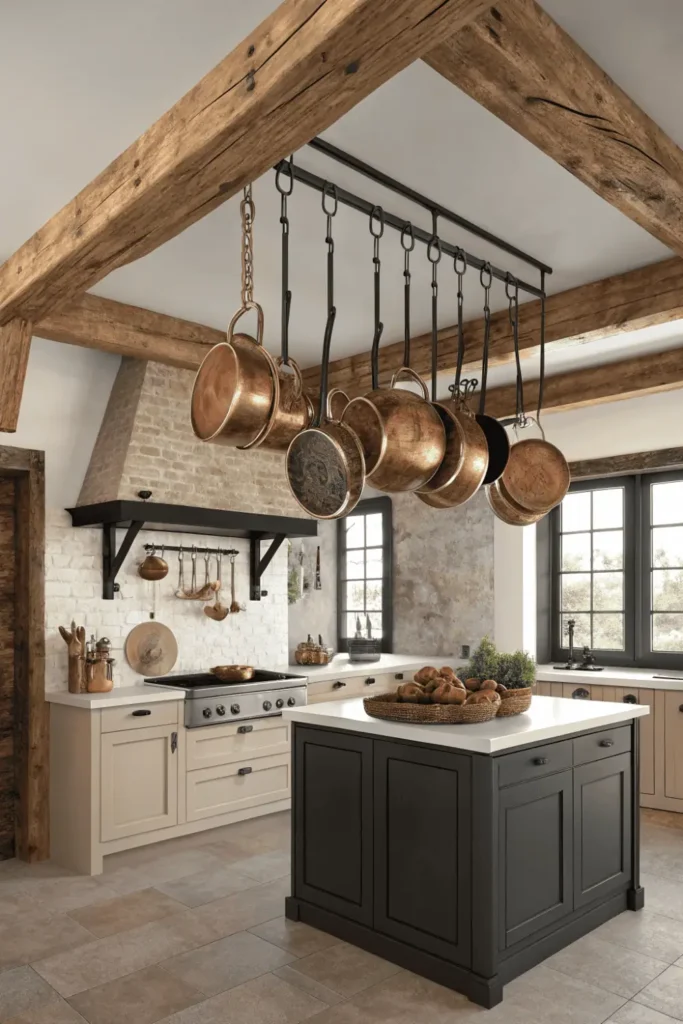
Copper cookware displayed on an overhead rack adds warmth and functionality to your rustic kitchen. These gleaming pots catch light beautifully while keeping your most-used cooking tools within arm’s reach.
A wrought iron pot rack suspended from ceiling beams creates visual interest overhead. The combination of copper and iron embodies rustic design principles perfectly.
Pro Tip: Polish copper pots regularly for a bright shine, or allow them to develop a natural patina for a more aged, authentic rustic kitchen appearance—both looks work beautifully.
11. Vintage-Style Lighting Fixtures
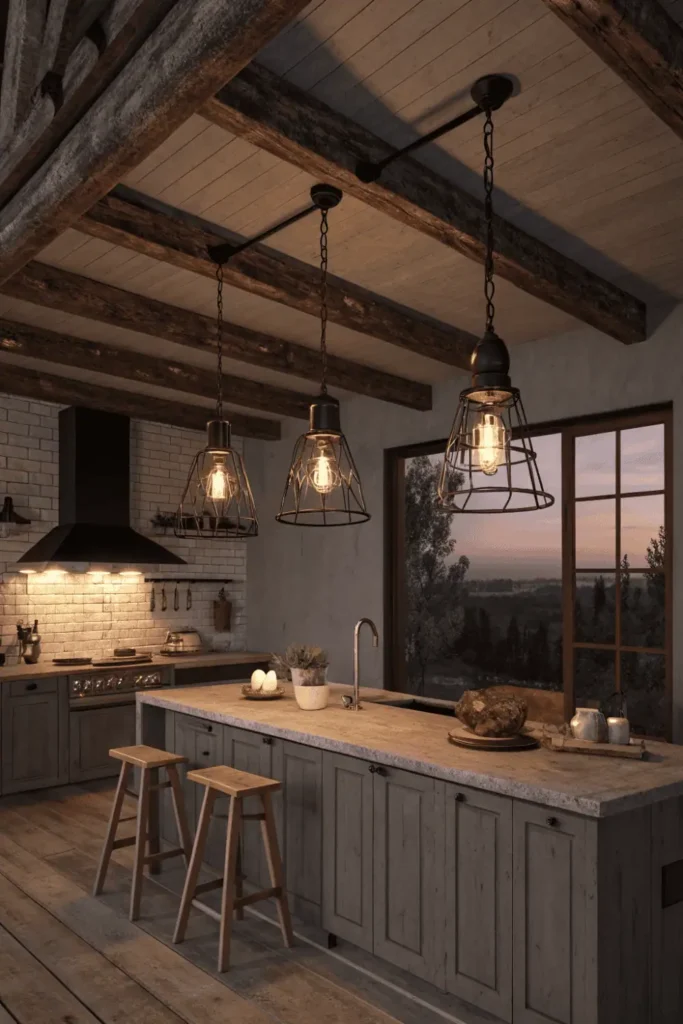
Period-appropriate lighting completes your rustic kitchen with fixtures that blend form and function. Schoolhouse pendants, industrial cage lights, or wrought iron chandeliers provide ambient and task lighting while reinforcing your design theme.
Layer different light sources—overhead fixtures, under-cabinet lighting, and accent lights—to create warmth and functionality. Vintage Edison bulbs add an extra touch of nostalgic charm.
Pro Tip: Install dimmer switches on all lighting circuits to adjust ambiance from bright task lighting during meal prep to soft, intimate lighting for dining and entertaining.
12. Distressed Cabinet Finishes
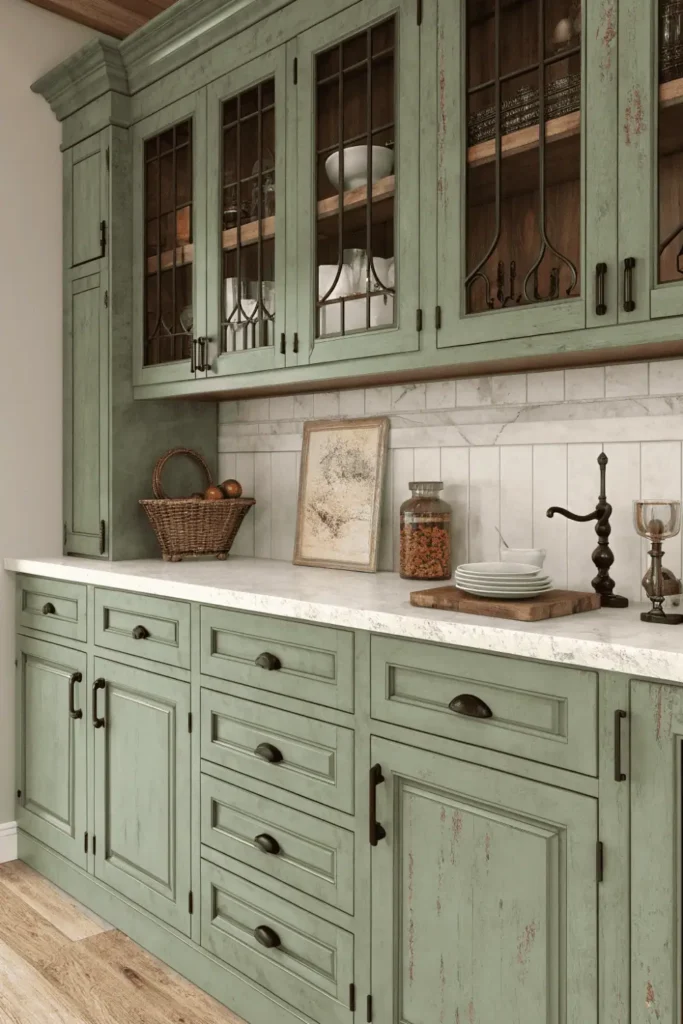
Distressed or weathered cabinets bring instant age and character to your rustic kitchen. Techniques like hand-scraping, wire-brushing, or antiquing create textured surfaces that look like they’ve been loved for generations.
Choose finishes in warm whites, sage greens, or natural wood stains that complement your overall palette. The imperfect surfaces hide everyday wear while adding authentic charm.
Pro Tip: Mix painted lower cabinets with natural wood uppers, or use distressed finishes only on your island to create visual interest without overwhelming your rustic kitchen space.
13. Apothecary-Style Glass Jars and Storage
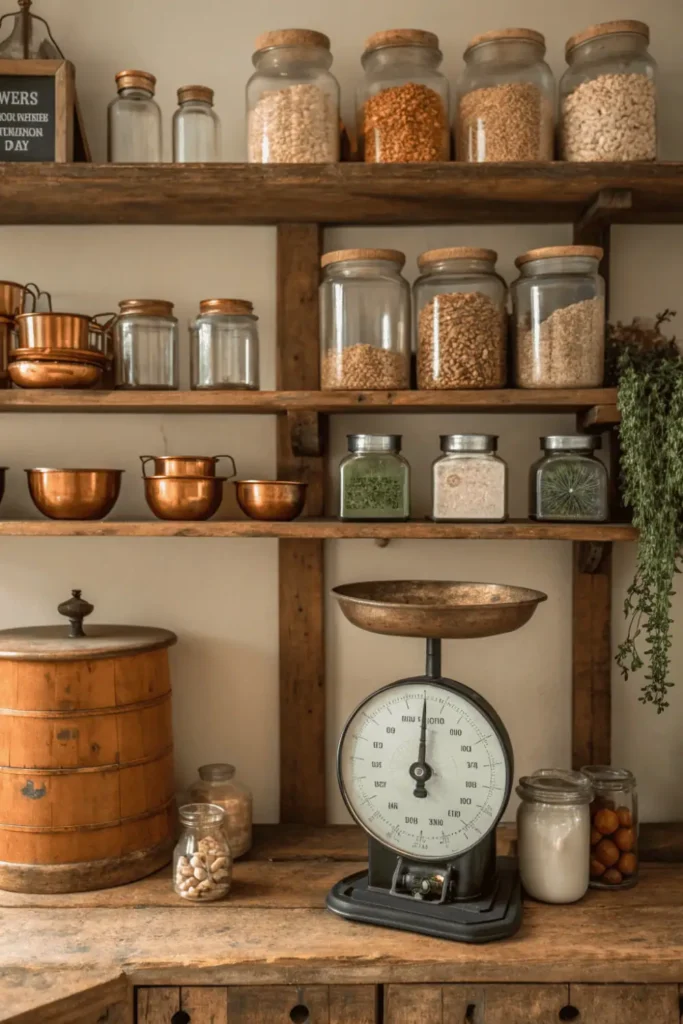
Glass storage jars on open shelving create both functional organization and decorative appeal in your rustic kitchen. These transparent containers showcase pantry staples like flour, sugar, and pasta while maintaining easy access and visual appeal.
Mix various sizes and styles—from large bulk containers to small spice jars—to create a collected look. Labels can be handwritten or vintage-inspired for added charm.
Pro Tip: Group jars by size and contents on different shelves, with frequently used items at eye level and decorative or seasonal items higher up to maximize both beauty and practicality in your rustic kitchen.
Why Rustic Kitchens Are Worth the Investment
A rustic kitchen delivers timeless appeal that won’t feel dated in five or ten years, protecting your renovation investment. The classic combination of natural materials and vintage elements creates enduring beauty that transcends fleeting design trends.
Rustic kitchens typically feature durable, high-quality materials like solid wood, natural stone, and metal that last for decades with proper care. These materials age gracefully, often looking better over time as they develop character and patina.
The warm, inviting atmosphere of a rustic kitchen increases your home’s value while making it more enjoyable to live in daily. Potential buyers consistently rate kitchens with authentic character and natural materials among the most desirable features.
Things to Consider Before Choosing Rustic Kitchen Design
Rustic kitchens require regular maintenance for wood surfaces, including periodic oiling of butcher block counters and proper sealing of natural stone. Budget time and resources for this ongoing care to keep your space looking beautiful.
Consider your lifestyle and cooking habits when selecting rustic kitchen materials—busy families might prefer durable stone over high-maintenance wood in heavy-use areas. Balance aesthetics with practicality to create a space that works for your specific needs.
Authentic rustic kitchen elements like reclaimed wood and custom metalwork can carry premium price tags, so prioritize which features matter most to you. Mix high-impact investment pieces with budget-friendly alternatives to achieve the look without overspending.
Comparison Table of Rustic Kitchen Elements
| Element | Price Range | Durability | Maintenance | Best For | Lead Time |
| Reclaimed Wood Beams | $500-$3,000 | Very High | Low | Adding architectural character | 2-6 weeks |
| Farmhouse Sink | $300-$2,500 | High | Low-Medium | Main sink statement piece | 1-4 weeks |
| Open Wooden Shelving | $200-$1,000 | High | Medium | Display and accessible storage | 1-3 weeks |
| Butcher Block Countertops | $40-$200/sq ft | Medium-High | High | Islands and prep areas | 2-4 weeks |
| Vintage-Style Range | $2,000-$15,000 | Very High | Medium | Main cooking appliance | 4-12 weeks |
| Stone Accent Wall | $15-$50/sq ft | Very High | Low | Feature walls and backsplashes | 2-6 weeks |
| Wrought Iron Hardware | $3-$25/piece | Very High | Very Low | All cabinets and drawers | 1-2 weeks |
| Natural Stone Backsplash | $20-$100/sq ft | Very High | Low-Medium | Behind range and sink | 3-6 weeks |
| Wood Island | $1,500-$8,000 | High | Medium | Central workspace | 4-10 weeks |
| Copper Pots & Rack | $500-$2,000 | High | Medium | Overhead pot storage | 1-3 weeks |
| Vintage Lighting | $100-$1,500/fixture | High | Low | Ambient and task lighting | 2-6 weeks |
| Distressed Cabinets | $150-$500/linear ft | High | Low | All cabinetry | 6-12 weeks |
| Glass Storage Jars | $50-$300/set | Medium | Low | Pantry organization | Immediate |
Frequently Asked Questions About Rustic Kitchen Design
What defines a rustic kitchen style?
A rustic kitchen is defined by natural materials, warm earth tones, and vintage or handcrafted elements that create a cozy, lived-in atmosphere. Key features include exposed wood beams, natural stone, wrought iron hardware, and distressed finishes that embrace imperfections.
The style emphasizes authenticity and craftsmanship over sleek modern perfection. Rustic kitchens often incorporate reclaimed materials, farmhouse sinks, and open shelving to create spaces that feel welcoming and timeless.
How much does it cost to create a rustic kitchen?
Creating a rustic kitchen can range from $15,000 to $75,000 depending on the size of your space and the quality of materials you choose. Budget-conscious renovations using DIY techniques and salvaged materials can achieve the look for less, while high-end custom cabinetry and premium appliances increase costs significantly.
Focus your budget on statement pieces like a farmhouse sink, quality wood island, or authentic vintage range. Save money by painting existing cabinets with distressed finishes, adding reclaimed wood accents yourself, and shopping salvage yards for unique rustic kitchen elements.
Can rustic kitchens work in modern homes?
Absolutely—rustic kitchens adapt beautifully to modern homes when you balance traditional elements with contemporary conveniences. Modern farmhouse style combines rustic warmth with clean lines and updated appliances for a fresh take on the aesthetic.
Focus on mixing materials like sleek stainless steel appliances with reclaimed wood and natural stone. Keep the color palette slightly lighter and incorporate more white space to prevent the rustic kitchen from feeling too heavy in a modern architectural setting.
What colors work best in rustic kitchen designs?
Rustic kitchens typically feature warm, earthy color palettes including cream, beige, warm grays, sage green, and natural wood tones. These neutral bases allow natural materials like wood and stone to take center stage while creating a cohesive, calming atmosphere.
Accent colors can include deep blues, terracotta, brick red, or forest green for added depth. Black wrought iron hardware and fixtures provide bold contrast, while copper and brass add warm metallic touches that enhance the rustic kitchen aesthetic beautifully.