
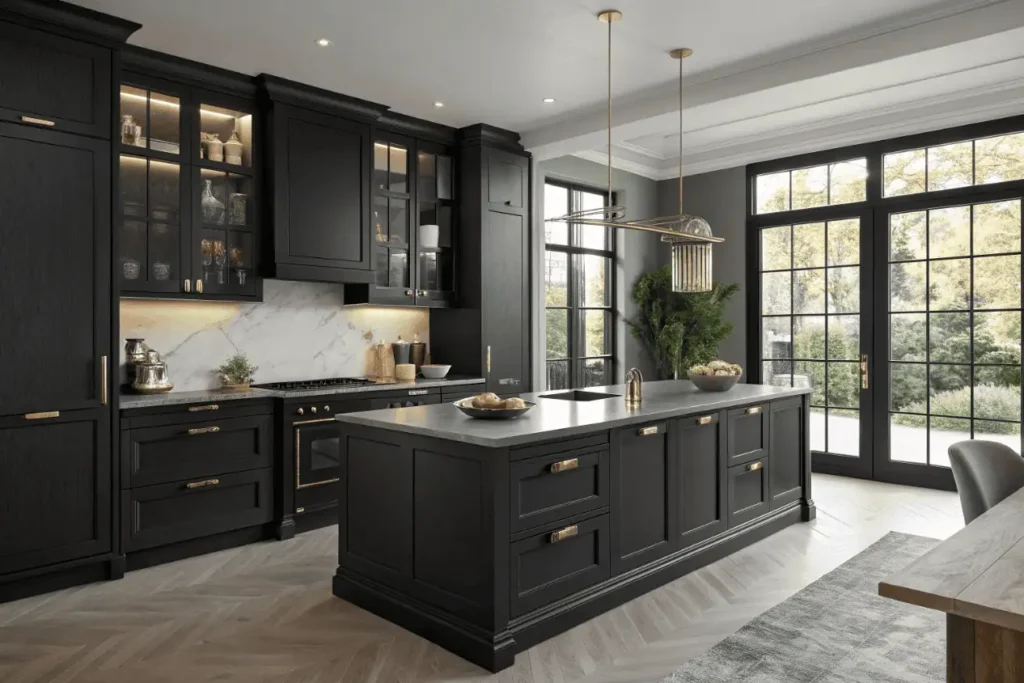
A black kitchen isn’t a safe choice. It’s the kind of choice people make when they want their home to say something before they do. The moment you walk in, it feels confident, intentional, and quietly dramatic.
What surprises most homeowners is how flexible black actually is. It doesn’t lock you into one look. It works just as well in sleek modern homes as it does in classic, industrial, or softly traditional spaces. The depth of the color adds richness, making kitchens feel warmer, more grounded, and undeniably polished.
You don’t need a complete remodel to make it work. Even minor updates, like cabinets, hardware, or a backsplash, can completely change how the space feels. These kitchens take an everyday cooking area and turn it into a space people notice, remember, and want to spend time in.
List of 13 Best Black Kitchen Design Ideas
1. Matte Black Cabinets with Gold Hardware
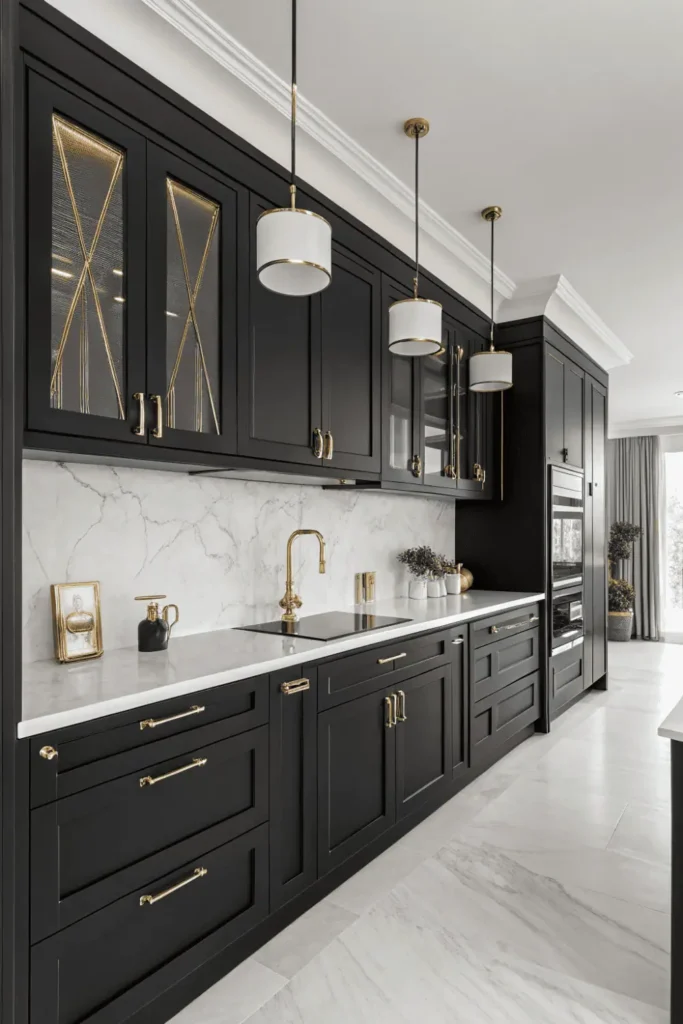
Matte black cabinets paired with brass or gold hardware create an instantly luxurious black kitchen aesthetic. The flat finish minimizes fingerprints and smudges while the warm metallic accents prevent the space from feeling too dark or cold.
This combination works exceptionally well in both modern and traditional settings. The matte finish offers a sophisticated, velvety appearance that catches light beautifully without creating harsh reflections.
Pro Tip: Choose hardware with substantial presence—oversized pulls and knobs in brushed or antique gold finishes make the most substantial visual impact against matte black surfaces.
2. Black and White Contrasting Kitchen
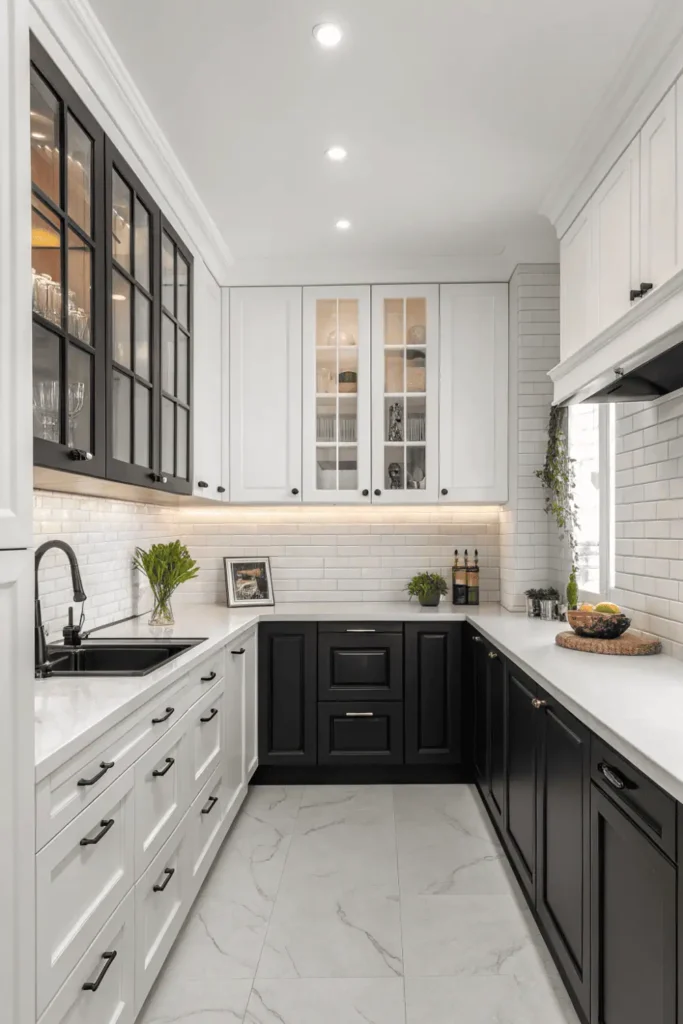
A black-and-white kitchen delivers classic sophistication through high contrast that never goes out of style. This timeless pairing allows you to play with proportions—black lower cabinets with white uppers, or the reverse.
The stark contrast makes both colors pop while maintaining balance. Add white subway tile backsplashes or marble countertops to break up solid black surfaces and reflect light throughout the space.
Pro Tip: Use the 60-30-10 rule—60% white, 30% black, 10% accent color like wood or metallics to prevent the space from feeling too stark or overwhelming.
3. Glossy Black Kitchen Cabinets for Modern Spaces
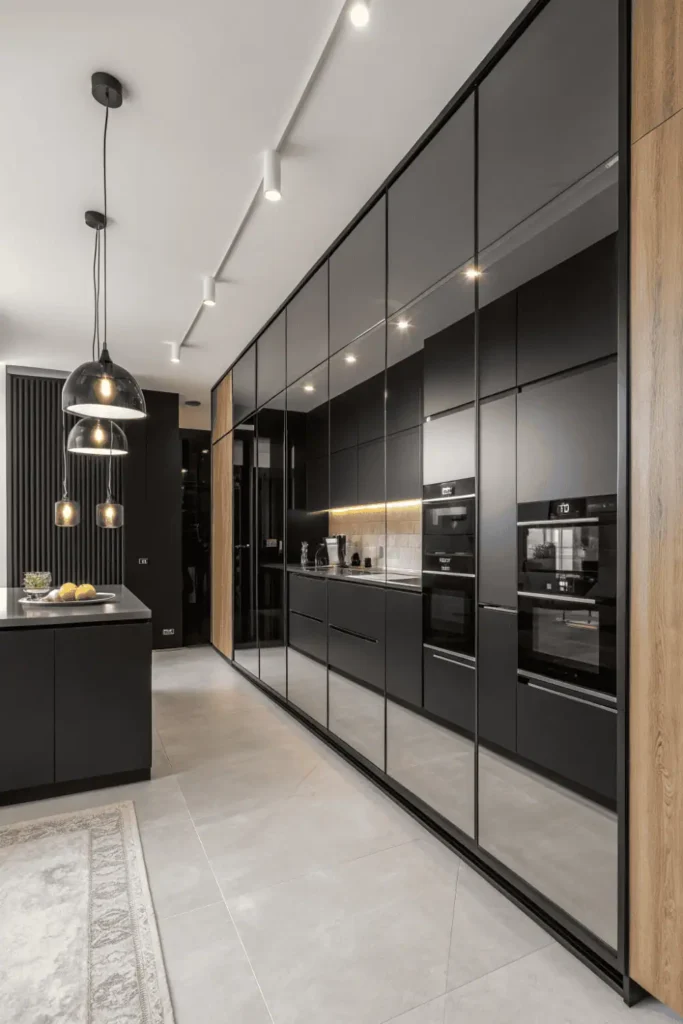
High-gloss black cabinets reflect light like mirrors, creating a sleek, contemporary black kitchen with futuristic appeal. The ultra-reflective surface makes spaces feel larger and brighter despite the dark color.
This finish works beautifully in modern and minimalist designs where clean lines dominate. However, glossy surfaces show fingerprints, smudges, and dust more readily than matte finishes, requiring frequent maintenance.
Pair glossy black with handleless cabinets featuring push-to-open mechanisms for the ultimate streamlined appearance.
Pro Tip: Install excellent lighting—glossy surfaces amplify both natural and artificial light, so strategically placing under-cabinet and pendant lights maximizes the reflective benefits.
4. Black Kitchen Island as a Statement Piece
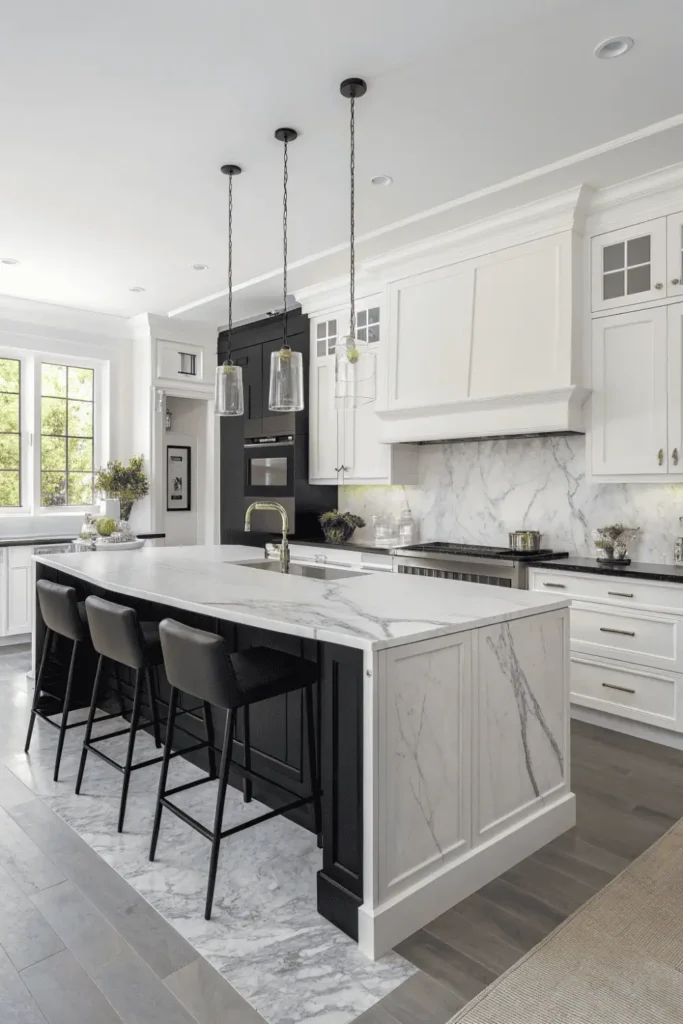
Creating a black kitchen island while keeping perimeter cabinets lighter provides a bold contrast without overwhelming the entire space. This approach allows you to test the black kitchen trend with less commitment and expense.
The dark island becomes an instant focal point, grounding the room visually. It works particularly well in open-concept layouts where the island defines the kitchen boundary.
Pro Tip: Choose a substantial island size—small black islands can look awkward, but generously sized ones (at least 4 feet long) make confident statements that anchor your design.
5. Black Stainless Steel Appliances Integration
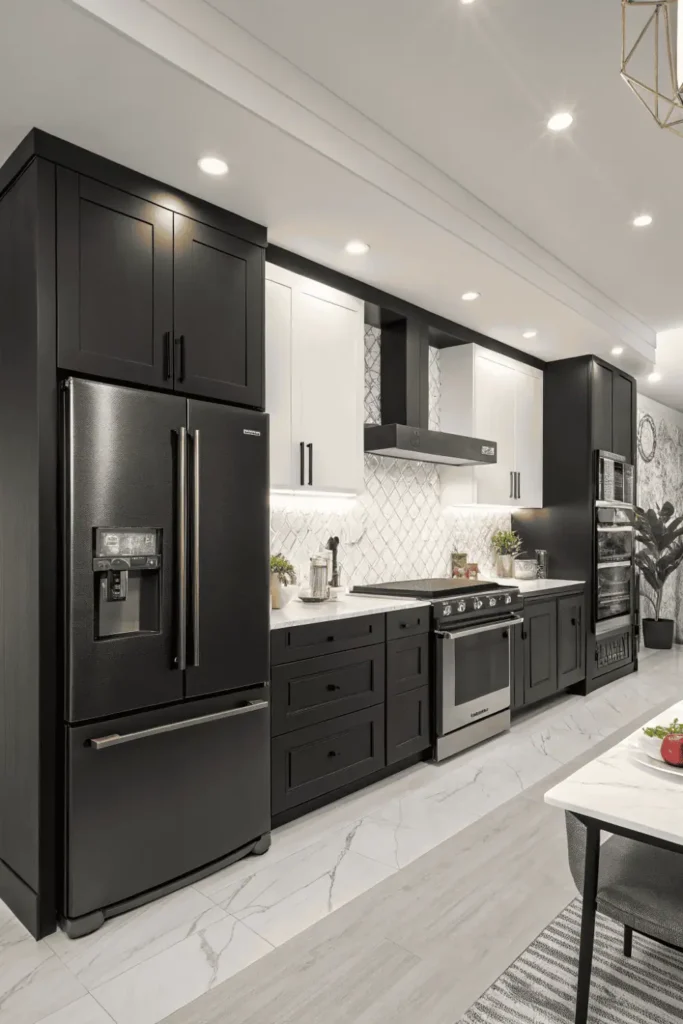
Black stainless steel appliances create seamless cohesion in a black kitchen while offering practical benefits over traditional stainless. These fingerprint-resistant finishes maintain their appearance with minimal cleaning.
The dark appliances blend beautifully with black cabinetry, creating an integrated look where appliances recede rather than dominate. This creates cleaner sightlines and more sophisticated aesthetics.
Mix black stainless with matte or glossy black cabinets for a monochromatic palette that feels intentional and cohesive.
Pro Tip: Major appliance manufacturers offer black stainless in slightly different shades—stick with one brand for all appliances to ensure perfect color matching throughout your black kitchen.
6. Black Lower Cabinets with Wood Upper Cabinets
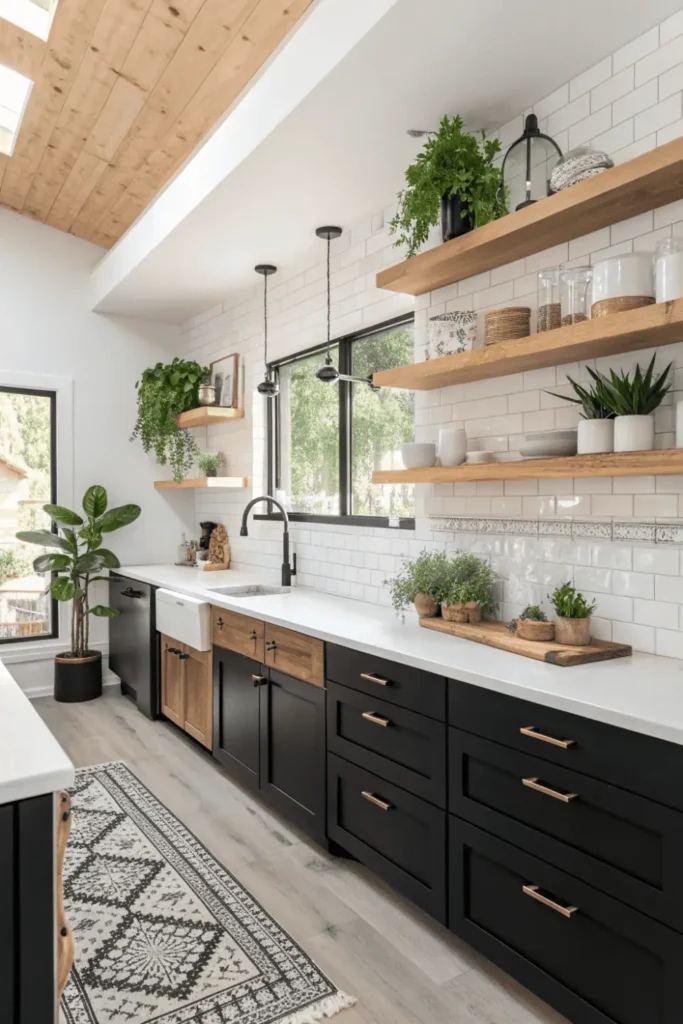
Combining black base cabinets with natural wood upper cabinets creates warmth that prevents a black kitchen from feeling cold or austere. The wood tones add organic texture and visual interest.
This two-tone approach balances drama with approachability. Light or medium wood tones work best—walnut, oak, or maple provide beautiful contrast against deep black.
Pro Tip: Extend the wood to open shelving or a wood hood cover to reinforce the natural element and create vertical visual interest that draws the eye upward.
7. Industrial Black Kitchen with Exposed Elements
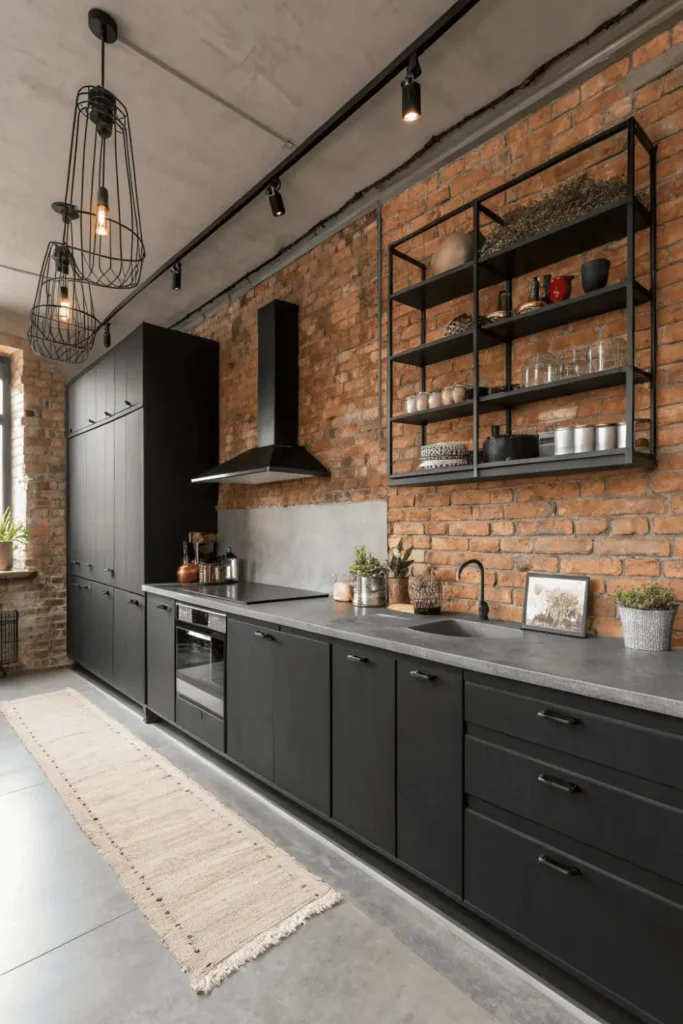
An industrial black kitchen embraces raw materials like exposed brick walls, concrete countertops, and metal fixtures. Black cabinetry anchors these rugged elements while maintaining cohesion.
Add open metal shelving, pipe hardware, and Edison bulb lighting to amplify the industrial aesthetic. The black kitchen elements provide grounding weight against lighter brick and metal.
Black works particularly well in loft spaces or converted industrial buildings where the architecture already suggests this design direction.
Pro Tip: Leave some upper cabinet space open or use wire baskets and industrial storage to maintain the authentic, utilitarian feel of actual industrial design.
8. Black Kitchen with Marble Countertops and Backsplash
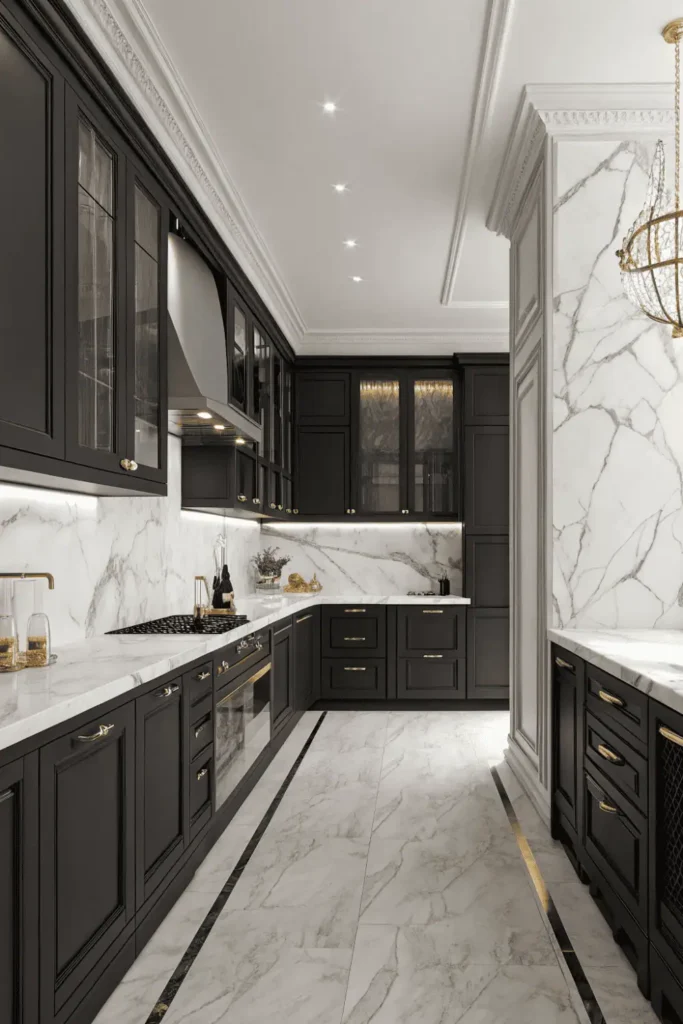
White or gray marble creates a stunning luxury contrast in a black kitchen. The natural veining adds organic movement and visual interest against solid black surfaces.
Consider full-height marble backsplashes or even marble-clad walls for maximum drama and sophistication. The white stone reflects light beautifully, preventing the space from feeling too dark.
Marble requires proper sealing and maintenance, but the aesthetic payoff in a black kitchen is substantial.
Pro Tip: Choose marble with bold, dramatic veining rather than subtle patterns—the strong visual movement complements and balances the solid black cabinetry.
9. Black Shaker-Style Cabinets for Transitional Appeal
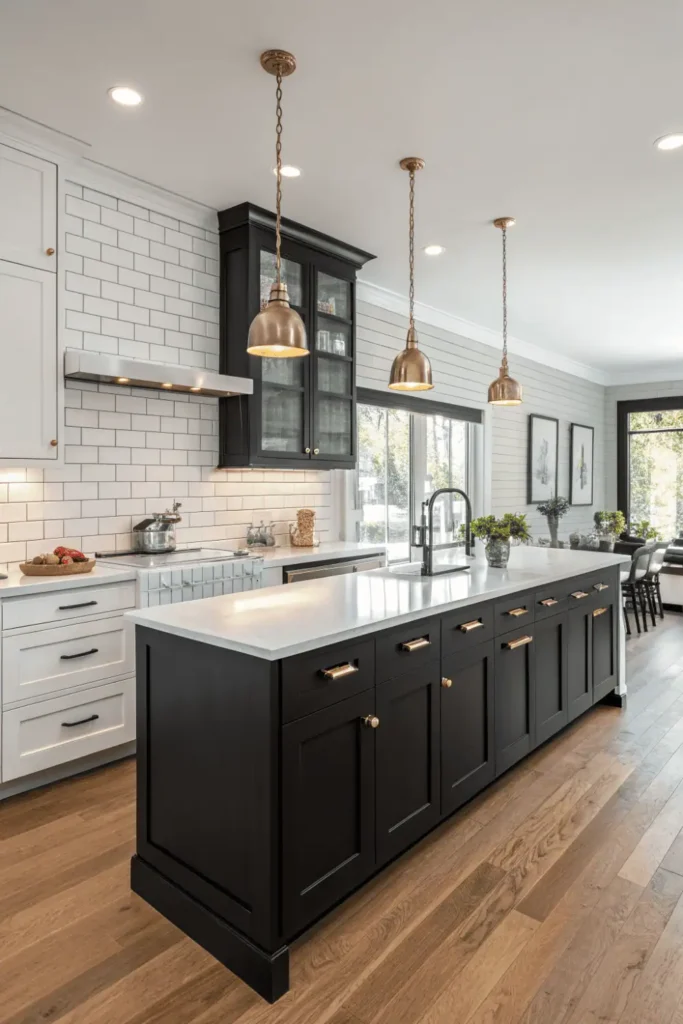
Black shaker cabinets blend traditional door styling with contemporary color for perfect transitional black kitchen design. The simple frame-and-panel construction provides subtle detail without excessive ornamentation.
This versatile style works in almost any home, from modern farmhouses to urban condos. The black color updates the classic shaker profile, making it feel current and fresh.
Pair with mixed metals—brass, chrome, and matte black—for layered sophistication.
Pro Tip: The recessed panel design of shaker doors helps hide minor imperfections and wear better than flat-panel cabinets, making them practical for busy family kitchens.
10. Black Kitchen with Concrete or Stone Countertops
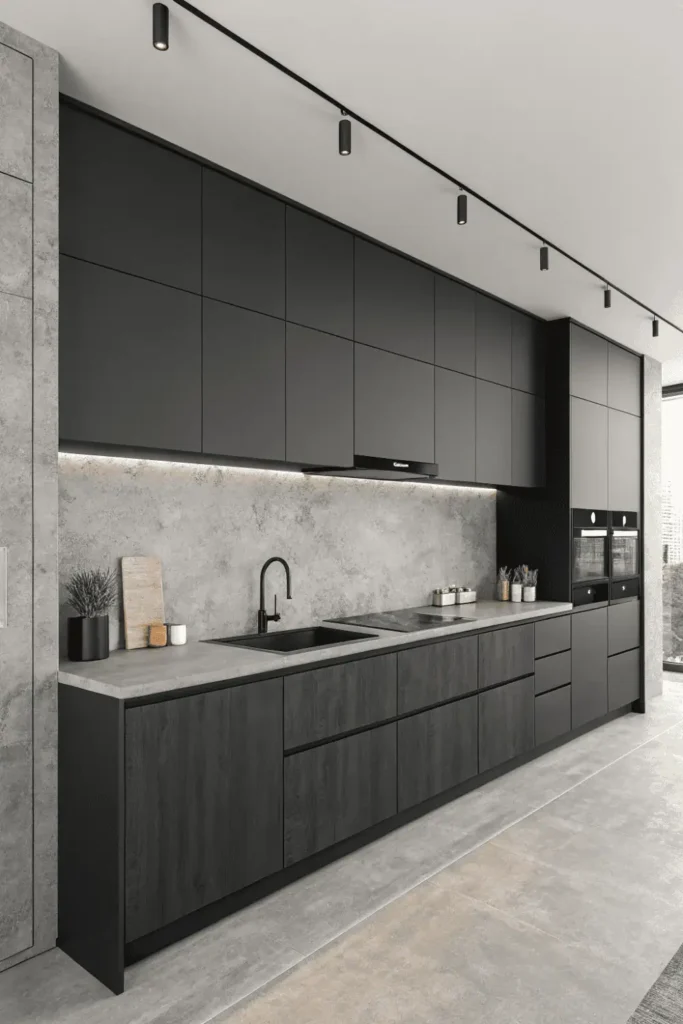
Concrete or soapstone countertops complement a black kitchen’s bold aesthetic with equally substantial materials. These durable, low-maintenance surfaces develop character over time through natural patina.
The matte, slightly textured finish of concrete or stone balances glossy or matte black cabinets beautifully. Concrete counters can be custom-colored to include subtle variations that add depth.
Both materials handle heat well and age gracefully, developing unique character that enhances the black kitchen’s personality.
Pro Tip: Seal concrete countertops properly during installation and reseal annually to prevent staining and ensure they maintain their appearance in your black kitchen.
11. Black Kitchen Cabinets with Glass Door Inserts
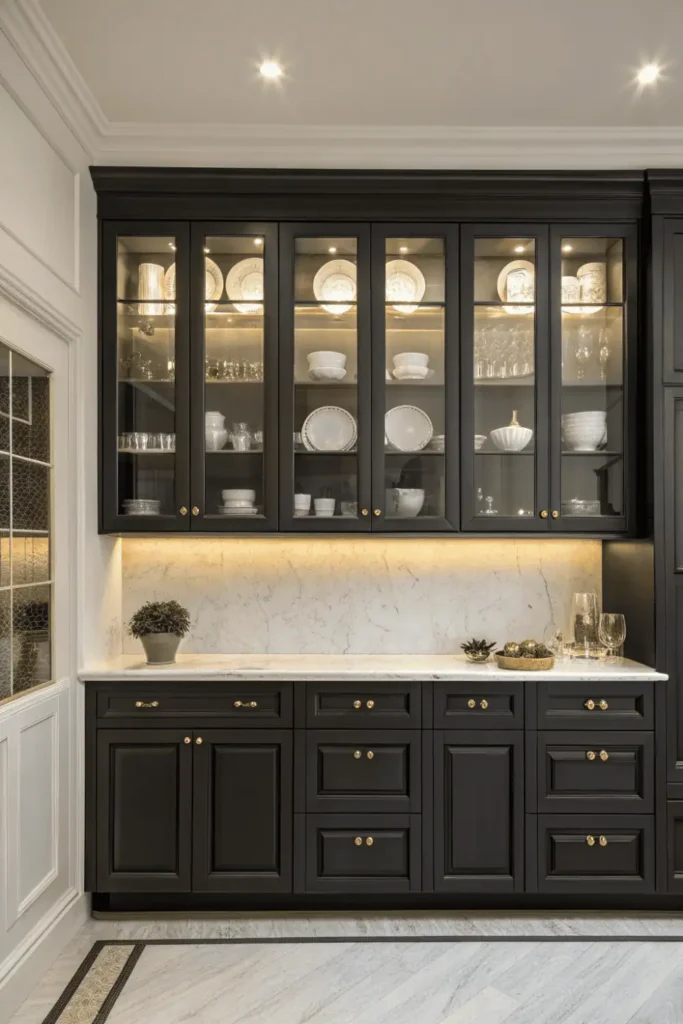
Glass-front upper cabinets break up solid black expanses while displaying attractive dishware or glassware. The transparency creates visual breathing room and prevents a black kitchen from feeling too heavy.
Choose from clear glass for maximum openness, frosted glass for subtle concealment, or seeded glass for vintage character. Interior cabinet lighting enhances the display and adds ambient glow.
This approach works particularly well in smaller black kitchens where solid cabinets might feel oppressive.
Pro Tip: Keep items behind glass doors organized and attractive—the display becomes part of your black kitchen’s decor, so treat it as intentional design rather than storage.
12. Minimalist Black Kitchen with Hidden Storage
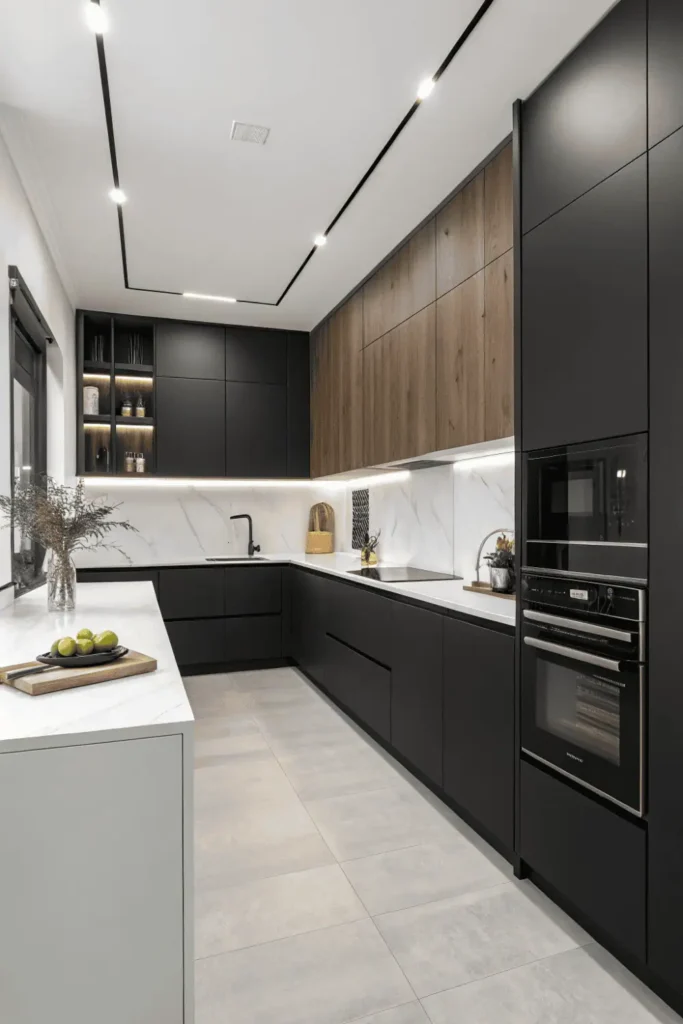
A minimalist black kitchen features handleless cabinets, integrated appliances, and concealed storage for ultimate sleek sophistication. Every element contributes to clean lines and uncluttered surfaces.
Push-to-open mechanisms and touch-latch hardware eliminate visible handles entirely. Integrated appliances with black panel-ready fronts disappear into cabinetry.
The monochromatic palette and absence of visual clutter create serene, zen-like spaces.
Pro Tip: Invest in excellent internal cabinet organization—pull-out shelves, drawer dividers, and vertical storage—since minimalist black kitchens depend on everything having its designated place.
13. Black Kitchen with Warm Wood Flooring
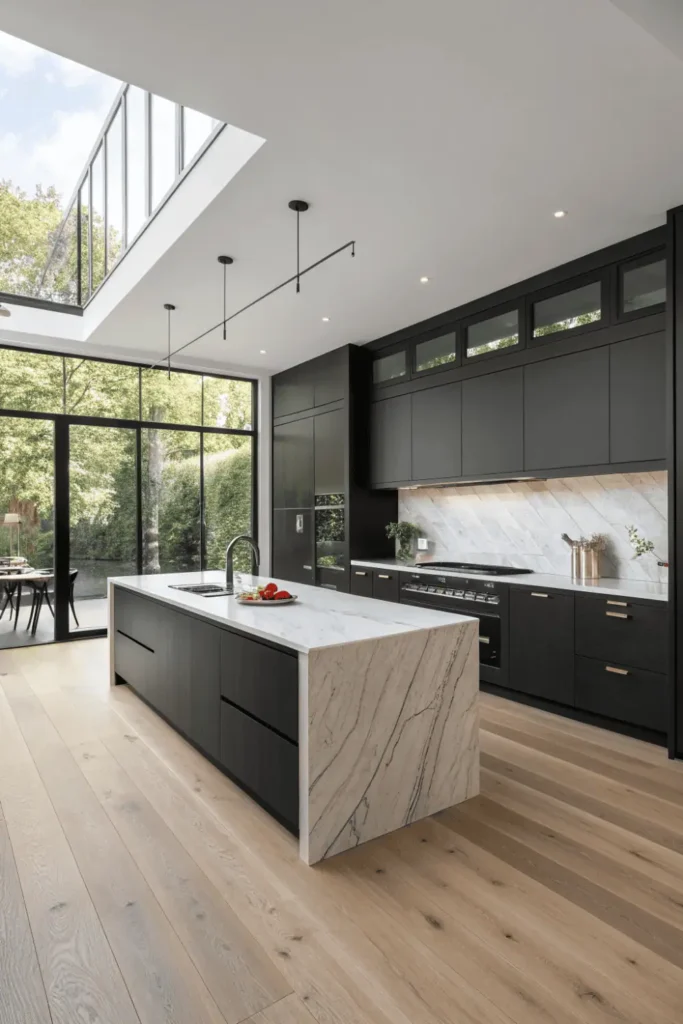
Natural wood floors in warm tones provide essential balance and organic warmth in a black kitchen. The contrasting textures—smooth cabinets against grainy wood—add dimensional interest.
Choose medium to light wood tones like oak, maple, or ash rather than dark woods that might make the space feel too heavy. The floor becomes a neutral bridge between black elements and lighter walls or countertops.
Wood flooring also adds practical durability and timeless appeal that outlasts trends.
Pro Tip: Consider wider plank flooring (5-7 inches) in your black kitchen—the larger scale better balances the visual weight of dark cabinetry than narrow strips.
Why Black Kitchens Are Worth the Investment
Black kitchens significantly increase home value by creating distinctive, memorable spaces that stand out in competitive real estate markets. Homes with bold, well-executed design choices typically sell faster and command premium prices because they demonstrate attention to detail and current design awareness.
The timeless sophistication of black kitchens ensures long-term style relevance that transcends passing trends. Unlike trendy colors that quickly date homes, black maintains classic appeal while feeling contemporary—a combination that protects your investment for decades.
High-quality black kitchen finishes resist visible wear better than lighter colors, maintaining their appearance with less frequent updates. This durability means your black kitchen investment continues delivering aesthetic and financial returns long after installation.
Things to Consider Before Choosing Black Kitchens
Natural lighting availability is the single most important factor for successful black kitchen design. Spaces with limited windows or northern exposures may feel too dark and oppressive with extensive black surfaces, so assess your light sources honestly before committing.
Maintenance requirements vary significantly between black kitchen finishes—glossy surfaces show every fingerprint and smudge, while matte finishes hide wear better but can be harder to clean. Consider your household’s lifestyle and your willingness to perform frequent maintenance when selecting finishes.
Room size and ceiling height impact how black kitchens feel in person. Smaller spaces with standard 8-foot ceilings may feel cramped with all-black cabinetry, while larger kitchens with ample natural light handle dark colors beautifully without feeling claustrophobic.
Comparison Table of Black Kitchen Design Styles
| Design Element | Price Range | Maintenance | Best For | Style Longevity | Natural Light Needed |
| Matte Black Cabinets | $$-$$$ | Medium | Modern, transitional homes | High | Medium |
| Glossy Black Cabinets | $$$-$$$$ | High | Contemporary, minimalist | Medium | High |
| Black & White Contrast | $$-$$$ | Low | Traditional, modern | Very High | Medium |
| Black Island Only | $$-$$$ | Medium | Open-concept, transitional | High | Low-Medium |
| Black Stainless Appliances | $$$-$$$$ | Low | Modern, integrated designs | High | Any |
| Black with Wood Accents | $$-$$$ | Medium | Farmhouse, transitional | High | Medium |
| Industrial Black | $$-$$$ | Low | Lofts, converted spaces | High | High |
| Black with Marble | $$$$+ | High | Luxury, traditional | Very High | High |
| Black Shaker Style | $$-$$$ | Low | Transitional, farmhouse | Very High | Any |
| Minimalist Black | $$$-$$$$ | Low | Contemporary, modern | High | High |
Frequently Asked Questions About Black Kitchen
Will a black kitchen make my space feel smaller?
Black kitchens can make spaces feel smaller if poorly executed, but proper design prevents this issue. The key is balancing dark elements with light-reflecting surfaces like white countertops, glossy backsplashes, and adequate lighting.
Incorporate multiple light sources—under-cabinet LEDs, pendant lights, and recessed ceiling fixtures—to eliminate shadows and create depth. Large windows or glass doors that bring in natural light are invaluable in black kitchen spaces.
Consider using black only on lower cabinets while keeping upper cabinets white or eliminating them entirely in favor of open shelving. This prevents the dark color from extending to eye level and above, maintaining an open feeling.
Are black kitchens hard to keep clean?
Black kitchen maintenance varies dramatically based on finish selection. Matte black finishes hide fingerprints, smudges, and minor scratches better than any other option, making them the most practical choice for busy households.
Glossy black surfaces show every fingerprint and water spot, requiring daily wiping to maintain their pristine appearance. However, the smooth surface makes actual cleaning easier—dirt and grease wipe away quickly with minimal effort.
Pro maintenance tip: Keep microfiber cloths handy and wipe down black surfaces after each use. This simple habit prevents buildup and keeps your black kitchen looking showroom-fresh with minimal time investment.
What colors work best with black kitchens?
White and cream are classic companions that provide essential contrast and brightness in black kitchen designs. These neutral tones reflect light, balance the dark cabinetry, and create timeless color schemes that never go out of style.
Warm wood tones in medium to light shades add organic warmth that prevents black kitchens from feeling cold or sterile. Natural materials like wood floors, butcher block counters, or wood upper cabinets create inviting, approachable spaces.
Metallic accents—brass, gold, copper, or stainless steel—add luxurious finishing touches that elevate black kitchen sophistication. Don’t forget pops of color through accessories like bar stools, artwork, or plants to inject personality and prevent monotony.
Can black kitchens work in traditional homes?
Black kitchens absolutely work in traditional homes when paired with classic elements like shaker-style doors, ornate hardware, and traditional materials such as marble or wood. The black color updates traditional profiles, making them feel current without abandoning classic proportions.
Consider black lower cabinets with white uppers for a more traditional feel, or use black on an island while keeping perimeter cabinets in traditional wood tones. Crown molding, furniture-style feet, and decorative range hoods maintain traditional character while the black kitchen color adds contemporary edge.
The key is balancing the bold color choice with traditional details that honor your home’s architectural heritage. A black kitchen in a traditional setting creates sophisticated spaces that feel both rooted in history and refreshingly modern.