
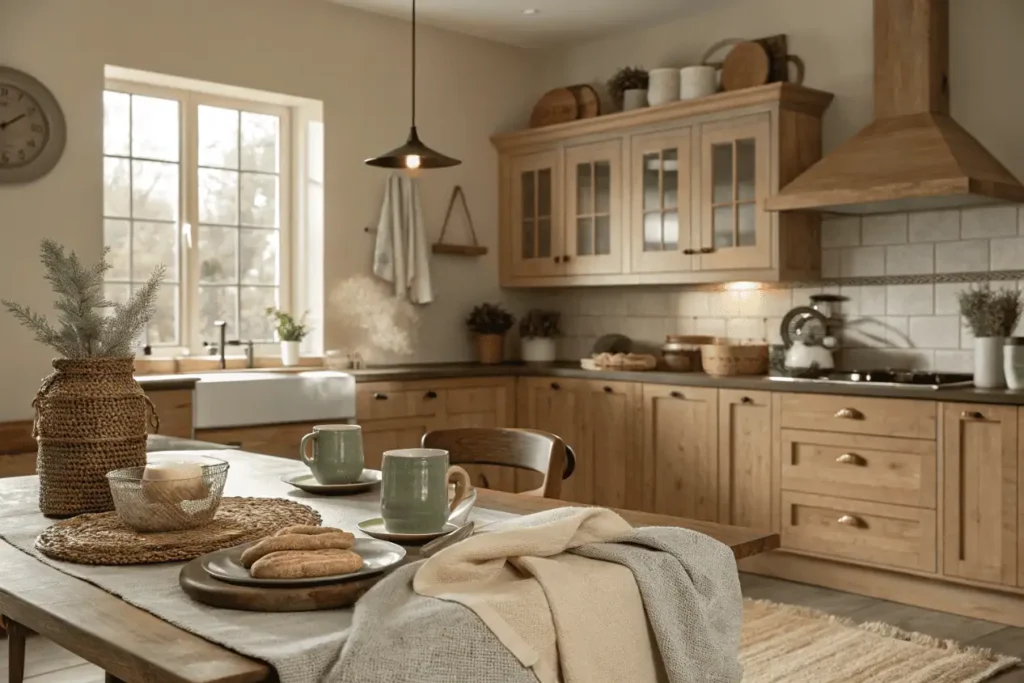
Creating a cozy kitchen transforms your cooking space into the warm, inviting heart of your home. The right design elements make your kitchen feel welcoming, comfortable, and perfect for gathering with family and friends.
A well-designed kitchen balances functionality with warmth, incorporating soft textures, ambient lighting, and personal touches. These elements work together to create spaces where people naturally want to spend time.
This guide explores the best cozy kitchen ideas to help you design a space that’s both beautiful and functional. Let’s discover how to make your kitchen the coziest room in your home.
List of 15 Best Cozy Kitchen Ideas
1. Warm Wood Cabinets and Natural Tones
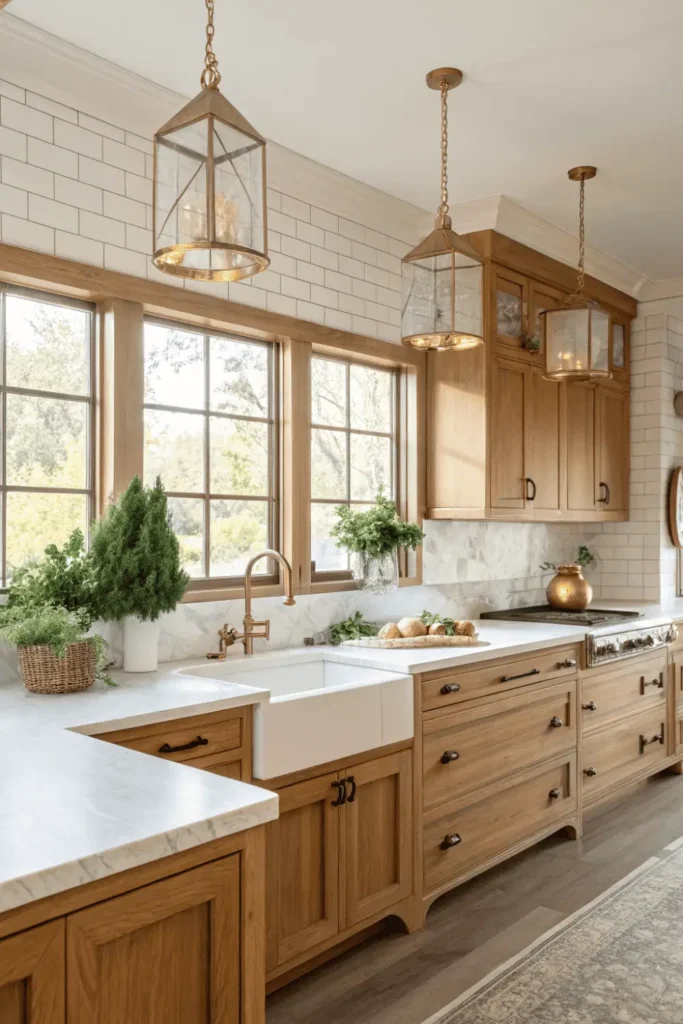
Natural wood cabinets instantly add warmth and organic beauty to any cozy kitchen design. Rich tones like honey oak, walnut, or cherry create inviting atmospheres that feel both timeless and comfortable.
Wood grain patterns introduce visual texture and depth without overwhelming the space. These natural materials age beautifully, developing character and patina over time.
Pair wood cabinets with complementary warm metals like brass or copper hardware to enhance the cozy aesthetic. The combination creates layers of warmth that make the space feel genuinely welcoming.
Pro Tip: Mix wood finishes by using one tone for base cabinets and a slightly different shade for upper cabinets or open shelving to create visual interest while maintaining warmth.
2. Open Shelving with Displayed Dishware
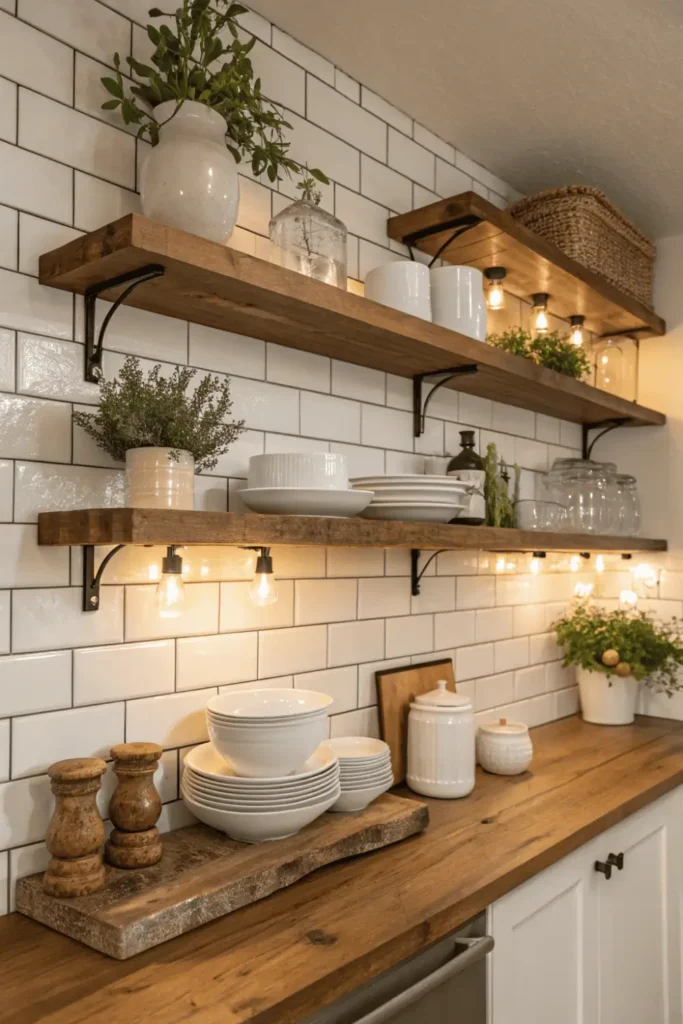
Open wooden shelves replace upper cabinets in a cozy kitchen, creating an approachable, lived-in feel. Displaying everyday dishes, glassware, and vintage finds adds personality while keeping essentials within easy reach.
The visual openness prevents the space from feeling closed in or overly formal. Carefully curated displays featuring items you actually use maintain function while adding decorative appeal.
Pro Tip: Style open shelves with a mix of three elements—stacked dishes for height, glassware for reflection, and small plants or decorative objects for color and life—keeping the rule of odd numbers for the most pleasing arrangements.
3. Farmhouse Sink with Vintage-Style Faucet
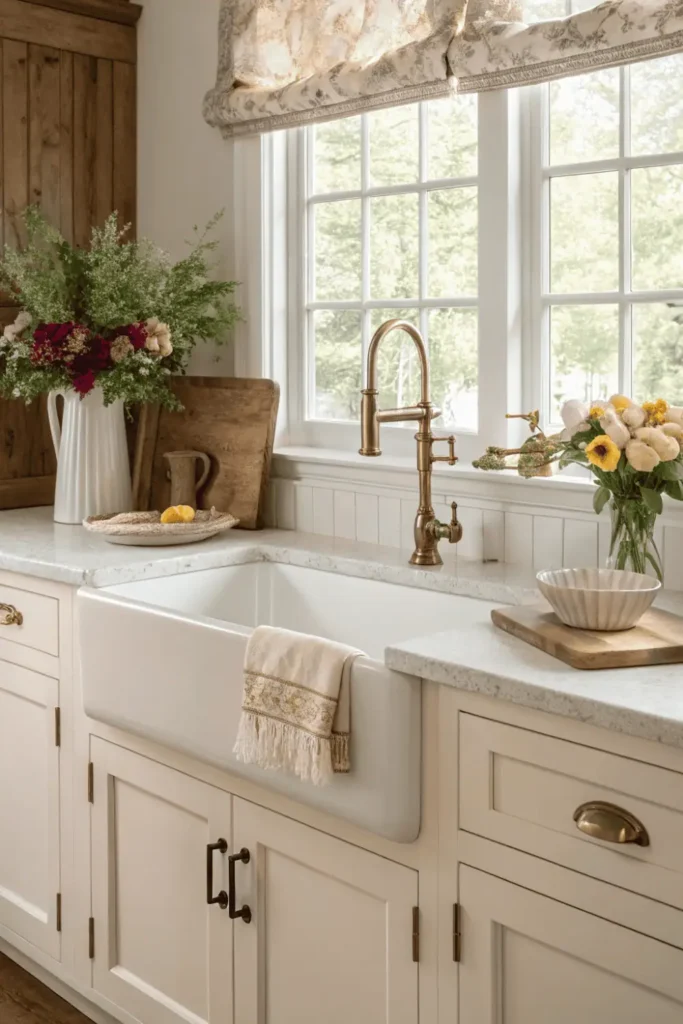
An apron-front farmhouse sink serves as both functional workspace and nostalgic focal point in a cozy kitchen. The deep basin accommodates large pots while the exposed front adds architectural interest and traditional charm.
Pair your farmhouse sink with a vintage-inspired bridge faucet in oil-rubbed bronze or brushed brass. These classic fixtures add authenticity and warmth that modern chrome alternatives can’t match.
Pro Tip: Choose white or cream-colored fireclay sinks for the most authentic farmhouse look, or select colored options like sage green or navy blue for a modern twist on the traditional cozy kitchen aesthetic.
4. Soft Lighting Layers with Warm Bulbs
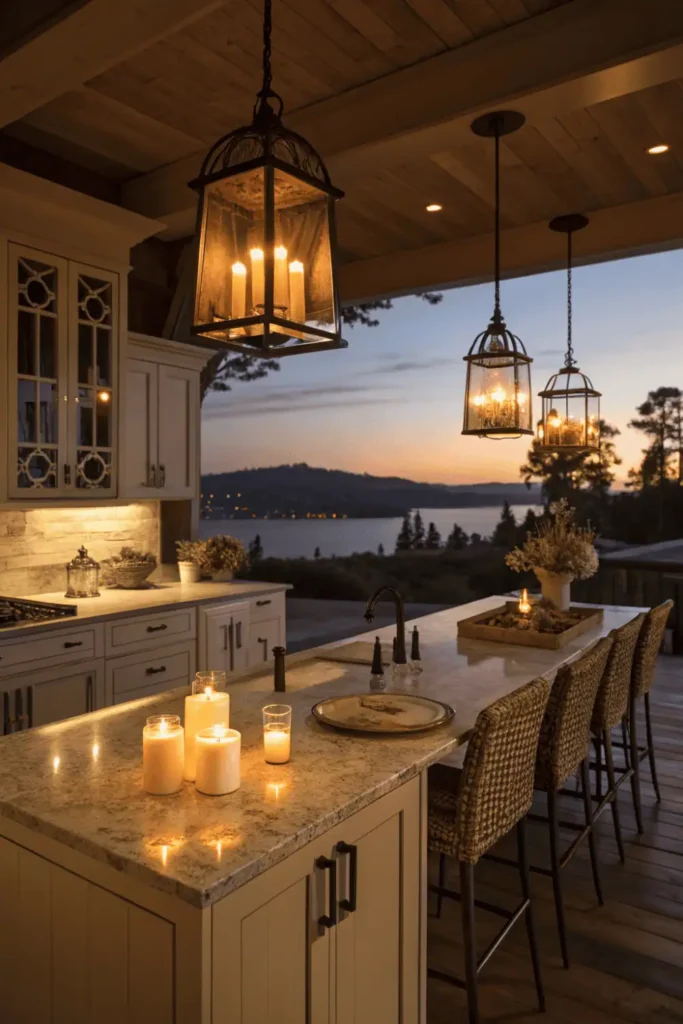
Layered lighting creates the essential ambiance for a cozy kitchen by combining overhead fixtures, task lighting, and accent lights. Warm-toned LED bulbs (2700K-3000K) produce the golden glow that makes spaces feel inviting.
Install dimmer switches on all lighting circuits to adjust brightness for different activities and times of day. Lower lighting during evening meals creates intimate, restaurant-like atmospheres.
Under-cabinet LED strips illuminate work surfaces while adding soft, indirect light that enhances coziness. Pendant lights over islands or tables serve as both functional task lighting and decorative focal points.
Pro Tip: Use multiple light sources at different heights—overhead for general illumination, pendants at eye level, and under-cabinet lights low—to eliminate harsh shadows and create depth.
5. Textured Backsplash with Handmade Tiles
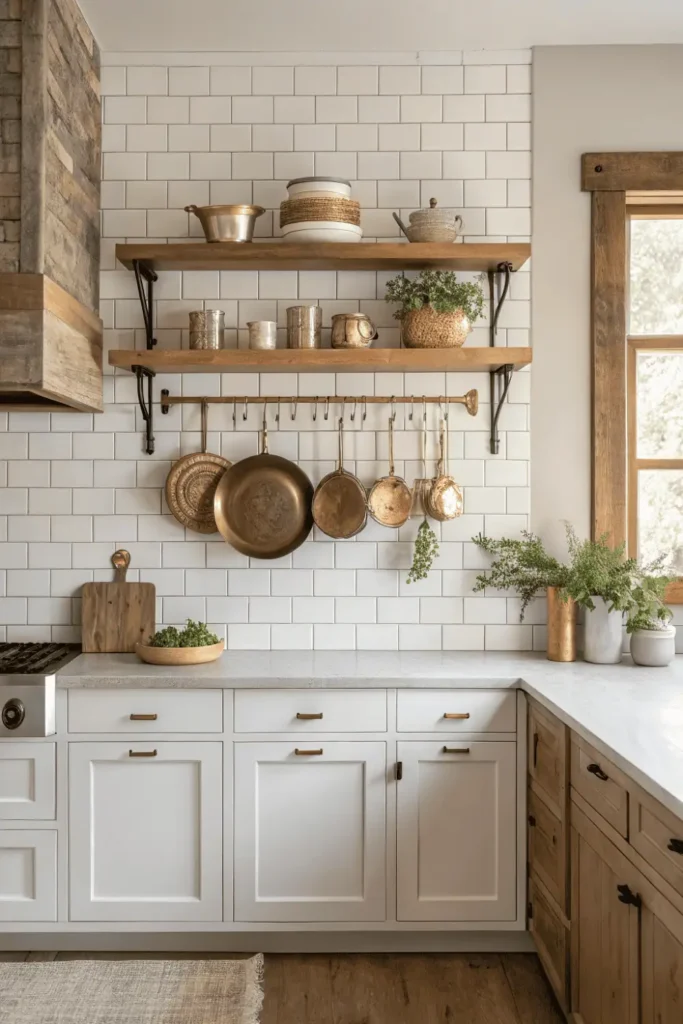
Handmade ceramic or subway tiles add artisanal texture and visual warmth to cozy kitchen designs. Slight variations in color and shape create character that perfectly manufactured tiles lack.
Consider warm-toned tiles in creams, soft grays, or muted greens that complement natural wood elements. Textured surfaces catch light beautifully, adding depth and interest to wall spaces.
Pro Tip: Choose tiles with slightly irregular edges or surfaces for authentic handmade appeal, and consider contrasting grout colors like charcoal gray with white tiles to emphasize the texture and pattern.
6. Butcher Block Countertops and Islands
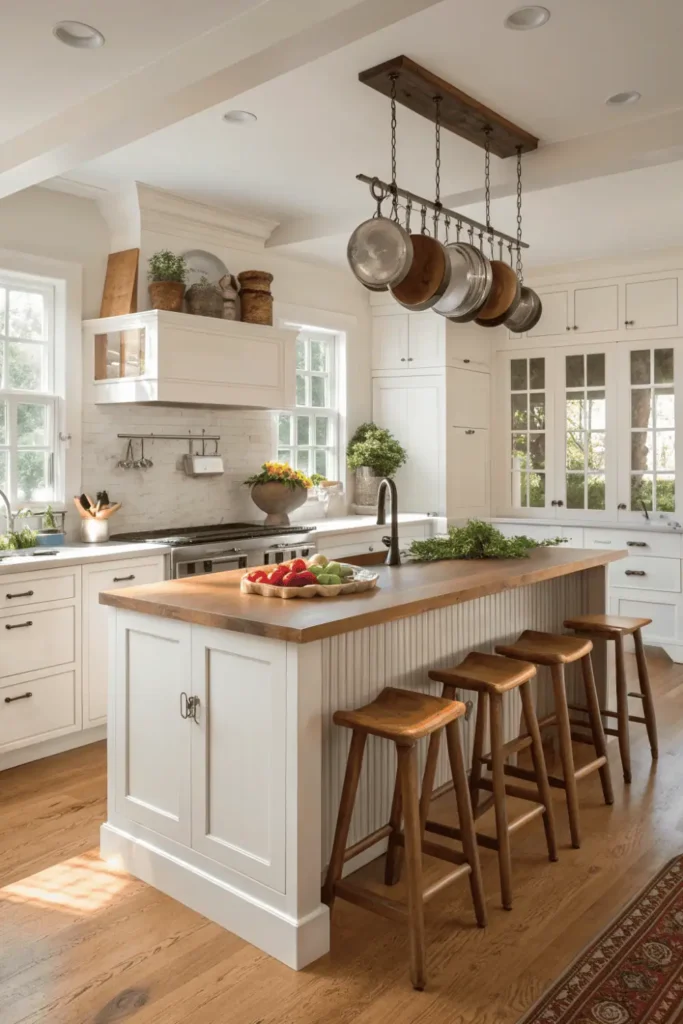
Solid wood butcher block countertops bring unmatched warmth and natural beauty to cozy kitchen spaces. The living material develops a rich patina with use, creating surfaces with unique character and stories.
Butcher block provides practical cutting surfaces while adding organic texture that cold stone or laminate can’t replicate. The warmth underfoot when leaning against counters enhances the cozy factor significantly.
Pro Tip: Maintain butcher block with monthly applications of food-safe mineral oil or beeswax-based conditioners to protect the wood, prevent drying, and keep the surface looking rich and beautiful.
7. Window Seat Breakfast Nook
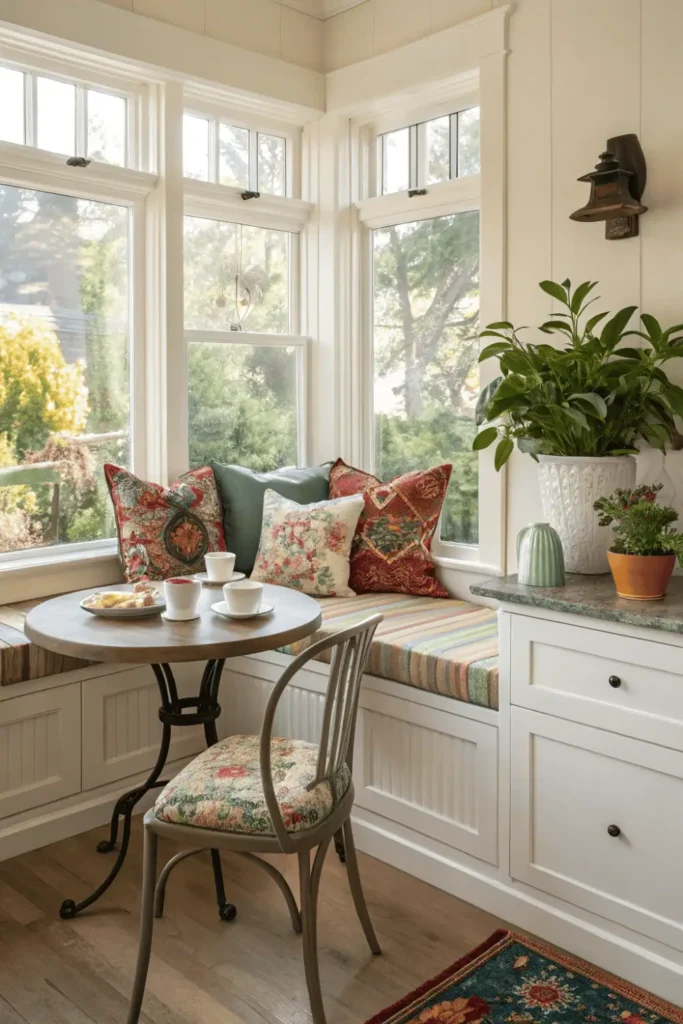
A built-in window seat creates the ultimate cozy gathering spot in your kitchen. Cushioned benches with throw pillows invite lingering over morning coffee or casual meals while enjoying natural light and views.
Storage drawers underneath maximize functionality without sacrificing comfort. This space-efficient design works beautifully in both small and large kitchens, defining intimate dining areas within open layouts.
Pro Tip: Add at least 18 inches of seat depth and include both firm base cushions for support and softer throw pillows for comfort—choose washable, durable fabrics that can handle kitchen spills and daily use.
8. Vintage-Inspired Appliances and Hardware
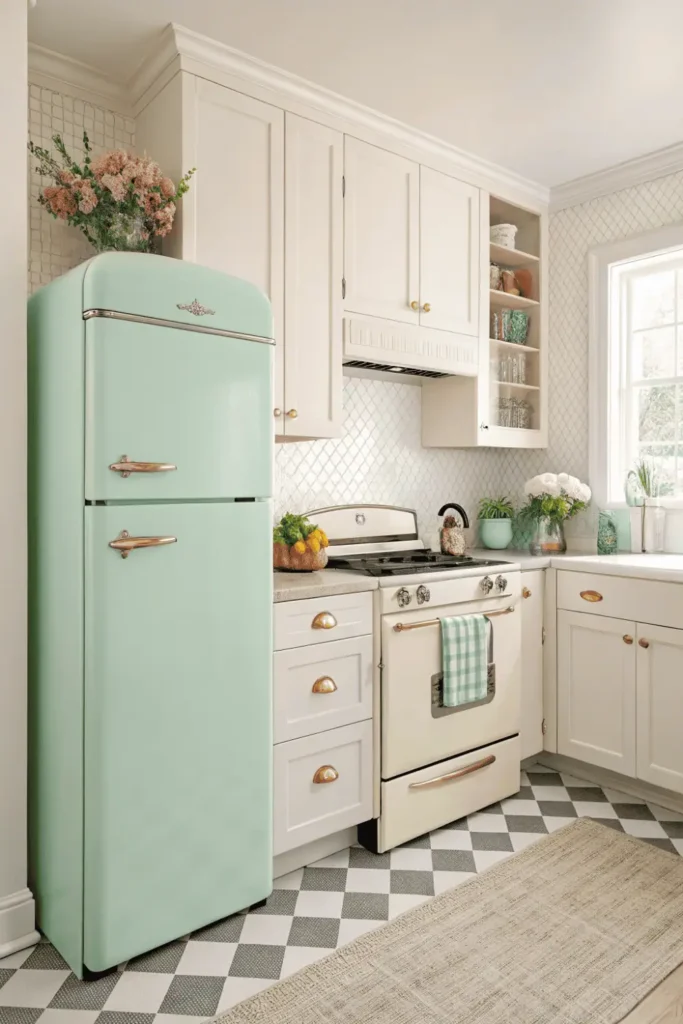
Retro-style appliances in colors like mint green, cream, or robin’s egg blue add personality and charm to cozy kitchen designs. Modern versions offer contemporary functionality wrapped in nostalgic aesthetics that warm up spaces instantly.
Complement vintage appliances with period-appropriate hardware like cup pulls, bin pulls, or glass knobs in oil-rubbed bronze or antique brass. These details create cohesive, thoughtfully designed spaces that feel collected over time.
Pro Tip: Balance colorful vintage appliances with neutral cabinetry and countertops to prevent the space from feeling overwhelming—let one or two statement pieces shine against a calm backdrop.
9. Exposed Wood Ceiling Beams
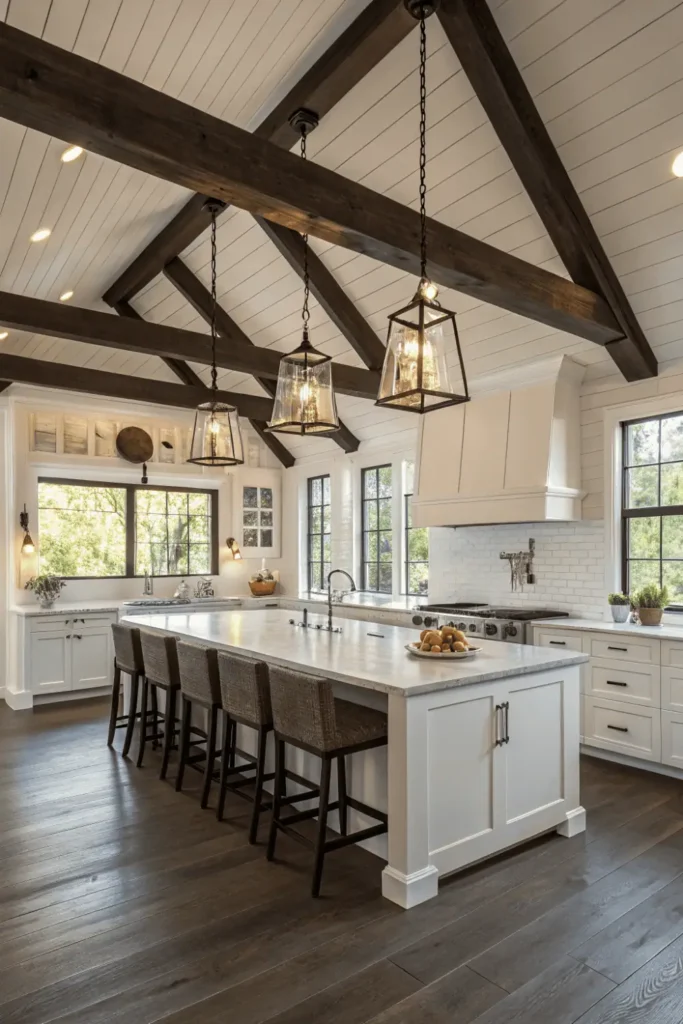
Rustic wood beams add architectural interest and natural warmth overhead in cozy kitchen spaces. Whether authentic structural elements or decorative additions, beams create visual texture and draw eyes upward, making rooms feel larger and more interesting.
Stained or natural wood tones complement virtually all color schemes while adding organic elements that soften modern kitchens. The horizontal lines create calming visual rhythm throughout the space.
Pro Tip: Paint beams the same color as your ceiling for subtle texture, or choose contrasting dark stains against white ceilings for dramatic impact—consider your ceiling height when deciding, as dark beams can make low ceilings feel lower.
10. Colorful Patterned Rugs and Runners
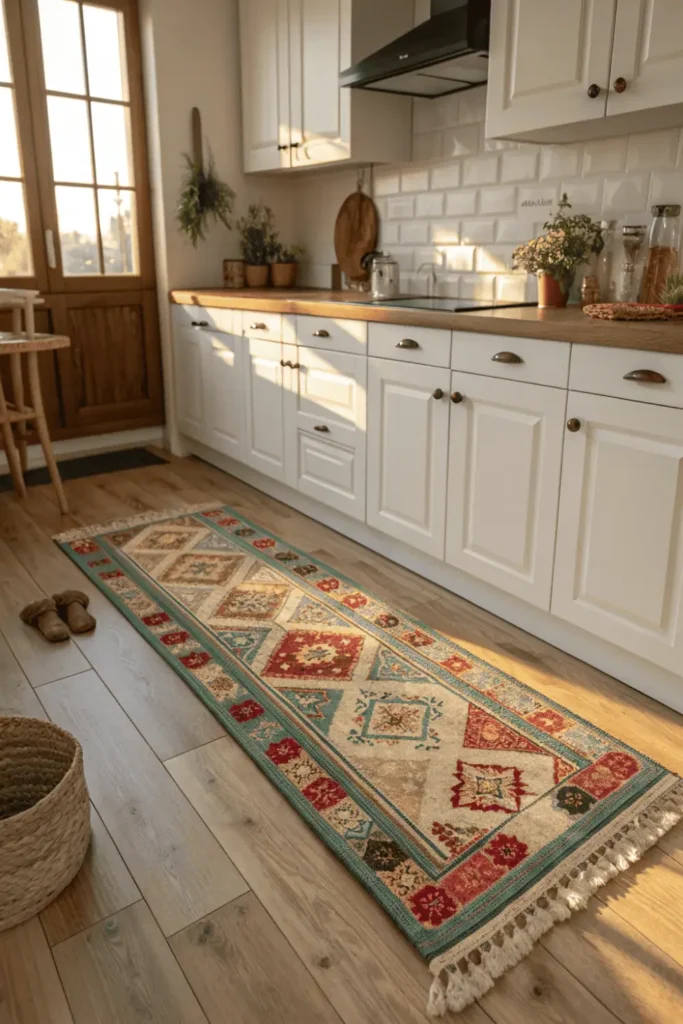
Kitchen rugs introduce softness, color, and pattern that make cozy kitchen floors more comfortable and inviting. Vintage-inspired Persian or Turkish patterns add Old World charm while protecting floors and reducing fatigue during long cooking sessions.
Choose low-pile or flatweave rugs designed for high-traffic areas that won’t trip or shift underfoot. Machine-washable options maintain practicality without sacrificing style.
Pro Tip: Layer a smaller patterned rug over a larger neutral jute or sisal rug for added texture and visual interest—this combination protects floors while creating a collected, cozy aesthetic that’s easy to clean.
11. Houseplants and Fresh Herbs Display
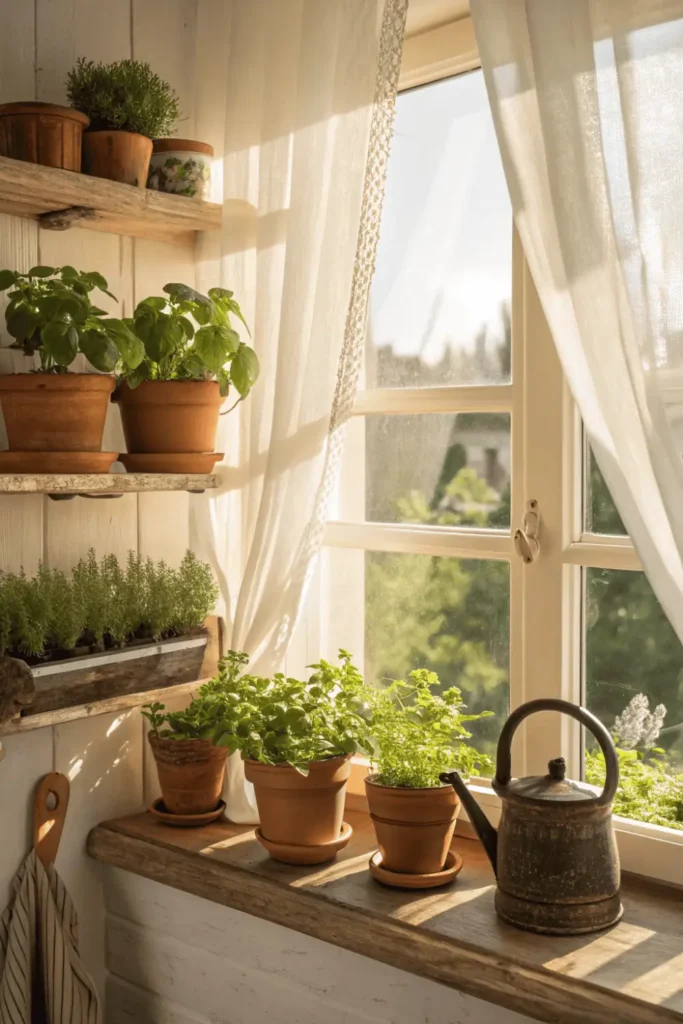
Living plants and fresh herbs bring life, color, and natural fragrance into cozy kitchen spaces. Windowsill herb gardens provide practical ingredients while adding organic beauty that connects indoor spaces with nature.
Larger potted plants on counters, shelves, or floor corners soften hard surfaces and architectural lines. The green elements purify air while creating visual interest and welcoming energy.
Pro Tip: Choose easy-care herbs like basil, rosemary, and mint for sunny windowsills, and add low-light tolerant pothos or snake plants in corners away from windows for year-round greenery with minimal maintenance.
Pinterest Image Prompt: A cozy kitchen window filled with potted herbs in terracotta pots, morning sunlight streaming through, white curtains, wooden shelves with more plants, vintage watering can, warm golden light, vertical 2:3 ratio, fresh organic aesthetic
12. Glass-Front Cabinet Displays
Glass-front upper cabinets create opportunities for displaying beautiful dishware while maintaining the practical storage of closed cabinets. This design feature adds depth and visual interest without the exposure of fully open shelving.
Arrange your prettiest dishes, glassware, and serving pieces behind glass to create mini vignettes. The transparent doors reflect light and make kitchens feel more spacious while keeping contents dust-free.
Pro Tip: Install small LED puck lights inside glass-front cabinets to illuminate displays and create ambient evening lighting that enhances the cozy atmosphere—this detail makes the kitchen feel like a warm, inviting showpiece.
13. Freestanding Furniture Pieces
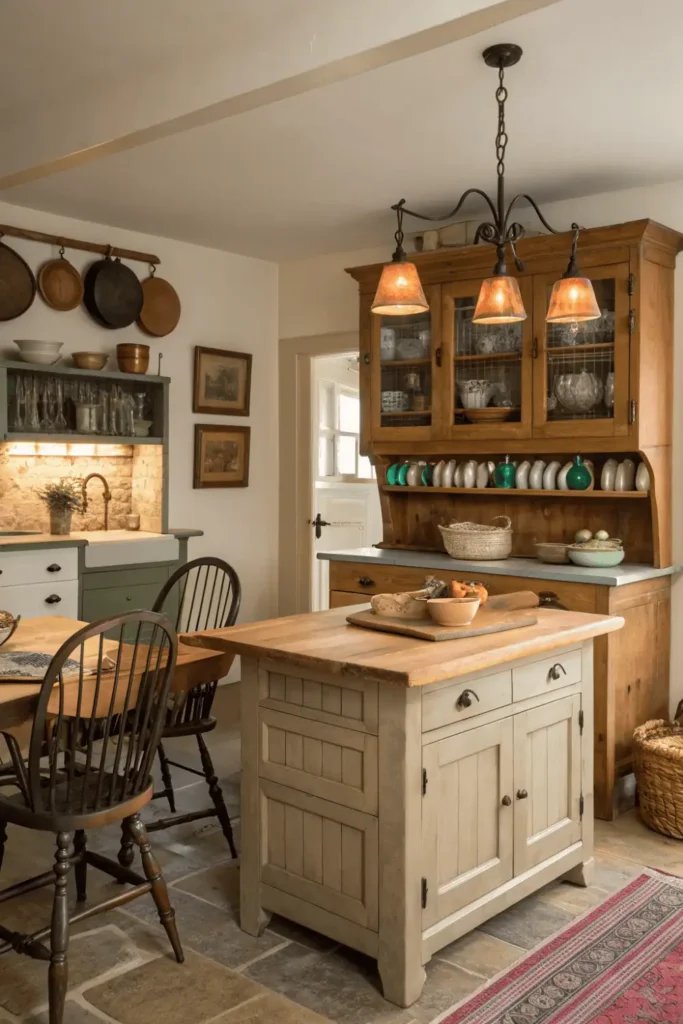
Antique or vintage furniture pieces like hutches, baker’s racks, or kitchen islands add personality and warmth to cozy kitchen designs. These unfitted elements create the collected-over-time aesthetic that feels homey rather than showroom-perfect.
Freestanding pieces offer flexibility and character that built-in cabinetry can’t match. Mix finishes, styles, and eras for spaces that tell stories and reflect personal histories.
Pro Tip: Balance freestanding furniture with built-in cabinetry—use one or two statement pieces like a vintage hutch or antique island rather than replacing all built-ins, which maintains functionality while adding cozy character.
14. Cozy Breakfast Bar with Comfortable Stools
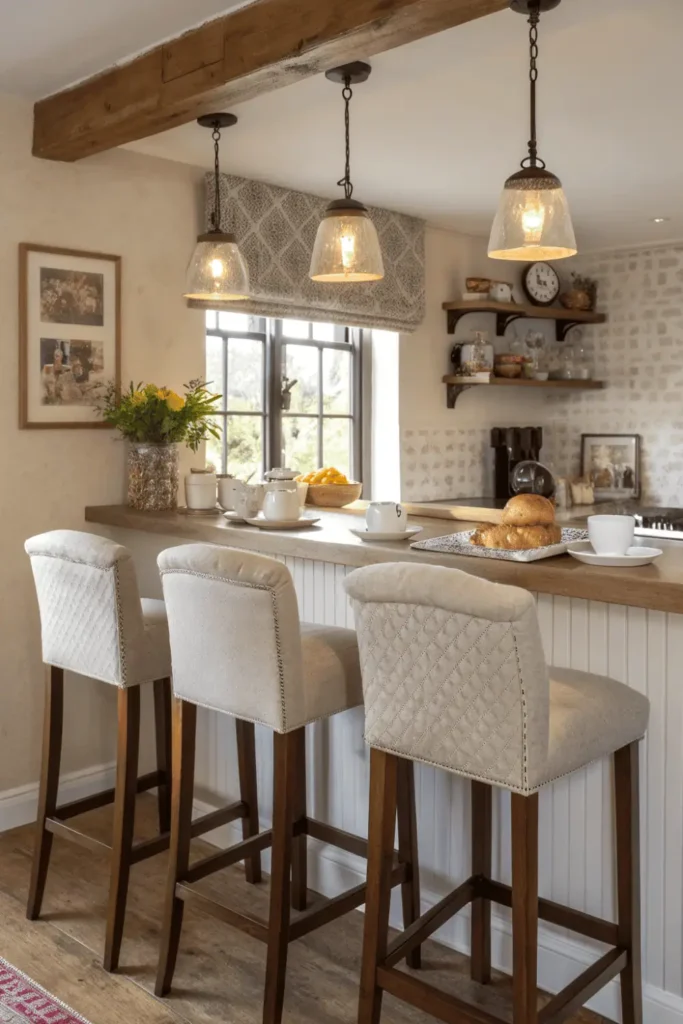
A breakfast bar with cushioned stools creates casual gathering spots perfect for quick meals, homework, or conversation. This informal seating encourages family members to linger in the kitchen throughout the day.
Choose upholstered or wooden stools with backs for genuine comfort rather than sleek but uncomfortable backless designs. The extra comfort invites longer stays and more meaningful interactions.
Pro Tip: Select stools 10-12 inches shorter than your counter height for comfortable seating, and ensure at least 24 inches of width per person—add footrests if your bar is particularly high to prevent leg fatigue.
15. Personal Touches and Family Collections
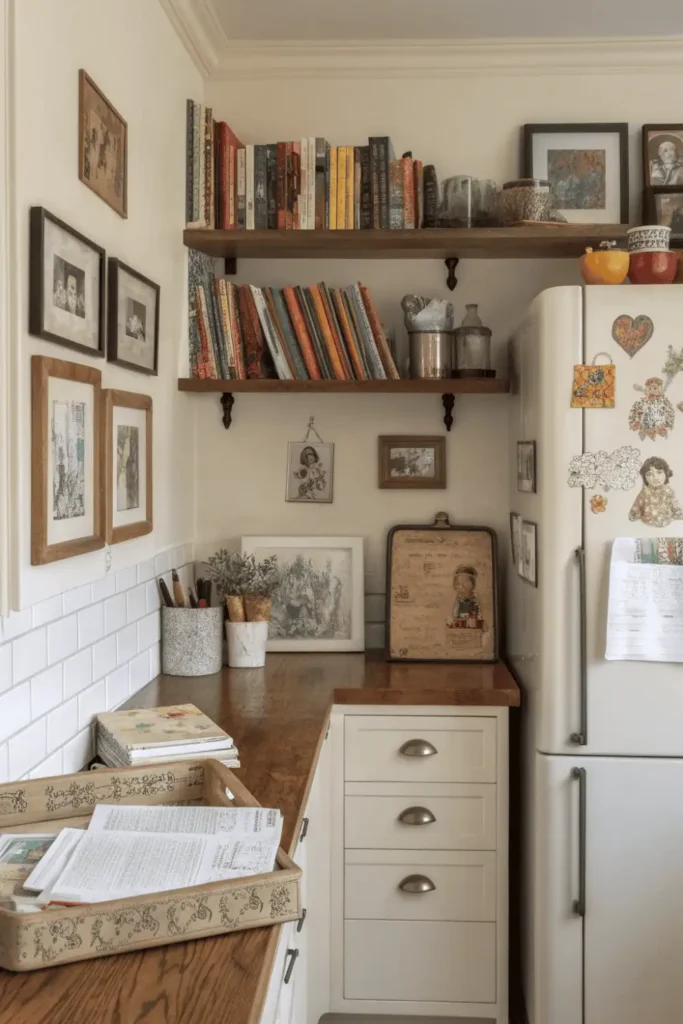
Meaningful personal items transform generic kitchens into cozy kitchen spaces that reflect your family’s story. Display inherited cookware, children’s artwork, travel souvenirs, or recipe boxes that hold sentimental value and spark conversations.
These authentic touches create emotional connections to the space that perfectly styled designer kitchens lack. Your kitchen becomes a living scrapbook of memories and experiences rather than just a functional room.
Pro Tip: Rotate displayed items seasonally to keep the space feeling fresh—summer might showcase beach-collected shells while winter brings out grandmother’s copper pots and vintage holiday tins, keeping your cozy kitchen dynamic and personal.
Why Cozy Kitchen Designs Are Worth the Investment
Cozy kitchen spaces increase your home’s emotional value by creating environments where families naturally gather and meaningful memories form. The welcoming atmosphere encourages longer meals, deeper conversations, and stronger family bonds that impact quality of life far beyond monetary measures.
Well-designed cozy kitchen features maintain strong appeal to potential homebuyers, making your property more marketable and valuable. Real estate professionals consistently report that warm, inviting kitchens sell homes faster than sterile, overly modern designs, providing excellent ROI when renovation costs are reasonable.
Investing in cozy kitchen elements like quality wood materials, proper lighting, and thoughtful details creates spaces that age gracefully and remain stylish across decades. These timeless choices avoid expensive renovations required when trendy designs quickly become dated, saving money long-term.
Things to Consider Before Creating Your Cozy Kitchen
Evaluate your cozy kitchen design choices against your actual lifestyle and cooking habits. High-maintenance materials like butcher block or open shelving require regular care—ensure you’re willing to commit to the upkeep before installing features that need attention.
Consider how proposed cozy kitchen elements affect functionality and workflow in your specific space. Overly decorative choices that compromise storage capacity or create cleaning challenges ultimately reduce enjoyment rather than enhance it, so balance aesthetics with practical needs.
Budget realistically for your cozy kitchen renovation by prioritizing foundational elements like lighting and cabinetry over accessories. Start with permanent features that establish the warm atmosphere, then layer in textiles, plants, and personal touches gradually as budget allows.
Comparison Table of Cozy Kitchen Elements
| Design Element | Cost Range | Installation Difficulty | Maintenance Level | Impact on Coziness | Longevity |
| Warm Wood Cabinets | $$$ – $$$$ | Professional required | Low to Medium | Very High | 20-30 years |
| Open Shelving | $ – $$ | DIY friendly | Medium (dusting) | High | 15-20 years |
| Farmhouse Sink | $$ – $$$ | Professional recommended | Low | Medium to High | 20-30 years |
| Layered Lighting | $$ – $$$ | Professional recommended | Low | Very High | 10-20 years |
| Textured Backsplash | $$ – $$$ | Moderate DIY or professional | Low | Medium | 20+ years |
| Butcher Block Counters | $$ – $$$ | Professional recommended | High | Very High | 10-20 years (with care) |
| Window Seat Nook | $$$ – $$$$ | Professional required | Low | Very High | 20+ years |
| Vintage Appliances | $$$ – $$$$ | Professional required | Low | High | 10-15 years |
| Exposed Beams | $$ – $$$$ | Professional required | Low | High | Permanent |
| Kitchen Rugs | $ – $$ | DIY | Medium (washing) | Medium | 2-5 years |
| Houseplants/Herbs | $ | DIY | Medium (watering) | Medium | Ongoing |
| Glass-Front Cabinets | $$ – $$$ | Professional recommended | Medium (visible interiors) | Medium | 20+ years |
| Freestanding Furniture | $$ – $$$ | DIY | Low | High | 20+ years |
| Breakfast Bar | $$ – $$$ | Professional recommended | Low | High | 20+ years |
| Personal Collections | $ – $$ | DIY | Low | High | Ongoing |
Frequently Asked Questions About Cozy Kitchen Design
How can I make my cozy kitchen feel warmer without major renovations?
Start with lighting changes in your cozy kitchen by replacing cool-toned LED bulbs with warm white versions (2700K-3000K) and adding dimmer switches. This simple electrical update dramatically affects ambiance and costs under $100 for most kitchens.
Layer in textiles like curtains, rugs, and seat cushions in warm colors and natural fabrics. Add wood elements through cutting boards, utensil holders, or floating shelves that introduce organic warmth without permanent installation.
Incorporate living plants, displayed cookbooks, and personal items that create lived-in comfort. These affordable additions transform sterile spaces into welcoming environments quickly and reversibly for renters or budget-conscious homeowners.
What colors create the coziest kitchen atmosphere?
Warm neutrals form the best foundation for cozy kitchen designs—think creams, warm grays, beiges, and soft whites with yellow or pink undertones. These colors reflect light beautifully while creating welcoming backdrops for layered design elements.
Add depth with warm accent colors like terracotta, sage green, warm blues, or muted burgundy in textiles, dishware, or painted elements. Natural wood tones in medium to dark stains contribute significant warmth without paint.
Avoid stark white and cool grays that feel clinical rather than cozy. Layering multiple warm tones in different materials creates the rich, collected aesthetic that defines truly cozy kitchens rather than relying on single paint colors.
Can modern kitchens still feel cozy?
Modern cozy kitchen designs absolutely work by balancing clean lines with warm materials and soft textures. The key is avoiding cold, sterile minimalism by incorporating wood, textiles, and personal touches alongside contemporary cabinetry and appliances.
Choose warm-toned materials like natural wood, copper, brass, or textured tile rather than exclusively using stainless steel and glass. Add soft lighting with multiple sources instead of relying on harsh overhead fixtures alone.
Include comfortable seating, plants, and displayed items that prevent the space from feeling like a showroom. Modern doesn’t mean impersonal—thoughtful layering of warm elements within contemporary structures creates sophisticated yet inviting cozy kitchens.
How do I maintain a cozy kitchen without creating clutter?
Create designated display zones in your cozy kitchen using open shelves, glass cabinets, or specific counter areas for visible items. Limit displayed items to favorites you actually use or love, rotating seasonally to prevent visual overload and staleness.
Implement hidden storage solutions like drawer organizers, pull-out pantries, and closed cabinets for everyday clutter. This allows you to showcase beautiful or meaningful items while keeping necessities organized and out of sight.
Embrace the “one in, one out” rule for displayed items and maintain regular editing habits. A cozy kitchen should feel lived-in and warm, not messy or chaotic—intentional curation creates the difference between charming and cluttered.