
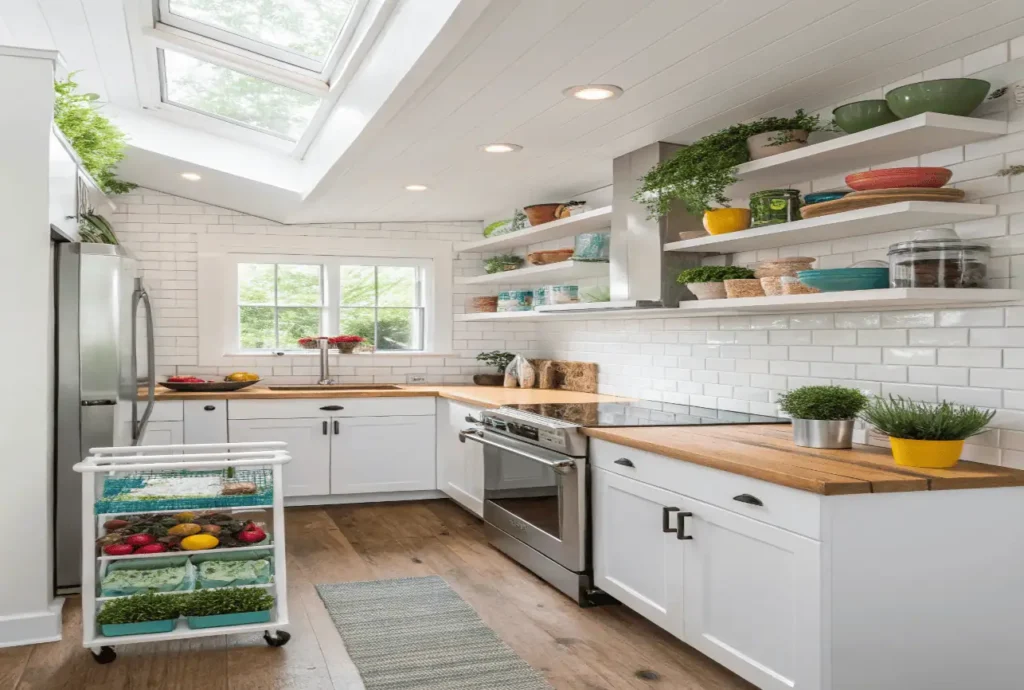
Mastering tiny kitchen design transforms cramped cooking spaces into functional, beautiful rooms that work harder than their square footage suggests. Even the smallest kitchens can become efficient culinary centers with strategic planning.
Limited space doesn’t mean limited style or functionality. Smart storage solutions, clever layouts, and thoughtful design choices make compact kitchens feel surprisingly spacious and capable.
These tiny kitchen design strategies prove that size matters less than how you use available space. Let’s explore the best ideas for making your small kitchen work beautifully.
List of 15 Best Tiny Kitchen Design Ideas
1. Open Shelving Instead of Upper Cabinets
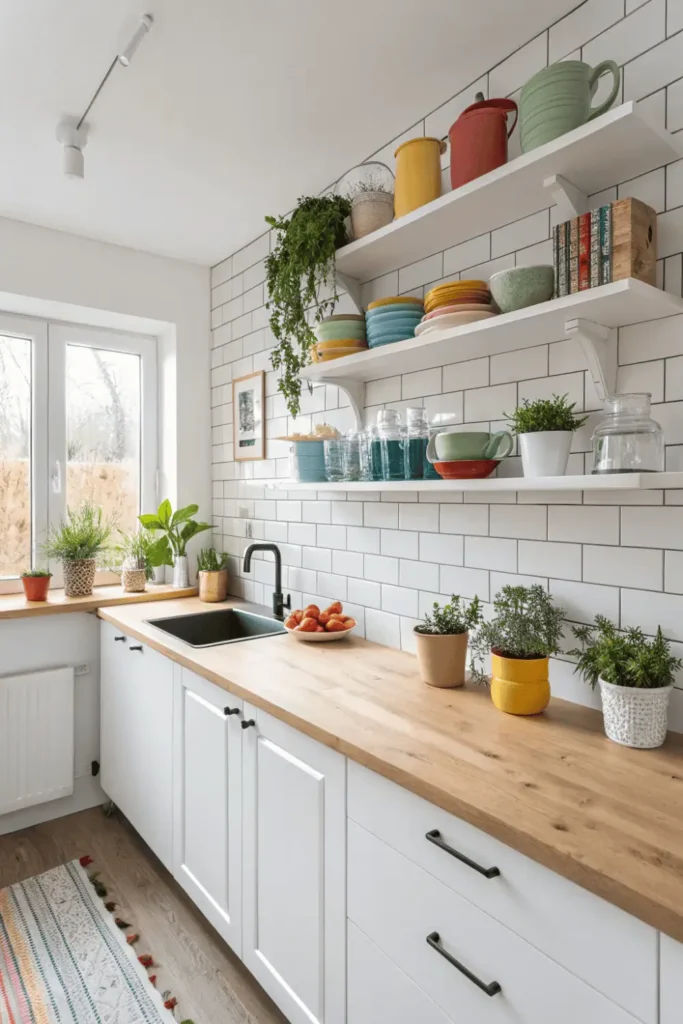
Open shelving creates visual breathing room in tiny kitchen design while providing essential storage. Removing bulky upper cabinets makes small spaces feel larger and more open, allowing light to flow freely throughout the room.
Display attractive dishes, glassware, and frequently used items on floating shelves for both function and style. This approach forces you to keep items organized and curated, maintaining the clean aesthetic.
Choose sturdy brackets and solid-wood shelves that can safely support heavy dishes and cookware.
Pro Tip: Paint shelves the same color as your walls to create a seamless look that visually expands your space, or use glass shelves for maximum lightness.
2. Light Color Palettes to Expand Visual Space
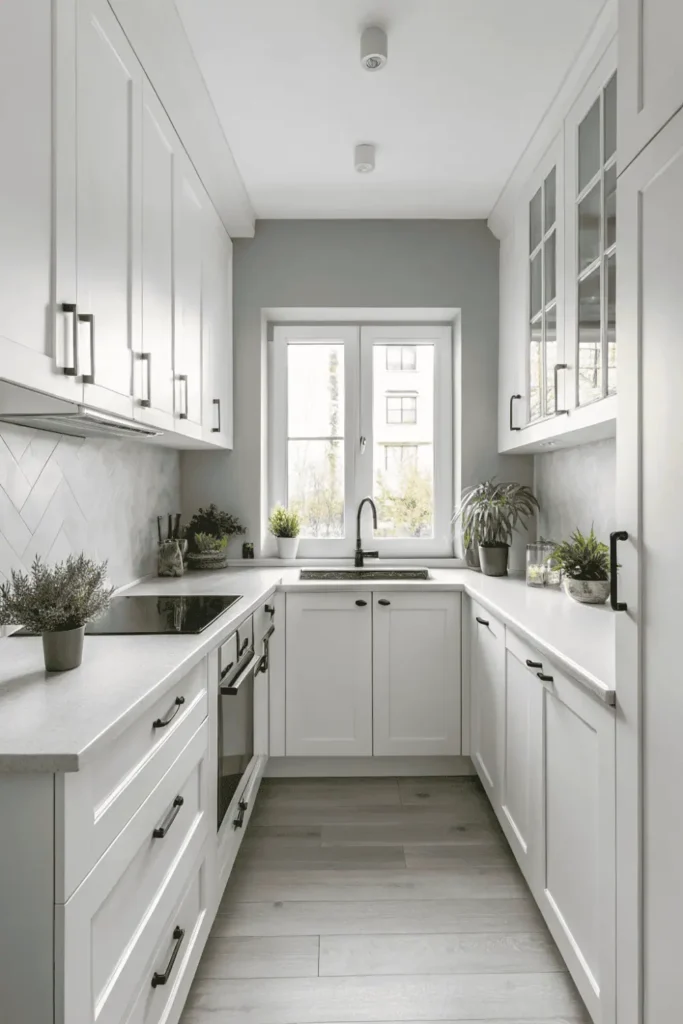
All-white or light-colored cabinets, walls, and countertops reflect light and make tiny kitchen design spaces feel significantly larger. Pale colors create an airy, open atmosphere that counteracts the closed-in feeling of small rooms.
Consider soft whites, pale grays, light sage, or cream tones for maximum space-expanding effects. Glossy finishes on cabinets amplify this effect by bouncing light around the room.
Pro Tip: Add warmth to all-white kitchens with natural wood accents, brass hardware, or a single accent color in accessories to prevent sterile feelings while maintaining the spacious aesthetic.
3. Galley Layout for Maximum Efficiency
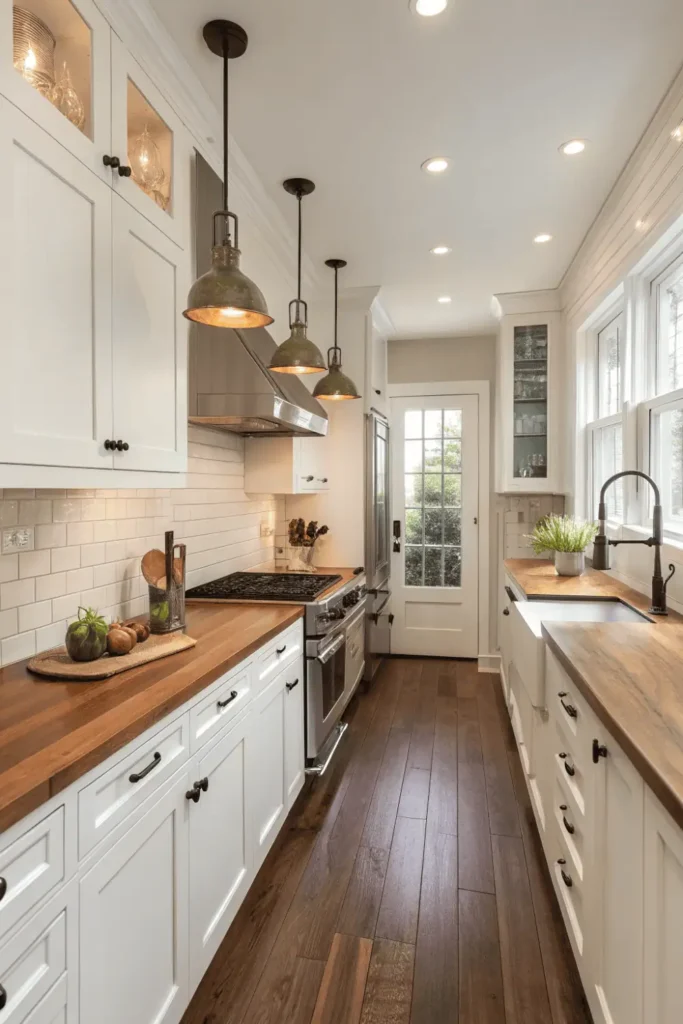
The galley layout maximizes workflow in tiny kitchen design by placing cabinets and appliances along two parallel walls. This efficient configuration creates a natural work triangle with minimal steps between sink, stove, and refrigerator.
Narrow galley kitchens (36-48 inches between counters) work surprisingly well for one cook, though they can feel tight for multiple people. End the galley with a window or open archway to prevent tunnel-like feelings.
Pro Tip: Keep one side of your galley exclusively for cooking (stove and prep) and the other for cleaning and storage (sink and refrigerator) to establish clear work zones.
4. Compact Appliances Sized for Small Spaces
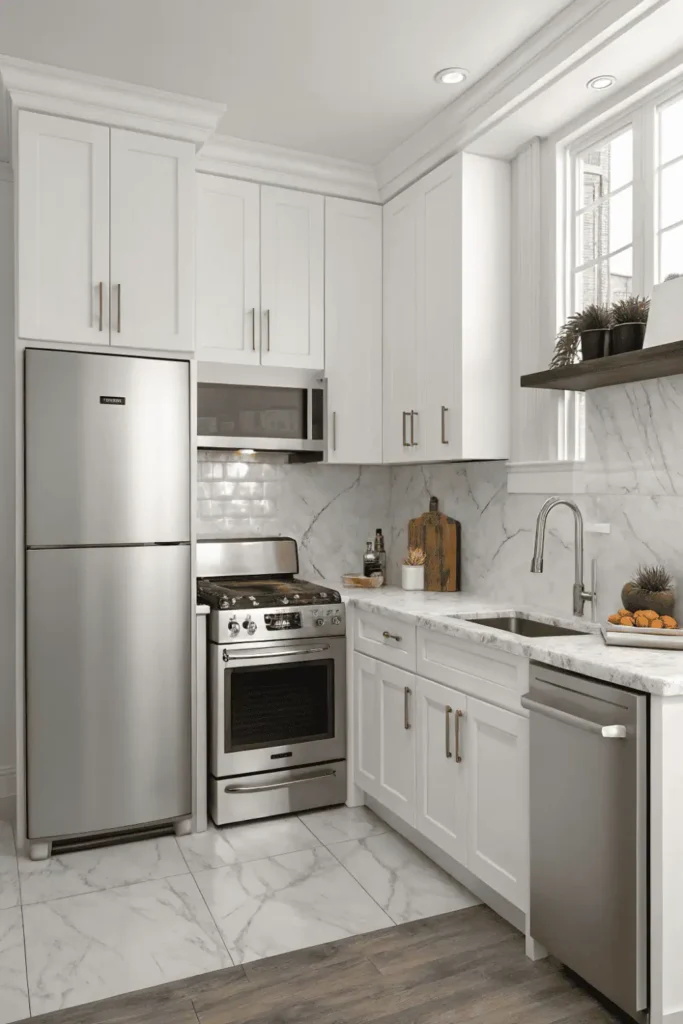
Apartment-sized appliances scaled for tiny kitchen design provide full functionality in smaller footprints. Choose 18-24 inch refrigerators, slim dishwashers, and narrow ranges designed specifically for compact spaces.
Look for multi-functional appliances like combination microwave-convection ovens that eliminate the need for separate units. Consider counter-depth refrigerators that don’t protrude beyond cabinetry, creating streamlined appearances.
Pro Tip: Measure carefully before purchasing—even compact appliances vary significantly in dimensions, and an inch or two can make the difference between fitting comfortably or not at all.
5. Pull-Out Pantry Storage for Narrow Spaces
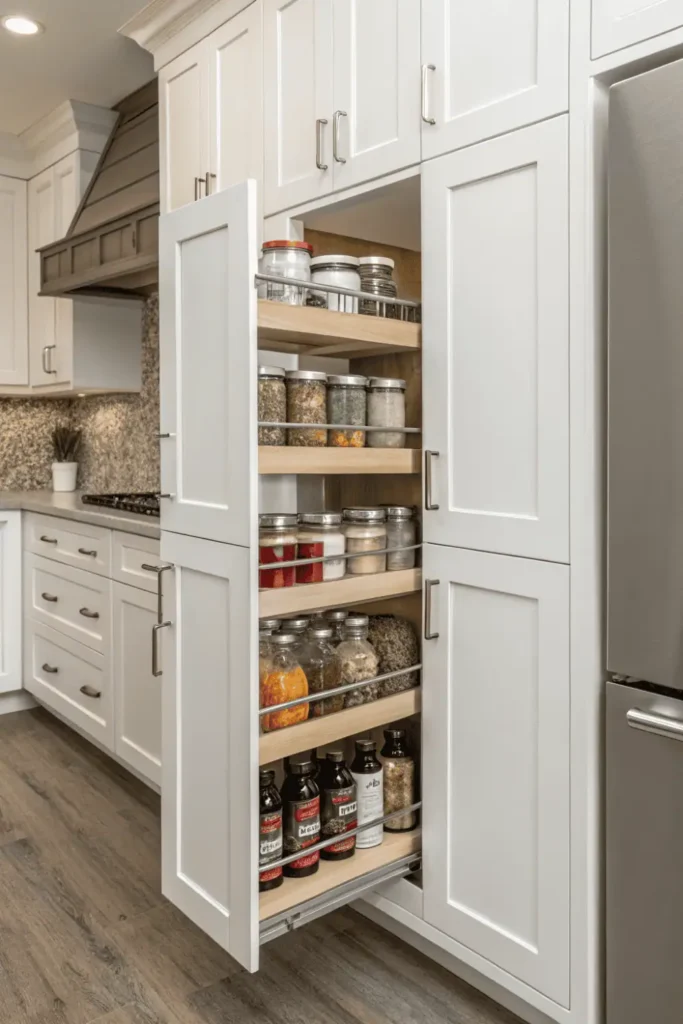
Slim pull-out pantries utilize narrow gaps (6-12 inches wide) in tiny kitchen design layouts that would otherwise go unused. These vertical storage solutions slide out to reveal multiple shelves perfect for spices, canned goods, and bottles.
Install pull-out pantries between appliances, at the end of cabinet runs, or in awkward corners. Soft-close mechanisms ensure smooth, quiet operation even when fully loaded.
Pro Tip: Choose pull-out pantries with adjustable shelves so you can customize spacing for your specific storage needs and accommodate items of varying heights.
6. Multi-Level Lighting for Depth and Function
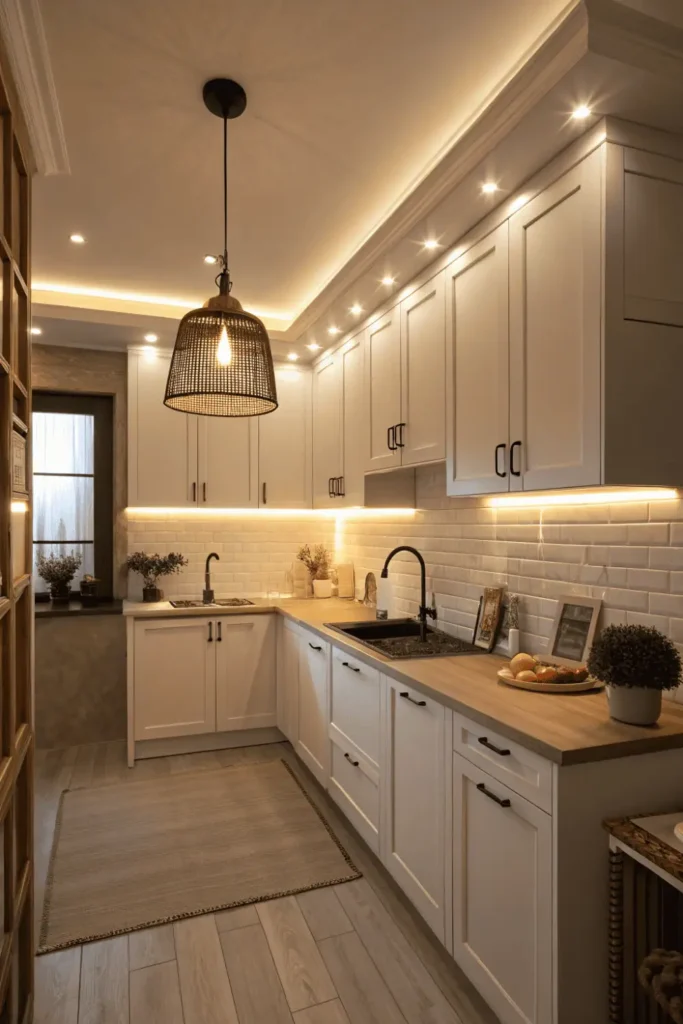
Layered lighting creates depth in tiny kitchen design while eliminating shadows in work areas. Combine recessed ceiling lights, under-cabinet task lighting, and decorative pendants for a well-lit, inviting space.
LED strip lights under cabinets illuminate countertops for food prep while adding ambient glow. Install dimmer switches to adjust brightness for different times of day and activities.
Pro Tip: Choose warm white bulbs (2700K-3000K) rather than cool white to create cozy, inviting atmospheres—cold lighting makes small spaces feel institutional.
7. Mirrored or Glossy Backsplashes for Reflection
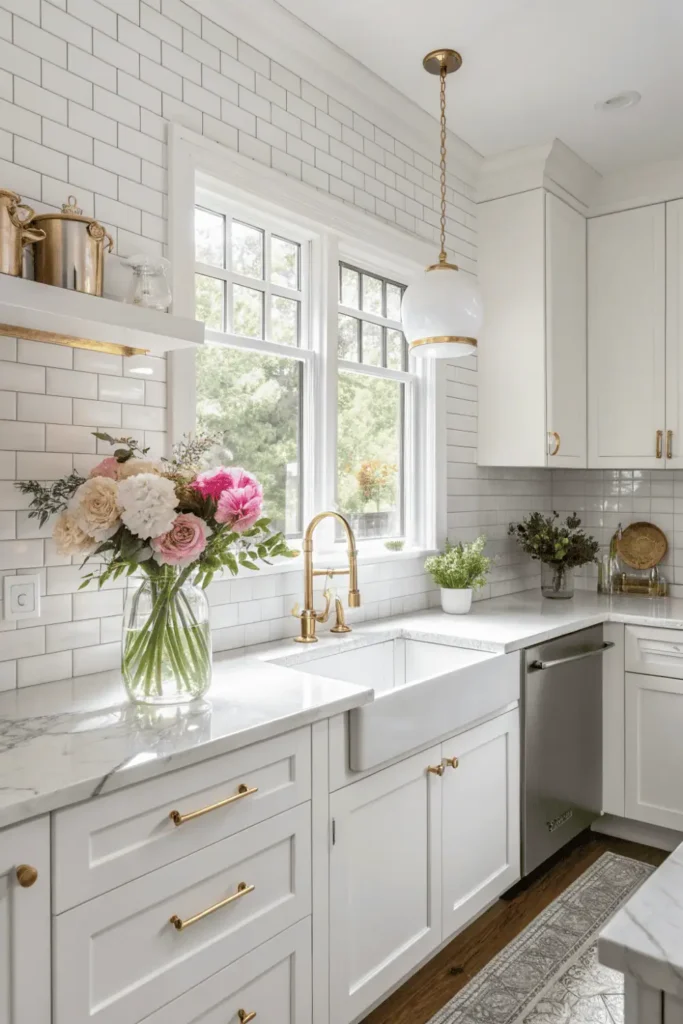
Reflective backsplashes using glass, mirror, or high-gloss tiles multiply light in tiny kitchen design spaces. These surfaces bounce natural and artificial light around the room, making it feel brighter and more spacious.
Mirrored backsplashes behind stoves or sinks create dramatic visual expansion, though they require frequent cleaning to maintain their reflective properties. Glass subway tiles in light colors offer similar benefits with easier maintenance.
Pro Tip: If mirrors feel too bold, choose glazed ceramic tiles with high sheen finishes—they provide reflective benefits without the maintenance challenges of actual mirrors.
8. Fold-Down Tables or Breakfast Bars
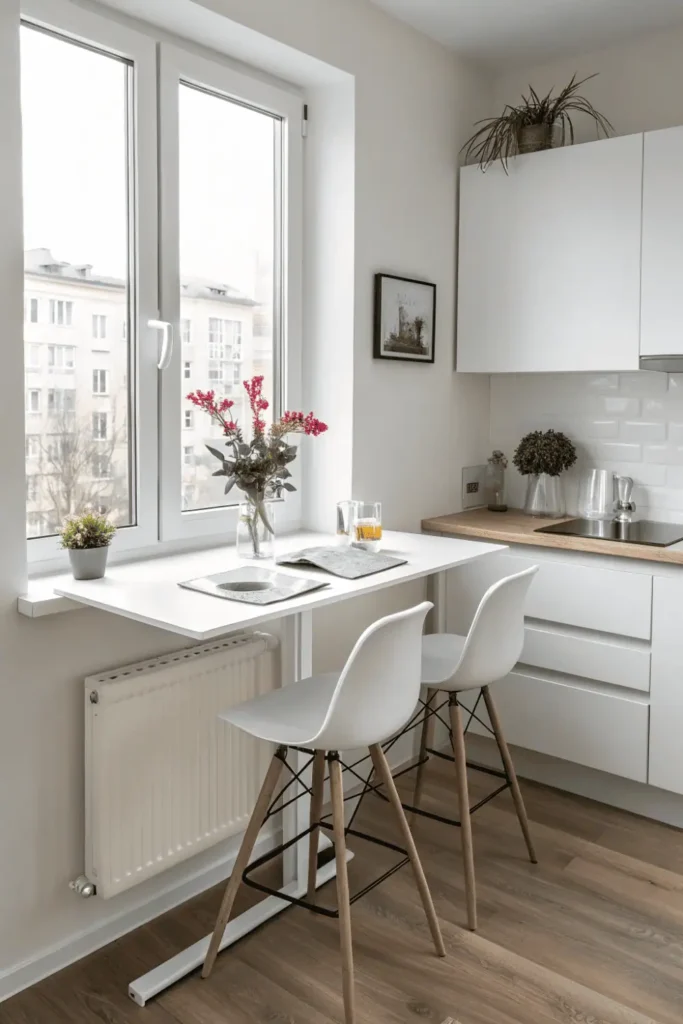
Wall-mounted fold-down tables provide dining space in tiny kitchen design layouts without permanently consuming floor area. These clever solutions fold flat against walls when not in use, creating walkways and work space.
Narrow breakfast bars (12-15 inches deep) attached to walls or peninsula counters offer casual seating without requiring separate dining furniture. Add fold-away stools that tuck underneath when not needed.
Pro Tip: Install fold-down tables with sturdy brackets rated for at least 100 pounds to safely support dishes, elbows, and the inevitable leaning that happens during meals.
9. Vertical Storage Using Full-Height Cabinets
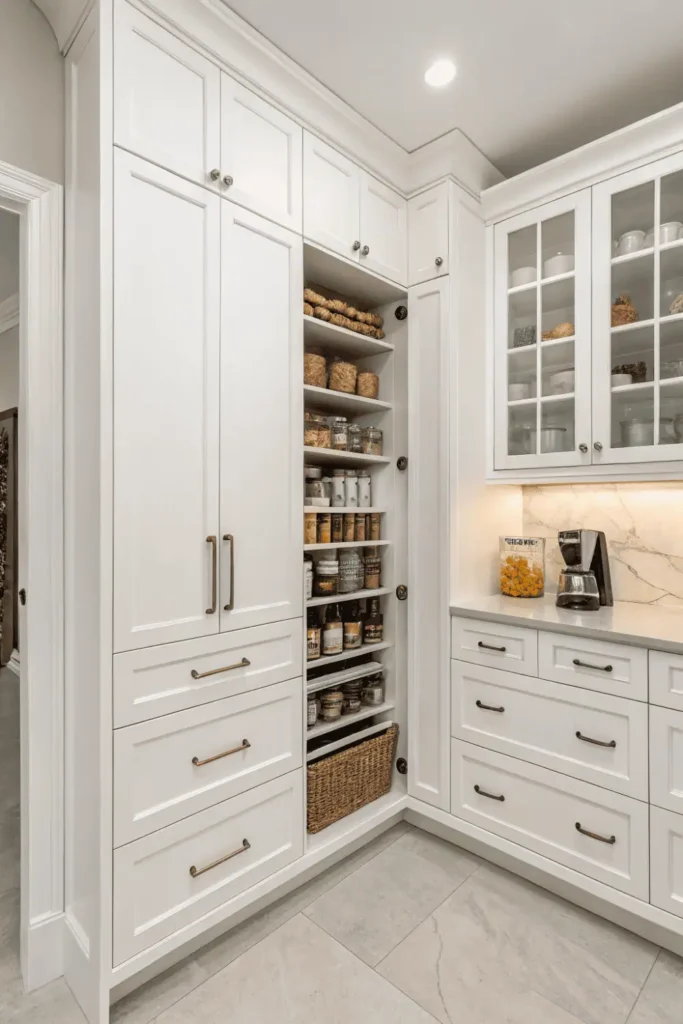
Floor-to-ceiling cabinets maximize storage in tiny kitchen design by utilizing often-wasted vertical space. Tall cabinets draw the eye upward, making ceilings feel higher and rooms feel more spacious.
Store rarely used items in upper sections and everyday essentials at eye level for optimal functionality. Built-in step stools or pull-out ladders provide safe access to top shelves.
Pro Tip: Install cabinet lighting inside upper cabinets to make finding items easier and prevent dark, cave-like feelings in tall cabinet interiors.
10. Rolling Carts for Flexible Additional Storage
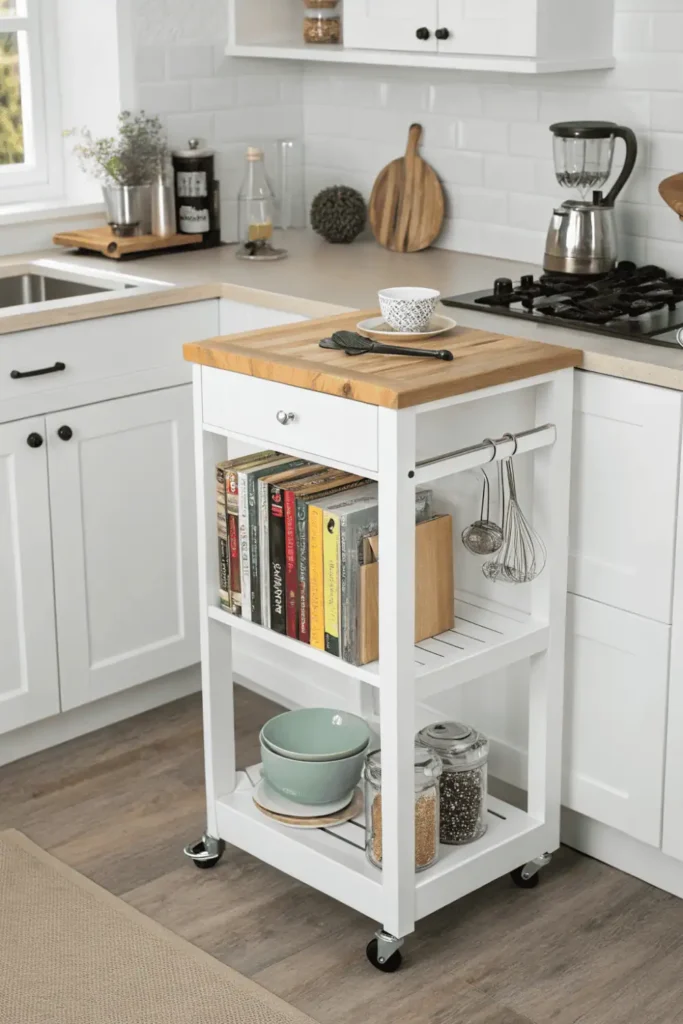
Mobile kitchen carts add moveable storage and prep space to tiny kitchen design layouts. Roll them into position when cooking, then tuck them away in corners or adjacent rooms when not needed.
Choose carts with butcher block tops for additional prep surfaces, towel bars, and multiple shelves for versatile storage options. Locking wheels ensure stability during use.
Pro Tip: Select a cart slightly shorter than your counter height so it can slide partially underneath for space-saving storage while remaining accessible for quick access to frequently used items.
11. Glass Cabinet Doors to Create Visual Depth
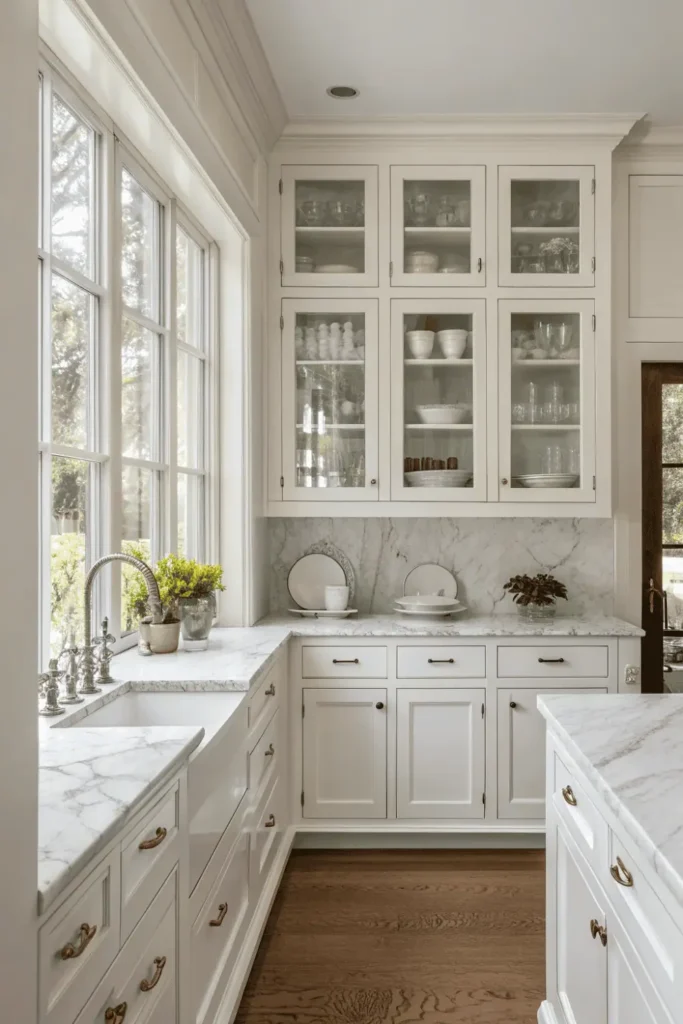
Glass-front cabinets create visual depth in tiny kitchen design by allowing the eye to see beyond cabinet faces. This transparency makes walls feel less solid and spaces feel more open and dimensional.
Display attractive dishes, glassware, or decorative items behind glass while hiding less attractive items in solid-door cabinets. Frosted or textured glass provides semi-transparency for items that don’t need to be fully visible.
Pro Tip: Keep glass-front cabinets organized and edit their contents regularly—visible clutter defeats the purpose of creating visual expansion and can make spaces feel chaotic.
12. Single-Bowl Undermount Sinks for Counter Space
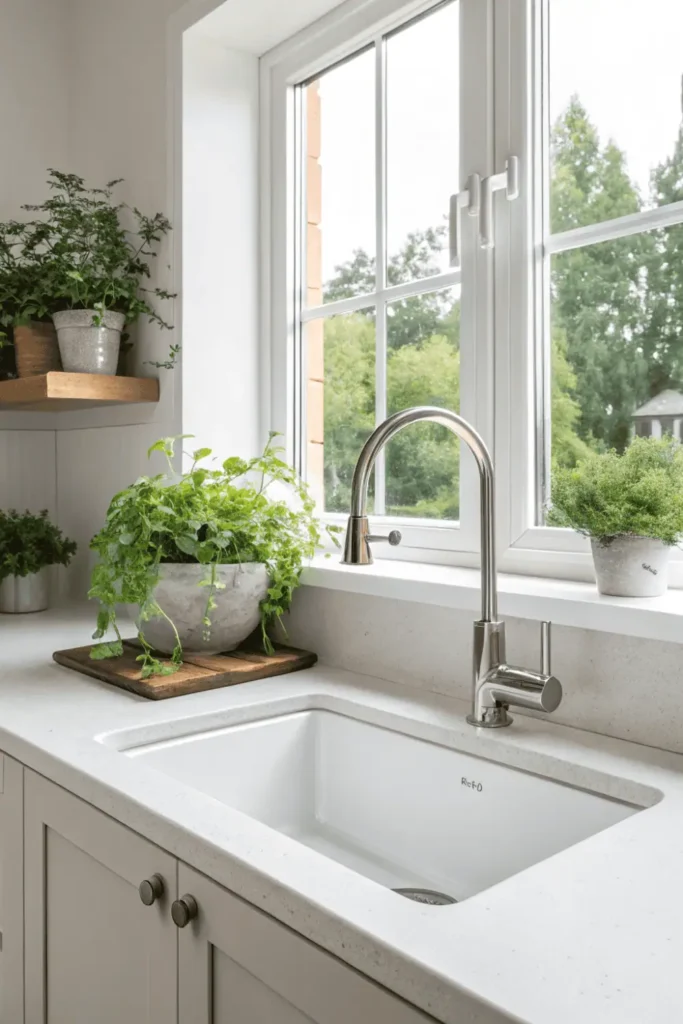
Large single-bowl sinks installed undermount maximize counter space in tiny kitchen design by eliminating dividers and rim edges. Undermount installation creates seamless transitions from counter to sink for easy cleanup.
Choose deeper bowls (9-10 inches) that accommodate large pots and baking sheets while maintaining clean counter surfaces. Stainless steel or white composite materials blend with various design styles.
Pro Tip: Install sink slightly off-center rather than directly in front of the window to create more usable counter space on one side for food prep and dish drying.
13. Magnetic Knife Strips and Wall-Mounted Storage
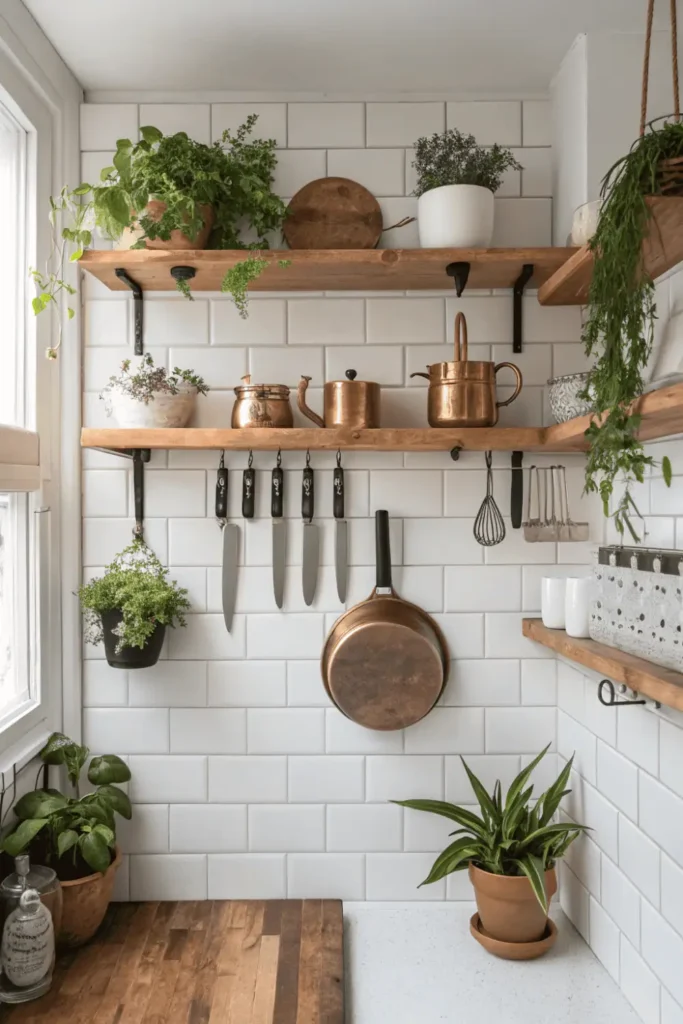
Wall-mounted storage keeps counters clear in tiny kitchen design while keeping essential tools accessible. Magnetic knife strips, hanging pot racks, and wall-mounted utensil holders utilize vertical surfaces efficiently.
Install pegboards for customizable tool storage, mounted spice racks near cooking areas, and hooks for frequently used items. This approach eliminates drawer clutter while creating visual interest.
Pro Tip: Group wall-mounted storage by function—knives near prep areas, pot holders near the stove, utensils near cooking surfaces—to create efficient work zones.
14. Corner Solutions with Lazy Susans or Pull-Outs
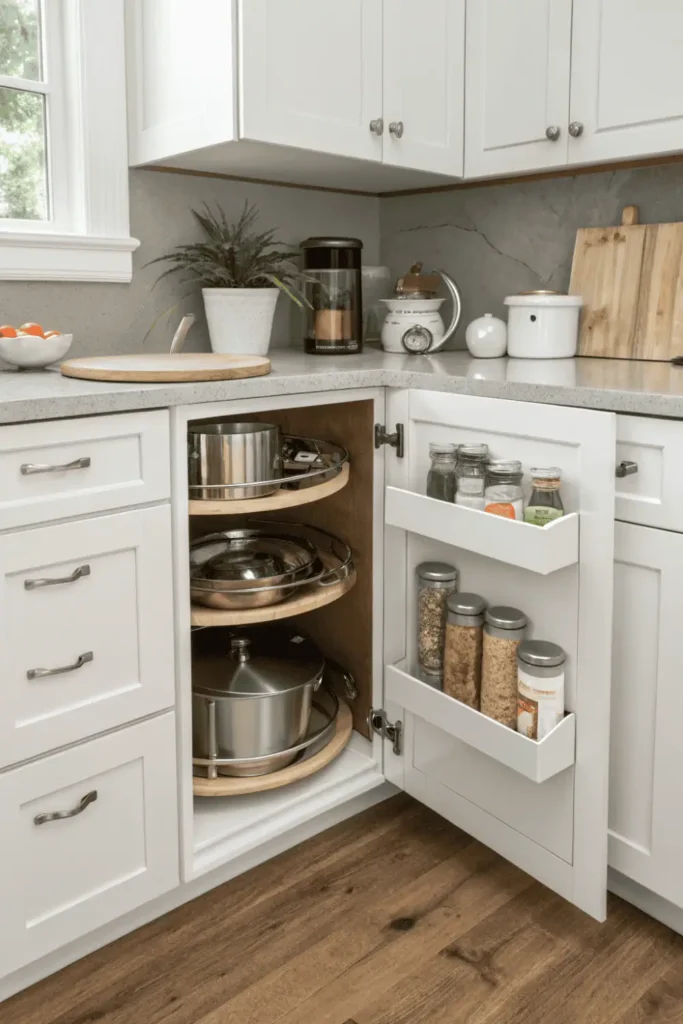
Corner storage solutions maximize awkward spaces in tiny kitchen design that typically become black holes for lost items. Lazy Susan turntables, pull-out corner drawers, and magic corner systems make deep corners fully accessible.
Install two-tier Lazy Susans in base corner cabinets for easy access to pots, pans, and pantry items. Pull-out shelving systems bring corner contents completely out of cabinets for total visibility.
Pro Tip: Measure your corner cabinet openings carefully—some corner solutions require larger door openings than standard cabinets provide, or you’ll need to modify your cabinet faces.
15. Sliding Doors or Pocket Doors to Save Space
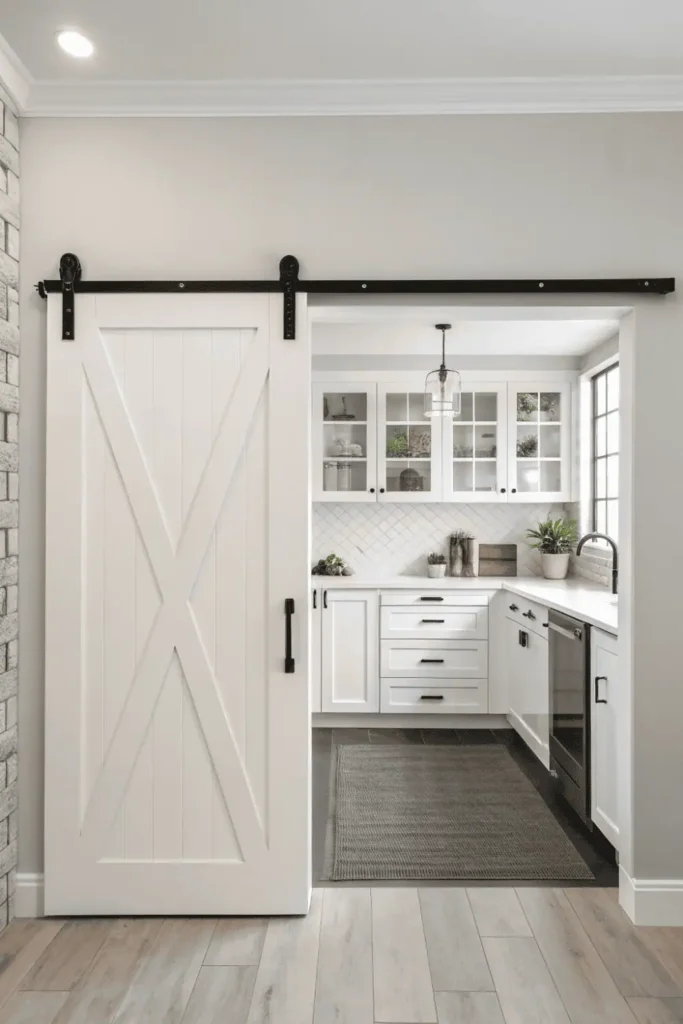
Sliding barn doors or pocket doors eliminate swing clearance needed for traditional doors in tiny kitchen design layouts. This simple change can recover 10-15 square feet of usable floor space.
Choose frosted glass sliding doors that maintain visual connection while providing separation, or solid wood doors for complete privacy. Soft-close hardware prevents loud slamming in compact spaces.
Pro Tip: Install sliding door hardware on the kitchen side of the opening rather than the adjacent room—this prevents visible track systems in living or dining areas while keeping mechanisms accessible for maintenance.
Pinterest Image Prompt: A modern tiny kitchen design with white barn door on black track sliding to reveal the kitchen, glass panel insert, bright white kitchen visible beyond, contemporary style, space-saving solution, vertical 2:3 ratio
Why Tiny Kitchen Design Ideas Are Worth the Investment
Implementing smart tiny kitchen design strategies dramatically increases your home’s functionality and market value. Well-designed compact kitchens impress potential buyers and can increase property values by 5-10% by maximizing every square inch efficiently.
Tiny kitchen design improvements enhance daily quality of life by reducing frustration and increasing cooking enjoyment. Thoughtful organization and layout mean less time searching for items and more efficient meal preparation, making small kitchens work as well as larger ones.
Professional tiny kitchen design creates beautiful spaces that photograph well and feel intentional rather than cramped. These improvements cost less than room additions while delivering significant lifestyle benefits and preparing homes for future sale.
Things to Consider Before Choosing Tiny Kitchen Design
Carefully assess your tiny kitchen design priorities before starting renovations or purchases. Honest evaluation of cooking habits, storage needs, and budget constraints prevents expensive mistakes and ensures solutions actually serve your lifestyle.
Consider the permanence of tiny kitchen design choices you’re contemplating—built-in solutions like custom cabinetry represent bigger commitments than portable storage carts. Start with reversible changes like lighting and organization before committing to permanent structural alterations.
Plan your tiny kitchen design timeline realistically, especially for rental properties or temporary living situations. Removable solutions like tension rod organizers, magnetic storage, and furniture-style carts maximize impact while maintaining flexibility for future moves.
Comparison Table of Tiny Kitchen Design Ideas
| Design Solution | Cost Range | Installation Difficulty | Space Saved | Visual Impact | Best For |
| Open Shelving | $ | Easy | Medium | High | Renters, style-focused |
| Light Color Palette | $ – $$ | Easy | None | Very High | All tiny kitchens |
| Galley Layout | $$$ – $$$$ | Hard (professional) | High | Medium | Renovations |
| Compact Appliances | $$ – $$$ | Medium | High | Medium | Full remodels |
| Pull-Out Pantry | $$ | Medium | High | Low | Storage-challenged |
| Multi-Level Lighting | $$ | Medium | None | High | All kitchens |
| Reflective Backsplash | $$ – $$$ | Medium | None | High | Style upgrades |
| Fold-Down Tables | $ – $$ | Medium | Very High | Medium | No dining space |
| Vertical Cabinets | $$$ | Hard | High | Medium | Renovations |
| Rolling Carts | $ – $$ | None | Medium | Low | Flexible storage |
| Glass Cabinet Doors | $$ | Medium | None | Medium | Upper cabinets |
| Single-Bowl Sink | $$ – $$$ | Hard | Medium | Low | Remodels |
| Wall-Mounted Storage | $ | Easy | Medium | Medium | Renters, quick fixes |
| Corner Solutions | $$ – $$$ | Medium | High | Low | Existing corners |
| Sliding Doors | $$ – $$$ | Hard | Very High | High | Doorway challenges |
Frequently Asked Questions About Tiny Kitchen Design
What is the minimum size for a functional tiny kitchen design?
Functional tiny kitchen design can work in spaces as small as 30-40 square feet when properly planned. Galley kitchens measuring 4 feet wide by 8-10 feet long provide adequate room for essential appliances, counter space, and storage.
Commercial efficiency standards recommend at least 30 inches of counter workspace, 21 inches of clearance in front of cabinets and appliances, and the ability to comfortably open appliance doors and drawers. Spaces smaller than 30 square feet work better as kitchenettes with limited cooking capabilities.
The key is prioritizing essentials and eliminating non-essential items that consume valuable space without adding real functionality to your cooking routine.
How can I make my tiny kitchen design feel larger?
Light colors, reflective surfaces, and strategic lighting create the biggest visual impact in tiny kitchen design spaces. Paint cabinets and walls white or pale neutrals, install glossy backsplashes, and add under-cabinet lighting to maximize brightness.
Remove upper cabinets or replace some with open shelving to eliminate visual weight and create breathing room. Use glass-front cabinets on remaining uppers to maintain the open feeling while preserving storage capacity.
Declutter ruthlessly—small kitchens require discipline about what you keep visible, storing rarely-used items elsewhere and displaying only essentials and decorative pieces.
What layout works best for tiny kitchen design?
Galley layouts generally work best for tiny kitchen design because they maximize efficiency by placing everything within a few steps. Position appliances and work zones along two parallel walls with 36-48 inches between them for optimal workflow.
L-shaped layouts work well in square small kitchens, creating corner space for dining or a small peninsula. Single-wall kitchens with all appliances and cabinets along one wall save the most space but require careful planning for efficient work triangles.
Avoid U-shaped layouts in tiny kitchens—they consume too much floor space with cabinetry and create inefficient workflows in compact areas.
Should I hire a professional for tiny kitchen design?
Professional designers bring valuable expertise to tiny kitchen design projects, especially for renovations involving structural changes, plumbing, or electrical work. They help you avoid expensive mistakes and maximize functionality in limited space.
Consider professionals if you’re planning cabinet replacement, layout changes, or appliance relocations—these complex projects benefit from expert space planning and technical knowledge. Professional design fees typically range from $100-$200 per hour or flat project rates.
DIY approaches work well for cosmetic updates like painting, installing open shelving, adding lighting, or organizing existing spaces—these changes don’t require professional expertise and save significant money.