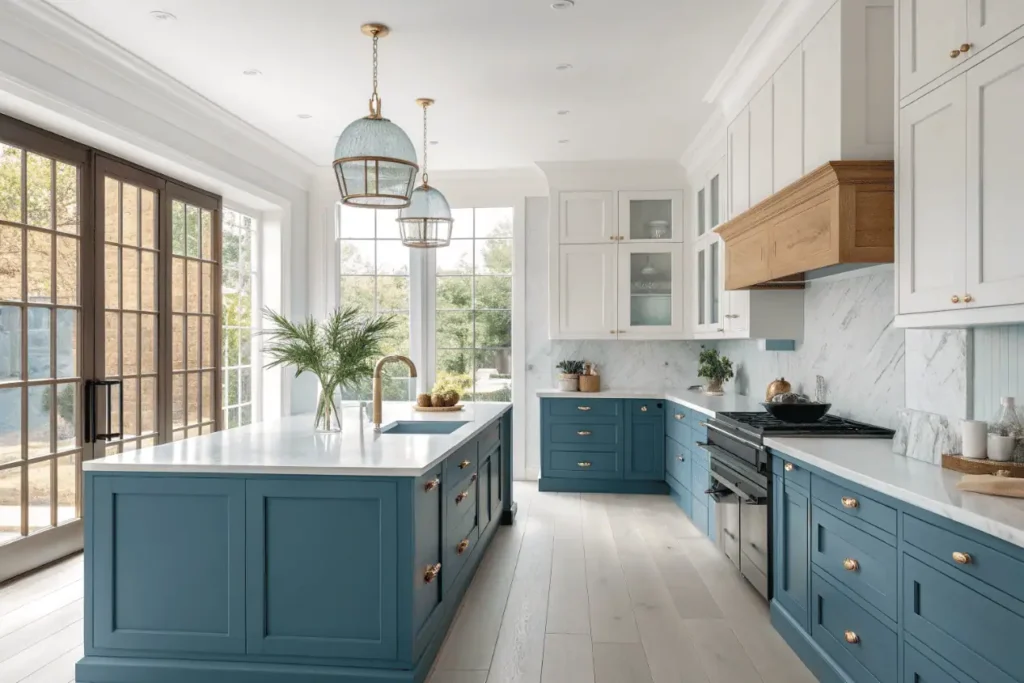
A blue kitchen brings timeless elegance and calming sophistication to the heart of your home. This versatile color choice ranges from soft powder blues to deep navy hues, creating spaces that feel both inviting and stylish.
Blue has become one of the most popular kitchen colors because it works beautifully with various design styles. From coastal cottages to modern apartments, this shade adapts to your aesthetic preferences while maintaining broad appeal.
Whether you’re planning a complete renovation or a simple refresh, these blue kitchen ideas will inspire you to create a space that’s uniquely yours. Let’s explore the best ways to incorporate this stunning color into your cooking space.
List of 15 Best Blue Kitchen Design Ideas
1. Navy Blue Cabinets with Brass Hardware
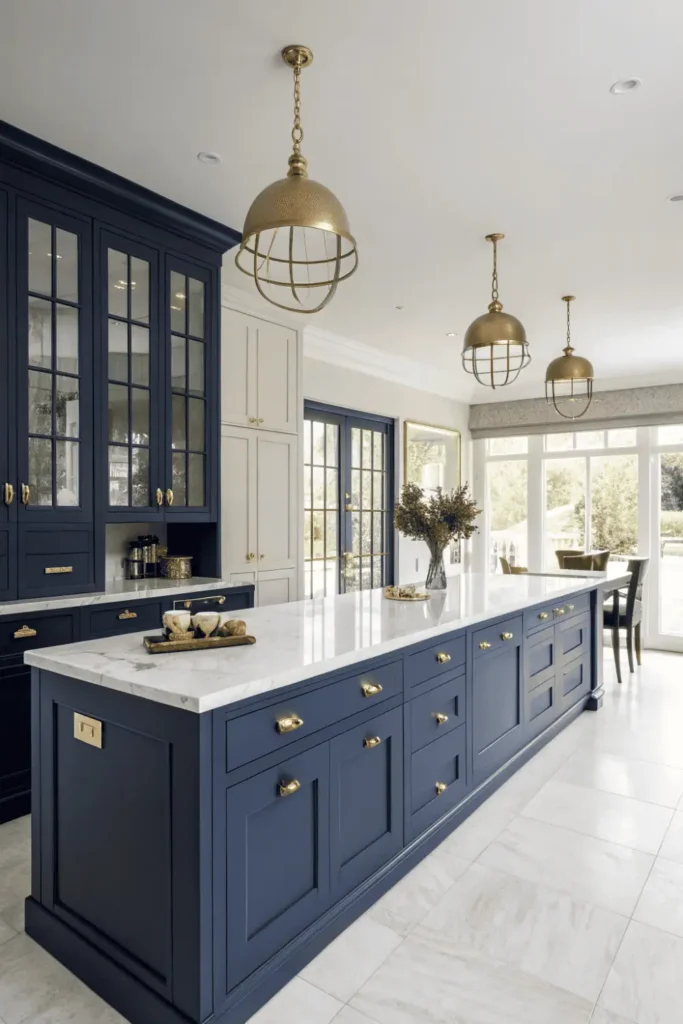
Navy blue cabinets create a dramatic, sophisticated foundation for your kitchen design. This deep, rich shade adds instant elegance while remaining surprisingly versatile and timeless.
Pair navy cabinets with warm brass or gold hardware to create luxurious contrast that catches the eye. The combination of deep blue and metallic accents evokes high-end hotel aesthetics in your home.
White or marble countertops balance the darkness and prevent the space from feeling too heavy. Brass fixtures on faucets and lighting complete the upscale look.
Pro Tip: Navy blue hides fingerprints and wear better than lighter colors, making it an excellent practical choice for busy family kitchens that need to look polished with minimal maintenance.
2. Powder Blue Shaker Cabinets for Cottage Charm
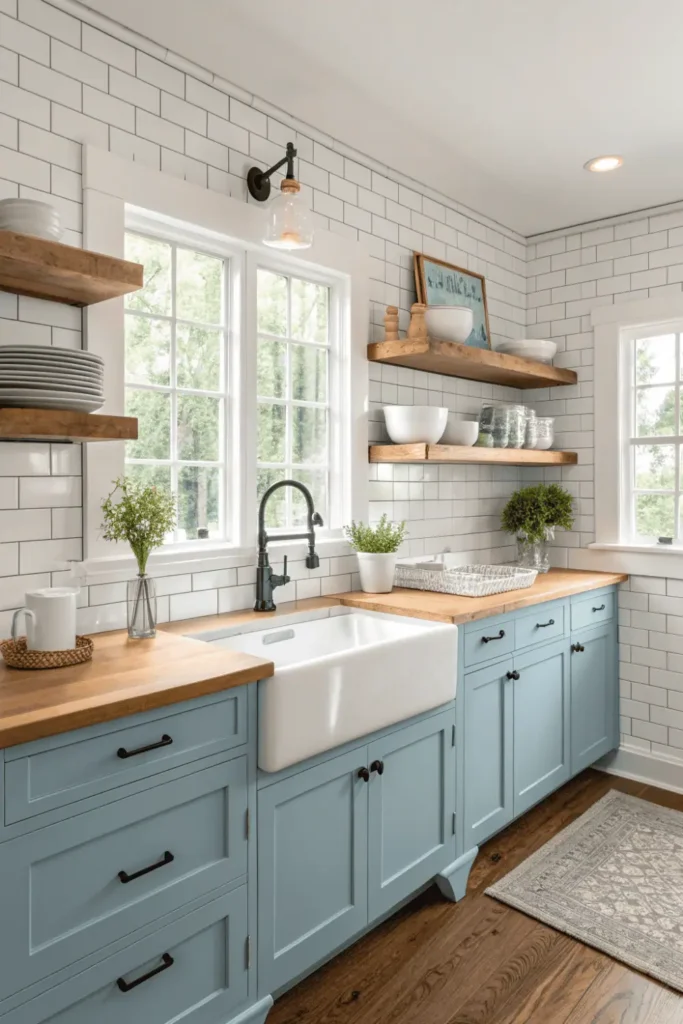
Soft powder blue shaker cabinets bring gentle, cottage-inspired charm to your cooking space. This lighter shade creates airy, welcoming environments that feel spacious and bright.
The classic shaker style features simple frame-and-panel construction that never goes out of style. Powder blue works beautifully in farmhouse, coastal, and traditional kitchen designs.
Pro Tip: Powder blue pairs perfectly with white subway tile backsplashes and butcher block countertops for an authentic farmhouse aesthetic that feels collected over time rather than decorated all at once.
3. Two-Tone Blue and White Cabinet Combination
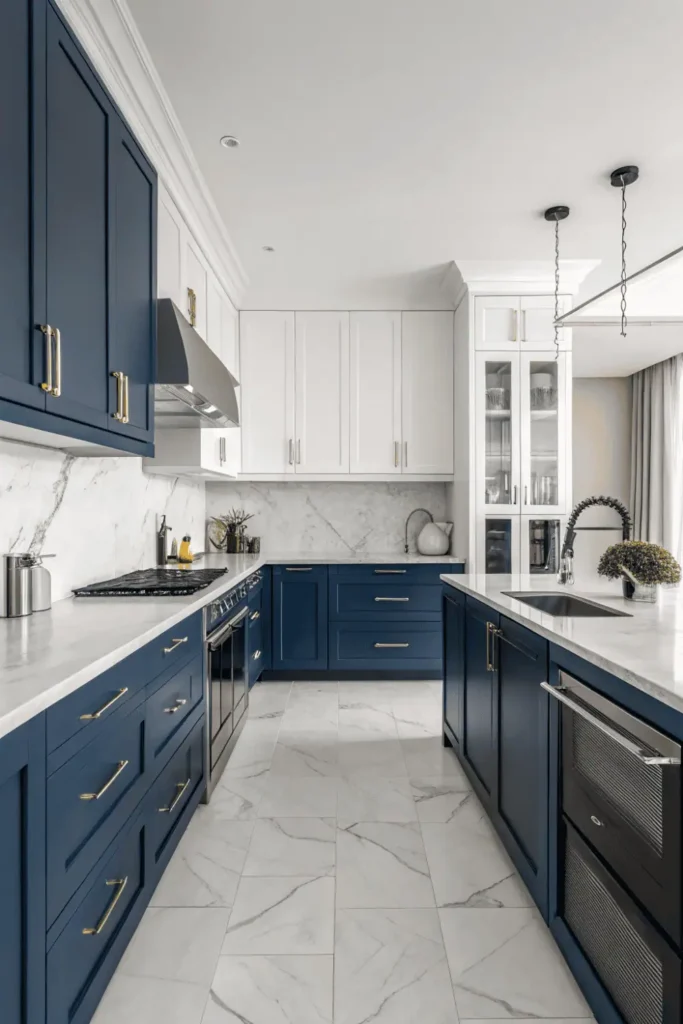
Two-tone cabinetry balances bold color with classic neutrality by pairing blue lower cabinets with white upper cabinets. This approach adds visual interest while preventing color overload in smaller spaces.
The lighter upper cabinets keep the kitchen feeling open and airy while blue base cabinets ground the design and add personality. This combination works across multiple style preferences from traditional to contemporary.
Pro Tip: Use deeper blues like navy or cobalt on lower cabinets and crisp white on uppers to create maximum contrast—this draws the eye horizontally and makes kitchens appear wider than they actually are.
4. Blue Kitchen Island as a Statement Piece
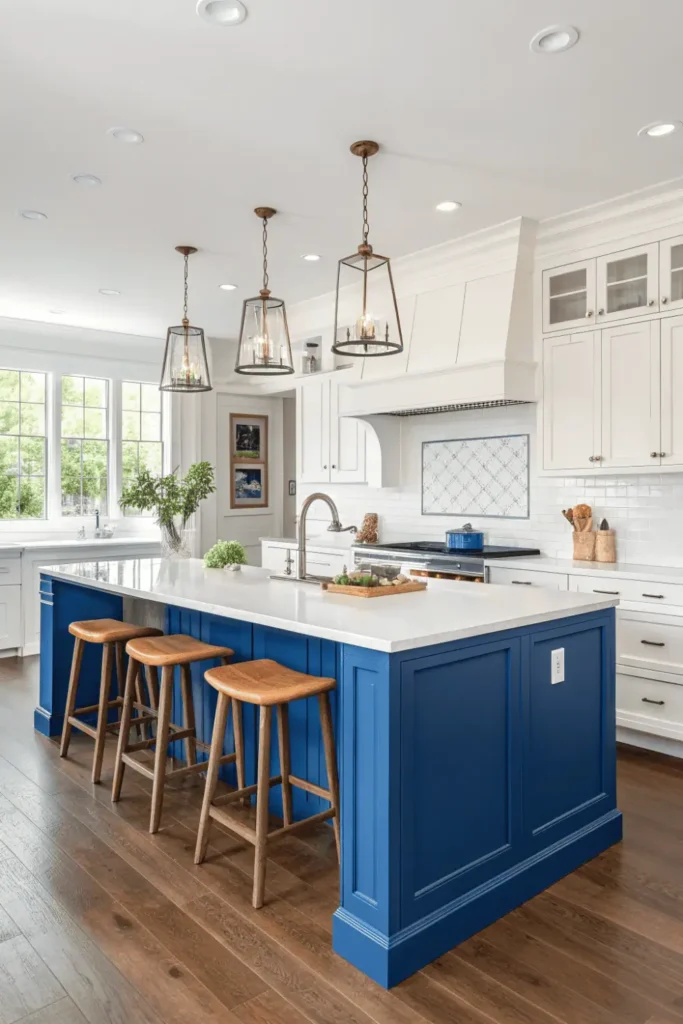
Transform your space by painting just the kitchen island in bold blue while keeping perimeter cabinets neutral. This strategy adds personality without overwhelming the entire room.
A blue island becomes an instant focal point that anchors the kitchen design. Choose deeper shades like royal blue, teal, or navy for maximum impact against white or cream surroundings.
Coordinate the island color with smaller accents like backsplash tiles, rugs, or bar stools to create cohesion. This approach offers flexibility if you later want to change the color scheme.
Pro Tip: If you’re nervous about committing to blue cabinets everywhere, start with just the island—it’s easier and less expensive to repaint a single island than entire banks of cabinetry if you change your mind.
5. Teal Blue Cabinets with Natural Wood Accents
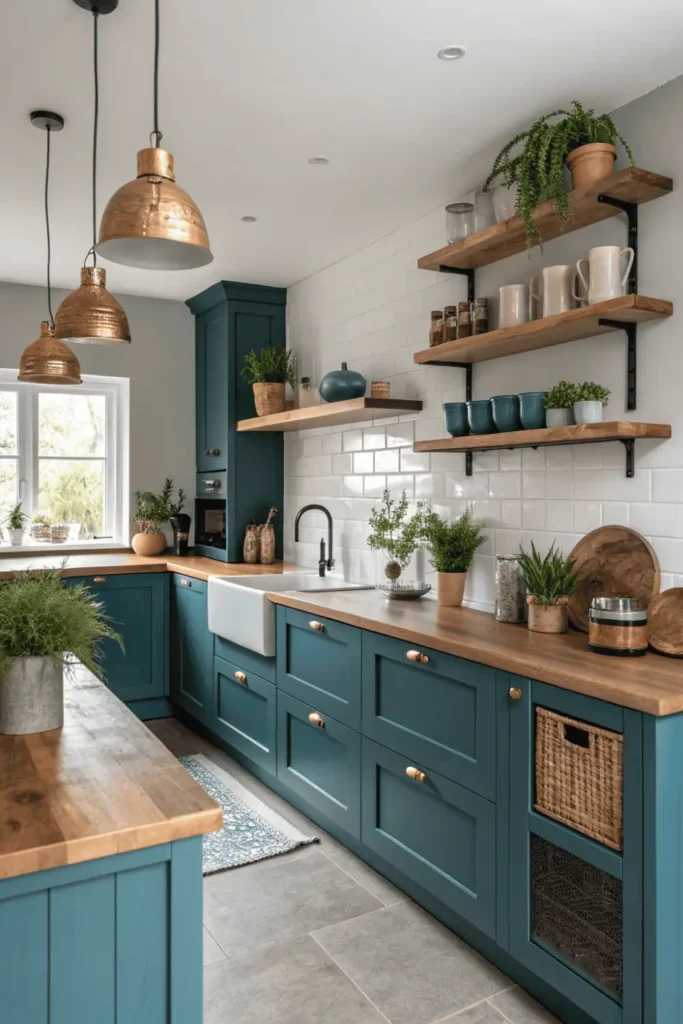
Teal blue cabinets strike the perfect balance between blue and green, creating unique, eye-catching kitchens. This sophisticated shade pairs beautifully with natural materials for organic, grounded designs.
Combine teal cabinetry with wood countertops, open shelving, or butcher block islands to add warmth. The contrast between cool blue-green tones and warm wood creates dynamic visual interest.
Pro Tip: Teal works exceptionally well in kitchens with limited natural light because it has both warm and cool undertones that appear vibrant even in artificial lighting conditions where other blues might feel dull or cold.
6. Sky Blue Walls with White Cabinets
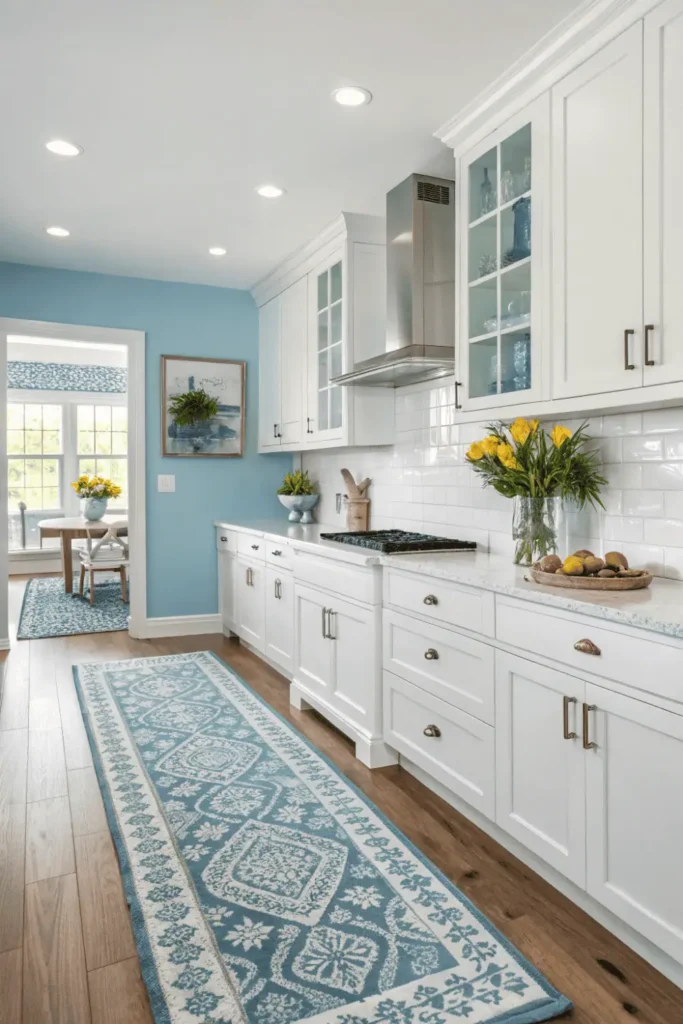
Create a serene blue kitchen by painting walls in soft sky blue while keeping cabinets classic white. This approach provides color impact with less commitment and lower cost than replacing or painting cabinetry.
Sky blue walls evoke peaceful, Mediterranean atmospheres perfect for kitchens where families gather. The light shade reflects brightness and makes spaces feel larger and more open.
White cabinets, trim, and ceiling create crisp contrast that keeps the blue from overwhelming the space. Add blue and white patterned tiles or textiles to reinforce the color scheme.
Pro Tip: Test paint samples in your actual kitchen in both morning and evening light before committing—blues can shift dramatically from warm to cool depending on your home’s natural light direction and intensity throughout the day.
7. Cobalt Blue Tile Backsplash
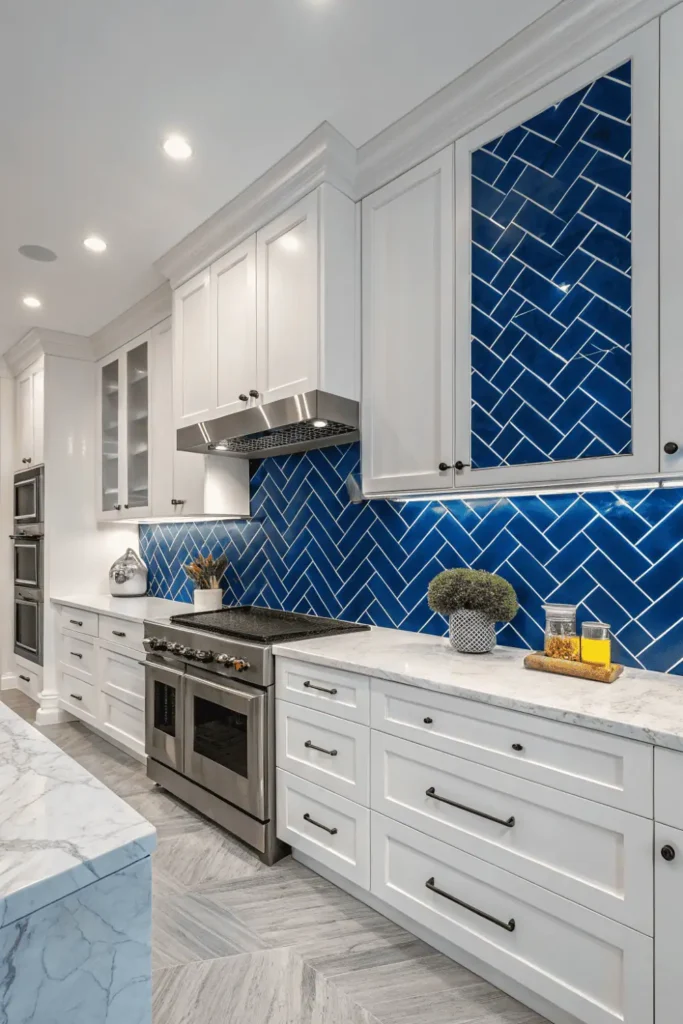
A cobalt blue tile backsplash adds bold personality to neutral kitchens without the commitment of colored cabinetry. Glossy blue tiles catch light beautifully and create stunning focal points behind stoves or sinks.
Choose from subway tiles, arabesque patterns, or large format tiles depending on your style preference. The vibrant blue provides washable, practical protection while delivering serious aesthetic impact.
Pro Tip: Extend your blue backsplash all the way to the ceiling instead of stopping at the bottom of upper cabinets—this dramatic approach makes standard 8-foot ceilings appear taller and creates a more custom, high-end look.
8. Dusty Blue Cabinets for Modern Farmhouse Style
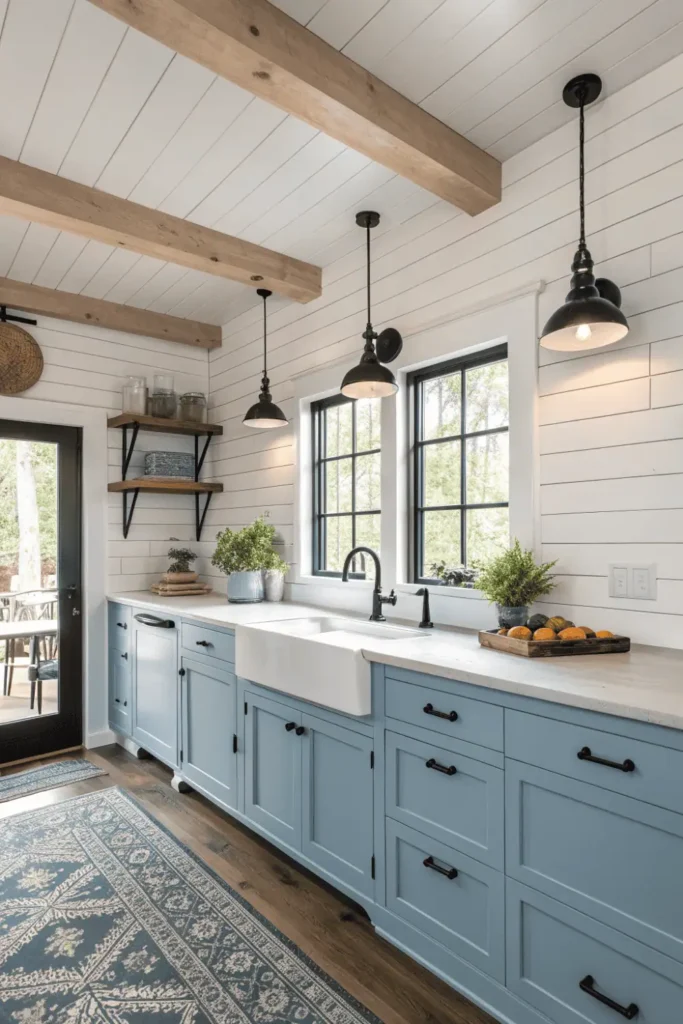
Dusty blue cabinets offer muted, sophisticated alternatives to brighter blues in modern farmhouse kitchens. This grayish-blue shade feels current and fresh while maintaining the cozy warmth farmhouse style requires.
The subtle color works beautifully with white countertops, black hardware, and natural wood elements typical of farmhouse design. Dusty blue provides color without competing with other design elements.
Pair with shiplap walls, apron-front sinks, and vintage-inspired lighting to complete the modern farmhouse aesthetic. This shade photographs beautifully and appeals to wide audiences.
Pro Tip: Dusty blue works exceptionally well in north-facing kitchens that might make other blues feel too cold—the gray undertones prevent the space from feeling icy even in indirect natural light.
9. Deep Sapphire Blue Lower Cabinets with Glass Uppers
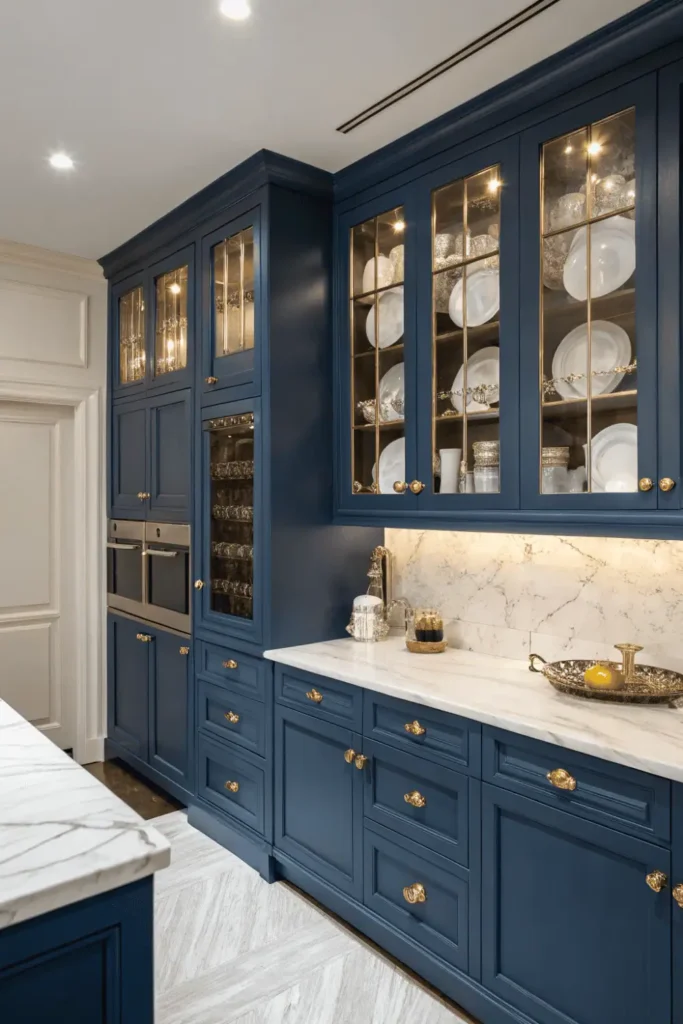
Sapphire blue lower cabinets create jewel-toned luxury in your cooking space. This deep, rich shade adds drama and sophistication while glass-front upper cabinets maintain openness and display opportunities.
The glass uppers prevent the space from feeling too dark or enclosed while showcasing beautiful dishware, glassware, or decorative items. Interior cabinet lighting enhances the display effect.
Pro Tip: Keep items displayed in glass cabinets coordinated and minimal—limit yourself to matching white dishes or a curated collection in complementary colors to maintain the sophisticated look rather than creating visual clutter.
10. Periwinkle Blue Accent Wall Behind Open Shelving
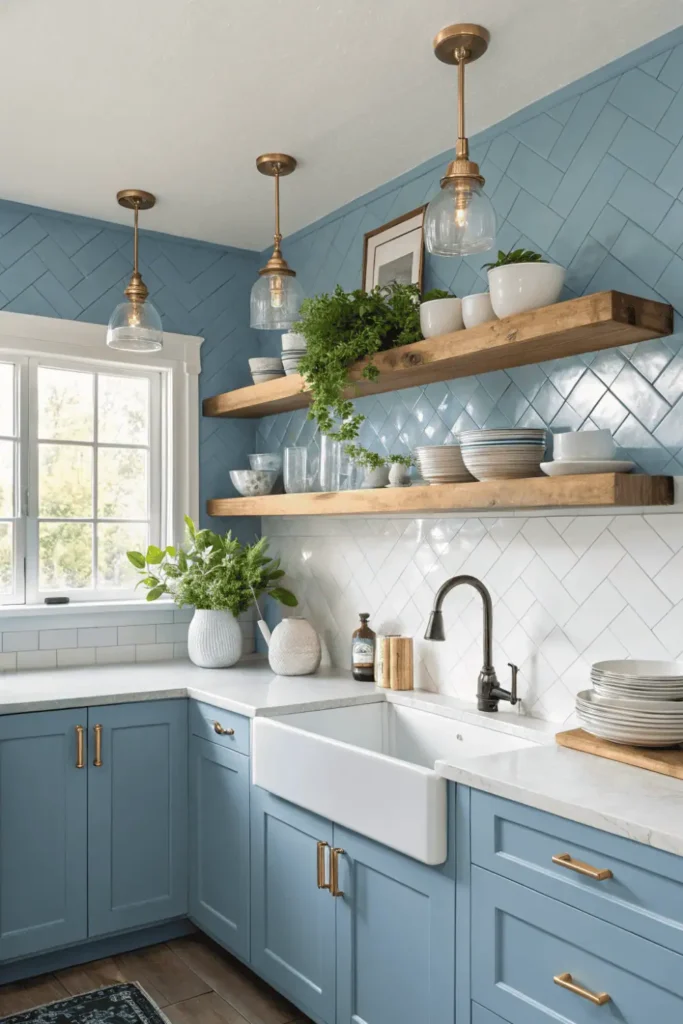
A periwinkle blue accent wall behind floating shelves adds soft color and dimension without permanent cabinet changes. This light, purple-tinged blue creates feminine, romantic atmospheres in kitchens.
Open wood shelving pops against the colored background, creating attractive display spaces for dishes, cookbooks, and decorative items. The combination feels collected and personal rather than matchy.
Pro Tip: Use the periwinkle wall color as a jumping-off point for your entire kitchen palette—pull accent colors for textiles, artwork, and accessories from this wall to create a cohesive, intentional design scheme throughout the space.
11. Mediterranean Blue Cabinets with Terracotta Accents
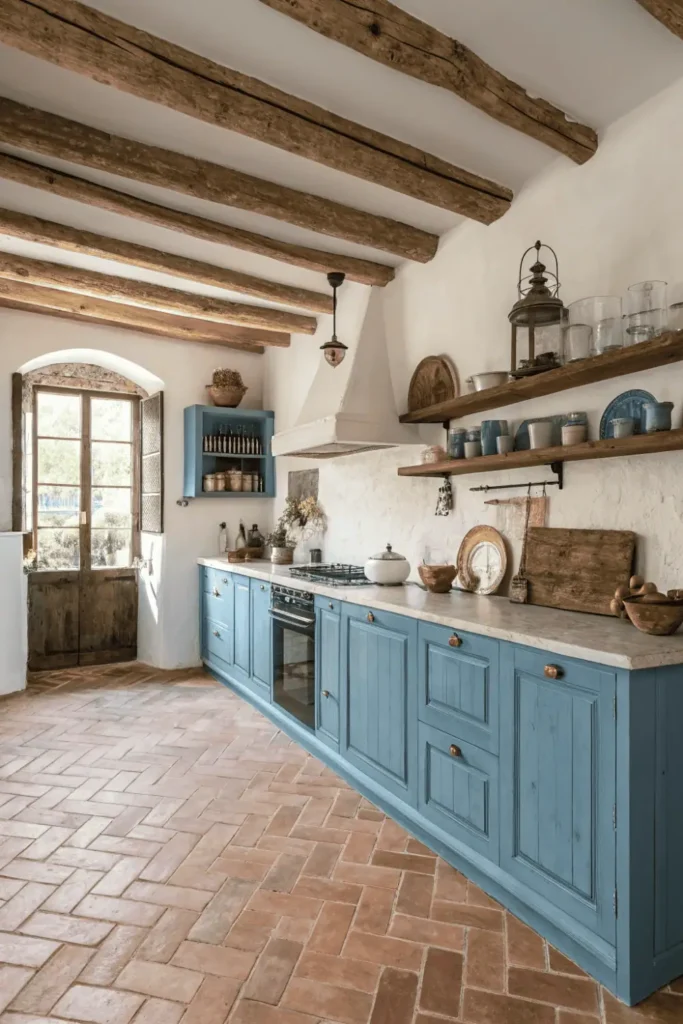
Mediterranean blue cabinets in saturated, slightly weathered finishes evoke Greek island aesthetics. This warm-toned blue pairs beautifully with terracotta, bringing vacation vibes into everyday cooking spaces.
Add terracotta floor tiles, pottery, or backsplash accents to reinforce the Mediterranean theme. Natural materials like wood, stone, and clay complement the blue beautifully.
The combination creates warm, inviting kitchens that feel lived-in and welcoming. Arched doorways, wrought iron hardware, and vintage lighting complete the look.
Pro Tip: Mediterranean blues work best with warm, yellow-based undertones rather than cool gray-blues—look for shades that remind you of weathered shutters or sun-faded paint for authentic coastal European aesthetics.
12. Robin’s Egg Blue Retro Kitchen
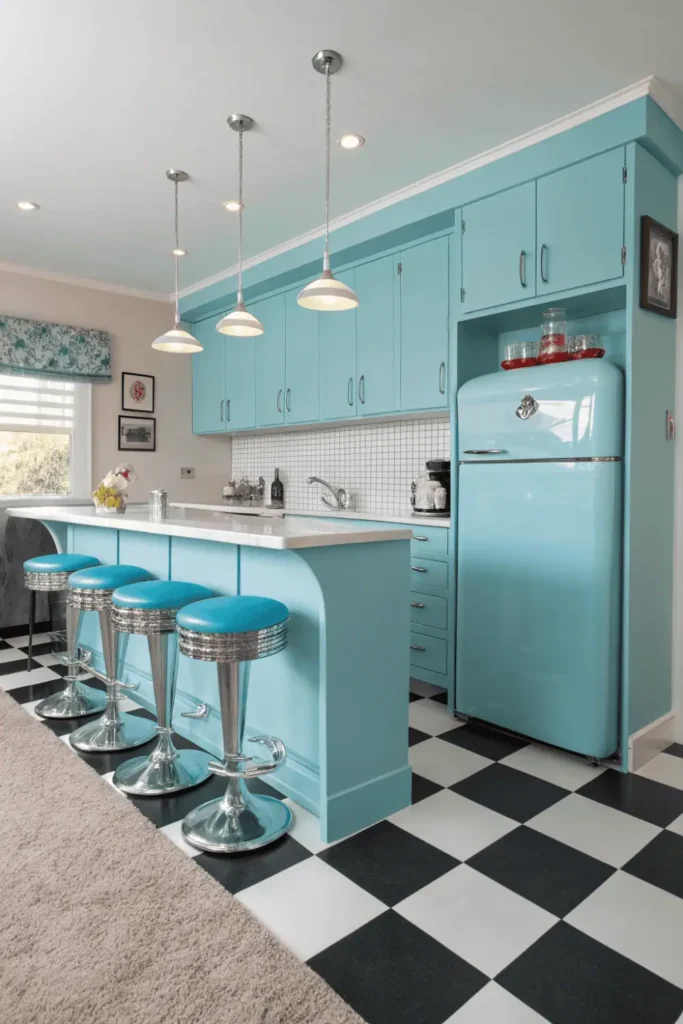
Robin’s egg blue creates cheerful, vintage-inspired kitchens reminiscent of 1950s diners. This bright, playful shade works wonderfully in retro-themed spaces with period-appropriate appliances and fixtures.
Pair with chrome hardware, checkerboard floors, and vintage-style appliances for authentic mid-century appeal. The light, energetic blue creates happy, optimistic cooking environments.
Pro Tip: If going full retro feels too themed, use robin’s egg blue on just the lower cabinets or island and keep other elements more contemporary—this creates charming eclectic spaces that feel collected rather than costume-like.
13. Slate Blue Cabinets with Concrete Countertops
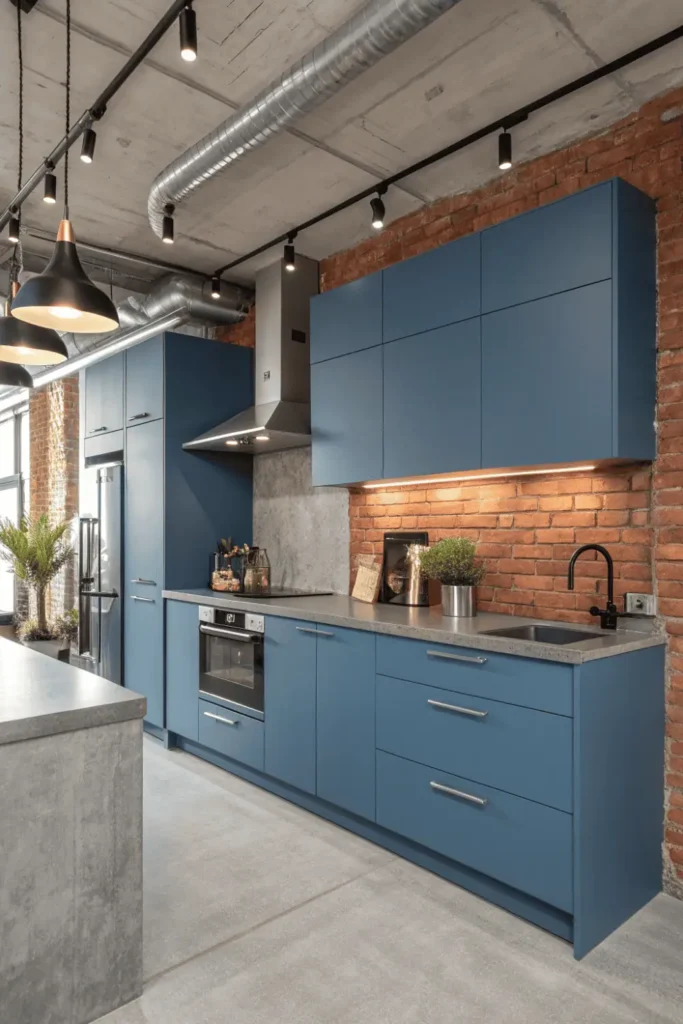
Slate blue cabinets offer moody, industrial-chic alternatives to standard blues in modern kitchens. This gray-blue hybrid creates sophisticated, masculine-leaning designs that feel current and edgy.
Concrete countertops enhance the industrial aesthetic while providing durable, unique work surfaces. Add exposed brick, metal accents, and Edison bulb lighting to complete the urban loft look.
Pro Tip: Slate blue works beautifully in open-concept spaces because it’s substantial enough to define the kitchen zone while neutral enough to coordinate with adjacent living areas painted in grays, whites, or other neutrals.
14. Light Blue Beadboard Kitchen Island
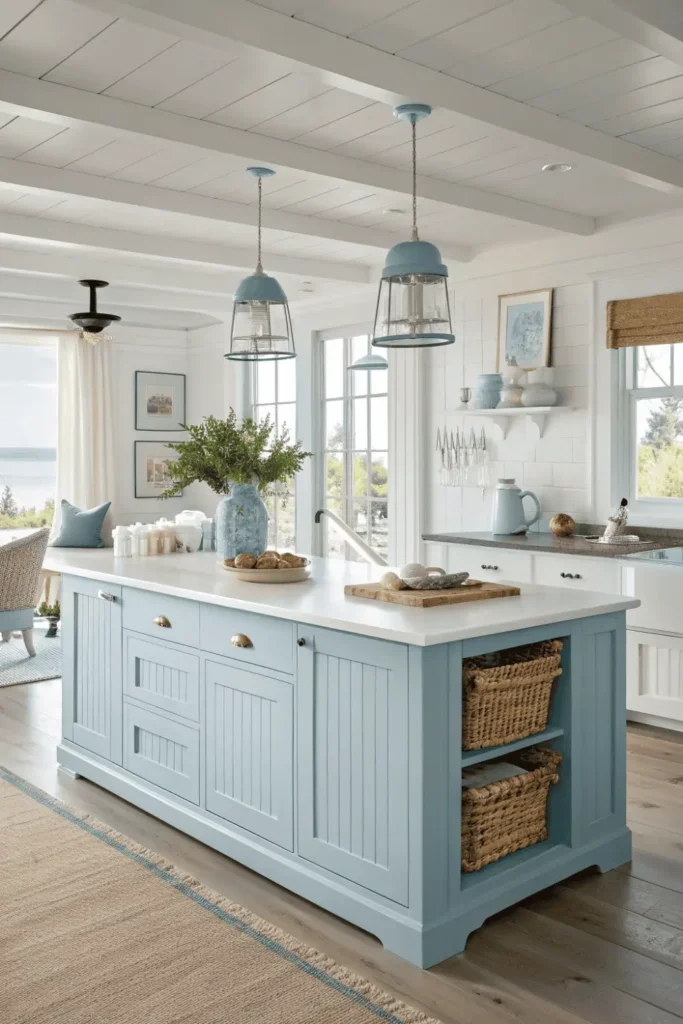
Transform a standard island into a cottage showpiece with light blue beadboard panels. This texture adds architectural interest while the soft blue creates focal points in all-white or neutral kitchens.
Beadboard detailing brings traditional charm and visual texture to plain flat surfaces. Top with butcher block or white countertops for classic combinations that never go out of style.
Pro Tip: Extend the beadboard treatment to just the sides of your island that are visible from main living areas rather than all sides—this saves time and materials while still achieving the decorative impact you want.
15. Turquoise Blue Cabinets for Bohemian Flair
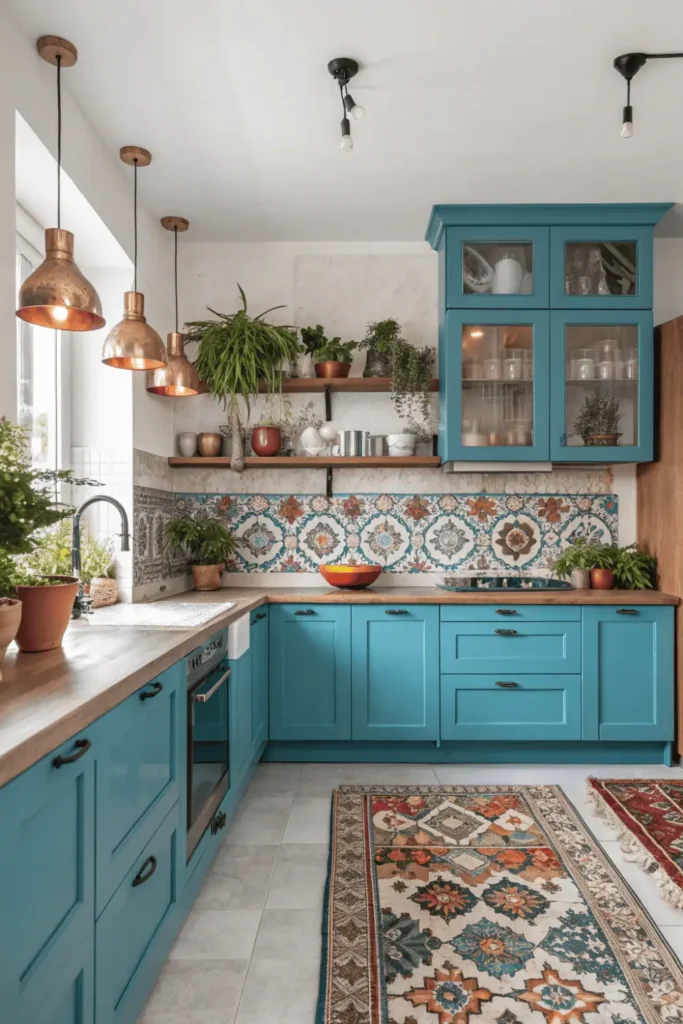
Turquoise blue cabinets bring vibrant, bohemian energy to kitchens with artistic, eclectic design sensibilities. This bold shade sits between blue and green, creating unique, personalized spaces.
Pair with colorful patterned tiles, global textiles, and mixed metal finishes for layered, collected looks. Turquoise works beautifully with warm woods, copper accents, and jewel-toned accessories.
The vibrant color creates cheerful, creative cooking environments perfect for homeowners who embrace bold design choices. Open shelving, plants, and personal collections complete the bohemian aesthetic.
Pro Tip: If pure turquoise feels too bold, consider using it on just lower cabinets or a single wall of cabinetry and keep the rest more neutral—you’ll still get the personality boost without overwhelming the space with intense color.
Why Blue Kitchen Designs Are Worth the Investment
Blue kitchen designs have proven staying power that transcends temporary trends, making them smart long-term investments. Unlike fleeting color fads, blue has been used in homes for centuries and continues evolving with contemporary styles, ensuring your kitchen remains stylish and relevant for decades.
Blue kitchens photograph beautifully in real estate listings and consistently attract buyer attention, potentially increasing your home’s resale value. Kitchen renovations typically recoup 50-80% of their cost, and distinctive, well-designed blue kitchens help properties sell faster while commanding higher prices than generic all-white spaces.
The psychological benefits of blue kitchen environments contribute to daily quality of life and shouldn’t be underestimated. Blue promotes feelings of calm, trust, and stability, creating peaceful cooking and gathering spaces where families genuinely want to spend time together.
Things to Consider Before Choosing Blue Kitchen Designs
Carefully evaluate your kitchen’s natural light before committing to blue kitchen colors, as lighting dramatically affects how shades appear. North-facing kitchens receive cool, indirect light that can make certain blues feel icy, while south-facing spaces with warm, direct light can handle deeper, cooler blues without feeling cold.
Consider which blue kitchen elements you’re willing to change in the future when assessing commitment levels and budgets. Painted cabinets or walls offer flexibility and can be updated affordably, while blue tile backsplashes or countertops represent more permanent, expensive choices requiring careful consideration.
Think about your blue kitchen design in the context of adjacent spaces, especially in open-concept homes where colors flow between rooms. Choose blue shades that coordinate with existing paint colors in connected living and dining areas to create cohesive, intentional designs rather than jarring color clashes.
Comparison Table of Blue Kitchen Styles
| Blue Kitchen Style | Price Range | Durability | Maintenance | Best For | Design Lifespan |
| Navy Cabinets with Brass | $$$ | Very High | Low | Traditional, transitional homes | 15-20 years |
| Powder Blue Shaker | $$ | High | Low | Cottage, farmhouse style | 10-15 years |
| Two-Tone Blue/White | $$ – $$$ | High | Low | Small to medium kitchens | 15-20 years |
| Blue Island Only | $ – $$ | High | Low | Cautious color adopters | 10-15 years |
| Teal Cabinets | $$ – $$$ | High | Medium | Modern, eclectic spaces | 10-15 years |
| Sky Blue Walls | $ | Medium | High | Renters, budget updates | 5-10 years |
| Cobalt Tile Backsplash | $$ | Very High | Low | Modern, contemporary | 15-20 years |
| Dusty Blue Farmhouse | $$ | High | Low | Modern farmhouse | 10-15 years |
| Sapphire Lower Cabinets | $$$ | Very High | Low | Luxury, traditional | 15-20 years |
| Periwinkle Accent Wall | $ | Medium | High | Soft, romantic style | 5-10 years |
| Mediterranean Blue | $$ – $$$ | High | Medium | European, rustic | 15-20 years |
| Robin’s Egg Retro | $$ | Medium | Medium | Vintage lovers | 8-12 years |
| Slate Blue Industrial | $$ – $$$ | Very High | Low | Urban, modern | 12-18 years |
| Light Blue Beadboard | $ – $$ | Medium | Medium | Coastal cottage | 10-15 years |
| Turquoise Bohemian | $$ | High | Medium | Eclectic, artistic | 8-12 years |
Frequently Asked Questions About Blue Kitchen
What shade of blue works best in a blue kitchen with limited natural light?
Lighter blues with warm undertones work best in kitchens with limited natural light, such as powder blue, sky blue, or dusty blue with slight gray tones. These shades reflect available light rather than absorbing it, preventing spaces from feeling dark or cave-like.
Avoid cool-toned blues like pure royal blue or icy periwinkle in dark kitchens—they can appear dull and gray without adequate sunlight. Instead, choose blues with slight yellow or green undertones that maintain vibrancy in artificial lighting.
Test large paint or cabinet samples in your actual kitchen, observing them throughout the day under different lighting conditions. What looks perfect in the store may appear completely different in your home’s specific light quality.
Does a blue kitchen hurt resale value or limit buyer appeal?
A well-executed blue kitchen typically enhances rather than hurts resale value when using classic, sophisticated shades. Navy, powder blue, and dusty blue have broad appeal and help homes stand out in listings while remaining neutral enough for most buyers to appreciate.
Avoid extremely bold or unusual blues like electric blue, neon turquoise, or purple-tinged blues if resale is a near-term concern. Stick with timeless shades paired with quality materials like marble countertops and good lighting to ensure your blue kitchen appeals to maximum buyers.
Real estate data shows that distinctive, well-designed kitchens in any color sell faster than generic all-white spaces, as they demonstrate thoughtful updates and allow buyers to envision a styled, finished home.
What colors complement blue kitchen cabinets best?
White and cream are classic complements that create fresh, clean aesthetics with any blue kitchen shade. These neutrals brighten spaces and balance blue’s intensity while maintaining timeless appeal.
Natural wood tones add warmth that prevents blue kitchens from feeling cold, working beautifully across styles from rustic to modern. Consider butcher block countertops, wood floors, or open wood shelving to introduce organic texture.
Metallic accents elevate blue kitchens—brass and gold create traditional elegance, while chrome and stainless suit modern designs. Gray, navy, and even green work as secondary colors for layered, sophisticated palettes.
Can I create a blue kitchen without painting cabinets?
Absolutely! Many homeowners achieve beautiful blue kitchen aesthetics without touching their cabinets. Paint walls in your chosen blue shade while keeping cabinets neutral—this provides dramatic color impact with minimal commitment and cost.
Install a blue tile backsplash behind stoves or sinks for focal point color that’s practical and permanent. Add blue through easily changeable elements like dish towels, rugs, bar stools, small appliances, pottery, or artwork.
Consider a blue kitchen island if you have neutral perimeter cabinets—painting just the island provides statement color without overwhelming the space and costs less than painting all cabinetry if you later want changes.