
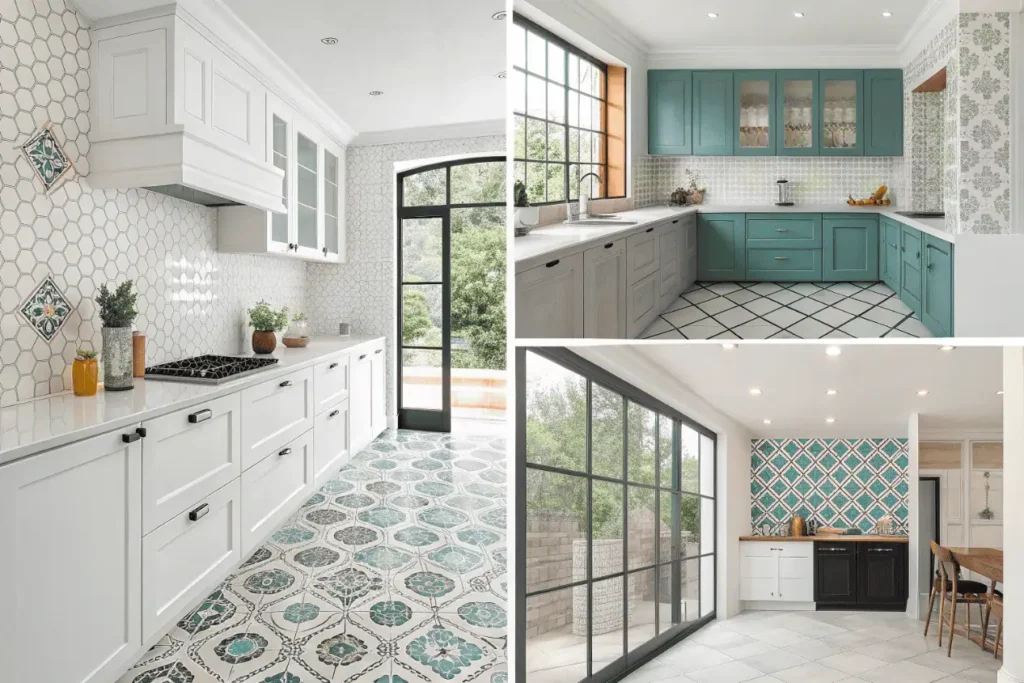
Selecting the perfect kitchen tiles can dramatically transform your cooking space into a stunning focal point. The right tile choice combines beauty, durability, and practicality to withstand daily cooking demands.
From backsplashes to flooring, tiles provide water resistance, easy cleaning, and timeless appeal that enhances any kitchen style. Modern options range from classic subway tiles to bold geometric patterns.
This comprehensive guide explores the best kitchen tiles available today to help you create a space that’s both functional and beautiful. Let’s discover which options work best for your home.
List of 15 Best Kitchen Tiles
1. Classic White Subway Tiles

White subway tiles remain the most popular kitchen tiles choice for timeless, versatile design. The traditional 3×6 inch rectangular shape creates clean lines that complement any kitchen style from farmhouse to contemporary.
These tiles reflect light beautifully, making small kitchens feel larger and brighter. Glossy finishes enhance this effect while providing easy-to-clean surfaces that resist stains and water damage.
Installation patterns like herringbone, vertical stack, or classic offset brick create different visual effects. Affordable pricing makes subway tiles budget-friendly without sacrificing style or quality.
Pro Tip: Choose beveled subway tiles for added dimension and visual interest—the subtle edge detail catches light beautifully and adds sophistication to standard white tiles.
2. Hexagonal Marble Tiles

Hexagonal marble tiles bring geometric sophistication to kitchen tiles installations with their six-sided shape. Natural marble veining creates unique patterns that ensure no two installations look identical.
These tiles work beautifully as backsplashes or accent walls, adding luxury and elegance to kitchen designs. The geometric shape creates visual interest while the neutral marble tones complement various color schemes.
Pro Tip: Seal marble tiles immediately after installation and reseal annually to protect against staining from cooking oils and acidic foods—marble is porous and requires regular maintenance.
3. Large Format Porcelain Tiles

Large format porcelain tiles (12×24 inches or larger) minimize grout lines for sleek, modern kitchen tiles installations. These oversized tiles create seamless appearances that make spaces feel more expansive and contemporary.
Porcelain’s durability exceeds ceramic, making it ideal for high-traffic kitchen floors and walls. The material resists scratches, stains, moisture, and temperature changes better than most alternatives.
Modern printing technology allows porcelain to mimic natural stone, wood, or concrete at a fraction of the cost. This versatility provides premium looks with superior practicality and easier maintenance.
Pro Tip: Large tiles require perfectly level surfaces for proper installation—hire experienced professionals to avoid lippage (uneven edges) that can create tripping hazards or unsightly appearances.
4. Colorful Moroccan Cement Tiles

Moroccan cement tiles feature vibrant patterns and colors that transform kitchen tiles installations into artistic statements. Hand-made construction creates authentic, artisanal character with slight variations adding to their charm.
Bold geometric patterns, florals, and traditional designs provide endless customization options for backsplashes and accent walls. These tiles work particularly well in bohemian, Mediterranean, and eclectic kitchens.
Pro Tip: Cement tiles are porous and require professional sealing before and after grouting—they’re more maintenance-intensive than porcelain but offer unmatched character and authentic handcrafted beauty.
5. Glass Mosaic Tiles

Glass mosaic tiles add luminous beauty to kitchen tiles applications with their reflective surfaces. Small tiles (typically 1×1 inch or smaller) mounted on mesh sheets create shimmering backsplashes that catch and reflect light.
Available in countless colors, finishes, and iridescent effects, glass tiles range from solid colors to mixed blends. The reflective quality brightens kitchens while adding depth and visual interest.
Glass proves non-porous and resistant to staining, making it exceptionally hygienic and easy to clean. Unlike natural stone, glass never requires sealing and maintains its appearance for decades.
Pro Tip: Use white thin-set mortar behind glass tiles instead of gray—colored mortar shows through translucent glass and affects the final appearance, potentially dulling your chosen color palette.
6. Terracotta Floor Tiles

Terracotta floor tiles bring warm, earthy character to kitchen tiles installations with their natural clay composition. The reddish-orange to brown tones create inviting, rustic atmospheres perfect for Mediterranean, Spanish, or farmhouse kitchens.
Handmade terracotta tiles feature slight variations in color and texture that add authentic character. The natural material ages beautifully, developing rich patinas over time that enhance rather than diminish appearance.
Pro Tip: Seal terracotta tiles with penetrating sealers designed specifically for porous clay—these tiles absorb liquids easily and require regular resealing every 1-2 years to maintain stain resistance.
7. Metallic Accent Tiles

Metallic accent tiles introduce shimmer and sophistication to kitchen tiles designs through copper, bronze, stainless steel, or pewter finishes. These tiles work beautifully as backsplash accents mixed with standard tiles.
The reflective metallic surfaces create focal points that draw the eye and add luxury touches. Mixed with neutral tiles, metallic accents provide visual interest without overwhelming spaces.
Modern metallic tiles feature durable finishes that resist tarnishing and maintain their luster with simple cleaning. They coordinate beautifully with stainless steel appliances and contemporary fixtures.
Pro Tip: Use metallic tiles sparingly as accents rather than covering entire surfaces—a few strategically placed metallic tiles create more impact than full metallic walls, which can feel overwhelming.
8. Patterned Encaustic Tiles
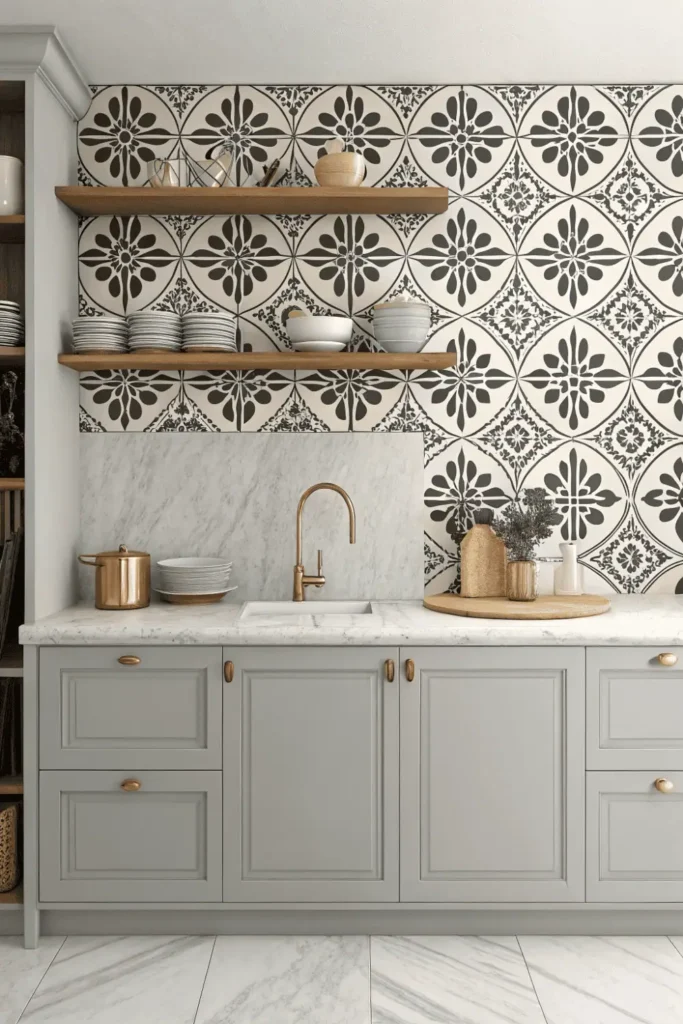
Patterned encaustic tiles feature designs inlaid into the tile surface rather than printed on top, making them ideal decorative kitchen tiles. Traditional manufacturing creates durable patterns that won’t wear off with use.
These tiles work wonderfully as statement backsplashes or floor accents that add personality and visual interest. Intricate patterns ranging from geometric to floral provide endless design possibilities.
Pro Tip: Mix patterned encaustic tiles with solid neutral tiles to balance visual weight—using patterned tiles for the entire backsplash can overwhelm small kitchens, but strategic placement creates stunning focal points.
9. Slate Floor Tiles

Slate floor tiles provide natural texture and durability for kitchen tiles flooring applications. The natural stone features beautiful color variations in grays, blacks, greens, and purples that create organic, earthy atmospheres.
Natural cleft surfaces offer slip resistance crucial for kitchen safety, especially in areas prone to water splashes. The textured finish hides dirt and wear better than smooth tiles.
Slate’s natural durability withstands heavy foot traffic and resists scratches from dropped utensils or pots. Low maintenance requirements make it practical for busy kitchens where easy cleaning is essential.
Pro Tip: Seal slate tiles annually to enhance color depth and protect against staining—unsealed slate appears dull and absorbs spills easily, but proper sealing brings out the stone’s natural beauty.
10. Arabesque Lantern-Shaped Tiles

Arabesque tiles feature distinctive lantern or teardrop shapes that create elegant kitchen tiles installations. The Moroccan-inspired silhouette adds architectural interest and sophisticated curves to backsplashes.
These tiles create eye-catching patterns through their unique shape alone, even in solid colors. Available in ceramic, glass, or natural stone, arabesque tiles suit various design styles and budgets.
Pro Tip: Arabesque tiles show grout lines prominently due to their shape—choose grout colors carefully, either matching the tile for a seamless look or contrasting for bold pattern definition.
11. Brick-Look Ceramic Tiles

Brick-look ceramic tiles replicate exposed brick aesthetics without the maintenance challenges of real brick kitchen tiles. These tiles capture rustic, industrial character while providing smooth, cleanable surfaces.
Available in red, white, or gray tones, brick-look tiles suit farmhouse, industrial, and contemporary kitchen styles. The ceramic construction ensures durability and stain resistance that real brick cannot match.
Pro Tip: Vary the installation pattern by mixing different shades of brick-look tiles to create authentic aged brick appearance—monochromatic installations can look artificial, while tonal variations add realistic character.
12. Travertine Natural Stone Tiles

Travertine tiles bring timeless elegance to kitchen tiles installations with their neutral beige, cream, and tan tones. Natural stone formation creates unique pitting and texture that adds organic character and warmth.
The stone’s natural variations ensure no two installations look identical, providing one-of-a-kind results. Travertine complements traditional, Mediterranean, and transitional kitchen designs beautifully.
Honed or tumbled finishes offer different aesthetics—honed provides smooth, matte surfaces while tumbled creates aged, rustic appearances. Both finishes work well for backsplashes and floors.
Pro Tip: Fill travertine’s natural holes with matching grout during installation to create smoother surfaces that trap less dirt—unfilled travertine requires more maintenance and collects debris in pits.
13. Penny Round Tiles

Penny round tiles feature small circular tiles (typically 3/4 to 1 inch diameter) that create distinctive retro-inspired kitchen tiles installations. The circular shape mounted on mesh sheets creates playful, textured surfaces.
These tiles work beautifully in vintage, cottage, or eclectic kitchens seeking nostalgic charm. Available in ceramic, porcelain, or glass, penny rounds suit various budgets and maintenance preferences.
Pro Tip: Use penny rounds strategically in smaller areas rather than large expanses—the busy visual pattern can overwhelm, but they create perfect accents behind ranges or as border details.
14. Limestone Tiles

Limestone tiles offer subtle elegance for kitchen tiles applications with soft, muted tones ranging from cream to gray. Natural stone formation creates gentle variations and organic texture that add sophistication without overwhelming.
The stone’s matte finish provides understated luxury perfect for neutral, calming kitchen designs. Limestone coordinates beautifully with natural materials like wood and works in traditional or contemporary spaces.
Pro Tip: Avoid limestone near cooking areas where acidic foods might splash—the calcium-based stone etches easily from acids in tomatoes, citrus, or vinegar, making it better suited for flooring than backsplashes.
15. Geometric Pattern Tiles


Geometric pattern tiles create bold statements in kitchen tiles installations through triangles, chevrons, diamonds, or abstract shapes. These tiles make kitchens feel modern, artistic, and personality-filled.
Available in countless color combinations and patterns, geometric tiles range from subtle to dramatic. The patterns create focal points that anchor kitchen design and showcase personal style.
Modern printing technology allows ceramic and porcelain geometric tiles to achieve crisp pattern edges and vibrant colors. These durable options withstand kitchen demands while maintaining visual impact.
Pro Tip: Balance bold geometric tiles with simple, neutral surrounding elements—pair patterned backsplashes with solid-color cabinets and minimal countertop decor to prevent visual chaos.
Why Kitchen Tiles Are Worth the Investment
Quality kitchen tiles provide exceptional durability that outlasts most other wall and floor materials. Properly installed tiles last 20-50 years or more, making them cost-effective long-term investments that won’t require frequent replacement like paint or wallpaper.
Kitchen tiles offer superior water resistance and hygiene crucial in cooking spaces. The non-porous surfaces prevent moisture damage, resist bacteria growth, and clean easily with simple soap and water, protecting your home’s structure while maintaining healthy environments.
Strategic kitchen tiles installations significantly increase home value and buyer appeal. Real estate professionals consistently report that updated tile work yields high returns on investment, with attractive tile backsplashes and floors helping homes sell faster and for premium prices.
Things to Consider Before Choosing Kitchen Tiles
Carefully evaluate your kitchen tiles budget including materials, professional installation, and underlayment preparation. Tile costs range from $1-50 per square foot, but installation typically doubles or triples total project costs—factor in both for realistic budgeting and avoid unpleasant financial surprises.
Consider maintenance requirements when selecting kitchen tiles for your lifestyle needs. Natural stone requires regular sealing, while porcelain and ceramic need minimal care—busy households benefit from low-maintenance options that maintain beauty without intensive upkeep schedules.
Assess your kitchen tiles needs based on location and function. Floor tiles require different specifications than backsplashes, including slip resistance ratings and higher durability—using wall tiles on floors creates safety hazards and premature wear.
Comparison Table of Kitchen Tiles
| Tile Type | Price Range | Durability | Maintenance | Best For | Installation Difficulty |
| White Subway Tiles | $ | High | Low | Backsplashes, timeless style | Easy |
| Hexagonal Marble | $$$ | Medium | High | Accent walls, luxury looks | Medium |
| Large Format Porcelain | $$ – $$$ | Very High | Very Low | Floors, modern kitchens | Difficult |
| Moroccan Cement | $$$ | Medium | High | Backsplashes, bohemian style | Medium |
| Glass Mosaic | $$ – $$$ | High | Low | Backsplashes, light reflection | Medium |
| Terracotta Floor | $$ | Medium | High | Floors, rustic kitchens | Medium |
| Metallic Accent | $$$ – $$$$ | High | Low | Accent pieces, modern style | Medium |
| Patterned Encaustic | $$$ | High | Medium | Statement backsplashes | Medium |
| Slate Floor | $$ | Very High | Medium | Floors, natural look | Medium |
| Arabesque Lantern | $$ – $$$ | High | Low | Backsplashes, elegant style | Difficult |
| Brick-Look Ceramic | $ – $$ | High | Low | Backsplashes, industrial style | Easy |
| Travertine Stone | $$ – $$$ | Medium | High | Traditional kitchens | Medium |
| Penny Round | $$ | High | Low | Vintage style, accents | Medium |
| Limestone | $$$ | Medium | High | Floors, neutral elegance | Medium |
| Geometric Pattern | $$ – $$$ | High | Low | Modern statement walls | Medium |
Frequently Asked Questions About Kitchen Tiles
What are the most durable kitchen tiles for high-traffic areas?
Porcelain kitchen tiles offer the highest durability for floors and walls in busy cooking spaces. The dense material resists scratches, stains, moisture, and heavy impact better than ceramic or natural stone alternatives.
Look for porcelain rated PEI 4 or 5 (Porcelain Enamel Institute rating) for kitchen floors—these grades withstand heavy traffic without showing wear. Through-body porcelain tiles maintain color throughout the tile thickness, so chips and scratches remain invisible.
Natural slate also provides excellent durability with the added benefit of slip resistance. The textured surface and natural composition withstand kitchen demands while requiring minimal maintenance beyond annual sealing.
How do I choose between ceramic and porcelain kitchen tiles?
Ceramic kitchen tiles cost less and work beautifully for backsplashes and low-traffic areas where impact resistance matters less. The glazed surface provides adequate water resistance and easy cleaning for vertical surfaces protected from heavy use.
Porcelain kitchen tiles offer superior density, durability, and water resistance essential for floors and high-impact areas. The manufacturing process creates tiles that absorb less than 0.5% moisture, preventing damage in wet kitchen environments.
Choose ceramic for budget-friendly backsplash projects and porcelain for kitchen floors or areas behind sinks where water exposure is constant. Both materials clean easily and last for decades with proper installation.
What kitchen tiles are easiest to clean and maintain?
Glazed porcelain and ceramic kitchen tiles require the least maintenance with simple soap and water cleaning. The non-porous glazed surface resists staining and never requires sealing, making them ideal for busy households.
Glass kitchen tiles also clean effortlessly with standard glass cleaner and maintain their appearance indefinitely without special treatments. The completely non-porous material prevents bacteria growth and staining better than any stone option.
Avoid natural stone kitchen tiles like marble, travertine, or limestone if you want minimal maintenance—these porous materials require annual sealing, special pH-neutral cleaners, and careful attention to prevent etching and staining from kitchen acids.
How much do kitchen tiles typically cost installed?
Kitchen tiles material costs range from $1-50 per square foot depending on tile type, size, and quality. Budget ceramic tiles start around $1-3 per square foot, while premium natural stone or designer tiles reach $20-50 per square foot or higher.
Professional installation typically adds $5-15 per square foot for labor, including surface preparation, setting tiles, grouting, and sealing. Complex patterns, small tiles, or difficult layouts increase labor costs due to additional time and precision requirements.
Expect total kitchen tiles project costs of $800-3,000 for average backsplashes (30-40 square feet) or $2,000-8,000 for complete floor renovations (100-200 square feet), including materials and professional installation with proper underlayment and finishing.