
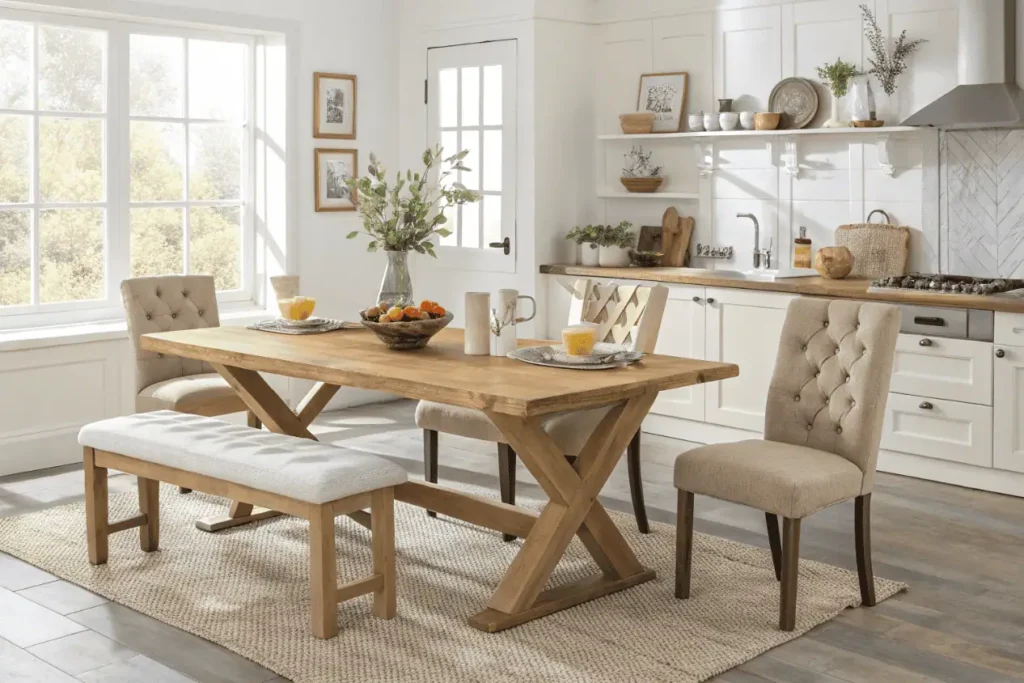
Selecting the perfect kitchen table transforms your dining space into the heart of your home. This essential piece of furniture serves as the gathering spot for family meals, homework sessions, and meaningful conversations.
Beyond functionality, your table choice impacts your kitchen’s aesthetic and flow. The right size, shape, and material create harmony and comfort in your busiest room.
This comprehensive guide explores the best kitchen table options available today, helping you find the ideal match for your space, lifestyle, and budget. Let’s discover your perfect dining solution.
List of 15 Best Kitchen Table Options
1. Solid Wood Farmhouse Kitchen Table

A solid wood farmhouse table brings timeless charm and durability to any kitchen space. The sturdy construction withstands daily use while developing a beautiful patina over time.
These tables typically feature thick tabletops and chunky legs that create a rustic, welcoming aesthetic. Natural wood grains add warmth and character that complements both traditional and modern kitchens.
Most farmhouse tables accommodate 6-8 people comfortably, making them perfect for family gatherings. The classic design never goes out of style.
Pro Tip: Look for tables made from hardwoods like oak, maple, or walnut for maximum durability—these woods resist scratches and dents better than softer pines, ensuring your kitchen table investment lasts decades.
2. Round Pedestal Kitchen Table for Small Spaces

Round pedestal tables maximize seating capacity in compact kitchens by eliminating corner legs. The single central base allows chairs to tuck in completely, creating more floor space and easier movement.
This kitchen table style promotes conversation by seating everyone equally around the perimeter. The circular shape creates an intimate, inclusive dining experience.
Pro Tip: Measure your space carefully and allow at least 36 inches of clearance around the table for comfortable chair movement—round tables work best in square or nearly square dining areas.
3. Extendable Rectangular Kitchen Table
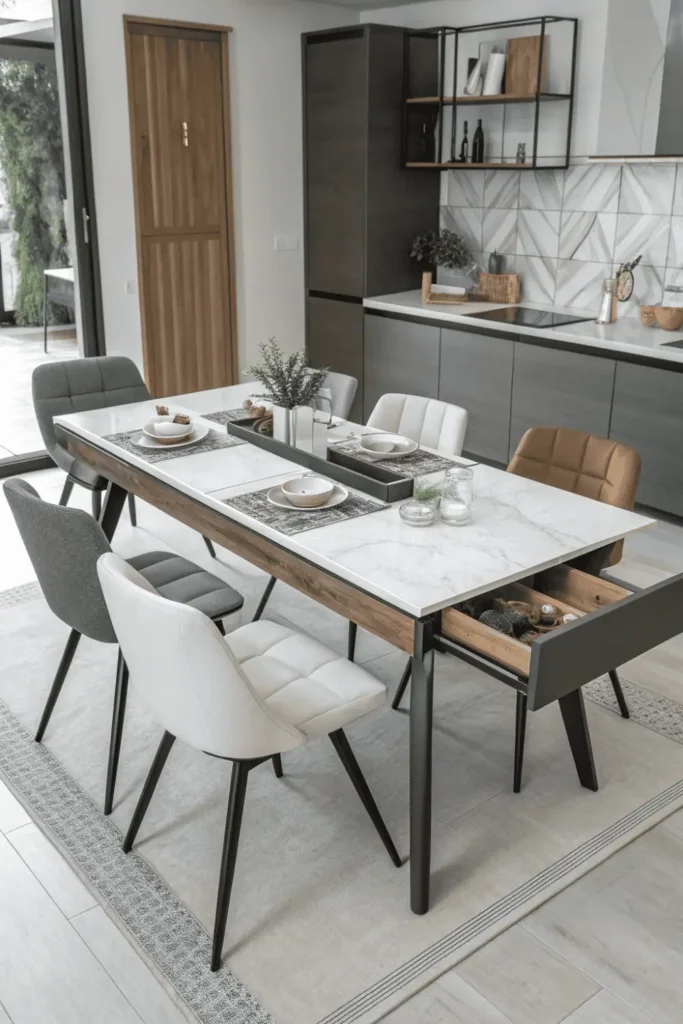
An extendable kitchen table adapts to your changing needs with leaves that expand the surface when guests arrive. The butterfly leaf or drop-in extensions transform everyday dining into holiday-ready entertaining.
These versatile tables typically seat 4-6 people normally and expand to accommodate 8-10 guests. The space-saving design eliminates the need for a permanently large table in smaller kitchens.
Quality extension mechanisms operate smoothly and lock securely to prevent gaps or instability during meals.
Pro Tip: Test the extension mechanism in the store to ensure it operates easily—you should be able to extend and collapse the table without requiring two people or excessive force.
4. Glass Top Kitchen Table with Metal Base

Glass-top tables create an airy, modern aesthetic while making small kitchens feel more spacious. The transparent surface reflects light beautifully and visually opens up tight spaces.
This kitchen table style requires regular cleaning to maintain its pristine appearance but rewards you with contemporary elegance. Tempered glass construction ensures safety and durability.
Metal bases in chrome, brushed nickel, or black powder-coat finishes provide sturdy support and modern styling.
Pro Tip: Choose tempered glass at least 3/8-inch thick for dining tables, and look for tables with rounded or beveled edges to prevent chips and provide safer contact points for active households.
5. Drop-Leaf Kitchen Table for Tiny Spaces

Drop-leaf tables feature hinged sides that fold down when not in use, creating ultra-compact storage perfect for studio apartments or galley kitchens. When needed, one or both leaves lift to provide full dining surface.
This space-saving kitchen table can shrink to console table width against a wall, freeing valuable floor space. The traditional gate-leg or bracket support systems ensure stability when extended.
Pro Tip: Position drop-leaf tables perpendicular to walls so both leaves can extend freely—avoid placing them in corners where wall proximity prevents full expansion and limits seating options.
6. Counter-Height Kitchen Table for Modern Living
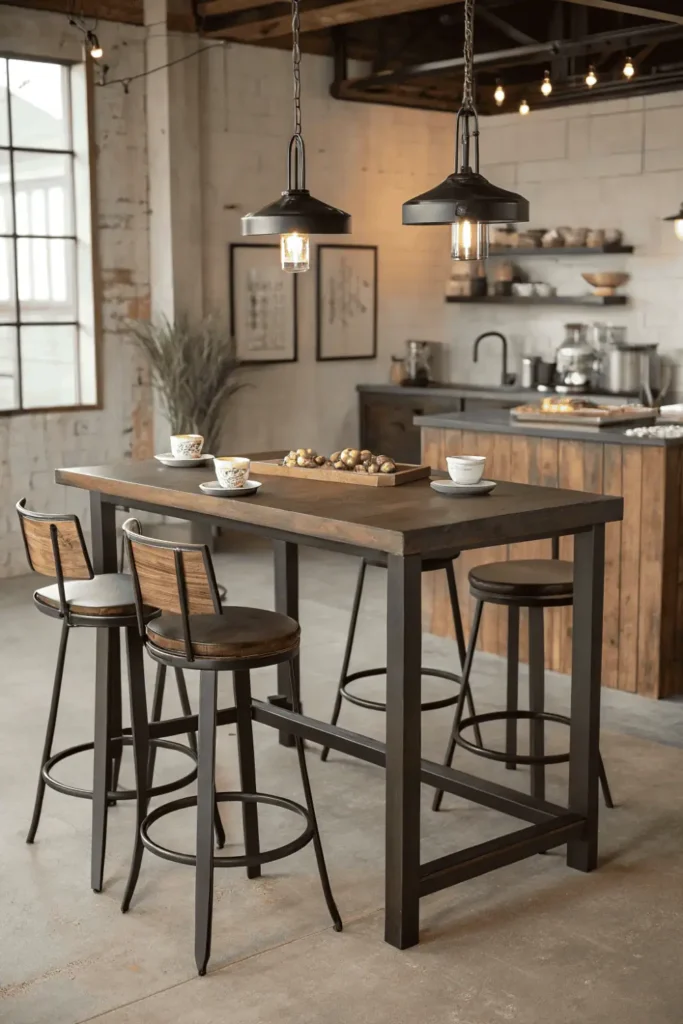
Counter-height tables (36 inches tall) create casual dining experiences and work beautifully in open-concept spaces. The elevated surface provides comfortable standing workspace for food prep and homework help.
This kitchen table style pairs with bar stools or counter-height chairs, adding visual variety to your space. The height eliminates the need for separate kitchen islands in smaller homes.
Counter-height seating promotes better posture and makes getting up and down easier for many people.
Pro Tip: Ensure your counter-height stools have footrests for comfort during extended sitting—dangling feet cause discomfort, so measure carefully to find stools that position feet comfortably at rest.
7. Marble Top Kitchen Table for Luxury Appeal

Marble-topped tables bring sophisticated elegance and timeless luxury to kitchen dining areas. The natural stone features unique veining patterns that make each table one-of-a-kind.
This kitchen table material stays naturally cool, making it ideal for pastry work and summer dining. Sealed marble surfaces resist stains when properly maintained.
The substantial weight provides excellent stability, though it makes moving this furniture challenging.
Pro Tip: Apply marble sealer every 6-12 months to protect against stains and etching from acidic foods like lemon juice or tomato sauce—prevention is easier than repair with natural stone surfaces.
8. Butcher Block Kitchen Table for Workspace

Butcher block tables combine beautiful wood surfaces with practical food preparation functionality. The thick laminated wood construction withstands knife work, heat, and heavy use.
This kitchen table style adds warmth and texture while serving double duty as additional counter space. Regular oiling maintains the wood’s luster and protective qualities.
The natural antimicrobial properties of wood make butcher block surfaces surprisingly hygienic for food prep.
Pro Tip: Use food-grade mineral oil monthly to condition your butcher block table and prevent drying or cracking—avoid vegetable oils which can turn rancid and create unpleasant odors over time.
9. Industrial Style Metal and Wood Kitchen Table

Industrial-style tables combine metal frames with reclaimed wood tops, creating edgy, urban aesthetics. The mixed materials offer durability and distinctive character perfect for loft-style spaces.
This kitchen table design typically features exposed hardware, raw finishes, and minimal ornamentation. Steel or iron bases provide exceptional stability and weight capacity.
The rugged construction handles active families and entertaining without showing wear easily.
Pro Tip: Check that metal components have powder-coat finishes or proper rust-prevention treatment, especially in humid climates—raw metal develops patina that some love but others find problematic for maintaining clean aesthetics.
10. Live Edge Wood Kitchen Table for Natural Beauty

Live edge tables showcase wood’s natural edges and organic shapes, creating stunning focal points in modern kitchens. Each piece is unique, displaying the tree’s original contours and character.
This kitchen table style celebrates natural imperfections like knots, burls, and color variations. Epoxy resin fills often stabilize cracks while adding contemporary contrast.
The substantial slabs require kiln-drying and proper sealing to prevent warping and ensure longevity.
Pro Tip: Verify that your live edge table has been properly kiln-dried and sealed—inadequately prepared wood slabs can crack, warp, or split over time, ruining your investment in this premium furniture.
11. Painted Cottage Style Kitchen Table

Painted cottage tables offer charming character and easy customization to match your decor. Distressed finishes create vintage appeal while hiding future scratches and wear.
This kitchen table style typically features turned legs, apron details, and soft pastel or crisp white finishes. The versatile design complements farmhouse, shabby chic, and coastal aesthetics.
Quality furniture paint and sealing create durable surfaces that withstand daily use.
Pro Tip: When buying painted tables, check that finish is even and smooth—quality paint jobs have multiple thin coats rather than thick, drippy applications that chip easily with use.
12. Oval Kitchen Table for Flexible Seating

Oval tables combine the space efficiency of rectangles with the conversational benefits of round shapes. The elongated design fits well in narrow dining areas while eliminating sharp corners.
This kitchen table shape accommodates more guests than round tables of similar length. The flowing curves soften room aesthetics and improve traffic flow around the dining area.
Oval tables work particularly well in transitional spaces between kitchens and living areas.
Pro Tip: Oval tables typically require custom tablecloths or runners since standard rectangular linens don’t fit properly—factor this additional cost into your budget if you prefer dressed tables for entertaining.
13. Convertible Coffee-to-Dining Kitchen Table

Convertible tables transform from low coffee tables to full dining height with adjustable mechanisms. These space-saving solutions work perfectly in studio apartments or multipurpose rooms.
This innovative kitchen table design eliminates the need for separate furniture pieces. Hydraulic lifts or manual adjustments change height and sometimes expand surface area simultaneously.
The versatile functionality makes small-space living more comfortable and practical.
Pro Tip: Test the conversion mechanism thoroughly and read reviews about long-term durability—these moving parts represent potential failure points, so invest in quality construction from reputable manufacturers.
14. Rustic Trestle Base Kitchen Table

Trestle tables feature distinctive X-shaped or pedestal-style bases connected by stretchers, offering excellent legroom and classic charm. The sturdy construction supports large tabletops without center legs.
This kitchen table design originated in medieval times and remains popular for its architectural interest and stability. Rustic finishes highlight natural wood character.
The open base design makes cleaning underneath easier than traditional four-leg tables.
Pro Tip: Ensure the trestle base is proportional to the tabletop—oversized tops on narrow bases can feel tippy, while massive bases under modest tops look awkward and waste valuable floor space.
15. Acrylic or Lucite Kitchen Table for Contemporary Spaces

Acrylic tables offer ultra-modern transparency that makes small kitchens feel significantly larger. The clear material seemingly disappears, creating floating illusions for dishes and decor.
This contemporary kitchen table style resists yellowing when made from quality materials. Scratch-resistant finishes maintain clarity despite daily use.
The lightweight construction makes moving and rearranging furniture surprisingly easy compared to traditional materials.
Pro Tip: Wipe acrylic tables with microfiber cloths and avoid ammonia-based cleaners which can cloud the surface—use mild soap and water for regular cleaning to maintain the crystal-clear appearance.
Why Kitchen Table Investments Are Worth It
A quality kitchen table serves as your home’s gathering center for 15-20 years or more, making it one of the most-used furniture pieces you’ll own. The daily value of comfortable, beautiful dining space far exceeds the initial cost when calculated over decades of family meals and memories.
Investing in the right kitchen table significantly impacts your home’s resale value and buyer appeal. Real estate professionals consistently note that well-furnished dining areas help homes sell faster and for better prices, as buyers envision their own family moments in welcoming spaces.
Premium kitchen table materials and construction mean fewer replacements and lower long-term costs. Quality hardwoods, sealed stone, and professional finishes withstand decades of use while cheap tables deteriorate within 5-7 years, ultimately costing more through repeated purchases.
Things to Consider Before Choosing Kitchen Table Options
Measure your kitchen table space carefully, allowing 36-48 inches of clearance on all sides for comfortable chair movement and traffic flow. Inadequate space creates cramped, uncomfortable dining that defeats the purpose of gathering around the table.
Consider your kitchen table material choice based on lifestyle and maintenance preferences—households with young children need durable, stain-resistant surfaces while empty nesters can enjoy delicate materials. Daily cleaning requirements vary dramatically between glass, wood, and stone surfaces.
Evaluate your kitchen table purchase with realistic growth projections and flexibility needs. Families expecting to expand benefit from extendable designs, while downsizing retirees might prioritize compact options that accommodate occasional guests without dominating daily space.
Comparison Table of Kitchen Table Styles
| Table Style | Price Range | Durability | Maintenance | Best For | Typical Lifespan |
| Solid Wood Farmhouse | $$$ – $$$$ | Very High | Medium | Traditional homes, families | 20-30+ years |
| Round Pedestal | $$ – $$$ | High | Low to Medium | Small spaces, conversation | 15-25 years |
| Extendable Rectangular | $$$ | High | Medium | Growing families, entertainers | 15-20 years |
| Glass Top with Metal | $$ – $$$ | Medium | High | Modern spaces, small kitchens | 10-15 years |
| Drop-Leaf | $ – $$ | Medium | Low | Tiny spaces, apartments | 10-15 years |
| Counter-Height | $$ – $$$ | High | Low to Medium | Casual dining, open concepts | 15-20 years |
| Marble Top | $$$$ | Very High | High | Luxury kitchens, formal dining | 25-40+ years |
| Butcher Block | $$ – $$$ | High | High | Food prep, rustic kitchens | 15-25 years |
| Industrial Metal/Wood | $$ – $$$ | Very High | Low | Urban lofts, modern spaces | 20-30 years |
| Live Edge Wood | $$$$ | High | Medium | Statement pieces, modern rustic | 20-30+ years |
| Painted Cottage | $ – $$ | Medium | Medium | Shabby chic, farmhouse | 10-20 years |
| Oval | $$ – $$$ | High | Low to Medium | Narrow spaces, formal dining | 15-25 years |
| Convertible | $$$ – $$$$ | Medium | Medium | Studio apartments, multi-use | 10-15 years |
| Rustic Trestle | $$$ | Very High | Low | Farmhouse, large families | 20-30+ years |
| Acrylic/Lucite | $$$ – $$$$ | Medium | Medium | Contemporary, small spaces | 10-15 years |
Frequently Asked Questions About Kitchen Table Selection
What size kitchen table fits my space best?
Your ideal kitchen table size depends on both room dimensions and seating needs, requiring 36-48 inches of clearance on all sides for comfortable movement. For rectangular tables, allow 24 inches of surface width per person and 12 inches of depth for place settings.
A 36-inch round table seats four people comfortably in spaces measuring at least 9×9 feet, while 60-inch rectangular tables accommodate six in rooms measuring 10×12 feet minimum. Measure carefully and use painter’s tape to mark the table footprint on your floor before purchasing.
Consider traffic patterns through your kitchen—tables shouldn’t block pathways to appliances, exits, or frequently accessed cabinets.
What kitchen table material is most durable?
Solid hardwoods like oak, maple, and walnut offer the best durability for kitchen tables, resisting scratches, dents, and moisture damage better than softer woods or veneers. These materials develop beautiful patinas over decades and can be refinished multiple times.
Natural stone tops including granite and marble provide exceptional longevity and heat resistance, though they require regular sealing and careful maintenance. Metal and quality engineered materials also deliver excellent durability for modern kitchen table designs.
Avoid particleboard or low-quality veneers in dining tables—these materials deteriorate quickly under normal use and cannot be repaired when damaged.
How many people should my kitchen table seat?
Base your kitchen table seating capacity on regular household size plus 2-4 occasional guests for optimal flexibility. A family of four benefits from a six-person table, while couples might choose four-seat options with extendable features for entertaining.
Allow 24 inches of table width per person for comfortable elbow room—cramped seating makes meals uncomfortable. Count all regular diners including children who will grow into full-sized chairs within the table’s expected lifespan.
Consider extendable options if you frequently host holidays or dinner parties but don’t want a permanently large table occupying daily space.
What’s the best height for a kitchen table?
Standard kitchen table height measures 28-30 inches from floor to tabletop, pairing comfortably with chairs measuring 17-19 inches to the seat. This traditional height accommodates most body types and allows proper posture during meals.
Counter-height tables (36 inches) pair with 24-inch bar stools and create casual dining atmospheres popular in modern open-concept homes. Bar-height tables (42 inches) work best in dedicated bar areas rather than primary dining spaces.
Test table and chair combinations in person when possible—comfortable proportions ensure your kitchen table gets used rather than avoided for dining.