Selecting the right kitchen cabinets transforms your cooking space from ordinary to extraordinary. These essential storage solutions define your kitchen’s style while providing the functionality you need for daily cooking and entertaining.
Quality cabinetry accounts for nearly 40-50% of your kitchen renovation budget, making it crucial to choose wisely. The right cabinets improve workflow, maximize storage, and increase your home’s resale value significantly.
This comprehensive guide explores the best kitchen cabinets available today, helping you navigate materials, styles, and features to find the perfect match for your home. Let’s discover your ideal cabinetry solution.
List of 15 Best Kitchen Cabinets
1. Shaker-Style Solid Wood Cabinets

Shaker-style kitchen cabinets feature clean lines with a simple frame-and-panel door design that never goes out of style. This timeless aesthetic works beautifully in traditional, farmhouse, and transitional kitchens while offering versatility for modern spaces.
Solid wood construction ensures durability lasting 20-50 years with proper care. Popular wood choices include maple, oak, cherry, and birch, each offering unique grain patterns and natural beauty.
The recessed center panel and minimal ornamentation make these cabinets easy to clean and maintain. Customizable finishes range from natural stains to painted colors matching any design scheme.
Pro Tip: Choose maple for painted finishes as its tight grain accepts paint smoothly without showing texture, while oak works better for stained finishes that highlight natural wood grain.
2. Flat-Panel Contemporary Cabinets

Flat-panel kitchen cabinets (also called slab cabinets) feature completely smooth door fronts without raised panels or frames. This ultra-modern design creates sleek, minimalist aesthetics perfect for contemporary and European-style kitchens.
The seamless surfaces reflect light beautifully, making small kitchens feel more spacious and open. High-gloss finishes enhance this effect while matte finishes offer sophisticated subtlety.
These cabinets pair wonderfully with handleless designs or minimalist bar pulls for the ultimate streamlined look.
Pro Tip: Flat-panel cabinets show fingerprints and smudges more easily than textured styles—choose matte or textured laminates instead of high-gloss finishes if you have young children or prefer low-maintenance surfaces.
3. Rustic Reclaimed Wood Cabinets
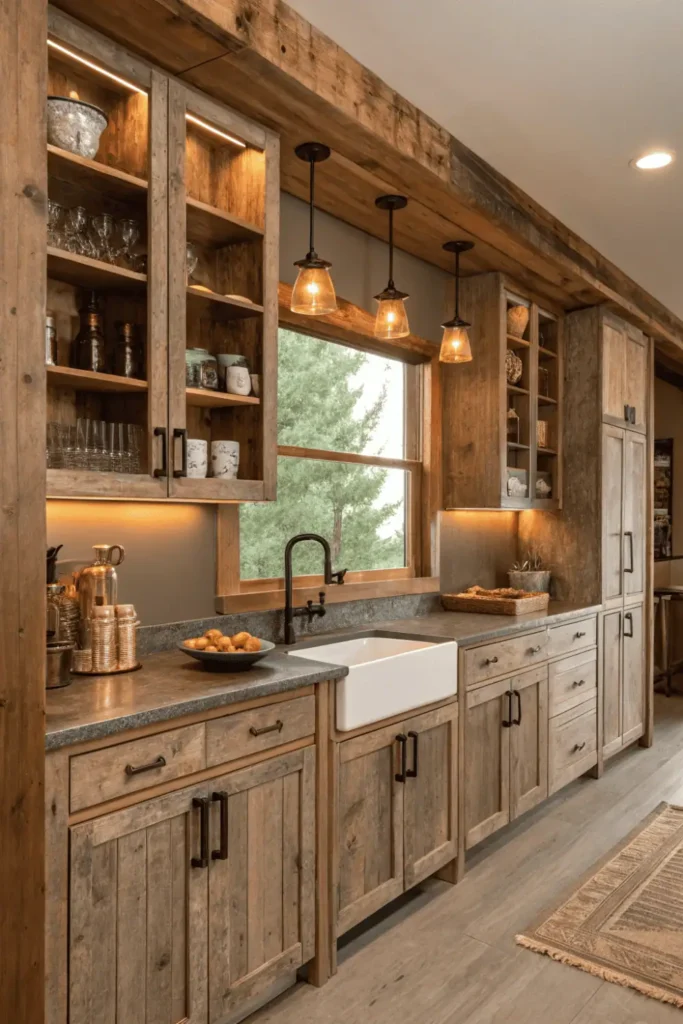
Reclaimed wood kitchen cabinets bring character and history into your cooking space with unique patinas and weathered textures. Each piece tells a story through natural imperfections, knots, and varied coloring that mass-produced cabinets cannot replicate.
This eco-friendly choice repurposes barn wood, old factory lumber, or salvaged building materials into stunning cabinetry. Sustainability-minded homeowners appreciate reducing waste while creating one-of-a-kind kitchens.
The rustic aesthetic works beautifully in farmhouse, industrial, and mountain home designs.
Pro Tip: Seal reclaimed wood cabinets with food-safe finishes to protect against moisture and make cleaning easier, while preserving the authentic weathered appearance that makes these pieces special.
4. Glass-Front Display Cabinets

Glass-front kitchen cabinets showcase beautiful dishware, glassware, and collectibles while maintaining dust-free storage. These cabinets add visual interest and depth by creating see-through sections that break up solid cabinetry.
Clear, seeded, or frosted glass options offer varying levels of visibility and privacy. Interior cabinet lighting transforms these displays into stunning focal points, especially during evening entertaining.
Mixing glass-front uppers with solid lowers creates balanced designs that feel open without sacrificing storage capacity.
Pro Tip: Reserve glass-front cabinets for items you genuinely love displaying and keep them organized—cluttered or mismatched items behind glass doors create visual chaos instead of elegant displays.
5. Two-Tone Cabinet Combinations

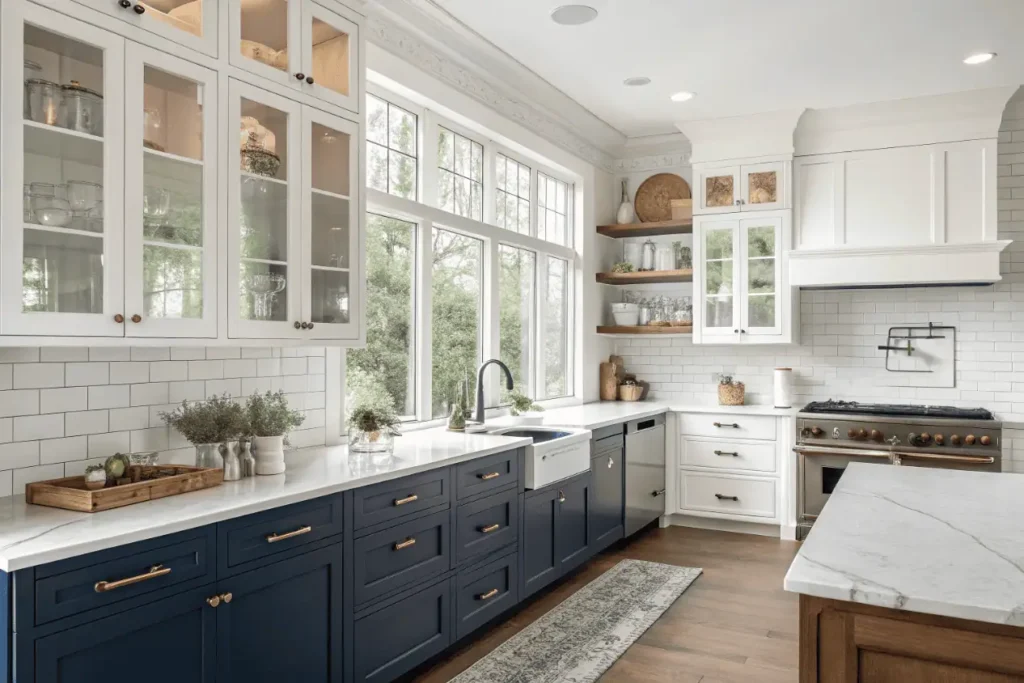
Two-tone kitchen cabinets combine different colors or finishes on upper and lower cabinets, creating dynamic visual interest. This trendy approach typically features darker lowers (navy, charcoal, or forest green) with lighter uppers (white, cream, or light gray).
The contrasting colors add depth and dimension while allowing you to incorporate bold colors without overwhelming the space. Islands in accent colors create stunning focal points while perimeter cabinets remain neutral.
This design strategy works across multiple styles from modern farmhouse to contemporary urban kitchens.
Pro Tip: Ensure your two-tone cabinet choices share complementary undertones (both warm or both cool) and connect them through hardware, countertops, or backsplash materials to create cohesion.
6. Open Shelving Mixed with Closed Cabinets

Combining open shelving with traditional kitchen cabinets creates functional storage while displaying attractive items. This hybrid approach offers the practicality of closed storage with the visual breathing room of open displays.
Floating shelves replace some upper cabinets, reducing the closed-in feeling while maintaining adequate storage for everyday dishes and cooking essentials. This design works particularly well in smaller kitchens needing visual expansion.
Style open shelves with curated collections, cookbooks, plants, and attractive dishware for magazine-worthy displays.
Pro Tip: Install open shelving where you store items used daily like coffee mugs, plates, and glasses—this keeps frequently accessed items convenient while reserving closed cabinets for less attractive necessities.
7. High-Gloss Lacquer Cabinets

High-gloss kitchen cabinets feature ultra-smooth, reflective finishes that bounce light throughout the space. These modern cabinets create dramatic, sophisticated looks popular in European and contemporary designs.
The mirror-like surface makes small kitchens appear larger and brighter by reflecting natural and artificial light. Easy-to-clean surfaces wipe down effortlessly, though they show fingerprints and smudges readily.
Available in countless colors from classic white to bold jewel tones, glossy cabinets make strong style statements.
Pro Tip: Pair high-gloss cabinets with matte countertops and backsplashes to prevent overwhelming shine—mixing finishes creates more sophisticated, balanced designs than matching everything.
8. Raised-Panel Traditional Cabinets

Raised-panel kitchen cabinets feature decorative center panels that protrude from the door frame, creating classic, elegant aesthetics. This traditional style suits formal kitchens and homes with historical or classical architectural details.
The dimensional design adds visual interest and sophistication through craftsmanship details. Intricate moldings and decorative elements enhance the luxurious appearance.
These cabinets work beautifully in traditional, Victorian, and French country kitchen designs where ornate details are celebrated.
Pro Tip: Balance ornate raised-panel cabinets with simpler countertops and backsplashes—too many competing details create visual clutter rather than elegant sophistication.
9. Frameless European-Style Cabinets
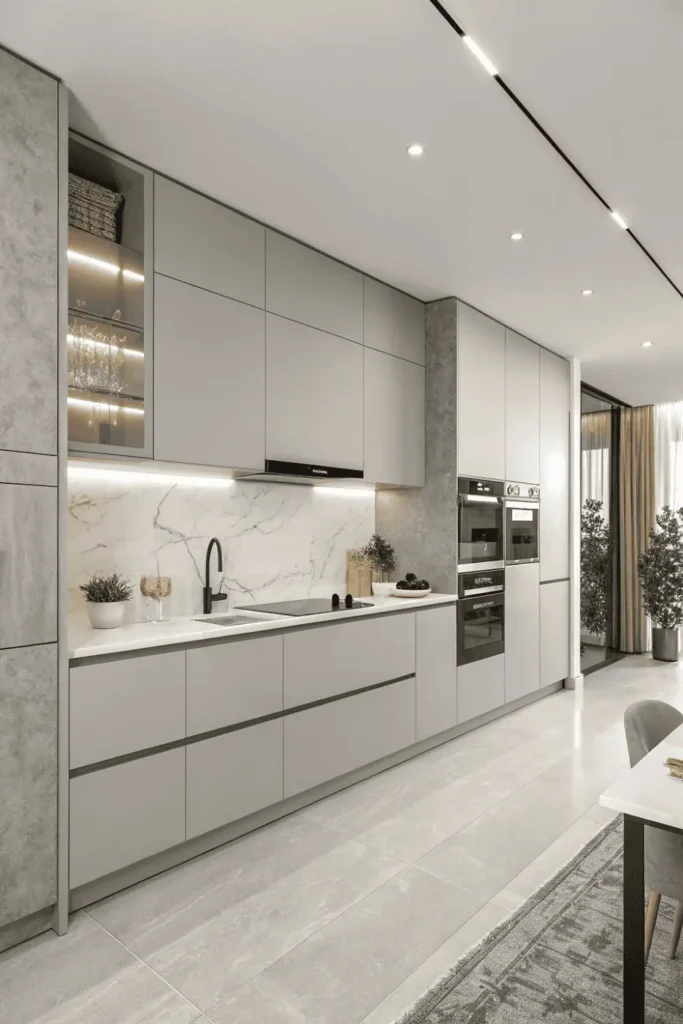
Frameless kitchen cabinets (also called full-access or European-style) eliminate the face frame for maximum interior storage space. The doors attach directly to the cabinet box, providing easier access and more usable storage than framed designs.
This construction method creates clean, modern aesthetics with minimal gaps between doors. Full-overlay doors cover the entire cabinet front for seamless, contemporary appearances.
The increased storage capacity (approximately 10-15% more space) makes these cabinets ideal for smaller kitchens maximizing every inch.
Pro Tip: Frameless cabinets require more precise installation than framed styles—hire experienced installers familiar with European cabinetry to ensure proper alignment and function.
10. Distressed and Antiqued Cabinets
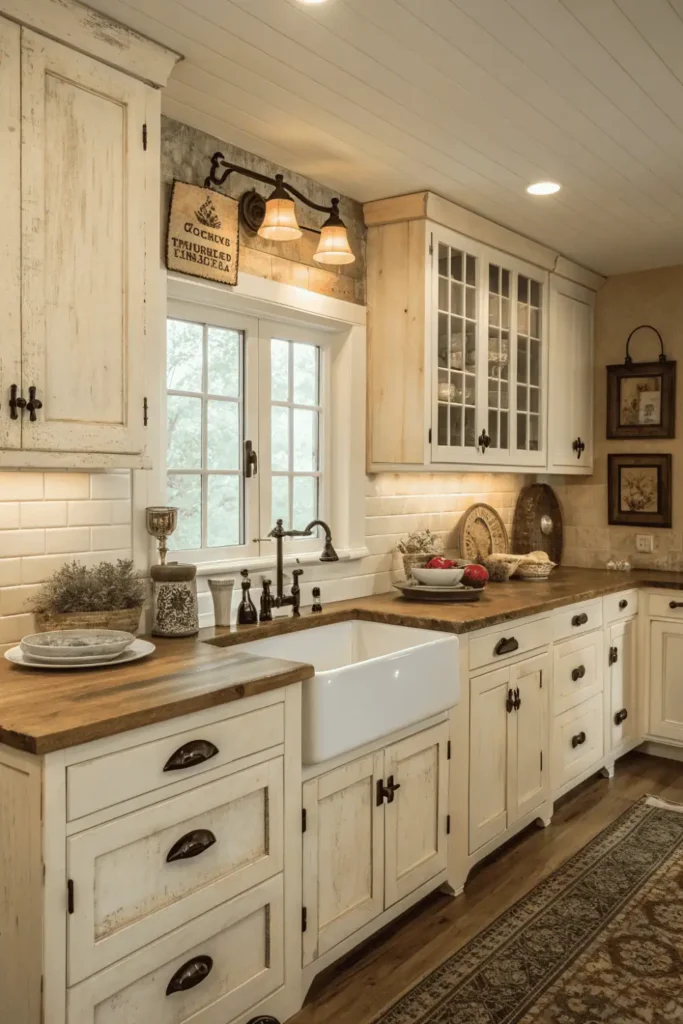
Distressed kitchen cabinets feature intentional wear marks, glazing, and aging techniques that create vintage, lived-in appearances. This finishing process adds character and warmth to new cabinetry while hiding future wear and tear beautifully.
Techniques include hand-scraping, glazing, sanding edges, and applying multiple paint layers that show through strategically. The results range from subtle antiquing to heavily distressed farmhouse styles.
These cabinets work wonderfully in country, cottage, and shabby-chic kitchen designs seeking cozy, comfortable aesthetics.
Pro Tip: Request cabinet samples showing the exact distressing technique before ordering—distressing varies dramatically between manufacturers, and you want to ensure the finish matches your vision.
11. Deep Drawer Base Cabinets

Deep drawer kitchen cabinets replace traditional door-and-shelf base cabinets with full-extension drawers that maximize accessibility and organization. These practical cabinets eliminate digging in dark cabinet backs to find items.
Soft-close drawer glides operate smoothly and quietly while protecting contents from slamming. Customizable divider systems keep pots, pans, utensils, and food organized efficiently.
The pull-out design works beautifully for heavy cookware storage and reduces bending and reaching compared to traditional shelves.
Pro Tip: Install deep drawers in base cabinets flanking your cooktop for convenient pot and pan access exactly where you need them during cooking—this strategic placement improves kitchen workflow significantly.
12. Custom Built-In Pantry Cabinets
Custom pantry kitchen cabinets maximize food storage with floor-to-ceiling designs featuring pull-out shelves, lazy Susans, and organizational systems. These dedicated food storage solutions keep ingredients visible and accessible.
Pull-out shelves eliminate digging through deep pantry spaces while adjustable shelving accommodates items of all sizes. Interior lighting helps locate ingredients quickly, especially in corner or walk-in pantries.
Built-in pantries utilize space more efficiently than freestanding furniture pieces while creating cohesive designs.
Pro Tip: Dedicate at least 10-15% of your total cabinet budget to pantry organization systems—proper food storage solutions reduce waste, simplify meal planning, and keep kitchens more organized.
13. Corner Cabinet Solutions

Corner kitchen cabinets maximize awkward corner spaces with innovative storage solutions like lazy Susans, blind corner pull-outs, or diagonal cabinets. These specialized designs prevent wasted space in L-shaped and U-shaped kitchen layouts.
Rotating lazy Susan shelves provide easy access to items in deep corner cabinets, while pull-out systems bring back corner contents forward. Diagonal corner cabinets create accessible storage without complicated mechanisms.
Smart corner solutions can recover 30-50% more usable storage compared to standard blind corner cabinets.
Pro Tip: Test corner mechanisms in showrooms before selecting—some pull-out systems are easier to use than others, and you’ll interact with these cabinets daily for years.
14. Upper Cabinets with Lift-Up Doors
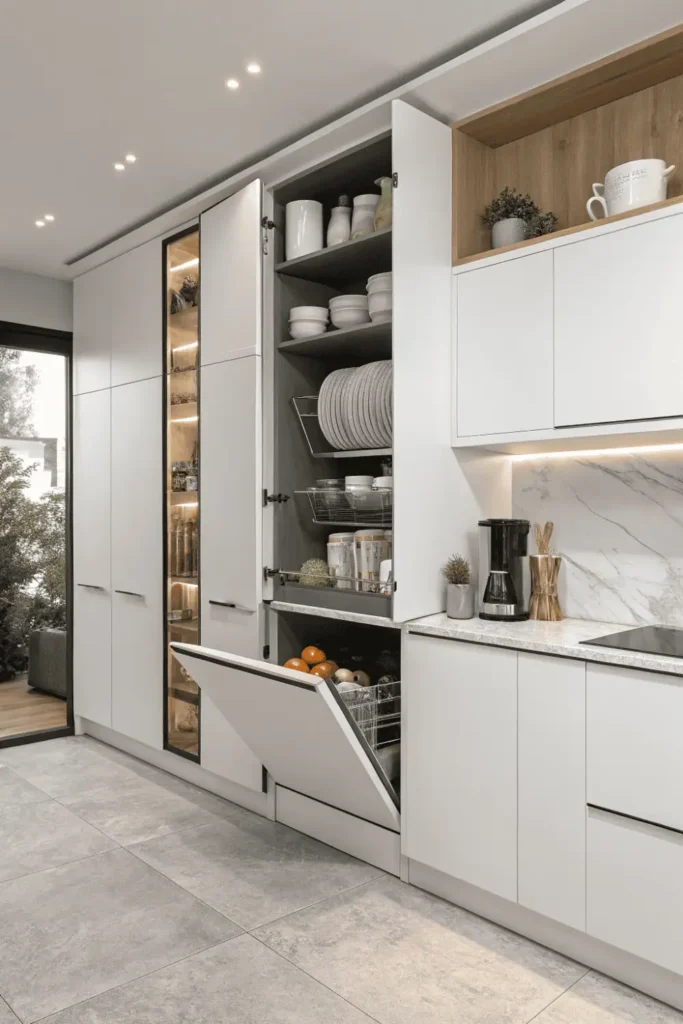
Lift-up door kitchen cabinets feature upward-opening doors with hydraulic hinges instead of traditional side-swing doors. This modern European innovation creates better access in tight spaces and contemporary aesthetics.
Gas-lift mechanisms hold doors open at any height, eliminating the need for clearance space required by swing-out doors. This design works wonderfully in kitchens with limited space or high-traffic areas.
The horizontal door lines create sleek, modern appearances while the unusual operation becomes a conversation piece.
Pro Tip: Reserve lift-up doors for upper cabinets at comfortable heights (not the very highest cabinets) since pulling down doors from maximum height can be awkward or unsafe.
15. Eco-Friendly Bamboo Cabinets

Bamboo kitchen cabinets offer sustainable alternatives to traditional hardwood using rapidly renewable grass that matures in just 3-5 years. This eco-friendly material provides durability comparable to hardwood while reducing environmental impact.
Natural bamboo offers warm honey tones with distinctive grain patterns, while carbonized bamboo creates richer, darker caramel colors. Both options accept stains and finishes beautifully.
The hardness and moisture resistance make bamboo ideal for kitchen environments while supporting green building practices.
Pro Tip: Verify your bamboo cabinets use formaldehyde-free adhesives and sustainable harvesting practices—certifications like FSC or GREENGUARD ensure truly eco-friendly choices beyond just bamboo material.
Why Kitchen Cabinets Are Worth the Investment
Quality kitchen cabinets represent one of the most valuable home improvements, typically recouping 60-80% of costs at resale. Well-designed cabinetry dramatically improves kitchen functionality while creating the aesthetic foundation that defines your entire space.
Kitchen cabinets last 15-50 years depending on quality and care, making them long-term investments rather than temporary purchases. Premium materials and construction withstand daily use, moisture exposure, and temperature changes that destroy inferior cabinets within years.
Upgraded kitchen cabinets transform cooking experiences by improving organization, workflow efficiency, and storage capacity. Custom organizational features reduce daily frustration, save time, and help maintain tidy, functional kitchens that genuinely support your lifestyle.
Things to Consider Before Choosing Kitchen Cabinets
Your kitchen cabinets selection must balance budget, timeline, and quality expectations realistically. Custom cabinets cost 2-3 times more than stock options but offer perfect sizing and finishes, while semi-custom splits the difference with reasonable customization at moderate prices.
Evaluate your actual kitchen cabinets needs by measuring your space accurately, accounting for appliances, windows, and architectural features before ordering. Mistakes in measurements lead to expensive returns, delays, or compromises that affect functionality and appearance.
Consider your household’s lifestyle when selecting kitchen cabinets materials and finishes—families with young children need durable, easy-clean surfaces while child-free households can choose more delicate materials requiring careful maintenance.
Comparison Table of Kitchen Cabinets
| Cabinet Type | Price Range | Durability | Maintenance | Best For | Lead Time |
| Shaker-Style Solid Wood | $$$ – $$$$ | Excellent (20-50 years) | Medium | Traditional, farmhouse, transitional | 6-12 weeks |
| Flat-Panel Contemporary | $$ – $$$$ | Very Good (15-30 years) | Low to High (finish dependent) | Modern, contemporary, minimalist | 4-10 weeks |
| Rustic Reclaimed Wood | $$$ – $$$$ | Excellent (30+ years) | Medium | Farmhouse, industrial, rustic | 8-16 weeks |
| Glass-Front Display | $$ – $$$ | Good (15-25 years) | Medium (glass cleaning) | Traditional, transitional, display | 4-8 weeks |
| Two-Tone Combinations | $$ – $$$$ | Varies by materials | Varies by finishes | Contemporary, farmhouse, eclectic | 6-12 weeks |
| Open Shelving Mixed | $ – $$ | Good (10-20 years) | High (dusting required) | Scandinavian, modern, small spaces | 2-6 weeks |
| High-Gloss Lacquer | $$$ – $$$$ | Very Good (15-25 years) | High (shows fingerprints) | Modern, contemporary, European | 8-14 weeks |
| Raised-Panel Traditional | $$$ – $$$$ | Excellent (20-50 years) | Medium | Traditional, classical, formal | 8-14 weeks |
| Frameless European | $$$ – $$$$ | Excellent (20-40 years) | Low | Contemporary, modern, European | 8-16 weeks |
| Distressed/Antiqued | $$ – $$$ | Very Good (15-30 years) | Low (hides wear) | Cottage, shabby-chic, farmhouse | 6-10 weeks |
| Deep Drawer Base | $$ – $$$ | Excellent (15-25 years) | Low | All kitchens, accessibility needs | 4-8 weeks |
| Custom Pantry | $$$ – $$$$ | Excellent (20-30 years) | Low | Large kitchens, food storage needs | 8-14 weeks |
| Corner Solutions | $$ – $$$ | Very Good (15-25 years) | Medium | L-shaped, U-shaped kitchens | 6-10 weeks |
| Lift-Up Doors | $$$ – $$$$ | Very Good (15-25 years) | Low | Modern, space-constrained kitchens | 10-16 weeks |
| Bamboo Eco-Friendly | $$ – $$$ | Very Good (15-30 years) | Low | Eco-conscious, natural styles | 6-12 weeks |
Frequently Asked Questions About Kitchen Cabinets
What is the average cost of new kitchen cabinets?
Kitchen cabinets typically cost $4,000-$25,000+ depending on size, materials, and customization level. Stock cabinets from home improvement stores run $75-$150 per linear foot, while semi-custom options cost $150-$300 per linear foot with more finish and sizing choices.
Custom kitchen cabinets from specialized manufacturers or local cabinetmakers cost $300-$1,200+ per linear foot, offering perfect sizing and unlimited customization. A typical 10×10 kitchen requires approximately 20-25 linear feet of cabinetry.
Budget roughly 40-50% of your total kitchen renovation for cabinets and installation to ensure proportional spending across all project elements.
How long do kitchen cabinets typically last?
Quality kitchen cabinets last 15-50 years depending on materials, construction, and maintenance. Solid wood cabinets with quality joinery and finishes easily last 30-50 years, while particle board or MDF cabinets with laminate finishes typically survive 10-20 years before showing significant wear.
Professional installation and proper care dramatically extend cabinet lifespan regardless of materials. Regular cleaning, prompt moisture cleanup, and gentle use of doors and drawers prevent premature failure.
Consider replacement when kitchen cabinets show structural damage, outdated styles affecting home value, or when layout changes improve functionality—cosmetic issues alone can often be resolved through refacing or painting.
Should I choose stock, semi-custom, or custom kitchen cabinets?
Stock kitchen cabinets work best for budget-conscious projects, standard-sized kitchens, and quick timelines (available immediately). These pre-manufactured cabinets offer limited finish and size options but cost significantly less with acceptable quality for many homeowners.
Semi-custom kitchen cabinets provide the best value for most renovations, offering reasonable customization at moderate prices (4-8 week lead times). You can adjust dimensions, choose from extensive finish options, and add organizational features without custom pricing.
Custom kitchen cabinets suit unique spaces, specific design visions, or premium quality requirements despite higher costs and 8-16 week lead times—choose custom when standard sizes won’t work or when you want perfect finishes and features.
What kitchen cabinet colors are most popular right now?
White kitchen cabinets remain the most popular choice for their timeless appeal, bright appearance, and broad buyer appeal. This classic option works with any design style, makes small kitchens feel larger, and provides a neutral backdrop for colorful accents.
Two-tone kitchen cabinets combining white or light gray uppers with navy, forest green, or charcoal lowers create trendy, sophisticated looks. Natural wood tones from light oak to rich walnut are regaining popularity as homeowners embrace warmer, organic aesthetics.
Consider kitchen cabinets in neutral foundations (white, gray, natural wood) with personality through hardware, countertops, and backsplashes—these flexible bases remain stylish longer than trendy bold colors requiring expensive updates.