
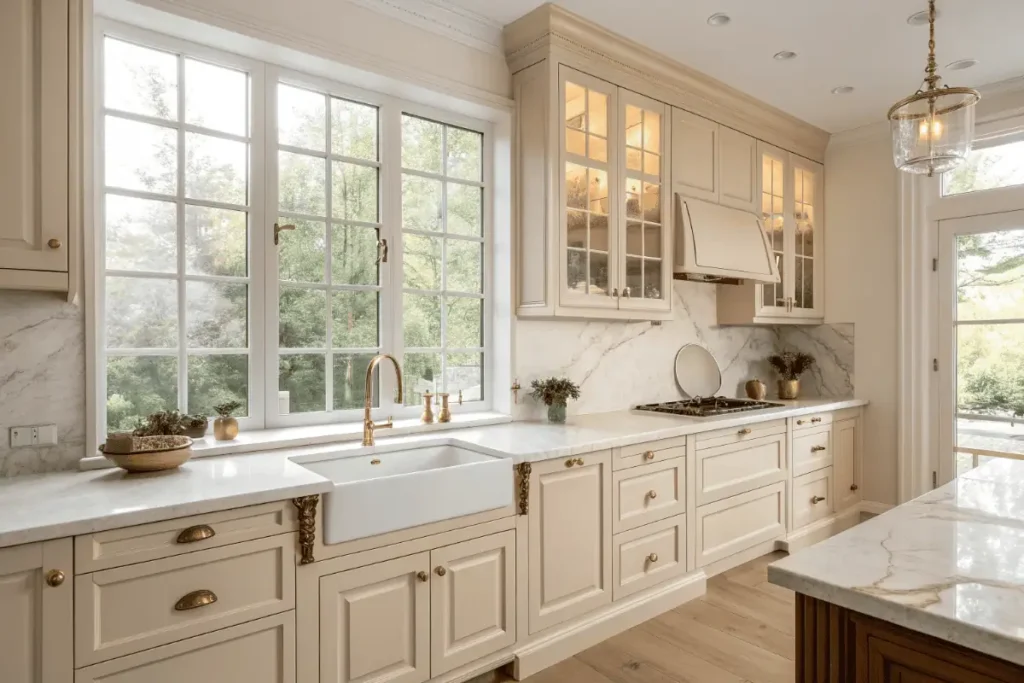
A beige kitchen creates a warm, timeless foundation that works beautifully with virtually any design style. This neutral color brings sophistication and calm to one of your home’s most important spaces.
Beige tones range from creamy ivory to warm taupe, offering incredible versatility for both traditional and contemporary kitchens. These earthy neutrals provide the perfect backdrop for natural materials, metallic accents, and colorful accessories.
Whether you’re planning a full renovation or a simple refresh, a beige kitchen offers endless possibilities for creating a welcoming space that never feels dated. Let’s explore the top design ideas to inspire your project.
List of 15 Best Beige Kitchen Design Ideas
1. Warm Beige Shaker Cabinets with Brass Hardware
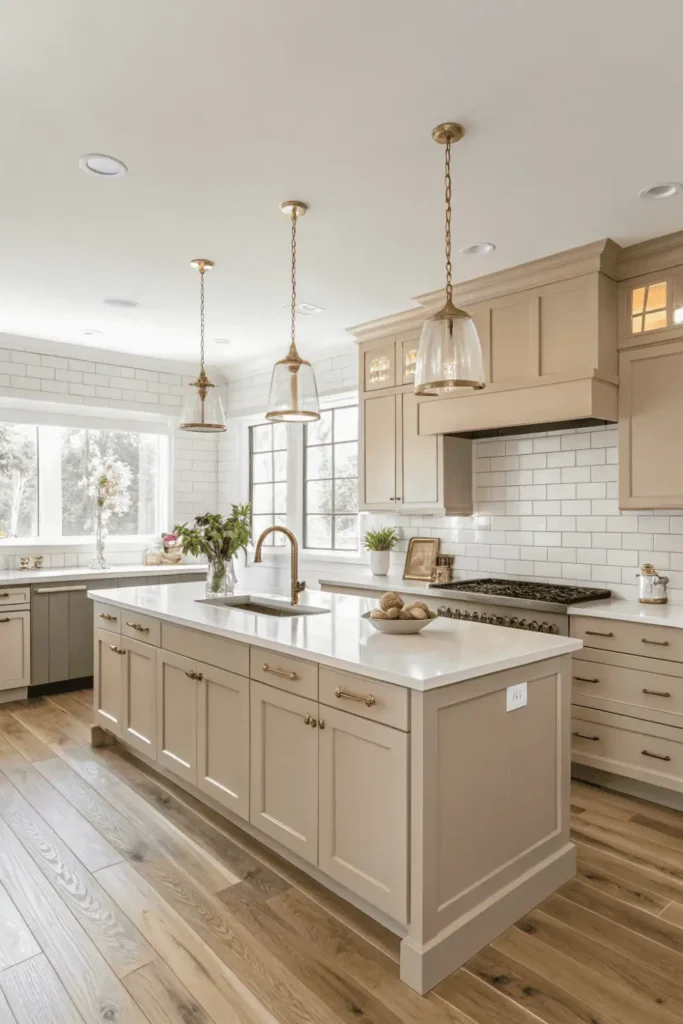
Beige shaker-style cabinets combine timeless craftsmanship with contemporary color choices for a sophisticated look. The classic frame-and-panel design features clean lines that work across multiple design aesthetics from farmhouse to transitional.
Pairing these cabinets with warm brass or gold hardware adds luxurious touches that complement beige’s warm undertones. The combination creates depth and visual interest without overwhelming the space.
Pro Tip: Choose cabinet colors with warm undertones like greige or sand rather than cool gray-beiges to create a truly inviting atmosphere that feels cozy rather than clinical.
2. Two-Tone Beige and White Cabinet Combination
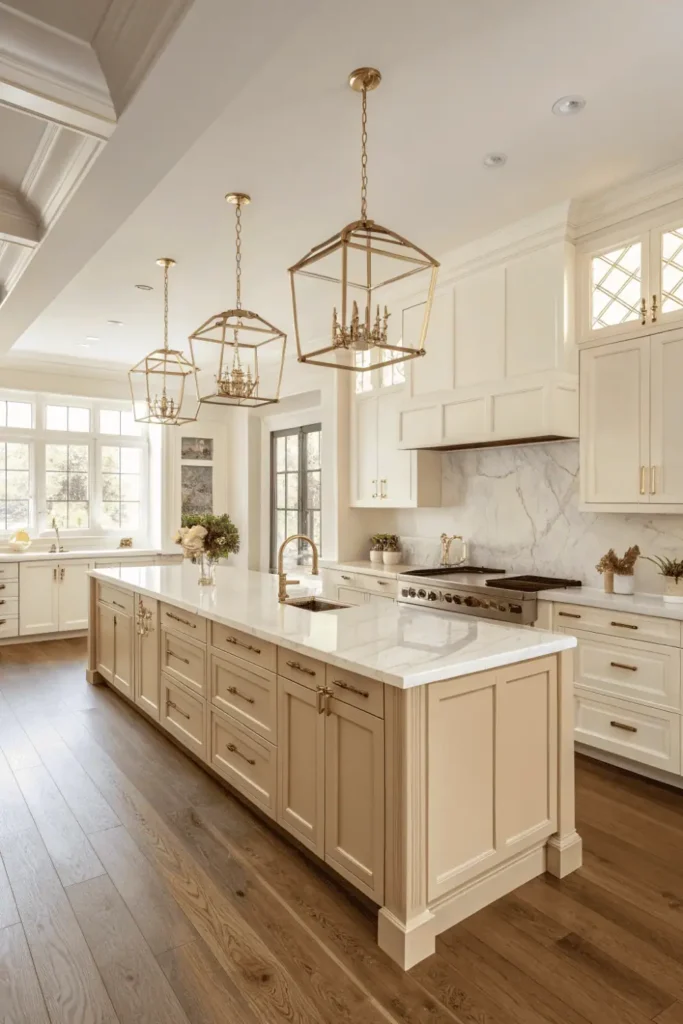
A two-tone beige kitchen balances warm lower cabinets with crisp white uppers for visual interest and dimension. This design approach prevents the space from feeling too monochromatic while maintaining a cohesive neutral palette.
The lighter upper cabinets keep the room feeling airy and open, especially important in kitchens with standard 8-foot ceilings. Beige base cabinets ground the space and hide wear better than pure white in high-traffic areas.
This versatile combination works beautifully with various countertop materials from marble to butcher block.
Pro Tip: Carry the beige tone through in your backsplash or incorporate beige veining in your countertops to tie both cabinet colors together seamlessly throughout the design.
3. Beige Kitchen with Natural Stone Backsplash

Natural stone backsplashes in travertine, limestone, or marble complement a beige kitchen perfectly. These materials introduce organic texture and subtle color variation that adds depth to neutral spaces.
Stone backsplashes bring timeless elegance while providing durable, heat-resistant surfaces behind cooktops. The natural veining and movement in stone prevents beige kitchens from feeling flat or boring.
Choose honed or tumbled finishes for a softer look, or polished stone for more formal, traditional aesthetics.
Pro Tip: Seal natural stone backsplashes properly and maintain them with pH-neutral cleaners to prevent staining and preserve their beautiful appearance for decades of use.
4. Beige Cabinets with Dark Walnut Island
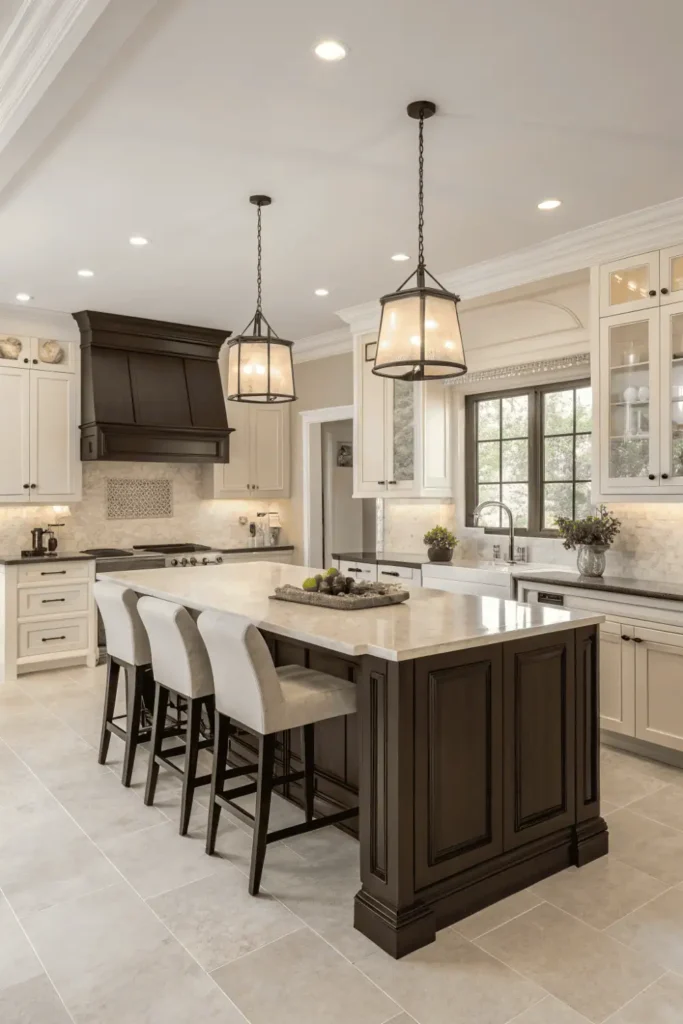
Create a stunning focal point in your beige kitchen by contrasting light cabinets with a dark walnut or espresso-stained island. This bold design choice adds drama and grounds the space with rich wood tones.
The dark island becomes an architectural anchor while the surrounding beige cabinetry keeps the room bright and open. This combination works particularly well in large, open-concept kitchens where the island serves as a transitional piece.
Pro Tip: Repeat the dark wood tone in your flooring, open shelving, or bar stools to create visual cohesion and prevent the island from feeling like an afterthought in your design.
5. Monochromatic Beige Kitchen with Textured Elements
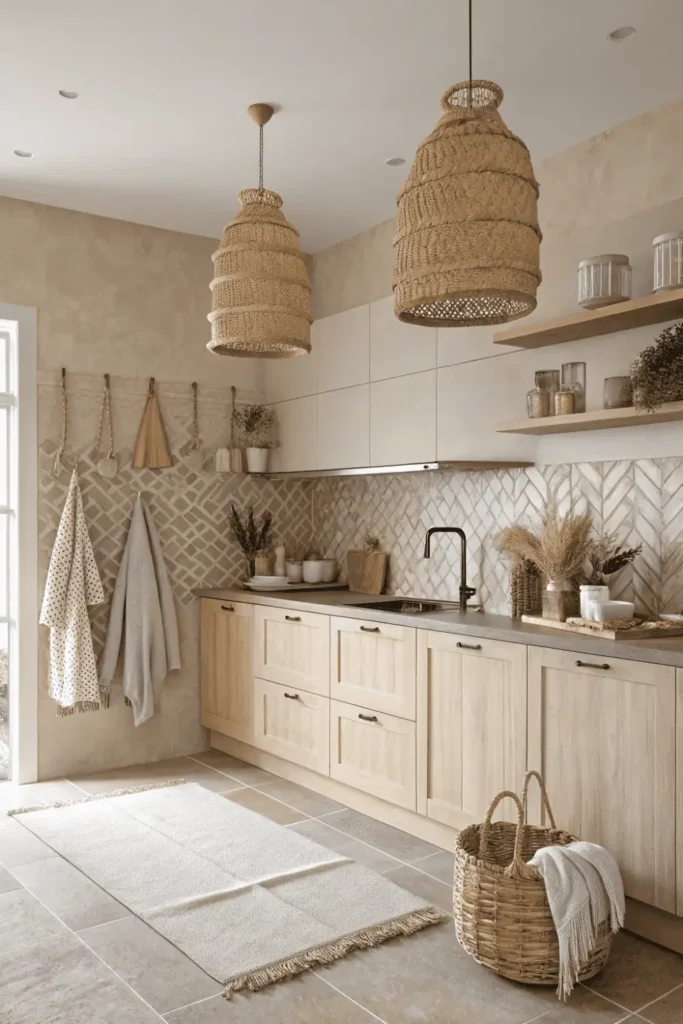
A monochromatic beige kitchen creates serene, spa-like atmospheres when executed with varied textures and materials. Layer different beige tones from cream to taupe throughout cabinets, walls, backsplashes, and flooring.
Introduce texture through materials like woven baskets, linen curtains, rattan bar stools, or grasscloth wallpaper to prevent the space from feeling flat. Mixing matte and glossy finishes adds subtle dimension.
Incorporate natural wood elements in medium tones to break up the beige while maintaining the monochromatic concept.
Pro Tip: Use at least three different textures and five slightly different beige shades throughout your monochromatic kitchen to create a sophisticated, layered look with genuine visual interest.
6. Beige Kitchen with Marble Waterfall Countertops
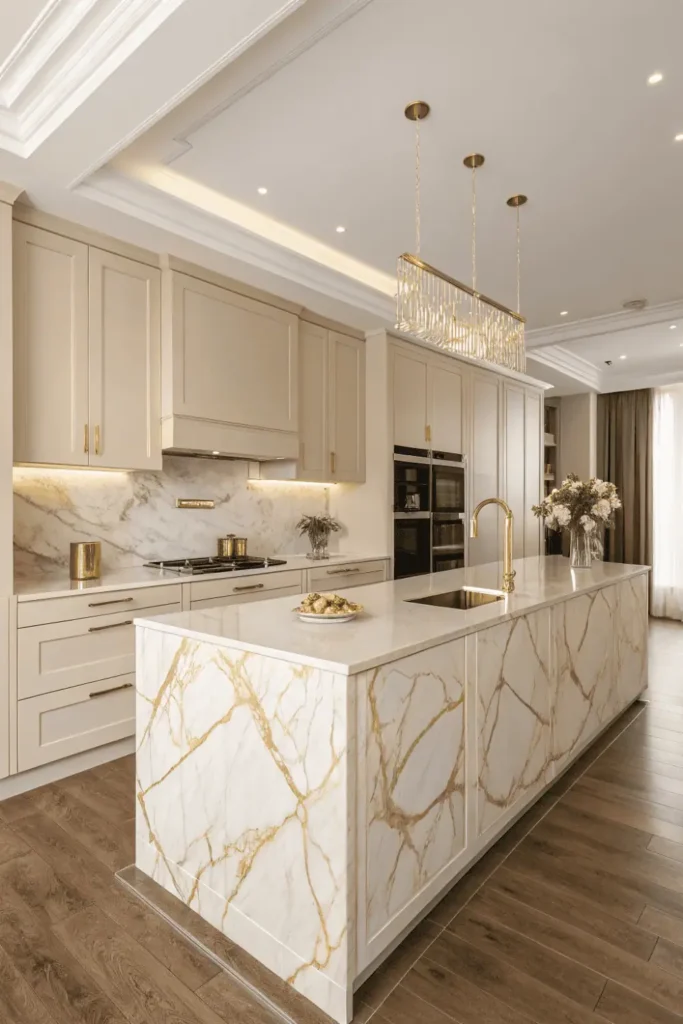
Marble waterfall countertops add luxury and drama to a beige kitchen design. The continuous stone extends from the counter surface down the sides of islands or peninsulas, creating striking visual statements.
Choose marble with beige, cream, and gold veining that complements your cabinet color for cohesive elegance. This high-end detail works beautifully in both modern and traditional kitchens.
The waterfall edge protects cabinet sides while showcasing the beauty of premium stone materials.
Pro Tip: Reserve waterfall edges for islands or peninsulas rather than all countertops to make the feature feel special and keep costs manageable while maximizing visual impact.
7. Beige and Black Contrast Kitchen

Pairing beige cabinets with matte black accents creates sophisticated contrast and modern edge. Black hardware, light fixtures, window frames, and even a black range hood add definition against soft beige tones.
This high-contrast approach works particularly well in contemporary and transitional kitchens where clean lines take center stage. The black elements ground the design and prevent beige from feeling too sweet or soft.
Pro Tip: Balance the contrast by limiting black to 15-20% of the visual space—too much black overwhelms beige’s warmth, while too little fails to create the intended dramatic effect.
8. Beige Kitchen with Open Shelving Display

Replace upper cabinets with open shelving in a beige kitchen to create an airy, approachable feel. Display beautiful dishware, glassware, and cooking essentials on natural wood or metal shelves.
This design choice works exceptionally well in small kitchens where upper cabinets might feel heavy and overwhelming. Open shelving provides easy access to frequently used items while showcasing your personal style.
Beige lower cabinets provide ample closed storage for items you prefer hidden from view.
Pro Tip: Keep open shelves curated and organized with color-coordinated dishes, attractive containers, and minimal clutter—messy shelves destroy the intentional, sophisticated look you’re trying to achieve.
9. Beige Kitchen with Terracotta and Natural Elements

Introduce terracotta tiles, pottery, or accents into your beige kitchen for warm, Mediterranean-inspired design. These earthy orange-red tones complement beige beautifully while adding personality and depth.
Consider terracotta floor tiles in traditional patterns, terracotta backsplash tiles, or simply decorative elements like pottery and planters. The combination creates inviting, organic atmospheres.
Add plants, woven baskets, and natural wood to complete the earth-toned aesthetic.
Pro Tip: Balance terracotta’s boldness by using it as an accent (20-30% of the design) rather than the dominant color—this prevents the space from feeling too rustic or dated.
10. All-Beige Contemporary Kitchen with Handleless Cabinets

Create a sleek, modern beige kitchen with handleless flat-panel cabinets featuring push-to-open mechanisms or integrated pulls. This minimalist approach emphasizes clean lines and smooth surfaces for ultra-contemporary aesthetics.
The lack of hardware creates seamless, uninterrupted expanses of color that feel sophisticated and intentional. Beige tones soften the starkness that often accompanies minimalist design.
Pair with glossy or matte lacquer finishes for different effects—glossy reflects light while matte creates warmth.
Pro Tip: Combine handleless beige cabinets with one or two statement elements like a bold backsplash or dramatic lighting to prevent the minimalist design from feeling too sterile.
11. Beige Kitchen with Green Accents and Plants

Pair your beige kitchen with sage green, olive, or eucalyptus accents for a fresh, nature-inspired palette. These complementary colors work beautifully with beige’s warm neutrality while adding personality.
Incorporate green through painted accent walls, cabinet islands, tile backsplashes, or simply accessories and abundant plants. The green-beige combination feels organic, calming, and on-trend yet timeless.
Pro Tip: Use living plants liberally throughout your beige kitchen—they’re affordable, changeable accent elements that purify air while preventing neutral spaces from feeling lifeless or boring.
12. Beige Kitchen with Brass and Gold Metallic Finishes

Elevate your beige kitchen with brass, gold, or warm metallic accents throughout hardware, lighting, faucets, and accessories. These luxurious finishes complement beige’s warm undertones perfectly.
The metallic gleam adds sophistication and prevents beige from feeling too matte or flat. Mix different metallic finishes (brushed, polished, antique) for depth and visual interest while maintaining warmth.
Pro Tip: Match your metal finish undertones to your beige cabinets—warm brass with warm beige, champagne gold with cooler beige—for the most cohesive, professionally designed appearance.
13. Beige Kitchen with Classic White Subway Tile
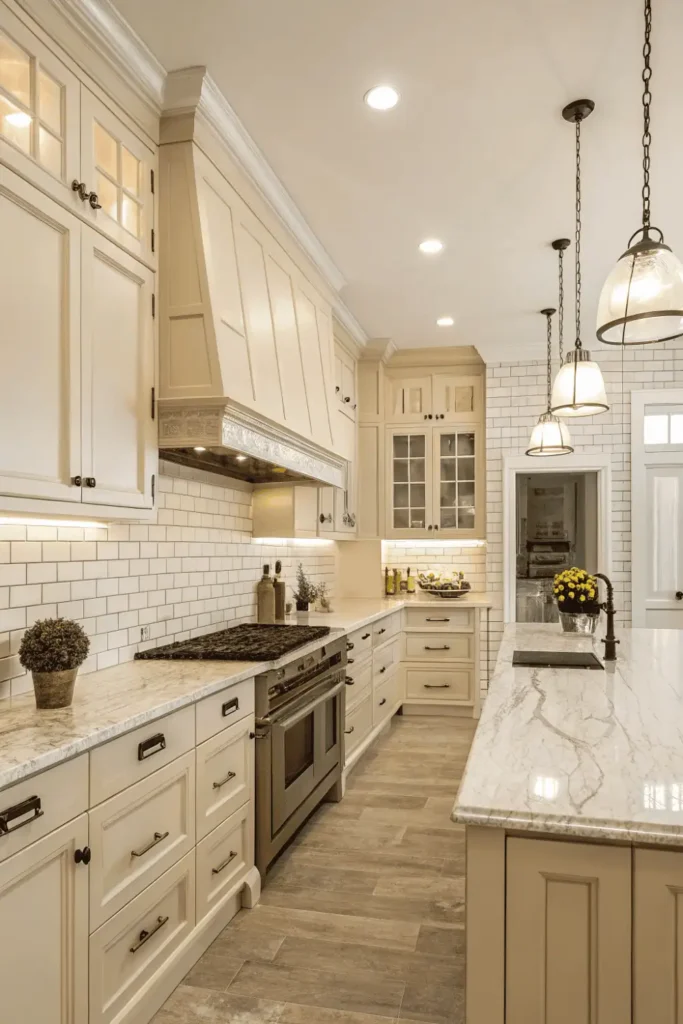
White subway tile backsplashes create fresh contrast in a beige kitchen while maintaining a neutral, timeless palette. This classic combination works across all design styles from vintage to contemporary.
The crisp white tiles reflect light and prevent beige cabinetry from feeling too heavy or monotonous. Traditional 3×6 subway tiles in brick pattern offer fail-safe appeal.
Consider gray or beige grout instead of white to soften the contrast and create a more cohesive look.
Pro Tip: Experiment with subway tile layouts like herringbone, vertical stack, or basket weave patterns to add interest while maintaining the classic subway tile aesthetic everyone loves.
14. Beige Kitchen with Butcher Block Countertops

Butcher block countertops add warmth and organic texture to a beige kitchen design. The natural wood grain introduces living material that ages beautifully and provides functional work surfaces.
Wood countertops complement beige’s earthy nature while adding honey, amber, or golden tones that enhance the kitchen’s warmth. Use butcher block on islands or specific sections paired with stone on perimeter counters.
Pro Tip: Maintain butcher block with regular mineral oil treatments and prompt spill cleanup—well-cared-for wood countertops develop rich patinas that improve with age rather than deteriorating.
15. Beige Kitchen with Large Format Tile Floors

Large format tile flooring in beige, taupe, or cream tones creates seamless foundations for a beige kitchen. Tiles measuring 12×24 inches or larger minimize grout lines for cleaner, more modern appearances.
Choose tiles with subtle texture or pattern to add interest without overwhelming the neutral palette. Porcelain or ceramic tiles offer durability, easy maintenance, and endless design options.
The floor’s neutral tone allows flexibility with other design elements while maintaining cohesion.
Pro Tip: Select floor tiles one to two shades darker than your cabinets to create gentle contrast and hide dirt better than matching tones—this keeps your kitchen looking cleaner.
Why Beige Kitchen Designs Are Worth the Investment
Beige kitchen designs offer unmatched versatility that works with virtually any design style, from traditional farmhouse to sleek contemporary. This timeless neutral never goes out of style, protecting your investment from the fate of trendy colors that quickly feel dated and require expensive updates.
The warm undertones in beige kitchens create welcoming, comfortable atmospheres that make these gathering spaces feel truly inviting. Studies show warm neutrals reduce stress and promote relaxation, making beige ideal for the heart of your home where families spend significant time.
Beige kitchen cabinets and finishes provide the perfect neutral backdrop that allows you to easily update your space through accessories, textiles, and small changes. This flexibility means your kitchen grows with your evolving taste without requiring complete renovations, offering excellent long-term value.
Things to Consider Before Choosing Beige Kitchen Design
Evaluate your beige kitchen color undertones carefully before committing—some beiges lean pink, others yellow, and some gray. Test large samples in your actual kitchen lighting (both natural and artificial) at different times of day to ensure the tone complements your space and preferences.
Consider your home’s existing elements when planning a beige kitchen renovation, including flooring, countertops, and adjacent room colors. Beige works with virtually everything, but achieving cohesion requires thoughtful coordination of warm versus cool undertones throughout connected spaces.
Plan for adequate texture and contrast in your beige kitchen design to prevent the space from feeling flat or boring. Incorporate varied materials, finishes, and subtle color variations through backsplashes, countertops, hardware, and accessories to create visual interest within the neutral palette.
Comparison Table of Beige Kitchen Design Styles
| Design Style | Price Range | Complexity | Maintenance | Best For | Timeline |
| Warm Beige Shaker Cabinets | $$ – $$$ | Medium | Low | Traditional to modern styles | 6-8 weeks |
| Two-Tone Beige and White | $$ – $$$ | Medium | Low | Transitional kitchens | 6-10 weeks |
| Natural Stone Backsplash | $$$ – $$$$ | High | Medium | Luxury kitchens | 8-12 weeks |
| Dark Wood Island Contrast | $$$ | Medium-High | Medium | Large open kitchens | 8-10 weeks |
| Monochromatic Beige | $$ – $$$ | Medium | Low | Modern minimalist spaces | 6-8 weeks |
| Marble Waterfall Countertops | $$$$ | High | High | Luxury contemporary | 10-14 weeks |
| Beige and Black Contrast | $$ – $$$ | Medium | Low | Contemporary designs | 6-8 weeks |
| Open Shelving Display | $ – $$ | Low | Medium | Cottage, farmhouse styles | 4-6 weeks |
| Terracotta Accents | $$ – $$$ | Medium | Low | Mediterranean inspired | 6-8 weeks |
| Handleless Contemporary | $$$ – $$$$ | High | Low | Ultra-modern minimalist | 10-12 weeks |
| Green Accent Combination | $$ – $$$ | Low-Medium | Low | Nature-inspired designs | 6-8 weeks |
| Brass Metallic Finishes | $$ – $$$ | Low-Medium | Medium | Traditional to transitional | 4-6 weeks |
| White Subway Tile Classic | $$ | Low | Low | All styles, timeless appeal | 4-6 weeks |
| Butcher Block Countertops | $$ – $$$ | Medium | High | Farmhouse, rustic designs | 6-8 weeks |
| Large Format Tile Floors | $$ – $$$ | Medium | Low | Modern contemporary | 6-8 weeks |
Frequently Asked Questions About Beige Kitchen
Is a beige kitchen still in style or too dated?
Beige kitchen designs are absolutely current and timeless rather than dated when executed with contemporary elements and proper styling. The key is choosing warm, complex beiges like greige, sand, or taupe rather than flat builder-beige from the 1990s.
Pair modern beige tones with updated hardware, contemporary lighting, and quality materials to create spaces that feel fresh and intentional. Incorporate texture, contrast, and current design elements while using beige as your neutral foundation.
The current design trend emphasizes warm neutrals over the cool grays that dominated recent years, making beige kitchens more relevant than ever for homeowners seeking timeless sophistication.
What colors work best with beige kitchen cabinets?
Beige kitchen cabinets pair beautifully with white, cream, gray, black, navy, sage green, olive, terracotta, and warm wood tones. White and cream create fresh, bright spaces, while black adds drama and definition through hardware, fixtures, and accents.
Sage green and olive complement beige’s warmth for nature-inspired palettes that feel organic and calming. Navy blue creates sophisticated contrast for traditional or transitional designs, while terracotta adds Mediterranean warmth.
Metallic finishes in brass, bronze, or gold enhance beige’s warm undertones beautifully—these work better than cool silver or chrome tones with most beige shades.
How do I prevent my beige kitchen from looking boring or bland?
Prevent boring beige kitchen designs by incorporating multiple textures, varied materials, and subtle color variations throughout the space. Layer different beige tones from cream to deeper taupe rather than using one flat shade everywhere.
Add visual interest through natural materials like wood, stone, rattan, and plants that introduce organic texture and movement. Include metallic accents through hardware, lighting, and fixtures that catch light and add sparkle.
Create focal points using pattern in backsplashes, contrast through a dark island, or architectural interest via open shelving—these elements prevent monochromatic beige from feeling flat or lifeless.
What’s the difference between beige and greige kitchen cabinets?
Beige kitchen cabinets feature warm undertones with yellow, pink, or peachy bases that create cozy, inviting atmospheres. Traditional beige leans distinctly warm and pairs beautifully with brass, wood, and other warm materials.
Greige (gray + beige) combines both warm and cool undertones, creating more neutral, balanced colors that work with both warm and cool design elements. Greige feels more contemporary and versatile than traditional beige.
The best choice depends on your home’s existing elements, personal preference, and desired atmosphere—beige creates warmth while greige offers versatility and slightly cooler, more modern appeal in kitchen designs.