
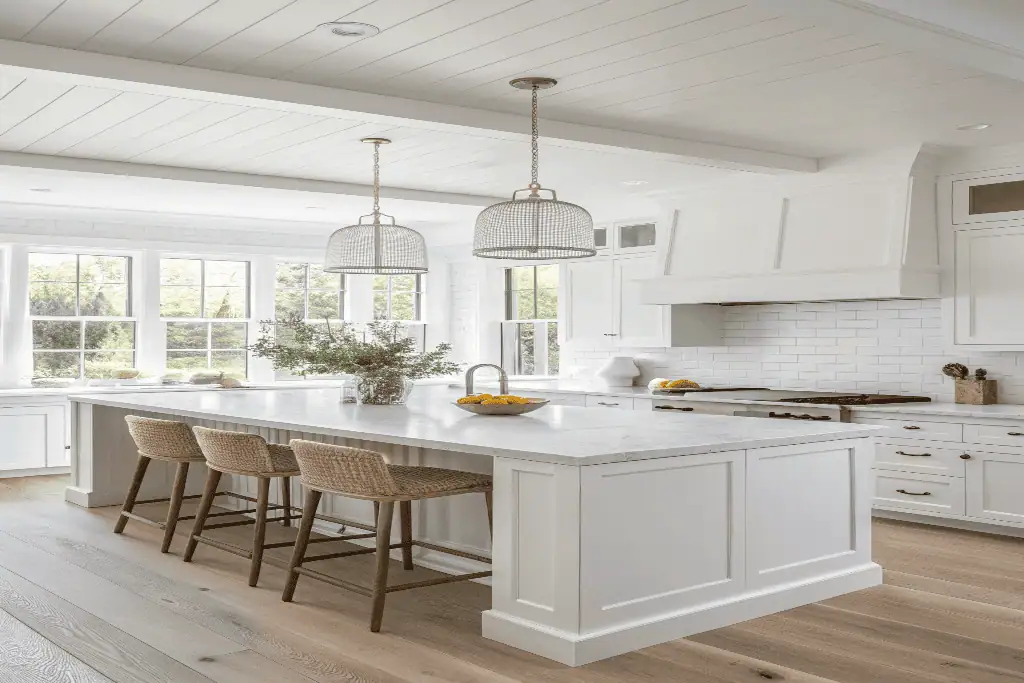
A white kitchen remains the most popular choice for homeowners and designers alike, offering timeless elegance that transcends passing trends. The bright, airy aesthetic creates an illusion of space while providing a versatile canvas for personal style expression.
The enduring appeal stems from white’s ability to reflect light, making even compact cooking spaces feel open and inviting. From farmhouse charm to sleek contemporary designs, this neutral palette adapts beautifully to any architectural style.
Whether you’re renovating or building new, understanding the nuances of white kitchen design helps you create a space that feels fresh for decades. Let’s explore stunning approaches that showcase why white continues to dominate kitchen trends.
List of 13 Best White Kitchen Design Ideas
1. All-White Shaker Cabinets with Marble Countertops
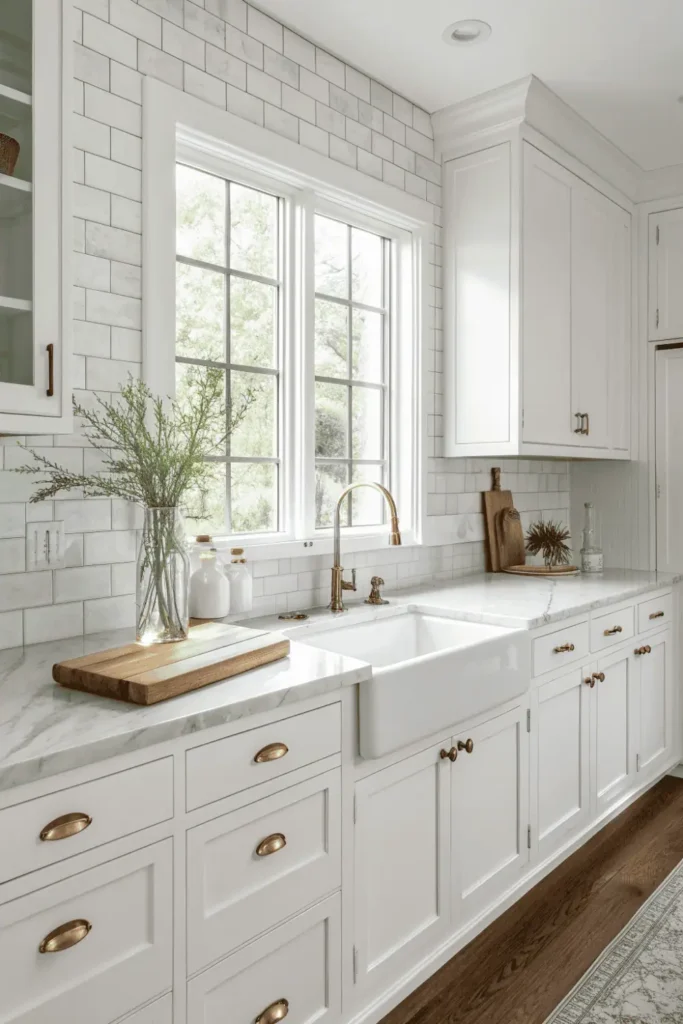
Classic shaker-style cabinetry in pure white creates a timeless white kitchen foundation that pairs beautifully with natural marble countertops. The simple recessed panel doors and minimal hardware offer clean lines that never go out of style.
Carrara or Calacatta marble introduces subtle gray veining that adds visual interest without overwhelming the monochromatic palette. This combination works equally well in traditional, transitional, and modern settings.
Pro Tip: Choose honed marble instead of polished for a white kitchen to minimize visible scratches and etching while maintaining an elegant, softer appearance.
2. White Kitchen with Contrasting Black Hardware

Matte black handles, faucets, and light fixtures create striking focal points in an all-white kitchen without disrupting the bright aesthetic. This high-contrast approach adds definition and modern sophistication while maintaining the airy feeling.
The black accents draw the eye to architectural details and create visual anchors throughout the space. Cabinet hardware, range hoods, and window frames become sculptural elements when finished in black.
Pro Tip: Use the same black finish throughout your white kitchen—mixing oil-rubbed bronze with matte black creates an unintentional, disjointed appearance.
3. White Cabinets with Natural Wood Accents

Warm wood tones balance the coolness of a white kitchen, introducing organic texture that prevents sterility. Floating shelves, wood beam ceilings, or a wooden island top add character while maintaining the bright, open aesthetic.
The natural wood grain provides visual warmth and tactile interest that makes the space feel inviting. Light oak, walnut, or reclaimed wood options each create distinctly different moods within the white framework.
Pro Tip: Limit wood accents to 20-30% of visible surfaces in your white kitchen to maintain the airy quality while adding sufficient warmth.
4. Glossy White Lacquer Modern Kitchen

High-gloss lacquered cabinets amplify light reflection in a white kitchen, creating a luxurious, sophisticated atmosphere. The mirror-like finish and handleless design epitomize contemporary minimalism with seamless surfaces.
This ultra-modern approach works beautifully with integrated appliances, under-cabinet lighting, and reflective backsplashes that enhance the luminous quality. Fingerprint-resistant coatings make maintenance manageable despite the glossy surface.
Pro Tip: Pair glossy cabinets with matte countertops in your white kitchen to create textural variety and prevent the space from feeling too slick.
5. White Farmhouse Kitchen with Apron Sink

A deep farmhouse apron-front sink serves as the centerpiece of a country-inspired white kitchen with nostalgic charm. Beadboard paneling, open shelving, and vintage-style fixtures complete the rustic aesthetic.
The generous sink basin provides practical functionality while making a bold design statement. White subway tiles, shiplap walls, and distressed wood accents enhance the farmhouse character.
Pro Tip: Install a single-basin farmhouse sink at least 30 inches wide in your white kitchen to accommodate large pots and baking sheets comfortably.
6. White Kitchen with Colorful Backsplash Feature

A vibrant backsplash becomes artwork in an all-white kitchen, providing personality without overwhelming the clean aesthetic. Moroccan tiles, hand-painted ceramics, or colorful glass mosaics inject energy and personal style.
This approach allows you to express creativity while maintaining the practical benefits of white cabinetry. The backsplash can be updated more easily than cabinets, making it an ideal place for trend experimentation.
Pro Tip: Choose backsplash colors that appear elsewhere in your home to create visual flow between your white kitchen and adjacent living spaces.
7. Two-Tone White and Gray Kitchen

Pairing white upper cabinets with gray lower cabinets adds depth to your white kitchen while maintaining the bright, open feeling. This two-tone approach visually grounds the space and provides opportunities for creative material mixing.
The gray lowers hide wear and dirt more effectively than all-white while still feeling light and fresh. Dove gray, charcoal, or greige tones each create different moods when paired with white.
Pro Tip: Use the 60-40 rule in your two-tone white kitchen—60% white and 40% gray creates the most balanced, harmonious appearance.
8. White Kitchen with Brass or Gold Accents

Warm metallic finishes like brass, gold, or copper add luxury and sophistication to a white kitchen without darkening the space. Cabinet hardware, faucets, light fixtures, and even range hoods in these finishes create elegant focal points.
The golden tones introduce warmth that balances white’s coolness while remaining timeless. Unlacquered brass develops a natural patina over time, adding character to your white kitchen.
Pro Tip: Mix metal finishes intentionally—pair brushed brass hardware with polished brass plumbing fixtures for subtle variety that feels curated, not accidental.
9. White Kitchen with Large Format Tile Flooring

Oversized porcelain tiles in white or light gray create a seamless foundation for your white kitchen with minimal grout lines. These 24×48-inch or larger slabs make spaces feel more expansive while simplifying cleaning.
The continuous surface enhances the airy quality of white cabinetry while providing durability. Wood-look porcelain in light tones offers warmth without the maintenance concerns of genuine hardwood.
Pro Tip: Install large format tiles on the diagonal in your white kitchen to visually expand narrow spaces and add architectural interest.
10. White Kitchen with Glass-Front Upper Cabinets

Glass-paneled cabinet doors create visual depth in a white kitchen while showcasing beautiful dishware and glassware. This design element breaks up solid cabinetry and makes upper cabinets feel less imposing.
The transparency allows you to display collections and adds personality through curated styling. Interior cabinet lighting enhances the display quality and adds ambient illumination.
Pro Tip: Use frosted or seeded glass in some cabinet doors of your white kitchen to maintain the light-reflecting quality while concealing less-attractive storage.
11. White Kitchen with Waterfall Island

A dramatic waterfall edge on your island where white countertop material cascades to the floor creates a sculptural centerpiece. This continuous surface flow works beautifully with quartz, marble, or concrete in white or light tones.
The vertical panels protect island sides while making a bold design statement. Contrasting the island material with perimeter counters adds visual hierarchy to your white kitchen.
Pro Tip: Book-match the waterfall panels in your white kitchen island to create mirror-image veining patterns that enhance the luxurious, intentional appearance.
12. White Kitchen with Subway Tile Backsplash

Classic white subway tiles remain a quintessential element of white kitchen design, offering affordability and timeless appeal. The rectangular tiles in traditional 3×6-inch size provide subtle texture without competing visually.
Various layout patterns like herringbone, vertical stack, or traditional running bond create different effects using the same material. Contrasting grout colors can either blend seamlessly or add definition.
Pro Tip: Use white or light gray grout in your white kitchen subway tile to minimize cleaning maintenance—dark grout shows dirt and discoloration more readily.
13. White Kitchen with Integrated Appliances

Panel-ready appliances concealed behind matching white cabinetry create the ultimate seamless white kitchen aesthetic. This fully integrated approach hides refrigerators, dishwashers, and even range hoods behind cabinet fronts.
The streamlined appearance emphasizes architectural elements over appliances, making the space feel calmer and more cohesive. Only the cooktop and sink remain visible as functional necessities.
Pro Tip: Invest in quality soft-close mechanisms for appliance panels in your white kitchen—heavy refrigerator doors require robust hardware to function smoothly long-term.
Why White Kitchens Are Worth the Investment

A white kitchen consistently ranks among the most valuable upgrades for home resale, with buyers perceiving white spaces as clean, updated, and move-in ready. Real estate professionals note that white kitchens photograph beautifully and appeal to the broadest buyer demographic, often resulting in faster sales and higher offers.
The timeless nature of white kitchen design protects your investment from rapid style obsolescence, unlike trendy colors that may feel dated within five years. This longevity means you’ll enjoy a fresh-looking space for decades without major updates, maximizing your return on investment through extended use and enduring appeal.
White cabinetry provides the most versatile backdrop for future updates in your white kitchen—changing hardware, countertops, or backsplash refreshes the entire look without replacing expensive cabinets. The bright, light-reflective quality can reduce artificial lighting needs, potentially lowering energy costs while creating a more pleasant cooking environment.
Things to Consider Before Choosing a White Kitchen

Maintenance expectations vary significantly with finish choices in a white kitchen—glossy surfaces show fingerprints while textured whites conceal them, and oil-based paints resist yellowing better than latex. Consider your household traffic, cooking frequency, and cleaning habits when selecting specific white finishes and materials.
Undertone selection dramatically affects the final appearance of your white kitchen—cool whites with blue undertones feel crisp and modern, warm whites with yellow or beige undertones create coziness, while pure whites without undertones remain the most versatile. Test large samples in your actual space at different times of day before committing to ensure the white kitchen tone complements your lighting and adjacent rooms.
Budget allocation should prioritize quality cabinetry and durable surfaces in a white kitchen since cheaper materials show wear more visibly on light colors. Invest in sealed, stain-resistant countertops, washable backsplashes, and quality paint or finishes that will maintain their pristine appearance despite daily use in your white kitchen.
Comparison Table of White Kitchen Designs
| Design Style | Price Range | Durability | Maintenance | Best For | Lead Time |
| Shaker with Marble | $$$ | High | Medium | Traditional & transitional | 8-12 weeks |
| Black Hardware Accent | $$ | High | Low | Modern & contemporary | 6-10 weeks |
| Wood Accent Mix | $$$ | High | Medium | Warm, inviting spaces | 8-12 weeks |
| Glossy Lacquer | $$$$ | High | High | Ultra-modern aesthetics | 10-14 weeks |
| Farmhouse Style | $$ | High | Medium | Country & rustic lovers | 6-10 weeks |
| Colorful Backsplash | $$ | High | Low | Personality expression | 4-8 weeks |
| Two-Tone Gray/White | $$$ | High | Low | Balanced visual interest | 8-12 weeks |
| Brass Accent Luxury | $$$ | High | Low | Sophisticated elegance | 8-12 weeks |
| Large Format Tile | $$ | Very High | Very Low | Easy maintenance | 4-6 weeks |
| Glass-Front Cabinets | $$$ | High | Medium | Display-worthy collections | 8-12 weeks |
| Waterfall Island | $$$$ | Very High | Low | Statement centerpieces | 10-14 weeks |
| Subway Tile Classic | $ | High | Low | Budget-friendly timeless | 4-6 weeks |
| Integrated Appliances | $$$$ | High | Low | Seamless minimalism | 12-16 weeks |
Frequently Asked Questions About White Kitchen
Do white kitchens show dirt and stains more easily than darker colors?
White kitchens actually hide everyday dust better than dark surfaces where particles show more prominently, though they do require regular wiping to maintain the fresh, bright appearance. The key factor is finish selection rather than color—textured or matte whites conceal minor imperfections while glossy finishes show every fingerprint and splash.
Quality materials matter significantly in a white kitchen—properly sealed countertops, washable backsplashes, and durable cabinet finishes resist staining effectively. Most homeowners find white kitchens no more difficult to maintain than any other color when appropriate materials are chosen and basic cleaning routines are followed.
Will a white kitchen make my space feel too cold or sterile?
Layering warm elements prevents the clinical feeling in a white kitchen—add natural wood tones, brass or gold hardware, textured fabrics, and warm lighting to create inviting coziness. The specific white undertone dramatically affects warmth—choosing whites with cream, beige, or yellow undertones rather than blue-toned stark whites naturally feels warmer.
Incorporating varied textures in your white kitchen adds visual interest and warmth—combine smooth cabinets with rough stone, glossy tile with matte walls, and soft textiles with hard surfaces. Many homeowners find their white kitchens feel more spacious and peaceful rather than cold, especially when balanced with intentional warm accent choices throughout the design.
How do I choose the right shade of white for my kitchen cabinets?
Test multiple white samples on actual cabinet doors in your space since lighting conditions dramatically affect how whites appear—what looks perfect in the store may read too yellow or blue in your home. View samples during different times of day and under both natural and artificial lighting to ensure the white kitchen tone remains consistent and appealing in all conditions.
Consider adjacent room colors and your home’s overall palette when selecting white for kitchen cabinets—the white should coordinate with wall colors, flooring, and trim throughout your home for visual flow. Popular versatile whites for kitchens include Benjamin Moore Simply White, Sherwin-Williams Pure White, and Farrow & Ball All White, though the best choice depends on your specific lighting and color preferences.
Can a white kitchen work with any design style?
Absolutely—a white kitchen serves as a versatile neutral canvas that adapts beautifully to farmhouse, modern, traditional, coastal, Scandinavian, and transitional aesthetics. The styling elements you choose determine the overall mood—rustic wood and vintage fixtures create farmhouse charm while sleek hardware and minimalist lines achieve modern sophistication in the same white framework.
White’s adaptability makes it ideal for evolving tastes since you can update accessories, hardware, lighting, and accent colors to completely transform the style without replacing expensive white cabinetry. This flexibility ensures your white kitchen remains relevant through changing design trends and personal preference shifts over the years.
Your dream white kitchen combines timeless elegance with personal style through thoughtful material selection and careful attention to undertones, finishes, and accent elements. These 13 inspiring approaches demonstrate the remarkable versatility of white—from cozy farmhouse charm to sleek contemporary minimalism—proving that a white kitchen never means boring or one-dimensional. By understanding the nuances of finish, hardware, and accent choices, you’ll create a bright, beautiful space that enhances your home’s value while providing a stunning backdrop for daily life and memorable gatherings for years to come.