
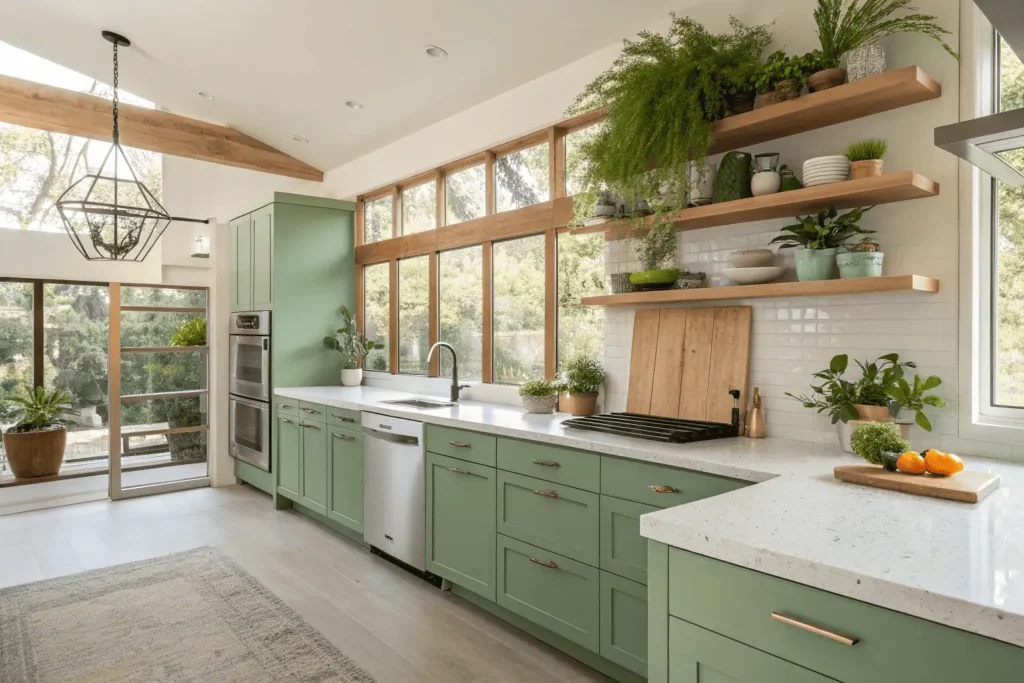
Creating a green kitchen is a practical design choice that blends sustainability with thoughtful aesthetics. Whether you’re planning a complete renovation or looking for simple eco-friendly upgrades, the right approach can transform your cooking space into an environmentally conscious haven.
Modern homeowners are increasingly drawn to sustainable design that doesn’t compromise on style. From energy-efficient appliances to recycled materials, the options for creating an eco-friendly culinary space have never been more diverse or accessible.
A well-designed, eco-friendly kitchen not only reduces your environmental footprint but also increases your home’s value and creates a healthier living environment. Let’s explore the 13 best ways to bring sustainable style into the heart of your home.
- List of 13 Best Green Kitchen Ideas
- 1. Recycled Glass Countertops
- 2. Energy Star Certified Appliances
- 3. Reclaimed Wood Cabinets
- 4. Low-VOC Paint and Finishes
- 5. Bamboo Flooring
- 6. Composting System Station
- 7. LED Under-Cabinet Lighting
- 8. Sustainable Cork Backsplash
- 9. Quartz Composite Countertops
- 10. Herb Garden Window
- 11. Water-Efficient Fixtures
- 12. Recycled Metal Pendant Lights
- 13. Plant-Based Linoleum Flooring
- Why Green Kitchen Renovations Are Worth the Investment
- Things to Consider Before Choosing Green Kitchen Materials
- Comparison Table of Green Kitchen Features
- More kitchen ideas worth saving
- Frequently Asked Questions About Green Kitchen Renovations
- References
List of 13 Best Green Kitchen Ideas
1. Recycled Glass Countertops

Recycled glass countertops are the crown jewel of sustainable kitchen design, offering stunning visual appeal with a conscience. These surfaces combine recycled glass pieces with concrete or resin binders, creating unique patterns that make every installation one-of-a-kind.
Many recycled glass countertops reuse a significant amount of post-consumer glass, helping divert waste from landfills. Heat-resistant and stain-resistant properties make them ideal for busy green kitchen spaces where both beauty and functionality matter.
Pro Tip: Choose lighter colors for small kitchens to maximize natural light reflection, reducing the need for artificial lighting throughout the day.
2. Energy Star Certified Appliances
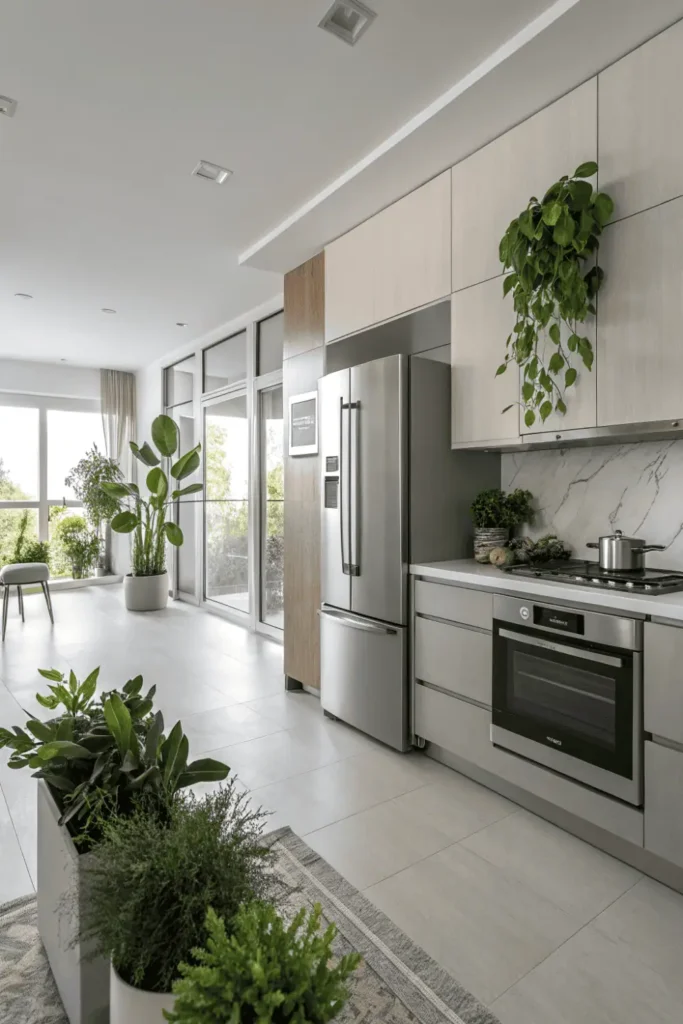
Upgrading to Energy Star-certified appliances is the single most impactful change you can make in your green kitchen renovation. ENERGY STAR-certified appliances are designed to use less energy than standard models, but the exact savings vary by product type and model. For example, ENERGY STAR-certified dishwashers are about 10% more energy efficient and 20% more water efficient than standard models. [5]
Modern Energy Star refrigerators, dishwashers, and ranges combine cutting-edge technology with sleek designs that complement any kitchen aesthetic. The initial investment pays for itself through lower operating costs, typically within 3-5 years.
Pro Tip: Look for appliances with advanced features, such as soil sensors in dishwashers or inverter technology in refrigerators, to maximize energy savings.
3. Reclaimed Wood Cabinets

Reclaimed wood cabinets bring character and history into your eco-friendly kitchen while preventing old-growth timber from ending up in landfills. Each piece tells a story through unique grain patterns, nail holes, and weathered textures that new wood cannot replicate.
Sourced from old barns, factories, or demolished buildings, reclaimed wood requires minimal processing compared to harvesting new timber. The natural patina and durability of aged wood mean your cabinets will last for decades with proper care.
Pro Tip: Seal reclaimed wood properly with low-VOC finishes to protect against moisture while maintaining indoor air quality in your kitchen.
4. Low-VOC Paint and Finishes

Choosing low-VOC paints and finishes for your green kitchen walls and cabinets protects your family’s health while minimizing environmental impact. Traditional paints release harmful volatile organic compounds that can linger for years, contributing to poor indoor air quality.
Modern low-VOC formulas offer vibrant color options and excellent durability without the toxic off-gassing. Many brands now offer zero-VOC options that are completely odorless and safe for use in enclosed spaces.
Pro Tip: Paint during warm weather with windows open to accelerate drying and further reduce any minimal VOC exposure.
5. Bamboo Flooring

Bamboo flooring offers the perfect blend of sustainability and durability for your green kitchen, growing to harvest maturity in just 3-5 years compared to hardwood’s 20-30 years. This rapidly renewable resource provides exceptional hardness that withstands heavy foot traffic and dropped utensils.
Available in a range of colors from natural blonde to rich carbonized brown, bamboo floors complement any design style. Water-resistant varieties are engineered explicitly for kitchen environments where spills are inevitable.
Pro Tip: Choose strand-woven bamboo for kitchen installations—it’s twice as hard as traditional bamboo and even more moisture-resistant.
6. Composting System Station

A built-in composting system transforms your green kitchen into a zero-waste powerhouse while providing nutrient-rich soil for your garden. Modern under-counter composters eliminate odors through carbon filtration and speed decomposition with temperature control.
Designating specific storage for compost bins, including a small counter container for scraps and a larger outdoor bin, creates an efficient workflow. Pull-out drawer systems keep composting materials hidden while maintaining easy access during meal prep.
Pro Tip: Line your counter compost bin with newspaper instead of plastic bags—it’s compostable and helps absorb excess moisture from food scraps.
7. LED Under-Cabinet Lighting

LED under-cabinet lighting dramatically reduces energy consumption in your green kitchen while providing superior task lighting for food preparation. LEDs use 75% less energy than incandescent bulbs and last up to 25 times longer, virtually eliminating bulb replacement waste.
The cool operating temperature of LED strips prevents heat buildup that can damage cabinets or make kitchens uncomfortably warm. Dimmable options allow you to adjust brightness based on time of day, further optimizing energy use.
Pro Tip: Install LED strips on motion sensors or timers to keep lights on only when needed, maximizing energy savings throughout the day.
8. Sustainable Cork Backsplash

Cork backsplash panels bring renewable beauty to your green kitchen with a unique texture that stands apart from traditional tile. Harvested from cork oak bark without harming the tree, cork regenerates every 9 years, making it one of nature’s most sustainable materials.
Naturally antimicrobial and water-resistant when sealed properly, cork provides practical benefits beyond aesthetics. The material’s thermal properties also help insulate walls, contributing to your kitchen’s overall energy efficiency.
Pro Tip: Apply a food-safe sealant every 2-3 years to maintain water resistance and prevent staining from cooking splatters.
9. Quartz Composite Countertops

Quartz composite countertops made from recycled content offer the durability of natural stone with enhanced sustainability. These engineered surfaces combine 93% natural quartz with recycled glass, mirrors, or porcelain, creating stunning patterns while diverting waste from landfills.
The non-porous surface resists bacteria and never requires sealing, unlike granite or marble. This sustainable kitchen solution maintains its beauty for decades with minimal maintenance, reducing the need for harsh chemical cleaners.
Pro Tip: Choose countertops with higher recycled content percentages—some manufacturers now offer options with up to 40% post-consumer recycled materials.
10. Herb Garden Window

A dedicated herb garden window transforms your eco-friendly kitchen into a source of fresh ingredients while purifying indoor air. Growing your own basil, cilantro, and thyme eliminates packaging waste from store-bought herbs and reduces food miles to zero.
South-facing windows provide optimal sunlight for most culinary herbs, though supplemental grow lights can support year-round production. The living greenery also improves air quality by filtering toxins and increasing oxygen levels in your cooking space.
Pro Tip: Use self-watering planters to maintain consistent moisture levels and reduce the risk of over or under-watering your herbs.
11. Water-Efficient Fixtures

Installing water-efficient fixtures in your sustainable kitchen reduces consumption by up to 30% without sacrificing performance. Modern low-flow faucets use aerators that mix air with water, maintaining strong pressure while using significantly less water per minute.
Touchless sensor faucets prevent water waste from taps left running during food prep or hand washing. The investment in quality fixtures pays dividends through lower water bills and reduced strain on local water resources.
Pro Tip: Install a foot pedal faucet control for hands-free operation when handling raw meat or dough, further reducing water waste.
12. Recycled Metal Pendant Lights

Recycled metal pendant lights provide both illumination and sustainability in your green kitchen design. Crafted from reclaimed industrial materials like copper pipes, steel drums, or salvaged fixtures, these lights offer unique character that mass-produced lighting cannot match.
The durability of metal ensures decades of use, while the industrial-chic aesthetic complements various design styles from farmhouse to contemporary. Many artisans hand-craft these fixtures locally, reducing transportation emissions and supporting small businesses.
Pro Tip: Pair recycled metal pendants with LED bulbs to maximize energy efficiency while highlighting the unique patina of salvaged materials.
13. Plant-Based Linoleum Flooring

Plant-based linoleum flooring (not to be confused with vinyl) offers a completely biodegradable option for your green kitchen floor. Made from linseed oil, cork dust, wood flour, and natural pigments, this renewable material has been sustainably produced for over 150 years.
The antimicrobial properties of linoleum naturally inhibit bacteria growth, making it ideal for kitchen environments. With proper maintenance, linoleum floors can last 25-40 years before gracefully biodegrading at end of life.
Pro Tip: Choose linoleum tiles over sheets for easier DIY installation and the ability to replace individual damaged sections without redoing the entire floor.
Why Green Kitchen Renovations Are Worth the Investment

A green kitchen renovation delivers measurable returns through reduced utility bills that compound year after year. Energy-efficient appliances, LED lighting, and water-saving fixtures can meaningfully reduce monthly utility costs over time, especially when multiple upgrades are combined.
Beyond financial benefits, sustainable kitchen designs can improve resale appeal and value, especially in markets where buyers prioritize energy efficiency. Today’s homebuyers actively seek eco-friendly features, making your green kitchen a powerful selling point that differentiates your property in competitive markets.
The health benefits of an energy-efficient kitchen renovation extend to every family member who uses the space. Low-VOC materials improve indoor air quality, reducing respiratory issues and headaches. In contrast, natural materials like bamboo and cork can support a lower-emitting kitchen when you choose low-VOC adhesives, sealants, and finishes.
Things to Consider Before Choosing Green Kitchen Materials

Durability and longevity should be your primary considerations when selecting sustainable kitchen materials, as the most sustainable choice is one that doesn’t need replacement. Research the expected lifespan of materials and choose options rated for 20+ years of use to truly minimize environmental impact over time.
Local sourcing significantly reduces the carbon footprint of your energy-efficient kitchen renovation by minimizing transportation emissions. Prioritize materials produced within 500 miles of your location and work with contractors who source from regional suppliers whenever possible.
Certifications and third-party verification help you avoid greenwashing and ensure your green kitchen materials meet legitimate environmental standards. Look for FSC certification for wood products, Energy Star ratings for appliances, and Greenguard Gold certification for low-VOC materials to guarantee your choices deliver on sustainability promises.
Comparison Table of Green Kitchen Features
| Feature | Price Range | Durability | Maintenance | Best For | Lead Time |
| Recycled Glass Countertops | $75-$150/sq ft | 20-30 years | Low (soap & water) | Modern & coastal styles | 4-6 weeks |
| Energy Star Appliances | $500-$3,000 | 10-15 years | Medium (routine cleaning) | All kitchen types | 1-4 weeks |
| Reclaimed Wood Cabinets | $200-$400/linear ft | 30+ years | Medium (annual resealing) | Rustic & farmhouse | 6-12 weeks |
| Low-VOC Paint | $40-$60/gallon | 5-10 years | Low (wipeable) | All kitchen types | Immediate |
| Bamboo Flooring | $5-$8/sq ft | 20-25 years | Low (sweep & damp mop) | Contemporary & Asian | 2-3 weeks |
| Composting System | $50-$400 | 5-15 years | Medium (weekly emptying) | All kitchen types | 1-2 weeks |
| LED Under-Cabinet Lights | $30-$200 | 25+ years | None (bulbs last 25,000 hours) | Task lighting needs | Immediate |
| Cork Backsplash | $10-$20/sq ft | 15-20 years | Medium (seal every 2-3 years) | Eclectic & natural styles | 2-4 weeks |
| Quartz Composite | $60-$100/sq ft | 25+ years | Low (no sealing needed) | All kitchen types | 3-5 weeks |
| Herb Garden Window | $100-$500 | Ongoing | Daily (watering) | Kitchens with natural light | 1-2 weeks |
| Water-Efficient Fixtures | $100-$400 | 15-20 years | Low (standard cleaning) | All kitchen types | 1-2 weeks |
| Recycled Metal Lights | $80-$300 | 30+ years | Low (dust occasionally) | Industrial & eclectic | 2-6 weeks |
| Plant-Based Linoleum | $4-$8/sq ft | 25-40 years | Medium (polish annually) | Retro & contemporary | 2-4 weeks |
More kitchen ideas worth saving
If you’re planning a full kitchen update, these ideas pair well with green kitchens and help you plan layouts and finishes together.
- 7 Gorgeous Small Kitchen Ideas That Make Space Look Bigger
- 15 Trending Kitchen Cabinet Designs You’ll Love in 2026
Frequently Asked Questions About Green Kitchen Renovations
What makes a green kitchen truly eco-friendly?
A truly eco-friendly green kitchen combines multiple sustainable elements working together to minimize environmental impact throughout the space. The key is choosing materials with low embodied energy, meaning they require minimal resources to produce, transport, and install.
Energy efficiency is the cornerstone of any green kitchen, from appliances and lighting to the building envelope itself. Equally important are material choices that avoid toxic chemicals, support renewable resources, and can be recycled or composted at the end of life.
How much does a green kitchen renovation cost compared to traditional options?
A green kitchen renovation may cost more up front than a traditional one, especially if you choose premium sustainable materials and high-efficiency appliances. Research shows that the cost premium for green construction projects can vary widely and, in many cases, is modest. Over time, energy-efficient appliances and better design can reduce utility bills and increase home value, although exact dollar savings depend on the products chosen and local energy costs. [1]
Can I create a green kitchen on a limited budget?
Creating an eco-friendly green kitchen does not require a full renovation or a large budget. Many homeowners start with small, high-impact upgrades such as LED lighting, low-flow faucet aerators, and low- or zero-VOC paint. These changes are often affordable and can improve energy efficiency, water use, and indoor air quality right away.
A phased renovation makes green kitchen updates easier. Homeowners can replace appliances as they wear out, add composting, and use reclaimed materials over time without a big upfront cost.
How do I properly maintain green kitchen materials?
Green kitchen materials last longer when they are cared for in ways that protect both the material and indoor air quality.
1. Use mild cleaners for daily care.
Research from the U.S. EPA shows that harsh chemical cleaners release volatile organic compounds (VOCs), which can damage finishes over time and reduce indoor air quality [2]. Mild soap and water are effective for most sealed surfaces, including low-VOC cabinetry, bamboo, and recycled countertops.
2. Avoid abrasive tools on natural or recycled materials
Studies on surface wear show that abrasive scrubbers cause micro-scratches on wood, stone, and recycled glass surfaces. These scratches make surfaces more likely to trap dirt, microbes and moisture [3], which shortens their lifespan.
3. Wipe spills quickly, especially on porous surfaces
Natural materials such as wood, concrete, and some stone absorb moisture faster than synthetic surfaces. Manufacturer care guides consistently recommend quick spill cleanup to prevent staining, warping, and finish breakdown.
4. Choose non-toxic or plant-based cleaners
According to EPA indoor air quality research, switching to low-toxicity cleaners reduces chemical buildup in enclosed spaces like kitchens. This helps protect finishes and keeps air cleaner, especially in homes with limited ventilation.
5. Regular maintenance of appliances
Regular maintenance, such as cleaning filters, coils, and seals, helps energy-efficient appliances maintain performance and reduces unnecessary energy use over time [4].
References
[1]https://www.sciencedirect.com/science/article/abs/pii/S0378778815303856
[2]https://www.epa.gov/indoor-air-quality-iaq/volatile-organic-compounds-impact-indoor-air-quality
[3]https://microbiologysociety.org/blog/scratching-the-surface-how-microbes-adhere-to-worktops.html
[5]https://www.energystar.gov/sites/default/files/tools/ENERGY%20STAR%20Appliances%20Brochure_508.pdf