
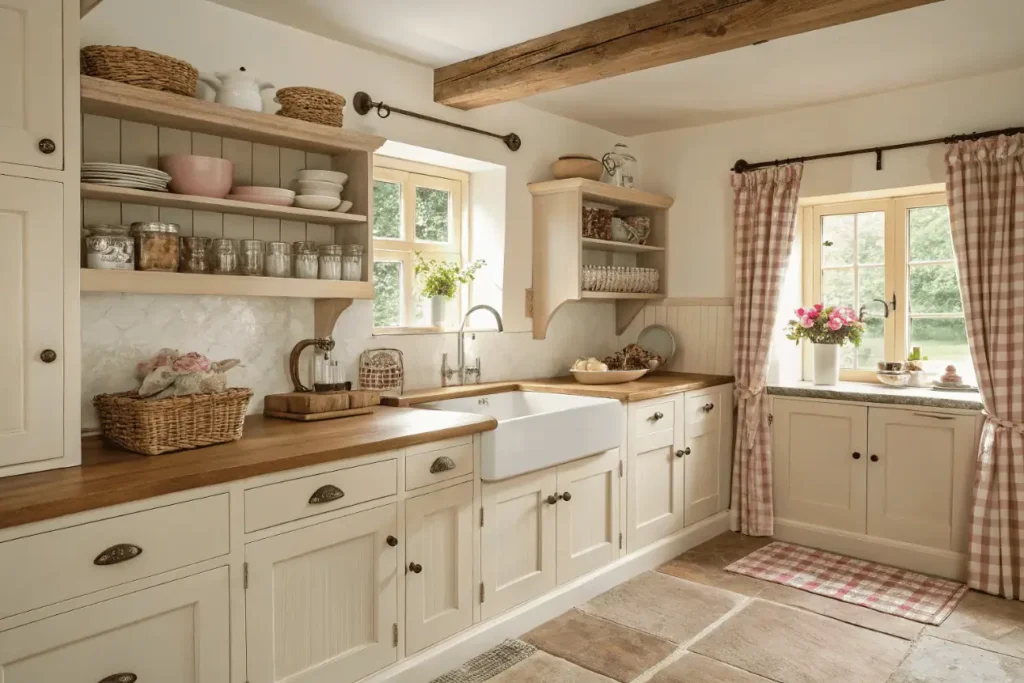
A cottage kitchen is a warm, inviting cooking space that combines rustic charm with functional design to create the heart of your home. This timeless style celebrates natural materials, vintage finds, and cozy details that make you feel instantly at home.
Cottage kitchens embrace imperfection and personal touches over polished perfection. They blend painted cabinetry, open shelving, farmhouse sinks, and collected treasures to create spaces full of character and warmth.
Whether you’re renovating a countryside retreat or bringing cottage kitchen style to your suburban home, these design ideas will help you create a space that’s both beautiful and welcoming.
List of 13 Best Cottage Kitchen Design Elements
1. Farmhouse Sink with Vintage-Style Faucet
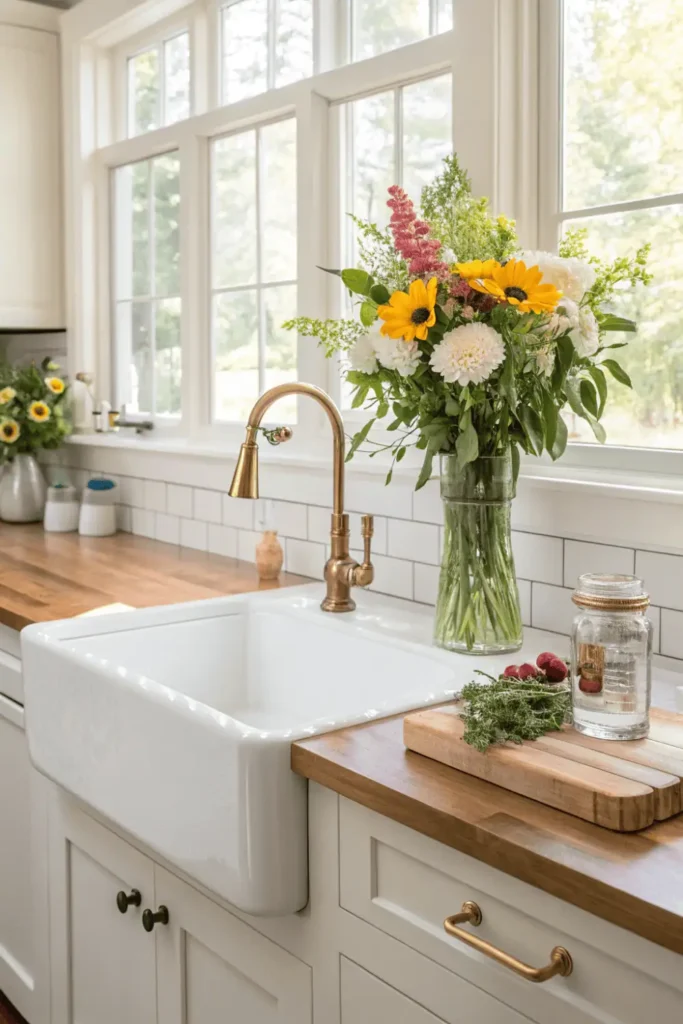
The farmhouse sink (also called an apron-front sink) is a defining feature of any authentic cottage kitchen design. These deep, wide sinks with exposed fronts make a bold statement while providing practical benefits for washing large pots and preparing vegetables.
Pair your farmhouse sink with a vintage-style bridge faucet in oil-rubbed bronze or polished nickel for an authentic period look. The generous basin depth accommodates everything from baking sheets to flower arrangements.
Pro Tip: Choose a fireclay or cast iron farmhouse sink for durability and authentic cottage appeal that will last decades.
2. Open Shelving with Displayed Dishware
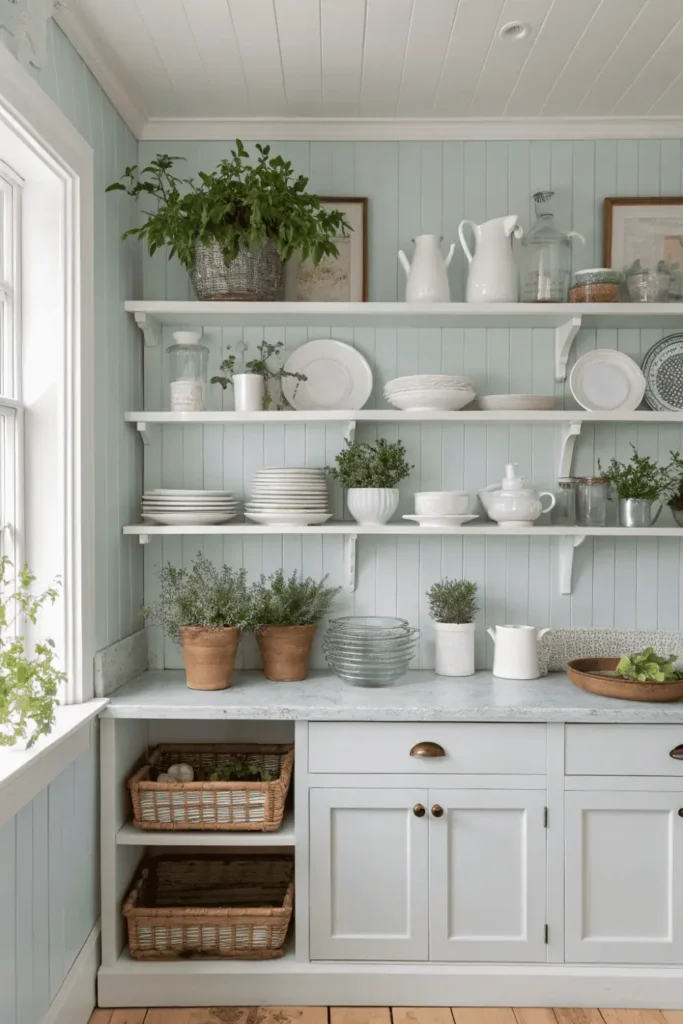
Open shelving is essential in cottage kitchen design, replacing some or all upper cabinets with floating shelves that display beautiful dishware and everyday items. This design choice creates an airy, accessible feeling while showcasing your favorite pieces.
Display white ironstone, transferware, or colorful pottery on painted wood shelves. Mix practical items like everyday plates with decorative pieces like vintage canisters and potted herbs for a collected-over-time look.
Stack plates by size, arrange mugs on hooks beneath shelves, and incorporate small plants or vintage finds for visual interest.
Pro Tip: Keep open shelving practical by displaying only items you actually use, and dust displayed pieces weekly to maintain cleanliness.
3. Painted Wood Cabinets in Soft Colors
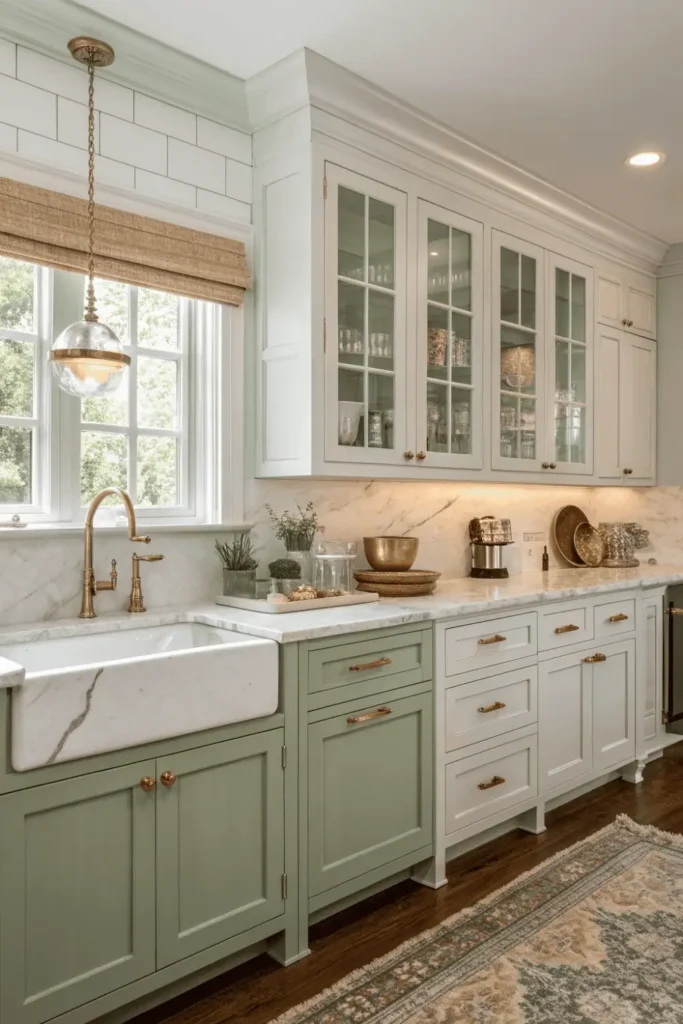
Painted wood cabinets in soft, muted colors form the foundation of beautiful cottage kitchen design. Traditional cottage colors include creamy whites, soft sage greens, pale blues, warm grays, and buttery yellows that create calm, welcoming atmospheres.
Shaker-style doors or simple flat-panel cabinets work best for cottage aesthetics, avoiding overly ornate detailing. Consider a slightly distressed finish or visible brush strokes for authentic aged character.
Pro Tip: Paint lower cabinets in a soft color and keep uppers white to create visual interest while maintaining an open, airy feeling in smaller kitchens.
4. Butcher Block or Wood Countertops
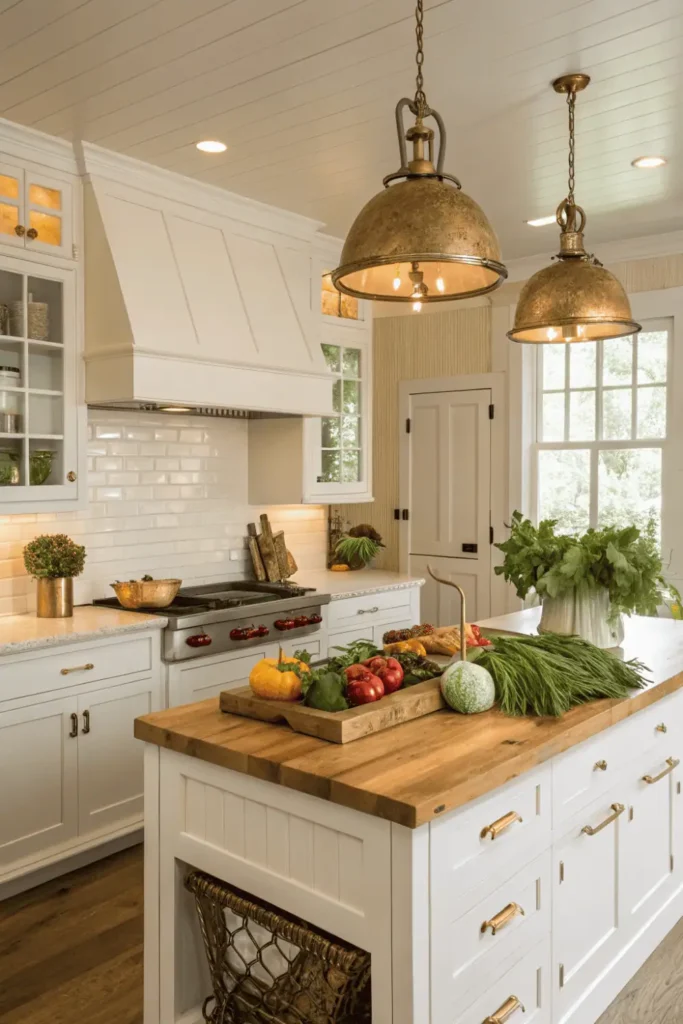
Wood countertops bring natural warmth and texture that’s perfect for cottage kitchen spaces. Butcher block counters provide practical work surfaces for food preparation while adding organic beauty that improves with age and use.
Choose maple, oak, or walnut butcher block in edge grain or end grain configurations. The natural material pairs beautifully with painted cabinets and creates pleasant contrast against farmhouse sinks.
Regular oiling maintains the wood’s beauty and creates a food-safe, water-resistant surface.
Pro Tip: Use butcher block on your island or a section of counter while choosing more durable materials like marble or quartz near the sink where water exposure is constant.
5. Vintage or Reproduction Appliances
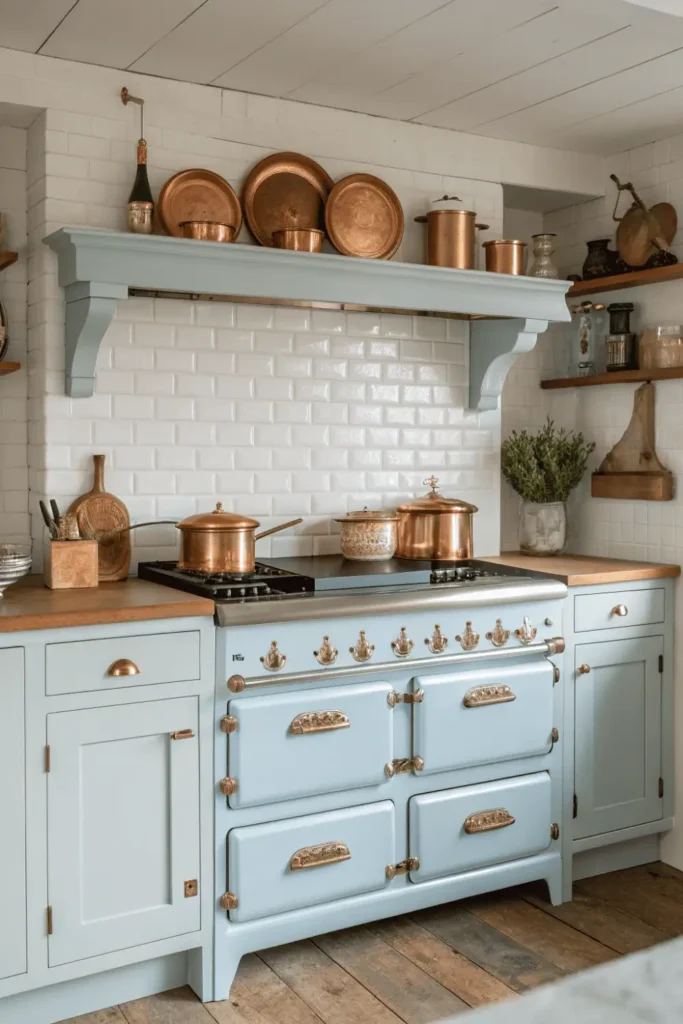
Vintage-style appliances or authentic restored pieces add authentic character to your cottage kitchen. Brands like Big Chill, Smeg, and Elmira Stove Works offer modern appliances with retro styling in various cottage-appropriate colors.
Choose appliances in classic white, soft mint, pale blue, or cream rather than stainless steel for authentic cottage appeal. Vintage-inspired ranges with colorful enamel finishes become stunning focal points.
Look for reproductions with modern efficiency and features housed in period-appropriate styling.
Pro Tip: If budget doesn’t allow for specialty appliances, choose white appliances over stainless steel for a more cottage-appropriate look at standard pricing.
6. Beadboard or Shiplap Wall Treatments
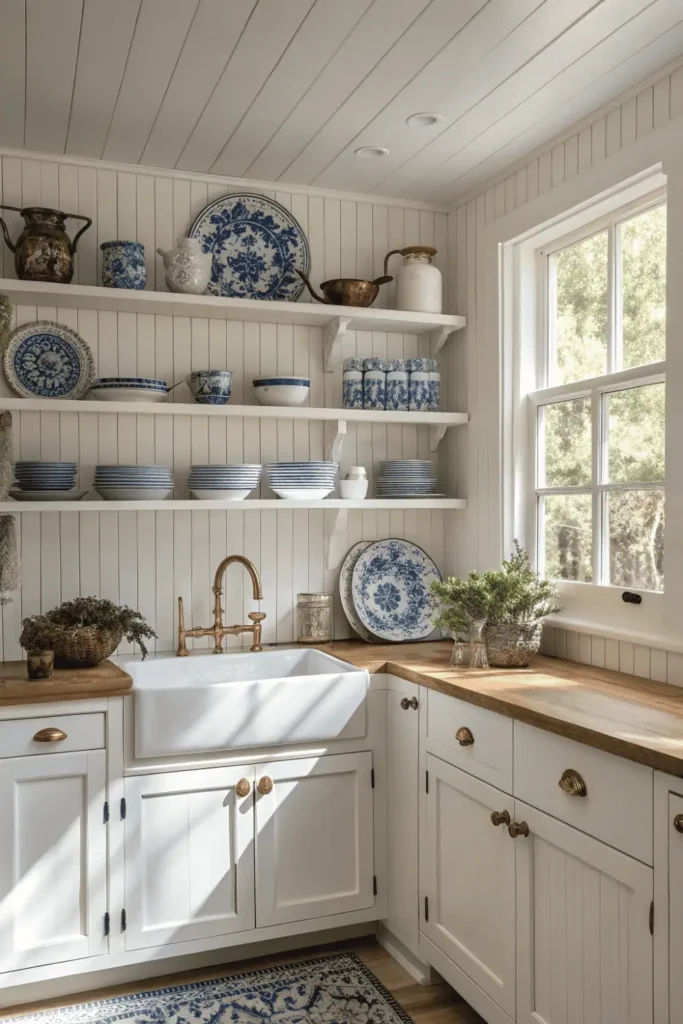
Beadboard paneling or shiplap on walls and ceilings adds architectural interest and cottage character to your kitchen. These traditional wall treatments bring texture and visual warmth while hiding imperfect walls.
Install beadboard as a backsplash, on the ceiling, or as wainscoting on lower walls. Paint it in soft whites or colors that complement your cabinets for cohesive design.
The vertical lines of beadboard make ceilings appear higher, perfect for cottage spaces with lower ceilings.
Pro Tip: Install beadboard behind your stove as an alternative to tile backsplash for authentic cottage style, sealing it well with heat-resistant paint.
7. Vintage Lighting Fixtures and Pendants
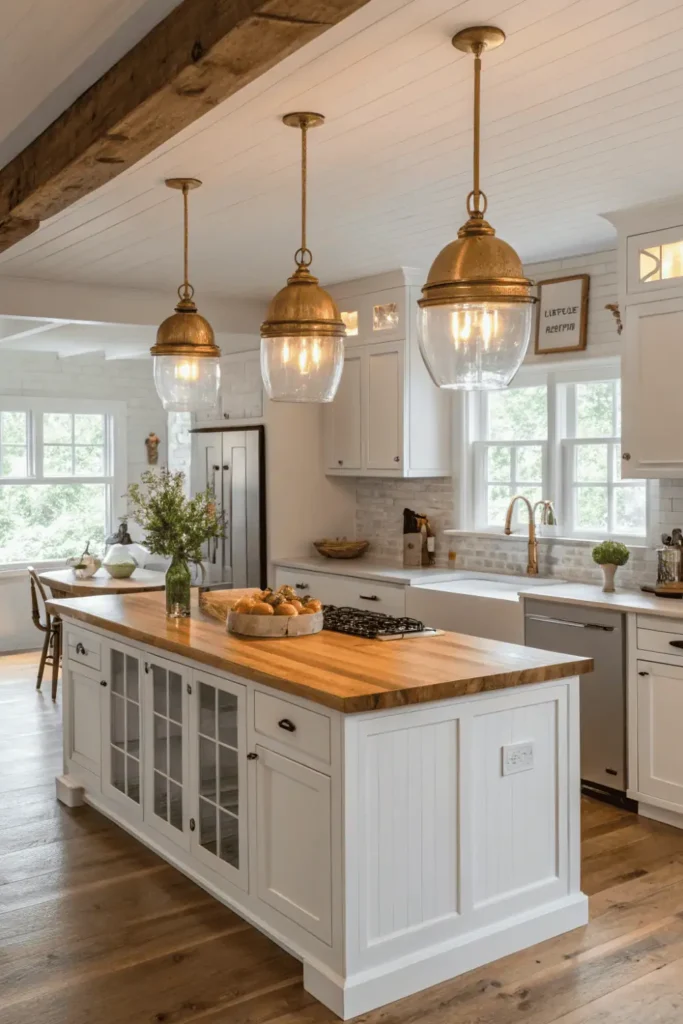
Period-appropriate lighting transforms your cottage kitchen with fixtures that combine function and vintage charm. Choose pendant lights, schoolhouse globes, or rustic chandeliers that complement your cottage aesthetic.
Hang glass pendants with brass or black hardware over islands or eating areas. Look for milk glass shades, seeded glass, or vintage-inspired designs that provide warm, diffused light.
Mix overhead lighting with under-cabinet fixtures and task lighting for proper illumination.
Pro Tip: Shop antique stores and salvage yards for authentic vintage light fixtures that can be rewired, creating one-of-a-kind pieces with genuine history.
8. Freestanding Furniture Pieces
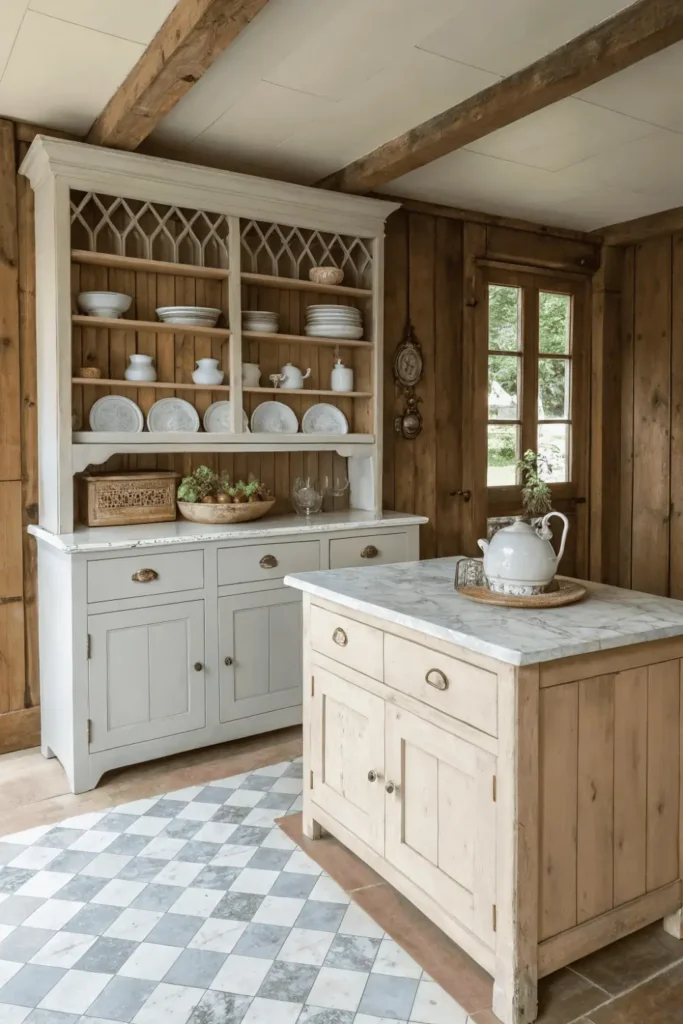
Incorporate freestanding furniture instead of built-ins to achieve the collected-over-time feeling essential to cottage kitchen design. Antique hutches, vintage dressers repurposed as islands, and standalone pantry cabinets add character and flexibility.
Painted or natural wood pieces in various styles create the unfitted kitchen look popular in authentic cottage homes. Mix different furniture periods and finishes for an eclectic, personal aesthetic.
Freestanding pieces offer flexibility to rearrange or take with you when moving.
Pro Tip: Use an antique dresser as a kitchen island by adding a butcher block top and painting the base in a coordinating cottage color.
9. Natural Fiber Rugs and Vintage Textiles
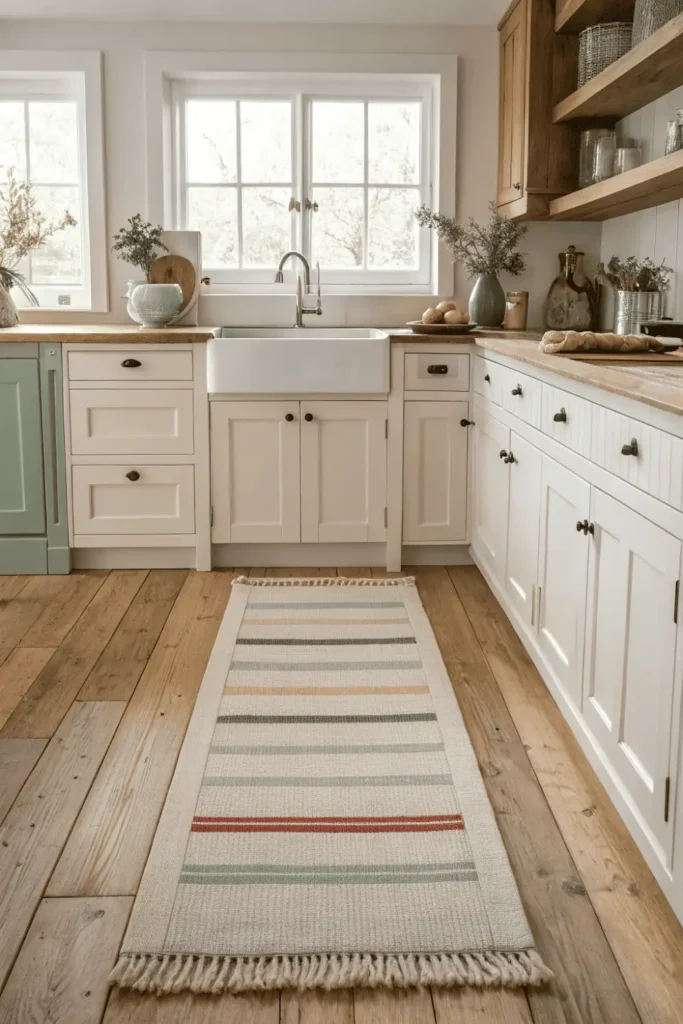
Layer natural fiber rugs like jute, sisal, or cotton in your cottage kitchen to add warmth underfoot and define spaces. Vintage-inspired patterns including stripes, checks, or botanical prints reinforce the cottage aesthetic.
Choose washable cotton rugs for high-traffic kitchen areas, or layer smaller vintage-style rugs over natural fiber foundations. Patterns in soft blues, greens, or reds add color without overwhelming the space.
Pro Tip: Place gel-backed rug pads under kitchen rugs to prevent slipping and protect floors while making rugs easier to vacuum.
10. Plate Racks and Display Storage
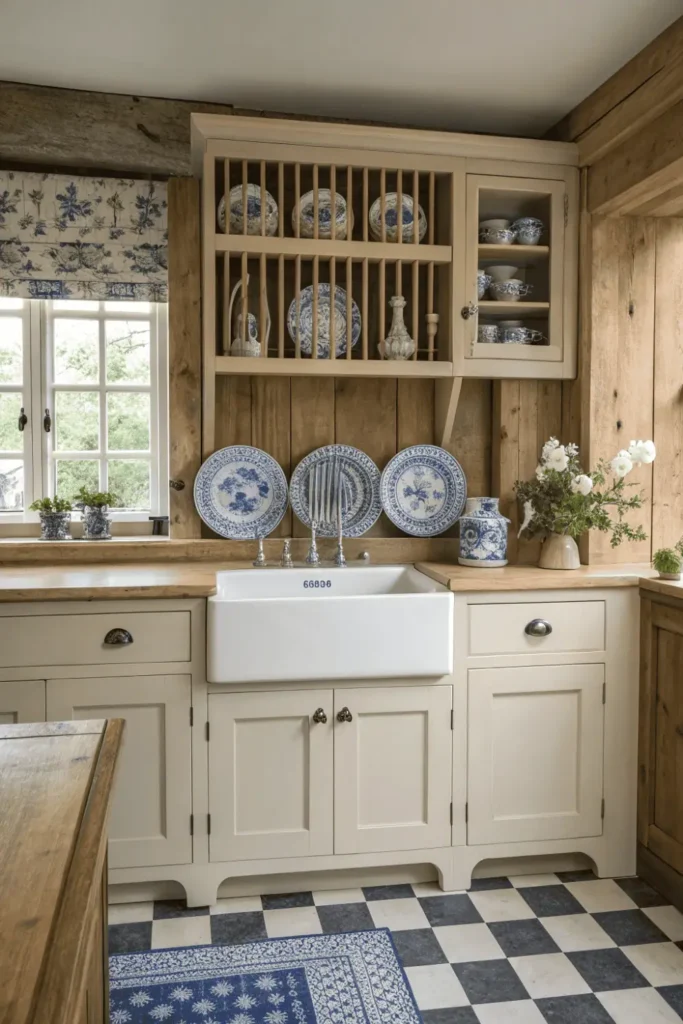
Install plate racks above the sink or on open walls in your cottage kitchen to display beautiful dishes while keeping them accessible. Traditional wooden plate racks with grooves hold plates vertically, creating practical storage that doubles as decoration.
Choose racks in natural wood or painted finishes that coordinate with your cabinets. Display your prettiest everyday dishes where they’re easy to grab and add visual interest.
Plate racks work especially well in kitchens with limited cabinet space.
Pro Tip: Paint an inexpensive wooden plate rack to match your cabinet color for a custom built-in look at a fraction of the cost.
11. Window Treatments in Natural Fabrics
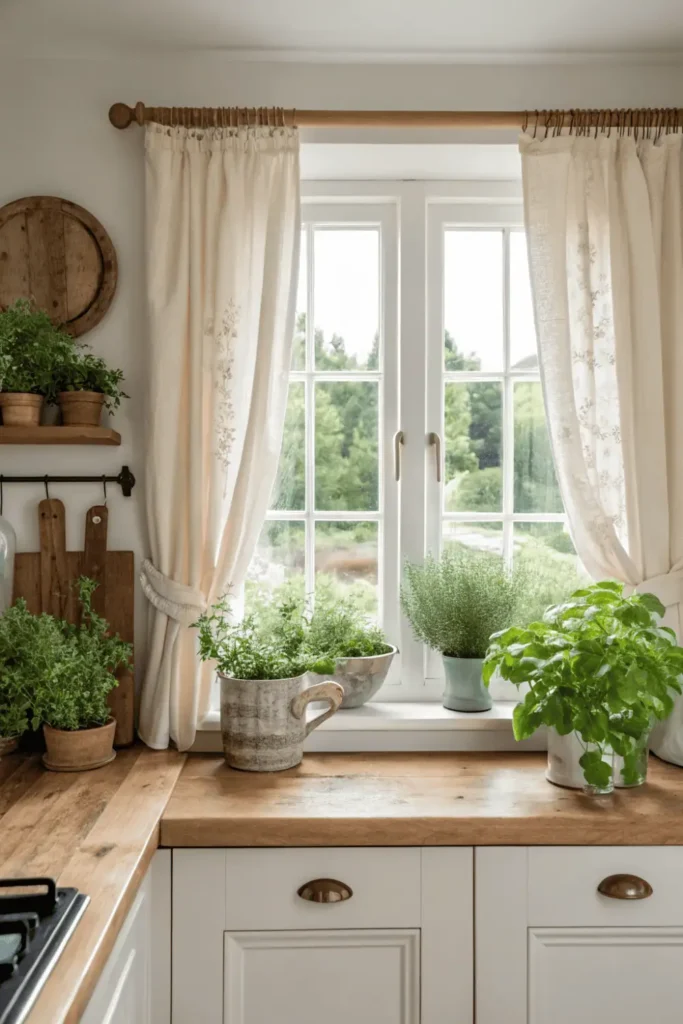
Dress your cottage kitchen windows with simple natural fabric treatments like linen cafe curtains, cotton panels, or roman shades in light colors or subtle patterns. Avoid heavy drapes or synthetic materials that feel too formal.
Choose white, cream, or soft colors in linen, cotton, or lightweight fabrics that filter light gently. Patterns like gingham checks, florals, or ticking stripes reinforce cottage charm.
Cafe curtains covering only the lower half of windows provide privacy while maximizing natural light.
Pro Tip: Make simple cafe curtains from vintage linen tea towels or dish towels for an authentic, budget-friendly cottage window treatment.
12. Fresh Flowers and Herb Gardens
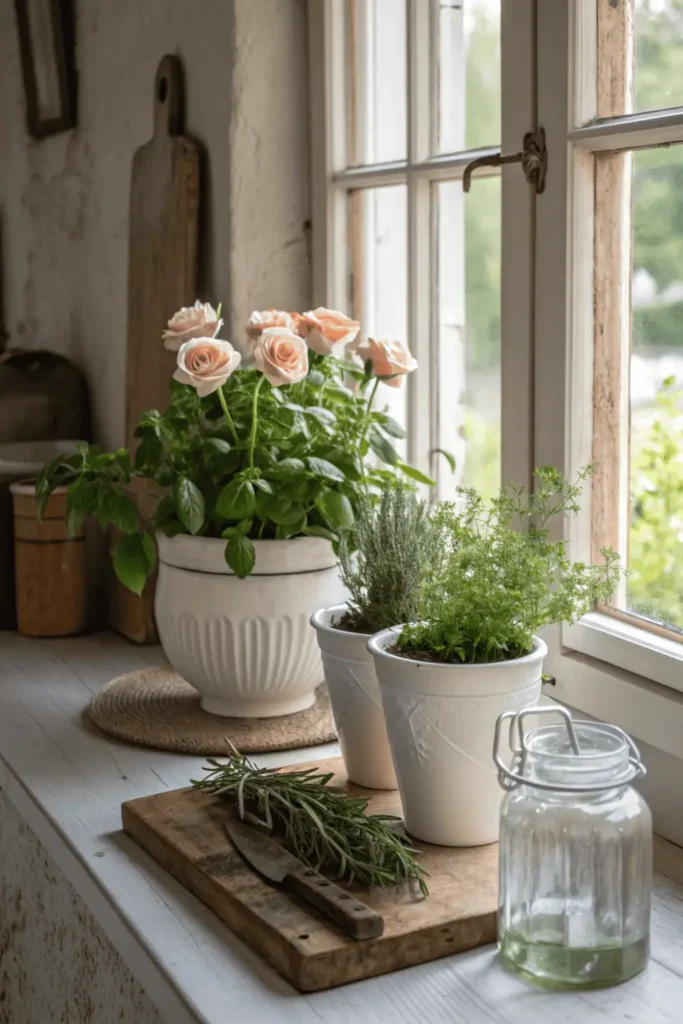
Bring life to your cottage kitchen with fresh flowers and potted herbs displayed on counters, windowsills, and open shelves. Garden flowers in simple vessels add natural beauty and reinforce the indoor-outdoor connection.
Display herbs in vintage containers, white ironstone pitchers, or galvanized buckets. Mix functional herbs like basil and rosemary with flowering plants for both beauty and practicality.
Change displays seasonally using garden-fresh flowers and foliage.
Pro Tip: Plant herbs in attractive containers that can stay permanently on your counter or windowsill, providing fresh ingredients and living decor year-round.
13. Vintage Accessories and Collections
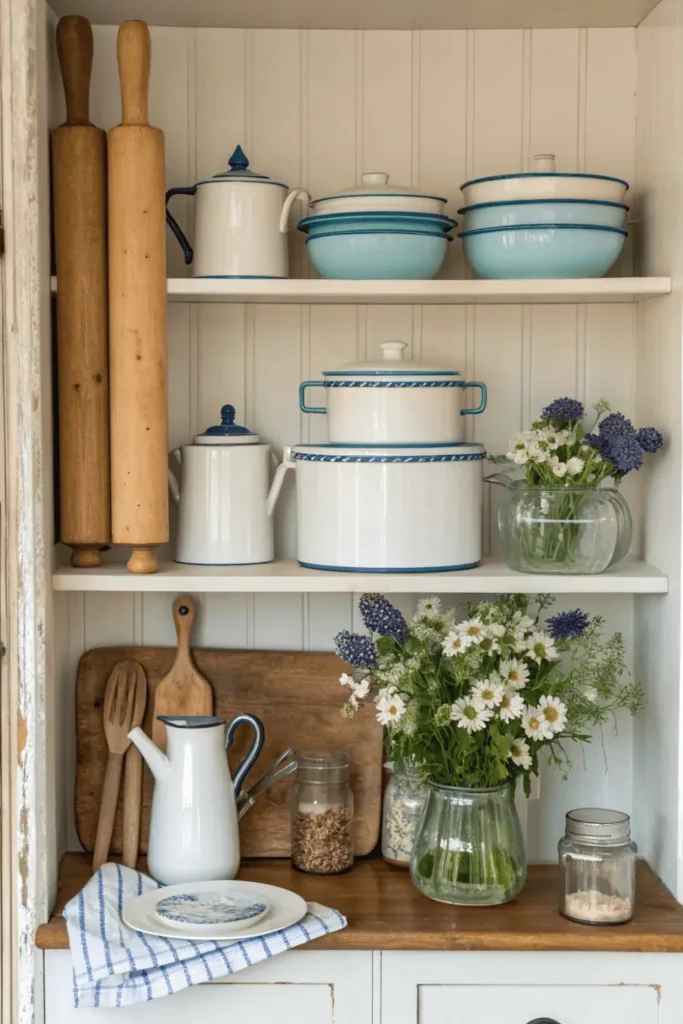
Complete your cottage kitchen with carefully curated vintage accessories that add personality and tell your story. Display collections of enamelware, vintage tins, old cookbooks, antique utensils, or wooden cutting boards.
Group similar items together on open shelves or counters, mixing functional pieces you actually use with purely decorative finds. Vintage bread boxes, flour sifters, and scales serve as both storage and decoration.
Shop antique stores, flea markets, and estate sales for authentic pieces with patina and history.
Pro Tip: Start a collection by choosing one category (like ironstone or enamelware) and gradually add pieces over time rather than buying everything at once.
Why Cottage Kitchens Are Worth the Investment
Cottage kitchen design creates timeless spaces that never go out of style, protecting your renovation investment for decades. The classic elements like farmhouse sinks, wood countertops, and painted cabinets maintain their appeal across changing trends.
Cottage kitchens increase home value by appealing to buyers seeking character and warmth over sterile modern designs. The combination of practical features and aesthetic charm makes these kitchens highly desirable in real estate markets.
Investing in quality cottage kitchen materials like real wood counters, fireclay sinks, and solid wood cabinets provides durability and longevity that saves money over time. These spaces age beautifully, developing patina and character rather than looking dated.
Things to Consider Before Choosing Cottage Kitchen Design
Evaluate your cottage kitchen budget carefully, as authentic materials like butcher block, farmhouse sinks, and quality painted cabinets cost more than basic options. Prioritize key elements like the sink and countertops, then add vintage accessories gradually.
Consider the maintenance requirements of cottage kitchen materials before committing. Wood countertops need regular oiling, painted cabinets require touch-ups, and open shelving demands frequent dusting and organization.
Ensure your cottage kitchen style fits your home’s architecture and your personal lifestyle. Authentic cottage design works best in older homes or new builds with traditional styling, while modern homes might need adapted cottage elements.
Comparison Table of Cottage Kitchen Elements
| Element | Price Range | Durability | Maintenance | Best For | Lead Time |
| Farmhouse Sink | $$$ | Excellent (20+ years) | Low | All cottage kitchens | 2-4 weeks |
| Open Shelving | $ – $$ | Good (10+ years) | Medium (dusting) | Display-worthy dishes | 1-2 weeks |
| Painted Cabinets | $$$ | Excellent (15+ years) | Medium (touch-ups) | Full renovations | 4-8 weeks |
| Butcher Block Counter | $$ | Good (10-15 years) | High (oiling) | Islands, prep areas | 2-3 weeks |
| Vintage Appliances | $$$$ | Good (varies) | Medium | Statement pieces | 4-12 weeks |
| Beadboard Walls | $ – $$ | Excellent (20+ years) | Low | All cottage kitchens | 1-2 weeks |
| Vintage Lighting | $$ – $$$ | Excellent (varies) | Low | All cottage kitchens | 2-6 weeks |
| Freestanding Furniture | $$ – $$$$ | Excellent (antiques) | Low | Unfitted cottage look | Immediate-8 weeks |
| Natural Fiber Rugs | $ – $$ | Good (5-10 years) | Medium (washing) | All cottage kitchens | 1-2 weeks |
| Plate Racks | $ – $$ | Excellent (15+ years) | Low | Display storage | 1-3 weeks |
| Natural Curtains | $ | Good (3-5 years) | Medium (washing) | Cottage windows | Immediate-1 week |
| Herb Gardens | $ | Medium (seasonal) | High (watering) | Windowsills, counters | Immediate |
| Vintage Accessories | $ – $$$ | Varies | Low | Finishing touches | Immediate |
Frequently Asked Questions About Cottage Kitchen
What colors work best in cottage kitchen design?
Cottage kitchen colors center on soft, muted tones that create calm, welcoming spaces. Classic choices include creamy whites, soft sage greens, pale sky blues, warm grays, and buttery yellows that evoke vintage charm.
Choose colors with slightly aged or dusty quality rather than bright, saturated tones. Two-tone combinations like white uppers with colored lowers add visual interest while maintaining cottage authenticity.
How much does a cottage kitchen renovation cost?
A complete cottage kitchen renovation typically costs $15,000 to $40,000 depending on kitchen size, material choices, and whether you’re keeping existing layouts. Key expenses include the farmhouse sink ($400-$1,200), painted cabinets ($5,000-$15,000), and butcher block counters ($40-$100 per square foot).
Budget-friendly cottage kitchen updates focusing on paint, open shelving, and vintage accessories can cost $3,000-$8,000. Prioritize signature elements like the sink and open shelving, then add vintage details gradually.
Can cottage kitchen style work in modern homes?
Yes, cottage kitchen style adapts beautifully to modern homes through careful element selection and updated proportions. Focus on simplified cottage details like painted shaker cabinets, farmhouse sinks, and natural materials rather than heavy ornamentation.
Blend cottage elements with modern conveniences like contemporary appliances, efficient lighting, and streamlined hardware. The key is balancing vintage-inspired design with clean lines and current functionality.
What’s the difference between cottage and farmhouse kitchen styles?
Cottage kitchens emphasize softer colors, lighter woods, and collected vintage accessories with slightly feminine, romantic aesthetics. Farmhouse kitchens feature more rustic, utilitarian elements with darker woods, industrial metals, and working-farm functionality.
Both styles share elements like farmhouse sinks, open shelving, and natural materials, but cottage kitchens feel cozier and more delicate while farmhouse kitchens appear sturdier and more rugged. Cottage kitchen design typically uses painted finishes and vintage accessories more extensively than farmhouse styles.