
Creating an attractive car parking design in a home garden combines functionality with curb appeal in your outdoor space. The right parking solution protects your vehicle while enhancing your property’s overall aesthetic and value.
Modern homeowners increasingly recognize that parking areas don’t have to be eyesores. Thoughtful design integration transforms necessary parking spaces into beautiful landscape features that complement your garden.
This comprehensive guide explores the best car parking design home garden solutions to help you create a parking area that’s both practical and visually stunning. Let’s discover options that work for every home style and budget.
List of 13 Best Car Parking Design Home Garden Solutions
1. Permeable Paver Driveway with Green Joints

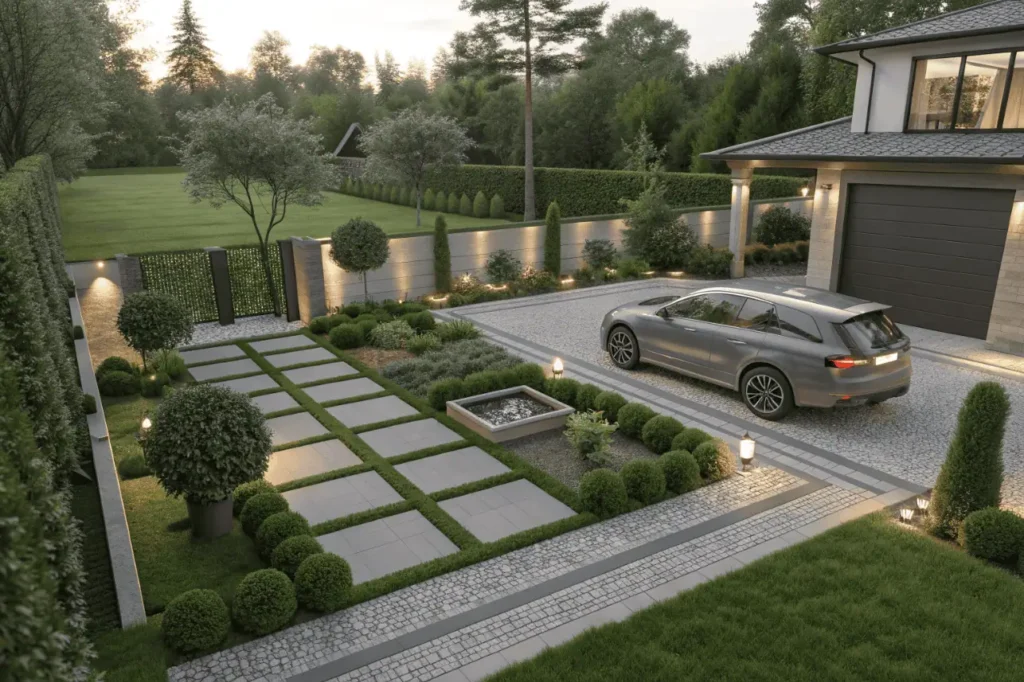
Permeable pavers create an eco-friendly car parking design home garden that allows rainwater to filter naturally into the ground. These interlocking stones feature gaps filled with grass or ground cover, reducing water runoff while maintaining structural integrity.
The grass-filled joints soften the hardscape appearance and blend seamlessly with your garden landscape. This sustainable solution prevents puddles and reduces heat island effects compared to solid concrete.
Pro Tip: Choose pavers rated for vehicular traffic (minimum 8,000 PSI) and ensure proper base preparation with 4-6 inches of compacted gravel for long-lasting durability and drainage performance.
2. Gravel Parking Area with Defined Borders
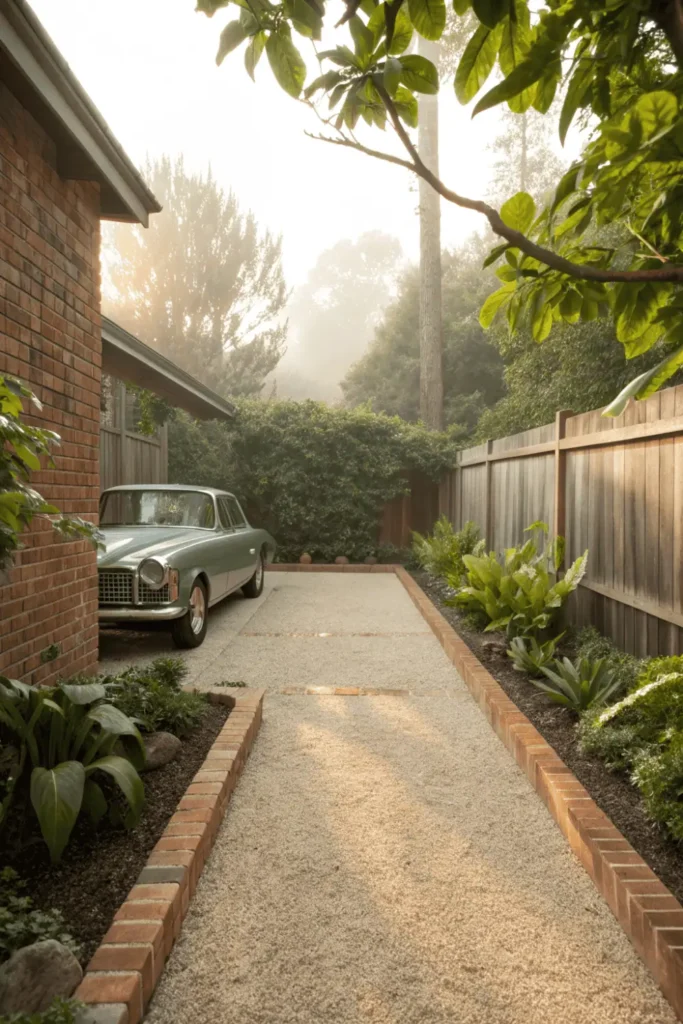
Crushed gravel offers an affordable and attractive car parking design home garden option that’s easy to install and maintain. The natural stone appearance complements various architectural styles from rustic farmhouses to contemporary homes.
Defined borders using brick, stone, or steel edging prevent gravel migration into garden beds and create clean visual lines. Choose stabilized gravel or larger stones (3/4 inch) that compact well under vehicle weight.
This permeable surface naturally drains water and requires minimal maintenance beyond occasional raking and top-dressing.
Pro Tip: Install landscape fabric beneath the gravel layer to prevent weed growth while allowing drainage, and add a 4-inch compacted base layer for stability and to prevent rutting.
3. Concrete Grid System with Planted Cells

Concrete grid systems combine structural strength with green space in an innovative car parking design home garden approach. The grid framework supports vehicle weight while open cells allow grass or ground cover to thrive.
This hybrid solution provides 60-70% green coverage while maintaining full parking functionality. The planted cells absorb rainwater, reduce heat reflection, and create visual interest with living vegetation.
Pro Tip: Select drought-tolerant grass varieties like perennial ryegrass or fine fescue that withstand vehicular traffic, and water regularly during the first growing season to establish strong root systems.
4. Natural Stone Parking Court with Garden Integration

Natural flagstone or slate creates an upscale car parking design home garden that seamlessly blends with surrounding landscapes. The irregular shapes and earth tones provide organic visual appeal while offering excellent durability.
Strategic gaps between stones accommodate low-growing ground covers like creeping thyme or Irish moss, adding color and softness. This design works beautifully for side parking areas or courtyards adjacent to formal gardens.
Pro Tip: Set stones in a sand or mortar base depending on soil conditions and expected traffic—mortar provides more stability but reduces permeability, while sand bases allow better drainage in wet climates.
5. Resin-Bound Aggregate Surfacing

Resin-bound aggregate combines natural stones with clear resin to create smooth, permeable surfaces for car parking design home garden applications. The seamless finish prevents loose stones while allowing water to drain through the surface.
Available in multiple colors and stone sizes, this material offers design flexibility to match your home’s palette. The smooth surface stays cleaner than loose gravel and doesn’t migrate into garden beds.
Pro Tip: Choose UV-stable resin formulations specifically rated for outdoor use and vehicular traffic to prevent yellowing or breakdown—professional installation ensures proper mixing ratios and curing for maximum longevity.
6. Brick Paver Patterns with Landscape Accents
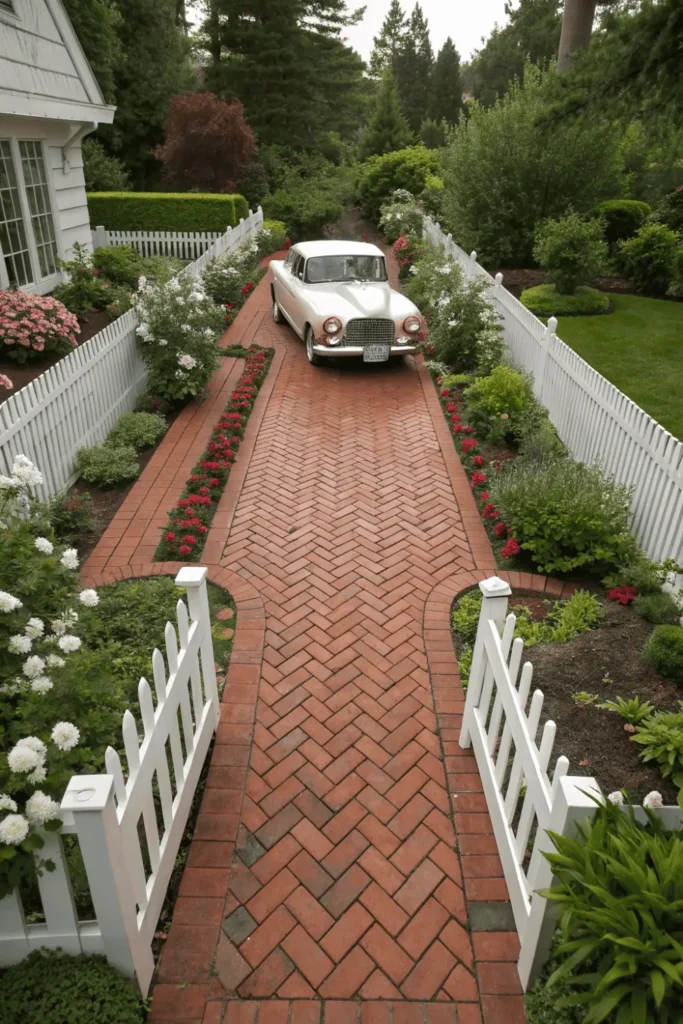
Clay brick pavers offer timeless appeal in car parking design home garden layouts with their warm colors and traditional charm. Herringbone, basketweave, or running bond patterns add visual interest while providing excellent load-bearing capacity.
Contrasting border colors or decorative insets create focal points and define parking zones. Brick’s porosity allows some water absorption while its durability ensures decades of reliable service.
The classic appearance complements both historic and contemporary homes when pattern and color are carefully selected.
Pro Tip: Use sand-set installation for DIY projects or mortar-set for professional results—ensure a 6-inch compacted gravel base and use polymeric sand between joints to resist weeds and ant colonization.
7. Reinforced Grass Parking System

Plastic or concrete grid reinforcements hidden beneath turf create strong car parking design home garden solutions that appear as pure lawn. The grid structure distributes vehicle weight to prevent soil compaction and grass damage.
This green parking option maintains 95% grass coverage while supporting regular vehicle use. The system works especially well for overflow parking areas or secondary parking spots used occasionally.
Pro Tip: Install reinforcement grids during spring or fall when grass grows actively, fill cells with quality topsoil mixed with sand for drainage, and overseed annually to maintain thick coverage that withstands vehicle stress.
8. Decomposed Granite with Stabilizer

Stabilized decomposed granite provides a natural, compact surface for car parking design home garden areas at moderate cost. The fine particles compact tightly to create firm surfaces while maintaining a softer, more organic appearance than concrete.
Stabilizing agents bind the particles together, preventing dust and erosion while keeping the surface permeable. Colors range from tan and gold to reddish-brown, complementing natural landscapes beautifully.
Pro Tip: Apply in 2-inch lifts and compact each layer thoroughly with a plate compactor—water lightly and allow to cure for 24-48 hours before vehicle use for maximum hardness and stability.
9. Interlocking Concrete Pavers with Drainage Channels
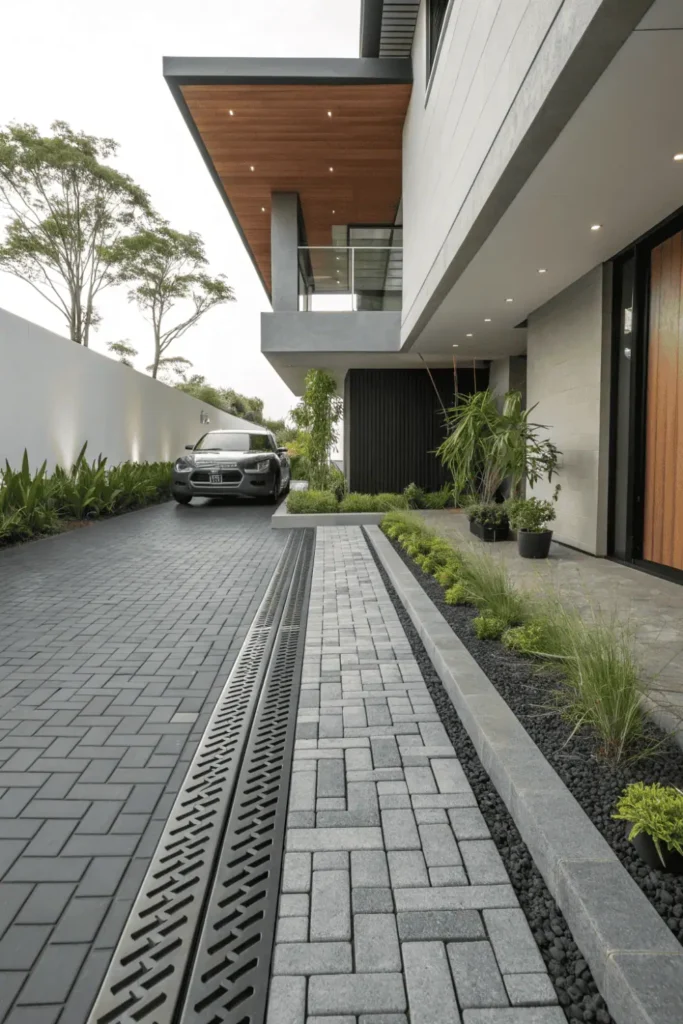
Interlocking concrete pavers engineered with drainage channels offer durable car parking design home garden solutions with excellent water management. The precision manufacturing ensures tight fits and level surfaces that resist shifting.
Available in countless colors, textures, and patterns, these pavers mimic natural stone at lower costs. Built-in spacers create consistent joints while drainage channels direct water away from parking areas.
Pro Tip: Select pavers rated for vehicular use (minimum 8,000 PSI compressive strength), install over properly compacted base material, and seal every 2-3 years to resist stains and enhance color vibrancy.
10. Rubber Paver Tiles for Flexibility

Recycled rubber pavers create eco-friendly car parking design home garden surfaces with shock-absorbing properties and easy installation. These interlocking tiles handle temperature extremes without cracking and provide slip-resistant surfaces year-round.
The lightweight material allows DIY installation without special equipment or expertise. Rubber pavers work particularly well for temporary parking solutions or areas with tree roots that might damage rigid materials.
Pro Tip: Install rubber pavers over compacted gravel or existing concrete surfaces for quick upgrades—the flexibility accommodates minor ground movement without cracking, making them ideal for areas with expansive soils or freeze-thaw cycles.
11. Stamped Concrete with Decorative Patterns
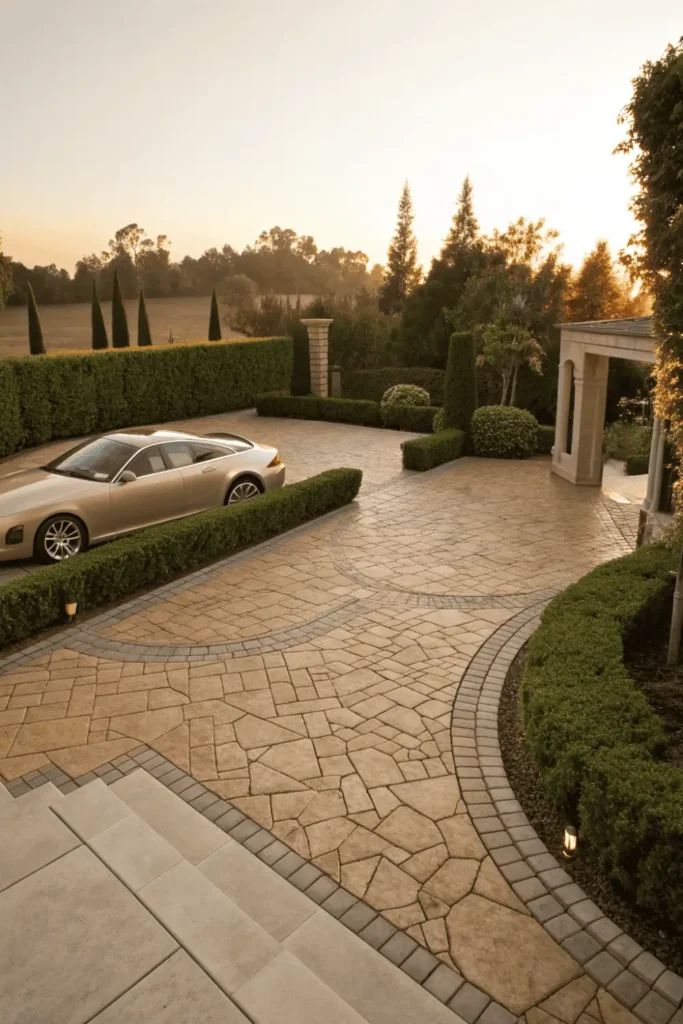
Stamped concrete replicates natural stone or brick appearances in car parking design home garden designs at significant cost savings. The continuous surface eliminates joints where weeds might grow while providing excellent durability.
Custom colors and patterns allow personalization to match your home’s architecture and landscape style. The seamless installation creates uniform surfaces ideal for areas with heavy traffic or difficult access.
Pro Tip: Apply concrete sealer every 2-3 years to maintain color vibrancy and protect against oil stains, salt damage, and weather erosion—choose matte finishes for better traction, especially in areas with snow and ice.
12. Wooden Deck Parking Platform

Pressure-treated wood decking creates unique car parking design home garden solutions for sloped properties or elevated parking areas. The elevated platform approach solves drainage issues while creating distinct separation between parking and garden zones.
Structural support systems must meet engineering requirements for vehicular loads, typically requiring closer joist spacing and heavier lumber. This solution works particularly well for hillside homes or properties with challenging topography.
Pro Tip: Use marine-grade or composite decking rated for commercial applications rather than standard residential decking—ensure proper ventilation underneath to prevent moisture accumulation and wood rot, and install at slight angles for water runoff.
13. Mixed Material Design with Transition Zones

Combining multiple materials creates distinctive car parking design home garden statements that delineate different functional zones. Transitional designs might blend concrete tire tracks with planted center strips or border gravel with brick soldier courses.
This layered approach adds visual complexity while allowing each material to serve its optimal purpose. Mixed materials also help define property boundaries and create architectural interest in otherwise plain areas.
Pro Tip: Ensure all materials share compatible drainage characteristics and installation requirements—use transition strips or borders to prevent material migration, and select colors that harmonize rather than clash for cohesive overall appearance.
Pinterest Image Prompt: A creative car parking design home garden combining three materials: concrete tire tracks, grass center strip, and paver border edges, cohesive color palette, well-designed transition zones, artistic landscape approach, vertical 2:3 ratio
Why Car Parking Design Home Garden Solutions Are Worth the Investment
Quality car parking design home garden installations significantly increase property values and curb appeal. Professional parking solutions can boost home resale values by 5-10% while making properties more attractive to potential buyers who appreciate thoughtful outdoor design.
Proper car parking design home garden planning prevents costly drainage problems, foundation damage, and landscape erosion. Well-designed parking areas direct water away from structures, protect underground utilities, and reduce maintenance costs over time through durable material selection.
Attractive car parking design home garden projects enhance daily living experiences and outdoor enjoyment. Beautiful parking areas create positive first impressions for visitors, provide safe all-weather vehicle access, and extend usable outdoor living space beyond traditional patio or garden areas.
Things to Consider Before Choosing Car Parking Design Home Garden Options
Evaluate your property’s drainage patterns and soil conditions before selecting car parking design home garden materials. Poor drainage leads to puddles, ice formation, and premature material failure, while expansive soils require flexible materials that accommodate ground movement without cracking or heaving.
Consider your local climate and maintenance commitment when choosing car parking design home garden solutions. Snow climates need materials that withstand freeze-thaw cycles and salt exposure, while hot climates benefit from lighter colors that reduce heat absorption and materials that resist fading under intense UV exposure.
Determine your budget, timeline, and DIY capabilities before committing to car parking design home garden projects. Professional installation costs 2-3 times material expenses but ensures proper preparation and warranties, while DIY approaches save money but require significant time, tools, and physical labor for successful results.
Comparison Table of Car Parking Design Home Garden Options
| Design Type | Price Range | Durability | Maintenance | Best For | Installation Time |
| Permeable Pavers | $$$ | High (20-25 years) | Low | Eco-conscious, wet climates | 3-5 days |
| Gravel Parking | $ | Medium (5-10 years) | Medium | Budget-conscious, rustic styles | 1-2 days |
| Concrete Grid System | $$ | High (20+ years) | Low | Balance of green/hard surface | 2-3 days |
| Natural Stone | $$$$ | Very High (30+ years) | Low | Upscale homes, formal gardens | 5-7 days |
| Resin-Bound Aggregate | $$$ | High (15-20 years) | Very Low | Modern aesthetics, smooth surface | 2-3 days |
| Brick Pavers | $$$ | Very High (25+ years) | Low | Traditional homes, classic appeal | 4-6 days |
| Reinforced Grass | $$ | Medium (10-15 years) | High | Lawn appearance, light use | 2-4 days |
| Decomposed Granite | $ | Medium (8-12 years) | Low | Natural look, southwestern style | 2-3 days |
| Interlocking Concrete | $$ | High (20-25 years) | Low | Versatile, various styles | 3-5 days |
| Rubber Pavers | $$ | Medium (10-15 years) | Very Low | DIY projects, temporary solutions | 1-2 days |
| Stamped Concrete | $$$ | High (15-20 years) | Medium | Custom patterns, seamless surface | 3-5 days |
| Wood Deck Platform | $$$$ | Medium (15-20 years) | High | Sloped lots, architectural interest | 5-10 days |
| Mixed Materials | $$$ – $$$$ | Varies | Medium | Unique design, zoned functions | 5-8 days |
Frequently Asked Questions About Car Parking Design Home Garden
What is the most affordable car parking design home garden option?
Crushed gravel represents the most budget-friendly car parking design home garden solution, typically costing $1-3 per square foot installed. This permeable option requires minimal site preparation, installs quickly, and provides adequate durability for residential use with proper edging and base preparation.
Decomposed granite with stabilizer offers another economical choice at $2-4 per square foot, providing a more refined appearance than loose gravel. For DIY enthusiasts, rubber paver tiles over existing surfaces cost $3-5 per square foot and require no special tools or skills for successful installation.
Consider long-term maintenance costs when evaluating affordability—cheaper materials may require more frequent top-dressing, edging repair, or complete replacement within 5-10 years compared to pricier options lasting 20+ years.
How do I choose the best car parking design home garden for my property?
Assess your property’s specific conditions including drainage patterns, soil type, and climate when selecting car parking design home garden materials. Properties with poor drainage benefit from permeable options like pavers or gravel, while stable, well-drained sites can accommodate any material type successfully.
Consider your home’s architectural style and existing landscape design to ensure parking areas complement rather than clash with overall aesthetics. Traditional homes pair beautifully with brick or natural stone, while contemporary properties suit concrete pavers or resin-bound aggregates.
Factor in your maintenance preferences and physical abilities—grass systems require regular mowing and watering, while sealed concrete or pavers need minimal upkeep beyond occasional power washing and resealing.
Can I install car parking design home garden solutions myself?
Many car parking design home garden projects suit confident DIYers, particularly gravel installations, rubber pavers, and simple paver systems over prepared bases. These options require basic tools, physical labor, and attention to detail but don’t demand specialized skills or expensive equipment rental.
Gravel parking areas are the most accessible DIY projects—excavate 4-6 inches, install landscape fabric, add compacted gravel base, and top with decorative stone. Rubber paver tiles simply interlock over existing concrete or compacted gravel without adhesives or special preparation.
Complex projects involving concrete pouring, large paver installations, or structural decking typically require professional expertise to ensure proper grading, drainage, and longevity. Improper installation leads to premature failure, water damage, and costly repairs that exceed initial professional installation savings.
How long does car parking design home garden installation typically take?
Installation timelines for car parking design home garden projects vary dramatically based on size, complexity, and material choice. Simple gravel or rubber paver installations for single-car spaces can be completed in 1-2 days, while paver or natural stone projects typically require 3-7 days for excavation, base preparation, and material installation.
Concrete-based solutions including stamped or poured parking areas need 3-5 days for forming, pouring, and initial curing, plus an additional 7-28 days before accepting full vehicle loads. Wood deck platforms may require 5-10 days depending on structural complexity and elevation requirements.
Weather significantly impacts installation schedules—rain delays concrete and paver installations, while frozen ground prevents excavation in winter. Plan car parking design home garden projects for spring or fall when conditions are most favorable and contractor availability is better than peak summer months.