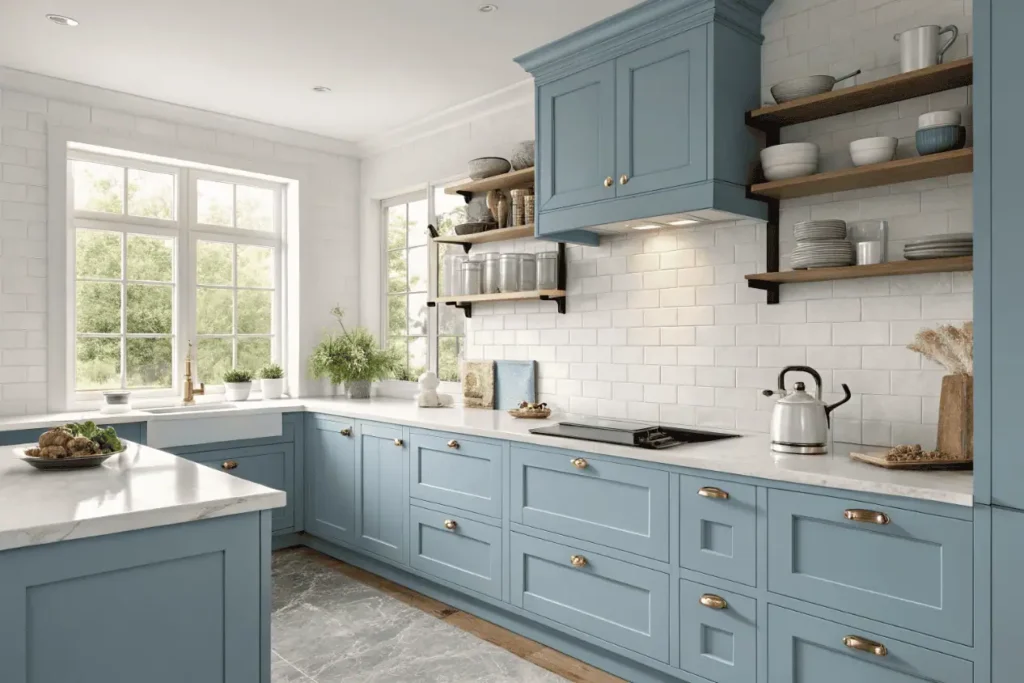
A blue kitchen brings calming, sophisticated color into the heart of your home, creating spaces that feel both timeless and contemporary. From soft powder blue to dramatic navy, this versatile color works beautifully across design styles while adding personality and depth to cooking spaces.
Blue kitchens have become increasingly popular because they offer alternatives to all-white designs without sacrificing elegance or resale value. They pair beautifully with natural materials like wood and marble, metallic finishes, and virtually any accent color you choose.
Whether you’re planning a complete renovation or simple updates, incorporating blue kitchen elements creates refreshing spaces that stand the test of time while reflecting current design trends.
List of 13 Best Blue Kitchen Ideas
1. Navy Blue Cabinets with Brass Hardware

Navy blue cabinets create dramatic, sophisticated foundations for blue kitchen designs that feel both classic and contemporary. This deep shade adds richness and depth while remaining neutral enough to work with various countertop materials and backsplash choices.
Pair navy cabinetry with warm brass or gold hardware for elegant contrast that elevates the entire space. The metallic accents catch light beautifully against dark blue surfaces, adding luxury and visual interest.
Pro Tip: Navy blue kitchen cabinets hide fingerprints and wear better than lighter shades, making them practical choices for busy households with children or frequent cooking.
2. Powder Blue Island with White Perimeter Cabinets
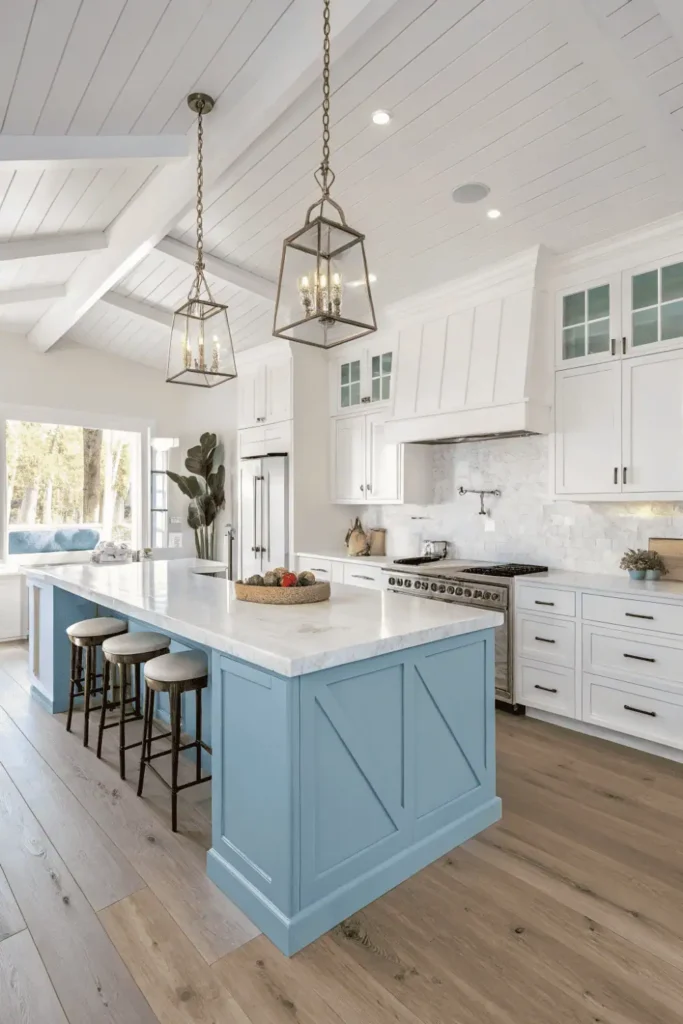
Create a focal point blue kitchen island in soft powder or sky blue while keeping surrounding cabinets neutral white or cream. This two-tone approach introduces color without overwhelming your space, perfect for homeowners hesitant about full-color commitment.
The light blue island becomes your kitchen’s centerpiece, drawing the eye and anchoring the room design. This strategy works beautifully in open-concept layouts where the island separates kitchen and living spaces.
Pro Tip: Extend your powder blue to lower cabinets only, keeping uppers white to maintain an airy, open feeling in your blue kitchen while maximizing color impact where it matters most.
3. Blue Subway Tile Backsplash

Blue subway tiles offer manageable ways to incorporate color into your blue kitchen without painting cabinets. Choose from glossy ceramic tiles that reflect light, matte finishes for subtle sophistication, or hand-painted artisan tiles for unique character.
Subway tile backsplashes provide practical, wipeable surfaces while serving as artistic focal points. The classic 3×6 size works in any style, from traditional to ultra-modern, depending on your tile shade and installation pattern.
Stack tiles vertically for contemporary looks, install them in classic brick patterns for traditional appeal, or arrange them in herringbone patterns for visual interest in your blue kitchen design.
Pro Tip: Pair darker blue tiles with white grout for definition, or use matching blue grout for seamless, contemporary blue kitchen backsplashes that feel more integrated.
4. Two-Tone Blue and White Cabinets

Two-tone blue kitchen cabinets combine blue lowers with white or cream uppers, creating balanced designs that feel intentional and sophisticated. This approach provides substantial blue presence while keeping spaces feeling bright and open.
The darker blue base cabinets ground the room and hide scuffs near floor level, while lighter upper cabinets reflect light and prevent the space from feeling too dark or heavy.
Pro Tip: Paint your blue kitchen island to match lower cabinets for cohesive flow, or choose a different blue shade for your island to create a three-tone design with even more depth and interest.
5. Blue Kitchen Walls with Natural Wood Cabinets
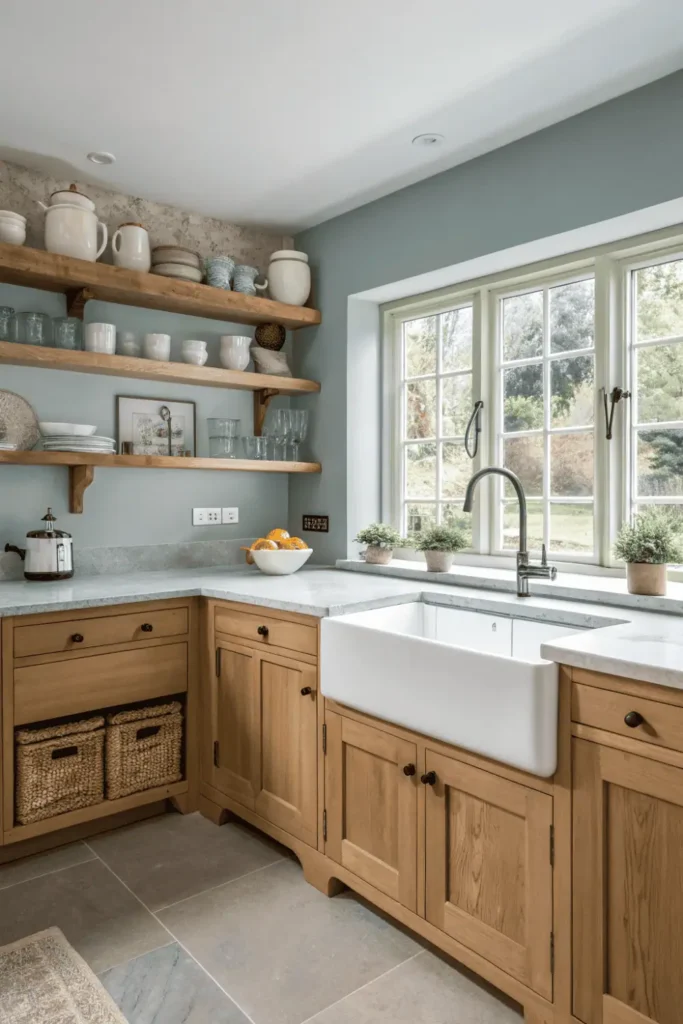
Transform your space with blue painted walls while keeping cabinets in natural wood tones for warm, organic blue kitchen designs. This approach offers color flexibility since wall paint changes more easily and affordably than cabinet refinishing.
Choose lighter blues like aqua or sky for smaller kitchens to maintain spaciousness, or embrace deeper teals and navy in larger, well-lit spaces for dramatic impact. The wood cabinetry adds warmth that prevents blue from feeling too cool or sterile.
Pro Tip: Test large paint samples on multiple walls and observe them throughout the day in changing light before committing to your blue kitchen wall color choice.
6. Teal Blue Cabinets for Bold Statements

Teal blue combines blue and green for unique blue kitchen cabinets that feel fresh and unexpected. This jewel-tone shade works beautifully in both modern and traditional designs, offering sophisticated color that photographs beautifully.
Teal pairs wonderfully with white marble, brass accents, and natural wood elements. The color reads differently in various lighting conditions, sometimes appearing more blue, sometimes more green, adding dynamic interest to your space.
Pro Tip: Balance bold teal blue kitchen cabinets with neutral walls, floors, and countertops to prevent color overload while letting your cabinets remain the star of the design.
7. Blue and White Patterned Tile Floors

Blue and white patterned cement tiles bring color to blue kitchen floors with vintage charm and modern appeal. These durable tiles create stunning visual foundations while hiding dirt and wear better than solid colors.
Moroccan, Spanish, or Portuguese tile patterns add global-inspired character that works with various design aesthetics. The bold floors pair beautifully with simple white or wood cabinets that let the flooring shine.
Patterned blue kitchen floors serve as artwork underfoot, reducing the need for additional decorative elements while creating memorable, Instagram-worthy spaces.
Pro Tip: Use patterned blue tiles in kitchen zones only, transitioning to solid wood or neutral tiles in adjacent living areas to prevent pattern overload in open-concept blue kitchens.
8. Soft Blue-Gray Cabinets for Transitional Style

Blue-gray cabinet shades offer subtle blue kitchen color that reads almost neutral while providing more interest than standard gray. These sophisticated hues work beautifully in transitional kitchens bridging traditional and contemporary design.
Choose cooler blue-grays with more blue tones for modern aesthetics, or warmer blue-grays with greige undertones for traditional or farmhouse styles. This versatile shade complements stainless steel appliances, white countertops, and various hardware finishes.
Pro Tip: Blue-gray blue kitchen cabinets appeal to broad buyer audiences, making them smart choices if you’re planning to sell within five years while still wanting color personality.
9. Cobalt Blue Accent Walls

Cobalt blue accent walls deliver bold blue kitchen color impact without permanent cabinet commitments. Paint one wall—typically behind open shelving or the range—in vibrant cobalt for dramatic focal points that energize entire spaces.
This high-impact, low-commitment approach lets you experiment with saturated color while keeping the rest of your kitchen neutral. Cobalt blue pairs beautifully with white cabinets, stainless appliances, and both warm and cool metallic finishes.
Pro Tip: Extend your cobalt blue kitchen accent color through accessories like pottery, dish towels, and small appliances to create cohesive designs that feel intentional rather than random.
10. Light Blue Upper Cabinets with Open Lower Shelves

Light blue upper cabinets paired with open lower shelving create airy, cottage-inspired blue kitchen designs that feel collected and casual. This approach works wonderfully in smaller kitchens where traditional base cabinets might feel heavy or cramped.
The open shelving displays dishes and cookware while providing practical storage, and the light blue uppers add just enough color without overwhelming. This combination suits coastal, farmhouse, and Scandinavian design aesthetics beautifully.
Pro Tip: Use baskets and matching containers on open shelves to maintain organized appearances in your blue kitchen while ensuring frequently used items remain easily accessible and visually appealing.
11. Royal Blue Kitchen Island with Seating
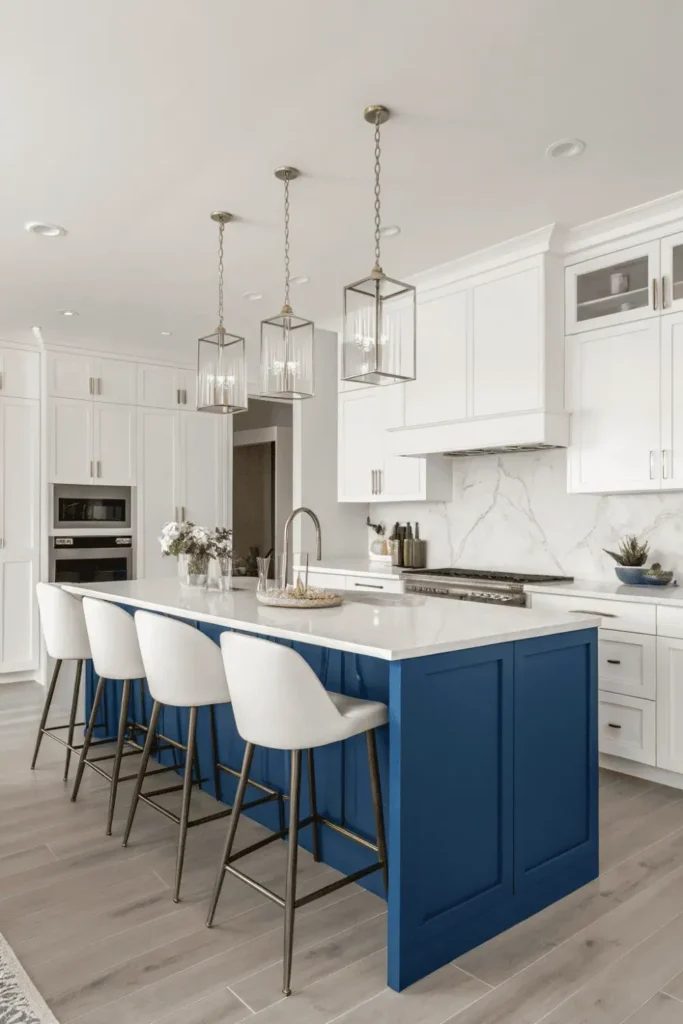
A royal blue kitchen island creates stunning focal points in otherwise neutral kitchens, providing both color drama and practical seating for casual meals. This bold shade makes powerful statements while remaining sophisticated and intentional.
Built-in seating or overhang counters turn your blue island into gathering spots where family and guests naturally congregate. The rich blue grounds the space and defines kitchen boundaries in open floor plans.
Pro Tip: Add contrast with white or light quartz countertops on your royal blue kitchen island to prevent the piece from feeling too dark and to create bright work surfaces.
12. Dusty Blue Cabinets with Copper Accents

Dusty blue cabinets offer muted, sophisticated blue kitchen color that feels current yet timeless. This soft shade works particularly well in farmhouse and vintage-inspired kitchens where overly bright colors might feel jarring.
Pair dusty blue with warm copper hardware, light fixtures, and faucets for beautiful contrast that adds warmth and metallic interest. The copper develops attractive patina over time, adding character to your blue kitchen design.
Pro Tip: Balance cool dusty blue tones with warm wood countertops, floors, or open shelving to create inviting blue kitchens that feel cozy rather than cold.
13. Blue and White Checkered Kitchen Floors

Blue and white checkered floors bring retro charm to blue kitchen designs with vintage appeal and practical benefits. These classic patterns work beautifully in cottage, farmhouse, and traditional kitchen styles while adding visual interest underfoot.
The checkerboard pattern hides dirt and wear better than solid colors while making small kitchens feel larger through diagonal installation. Pair with simple white cabinets to let the floor pattern shine without competing visual elements.
Pro Tip: Use large 12×12 inch tiles in blue and white checkerboard patterns for contemporary blue kitchens, or smaller 6×6 inch tiles for authentic vintage character.
Why Blue Kitchens Are Worth the Investment
Blue kitchens significantly increase home appeal and value because they offer distinctive character while maintaining broad market appeal that neutral beige kitchens lack. Real estate agents report that well-designed blue kitchens generate higher engagement in listings and help homes stand out in competitive markets.
The psychological benefits of blue kitchen spaces include reduced stress and increased calm during cooking and meal preparation. Studies consistently show that blue environments lower blood pressure and create peaceful atmospheres, making your blue kitchen a genuine wellness investment.
Blue kitchen designs remain stylish across decades unlike trendy colors that quickly date your home. Navy, powder blue, and teal have appeared in beautiful kitchens throughout history, proving their staying power and making your blue kitchen renovation a safe long-term choice.
Things to Consider Before Choosing Blue Kitchens
Your kitchen’s natural light dramatically affects how blue appears in your space—what looks perfect in a showroom may read differently in your home. Test large paint samples or cabinet door samples in your actual blue kitchen space, observing them in morning, afternoon, and evening light before finalizing decisions.
Blue kitchen undertones matter significantly when coordinating with existing elements like flooring, countertops, and appliances. Cool blues with gray undertones complement modern stainless and white finishes, while warmer blues with green undertones pair better with warm wood and brass in your blue kitchen design.
Consider your long-term plans and resale timeline when selecting blue kitchen shades—classic navy and soft blue-gray appeal to broader audiences than vibrant cobalt or teal. If you’re selling within five years, choose more universal blue tones that enhance value without limiting buyer appeal.
Comparison Table of Blue Kitchen Styles
| Blue Kitchen Style | Price Range | Longevity | Maintenance | Best For | Installation Time |
| Navy Cabinets | $$$ – $$$$ | 15-20 years | Low – hides wear | Traditional, modern, transitional | 1-2 weeks |
| Powder Blue Island | $$ – $$$ | 10-15 years | Medium – shows marks | Coastal, cottage, farmhouse | 3-5 days |
| Blue Subway Tile | $ – $$ | 20+ years | Low – easy cleaning | All styles | 2-3 days |
| Two-Tone Cabinets | $$$ – $$$$ | 15-20 years | Low to medium | Transitional, modern farmhouse | 1-2 weeks |
| Blue Walls | $ | 5-7 years | Medium – needs touch-ups | All styles | 1-2 days |
| Teal Cabinets | $$$ – $$$$ | 10-15 years | Low | Modern, eclectic, glam | 1-2 weeks |
| Patterned Tile Floors | $$ – $$$ | 20+ years | Medium – grout care | Vintage, Mediterranean, eclectic | 3-5 days |
| Blue-Gray Cabinets | $$$ – $$$$ | 15-20 years | Low | Transitional, modern | 1-2 weeks |
| Cobalt Accent Wall | $ | 5-7 years | Medium | Modern, eclectic | 1 day |
| Light Blue Uppers | $$ – $$$ | 10-15 years | Medium | Cottage, coastal | 1 week |
| Royal Blue Island | $$ – $$$ | 10-15 years | Medium | Traditional, glam | 3-5 days |
| Dusty Blue Cabinets | $$$ – $$$$ | 15-20 years | Low | Farmhouse, vintage | 1-2 weeks |
| Checkered Floors | $ – $$ | 10-15 years | Medium | Vintage, cottage | 2-3 days |
Frequently Asked Questions About Blue Kitchen
What shade of blue works best for kitchen cabinets?
Navy blue remains the most popular and timeless choice for blue kitchen cabinets because it works across design styles while maintaining sophisticated, neutral-like versatility. Navy pairs beautifully with virtually any countertop material, hardware finish, and accent color you choose.
Soft blue-gray shades offer safer alternatives for homeowners wanting blue kitchen color without bold commitment. These muted tones provide subtle interest while appealing to broad audiences if resale concerns factor into your decision-making process.
Do blue kitchens go out of style?
Classic blue kitchen shades like navy, powder blue, and soft blue-gray have remained stylish for decades and show no signs of disappearing from design trends. Unlike trendy colors that feel dated quickly, these timeless blues have appeared in beautiful kitchens throughout history.
The key to lasting blue kitchen appeal lies in choosing classic shades over trendy ones and pairing blue elements with timeless materials like marble, wood, and quality hardware. Well-designed blue kitchens maintain appeal and value far longer than all-white kitchens that lack distinctive character.
What colors pair well with blue kitchens?
White and cream are classic companions for blue kitchens that brighten spaces and create fresh, clean aesthetics that never feel dated. These neutral pairings work with any blue shade from powder to navy, providing versatile foundations.
Natural wood tones add warmth that balances blue’s cool nature, while brass and gold hardware create luxurious contrast in blue kitchen designs. Gray, marble patterns, and even black accents work beautifully depending on your blue shade and overall design aesthetic.
How do I make a blue kitchen feel warm instead of cold?
Incorporate warm materials like wood countertops, butcher block, or wood floors to balance cool blue tones and create inviting blue kitchen spaces. Natural wood adds organic warmth that prevents blue from feeling sterile or cold.
Choose warm metallic finishes like brass, copper, or gold for hardware, lighting, and faucets rather than cool chrome or nickel. Add warm white or soft yellow lighting instead of cool white bulbs to enhance the cozy atmosphere in your blue kitchen throughout the day and evening.