
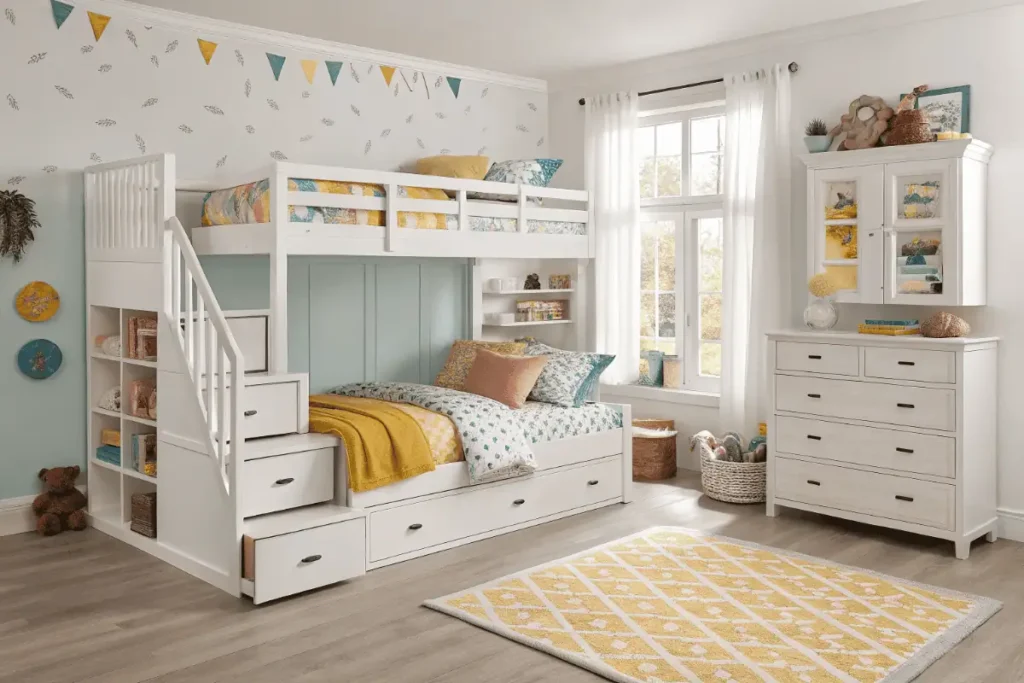
Choosing the perfect kids’ room bed transforms your child’s bedroom into a comfortable, functional sanctuary. The right bed serves as more than just a sleeping spot—it’s the foundation of their personal space.
Every child deserves a bed that supports healthy sleep while reflecting their personality and stage of development. From toddler-friendly options to teen-approved designs, the market offers countless choices.
This guide explores the best kids’ room bed options to help you make an informed decision that serves your family for years to come. Let’s dive into the top choices available today.
List of 13 Best Kids Room Bed Options
1. Twin Platform Bed with Under-Bed Storage Drawers

A twin platform bed with built-in storage drawers maximizes every inch of bedroom space. The low-profile design makes climbing in and out safe for young children while providing ample storage for toys, clothes, and books.
These beds eliminate the need for a box spring, keeping the sleeping surface closer to the ground. Solid wood construction ensures durability through years of active use.
The built-in drawers glide smoothly and keep clutter out of sight, teaching kids valuable organization skills. Most designs feature neutral finishes that grow with your child’s changing tastes.
Pro Tip: Measure your child’s room carefully and leave at least 24 inches of clearance around the bed for comfortable movement and drawer access.
2. Classic Wooden Bunk Bed for Siblings
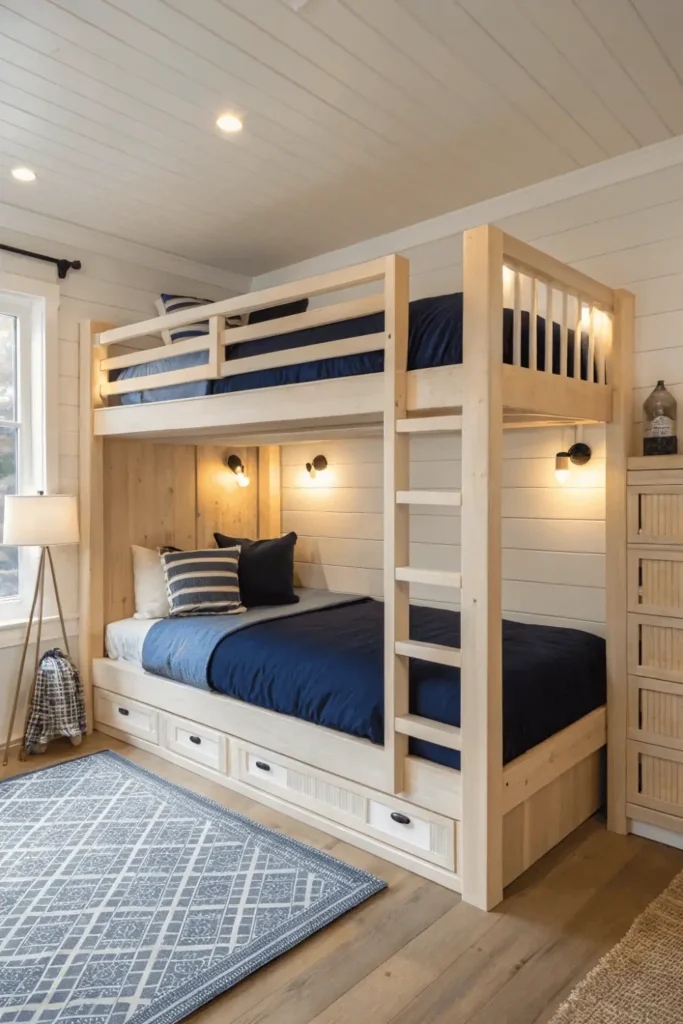
Wooden bunk beds remain the ultimate space-saving solution for shared bedrooms. These beds stack two twin mattresses vertically, freeing up valuable floor space for play areas and storage.
Look for solid pine or hardwood construction with full-length guardrails and sturdy ladders featuring wide, flat steps. Safety certifications ensure peace of mind for parents.
Many modern bunk beds convert into two separate twin beds when your children eventually want their own rooms. This versatility makes them excellent long-term investments.
Pro Tip: Only allow children over age 6 to sleep on the top bunk, and position the bed away from ceiling fans and windows.
3. Loft Bed with Built-In Study Desk

A loft-style kids room bed elevates the sleeping area to create functional space underneath. The raised design works perfectly for homework stations, reading nooks, or play areas in small bedrooms.
Integrated desks, shelving, and drawers transform the area below into a complete workspace. This all-in-one solution eliminates the need for separate furniture pieces, saving both money and space.
Choose loft beds with sturdy metal or wood frames that can support your child’s weight safely. Ensure the ladder is securely attached and easy to climb.
Pro Tip: Reserve loft beds for children at least 6 years old who have the coordination to safely climb up and down, and measure ceiling height to ensure 30 inches of clearance above the mattress.
4. Toddler Transition Bed with Safety Rails

Toddler beds provide the perfect bridge between cribs and standard twin beds. These low-to-the-ground options feature built-in safety rails on both sides to prevent nighttime tumbles.
Most toddler beds use standard crib mattresses, allowing you to save money by reusing your existing mattress. The familiar size helps ease the transition for young children.
Pro Tip: Look for toddler beds that sit no higher than 12 inches off the ground, making it easy for little legs to climb in and out independently while minimizing fall risks.
5. Trundle Bed for Sleepovers and Guests
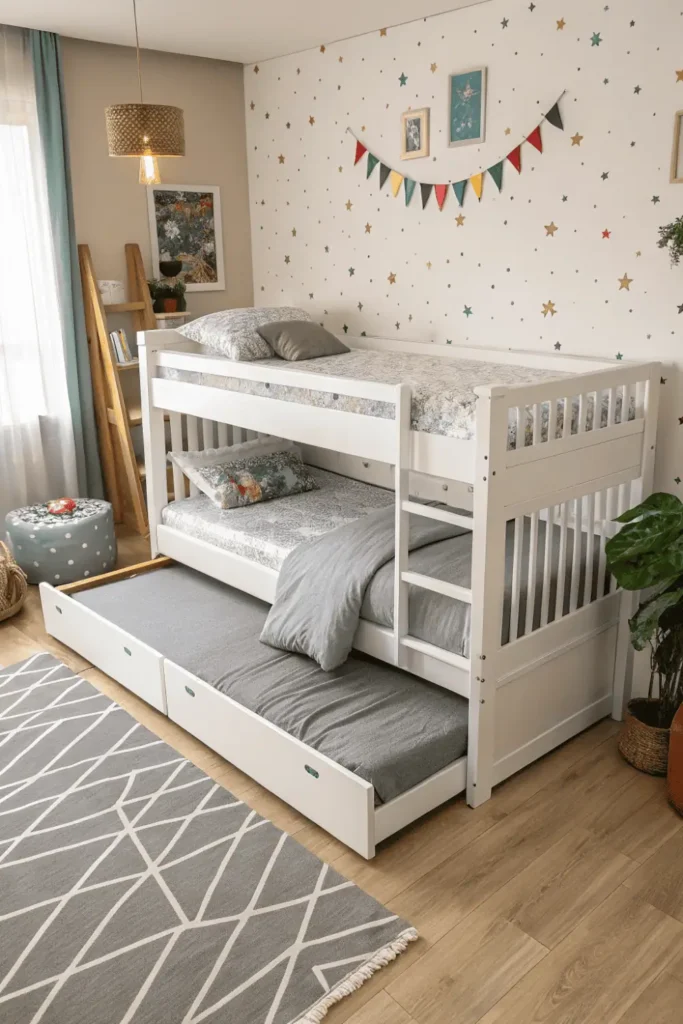
A trundle-style kids room bed hides a second sleeping surface underneath the main bed frame. During the day, it looks like a standard twin bed, but it rolls out effortlessly for overnight guests.
This design works beautifully in rooms where space is limited but occasional extra sleeping capacity is needed. The trundle section typically features wheels or casters for smooth operation.
Pro Tip: Choose pop-up trundle beds that rise to the same height as the main mattress—they create a comfortable king-size sleeping surface when pushed together, perfect for movie nights or when kids need parental comfort.
6. Daybed with Storage or Trundle Option
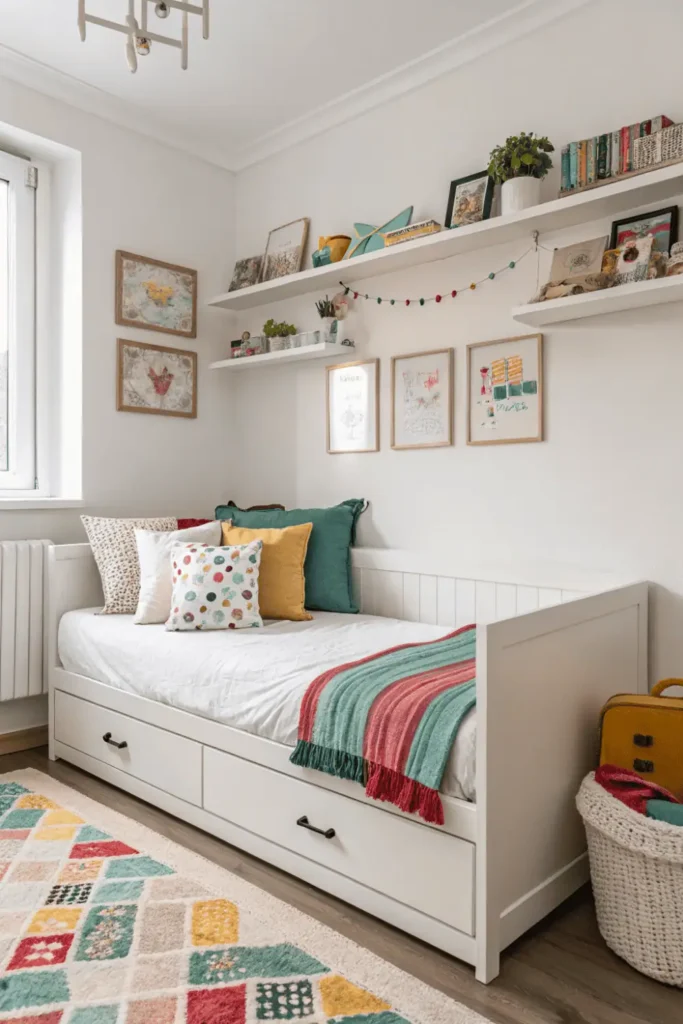
Daybeds function as both seating and sleeping surfaces, making them ideal for multi-purpose rooms. The sofa-like design provides comfortable spots for reading, homework, and hanging out with friends during the day.
Adding a trundle underneath doubles the sleeping capacity without taking up additional floor space. Many daybeds include built-in drawers for extra storage.
These beds work exceptionally well for older children and teens who want their rooms to feel more like personal lounges than traditional bedrooms.
Pro Tip: Style your daybed with decorative throw pillows and cushions during the day to emphasize its dual-purpose nature and make the space feel more sophisticated.
7. Captain’s Bed with Bookcase Headboard

Captain’s beds maximize storage by incorporating multiple drawers and cabinets into the bed frame. These beds typically sit higher than platform beds to accommodate deep storage compartments underneath.
The bookcase headboard adds even more organizational capacity with shelves perfect for books, alarm clocks, and treasured items. This all-in-one design eliminates the need for separate dressers or nightstands.
Pro Tip: Young children may need a small step stool to climb into captain’s beds comfortably—test the height with your child before purchasing to ensure they can get in and out safely.
8. Low-Profile Montessori Floor Bed
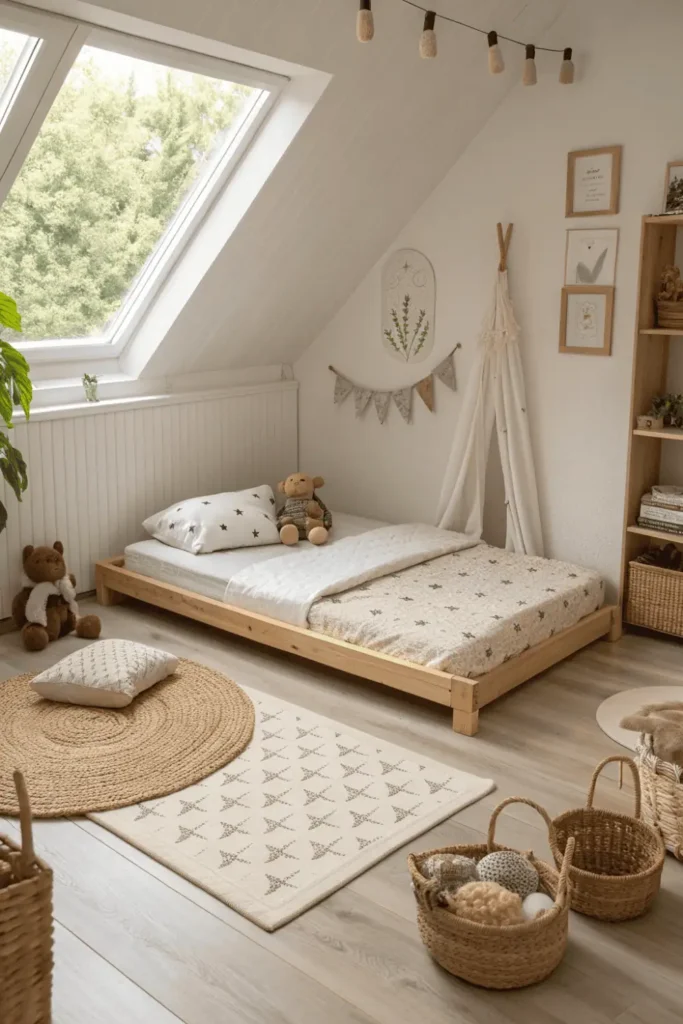
Montessori floor beds sit directly on the floor or use minimal frames just inches high. This child-centered approach promotes independence by allowing even toddlers to get in and out without adult help.
The design eliminates dangerous falls since there’s virtually no height to worry about. Freedom of movement encourages self-directed sleep patterns and confident exploration.
This kids room bed style requires full room childproofing since young children can roam freely when they wake.
Pro Tip: Place the floor bed against a wall and use a small area rug to define the sleeping space, creating a cozy boundary without restricting your child’s independence.
9. Full-Size Bed for Long-Term Investment

Full-size beds (54 x 75 inches) provide generous sleeping space that serves children from elementary school through adulthood. This larger option eliminates future bed transitions and purchases.
The extra width accommodates bedtime stories with parents, growing teenagers, and active sleepers who need more room. Full mattresses last longer as investments since they won’t be outgrown.
Pro Tip: Only choose full-size beds if your child’s room measures at least 10×12 feet—smaller spaces feel cramped with larger bed frames and limited room for other essential furniture.
10. Race Car or Themed Novelty Bed

Themed novelty beds transform sleeping into adventure with designs resembling race cars, princess carriages, fire trucks, or castles. These imaginative options combine sleep function with play value.
Young children (ages 3-8) especially love these beds, though they typically outgrow specific themes within a few years. Quality construction ensures these beds withstand both sleeping and active play.
Pro Tip: Choose themes based on enduring interests rather than passing fads—a generic race car design has broader appeal and longer usefulness than beds featuring specific movie characters or licensed properties.
11. Murphy Bed for Maximum Space Efficiency
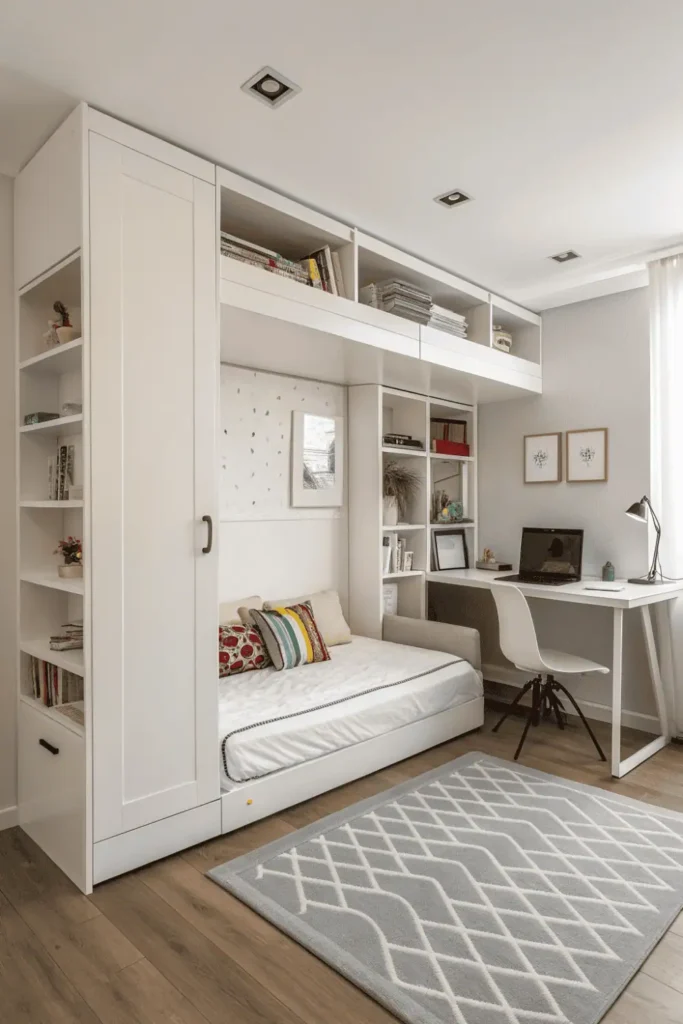
Murphy beds fold vertically against the wall when not in use, creating dramatic space savings in a kids room bed setup. This innovative solution works beautifully in very small bedrooms or multi-purpose spaces.
Modern mechanisms operate smoothly and safely, with features preventing accidental closure. When folded up, the bed’s exterior can feature chalkboard surfaces, bulletin boards, or decorative panels.
Pro Tip: Ensure professional installation into wall studs for safety, and teach children the proper operation technique—Murphy beds work best for kids aged 8 and up who can manage the mechanism responsibly.
12. Adjustable Bed That Grows in Length

Adjustable kids room beds extend in length as your child grows taller. These innovative designs start at toddler size (about 5 feet) and extend to full twin length (6-7 feet) through removable panels or adjustable frames.
One bed serves from toddlerhood through teenage years, eliminating multiple furniture purchases. This eco-friendly choice reduces waste while providing cost savings over time.
Pro Tip: Look for extension mechanisms that are secure and create seamless sleeping surfaces without gaps—poor-quality adjustable beds can develop weak spots at connection points that affect comfort and safety.
13. Canopy Bed for Dreamy Aesthetics

Canopy beds feature four posts with frames for hanging fabric, creating elegant, dreamy sleeping spaces. Sheer curtains or decorative fabrics add privacy, reduce light, and create cozy retreats.
These beds work particularly well for older children and teens who want sophisticated, grown-up bedroom styles. Modern canopy designs range from ornate traditional to sleek contemporary metal frames.
Pro Tip: Use removable fabric panels rather than permanent curtains so you can easily wash bedding and change the look as your child’s style preferences evolve—velcro attachments work perfectly for quick updates.
Why Kids Room Bed Choices Are Worth the Investment
Quality kids room bed options provide crucial support for healthy growth and development. Your child spends approximately one-third of their life sleeping, making proper rest essential for physical development, immune function, and cognitive performance.
The right kids room bed creates psychological benefits by establishing a personal sanctuary where children feel safe, secure, and comfortable. This emotional security supports better sleep quality and helps kids develop positive associations with their bedrooms and healthy sleep routines.
Well-chosen kids room bed designs offer long-term value through adaptability and durability. Beds with storage, convertibility, or adjustable features maximize your investment by serving multiple functions over many years, ultimately saving money compared to frequent replacements.
Things to Consider Before Choosing Kids Room Bed Options
Carefully measure your child’s bedroom before selecting a kids room bed design. Account for the bed’s dimensions plus adequate clearance (at least 24-30 inches) for walking paths, drawer operation, and accessing closets without feeling cramped.
Safety features must match your child’s age and development when choosing a kids room bed. Younger children need low heights, guardrails, and rounded corners, while older kids can safely use elevated loft or bunk designs with proper supervision and safety education.
Consider your kids room bed purchase timeline and growth projections honestly. Beds serving multiple years through adjustability or classic sizing prove more economical than purchasing multiple beds as your child grows, though transition beds serve valuable purposes for specific age ranges.
Comparison Table of Kids Room Bed Types
| Bed Type | Price Range | Durability | Maintenance | Best For | Typical Lifespan |
| Twin Platform with Storage | $$ | High | Low | Ages 5-18, small spaces | 10-15 years |
| Wooden Bunk Bed | $$ – $$$ | Very High | Low | Siblings, ages 6+ | 15-20 years |
| Loft Bed with Desk | $$ – $$$ | High | Medium | Ages 6-18, students | 10-15 years |
| Toddler Bed | $ | Medium | Low | Ages 2-5, transitions | 2-3 years |
| Trundle Bed | $$ | High | Low | Sleepovers, guests | 10-15 years |
| Daybed | $$ – $$$ | High | Low | Teens, multi-purpose rooms | 15+ years |
| Captain’s Bed | $$ – $$$ | High | Medium | Ages 5-18, storage needs | 10-15 years |
| Montessori Floor Bed | $ – $$ | Medium | Low | Ages 1-8, independence | 5-10 years |
| Full-Size Bed | $$ – $$$ | Very High | Low | Ages 8+, long-term | 20+ years |
| Themed Novelty Bed | $$ – $$$ | Medium | Medium | Ages 3-8, imaginative play | 3-5 years |
| Murphy Bed | $$$ – $$$$ | High | Medium | Tiny spaces, multi-use rooms | 15-20 years |
| Adjustable/Growing Bed | $$ – $$$ | High | Low | Ages 2-18, eco-conscious | 10-15 years |
| Canopy Bed | $$ – $$$$ | High | Medium | Ages 8+, aesthetics | 15-20 years |
Frequently Asked Questions About Kids Room Bed
When should I transition my child to a kids room bed from a crib?
Most children transition between 18 months and 3 years old, though ideal timing varies by individual development. Key indicators include climbing out of the crib (safety hazard), reaching 35 inches tall, or expressing interest in a “big kid bed.”
Toddler beds work well for younger children (18 months to 3 years) because they’re low to the ground with safety rails. Some parents skip toddler beds entirely and move to twin beds with bed rails around age 2.5-3 years for longer-term value.
Consider your child’s physical coordination and ability to understand boundaries when deciding timing.
What size kids room bed is best for long-term use?
Twin-size beds (39 x 75 inches) are the most popular choice because they fit comfortably in most bedrooms while providing adequate sleeping space from childhood through teenage years. Twin beds accommodate children from approximately age 3-4 through high school, making them excellent investments.
Full-size beds (54 x 75 inches) offer more sleeping space for larger bedrooms, taller children, or teens who will use the bed into young adulthood. The extra width creates comfortable sleeping for active sleepers and accommodates parent-child bedtime reading more easily.
Consider your bedroom dimensions, budget, and timeline—measure carefully and allow 24-30 inches of clearance around the bed for comfortable movement.
Are bunk beds safe as a kids room bed option?
Bunk beds are safe when age-appropriate guidelines are followed and quality construction standards are met. The American Academy of Pediatrics recommends children under age 6 should not sleep on top bunks due to coordination limitations and fall risks.
Choose bunk beds with full-length guardrails, secure ladders with wide flat steps, and sturdy construction meeting current safety standards. Ensure at least 5 inches of guardrail extends above the mattress top and maintain 30 inches of clearance between the top mattress and ceiling.
Position bunk beds away from ceiling fans and windows, use night lights for visibility, and regularly inspect and tighten all hardware connections.
How much should I budget for a quality kids room bed?
Kids room bed budgets vary based on type, materials, and features, but expect to spend $150-$500 for basic quality beds and $500-$1,500 for premium options. Simple toddler beds start around $100-$200, while basic twin platform beds range from $200-$400.
Beds with built-in storage, bunk beds, and loft beds typically cost $400-$800 for quality construction. Premium solid wood beds with extensive storage or specialty features can exceed $1,000.
Remember the bed frame is only part of the investment—budget separately for mattresses ($150-$400), bedding, and necessary accessories like bed rails or mattress protectors for total cost planning.