
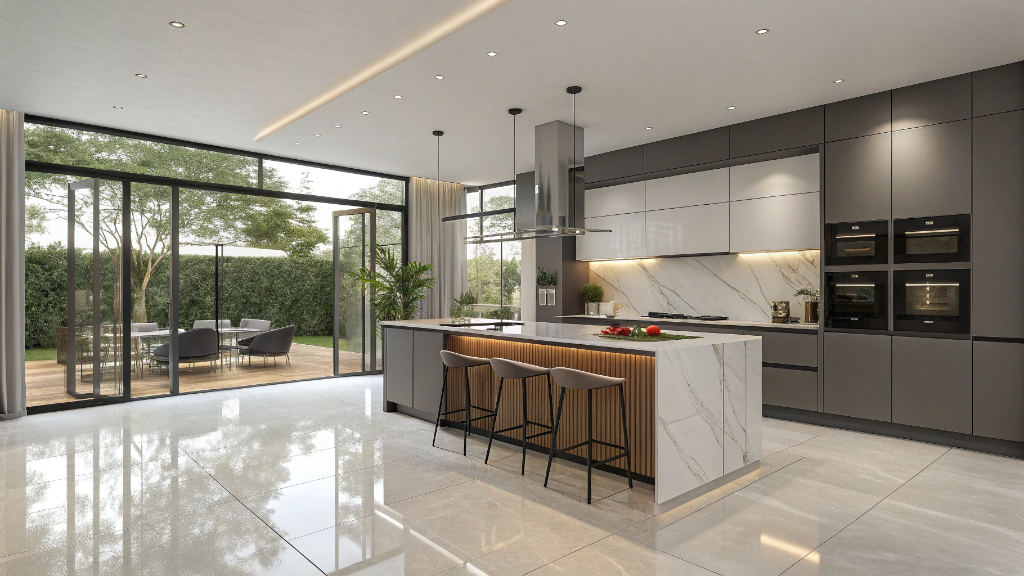
Modern kitchen design has become the cornerstone of contemporary home renovations, blending sleek aesthetics with cutting-edge functionality. Today’s homeowners are transforming their cooking spaces into stylish, efficient hubs that reflect personal taste while maximizing usability.
The evolution of kitchen spaces has shifted from purely functional areas to the heart of the home. Open layouts, smart storage solutions, and premium materials now define what makes a kitchen truly modern.
Whether you’re planning a complete remodel or subtle updates, understanding modern kitchen design principles will help you create a space that’s both beautiful and practical. Let’s explore the best ideas to transform your kitchen into a contemporary masterpiece.
List of 11 Best Modern Kitchen Design Ideas
1. Minimalist White and Wood Combination
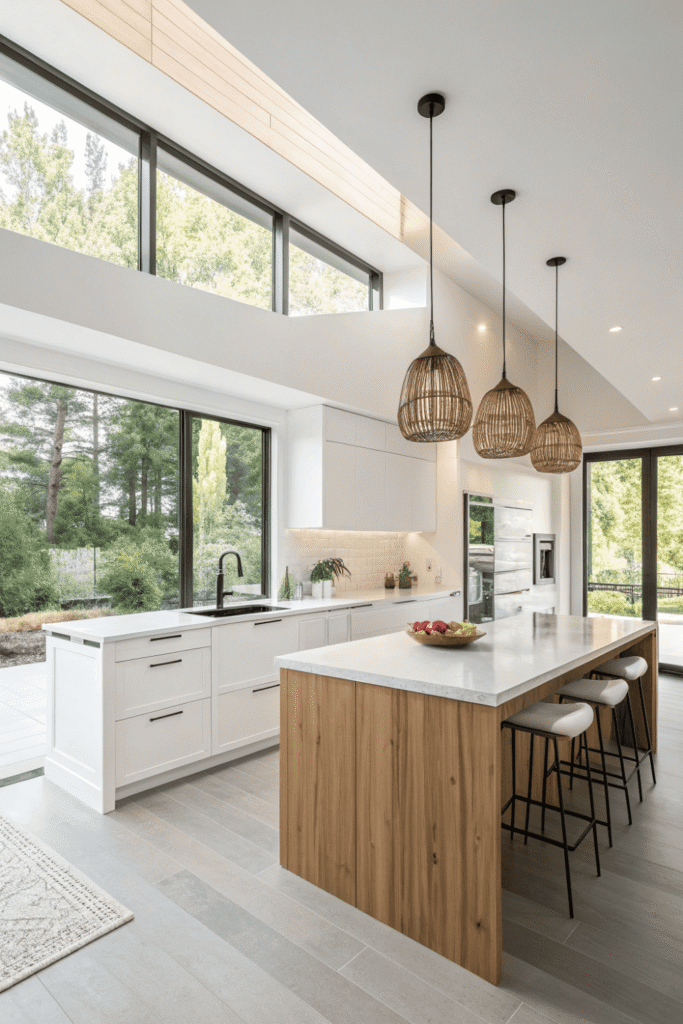
The marriage of crisp white cabinetry and warm wood accents creates a timeless modern kitchen design that feels both clean and inviting. This pairing offers visual balance while maintaining the sleek lines characteristic of contemporary spaces.
White surfaces reflect light beautifully, making kitchens feel more spacious and airy. Natural wood elements—whether in floating shelves, islands, or accent panels—add organic warmth that prevents the space from feeling sterile.
Pro Tip: Use light oak or ash for a Scandinavian vibe, or opt for walnut for a more sophisticated, moody aesthetic.
2. Handleless Cabinets with Push-to-Open Mechanisms
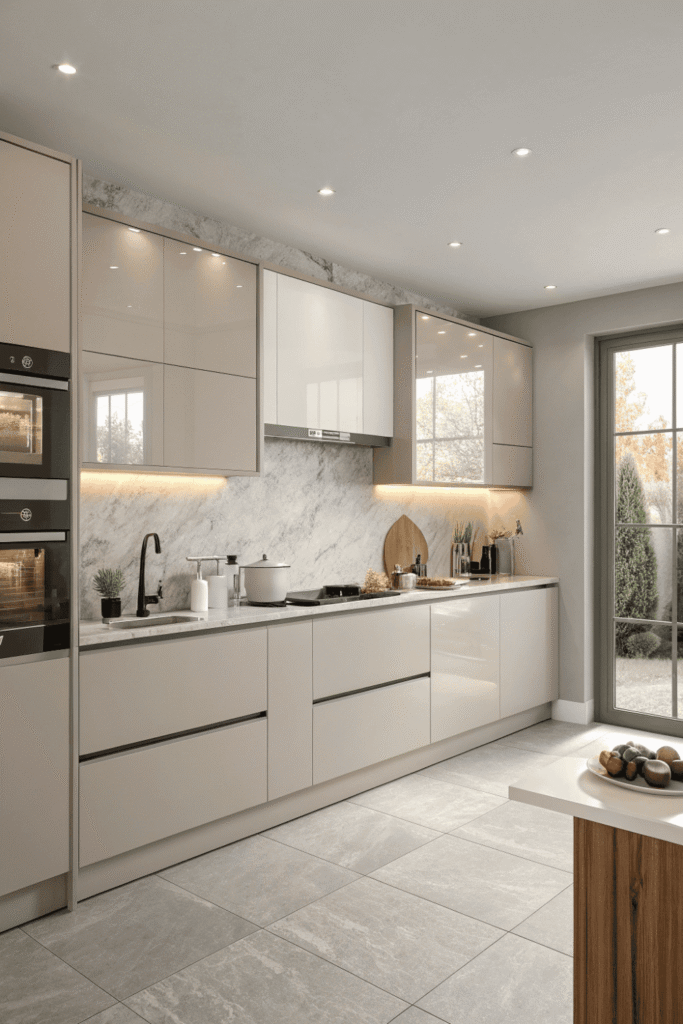
Handleless cabinetry represents the pinnacle of modern kitchen design, offering seamless surfaces that emphasize clean lines and uncluttered aesthetics. These push-to-open or touch-latch systems eliminate visual hardware while maintaining full functionality.
The streamlined appearance creates a sophisticated look that’s easier to clean and maintain. This design choice works exceptionally well in matte finishes or high-gloss lacquered surfaces.
Pro Tip: Install soft-close mechanisms to prevent slamming and extend the lifespan of your cabinetry hardware.
Related: How to Choose the Perfect Cabinet Hardware for Your Kitchen
3. Open Shelving with Curated Display
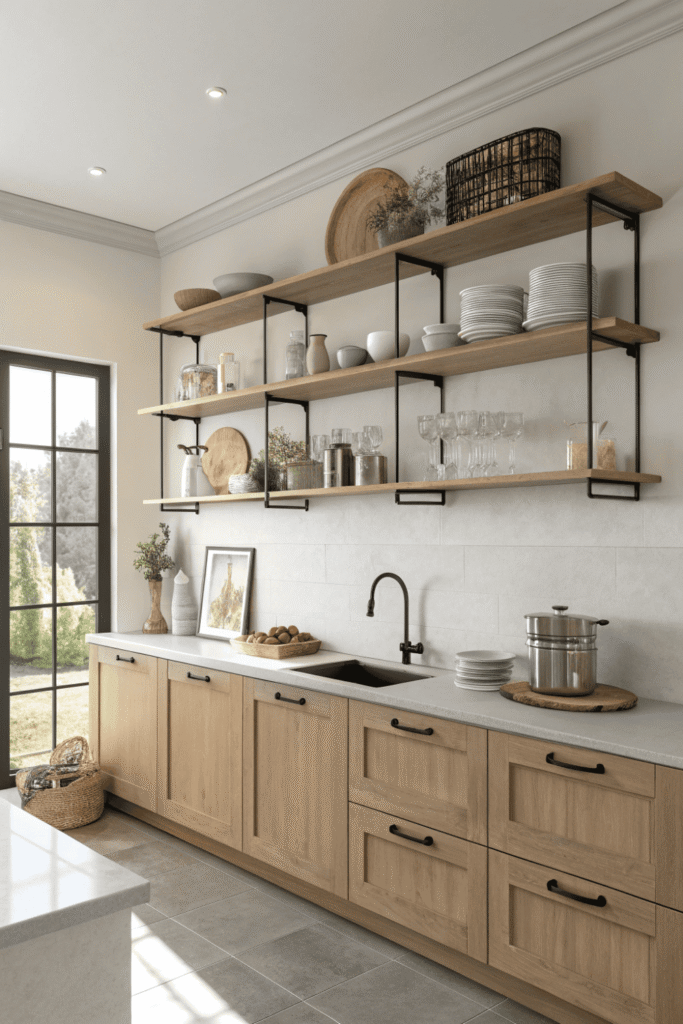
Open shelving has revolutionized modern kitchen design by creating visual lightness and encouraging intentional organization. This approach showcases beautiful dishware, glassware, and decorative objects while keeping everyday items within easy reach.
The key to successful open shelving is curated minimalism—displaying only what you use and love. Floating wooden shelves or sleek metal brackets can complement various modern aesthetics.
Pro Tip: Keep the top shelf for decorative items and reserve lower shelves for frequently used dishes to maintain both style and practicality.
4. Large Format Porcelain Slabs for Backsplash and Countertops
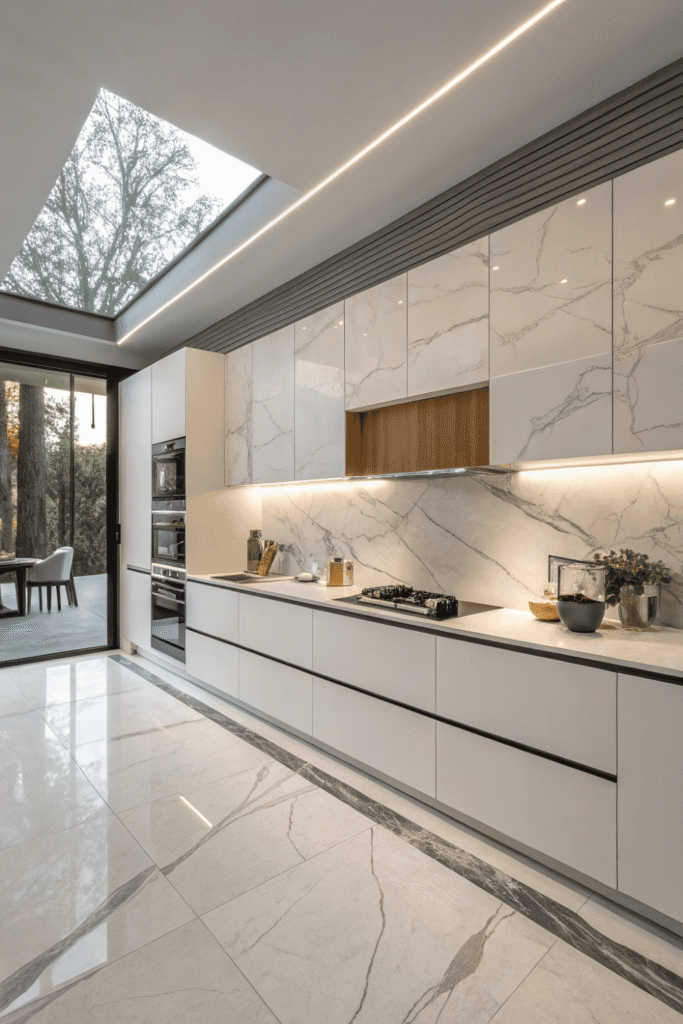
Large format porcelain slabs are transforming modern kitchen design with their seamless, luxurious appearance and minimal grout lines. These oversized panels can mimic marble, concrete, or unique patterns while offering superior durability and easier maintenance than natural stone.
Using the same material for both countertops and backsplash creates a cohesive, high-end look. Book-matched slabs add dramatic visual interest and showcase the beauty of continuous veining.
Pro Tip: Choose slabs with subtle veining for a timeless look, or go bold with dramatic patterns as your kitchen’s focal point.
Related: The Ultimate Guide to Choosing Kitchen Countertop Materials
5. Integrated Smart Appliances
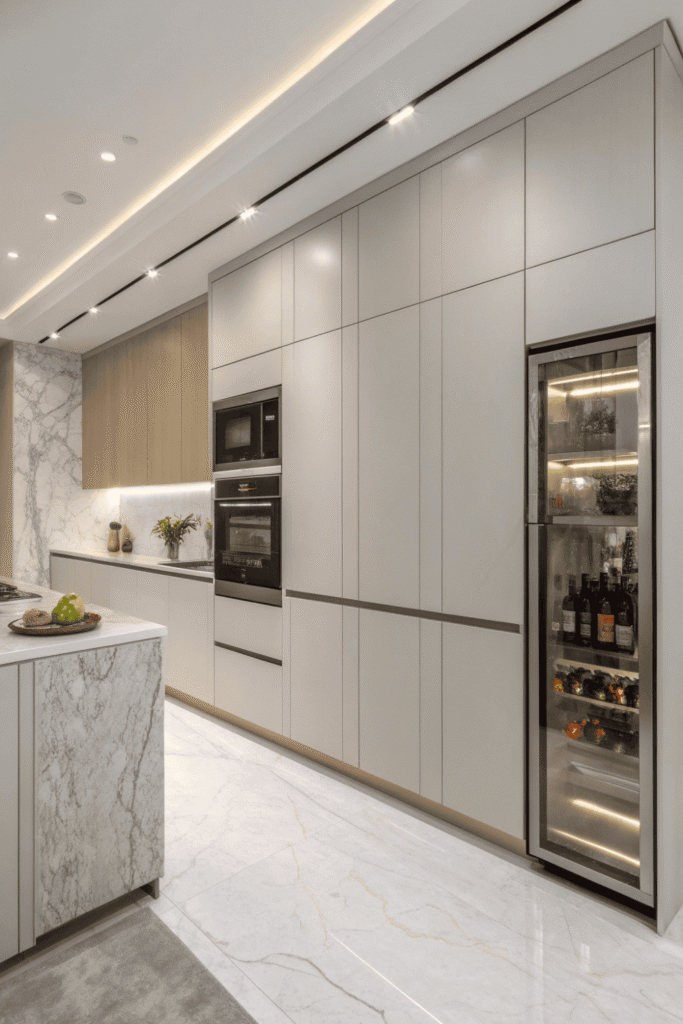
Smart technology integration defines cutting-edge modern kitchen design, with appliances that blend seamlessly into cabinetry while offering advanced functionality. Panel-ready refrigerators, dishwashers, and warming drawers maintain the clean aesthetic while providing Wi-Fi connectivity and voice control.
These intelligent appliances allow you to preheat ovens remotely, monitor refrigerator contents, and receive maintenance alerts. The streamlined appearance keeps the focus on your overall design rather than individual appliances.
Pro Tip: Invest in appliances from the same manufacturer to ensure consistent panel depths and integration capabilities across all units.
6. Statement Lighting Fixtures
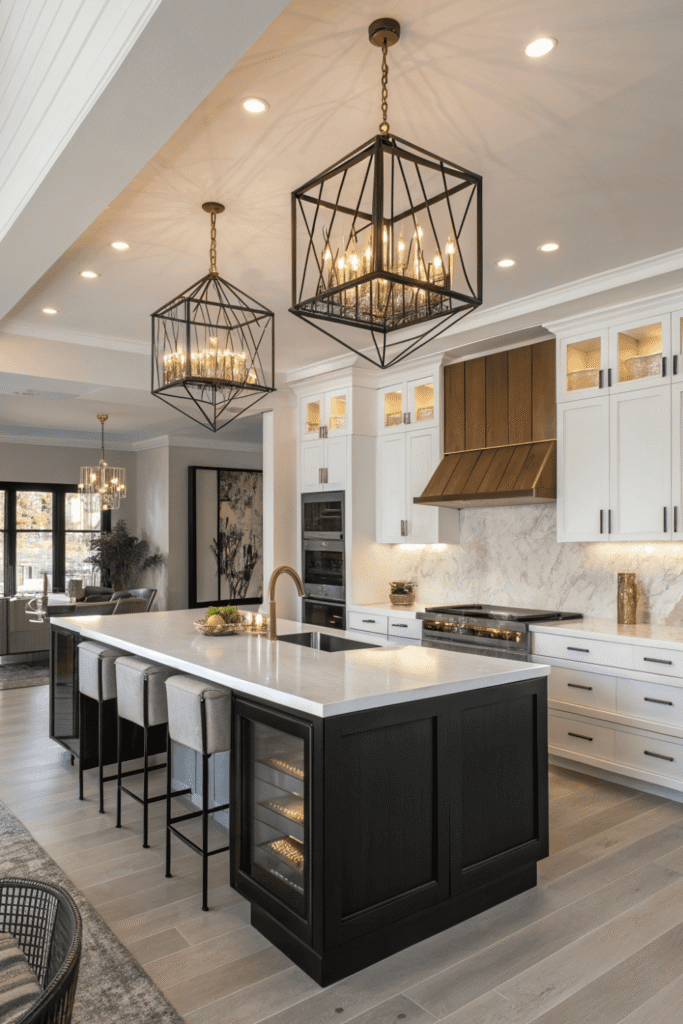
Bold pendant lights or sculptural chandeliers serve as functional art pieces in modern kitchen design, defining zones while adding personality. These fixtures draw the eye upward and can transform an otherwise simple kitchen into something extraordinary.
Geometric shapes, linear designs, and mixed materials like brass with glass or matte black with wood create visual interest. Proper lighting layering—combining task, ambient, and accent lighting—enhances both functionality and atmosphere.
Pro Tip: Install dimmers on all lighting circuits to create versatile ambiance for different times of day and occasions.
Related: 15 Kitchen Lighting Ideas That Will Transform Your Space
7. Two-Tone Cabinet Color Schemes
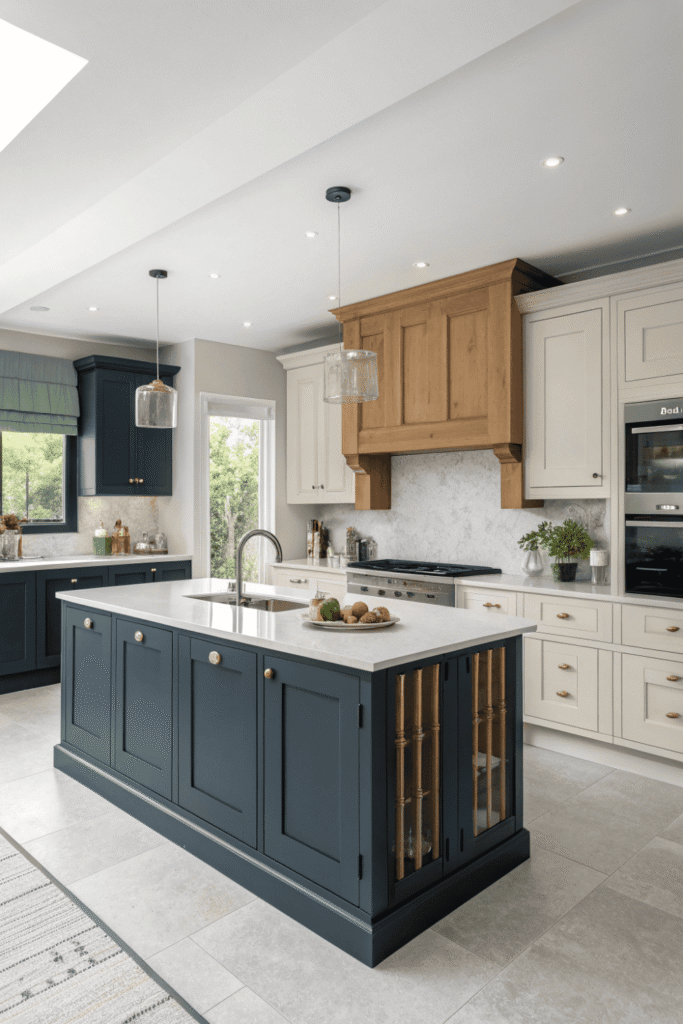
Contrasting cabinet colors add depth and visual interest to modern kitchen design while allowing you to define different functional zones. Dark lower cabinets paired with light upper cabinets or a contrasting island creates dynamic sophistication.
Popular combinations include navy and white, charcoal and light oak, or sage green with cream. This approach lets you incorporate bold colors without overwhelming the space.
Pro Tip: Use the darker color on lower cabinets to ground the space and hide wear, while lighter upper cabinets keep the kitchen feeling open and airy.
8. Waterfall Edge Islands
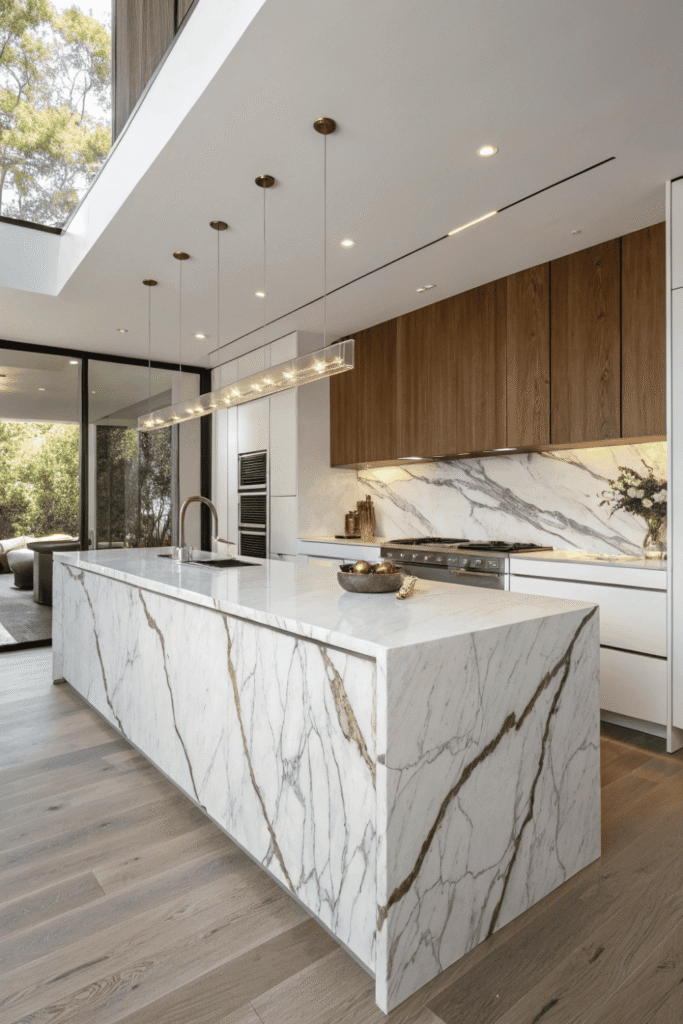
A waterfall edge island where the countertop material cascades down the sides creates a stunning focal point in modern kitchen design. This continuous surface flow emphasizes the beauty of your chosen material while providing a polished, furniture-like appearance.
Particularly striking with veined marble, quartzite, or bold quartz patterns, waterfall edges add architectural interest. The vertical panels also protect island sides from scuffs and impacts.
Pro Tip: Ensure your fabricator has experience with waterfall edges, as proper seam placement and mitering are crucial for a flawless finish.
Related: Kitchen Island Ideas: Size, Design, and Layout Guide
9. Floor-to-Ceiling Cabinetry
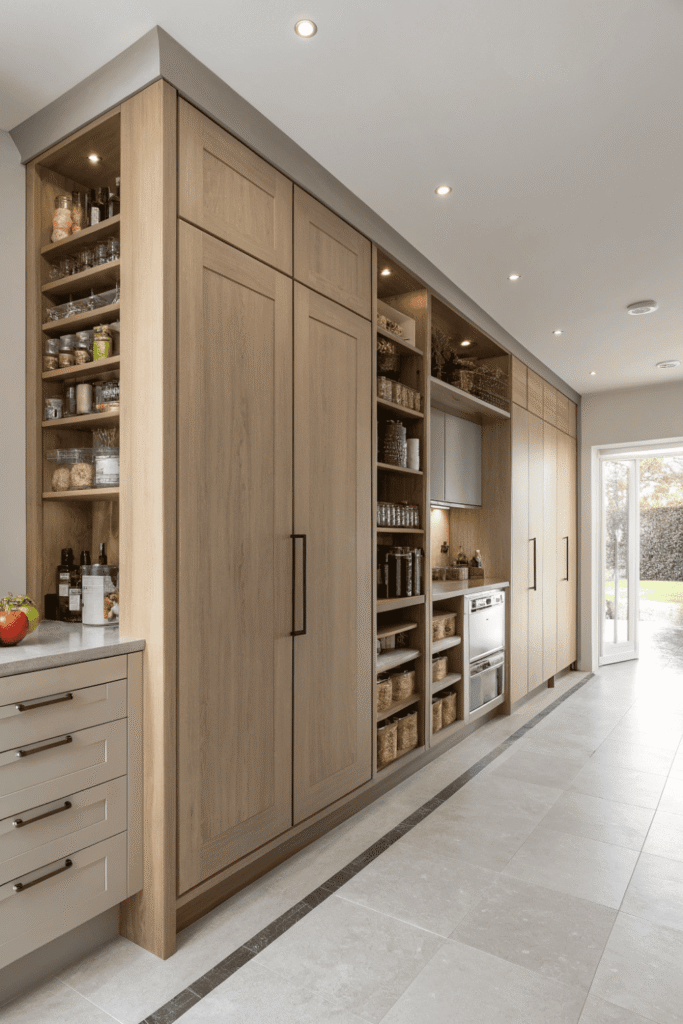
Maximizing vertical space with floor-to-ceiling cabinetry is both practical and visually impressive in modern kitchen design. This approach eliminates dust-collecting soffits while providing abundant storage and creating the illusion of higher ceilings.
Integrated pantry systems, appliance garages, and hidden storage can be seamlessly incorporated into tall cabinet runs. The continuous line draws the eye upward, making the space feel more expansive.
Pro Tip: Use the uppermost cabinets for seasonal items or rarely used serving pieces, and install a pull-down shelf system for easier access.
10. Mixed Material Textures
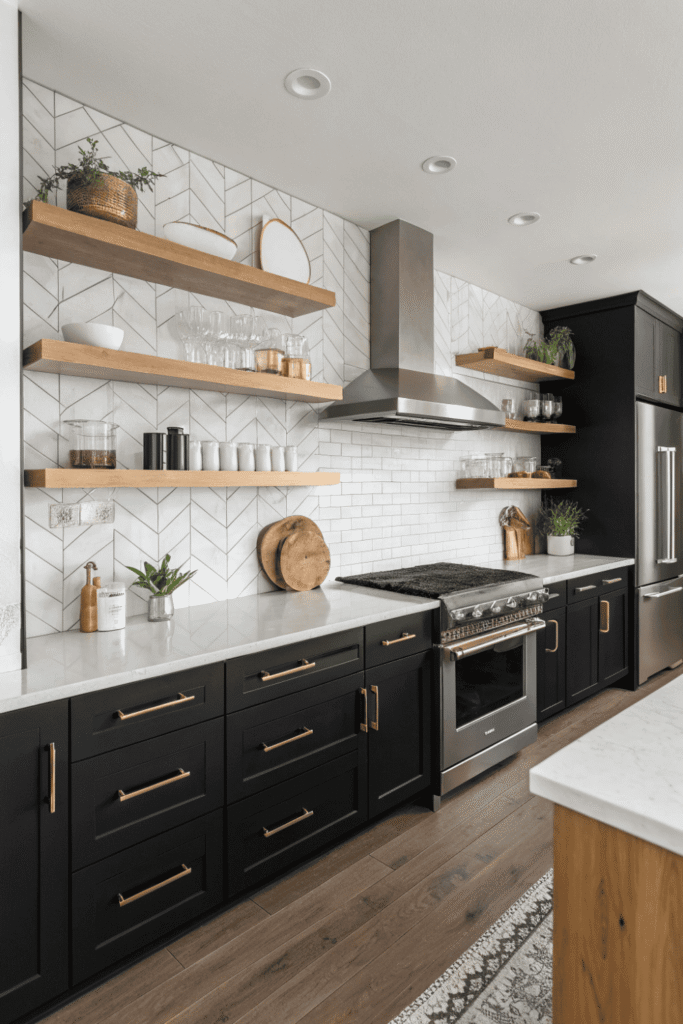
Combining different textures adds depth and tactile interest to modern kitchen design without cluttering the aesthetic. Smooth lacquered cabinets, rough stone countertops, warm wood accents, and cool metal fixtures create a sophisticated sensory experience.
The interplay of matte and glossy finishes, soft and hard materials prevents the space from feeling one-dimensional. This layering technique is essential for creating a modern kitchen that feels designed rather than assembled.
Pro Tip: Limit yourself to 3-4 primary materials and finishes to maintain cohesion—too many textures can feel chaotic rather than curated.
Related: How to Mix Metals in Your Kitchen Like a Designer
11. Indoor-Outdoor Connection with Sliding Glass Walls
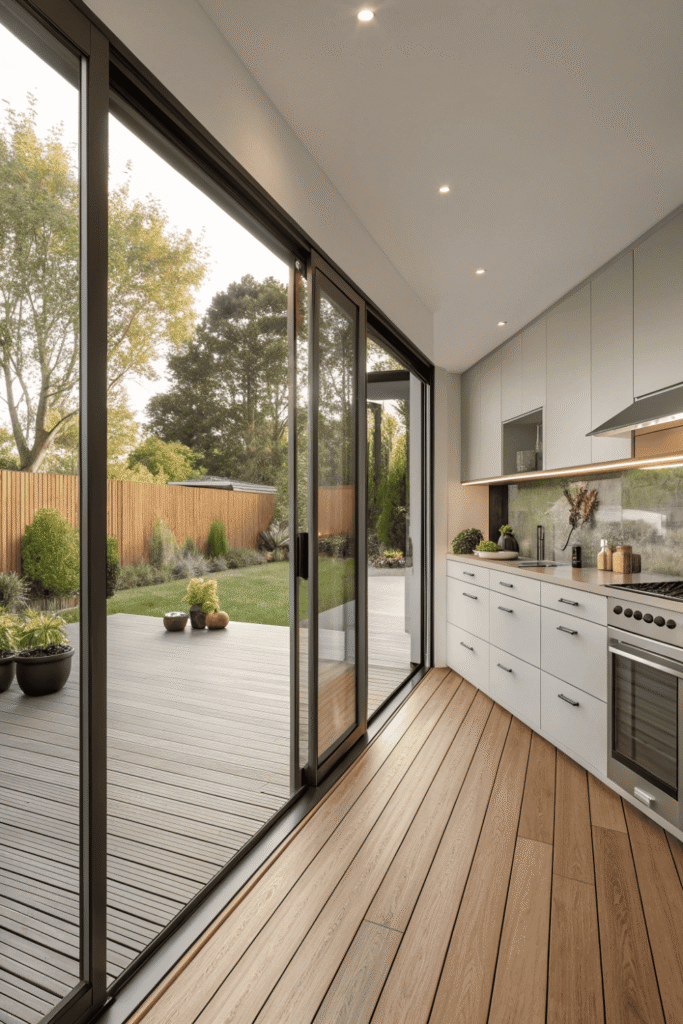
Large sliding glass doors or folding wall systems blur the boundaries between indoor and outdoor spaces, a hallmark of modern kitchen design in suitable climates. This seamless transition expands your functional living area while flooding the kitchen with natural light.
Pocket doors or lift-and-slide systems disappear completely when open, creating an unobstructed flow to patios, decks, or outdoor kitchens. The connection to nature enhances the overall living experience and makes entertaining effortless.
Pro Tip: Extend the same flooring material from inside to outside to visually expand the space and create true continuity between the two areas.
Why Modern Kitchen Design Is Worth the Investment
Modern kitchen design delivers exceptional return on investment, with contemporary renovations recouping 50-80% of costs at resale depending on your market. Beyond financial returns, you’ll enjoy improved functionality, energy efficiency, and daily satisfaction in a space you use multiple times every day.
The timeless appeal of modern kitchen design ensures your renovation won’t feel dated in five years. Clean lines, quality materials, and thoughtful layouts have an enduring appeal that transcends temporary trends.
Modern kitchens incorporate smart technology and energy-efficient appliances that reduce utility costs over time. The combination of durable materials, optimized workflow, and enhanced storage means your modern kitchen design will serve you well for decades.
Things to Consider Before Choosing Modern Kitchen Design
Budget allocation is crucial when planning a modern kitchen design—prioritize quality in permanent elements like cabinetry and countertops over easily replaceable items. Professional installation often justifies the cost, especially for handleless systems, integrated appliances, and complex material installations.
Consider your lifestyle and maintenance preferences when selecting modern kitchen design elements. Matte finishes show fingerprints less than high-gloss, open shelving requires consistent organization, and light colors may show wear more readily than darker tones.
Think about long-term functionality rather than just aesthetics in your modern kitchen design. Ensure adequate storage for your actual needs, plan for proper task lighting, and confirm that trendy choices like open shelving will work with your daily habits and organizational style.
Comparison Table of Modern Kitchen Design Elements
| Design Element | Price Range | Durability | Maintenance | Best For | Lead Time |
|---|---|---|---|---|---|
| Handleless Cabinets | $$$ | High | Low | Minimalist aesthetics | 8-12 weeks |
| Open Shelving | $ | Medium | High | Curated displays | 2-4 weeks |
| Porcelain Slabs | $$$$ | Very High | Very Low | Seamless luxury | 6-10 weeks |
| Smart Appliances | $$$$ | High | Low | Tech enthusiasts | 4-8 weeks |
| Statement Lighting | $$ | High | Low | Adding personality | 2-6 weeks |
| Two-Tone Cabinets | $$$ | High | Low | Visual interest | 8-12 weeks |
| Waterfall Islands | $$$$ | Very High | Low | Dramatic focal points | 6-10 weeks |
| Floor-to-Ceiling Storage | $$$ | High | Low | Maximum storage | 8-12 weeks |
| Mixed Materials | $$$ | High | Medium | Sophisticated depth | 8-14 weeks |
| Sliding Glass Walls | $$$$ | High | Medium | Indoor-outdoor living | 10-16 weeks |
| Wood-White Combination | $$ | High | Low | Timeless warmth | 6-10 weeks |
Frequently Asked Questions About Modern Kitchen Design
What defines modern kitchen design compared to contemporary or traditional styles?
Modern kitchen design emphasizes clean lines, minimal ornamentation, and functional simplicity rooted in mid-century modernism. Unlike traditional kitchens with decorative details and ornate hardware, modern spaces prioritize streamlined cabinetry, integrated appliances, and open layouts.
The modern aesthetic uses neutral color palettes with bold accent opportunities and incorporates natural materials like wood alongside manufactured surfaces. Technology integration, handleless cabinets, and geometric shapes are hallmarks of modern kitchen design.
How much does it typically cost to create a modern kitchen design?
A complete modern kitchen design renovation typically ranges from $25,000 to $80,000, depending on kitchen size, material quality, and geographic location. Budget-friendly modern updates focusing on painting cabinets, replacing hardware, and adding open shelving can cost $5,000-$15,000.
High-end modern kitchen design projects with custom cabinetry, premium appliances, and luxury materials like book-matched stone can exceed $100,000. The key cost drivers include cabinetry quality, countertop materials, appliance selections, and professional installation of complex elements like integrated systems.
Can modern kitchen design work in small spaces?
Absolutely—modern kitchen design principles actually enhance small spaces through strategic use of light colors, handleless cabinets, and vertical storage. The minimalist aesthetic prevents visual clutter, while reflective surfaces, glass elements, and adequate lighting make compact kitchens feel more spacious.
Smart space-planning in modern kitchen design includes pull-out pantries, corner solutions, and multifunctional islands that maximize every inch. Integrated appliances and streamlined fixtures consume less visual space than traditional bulky alternatives, making modern design ideal for urban apartments and smaller homes.
What are the most durable materials for modern kitchen design?
Quartz countertops, porcelain slabs, and engineered stone offer exceptional durability with modern aesthetics, resisting stains, scratches, and heat better than natural alternatives. For cabinetry, high-quality plywood with durable finishes such as lacquer or laminate withstands daily use in modern kitchen design.
Stainless steel, matte black fixtures, and solid wood accents provide longevity when properly maintained. Large-format porcelain tiles for flooring combine modern aesthetics with superior wear resistance, while glass backsplashes and metal elements maintain their appearance for decades in modern kitchen installations.
Creating your dream modern kitchen design requires careful planning, quality materials, and attention to detail. By incorporating these 11 stunning ideas—from handleless cabinetry to indoor-outdoor connections—you’ll achieve a space that’s both timelessly elegant and supremely functional. Remember that successful modern kitchen design balances aesthetics with practicality, ensuring your investment enhances both your daily life and your home’s value for years to come.